Wave for Wagyu Beef in Iowa!

Sena bought some Wagyu beef the other day at Walmart. It was $8 for 4 ounces. I know I said you could entice Bigfoot to shovel snow for you by giving it Wagyu beef—but I was just kidding.

But I’m not kidding when I tell you that Wagyu beef is available in Iowa. Now, Walmart probably gets its Wagyu beef from somewhere other than Iowa, but there are about 40 registered Wagyu operations in Iowa and even in Iowa City. Wagyu originated in Japan but there is such a thing as American Wagyu.

Normally when I hear that meat is heavily “marbled” I think it’s unhealthy. But according to the National Institute of Health, Wagyu makes for healthy eating partly because it has monounsaturated fats which makes it healthier for your heart.

The producers locally here have a bull named Oh-No and I guess he’s named after the cows who moo Oh-No whenever he gets a glint in his eye because I guess Oh-No needs doesn’t need any Nugenix Total-T. He produces perfect offspring just like himself every time.

So, if you’re looking for the great American Wagyu, look no further than Iowa City.

Walking the Clear Creek Trail Today

Took a quick hike on the Clear Creek Trail this afternoon. Last week, my step counter logged about 5 miles or so when I walked out to the mall. I paid dearly for that; I could barely limp around the house for a day and a half. Today, I got about 7,500 steps which now gives me an average of about 10,850 steps over the last week. But I burned only 30 calories per day over the last month. Walking 10,000 steps usually burns 300-500 calories.

Not good if I’m going to get rid of a belly which could threaten to qualify me to play Santa Claus at the mall—eventually (I’m exaggerating—a little). The web tells me I have to burn 3,500 calories by exercise to lose a pound or 500 calories per day over a week.

One incentive to walk more frequently (at least until the snow flies) is to walk where I can see interesting scenes in nature, like today. I’m pretty sure I saw a downy woodpecker because it was pretty small, which distinguishes it from a hairy woodpecker—otherwise they look a lot alike. And I caught a chipmunk trying to hide from me.

On the other hand, I saw an article indicating that you could get good results from working out 2 days a week. They always quote a study, which in this case was published in the open access journal Obesity. It says that a weekend warrior can get the same results at losing belly fat as those slogging away every day. Maybe.

I’m not a weekend warrior. In fact, lately I’m a peacenik when it comes to exercise. I’d rather sit on a bench than bench press.

Sit and Rise Exercise Related to Longevity?

I just read a few news articles and saw a couple of videos on something called the sit and rise or sitting rising exercise. It’s not the same as the sit to stand exercise, which is how many times you stand up from a chair without falling down after drinking several beers. The sit and rise exercise is sitting down and then standing back up in a cross-legged position.

Just to let you know, there are dozens of news stories that claim if you can’t do the sit and rise exercise without using one or both hands or a crane to get back up, you’re marked for death within hours. Make sure your last will and testament is notarized.

OK, I also saw a Snopes fact-check story about the sit and rise thing and it’s a myth that the inability to do it predicts mortality within a few years. It does indicate you have problems with mobility and that could be from a number of factors, including previous joint injuries and not having legs. Check a full-length mirror.

Apparently, there was a study done in Brazil in 2012 that got this story going about imminent mortality if you can’t do the sit and rise cross-legged routine. It looks like there have been news stories about it every year or so since then just to scare old people.

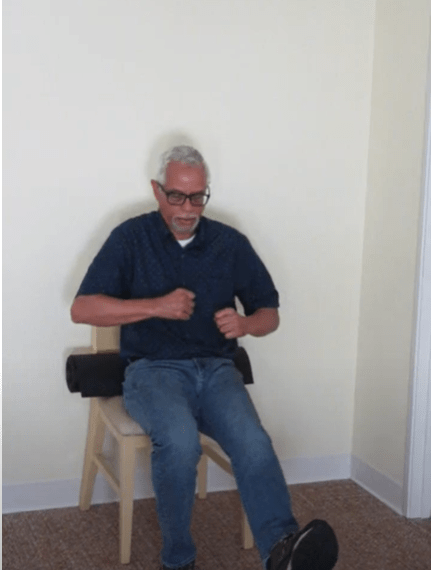
I can’t do the sit and rise cross-legged and wondered if there’s some kind of trick to it. There isn’t and the main problem according to experts are weak glutes. And I’m able to stand on one leg for 30 seconds and I can do 3-4 reps of the single sit to stand exercise on both legs. I also have no problem getting up from a chair from a sitting position without pulling myself up using grab bars or having somebody haul me up with a tow chain.

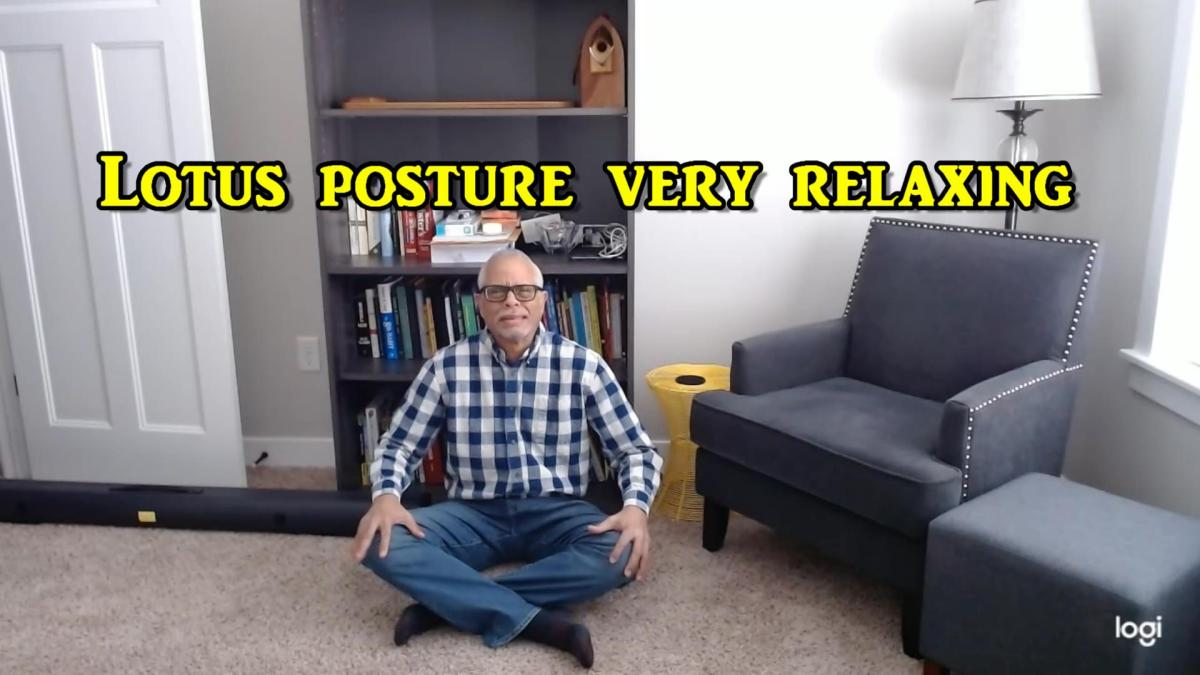
I can’t remember a time when I could even sit cross-legged, although I guess I did when I was in kindergarten. When I took a Mindfulness Based Stress Reduction (MBSR) course, I had to try to sit cross legged to meditate and I was numb in my hips and knees within a couple of minutes. When I got up, I usually fell over, sustained a minor head injury and was rushed to the ER about 1,200 times (“It’s Dr. Amos again; he’s been trying to sit in that lotus position” “OK, put him in the rack.”).

There’s a web page that gives advice on how to fix a problem with not being able to sit in a crossed leg position for longer than a minute. The author provides a short list of exercises without instructions for how to do them:

Child Pose: I imagine this resembles standing pigeon-toed, holding your crotch and dancing around a little about an hour after drinking a half-gallon of Kool-Aid.

Pigeon Pose: This is kind of like the Child Pose only it’s done while pooping on the head of a statue.

Toe Touch: Self-explanatory but apparently you can touch anything with your toe as long as it’s not something recently expelled from a pigeon.

Vajrasana: It involves contacting extraterrestrials who will assist you by inserting various probes in several orifices while you remain very still to allow the tracking device to be correctly installed.

Lung Pose: I’m not sure how this strengthens your glutes but obviously it involves surgery. Check your insurance.

Bridge Pose: This might tone your glutes if you dive off a bridge without a parachute. Make sure your life insurance policy is up-to-date.

That about does it for the sit and rise cross-legged issue. Remember, it’s only when you do it while cross-eyed that all the trouble starts. Glad I could clear that up.

This essay is satirical.

Fart Around for Your Health!

How many farts can old fart fart if an old fart walks to fart? I’m sure you’ve heard that one by now after a recent news article suggested that farting while going for a walk on the street after dinner (or any meal) could make you healthier.

It’s not like the only reason is that you get rid of gas and increase intestinal motility to prevent constipation. Some medical experts say it can help control blood sugar.

But you have to fart walk within an hour of finishing a meal to control the glucose spike. You could call it the fart walk sweet spot. There are social implications, especially if the fart walk becomes a growing trend.

What the heck should you wear on fart walks? Windbreakers.

For some reason, Artificial Intelligence (AI) has a lot to say about flatulence, but I usually pass gas over it to move on to other websites to find what might be more reliable information than you get from AI.

While farting a couple dozen times a day can be normal, if you can’t leave your house because of your Frequency Of Odoriferous Farting Impulse (FOOFI), you might want get it checked out.

Eating a lot of fiber-rich foods can lead to digestive problems that can lead to excessive flatulence. Have you noticed that when you’re in a crowd, people tend to sprint away from you? When you’re in an elevator, do people push any button to get off, even if it’s in the basement, or even between floors?

By the way, did you hear about the guy who farted on an elevator? It was wrong on so many levels.

The food choice thing can be the downside of what often happens when you follow the advice of health care professionals who tell you to avoid carbs and eat more fruits and vegetable. This can happen to guys who hit middle age and start to get that big belly. I’m not sure that the diet change will help much, especially since new studies show that guys can produce more belly fat cells as they get older.

What do you call a large, hairy cryptid who eats too much beef jerky? Bigfart.

Certain diseases can be linked to farting, like irritable bowel syndrome, celiac disease, bowel obstruction, and constipation. Funny, I thought farting was supposed to prevent constipation.

What do you say to someone who has made a commitment to daily fart walks? Conflatulations!

Pooboo: Our New Exercise Bike

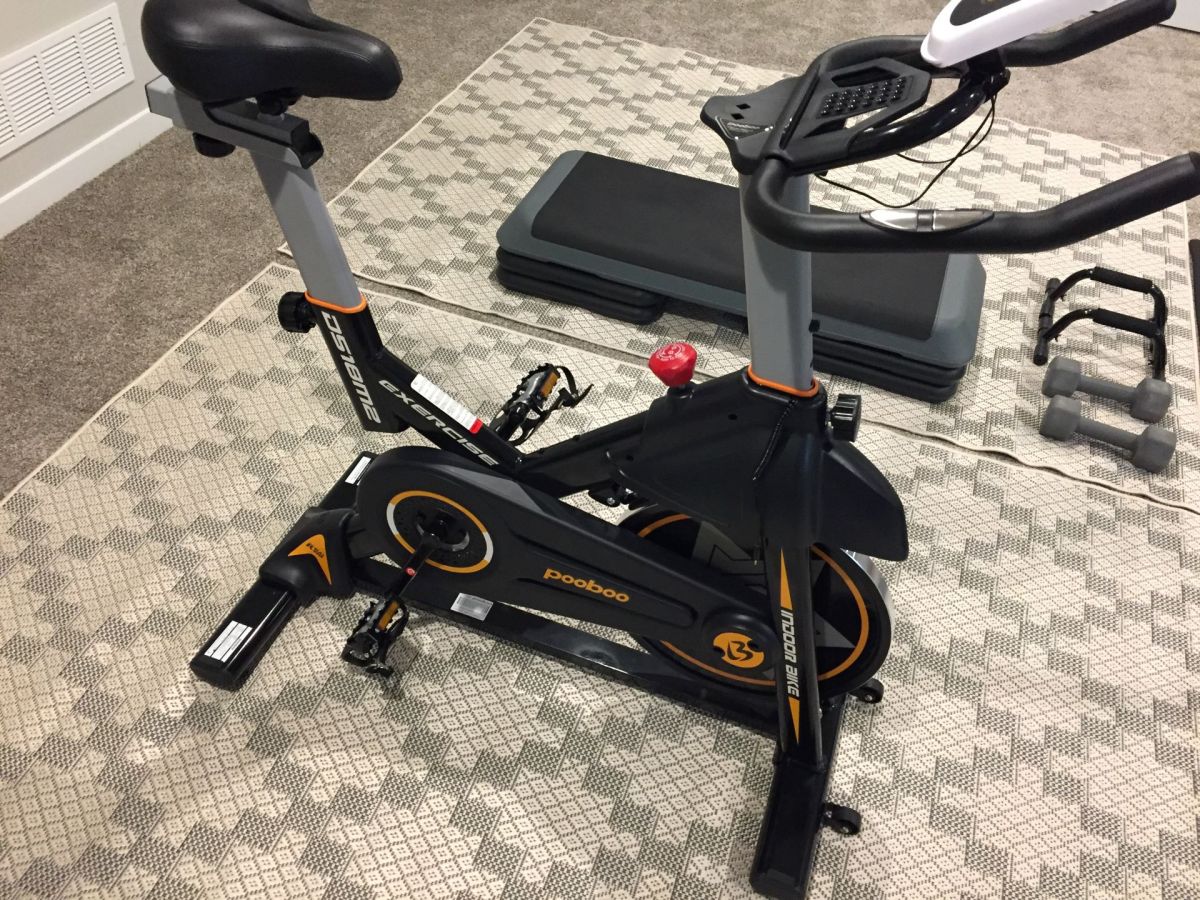
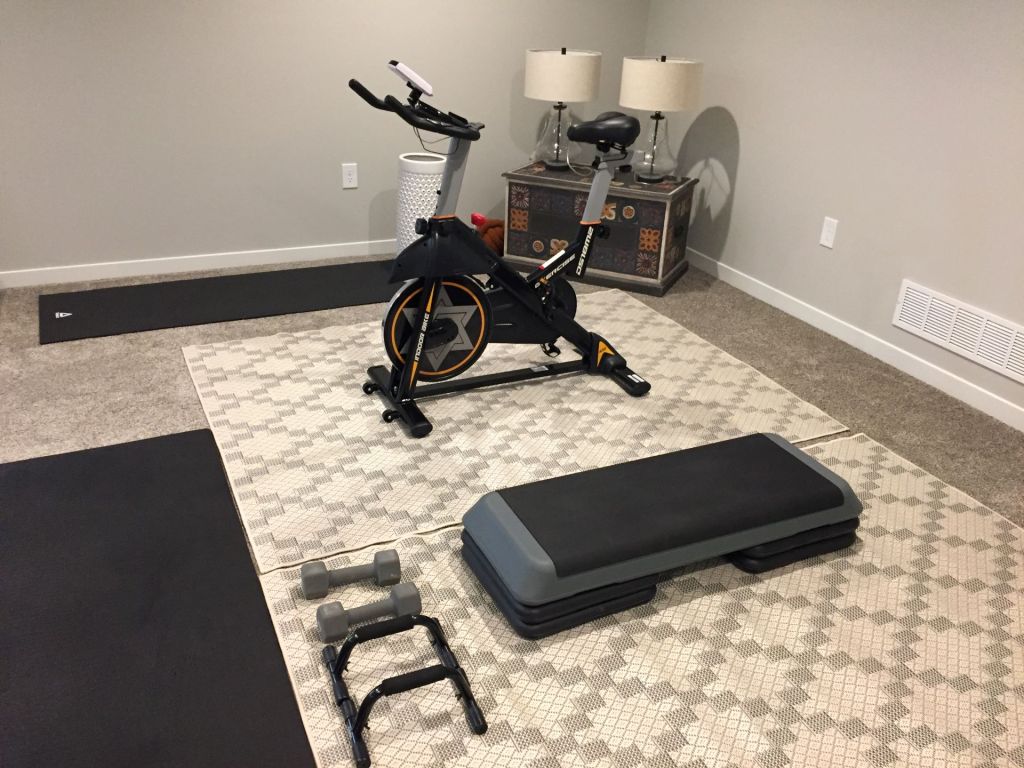
We just got our new Pooboo exercise bike, model D518M. I don’t know why it’s called “Pooboo.” It replaces our old exercise bike, which I’ve called the Anti-Peloton in a previous post.

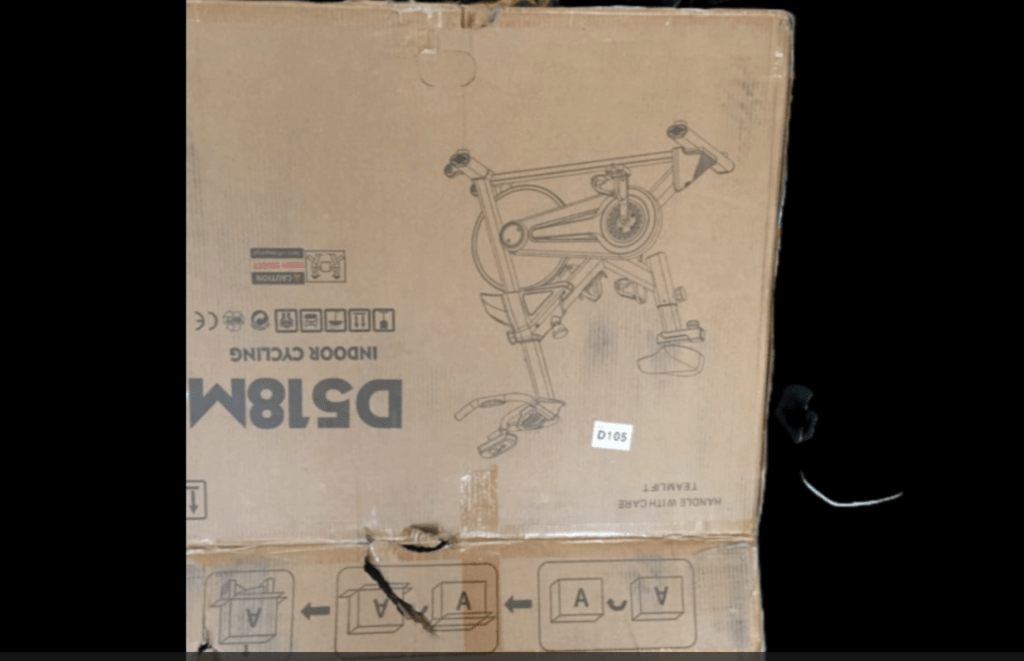
The Pooboo came in a big box, and it’s worthwhile to figure out how to turn it upside down. That way you can easily slip the box up and away from the bike.

The owner’s manual starts with a scary diagram of the parts, which made me think it would be difficult to assemble. Although there are only 5 pages for assembly, it took me 3 hours to put it together. But that’s just me.

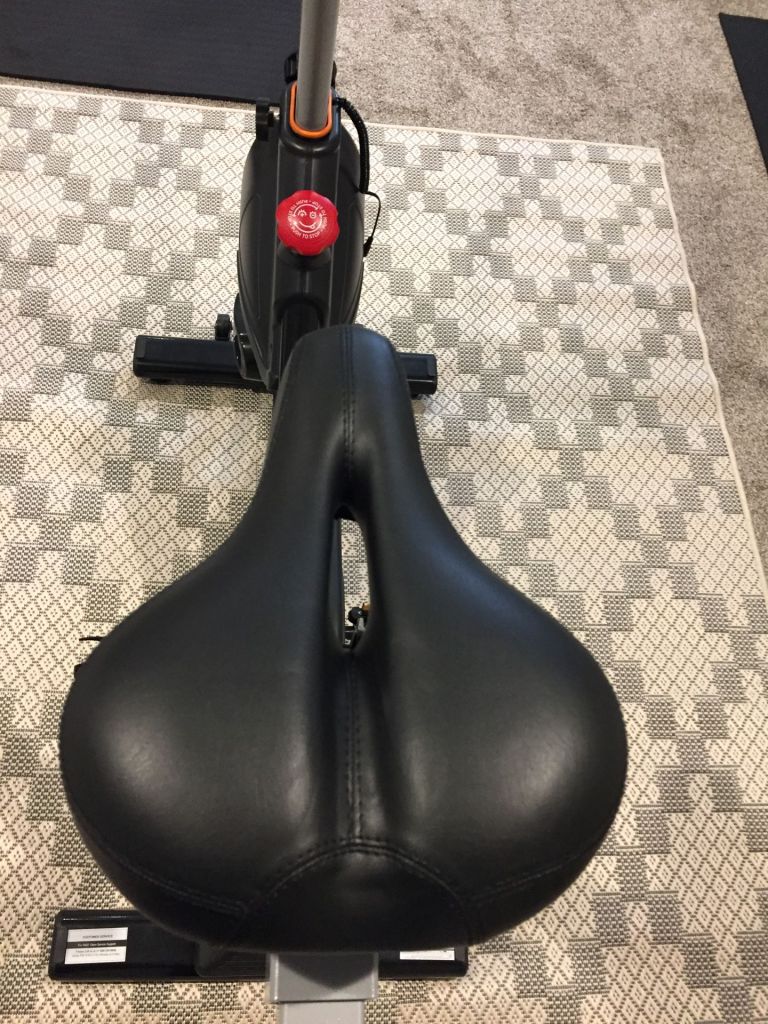
The bike got mostly positive reviews, although there were a fair number of questions about why the seat has a hole in it. Although it’s a fair question, all I can tell you is that none of my important anatomy got stuck.

We could have done without the fancy harnesses on the pedals, but they’re easy to adjust to get them out of the way.

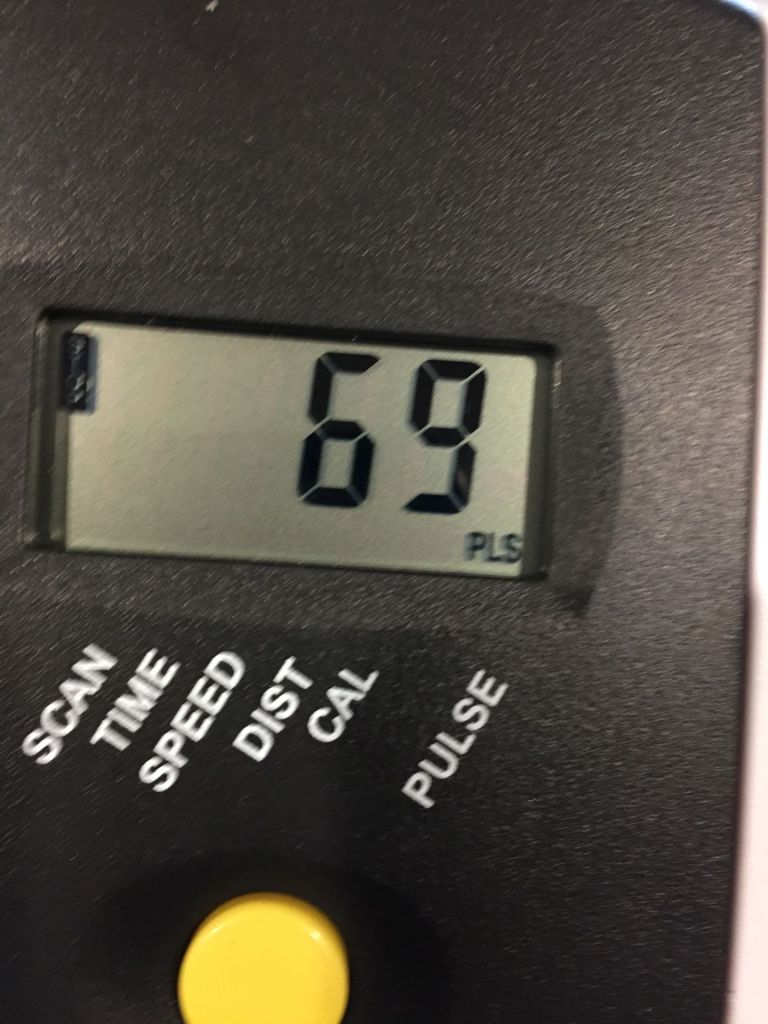
And the pulse monitor (called the “electronic watch”) works fine. There’s also a water bottle (called a “kettle holder” in the manual), but I couldn’t find the screws to install it—nor could I find a good reason to install it because I think it’s good exercise to take the stairs and get a bottle of water from the fridge.

We’re going to give the Pooboo a good workout to decide whether the purchase was a Booboo. And if you find out why it’s named Pooboo, let me hear from you.

Progress on the Single Leg Sit to Stand Exercise

Well, it has been since late July since I first tried the single leg sit to stand exercise. Recall the videos of that effort? I couldn’t really do much except collapse in the chair.

I’m doing better lately but it’s hard to figure why. I haven’t really been practicing that much. You’ll notice that I’m using a throw to give myself a little extra height to make it less arduous.

Single Leg Sit to Stand Redux

Well, we’ve been working on the single leg sit to stand exercise. After I did a little more reading about it, I think it’s really an exercise for runners. We don’t run, but this seems more like a game when you do it together.

It’s a lot easier to do if you find a seat level higher than a regular chair. We found out that our hotel bed is high enough for us to come closer to doing this with one leg raised off the floor.

Our form? It needs a little work.

Single Leg Sit to Stand-In Your Dreams!

We’ve got a new challenge and it’s the single leg sit to stand exercise. It strengthens the glutes, quads, hamstrings, and your resolve to never exercise again.

You remember the one leg stand, which Sena and I can do. The single leg sit to stand is a different thing altogether. You can cheat by using one leg braked against the floor, which helps you lift off on one leg.

The challenge when you try it with just one leg is a deal breaker. One thing you can do is start off sitting from a higher level.

We both noticed that sitting toward the front of the chair works better than sitting near the back. This exercise takes practice and if we get any better at it, we’ll post an update.

Ready for Another Step Counting Recommendation?

Remember my post about the step counter and my workout update pointing out the possibly bogus 10,000 step recommendation?

Well, get ready for another recommendation which lowers the bar somewhat, based on your sedentary index.

There’s a new study which says, essentially:

“Conclusions: Any amount of daily steps above the referent 2200 steps/day was associated with lower mortality and incident CVD risk, for low and high sedentary time. Accruing 9000–10 500 steps/day was associated with the lowest mortality risk independent of sedentary time. For a roughly equivalent number of steps/day, the risk of incident CVD was lower for low sedentary time compared with high sedentary time.”

Reference:

Ahmadi MN, Rezende LFM, Ferrari G, et al. Do the associations of daily steps with mortality and incident cardiovascular disease differ by sedentary time levels? A device-based cohort study. British Journal of Sports Medicine 2024;58:261-268.

I figure I’m in the low sedentary category. This is somewhat reassuring to me because so far, my step counter averages (over 3 days) about 2500 steps during my usual daily exercise periods. Of course, this doesn’t count trips to the bathroom. I guess I can relax now.

Jim Updates His Workout and Adds a Step Counter!

Since we added the step platform, I’ve been wondering how to count steps when I use it because for some reason my smartphone step counter won’t count steps when I try to use it on the platform.

Sena got a handy step counter and it works! It works if you have it in your pocket or wear it on neck with a lanyard.

I usually practice juggling patterns as a warm up to exercising. I’m still working on the shower pattern. Progress is slow.

My exercise routine takes a half hour. Following that I sit for mindfulness meditation for 30 minutes. We are still using our anti-Peloton exercise bike. I do one leg stands for a minute on each leg. I still do floor yoga, body weight squats, planks, and dumbbells. I still count my own steps on the platform: 50 steps alternating right and left leg four times (200 steps). The counter number varies between 170-200 or so.

As a review, a recently published study found that climbing 5 flights of stairs (approximately 50 steps) was associated with a lower risk of ASCVD types independent of disease susceptibility (Song et al, see reference below). There was a threshold effect of stair climbing in the study, meaning the benefit was lost if you went over a certain number of “floors.” Going over 15 or 20 didn’t gain much for subjects. A flight was 10 stair steps.

Step up!

Reference:

Song Z, Wan L, Wang W, Li Y, Zhao Y, Zhuang Z, Dong X, Xiao W, Huang N, Xu M, Clarke R, Qi L, Huang T, Daily stair climbing, disease susceptibility, and risk of atherosclerotic cardiovascular disease: A prospective cohort study, Atherosclerosis (2023)