


I heard the Big Mo Blues Show just (Halloween theme) this last Friday night and was not surprised to see that one of the songs discussed on the Big Mo Pod Show on Saturday was Peetie Wheatstraw’s “Devil’s Son-in-Law.”
When I first heard it, it got me chuckling because I didn’t understand hardly a single word until the last line. It was babbling. I can remember googling the term “Peetie Wheatstraw and unintelligible,” which revealed I’m not the only one who thinks he’s unintelligible. It’s a mondegreen mine field. It’s a good thing the lyrics are available.
I want to hastily point out that he’s not always unintelligible—but William Bunch aka Peetie Wheatstraw is speaking in tongues on that song. For comparison I listened to another song, “Sweet Home Blues” and I could understand just about every word in the lyrics.
That led me down the rabbit hole about the artist in a web search that seemed to have no end. I should probably say Brer Rabbit hole since most of my searches pointed in the direction of a character called Peter Wheatstraw, Petey Wheatstraw, as well as Peetie Wheatstraw who had variations in their identities, most often in the context of African American folklore.
I’m not going to attempt a summary of my web search on Peetie Wheatstraw; there’s too many twists and turns. You can start with the Wikipedia article. But from there, you can get trapped in Brer Rabbit’s little tunnels, which can run in different directions.
William Bunch was a blues artist in the 1930s who adopted the moniker “Peetie Wheatstraw.” While Big Mo says it’s sort of another name for Satan, I found confusing references by writers who claim that the Peter Wheatstraw character comes from Black folklore. There are those who believe that novelist Ralph Ellison wrote about a character in his book “Invisible Man” named Peter Wheatstraw and said it was the only character in the novel that was based on a live person—William Bunch.
Is that true? And did Ellison ever meet Peetie Wheatstraw (William Bunch)? I can’t tell from the web articles.
I was prompted to get my copy of “Invisible Man” out after reading a scholarly online essay mentioning the Peter Wheatstraw character, “Re-visioning Ralph Ellison’s Invisible Man for a Class of Urban Immigrant Youth” by Camille Goodison, CUNY New York City College of Technology. I couldn’t remember Wheatstraw at first, but there he was in Chapter 9.
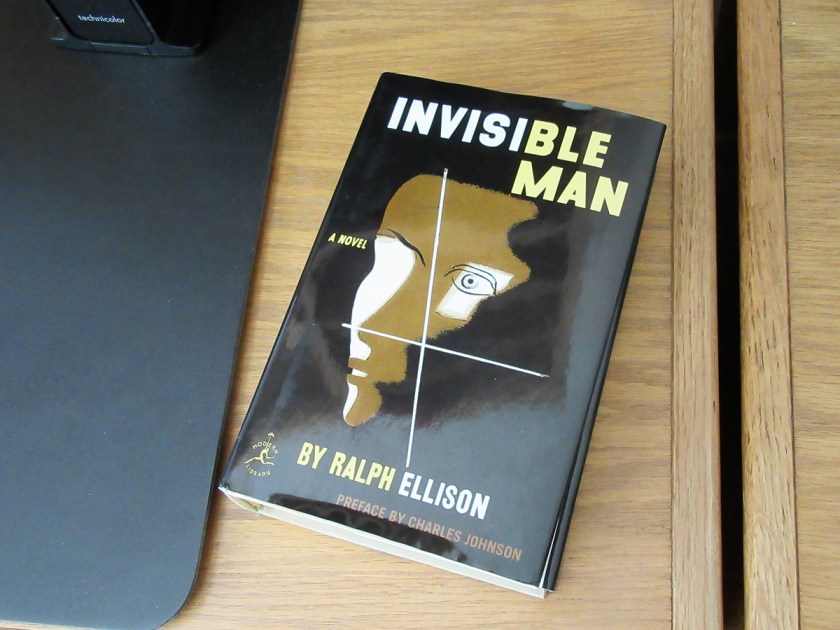
Goodison reveals there is a lot more texture to the Wheatstraw character then just as a moniker adopted by William Bunch. Wheatstraw is probably more complex than the devil. He has many sides to him and could be helpful—but mostly in an indirect way. His guidance is full of riddles and there doesn’t seem to be a solid way to cut through the metaphorical morass. As Emily Dickinson advised, Wheatstraw may tell the truth—but tells it slant.
I still don’t know why he mumbles the song.









 Go Retire Psychiatrist