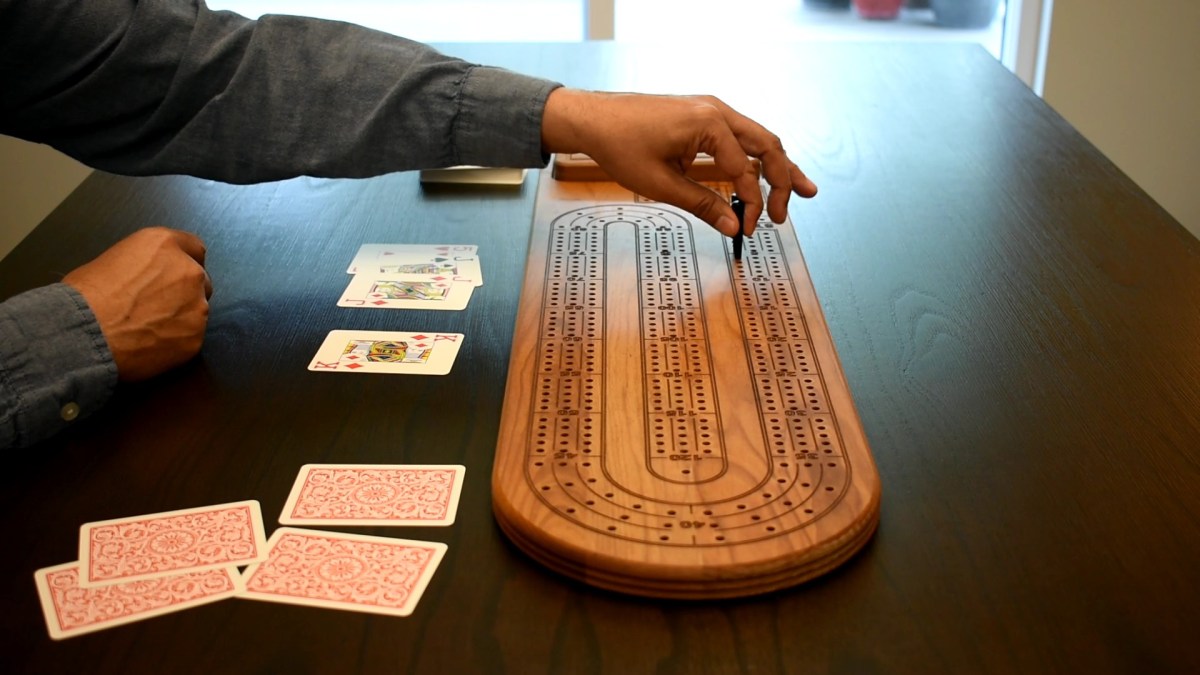
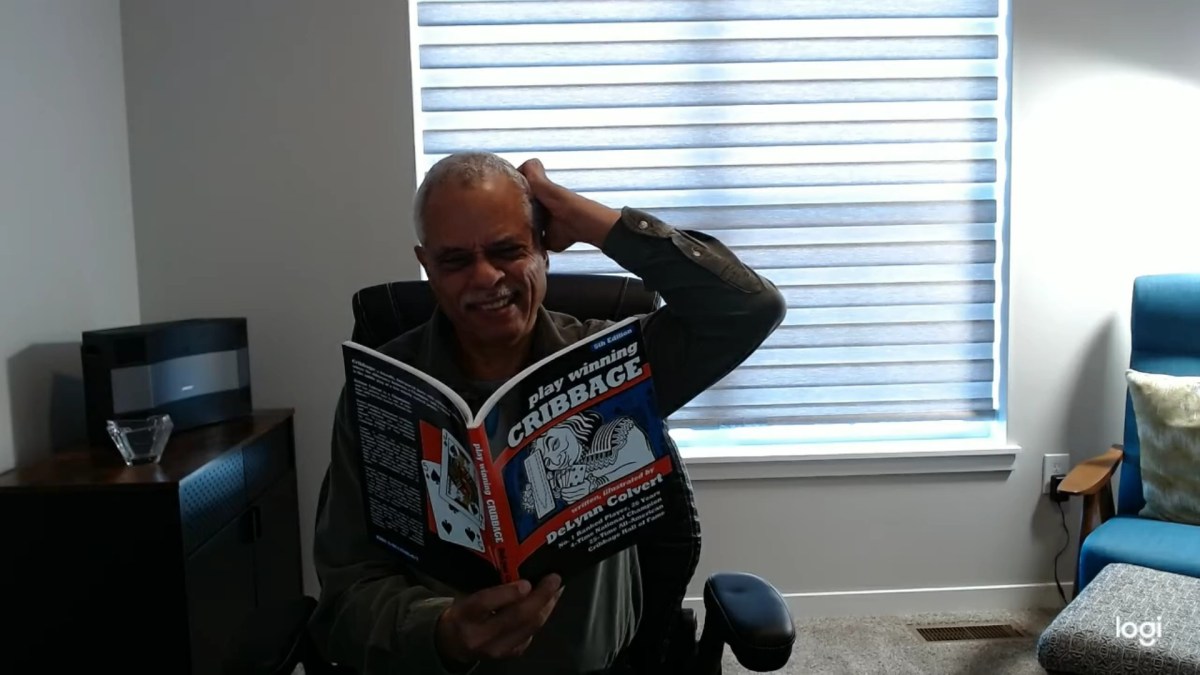
A Few Thoughts on Calvinball Cribbage

OK, so Sena and I have been experimenting with a few cribbage variants in the last few days and I ran into this Calvinball comment on a Reddit cribbage thread about 10-card cribbage. Yes, people play that! I’m afraid to look on the web for 11-card cribbage although Sena asked about it.

Briefly, 10-card cribbage is usually a two-player game. Deal 10 cards each; 2 cards from each player go to the dealer’s crib; each player divides the remaining 8 cards into 2 four card hands, one for pegging and either one or both for the show.

As an aside, the Reddit thread person who started the thread about 10 card cribbage asked if anyone else ever played it. One commenter facetiously replied “Yes, there have been many many posts of Calvinball crib.”

You have to know where that term “Calvinball” comes from. I’m pretty sure it’s from another social media forum which plays a game called Calvinball—which is a whimsical, forever evolving game which has nothing to do with playing cards, is based on the comic Calvin & Hobbes and has no real rules whatsoever. Participants make it up as they go along. So, I think what the commenter might have meant was that 10-card cribbage is yet another of the many proliferating variants (some better than others) of the more well-established game, usually identified as 6-card cribbage.

Anyway, we found out later that there are two sets of rules for 10-card cribbage. The intent is to make the game play faster and yield higher scores.

 Given that context, we played it both ways to 121. In the one set according to AI, you deal each player 10 cards and both throw 2 cards to the dealer’s crib. Each player divides the remaining cards into hands of 4 cards each. You play one hand only during the pegging phase and the other for the show (scoring the hand). It was pretty slow and didn’t yield high scores, partly because we used only the four card hand for the show.

And then there’s a Wikipedia article which says you peg with one hand and score both for the show. We got higher scores all around, the game was faster, and we both enjoyed it much more.

As a reminder follow up to the post about the 9-card and 8-card cribbage games, Sena still likes the 9-card variant but doesn’t care for the 8-card (neither do I) because it seems clunkier, probably because you need to bury cards under the deck. The 9-card variant has an on-line scorer which didn’t work consistently. We seemed to fare pretty well without it for the most part. The suggestion to play to 323 (up, back, and there again on a 121-hole board) seems like overkill. I’m retired but not that retired.

OK, is 8-Card Cribbage a Thing?

We’re still getting used to the 7-card cribbage game and guess what Sena asked me today?

“Is there an 8-card cribbage?”

So, I looked it up on the web and, sure enough, there was a Reddit thread a year ago with only one relevant entry. It was from someone asking if anybody else played 8-card cribbage. That person went on to admit uncertainty if it was a thing or not and wondered if they just made it up. I would vote for the latter. Two commenters didn’t shed any further light on the subject.

The rules for 8 card cribbage are that it’s played like 6-card cribbage except each player is dealt 8 cards, each chooses 4 cards to keep in the hand, tosses 2 cards to the dealer’s crib and the remaining 2 cards get buried at the bottom of the deck.

We gave 8-card cribbage a spin and it felt a little clunky, maybe because of the added motion of burying a couple of cards under the deck along with the extra cards—yet despite that we ended with 4 card hands and played to 121. So, it felt much like regular 6-card cribbage.

We both prefer 7-card cribbage. Even though it doesn’t have a lot of documentation about it, it feels less like word-of-mouth and a little more streamlined. The scores are more challenging to count. Anybody else out there ever heard of 8-card cribbage? Anybody else ever play 7-card cribbage?

15 Minute Push in Cribbage Game Today!

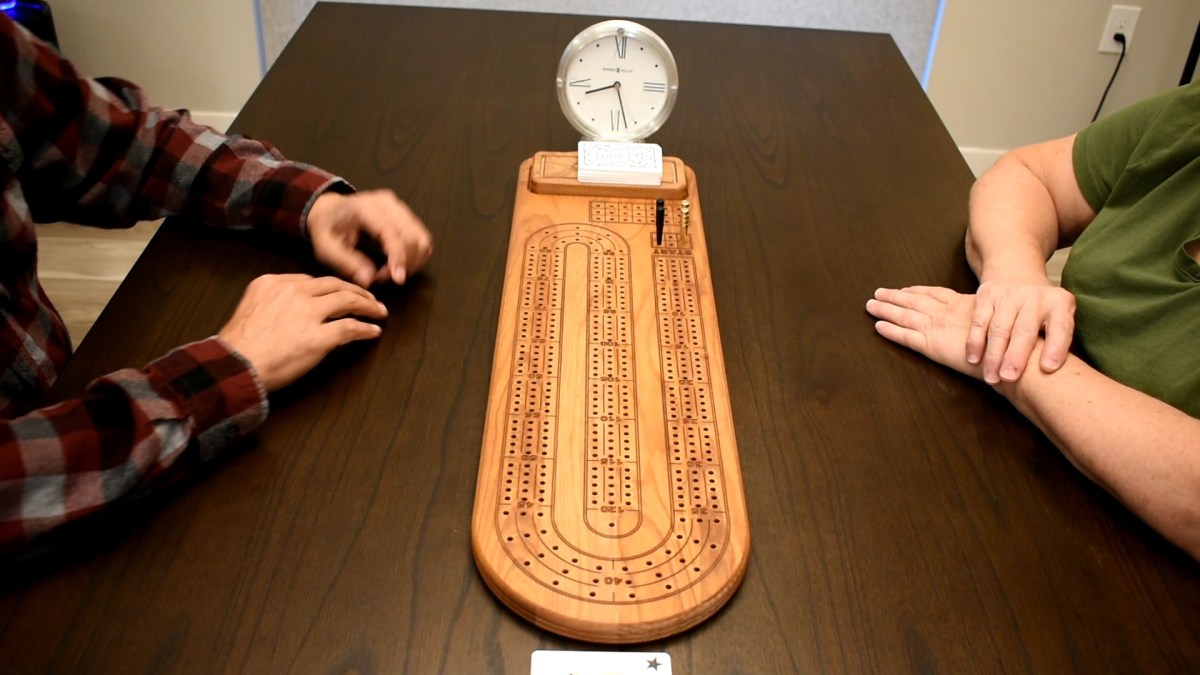
Today we filmed our cribbage game with a goal of completing a game in 15 minutes. We managed to do it, although I played out of turn on the last pegging phase. Sena got skunked today, but that’s rare!

You have to pay attention to the clock on the table in the video, showing we essentially made the 15-minute mark that cribbage tournament rules require for playing a game. We also decided to shuffle a few times every deal so as to try to mix the cards enough.

This is better than the time we usually take to play a typical game, which is generally 20 minutes. It’s hard to shave just 5 minutes off the game. I get pretty jittery trying to stay that focused, but today we did it. We helped each other, which doesn’t happen in tournaments. And there’s not the distraction of hundreds of other players in a giant auditorium all crammed together cheek by jowl and talking at once.

We’re not going to play that fast all the time.

Cribbage Could Help Preserve Your Brain Health!

I just saw an article that working on your cognitive skills might make you less susceptible to dementia. There are some websites that help you, but I think some, like BrainHQ, could cost you money.

On the other hand, there is some evidence that playing card games can help protect your brain. I think cribbage could be one of them, although it’s tough to find specific studies on it.

I checked around and found a few studies about how playing games like solitaire and hearts could help keep you sharp. On the other hand, when I was a young man, I worked on a land survey crew. We played hearts over lunch hour and when it rained. I consistently lost.

But for the last several years, Sena and I have regularly played cribbage, a card game that calls for some math skills, concentration, attentiveness, and strategy.

The one problem I see with picking cribbage as one of your main sources of cognitive stimulation is that many people see it has an old person’s game. They should try playing cribbage with someone who really knows how to play.

Cribbage players tend to be older; many tend to be over 50. The American Cribbage Congress (ACC) is the major organization for cribbage and they hold lots of tournaments, both local (called grass roots clubs) and national. They always welcome new and younger players. In general, you need to be able to play a game in 15 minutes in tournaments.

We have tried to finish a cribbage game in 15 minutes, but we can’t seem to do it in less than 20 minutes. I always know when Sena wants to play. She like to use the automatic card shuffler (I like to shuffle manually) and whenever I hear the card shuffling machine (which is loud enough to hear from all over the house), I know it’s time for a game!

The Ups and Downs of Cribbage Solitaire

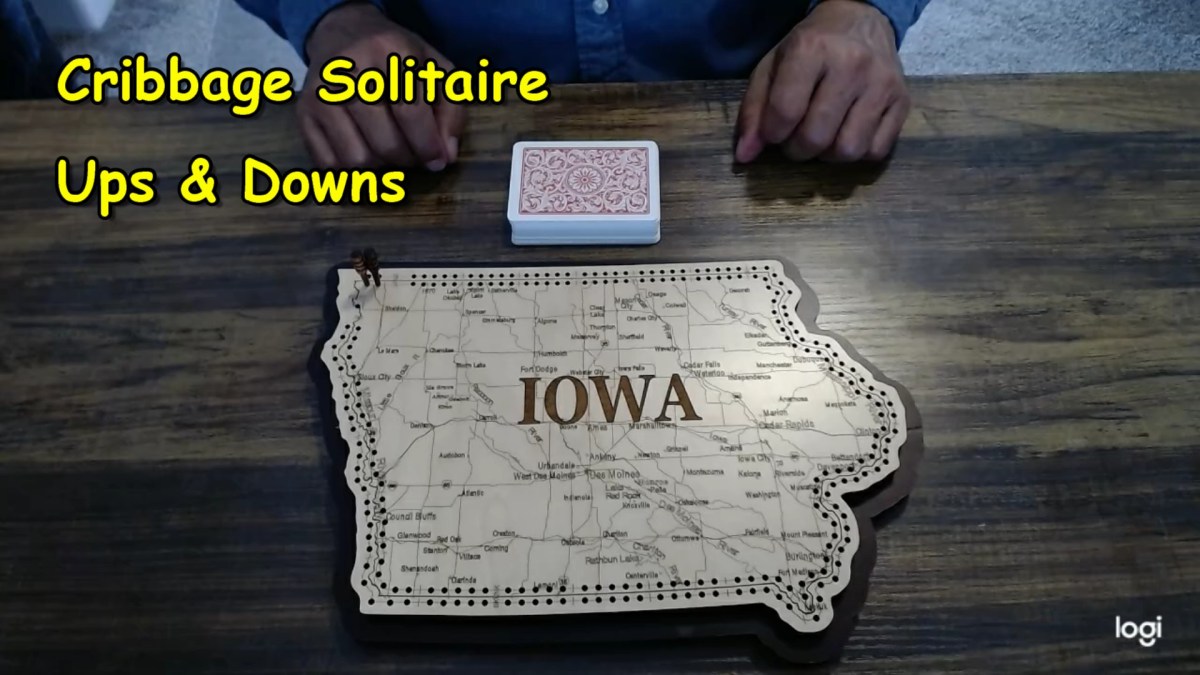
I made this YouTube video of a full six deal game of cribbage solitaire—and missed a 3-card run which would have won the game!

What the heck, I probably made other mistakes too that others will notice.

The rules:

Cribbage solitaire has six hands and six cribs and you peg your six hands.

Start by dealing two cards down to form part of your hand, then one down to form part of the crib. Deal two more to your hand, one more to the crib, and finally two more to your hand (which now has six cards and the crib has two.

Discard two of the six cards to form a four-card crib. Then flip the top card of the deck for the starter card.

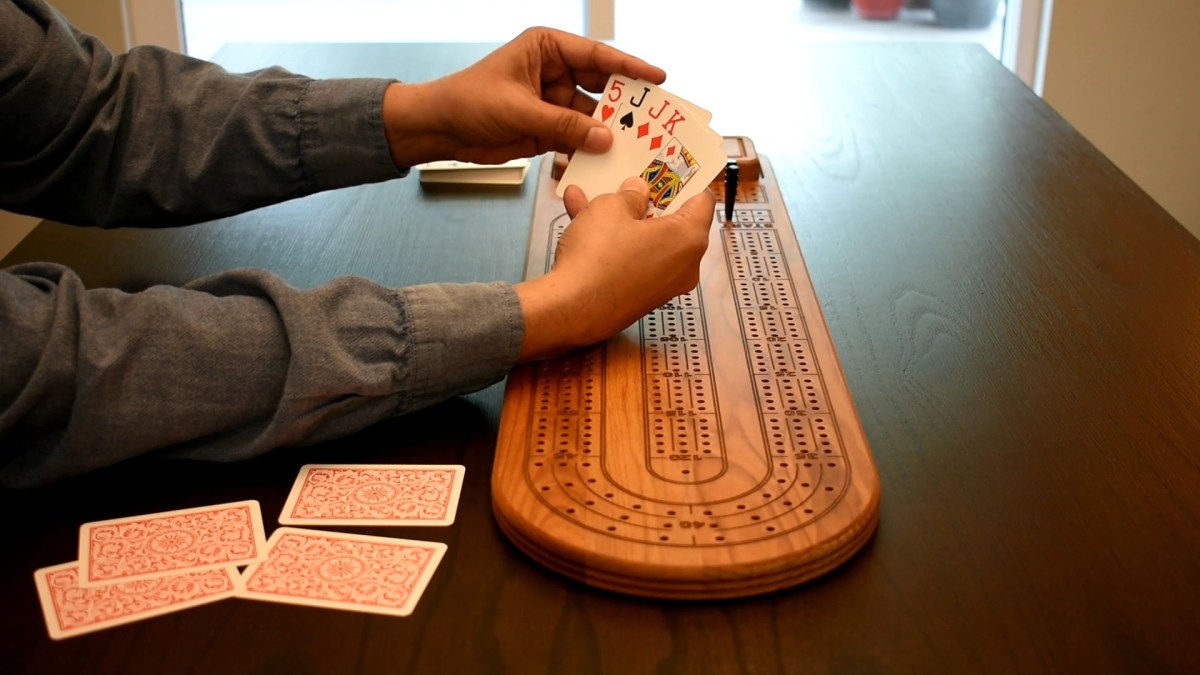
Then peg your hand for maximum count, which would not always be the way you’d peg in a game with an opponent. Colbert’s example paraphrased: if you hold 5-10-10-jack. Play the 5 first, then a 10 for “15-2,” then the other 10 for “25, a pair for two and a go.” The remaining jack also scores a “go” for one point. Your peg is six points total.

After scoring the peg, count your hand, then your crib.

Then start the second deal by using the first-hand starter card, which becomes one of the first six cards for your hand. Again, deal the crib two cards. Repeat this process until you complete the game with the sixth deal (the deck will have four cards after six deals). (Colvert, 2015)

Reference

Colvert, D. (2015). Play Winning Cribbage 5th ed. Missoula, Montana: Starr Studios.

Won Cribbage Solitaire on First Game Today!

I won cribbage solitaire in six deals (meaning I got to 121) on my first try today. Lucky break. I’m beginning to think I should just film these because, at least lately, I seem to be on a winning streak. My first and most recent win was 3 days ago and I think I’ve played once or twice since then.

Rules summarized and demo video below:

Cribbage solitaire has six hands and six cribs and you peg your six hands.

Start by dealing two cards down to form part of your hand, then one down to form part of the crib. Deal two more to your hand, one more to the crib, and finally two more to your hand (which now has six cards and the crib has two.

Discard two of the six cards to form a four-card crib. Then flip the top card of the deck for the starter card.

Then peg your hand for maximum count, which would not always be the way you’d peg in a game with an opponent. Colbert’s example paraphrased: if you hold 5-10-10-jack. Play the 5 first, then a 10 for “15-2,” then the other 10 for “25, a pair for two and a go.” The remaining jack also scores a “go” for one point. Your peg is six points total.

After scoring the peg, count your hand, then your crib.

Then start the second deal by using the first-hand starter card, which becomes one of the first six cards for your hand. Again, deal the crib two cards. Repeat this process until you complete the game with the sixth deal (the deck will have four cards after six deals). (Colvert, 2015)

Reference

Colvert, D. (2015). Play Winning Cribbage 5th ed. Missoula, Montana: Starr Studios.

First Cribbage Solitaire Win Today!

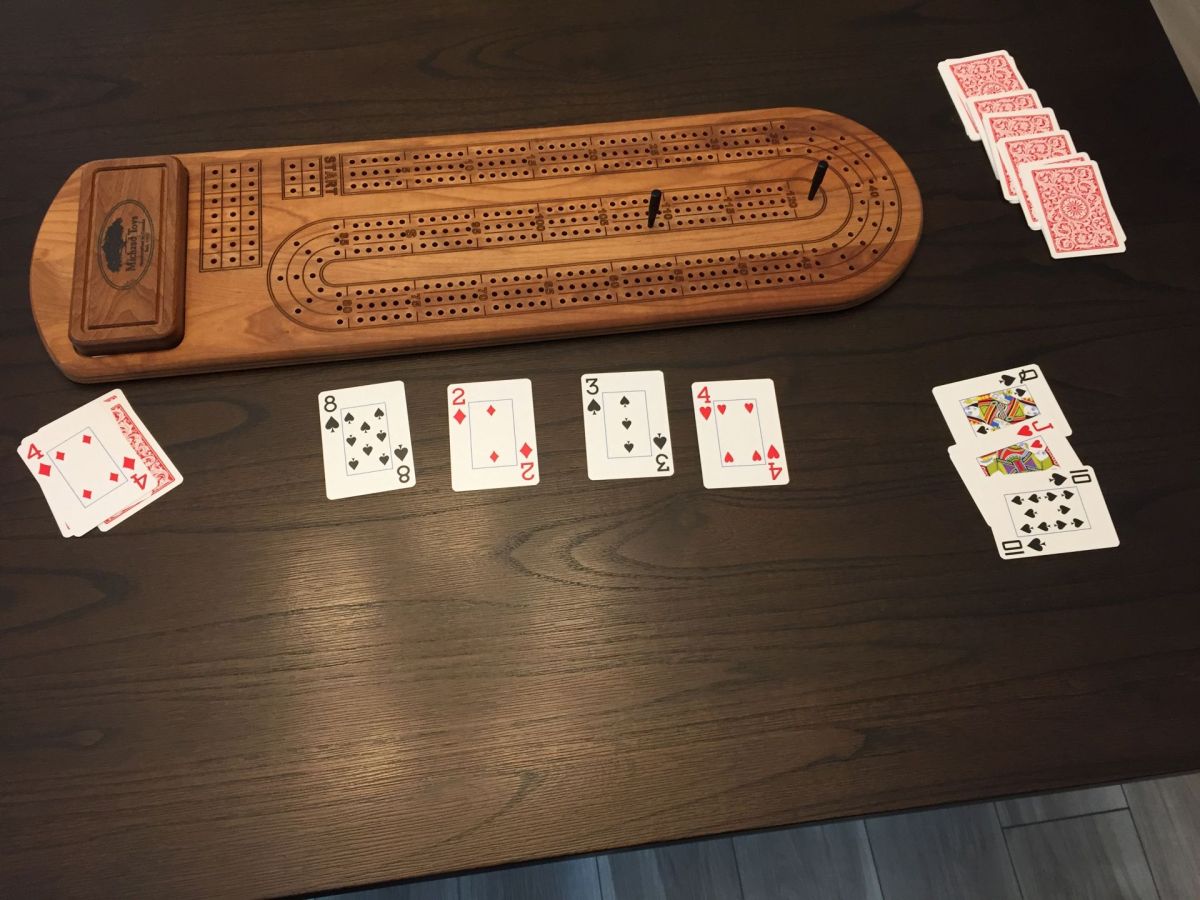
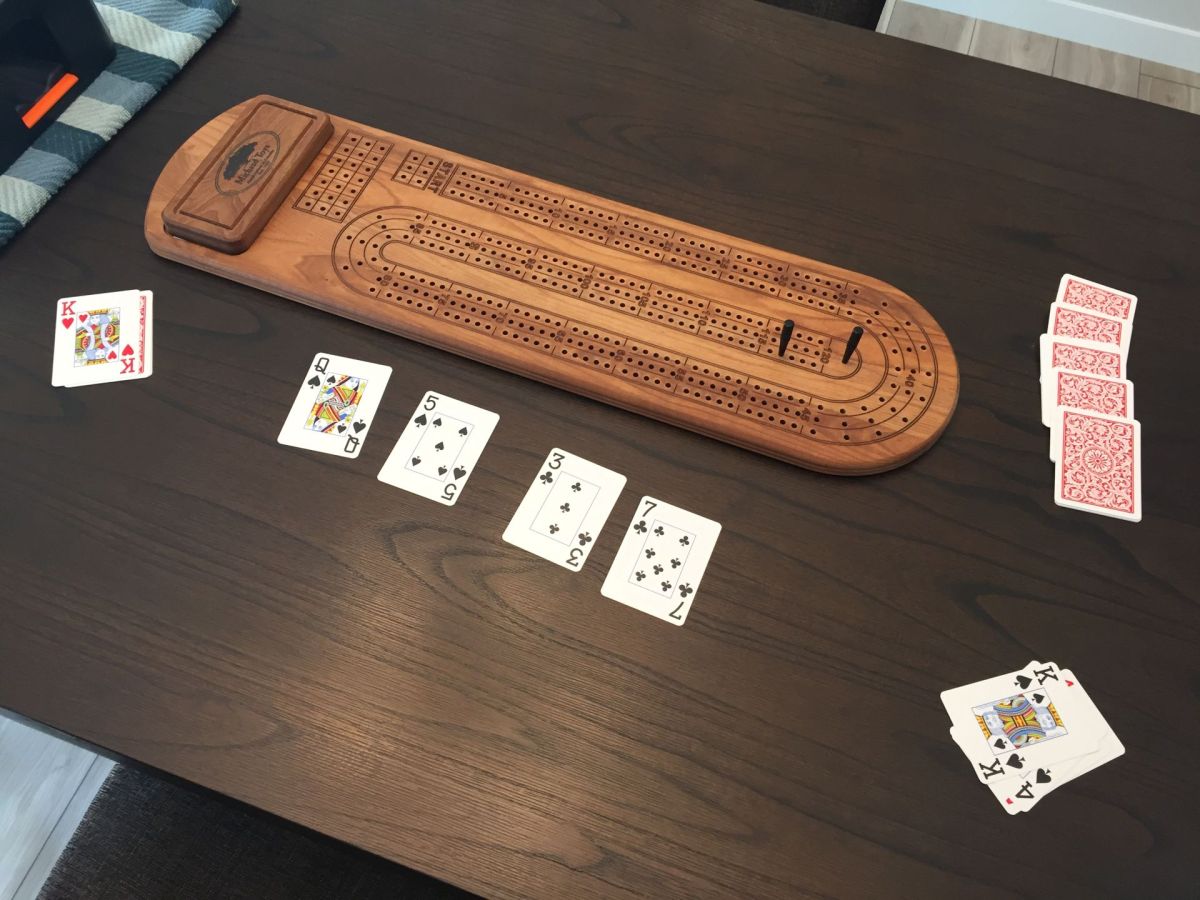
I got lucky and won my first game of cribbage solitaire today! I got to 121 in six deals. I probably should have videotaped the game, but since you never know if you’re going to win, you’d probably waste a lot of time filming. Sena watched me do it and I wonder when she’s going to give it a try. What you see in the picture are the 4 crib cards spaced out, the deck with starter card, the hand cards face up in a pile on the right, and the 5 other deals in piles face down on the left.

According to DeLynn Colvert in his book “Play Winning Cribbage” 5th Edition, published in 2015 in the appendix, “This game is simple, fast, and difficult to win…but it can be done.” You have to average 20 points per deal to win the 121-point game. See my YouTube video below for a quick demo.

Rules summarized:

Cribbage solitaire has six hands and six cribs and you peg your six hands.

Start by dealing two cards down to form part of your hand, then one down to form part of the crib. Deal two more to your hand, one more to the crib, and finally two more to your hand (which now has six cards and the crib has two.

Discard two of the six cards to form a four-card crib. Then flip the top card of the deck for the starter card.

Then peg your hand for maximum count, which would not always be the way you’d peg in a game with an opponent. Colbert’s example paraphrased: if you hold 5-10-10-jack. Play the 5 first, then a 10 for “15-2,” then the other 10 for “25, a pair for two and a go.” The remaining jack also scores a “go” for one point. Your peg is six points total.

After scoring the peg, count your hand, then your crib.

Then start the second deal by using the first-hand starter card, which becomes one of the first six cards for your hand. Again, deal the crib two cards. Repeat this process until you complete the game with the sixth deal (the deck will have four cards after six deals). (Colvert, 2015).

Reference

Colvert, D. (2015). Play Winning Cribbage 5th ed. Missoula, Montana: Starr Studios.

Cribbage Solitaire Inventor Lost in the Mists of Time?

I just played 3 games of cribbage solitaire that I posted about in the last couple of days. I got to 4th street in 2 of them and got to 115 in one. I think getting to 121 is at least possible. You have 6 deals to get there and you need over 20 points per deal to make it. Each game takes me about 10 minutes.

I haven’t seen any rules for this cribbage solitaire variation about looking at your cards or not as you deal them. I deal the hand cards face down as well as the first two crib cards face down. I look at the six cards in my hand from which I select the other two cards to throw to the crib. I only look at all four crib cards when I’m ready to count the crib points. I don’t know if anybody else does it differently. See my YouTube video demo for how I interpret the game play.

The only rules I’ve seen for this cribbage solitaire version are in DeLynn Colvert’s book (“Play Winning Cribbage, 5th edition, published in 2015) or were cited by someone on the boardgamegeekdotcom thread which dates to 2008 and they are virtually identical. Neither source identifies the inventor of the rules. I wonder if they would be in the original edition of Colvert’s book, which was first published in 1980. You can find a 1993 edition on eBay going for $150. There’s a 1985 edition advertised for $113. I can’t find anything on the Internet Archive about it.

It’s probably lost in the mists of time.

Learning How to Play Cribbage Solitaire

I thought I would try to learn how to play cribbage solitaire as described by DeLynn Colvert in his book Play Winning Cribbage, 5th edition published in June 2015.

There are several versions of the variation of the game often called cribbage solitaire, but I think this one teaches the most about the important phases of the game of cribbage.

I don’t know who originally created this variation of cribbage solitaire, but I found the same description on the website boardgamegeekdotcom.

If anyone else knows more about this variation, please let me know!

Addendum: The best I could do today was 111.

Cribbage Solitaire According to DeLynn Colvert or Whoever

I was leafing through Delynn Colvert’s book “Play Winning Cribbage” and found a section on how to play cribbage solitaire. I’ve never considered it, but I tried it tonight just for laughs. It’s easier to understand than his 26 Theory, which I never got. I looked for the rules as Colvert described them and was lucky to find them in the forum on the boardgamegeek website.

Just read Jesse Hickle’s description. If you look at stuff on the web about cribbage solitaire too long, you’ll find dozens of variations. I’d stick with Colvert’s version (or Hickle’s version, whatever). I don’t know where the rules originated.

Colvert says it’s not impossible to beat—but I didn’t win tonight after a few tries. It’s good practice.