I Got a 28 Hand in Cribbage Today!

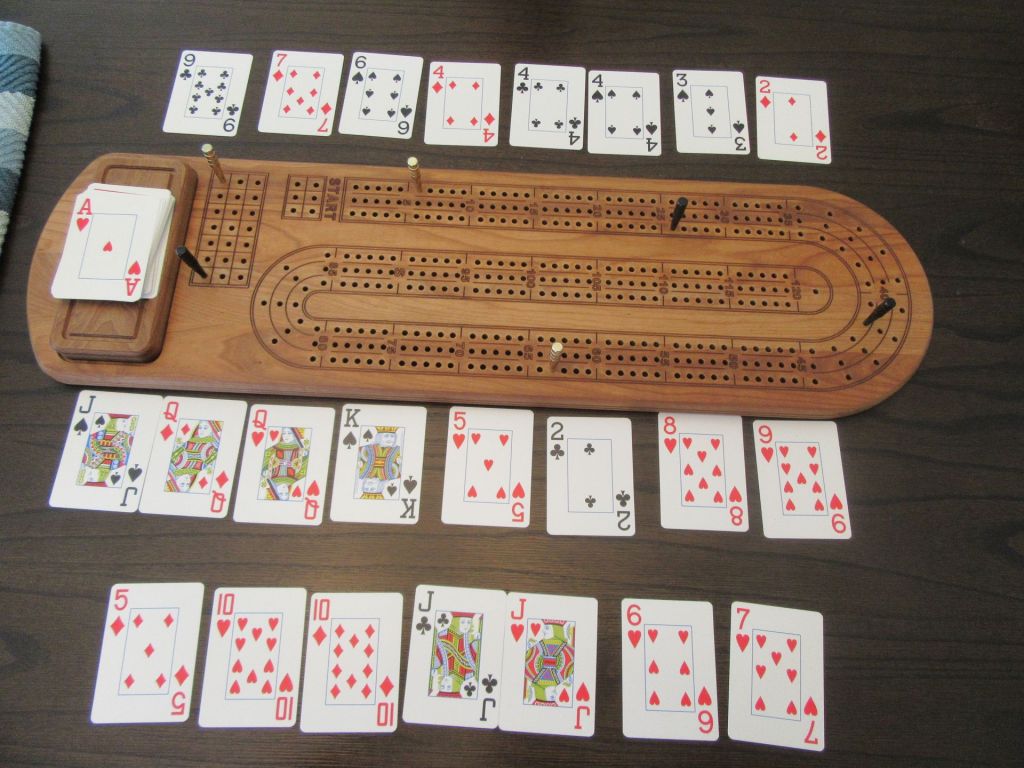
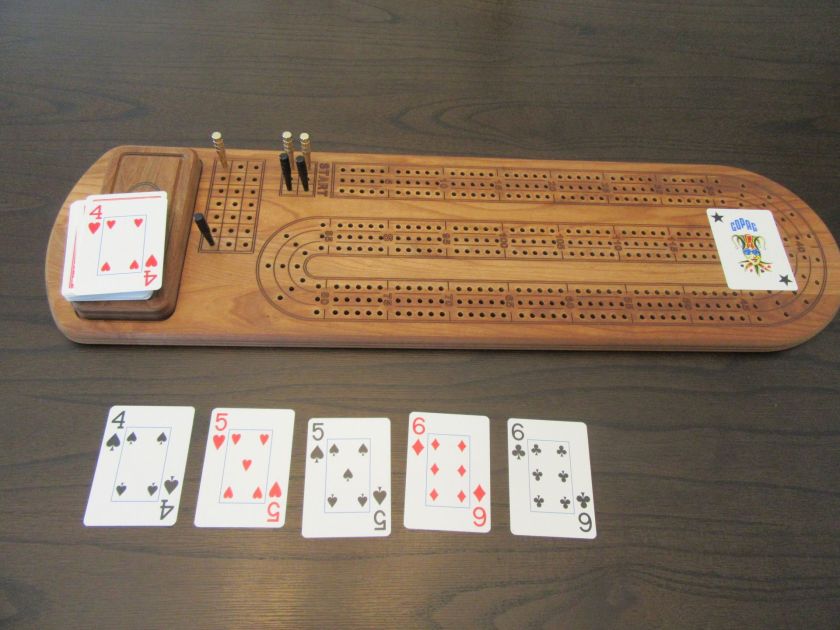
I got a 28 hand in Cribbage Pro scrimmage today against Brutal (the most difficult level). I also won the game. The odds of getting a 28 hand in cribbage is about 1 in 15,028. It’s the second highest hand score in cribbage. The highest score is a 29 hand and the odds of getting that is 1 in 216,580. There are different ways to calculate the odds which yield different results which involve crazy difficult statistics that I can’t explain, but you can find the details here.

Upcoming CDC ACIP September Meeting on MMVR & Covid-19 Vaccines

The upcoming meeting on the MMVR and Covid-19 vaccines will include voting on the MMVR and Covid-19 vaccines. Usually, the committee posts the actual voting questions, which so far I have not seen on the meeting agenda. I’ll be looking for them in the next couple of days.

Here is the link to the Center for Infectious Disease and Policy (CIDRAP) at the University of Minnesota article which bears directly on the meeting topics.

CDC ACIP Meeting Agenda Posted

I just noticed that the CDC ACIP draft agenda for upcoming meeting on September 18th and 19th has been posted. There will be votes on the MMRV, Hepatitis B, and Covid-19 vaccines.

Svengoolie Show Movie: “The Bad Seed”

I watched the Svengoolie show movie, “The Baddest Seed on the Planet” yesterday on the Internet Archive because I wanted to see the Iowa Hawkeye vs UMass football game last night. Hey, the Iowa Hawkeyes and the Iowa State Cyclones both won yesterday!

Actually, I thought “The Bad Seed” was a pretty good movie, just to let the shrilling chicken out of the bag. It’s a good break from the rubber mask, stop motion animation, shlocky howlers. It does run long, a little over 2 hours and at times there’s a little too much lofty psychoanalytic dialogue. At times it seemed like a play.

It’s a 1956 Warner Bros. Pictures production. There was a Perry Mason regular on it; William Hopper played Col. Kenneth Penmark (father of Rhoda). Henry Jones played Leroy, the really creepy sociopath handyman who had a lot in common with Rhoda (played by Patty McCormack), the psychopathic 8-year-old daughter of Kenneth and Christine Penmark (played by Nancy Penmark). Eileen Heckart played the heck out of her role as the tipsy Hortense Daigle, mother of her unfortunate murdered child Claude—who is never seen.

The main underlying theme is the question of whether psychopaths are born bad or victims of bad environments.

How this gets treated in the film is fascinating. When Rhoda saws through a fawn with a dull straight razor while singing Elvis Presley’s “Don’t Be Cruel,” it really doesn’t leave much to the imagination.

Things start to go bad early when Claude wins a penmanship award instead of Rhoda who is thinking, “OK bud, over your dead body!” I’ve got to tell you; I got chills just looking at her after a while.

The handyman Leroy pegs Rhoda for a bad seed right away, mainly based on the idea that bad seeds think alike. He keeps telling her he’s got her number until he has a close encounter of the excelsior kind, and “excelsior” means ever upward only in the sense that burning wood shavings used for packing fragile items tend to be carried by the wind.

Just to gloss over the scientific psychiatric literature on psychopathy, the most recent paper I could find on the web suggests that structural and functional brain abnormalities of psychopathic persons contribute substantially to the observed behavioral patterns of callousness and poor adaptability to prosocial motivations beginning early in life and which tend to be resistant to change as one gets older. The younger the person, the more plastic the antisocial traits may be to change via behavioral modification, hopefully leading to greater empathy. (Anderson NE, Kiehl KA. Psychopathy: developmental perspectives and their implications for treatment. Restor Neurol Neurosci. 2014;32(1):103-17. doi: 10.3233/RNN-139001. PMID: 23542910; PMCID: PMC4321752.)

By far, Hortense Daigle has the most awkwardly comical role as she combines grief, inebriation and eerie suspicion of Rhoda in her own son’s death. Every time she shows up to the Penmark house, she’s roaring, dramatically staggering drunk. She helps herself to the booze in the house, even making it clear which bourbon she prefers (Never mind my grief! I said I wanted that martini in a dirty glass!).

Other than the movie being a bit too long, I thought it was very good. I could have done without the theater like credits with all the actors coming out to take a bow (or curtsy in Rhoda’s case), a slapstick bit between Christine and Rhoda, and the warning to the audience not to reveal the ending to anyone.

Shrilling Chicken Rating 4/5

Big Mo Pod Show: “Planting Seeds”

The Big Mo Pod Show title is about planting seeds in a metaphorical way. One of the seeds Big Mo sows is his comedy bit on MayRee’s hand-battered catfish. It’s just one of his hilarious faux sponsor routines that he frequently tweaks, and the subtle changes are difficult to catch if you don’t listen to his show every Friday night. It evolves, kind of like a shaggy dog story joke. My lame imitation from my crippled memory is below:

You see, MayRee’s hand-battered catfish is better because it’s battered, cooked to perfection with manic delight, packed with nitrates at her shack which you can find at the corner of Highway 6 and Snowflake Drive, and if you tip her and give her a wink, she’ll set you up with a mason jar of her famous kickin’ mule’ not sure if it’s all the way legal, but it comes in 3 flavors, Classic Clear, Golden Grabass, and just right for the holidays, Pumpkin Spice, that’s Mayree’s hand-battered catfish; it’s better because it’s battered.

You get the idea. I’m still trying to sell him on my design for a MayRee’s hand-battered catfish tee shirt. Don’t know why he’s not biting that hook. The catfish could be a fire truck red color, just sayin’.

So, the pod show title is “Planting Seeds” and that’s related to the idea of fundamental, historically important basic elements of blues music, specifically in the case of Jessie Mae Hemphill’s song “Jump, Baby, Jump.” Both Big Mo and Producer Noah agree that this example of North Mississippi hill country folk trance or hypnotic griot music (or grio, pronounced Gree-oh; a kind of West African traditional oral folklorist) which serves as the seed or basis for building on other layers (instrumental or otherwise). That’s just what I picked up from the internet.

Big Mo distinguishes this from “production” style music you hear a lot of nowadays on the radio and I get his disparaging tone about it.

Anyway, that’s the rich music history part of the pod show, which you can get by listening to KCCK on your radio dial at 88.3 or click on the Listen Now to hear by internet.

Now, what is also great about the show is Big Mo’s own historical perspective on music. That’s what you get by growing older. And that’s why my favorite song from last night from the Big Mo Blues Show was Curtis Salgado’s “The Longer That I Live.” I can identify with the lyrics.

Urgent Svengoolie Movie Update: “The Bad Seed”

I think I just found out why we have to tune in to the upcoming Svengoolie movie “The Bad Seed” an hour early this Saturday. It comes on at 6:00 p.m. because it’s two hours long!

There’s another crisis. The Iowa Hawkeye vs UMass college football game comes on at 6:40 p.m. tomorrow evening.

That means I’d have to choose between watching “The Bad Seed” or watching the football game. In order to see both I’d have to watch the movie on the Internet Archive.

That means I’d miss Svengoolie’s corny jokes. Hmmmm.

Swallowtails Can Be Tipped or Tipless!

Sena pointed out a swallowtail butterfly fluttering around the lantana in our backyard garden yesterday. The lantana is great for attracting butterflies and hummingbirds because it has bright flowers and sweet nectar.

At first, I didn’t think it was unusual but I got video anyway. When I looked at it, I eventually noticed that the butterfly (which admittedly might be a different species) was lacking either one or both of the tips on its hindwings. For comparison, I checked a video clip of a swallowtail Sena shot when we were out on the Terry Trueblood walking trail a couple of weeks ago. The videos are obviously not the same quality. I shot the one yesterday through a window.

Sure enough, that swallowtail on the Terry Trueblood trail had impressive hindwing tips. I wondered what was so different about the tips on the one we saw yesterday. Not all swallowtails have tips and maybe the tips are smaller or only faintly visible on some species.

It turns out that the wing tips are probably a piece of butterfly anatomy that can be easily sacrificed when bird predators try to eat the butterflies. This is similar to some lizards whose tails can be sacrificed to predators for the same reason. Maybe the wing tips distract birds from attacking the central body parts. Anyway, I found an article about it on the web.

The article cites a study published in the May 2022 issue of the Proceedings of the Royal Society B that seemed to back up the idea that the tips might be an escape tactic. In the article, you can even see a video of bird preferentially targeting the sacrificial tips.

In our video, you can just barely make out either a transparent vestige of one of the tips or maybe there are two barely visible tips on the swallowtail in our garden. I saw a Facebook entry photo showing that females tend to be larger and have more prominent bluish coloring and males tend to be smaller and have more yellowish markings (interestingly, the male in that photo seems to be missing the right hindwing tip). Maybe we’re seeing a female in the video from 2 weeks ago and a male in yesterday’s video, only the male in that picture seems to have obvious hindwing tips, though they are smaller. I don’t know if anyone could help us sort this out.

University of Iowa Physician Wins Lasker Award!

How about some good news? This just in, University of Iowa Physician-Scientist, Dr. Michael Welsh, wins the 2025 Lasker Award for his research on cystic fibrosis.

His work and the work of two other researchers with whom he’ll share the award set the stage for the development of new drugs which saves the lives of those who suffer from cystic fibrosis.

I learned from the article that the cystic fibrosis gene was discovered in 1989; I was a second-year medical student then. Since then, the development of new treatments has meant that many people who died in early adulthood now can live into their 80s.

Congratulations to Dr. Welsh and colleagues!

Update to Forevergreen Monarch Tag and Release Event!

We just found out there’s an update to the Forevergreen Monarch tag and release event on September 14, 2025; see announcement below. It still may be a good idea to call ahead and confirm all details of the event.

Connecting the Dots between Kintsugi and the Blues

Since I wrote the blog about the Big Mo Pod Show, Hickory Smoked Blues, I’ve been trying to remember how I connected the dots between Kintsugi and blues music, which is said to be healing even though often it sounds like it could make you hurt.

I had a devil of a time tracking this down. The image of Kintsugi or Kintsukuroi, which is the Japanese art of repairing broken pottery by mending the broken parts a mixture which contains powered gold.

The main idea is that repairing something broken using something like gold (read blues music here) can be healing.

You could also apply this to some other process, including psychotherapy.

The writing of a couple of people helped me make the connection. One of them is now a child psychiatrist named Jenna, who used to write the blog The Good Enough Psychiatrist, a link for which is still on my blog menu. Her post entitled “Amae” (a Japanese concept meaning cherished) caught my attention. Amae has both positive and negative aspects. In a way blues music is similar. It can be nourishing as long as it isn’t too focused on trauma.

About a month later, I found an essay by another child psychiatrist, Dr. Ashmita Banerjee, MD, entitled “The Power of Reflection and Self-Awareness,” actually mentions kintsukuroi at the end of the essay following her poem, called “Not A Poem.”

So, I think what I was getting at was pain and suffering can be reduced in healing ways, which can include art forms, like music. Some blues music can be repetitious, negative and even demoralizing when the emphasis is only on the pain. The other side of the blues can be uplifting, especially when there is the element of cherishing the tender, the wise, and the healing notes—the golden glue.

Both essays were the inspiration for my post, “Food for Thought.” The image of the kintsugi bowl is on both that post and “Big Mo Pod Show: Hickory Smoked Blues.” I still think the Robert Cray Band version of “I’ll Always Remember You” is a reminder of Kintsugi, at least for me.