We noticed the wild turkeys hung back close to edge of the woods this morning. They didn’t move out across the open land or trot across our back yard like they usually do. It’s easy to imagine that they might be more wary because they know it’s Thanksgiving Day.
Usually a dozen or so get out foraging in the early morning. I’m not sure if a dozen counts as a rafter, which is another name for a flock of them.
I’ve never heard them gobble, but you can hear them from as far away as a mile, or so I’ve read. I think the turkeys in our area might not be ordinary turkeys.
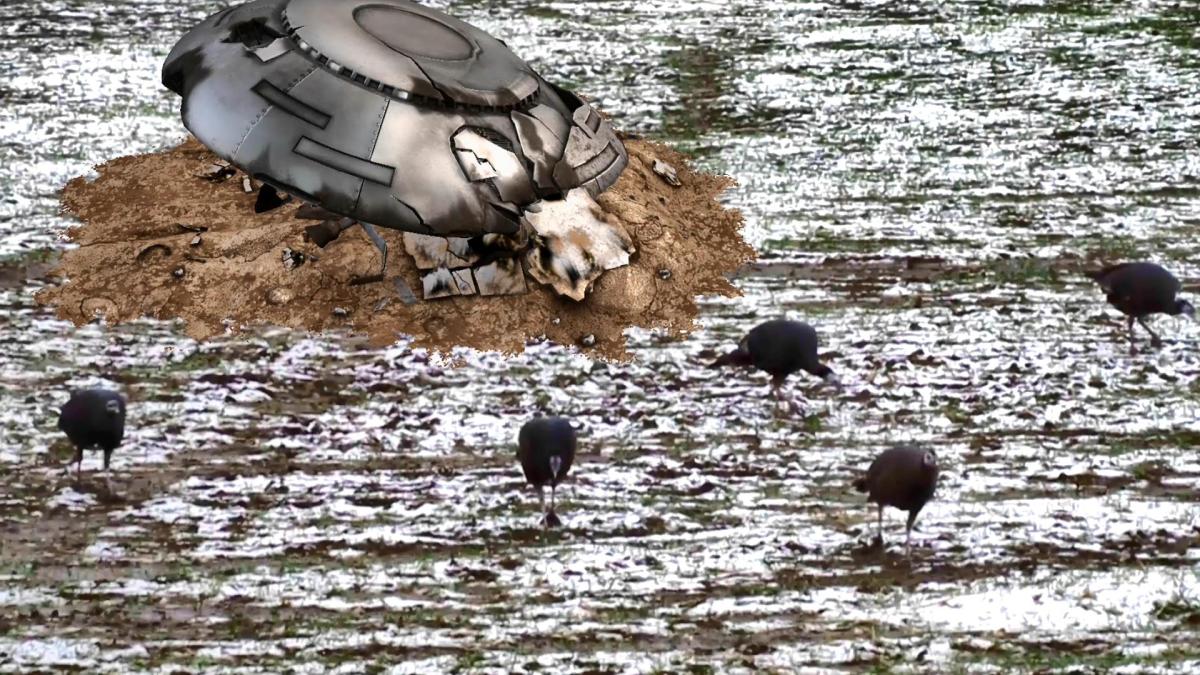
Maybe they’re more of a landing party rather than a rafter—of alien, zombie turkeys from the Pleiades. I would suspect that Pleiadian Zombie Turkeys (PZTs) can fly space craft about as well as any other alien species. That means they regularly crash them, if you believe the whole Roswell saga. I’m not sure why we think aliens are so much more intelligent than earthlings if they can’t drive any better than us.
The zombie aspect likely comes from turkeys who are slaughtered as the main course for the Thanksgiving Day menu and then are beamed up through a wormhole to the Pleiades, where they become zombified. After that, as PZTs they make regular missions to Earth to try to free their turkey brethren.
These missions often fail. It turns out that PZTs ae no better at rescue missions than driving spaceships. They can peck at assorted crap on the ground and scratch the dirt underfoot for more, which they could use as ammo for ray guns—except they can’t carry (much less shoot) ray guns. They can fly up to 55 miles an hour, leap tallish trees at a single bound, see poultry seasoning salesmen coming from a long way off—but compulsively dance in the dirt when they should be rescuing their brethren.
Well, that’s food for thought anyway. By the way, I’ve seen Pleiadian spelled a couple of different ways, so please cut me some slack today. Have a nice Thanksgiving.
The basic definition of the word “anniversary” is the date on which an event occurred in a previous year. There are many events to which it can be attached. However, wedding anniversaries most often ring the bell, literally for those of us who got married at the Little Brown Church in the Vale in Nashua, Iowa.
Sena and I pledged our wedding vows there 43 years ago. We rang the church bell. If I posted the snapshot of that, my days would be numbered. I wore a suit tailored for a skinny young man. That outfit included the shoes. I had an afro haircut, which was the style back then.
Sena was beautiful. She still is. In the picture, she is laughing out loud as we ring the bell.
We stopped by the Little Brown Church about five years ago. We took a picture of the church bell rope. We didn’t ring the bell because there was no official person there who would have let us do that. The church recently reopened the church for services but because of the coronavirus pandemic, the web site cautions visitors about touching anything.
So, I have to try to imagine the bell ringing. I guess that’s fitting because many good and great things start with imagination.
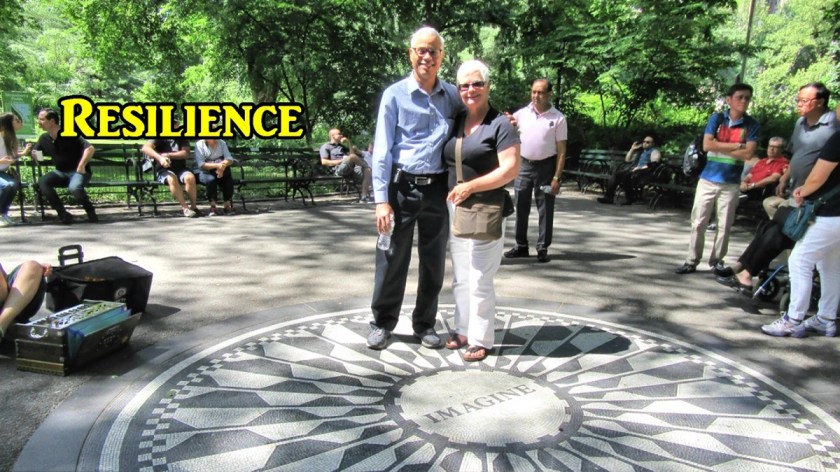
We imagined moving to Ames, Iowa, where I graduated from Iowa State University in the mid-1980s. ISU has a pretty campus and the bells of the Campanile Carillon are there. We imagined a trip to Hawaii in 1997—and it happened. We imagined a trip to New York City in 2017 where we saw the Imagine mosaic memorial to John Lennon in in the Strawberry Fields section of Central Park.
Sena has a fertile imagination, which has led to many beautiful back and front yard gardens over the years. Some of the flowers remind me of bells.
It’s week 2 of camping out in our basement because our wood floors underwent sanding and resealing. Today, the workers finished up and the floors look great.
But we still can’t move back upstairs because that would ruin the finish just applied on the floors. The final coat went on last Friday. It’ll be this coming Friday before we can move furniture back. We can’t even walk on them unless we’re in stocking feet. We have not mastered the art of levitation, which, incidentally, you can learn at the Maharishi International University in Fairfield, Iowa. Well, maybe that’s more like butt-hopping, otherwise known as yogic flying.
The views from our downstairs windows display the back yard, which has been full of birds feasting on the berries on the trees out there. I think those are Winterberry trees. The deer munch on the leaves. Blue jays, it turns out, save nuts and berries for later by hiding them under leaves.
So, we’re still in the basement, sleeping on the air mattresses. It’s pretty much like sleeping on the floor. We’ve discovered there’s a trick to getting in and out of them, since they’re only 12 inches high. I call it “roll in and roll out.” At first, I noticed that my calves were pretty sore after the first night. It turns out it was because I was trying to get off the air mattress the same way I get out of our regular bed. Because I swung my feet out first and tried to stand, it was like trying to do major squat exercises. I usually just sat back down pretty hard. It’s a lot like yogic flying.
Now I roll out on my hands and knees, which makes it easier to gather my legs under me and get on my feet. Getting into the air mattress is just the reverse.
I suppose we could have avoided these gymnastics by buying a queen size air mattress. It’s more the height of a regular bed—but that would have cost hundreds of dollars, believe it or not. Sena bought ours for a fraction of the price.
We’ve been camping in our basement since yesterday. We’re having our upper level wood floors sanded and resealed. This has led to a new sense of togetherness for me and Sena. We had to get all the furniture off the floor. We were lucky enough to be able to find places to move them.
We briefly considered renting a motel room for the duration. However, the cost would outweigh the inconvenience. We opted for the total inconvenience plan. This meant we had to make the basement as comfortable as possible. We had to think of all the necessities and some of the conveniences we take for granted on the upper level and somehow make those happen downstairs.
Sena came up with the idea to use air mattresses. We’ve never used them before. I had visions of me turning blue trying to blow them up. I can’t even blow up a toy balloon. Fortunately, Sena found a model that inflates just by plugging it into a regular electrical outlet and turning a knob. It doesn’t stop filling automatically, though. The instructions warn you not to inflate more than 5 minutes because that could burn out the motor. But there is no warning about the danger of an exploding air mattress. Be careful with the levitation mode.
The last two days have been pretty noisy. If you’ve ever listened to heavy duty sanding machines, the din is tremendous and nearly constant all day long. It’s like living in a giant’s wood shop. When the screeching stops, the buzzing starts. When the buzzing stops, the whirring starts. In fact, the sound is similar to the noise of Frank’s stump grinder (see post 10/2/2020). We were a little surprised when one of the workers sanded all the way through the floor and landed on our new folding table while we were having lunch. Good workers like that are hard to find.
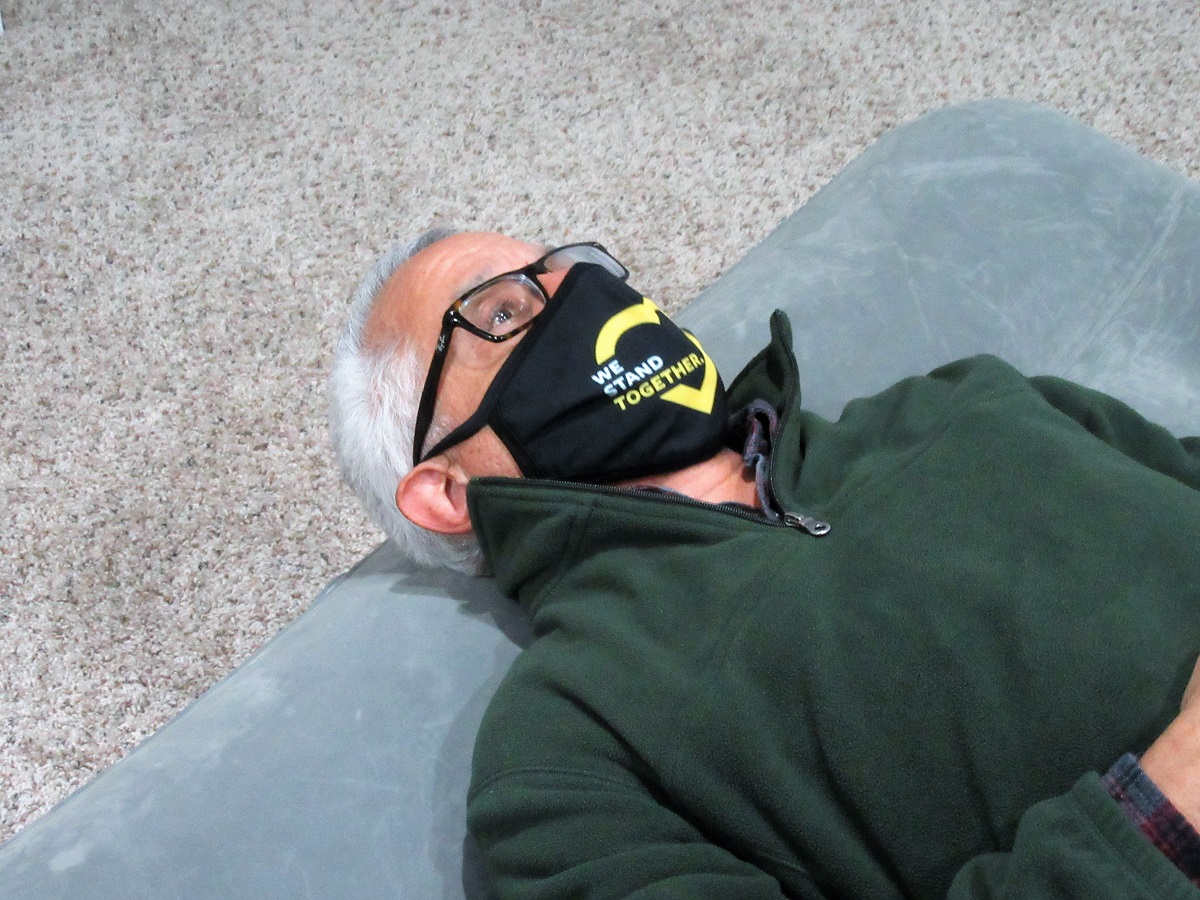
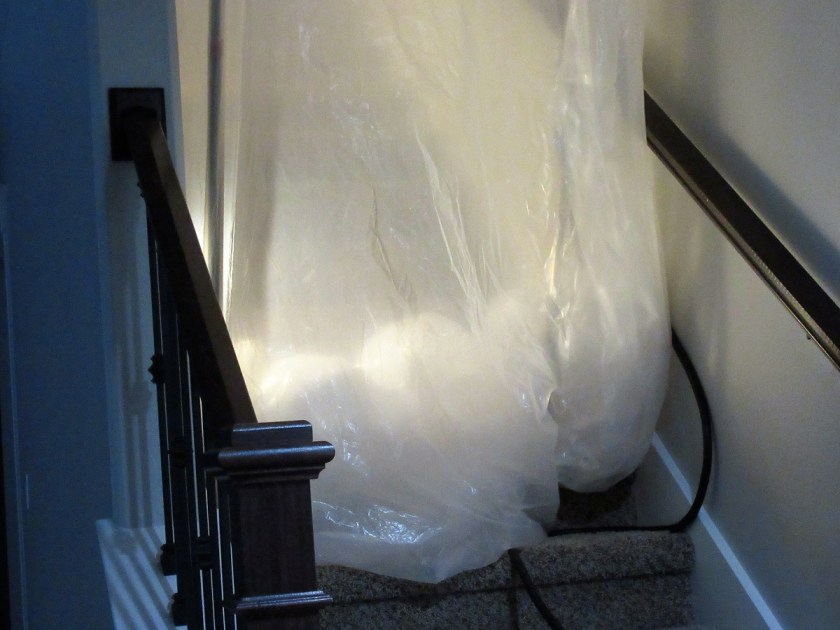
Sanding wood floors raises a regular haboob of dust, so we were sort of barricaded by heavy plastic on the stairway. We could sometimes hear the workers sneeze and cough, but most of the time they were muffled by masks. We never needed to wear masks against the dust because of the measures the workers took to protect us. We wore them when we talked face to face with them for the same reason—to protect them (and us) from coronavirus.
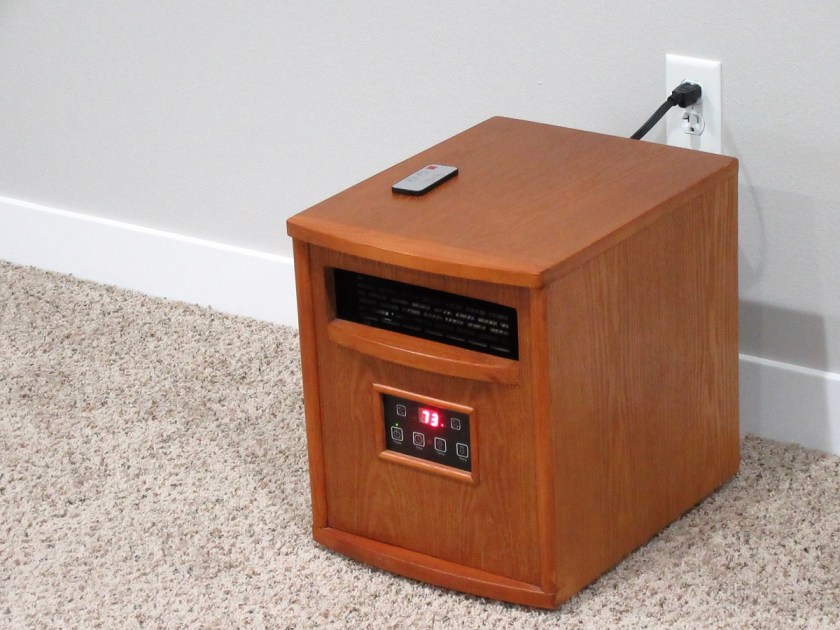
Heavy sanding also raises the temperature and it got pretty warm upstairs. On the other hand, it tends to be chillier downstairs and the furnace doesn’t come on. We’re lucky to have a little space heater.
I mentioned togetherness earlier and a smaller space like the basement has brought us together more. It’s more crowded in the kitchen (I guess I should say wet bar). The refrigerator is a blessing, even if it’s smaller. Doing the dishes can be a little bumpy, but we haven’t broken anything—yet.
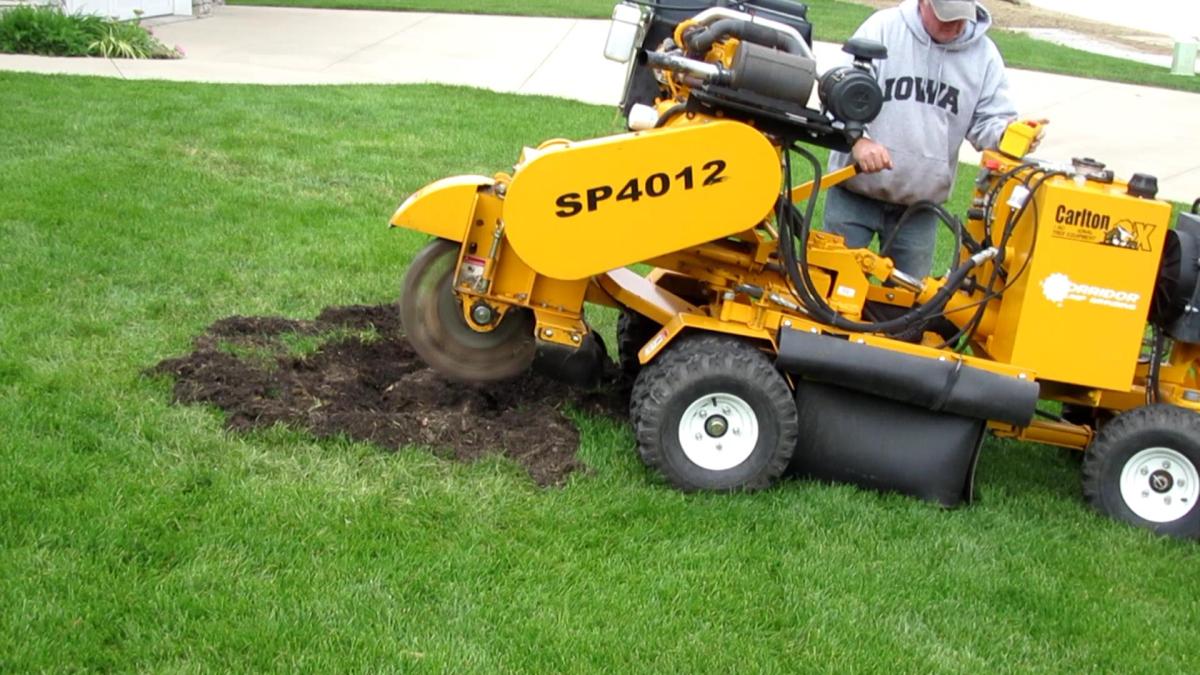
This is a follow-up post on Frank and his stump grinder estimate from last week (“Stumped”). By the way, he was the only stump grinder to return my call about getting a quote for the job. The name of his business is Corridor Stump Grinding (CSG) and the web page says it all: “We Remove Stumps.” Indeed, they do.
He brought his big rig over yesterday afternoon and chewed up our front yard stump in less than an hour. Frank is friendly, safe on the job, thorough, and offers a senior discount as well as complimentary ink pens with the CSG logo. I highly recommend him.
Frank has been in the stump grinding business for about 4 years and he’s pretty busy, although he’s in his 70s. He was retired for a couple of years before he embarked on this path in his life and now.
He’s also got a pretty good sense of humor and two other qualities are immediately obvious: kindness and respect. He’s proud of his family, a loving husband, father, and grandfather—and a sharp businessman. His Carleton stump grinder cost him tens of thousands of dollars and he’s doing very well.
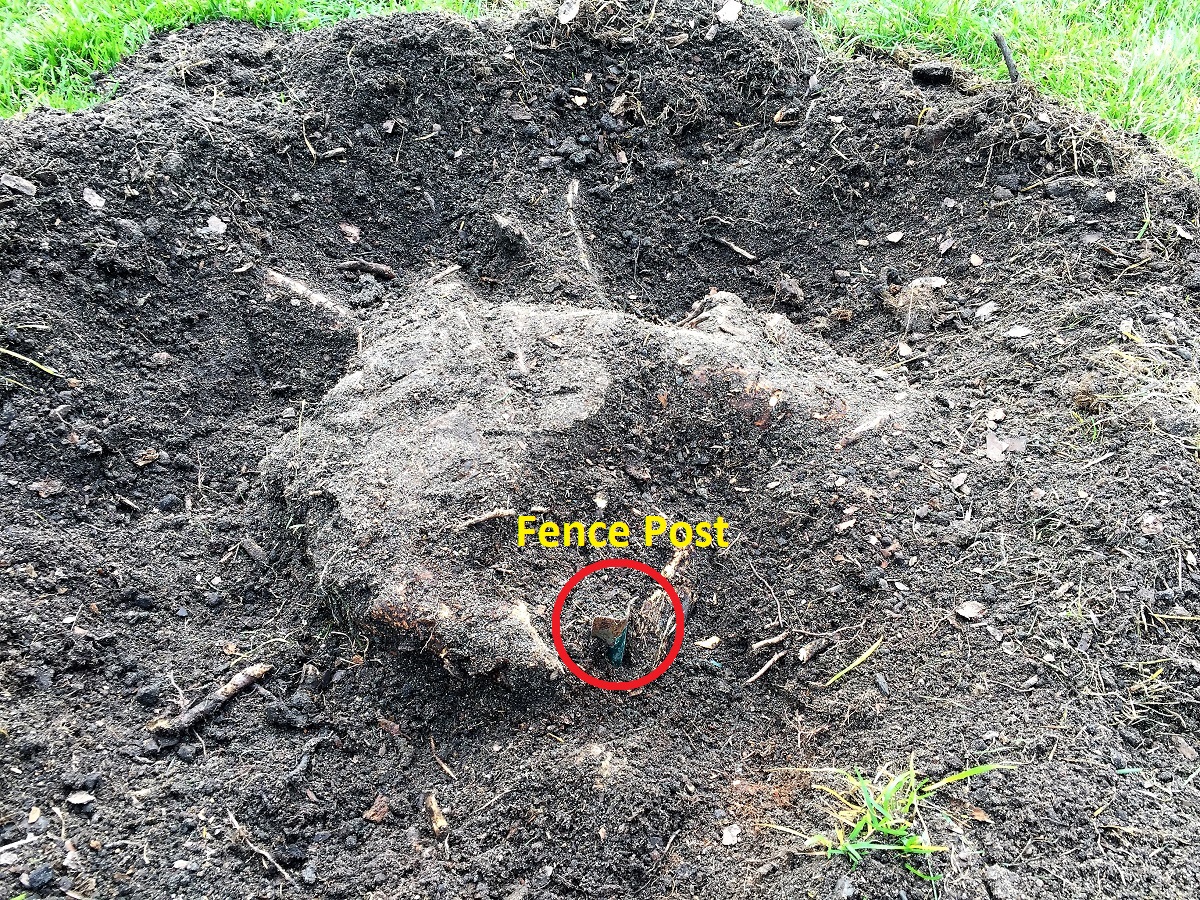
Frank has had to repair the 21-inch cutting wheel because of obstacles like fence posts, including T-bars—which I’m sure he was glad we had removed prior to his arrival.
We wanted to shake hands after the job was done and we had talked a while. We couldn’t of course, because of the coronavirus pandemic. Anyway, Frank doesn’t mind my sharing a few pictures and a video about him and his stump grinder.
I recently read an article about Maintenance of Psychiatry (MOC) written by Dr. Henry A. Nasrallah, MD and published this month in Current Psychiatry. The title is “Revamp the maintenance of certification program.” It brought back memories of my crusade to do the same thing in past years.
I lost my connection to that crusade when I was in my last year of my phased retirement contract. In a way, though I don’t miss MOC itself, I miss the sense of meaning and purpose I had while I opposed MOC through working with the Iowa Medical Society, through a petition to oppose Maintenance of Licensure (MOL, a state based version of MOC), and through writing articles and blogging about why I think psychiatrists and physicians in general don’t need these expensive, time-consuming activities which have led to anti-trust lawsuits being filed against certification boards.
In his article, Dr. Nasrallah criticizes the MOC as a monopoly perpetrated by the American Board of Psychiatry and Neurology (ABPN) and cites his own informal survey of 319 Current Psychiatry readers. He found that 86.5% of them recommended abolishing MOC. He tends to agree there should be an alternative to it. He recommends bringing back the oral exam.
I think it’s an interesting suggestion and I respect Dr. Nasrallah’s effort to not just oppose MOC, but to come up with another way for Psychiatry diplomates to keep their knowledge and skills up to date.
I remember my own oral board certification exam. It was very anxiety provoking, but I passed on the first try. There are reasons in addition to the anxiety they caused for why the oral boards were phased out after 2008. You can find them on the first page of a very entertaining post by Dr. Maria Yang. It’s a very long article, but the gist of the reasons for abolishing the oral boards is outlined on the first page. It was almost impossible to eliminate the wide variability of the live patient interview experience for diplomates while not being a guaranteed method for assessing a candidate’s knowledge and skills.
Dr. Yang lists several horror stories that make up the unverifiable yet terrifying lore about the process.
Even Dr. Nasrallah admits that the usual way the oral exams were conducted back in the day was almost unbelievably complicated logistically and also extremely expensive. He suggests that conducting them by videoconferencing could cut down on the costs, which is plausible. The justification for reinstating oral board exams is that it provided examiners a method for assessing a candidate’s interview skills and ability to collect and synthesize history and observation into a thorough diagnostic assessment and comprehensive treatment plan.
In fact, the academic medical center where I taught held what are sometimes called mock oral board exams regularly, which produced a tolerable mimic of the oral board experience in a less anxiety-provoking environment.
Making the oral exam, even in virtual format, the alternative to MOC would probably still make candidates nervous. It could also by logistically challenging as well. Would they be vulnerable to some sort of hack, such as Zoom bombing?
I spent a lot of time opposing MOC while I was working. It was frustrating. On the other hand, I thought it was important for me to let trainees know that life after residency would include challenges in addition to patient care and teaching, and that lifelong learning activities they engaged in might cost them a lot of money and personal time that they might find burdensome. I thought of myself as an example of a responsible protester in basic agreement with the principle of lifelong learning and improvement, although objecting to the certification boards’ methods.
The anti-MOC movement was a crusade that gave me a sense of purpose. I’m retired now. I salute Dr. Nasrallah.
I met Dr. Jenny Lind Porter Scott, one of my favorite teachers, in the mid-1970s during my first two years of college at what was then called Huston-Tillotson College (now Huston-Tillotson University or HTU). It’s one of America’s historically black colleges. I didn’t graduate from there, instead transferring credit to Iowa State University and taking a degree from there which eventually led to my graduating from the University of Iowa College of Medicine.
I’m sure there are no records of my attendance at HTU. I was recruited by Dr. Hector Grant, a professor of religious studies and philosophy who was traveling around the country and giving presentations to various church organizations to garner financial support for the college. I was awarded a $1,000 tuition grant under the auspices of the 17/76 Achievement Fund of the United Church of Christ.
I have neither degree nor transcripts from HTU. But I have my memories, and one of the most special memories is of Dr. Porter. One of the main reasons for today’s post is my finding her obituary on the web this morning. She died at the age of 93 in July of this year. I saw two obituaries, one apparently written by the funeral home on the Texas State Cemetery web site and the other appears in the Austin American Statesman.
Both list her many achievements as an educator, a leader among women, and a gifted writer. They also cite what might seem to be a minor detail to anyone but me and other students who knew her in the 1970s, which is that she “…established a Creative Writing program at Huston-Tillotson University…”
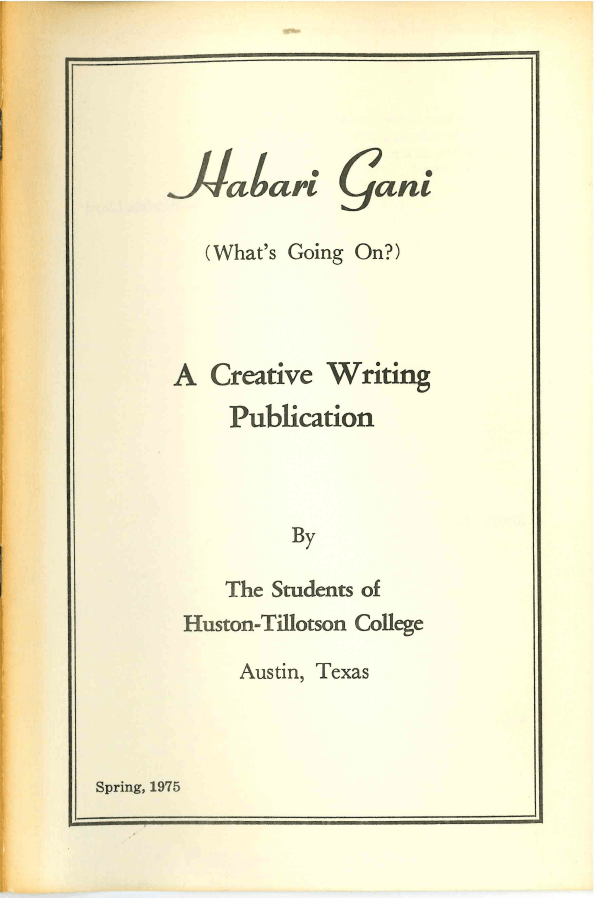
One of the products of that program was Habari Gani, a poetry anthology created and supported by the HTU student government and sponsored by Dr. Porter. “Habari Gani” is Swahili, which means “What’s going on?”
There was a poetry contest which preceded the publishing of Habari Gani. Mine didn’t make the cut and I left the school before I could get a copy of the anthology. Luckily, after a short web search, I was able to connect with the HTU librarian, who was kind enough to send me a digital copy in 2016. I like the introductory poem:
“Let your hum be the dream
Of an understanding universe…
Let your hum be a perfect
Utopia of love”
–Patricia Lloyd
Around that same time and in previous years, I would sometimes hear about Dr. Porter. Just when I had forgotten her, it would seem like somebody would send me a message about her. That began around 2011 when I left the one and only review on Amazon about one of her books of poetry, The Lantern of Diogenes and Other Poems, first published in 1954. It’s the only one I have. I was never able to connect with her after I left HTU.
Sadly, in 2016, I found out that the City of Austin, Texas was proposing to demolish her house. I watched the video-recorded public proceedings of the city council meetings involving the Austin Historic Landmark Commission. Those who knew Dr. Porter wanted to preserve the house as an example of the work done by a famous local architect (which they believed they could verify) and to honor her stature in literature and education. The meetings were painful to watch. I gathered that Dr. Porter’s house had fallen into disrepair and little could be done to preserve it. She had also developed a dementing illness which impaired her ability to manage her own affairs. Her husband had died several years earlier and it sounded like a decision-maker had been appointed to help her.
I had email messages from the Historic Preservation Officer and the local architect who planned to build a house with similar architectural style for a client. The plan included a micro free library, a small replica of the original house at the corner of the lot, and other items. The project was to begin about 8 months after demolition and I’ve not heard anything since. A Google Map search dated March 2019 shows a weed-covered empty lot at 1715 Summit View Place. There are hard facts of life I would rather forget sometimes. But I keep a few memories.
What I remember most vividly is her live poetry reading performance at the annual Faculty Talent Show on campus. It was held in the Agard-Lovinggood Auditorium (now a campus administration building).
Her act brought down the house because it was a strip tease. Don’t get me wrong, there was nothing salacious about it. It was absolutely typical for her legendary sense of humor and style. Of course, it was the ‘70s. Too bad I didn’t have a camera.
Dr. Porter loved her students. We believed in her courage, kindness, and strict attention to the sense and structure of English literature and language. My poem didn’t make it into Habari Gani for any other reason other than it was bad poetry. The important thing was—our lives mattered a great deal to her. She tried to teach me about Rosicrucianism, but it was over my head. The lead poem from her book is pretty down to earth.
Ever since the derecho last month, we’ve been stumped by stumps—tree stumps. It has been a lesson in the value of persistence. The tree in our front yard got knocked over almost right at ground level. I cut it up with a 20-inch hand saw. But the stump has me stumped so far. You can google “stump removal” and get an idea of what your options are.
One method is to use chemicals, involving drilling holes into the stump, into which the chemical is poured along with water and waiting patiently a few years. One guy’s review of a product revealed what appeared to be a basic misunderstanding of the procedure. It involved mixing the chemical with peanut butter, applying it to the stump which he then set on fire to make a smoke signal which could allow lost hikers to be more easily rescued. And by the way, it also hastened the rotting of a tree. The reviewer even included a photo of the heavily smoking concoction. I suspect the manufacturer published the review mainly for entertainment.
We took a half-hearted stab at chemical rotting. I mainly used a bow saw, believe it or not. That didn’t get the stump low enough below ground level to assure grass would grow above it.
Manual labor methods usually include recommendations for using a chain, a truck with 4-wheel drive, a wrecking bar, shovel, mattock, axe, and a few sticks of dynamite.
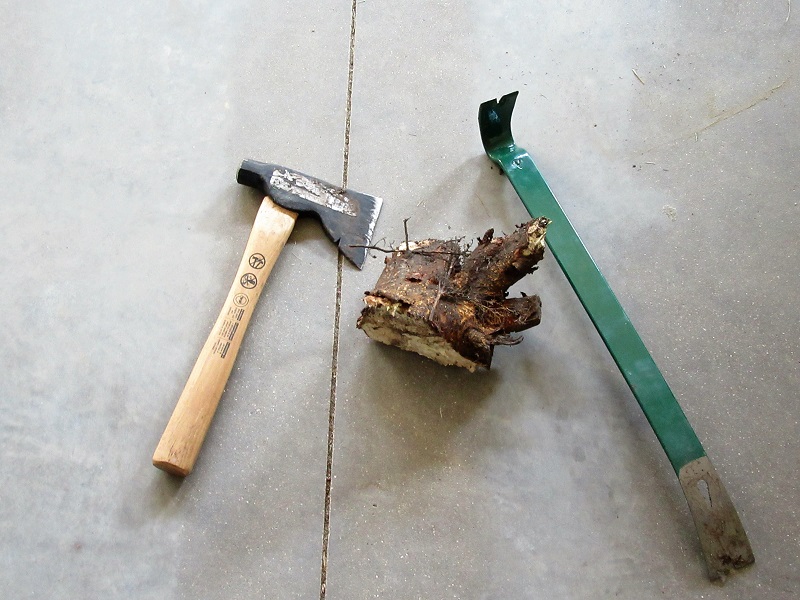
Manual labor has been the main method so far. There was a wire wrapped around the stump and three steel T-bar fence posts, which were probably placed when the tree was first planted several years ago. We got two of the T-bars out but couldn’t get the last one loose (only breaking it in half) until I got a hatchet and a pry bar. Thick roots were wrapped every which way around it and meandered off in all directions. I chopped and pried for hours until I could finally yank it out with vise grips. We hacked a softball-sized chunk of root out of the tangle, and managed to amputate several others away from the main stump. That is why I’m not a big fan of the manual labor method.
And then there’s a guy named Frank, half of a duo owning a stump grinding service. I called him and he came over the following day, shortly after I had removed the T-bar—which probably would not be the best thing for the 21-inch blade on his giant stump remover. He plans to grind it sometime in the next week.
I knew I could rent a stump grinder, but I would never do a thing like that. I’m not the handiest guy in the world, putting it mildly. I’m lucky I didn’t amputate a digit (along with a root) with the hatchet.
We talked with Frank in the front yard as he examined the stump. He said, “Oh, that’s nothing.” He quoted a fair price, which was far less than how much I would have had to pay to rent a stump grinder—and to cover the costs of emergency room charges, damage to the machine, the house and the neighborhood from a runaway grinder.
Frank is pretty busy and we speculated about what the main reasons might be, naturally one being the derecho. Frank thought the coronavirus pandemic might be another one. People sit at home either in self-isolation or quarantine and they have more time to stare at longstanding problems around the house and in the yard.
Having time on your hands can lead to boredom and brooding, which can happen to retirees like me. There are times when I would rather hack at a tree stump than read the daily news. I have to keep focused on where I’m aiming the hatchet or how I’m holding the power pole saw, which occupies me, makes time go by faster, and makes me tired and sore at the end of the day. I feel like I accomplished something. Frank retired several years ago and only later set up the stump grinding business.
We’ll see what happens next week with the stump. Frank’s business card has a picture of his giant machine. He can operate it by remote control. You can see what that looks like in a couple of videos at the website which markets the grinder he uses.
One of our favorite movies is “Up,” a charmer about an old guy named Carl whose wife Ellie always urged him to move up and onward to new adventures. In some ways, me and Sena are like Carl and Ellie. There’s a lot more to that movie than a house which travels under balloon power to South America, carrying Carl, a boy named Russell, and the spirit of Ellie.
Like Carl, I tend to be reluctant to try new things—like chain saws, for example. Ever since the derecho over a month ago, a chain saw would have come in a lot handier than a handsaw, a bow saw, and a manual pole saw. Sena tried to coax me to get a chain saw for a derecho disaster in our backyard, which left an eyesore of a mess. The tangle of stout oak branches with a dense mass of dead leaves never hit the house and was not a hazard—unless you bushwhacked into the woods and stood underneath it with a non-power pole saw and jiggled it with that.
Even with the pole fully extended, I could barely touch the 7 or 8-inch-thick branches. I could tickle it, but I knew I would never bring it down. Sena thought otherwise.
And then one day, Sena came home with a gift for me—the power pole saw. It’s a battery powered chain saw on a pole extendable to about 15 feet. The picture shows it without the battery. There are many words to describe my immediate reaction. Gratitude is not one of them. I have never owned nor used any kind of chain saw. I was not eager to learn and was not convinced that it would help me bring the oak tangle down.
My first efforts using the power pole saw reminded me more of Russell trying to pitch his first tent than Carl succeeding in getting his house in the air with balloons. The battery took only a little over an hour to fully charge, dashing my hopes of returning a defective product without injury to my ego.
I figured out how to attach and tighten the pole extensions. It was heavier than I thought it would be. Amazingly, no lubricant oil was provided. I had to make an extra trip to get that and a pair of safety glasses (which had to fit over my prescription pair). Oiling the bar and the chain is a bit tedious using the thumb-sized plastic bottle provided—which I had to fill from a large bottle of motor oil I had to go out and buy.
Finally, I could stall no longer. I crept into the very cramped space in the thicket, the kind of place in which experts tell you not to use the power pole saw. It was also necessary to stand right under the branch I needed to cut—another no-no.
At least I had my safety glasses on when I finally turned on the saw and got a face full of sawdust and wood chips that somehow got into my eyes anyway. One thing I was very thankful for was the two-step trigger mechanism. I had to first press one safety switch backward with my thumb while pressing the power trigger with my forefinger. Only then could I lift my thumb off the safety switch and continue to cut—as long as I kept my finger on the trigger. If I lifted my finger off the trigger, the motor would immediately stop. That didn’t bother me a bit.
I was just starting to gain a little confidence with the tool when I got it jammed into one of the thickest branches over my head. I couldn’t jiggle or pry it loose. It hung there, apparently wedged between the two sections of the limb and by one of those pesky strips of bark. I could hear faint snaps and pops that worried me more than a little bit.
I hurried out of there and looked back. The saw hung in mid-air in the wedge. I could hear more distinctly now a crackling noise and could see smaller branches slipping down through the foliage distal from the big branch. Gravity was playing a role here.
I grabbed the manual pole saw, extended to its full length and quickly scraped at that stupid strip of bark, holding my breath. The popping noises suddenly got a little louder and I rushed for the opening in the thicket, but got hung up by the manual pole saw which got stuck on some smaller trees. I yanked like a maniac a couple of times before realizing that I had to move back a few steps towards the thicket to unhook my saw from the brush before moving forward. I guess life is like that sometimes.
I got out—but the tree limb just wouldn’t drop. I used the molded hook on the manual pole saw and wrestled with outer branches in an effort to pull the thing down. It finally fell, releasing my power pole saw, which fell to the ground. By some miracle, neither the saw nor I was harmed. In its path to the ground, the branch passed the spot where I had been standing.
I wish I could tell you I reformed right then and there, stopped my foolhardy, reckless, death-defying acrobatics and levitated to the Himalayas, there to meditate for the rest of my life.
But I didn’t. I went back in there, retrieved my power pole saw and—got the thing wedged again in a different branch. This time, I could free the blade but had to take the chain off, brush the wood chips out, and put the tool back together. This involved repeatedly turning the chain over and over, trying to understand how this was supposed to be refitted on the bar to match the image stamped on the bar. This took a while. I dropped the bar a couple of times, but it didn’t break—dang.
Now you would naturally suppose that by this time, I saw the error of my ways, sought counsel from aliens who took me in their spaceship through the nearest wormhole back to their home planet in a distant galaxy where they reengineered my genetic code and built me a new brain thereby setting me free from the ancient human pattern of refusing to learn from mistakes.
But no, that didn’t happen. I just kept cutting. Against all odds, I cleared most of the derecho debris. It just goes to show you; sometimes it’s better to be lucky than smart.
It also helps to have a persistently encouraging wife who says, just like Ellie, “Adventure is out there!” Sena gets all the credit.
Today Sena and I want to make a shout out for a big act of kindness. Back in August, the derecho blew down a maple tree in our front yard, which also led to a concern about the tree right next to our house, which was a lilac.
We cut both down to stumps with a handsaw, a long handle tree trimmer, and a bow saw. We don’t have a chain saw. We planned to hire a handyman who does own a chainsaw to cut down the stumps.
We were outside, laboring over the lilac with the bow saw. We shared the bow saw. Come to think of it, I’m pretty good about sharing a bow saw, especially when I’ve been using it enough to notice muscle pain in several places I didn’t know I had.
We got the stump down to about 2 feet and were cutting off pathetic little chunks not much bigger than golf balls.
And then I guess a couple of guys on the construction crew working nearby took pity on us because suddenly, they walked over, shouting “Let us help you!” and carrying the biggest concrete saw I’ve ever seen, along with a respectable sledge hammer. The guy operating the concrete saw was the size of a sumo wrestler. His partner was no slouch.
No kidding, “Let us help you!” How could we refuse? What made them do that? Was it the white hair? Was it because they might have seen me yesterday get dirty as a pig cutting tiny pieces off the front yard maple stump? The only way to trim a stump once it gets to a certain height is to roll all over the ground. I have not been that dirty since I was 8 years old after playing king of the hill on a very tall dirt pile.
When I think about the use of a concrete saw almost as tall as I am to cut down a lilac stump, I’m astonished. They brought the tools they had to help us. I’ll never forget that big, friendly “Let us help you!” I’ll never forget their smiling faces.
That lilac stump lasted long a little longer than you’d think, and it was very heavy work. The saw screamed and smoked like it was on fire. It was heavy, but he was heavier and strove to slice the stump as close to the ground as possible. They both took turns swinging the sledge hammer at it—which made me instinctively want to duck. The stump finally let loose.
Immediately, the workers hurried away as we shouted thanks, almost as if they were worried that we might want to pay them—which I certainly considered. They smiled broadly, waving their huge hands.
We are still overwhelmed with gratitude for their kindness. These days, kindness is hard to come by. You look at the news (bad idea), and all you read is somebody is slamming or killing somebody else. I’m not saying you never see or hear about little or big acts of kindness—just that the bad news tends to overshadow the good.
You have to look very hard for an act of kindness. It’s harder to see how we can pay it forward. It doesn’t have to be a big act of kindness. It can be little, like saying “Good morning, how are you?” Even saying “thank you” is an act of kindness. And it’s OK to give a big shout out for any kindness you see—just to let people know it’s still out there.













 Go Retire Psychiatrist