Links to Ozymandias

Sena and I took a walk down Scott Boulevard today. The weather was practically balmy, compared to how cold it has been. Forty degrees above zero compared to 9 degrees below feels miraculous.

We walked past the Harvest Preserve entry. Across the street is what we’ve just learned is an old building that is known as the “Haunted Barn” (photo taken in August 2021).

We passed the 20-foot-tall, 110-ton Sitting Man sculpture, now on the west side of Scott Boulevard after it was moved from the east side of the road in July, 2020.

Today was the first time we trekked past the Sitting Man to Rochester Avenue and beyond. If we hadn’t, we would not have noticed a fascinating, blindingly white abstract sculpture mounted on a concrete block which we initially believed was on the Harvest Preserve property at the northwest corner of the intersection. Sena said it looked like a person, noting the head, arms, and body. I didn’t notice that.

After we got back home, I couldn’t find out anything about it on the web, no matter how much I connected the search terms to Harvest Preserve, the Sitting Man and so on. I found only one item with a photo and it was an announcement about a tour on Harvest Preserve in 2018. The impression is that the sculpture is on the property.

I sent an email inquiry to Executive Director of the Harvest Preserve Foundation, Inc., Julie Decker, whose email address is available on the website.

Ms. Decker informed me that the sculpture is technically not on Harvest Preserve property. She knew the sculpture is entitled “Family,” and the artist’s name was Eugene Anderson, who died in 2008. That’s all she knew.

It turns out that what little she knew led to an astonishing story that was even deeper and more engaging than we imagined. You can read the obituary of the Iowa City artist Eugene Anderson on legacy dot com. The highlights are that he started his career in architecture, was the University of Iowa Hospital and Clinics (UIHC) architect for 25 years, and then began creating original art work to display in the hospital to comfort patients. He later became a full-time sculptor, and was on the board of directors for “Arts Iowa City.”

I was a medical student, resident, faculty member and a consulting psychiatrist at UIHC, a career starting in 1988 and ending with my retirement in June of 2020. It’s possible I saw some of Anderson’s work while I was galloping around the hospital.

In 1994 he created the “Family Group” series of sculpture which have been displayed at Chait Galleries in Iowa City, Des Moines Art Center, and the Brunnier Art Museum in Ames, Iowa. The piece we saw might have been one of those. Unfortunately, I couldn’t find anything on the web about the series.

And what is more intriguing, Anderson also traveled extensively, even to Egypt where he cruised on the Nile and took a sunrise balloon ride over the pyramids.

How is it possible that so little of Eugene Anderson’s life and work are not better known? Come to think of it, I guess time can erase the memory of our accomplishments.

This little story reminded me of the poem “Ozymandias” by Percy Bysshe Shelley. I’ve forgotten all of my college freshman English Literature but a web search indicates that Ozymandias was based on Ramesses II, a king of ancient Egypt. Ozymandias was a great ruler of a vast empire. His sculptor built a huge monument in the desert and gave it the oft-quoted inscription, “Look on my works, ye Mighty, and despair!”

Ozymandias

Percy Bysshe Shelley-1792-1822

I met a traveller from an antique land
Who said: “Two vast and trunkless legs of stone
Stand in the desert . . . Near them, on the sand,
Half sunk, a shattered visage lies, whose frown,
And wrinkled lip, and sneer of cold command,
Tell that its sculptor well those passions read
Which yet survive, stamped on these lifeless things,
The hand that mocked them, and the heart that fed:
And on the pedestal these words appear:
‘My name is Ozymandias, king of kings:
Look on my works, ye Mighty, and despair!’
Nothing beside remains. Round the decay
Of that colossal wreck, boundless and bare
The lone and level sands stretch far away.”

Today we searched for links on the web to find out more about a mysterious sculpture. We found links of a different kind, links to a stranger and to the near and the ancient past. Anderson’s sculpture, “Family,” is still standing, tall, clean, and bright for all to see.


“To Kill a Mockingbird” Dropped from Seattle School Reading List

This is just a brief announcement about the book “To Kill a Mockingbird” by Harper Lee being dropped from the reading list in a Seattle school. We ordered a copy and just got it today. I realized I don’t recall ever reading the book. I did see the movie starring Gregory Peck and Brock Peters, though.

I’ll let you know what I think.

Return to the Sun Room

We have a sun room again. We moved into this house a little over a year and half ago. It has taken a little time to get it comfy. For the last couple of weeks, I’ve been sitting in there on Friday nights listening to the KCCK Jazz Radio ‘da Friday Blues show hosted by John Heim, aka Big Mo. I used to do that regularly but we’ve not lived in a house with a sun room for several years. The Big Mo blues show has been a favorite of mine for a long time.

I suppose I could have listened to it in another room in the other homes we’ve lived in. But it wouldn’t have felt right. I connect sun rooms with ‘da Friday Blues on KCCK 88.3.

It’s hard to believe Big Mo is still doing the show. He suffered an accidental neck injury a few years ago that left him paralyzed from the neck down. He was hospitalized at the University of Iowa and went to rehab from there. He still sounds great. He retired from teaching in 2004. He hasn’t retired from having a good time and helping others enjoy music and life. There’s a lesson in that for us all.

Anyway, we have a great sun room again. We have a nice coffee table in there, with the mandatory coffee table book. Chet Randolph really didn’t write that book, Theory of Detasseling—but he could have.

coffee table book

 Here’s a tune from tonight’s show that fits the season.

FDA Advisory Meeting on Covid-19 Vaccine for Children Less than 5 years Old

The FDA Advisory Committee will meet February 15, 2022 between 8:30 AM-5:00 PM ET to discuss Pfizer’s proposal to amend the Emergency Use Authorization for administration of the Covid-19 vaccine to children between 6 months through 4 years of age.

An Old Dog’s Approach to Replacing Electrical Outlets and Other Thoughts

Since retirement, I’ve been very gradually casting about for another identity now that I’ve given up my professional identity. It doesn’t come naturally. I’m definitely not a handyman, although I’ve been learning a few skills.

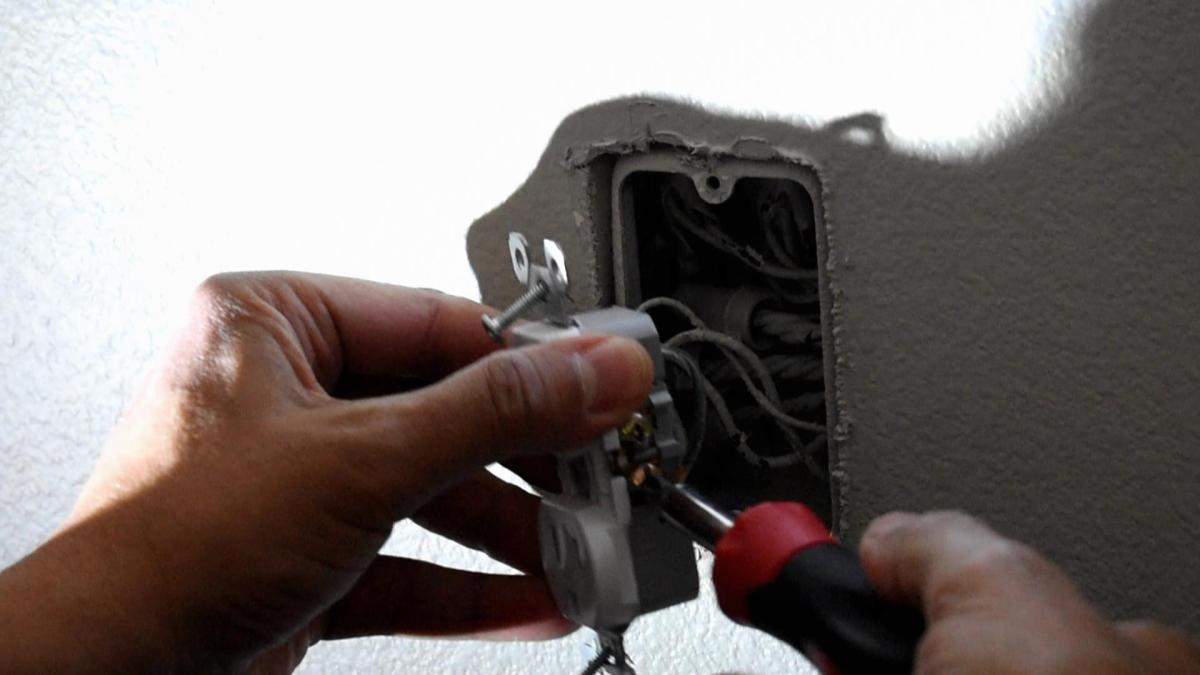
For some reason, a large number of our electrical outlets didn’t hold power cords tightly enough. They were either cheap or worn out or both. Appliances would stop running because the electrical plugs fell out of the outlets.

That led to Sena picking up an 85 gross of various replacement outlets, which led to losing one of my best excuses for not getting the vacuuming done. Since then, I’ve replaced a large number of outlets (see “instructional” video below). Toggle switch replacements are another item high on the list of vital electrical equipment to replace, mainly because they also get loose with age.

Funny how that doesn’t work for me. I get tighter in my joints as I age, which makes it very hard for me to sit cross-legged on the floor while replacing outlets. Standing up is even harder. That excuse doesn’t work either.

I’m pretty keen on checking outlets and the like for power before I start messing around changing them. I use a UL approved voltage tester for that—an electric can opener. Don’t let that get around. I always shut the power off at the circuit breaker to be safe.

Another skill comes to mine. Yesterday I had to install a soundbar on our TV for the first time. After Sena returned that one for a refund because it didn’t seem to improve on the TV’s audio, I installed a sound bar and subwoofer made by a different company.

I had a heck of a time getting it to work. It came with enough cords to hook it up, either by optical cable or something called HDMI ARC cable. Apparently, ARC stands for Audio Return Channel. I still don’t yet know why that makes it different from a regular HDMI cable.

What should have been a 10 to 15-minute hookup ended up taking most of an hour because neither cable worked. It was mysterious. I even hooked up both of them. The sound bar was soundless. In disgust, I yanked out the HDMI ARC—and abruptly the sound bar was loudly functional. Just prior to that I think I had moved the power plug from a power strip to a wall outlet. I figured the power strip might have just got old.

On the other hand, I had switched the sound bar plug and a CD player plug on the power strip which had been working fine and the sound bar still didn’t work. It was either aliens or luck. Sometimes it’s better to be lucky than good. I’m thinking about trying that HDMI cable again.

I have changed only in very small ways over the last 19 months (837,755 minutes; 50,265,308 seconds) since retirement. Some people say you can’t teach an old dog new tricks. I wonder if some people are just being ironic.

Retiree Musings

I’ve just discovered a web site that calculates the time that has passed since an event occurred. So, it calculated that I’ve been retired for 19 months—or 580 days, or 13,909 hours and so on. But I’m not counting.

What has been happening since then? I’ve had the usual problems with letting go of my professional identity, still having them in fact. I’ve posted a quote from another retired psychiatrist, H. Steven Moffic, MD.:

Plan for retirement, even if you don’t plan to retire. This means sound financial planning, developing other interests, and nurturing your relationships with significant others. Retire, even if you are not retired. Take enough time off periodically, and completely, with no connections to work, so that you can feel emotionally free from concerns about patients and practice. Of course, there is no reason to retire if you really love your work and relationships just as they are.

H. Steven Moffic, MD

There was also an article entitled “When Should Psychiatrists Retire?” written by Dinah Miller, MD. It was published in Clinical Psychiatry News January 2022 issue, Vol.50, No. 1 as well as Medscape on November 17, 2021. There is no consensus on the answer to the question, although there are several opinions by the commenters.

There are a lot of articles out there about what it’s like to lose your professional identity and the potential consequences of that. One thing I’m learning is that, while I may not be fully reconciled with losing my identity as a consult-liaison psychiatrist, I’m gradually starting to have more fun just being a clown sometimes, which pre-dated my becoming a doctor.

Maybe I just need to grow up, but my interests are everyday stuff I tend to make fun of.

Like dryer balls. Now, I don’t want to offend anybody who believes that dryer balls are effective at drying clothes quicker and the like—but the jury is still out on that claim.

In fact, there are many articles on the web, both pro and con about dryer balls. One of them is by somebody who did what sounds like an exhaustive study (just with his own laundry; you won’t find it published in any journal). He swears by them. Then there was the article which pretty much debunked dryer balls. It mentioned an “in-depth experiment” by an 8th grader in 2013 proving that they don’t reduce dryer time. My wife, Sena, says they don’t work. One ball got snagged in a fitted sheet pocket.

What I don’t get is why dryer balls look so much like the spiky massage balls (hint, it’s the green ball; the dryer balls also have holes in them). I think everybody just takes for granted that massage balls work. Sena says it works. She also has what she calls a massager which looks vaguely like a headless alien doing the downward dog yoga thing.

But what I find puzzling is why I can’t find any mention on line of clamshell eyeglass cases which have a steel trap-like spring-loaded hinge. You don’t want to get your fingers caught in them. They should have a safety protocol for use—so of course I came up with one.

Brief Reflections on N95 Masks

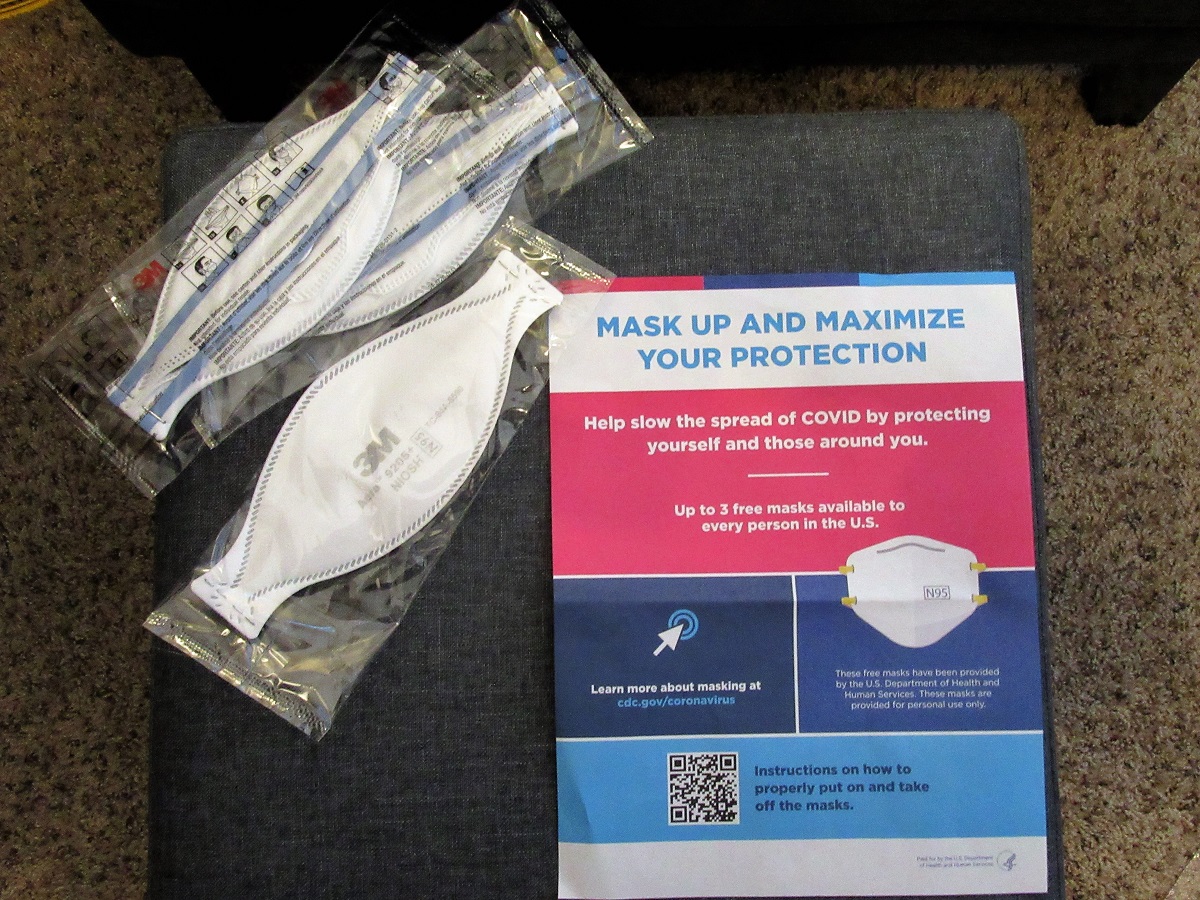
The free N95 masks are here. It’s 3M Model Aura 9205+and they’re available in many stores, including Hy-Vee and Walgreens.

I occasionally failed the fit test using this type of mask when I was working at the hospital; however, you can still get a pretty effective seal to make it protective in the community (see my video below). I was one of the few psychiatrists who had to fit test for a mask because I worked on the med-surg side of the hospital in a consult-liaison role.

The N95 flat type mask is probably no more difficult to don and doff than the surgical mask, for which the Slip Knot and Tuck method helps you achieve a pretty good seal (see my video for this).

At times, I had to use an alternative N95 mask, similar to 3M Model 1860, which is a cup-shaped mask. One year I failed the fit test for that one and I had to wear a Powered Air Purifying Respirator (PAPR). I had to wear it only once in the hospital. It was very cumbersome. Following that, I passed the fit test for the 1870+, which is similar to the 9205+.

When you search the web for more information about the N95 masks, you’ll find that there is disagreement about how to interpret eyeglass fogging pertaining to the seal. Some say that if you get any eyeglass fogging at all, you have an inadequate seal and need to fix that or “check with your supervisor.” On the other hand, others will discount that. Even the CDC says that eyeglass fogging indicates a poor seal that means that you have an inadequate seal and this should prompt the user to try another N95 model. On the other hand, others will discount that.

I did only a quick search, but found one open access article on a pilot study which concluded that “Fogging of eyeglasses is neither a sensitive nor a specific predictor for a poor fit of N95 respirators.” (Kyaw S, Johns M, Lim R, Stewart WC, Rojas N, Thambiraj SR, et al. Prediction of N95 Respirator Fit from Fogging of Eyeglasses: A Pilot Study. Indian J Crit Care Med 2021;25(9):976–980).

On balance, since no one who is not a health care professional will ever have to fit test for any N95 mask, the seal you’ll get is probably adequate. If you wear eyeglasses, remove them before donning and doffing the mask. You can get the bows caught in the straps, which can flip them off your face and into the toilet (although this has never happened to me personally). Always do hand hygiene before and after use of the mask.

I’ve read news items indicating that CDC guidelines say you should reuse the N95 only 5 times before disposing of it. It was difficult to find the source, but it’s mentioned here, under the heading “Decrease in N95 FFR fit and filtration performance” (FFR stands for Filtering Facepiece Respirator)”:

CDC recommends limiting the number of donnings for an N95 FFR to no more than five per device. It may be possible to don some models of FFRs more than five times [2]. One study reported that fit performance decreased over multiple, consecutive donnings and fit varied among the different models of FFRs examined [3]. If manufacturer guidance on how many times a particular FFR can be donned is not available, the CDC recommends limiting the number of uses to no more than five per device based on published data on changes in FFR fit from a limited number of FFR models over multiple donnings.

A recent observational study conducted in a hospital emergency room during the COVID-19 pandemic found that extended use and reuse of N95 FFRs as measured by the total hours and shifts the mask was worn and the number of donnings and doffings was associated with an increase in the fit failure of the respirators. This study also showed that it may be possible to don some models of FFRs more than five times [2]. Fit performance during limited reuse should be monitored by the respiratory protection program manager or appropriate safety personnel. 

Reference 2 is a research letter published in JAMA Network, June 4, 2020, a time when there were shortages of PPE (Degesys NF, Wang RC, Kwan E, Fahimi J, Noble JA, Raven MC. Correlation Between N95 Extended Use and Reuse and Fit Failure in an Emergency Department. JAMA. 2020;324(1):94–96. doi:10.1001/jama.2020.9843).

Further on in the CDC guidance is a section entitled “NIOSH recommends limiting the number of donnings to five for a filtering facepiece respirator. What is the science behind that recommendation?”

You can read all of this if you’re interested. I think it’s helpful to note that some experts say you can reuse them until they’re visibly dirty, which I think probably applies to users in the general community.

Free N95 Masks Available

Sena picked up 3 of the free N95 masks today at Hy-Vee. It turns out that it’s the same one I always used to fail the quantitative fit test for at Employee Health. I could never get a decent seal with it. I would get an alternative cup-shaped mask which worked pretty well. Fit testing includes maneuvers you have to do to make sure the mask stays where it’s supposed to on your face while moving your head up and down, side to side, or bending at the waist, doing back flips, moon-walking, and so on. You also have to read a short story as well, called the Rainbow Passage:

When the sunlight strikes raindrops in the air, they hit you in the face, which makes you jerk your neck so hard you get a charley horse and can’t move your head, which hinders your vision and makes you fall through the glass door of a doughnut shop. The owner yells at you because you get blood all over the chocolate frosted doughnuts. As you reel out of the shop, you trip over a chair which knocks over a display of N95 masks, which scatter the shards of broken glass, splitting the white light into a rainbow. You follow it until it leads you to a boiling pot of gold, which you trip and fall into, sustaining burns that send you to the hospital emergency room where all of the doctors and nurses are wearing Hazmat suits. That’s why they say if you know where the pot of gold is, don’t stop off at the doughnut shop.

If you can read the Rainbow Passage without interrupting the seal of this version of the N95 mask, you pass, which I never did.

I don’t think anyone expects you to pass a quantitative fit test for the free N95 masks. There is a self-test of the seal which involves holding a strong-smelling substance up to your face (such as Bigfoot turds) to see how long it takes before you pass out. If you don’t pass out, you’re eligible to become a Bigfoot personal trainer.

There’s a limit of 3 N95 masks per person per household. A store employee hands them to you from a bin full of alligators. When the employee gets eaten, management shuts down the whole operation. You can’t just go in there and grab up an armful of them and expect not to get chased out into the parking lot. However, that doesn’t stop some people from heading to every store all over town to get the 3-mask limit, ending up with more than a dozen. The same strategy worked early in the pandemic when stores were rationing toilet paper.

It would be a waste of time for me to try to demonstrate how to don the N95 mask when there’s a perfectly good video demonstration (see below). If you’re wondering about the real Rainbow Passage, the link is here.

Journey to the Center of the Snore

Sena and I snore. There, I said it. We’ve been snoring for years. It’s been getting a little worse for a while now and we’re finally exploring ways to deal with it. I snore by puffing out my cheeks and blowing, and Sena snores by blowing the pictures off the walls.

The separate bedrooms option was a bust after a few days. We missed each other. We have a couple of air mattresses left over from last year when we had our wood floors refinished and had to camp out in our basement. We tried taking turns on it.

It’s very cold in the basement. We have this old space heater which heats for about 10 minutes, then shuts down and buzzes for an hour or so—very hypnotic.

There’s a trick to getting into and out of an air mattress that sits only a few inches off the floor. If you don’t roll off the mattress onto your hands and knees and then push yourself up to a stand, you end up trying to do extreme deep squats and tip over a few dozen times before giving up and rolling over to the space heater to grab onto for leverage, which then rolls away on its casters.

We’ve tried those polyurethane foam wedge pillows, the kind that make you feel like you’re sliding into your belly. That’s fun. We also have some memory foam pillows. Those who have been there know where we’ve been.

We keep finding out about new advances in the world of snore relief. There are thousands of brick-and-mortar mattress stores where you can find people who can tell you with straight faces there is a ton of research out there showing this or that arcane method has scientific evidence supporting the opportunity for you to shell out thousands of dollars for this or that sure fire method for eliminating snoring in seconds or your money back when hell freezes over—and those are just the other customers.

There are motorized, voice-controlled adjustable beds which cost only millions of dollars if you have the right coupons. You can try any of the several dozen on line stores where you buy a bed in a box, which a guy started back in 2007 and which has since mushroomed into a giant industry. You get this memory foam or hybrid memory foam and spring mattress which has been packed under very high pressure into a cabinet-size box and delivered to your doorstep. The minute you open it, the bed explodes into your face, knocking you unconscious, which temporarily cures the snoring problem by putting you into a coma for weeks.

The adjustable beds are very expensive and will set you back several thousands, especially if you buy the option allowing the manufacturer to track your sleep data and send it to aliens throughout the galaxy and beyond who are working out new ways to control the human race.

The wedge concept is huge in the snore relief mattress industry. There is a thing called the Mattress Genie. It’s an inflatable bag which you stick under your mattress and inflate with the touch of a button on a remote control. It reminds me of those airbags I see on shows like Highway Thru Hell, which the heavy wrecker crews use to raise semi-truck trailers off the ground in the ditch where the drivers have jack-knifed their vehicles because they were too busy on their cell phones to watch the road. They tend to pop out at speeds which could probably knock out your average heavy wrecker guy.

The mattress industry says “snoring is prevalent in 45% of normal adults.” They’re really big on the wedge concept and how raising the head of the bed is the way to go. We’ve read a lot of reviews by customers about the various products. Usually, there are many people who rave about how good the wedges are. There a few who just rave.

I was able to find one scientific study, Wilhelm, E., Crivelli, F., Gerig, N. et al. The anti-snoring bed – a pilot study. Sleep Science Practice 4, 14 (2020). https://doi.org/10.1186/s41606-020-00050-2. The conclusion in the abstract says “The anti-snoring bed is able to stop individual episodes of habitual snoring without reducing the subjective sleep quality.” However, the authors hedge on the wedge several times in the discussion section of the article and finally end up saying “Further studies are needed to investigate whether Anti-snoring beds are a valuable alternative to conventional positional therapy.” I don’t know if they’ve been done, but many people swear by the wedge concept.

In fact, we’ve been experimenting with our wedge pillows by placing them between the mattress and foundation. Last night was a good night. No snoring, although we tended to slide downhill. We’re shopping for a mattress elevator wedge, which slopes gradually from head to foot.  

We just have to keep trying.