Overdiagnosis of Psychiatric Disorders Still Happens

I read an excellent article in Clinical Psychiatry News recently in the Hard Talk section. The title is “A prescription for de-diagnosing” by psychiatrists Nicholas Badre, MD and David Lehman, MD in the July 2022 issue (Vol 50, No. 7).

The bottom line is that too many psychiatric patients have too many psychiatric diagnoses. A lot of patients have conflicting diagnoses (both unipolar and bipolar affective disorder for example) and take many psychotropic medications which may be unnecessary and lead to side effects.

It takes time to get to know patients in order to ensure you’re not dropping diagnoses too quickly. Discussing them thoroughly in clinic or in the hospital is an excellent idea. And after getting to know patients as people, it makes sense to discuss reduction in polypharmacy, which can be quite a burden.

This reminds me of the Single Question in Delirium (SQiD), a test to diagnose delirium by simply asking a friend or family member of a patient whether their loved one seems to be more confused lately. It’s a pretty accurate test as it turns out.

This also reminds me of the difficulty in making an accurate diagnosis of bipolar disorder. I and a Chief Resident wrote an article for The Carlat Report in 2012 (TCPR, July / August 2012, Vol 10, Issue 8, “Is Bipolar Disorder Over-Diagnosed?”) which warned against overdiagnosis of bipolar disorder. Excerpts below:

Some argue that bipolar disorder is actually under-diagnosed. They have support from abundant literature showing that bipolar disorder tends to present more often with depression than mania or hypomania (Judd LL et al, Arch Gen Psychiatry 2002:59(6):530–537). As many as 10% of patients with unipolar depression ultimately are shown to have bipolar illness instead, according to some experts (Goodwin GM et al, Eur Neuropsychopharm 2008:18(7):535–549). (See this month’s Q&A with Claudia Baldassano for more on this.) In addition, a new emphasis on subthreshold mood symptoms and more rapid mood shifts has led some psychiatrists to promote the concept of a “bipolar spectrum disorder” (Youngstrom EA et al, Curr Psychiatry Rep 2010;12(6):479–489).

While it’s important to remain vigilant about a history of manic and hypomanic symptoms, we think the problem of over-diagnosis is probably greater. For instance, in a 2008 study, Zimmerman and colleagues performed a comprehensive diagnostic interview on 700 patients, nearly 21% of who self-reported a history of “bipolar disorder.” However, when using the gold-standard SCID (structured clinical interview), only 13% had the diagnosis; they also had more first-degree relatives with bipolar disorder than the others (Zimmerman M, Ruggero CJ et al, J Clin Psychiatry 2008:69(6):935–940). The authors hypothesized that over-diagnosis of bipolar disorder might be a consequence of efforts to improve recognition of it and avoid under-detection. In fact, the same authors studied 40 depressed patients previously diagnosed with bipolar disorder and found that, by the SCID, they had specific phobia, PTSD, drug abuse/dependence, or a personality disorder instead (Zimmerman M et al, Compr Psychiatry 2010;51(2):99–105).

Over-diagnosis can also occur when apparent mood episodes are defined as psychiatric when in fact, they have a different etiology altogether. Decreased need for sleep, disorganized or racing thoughts, increased activity and agitation, and delusional thinking, even when they occur together, can represent a sort of “final common pathway” for medical conditions and other syndromes. The manic phenotype can occur in patients with agitated delirium, brain tumors, corticosteroid treatment, and of course substance intoxication (Bunevicius A et al, CNS Spectr 2008;13(11):950–958; Brooks JO and Hoblyn JC, Am J Psychiatry 2005;162(11):2033–2038). These other phenotypes can be distinguished by recognition of key features such as the fluctuating nature of consciousness in delirium, neuroimaging findings, and positive urine drug screens.

Unfortunately, physicians may also be susceptible to diagnostic shortcuts. When faced with limited time for diagnostic interviews and the pressure to prescribe by patients and their families, well-meaning clinicians may give the diagnosis after a single brief interview. Not uncommonly, we find that it was diagnosed on the basis of mood fluctuation over minutes, temper tantrums, and fleeting insomnia. The rapidly expanding repertoire of medications approved for bipolar disorder, and their relative ease of use, may also contribute to over-diagnosis. Unfortunately, in some cases the treatment may be worse than the symptoms themselves (Iordache I and Low NC, J Psychiatry Neurosci 2010;35(3): E3–4).

I was accustomed to asking what I called the Single Question in Bipolar (SQiB). I frequently saw patients who said their psychiatrists had diagnosed them with bipolar disorder. I would ask them, “Can you tell me about your manic episodes?”

Often, they looked puzzled and replied, “What’s a manic episode?” I would describe the typical symptoms and they would deny ever having them.

The article by Drs. Badre and Lehman is a bit disappointing in that it doesn’t look as though we’ve improved our diagnostic acumen much in the last decade.

We need to try harder.

Be Quiet and Pay Attention!

I think it was last week that I got this thought about getting attention compared to paying attention. At first, I thought it was original. Hey, did I really just come up with that idea? The see-saw nature of it appealed to me. I write this blog partly to get attention. But I notice that when I pay attention and focus on what I’m writing, it’s more fun.

I quickly gave up the thought that I came up with the idea. I think the context was a little discouragement about the really low traffic to my blog. Now, I’m not just saying that to get more attention—although it does sound like that. And I really appreciate the visits I get from readers!

I searched the web for more about the get attention vs pay attention thing because I was pretty sure I didn’t come up with it but just forgot where I first heard about it.

The funny thing is that what first came to mind was the Men in Black (MIB) scene in which Agent J’s elementary schoolteacher Mrs. Edelson is displayed on the big monitor at MIB headquarters. It turns out she’s actually an alien and she’s crabbing at the class, “…Be quiet and pay attention!” I’ve searched for the YouTube clip but all I found were two: one deleted scene in which her rage at the class went up like a bomb and was way overdone and the other which was blurry and the audio was terrible.

Anyway, you get the idea. Of course, I also found the TED Talk by actor Joseph Gordon-Levitt about paying attention vs getting attention, “How craving attention makes you less creative.”

I think his point is spot on about social media being a big part of the push for many of us to crave attention. I used to have accounts on Twitter, Facebook, and LinkedIn but dropped them years ago because I got almost no traffic. I’m still on YouTube, which has low traffic but which I have fun with because I like making funny little videos. I also made teaching videos back when I was a consulting psychiatrist at University of Iowa Hospitals & Clinics.

I get hardly any traffic on my current blog (which I’ve had for about 3 years) and I get a little frustrated with that. However, I like to write so I’m probably going to hang on to it for a while. I had a previous blog that lasted for about 7 years. It also never got more than a modest number of followers.

When I’m paying attention to what I’m writing about, it may not get any views but I get more satisfaction from writing them. I do my best writing when I’m just having fun doing it. I get a kick out of writing. But then I wonder why I’m not getting any views.

I think the see-saw aspect of paying vs getting attention is normal. So, I should pay more attention to Mrs. Edelson.

Countdown to Hot Water Heater Replacement

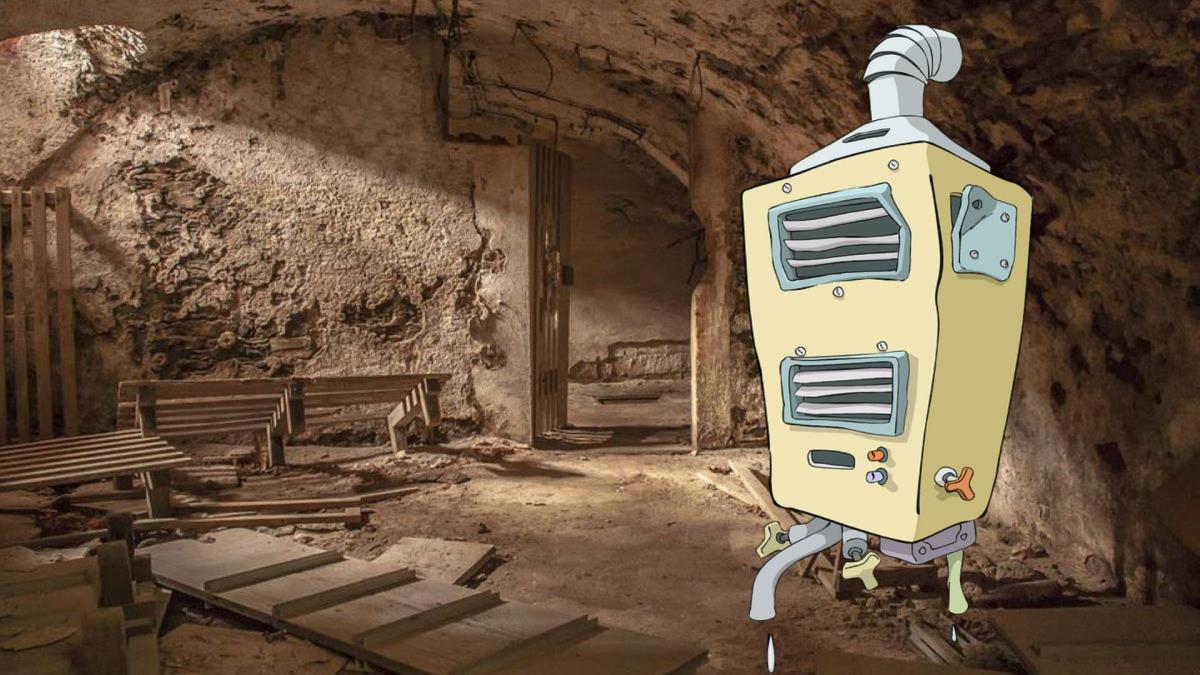
Well, even though our hot water heater was temporarily fixed, there is no guarantee that it won’t fail again between now and later this week. That’s when we’re scheduled to have the new water heater installed

That will cost approximately 10 billion dollars. This item will be the major selling point for our house because we’ll have to sell it immediately in order to move to the poor house.

We have insurance of course. We know what our deductible will be, although we’re not exactly sure how much the insurance company will pay. Maybe they’ll want to know whether we tried to “fix” the water heater first.

Technically, we did that although it could go out again during a shower. That could mean a trip to the emergency room for treatment of rapid hypothermia including surgical removal of icicles from various bodily orifices.

There may be an upside to that. Flash freezing could mean we could preserve ourselves for the future when scientists figure out how to slow down or even stop the aging process.

In fact, that reminds me; Sena saw a news item indicating that there may be a class of medications called “senolytics” that could allow humans to live up to 200 years.

The article doesn’t say what kind of shape you’d be in around that age. What are the implications for retirement age? Would that have to be postponed until you’re over a century old? What would it be like to be that old? Maybe we could ask certain entertainers who are making a living in Branson, Missouri.

How much would senolytics cost at the pharmacy? Probably about 10 billion dollars per pill.

How about extending the working life of water heaters?

Paying Attention to What Matters

This is just a quick shout-out to the Iowa City Fire Department (Iowa City Fire Engine 4 and Engine 1) and the Johnson County ambulance service for their outstanding rescue of a person who suffered a cardiac arrest recently. It was reported in the news and the city of Iowa City wrote a great story about it as well.

We visited with a firefighter at Fire Engine 4 when we were out for a walk a while back.

Every day I see news stories about people acting up just to get attention. I pay attention to the stories about people who exemplify courage and kindness.

New 988 Suicide and Crisis Lifeline Starts Today!

The new 988 Suicide and Crisis Lifeline number is available starting today. Iowa is with the program and you can read more about it at the Iowa State University Extension and Outreach website.

You can also learn more at the 988 Lifeline web page.

Stay Safe as Hot Weather Returns

The temperature will climb into the 90s and beyond beginning early next week. Please stay safe. Follow these guidelines about how to keep well-hydrated when the humidity soars. Be prepared to prevent heat illness.

Thoughts on the Song “Against the Wind”

A couple of days ago, while we were playing cribbage, Sena asked me who sang the song “Against the Wind.” I offered a name, which later turned out to be wildly wrong. It bugged her so much she got up from the cribbage game and went to the computer to look it up.

Of course, Bob Seger wrote the lyrics and sang it. She asked me what I thought it meant. I wasn’t sure at the time. I hadn’t thought about it for a really long time.

I read about it on the web. I didn’t know what the lyric “8 miles a minute” meant and found a forum message saying that it corresponds roughly to the speed of a cruising airliner which is about a “480 mph.” That’s technically more like 480 knots, which converts to about 550 mph.

Anyway, it’s really fast and might be a way of saying you’re moving through life at breakneck speed. In Seger’s case, it might have had a more concrete meaning, referring to flying all over from concert to concert.

The song was released in 1980, which was about the time we moved to Ames so I could go back to college at Iowa State University (ISU). It was a big change from working as a draftsman and land surveyor’s assistant in my hometown of Mason City.

If you extend the “against the wind” metaphor a little bit, Sena and I were both moving against the wind in terms of our place in society, income level, location and educational attainment. I thought I wanted to be an engineer at the time, mostly because I had worked for years for consulting engineers.

Backing up in time a little, I had done some undergraduate college work previously at an HBCU (historically black college/university), Huston-Tillotson College (now Huston-Tillotson University) in Austin, Texas in the mid-1970s.

That was also a kind of move against the wind. I grew up in Mason City, and often I was the only black kid in grade school. I got used to that, although the racism was more overt back then and it was difficult sometimes to bear up against that kind of wind. On the other hand, I felt like a fish out of water at H-TC. I just felt like I didn’t fit in. It was part of the reason I left Austin.

It was also challenging to fit in at ISU. I figured out quickly that I would never complete the engineering degree program. The math and hard science courses were tough from the beginning and only got harder. I realized I was going against the wind there.

So, I changed my major and settled on medical technology, which led to working in a hospital laboratory. But it took about a year to get a job after graduation. Looking back, It was a frustrating time and that really felt like pushing against a headwind. I don’t know what I would have done without Sena.

I finally got into medical school at the University of Iowa. Biostatistics and Biochemistry were brutal. I was very close to quitting before the 3rd year of clinical rotations. I doubted I was cut out to be a physician. I thought about going back to surveying. But I didn’t.

Many deadlines, commitments, and struggles leading to brief forays from academia into private practice led me to think of myself as more of a fireman or a cowboy than an academician. Yet I spent most of my career at the University of Iowa.

Now I’m retired. Sena is my shelter against the wind. I guess if you look hard enough, just about anybody can relate to Bob Seger’s song. Let the cowboys ride.

My Plan for the Unidentified Frying Objects!

We have to get the UFO thing under control, and it’s going to take more than mass produced tin foil hats. I watched a couple of paranormal shows the other night and saw The Secret of Skinwalker Ranch and The Proof is Out There hosted by Tony Harris.

I poke fun at The Secret of Skinpicker Ranch and The 200 Proof Moonshine is Out There, but not in malice. It’s because they are funny. Just to let you know, I think they’re both pretty good entertainment, although I favor The Proof is Out There because of the skeptical approach.

As usual, Tony and his experts politely debunked a few alleged paranormal phenomena and used a sense of humor doing it. I’m still not sure why Tony calls the current series the Skinwalker Edition. He never really investigates what the skin picker cast members are up to, which usually involves saying “What the bleep” after seeing the odd orb or two and occasionally having fainting spells.

I think Tony gets green screened into a couple of pictures and videos of the Skinpicker Ranch in northern Utah where it’s located and politely comments about what the cast is up to on the show. I cannot understand why an astrophysicist, Travis Taylor, is on the show, other than to try to give it credibility for the pseudoscientific approach. However, Dragon (played by Bryant Arnold), who is just a security guard, gets more camera time than Taylor.

That said, I think it’s way past time to get a better understanding of these Unidentified Frying Objects (UFOs). We’re talking about an astral chicken here, who is anatomically altered to function as its own wormhole vortex. I think the White House has been aware of the alien poultry cloaca portal vanguard (APCPV) for decades.

There are not enough tin foil hats to go around, people. Besides, they are a waste of good aluminum foil wrapping paper, which should be reserved for the resistance fighters when it comes time to roast the invaders. Don’t blame me when you get caught; you’ve been warned.

What we really need is a large coop to confine these galactic free range cluckmeisters. We need to toss the so-called Unidentified Frying Objects, which are actually alien cloaca black hole benders, into the skillet and add poultry seasoning. You want them to be golden brown.

It’s important to be committed to the goal, even when their hired thug abductors which commonly look like little green men (the small grays are the custodians). The abductors tend to be easily tricked into setting you free if you find a decent BBQ rib joint for them. Jimmy Jack’s Rib Shack in Iowa City is a good choice. They also do chicken.

You’re welcome.

Backyard Animal Parade

I put together some video clips of animals we’ve seen in our back yard over the past year or so. They include deer with fawns, wild turkeys, and raccoons.

I’m not a wildlife expert by any means. I searched the web for questions I had about the behavior of these creatures.

Are raccoons always or even mostly solitary foragers? I guess not, since there were a couple of them finding something to eat in our yard. Maybe it was a couple of former litter mates. I don’t think it was a date. They weren’t paying much attention to each other. Usually, males tend to be solitary as adults.

I’ve read articles by authors who assert that wild turkeys and deer get along pretty good, but obviously some big male turkeys get literally ruffled at the sight of fawns. Male turkeys usually ruffle their back feathers and fan their tails to intimidate other animals—including fawns, at least occasionally. They eat pretty much the same food, so they probably see each other as competitors sometimes. And I saw one YouTube video in which the narrator interpreted a fawn (without spots, maybe a male) rushing at turkeys and the turkey rushing back as a strange game of tag.

Does (plural of doe) tend to wean fawns between 2 and 4 months, but that doesn’t stop fawns from trying to nurse later. However, this doe ignored the fawn trying to nurse. The other fawn seemed to be trying to taste a branch with dead leaves on it—so maybe that one is getting the message.

May the Force Be With the Qualified Plumber

Well, after 5 grueling weeks of icy cold showers, a qualified plumber—oh wait, you guys already know our hot water heater croaked just last Friday. And the plumber fixed it in a jiffy on Monday—miraculous.

So, the cold shower ordeal lasted only 3 days. But those were really dreadfully, awfully, cosmically cold shower days.

I don’t know what he did other than to clean the burner and re-ignite it. But it must have been a special cleaning method using Obi Wan Kenobi moves and a spell, “These aren’t the droid reigniters you’re looking for.”

Anyway, he walked in without anyone else with him and wasn’t carrying a new hot water heater on his back. That said two things to us. He was not a technician in training and he was very confident he could get our water heater working again. And he did.

On the other hand, he did carry a very large pack on his back, and I wondered if just maybe there was a little old jedi in it. Maybe Yoda was hiding in there, ready to encourage the plumber to concentrate more deeply if necessary, “The burner clean. Yes, hrrrm.”

We were impressed and didn’t even ask him about his qualifications. We know what can happen when you ask questions like that.

Clean Version

Although he couldn’t tell us how long the fix would last, he did tell us the approximate price of a new water heater. I got the urge to take another cold shower as a countershock. But I resisted. And the plumber didn’t give a hard sell.

Anyway, he’ll get back to us with a quote. Until then, we’re hoping the cold shower days are gone.