This is just a shout-out to The University of Iowa Hospitals & Clinics for once again being recognized as one of the top hospitals in the nation by U.S. News & World Report.
The Ophthalmology and Visual Sciences Department ranked 6th in the nation.
I got a pang of anti-nostalgia after reading the latest article calling for abolition of Maintenance of Certification (MOC), posted by Medscape on August 1, 2023. There is a petition by oncologists to end MOC. So, what else is new? So far it has almost 10,000 signatures.
I remember my own petition in 2014 to end the American Board of Medical Specialists (ABMS) attempt to establish Maintenance of Licensure (MOL), a kissing cousin of MOC, which would have blocked physicians from getting a state medical license if they didn’t comply with MOC requirements. It was supported by both the Iowa Psychiatric Society and the Iowa Medical Society. It got a lot of signatures and many comments in support of opposing both MOC and MOL. The glaringly obvious motive by member boards to require MOC is money and always has been, in my opinion.
I’m baffled at why this debate still rages on. It looks like almost no progress has been made in the last decade, apparently because the American Board of Internal Medicine (ABIM) and other boards ignore the clear messages from rank-and-file doctors about how MOC actually interferes with efforts to pursue practical continuing medical education.
I have always been a staunch supporter of physician-led continuing medical education. At the hospital where I worked as a consultation-liaison psychiatrist, the consult service ran the Clinical Problems in Consultation Psychiatry (CPCP). It was a weekly case-based conference, which I have written about in a 2019 post.
Ironically, the Performance in Practice (PIP) delirium clinical assessment tool module that I and one of the residents created is still offered for credit on the American Board of Psychiatry & Neurology continuing education web site. I think it demonstrates the ability of individual doctors to establish practical methods for developing their own continuing education programs.
I recently found the obituary of my mentor, Dr. Russell Noyes, Jr. MD. He died on June 21, 2023. This is the first time I’ve ever said that he was my mentor. I probably just didn’t realize it until I found out he passed.
Dr. Noyes was my teacher during the time I was learning consultation-liaison psychiatry back in the 1990s at The University of Iowa Hospitals & Clinics. His knowledge was vast. He contributed greatly to the scientific literature on anxiety disorders. He also wrote about near death experiences.
Dr. Noyes retired in 2002. As his students, we chipped in to get him a retirement gift. It was a large bookstand. We were just a little uncertain about whether a bookstand was the right gift for someone who was a tireless researcher and teacher. He was also an avid gardener and musician. He soon returned to work in the department, staffing the outpatient clinic. He also continued to regularly attend grand rounds and research rounds. Years later at a grand rounds meeting, someone asked him about his retirement. Dr. Noyes retorted, “I don’t believe in retirement.”
I remember I could hardly wait to retire. Since then, I’ve been ambivalent about retirement, but not so much that I ever seriously considered returning to work. I sometimes have dreams about being late for college lectures because I can’t find my way to them. A couple of times lately, I’ve had dreams about not being able to find my way through a hospital to conduct a consultation evaluation. I don’t know what that means.
I was an avid student of consultation-liaison psychiatry but I was not a scientist. That was part of the reason I left the university in 2005 for a position in a private practice psychiatry clinic. He cried at the going away party my students and co-workers held for me. I still have a little book in which well-wishers wrote kind messages. Dr. Noyes’ note was:
“Jim
We’re going to miss you. You are the consummate consultation-liaison psychiatrist and your leaving is a great loss to the Department. We wish you the best and hope to see you at the Academy meetings.
Russ”
His sentiment was one of the main reasons I soon returned to the department, only to leave again a few years later—and return again after a very short time. I came back because he was a consummate teacher and I wanted to learn more from this beacon of wisdom.
Many who knew him, including me, often saw him riding a bicycle on Melrose Avenue to and from work at the hospital. We wondered why he didn’t drive instead. His son James wrote a beautiful remembrance of him and posted it on the web in 2006. It’s entitled “My Dad (Russell Noyes, Jr).”
James says his dad was a terrible driver. This triggered a memory of how it was Russ’s wife, Martie, who drove the rental car when we rode with them from the airport to the hotel where an Academy of Consultation-Liaison Psychiatry meeting was to be held. I remember gripping the armrest and wishing we’d hired a taxi as Martie steered erratically through heavy traffic.
Dr. Noyes knew how to guide his learners through their careers. He also knew how to write and was a stern editor. Even as I wrote this remembrance, I could see how he might have critiqued it. I tried to do it on my own, and of course I failed. It will have to do.
By now many of us have seen the news headline about the person in Washington state who was arrested and sent to jail for noncompliance with a court order for treatment of tuberculosis. This led to my searching the literature about the connection between court-ordered treatment for psychiatric illness and court-ordered treatment for tuberculosis in Iowa. I’m not assuming that the person who is the subject of the news story has psychiatric illness.
I’m a retired consultation-liaison psychiatrist and the issue of how to respond to patients who refuse treatment for tuberculosis arose maybe once in my career. When the Covid-19 pandemic began a few years ago, I thought of the Iowa code regarding involuntary quarantine of patients infected with Covid-19 infection. I thought it was a situation similar to that of persons infected with tuberculosis. That was an issue for the hospital critical incident management team to deal with.
I found an article relevant to both internal medicine and psychiatry. It is entitled “Can Psychiatry Learn from Tuberculosis Treatment?” It was written by E. Fuller Torrey, MD and Judy Miller, BA and published in Psychiatric Services in 1999. The authors point to the directly observed therapy (DOT) programs in place in several states, including Iowa. Such programs can include positive reinforcement incentives such as fast-food vouchers and food supplements, movie passes and more. They credit the New York experience using DOT with reducing the tuberculosis rate by 55%.
Torrey and Miller point out that many psychiatric treatment programs didn’t offer as many incentives as DOT programs for treatment of tuberculosis. They also say that a “credible threat of involuntary treatment, essential for the success of DOT” often is absent from psychiatric programs.
I was puzzled by their view because of what I saw from our own integrated multidisciplinary program of assertive community treatment (IMPACT) at The University of Iowa Hospitals & Clinics, which started well before they wrote the article. My impression is that it has been very successful. The Iowa Code covers the role of involuntary psychiatric hospitalization in the event of noncompliance as a result of uncontrolled psychiatric symptoms leading to danger to self or others or inability to provide for basic self-care needs.
On the other hand, because of my background in consultation-liaison psychiatry, I wondered about how we might treat someone with both tuberculosis and severe psychiatric illness, the latter of which could make treatment of the former difficult or even impossible.
We can use long-acting injectable antipsychotics to treat those with chronic schizophrenia. They’re not uniformly effective, but they play an important role in acute and maintenance therapy.
But I also forgot about how tuberculosis treatment could be administered to those unwilling to take it voluntarily. I rediscovered that tuberculosis treatment can be given by injection, if necessary, although it’s usually intended for treatment-resistant disease. On the other hand, scientists created a long-acting injectable drug for tuberculosis which was effective in animal studies and which could be a delivery system for non-adherent patients.
And I thought about who would be the responsible authority for administering tuberculosis medications on an involuntary basis. It’s not psychiatrists. It turns out that in most states, including Iowa, the local public health officer is in charge. The CDC has a web page outlining suggested provisions for state tuberculosis prevention and treatment.
Patients with tuberculosis who refuse treatment can be confined to a facility, although it’s not always clear what that facility ought to be. Certainly, I would be concerned about whether a jail would be the best choice.
I don’t have a clear answer for an alternative to incarceration. Would a hospital be better? General hospitals are not secure and there would not be an ideal way to prevent the patient from simply walking away from a general hospital ward. If the patient has a comorbid severe psychiatric illness that interferes with the ability to cooperate with tuberculosis treatment, then maybe a locked combined medical-psychiatric unit (MPU) would be the better choice. Arguably, while an MPU might not be the best use of this scare resource, it’s probably more likely to have a negative pressure isolation room for a patient with both tuberculosis and psychiatric illness. I co-attended with internal medicine staff on The University of Iowa Hospital’s MPU for many years. There are rigorous criteria for establishing such units. The best expert in integrated health care systems I know of would be a former teacher and colleague of mine, Roger Kathol, MD. He is currently the head of Cartesian Solutions.
I’m aware that just because someone refuses treatment for tuberculosis doesn’t necessarily mean a psychiatric illness is present. The critical issue then could become whether or not the patient has the decisional capacity to refuse medical treatment. The usual procedure for checking that would include assessing understanding, appreciation, reasoning, and the ability to make a choice. You don’t necessarily need a psychiatrist to do that. Further, there are nuances and recent changes in the decisional capacity assessment that can make the process more complicated. The New York Times article published in early May of this year, entitled, “A Story of Dementia: The Mother Who Changed,” makes that point based on a real-life case in Iowa, involving psychiatrists at The University of Iowa.
It occurs to me, though, that just because a person is able to pass a decisional capacity assessment doesn’t necessarily make a decision to refuse tuberculosis treatment OK. Letting someone expose others to infection when effective treatment is available doesn’t sound reasonable or safe.
That’s my two cents.
Quenard F, Fournier PE, Drancourt M, Brouqui P. Role of second-line injectable antituberculosis drugs in the treatment of MDR/XDR tuberculosis. Int J Antimicrob Agents. 2017 Aug;50(2):252-254. doi: 10.1016/j.ijantimicag.2017.01.042. Epub 2017 Jun 5. PMID: 28595939.
I read the news story about resident physicians at Elmhurst Hospital Center in New York City who went on strike this past Monday about low pay. The story doesn’t mention whether psychiatry residents joined the strike. The story did mention how difficult it was to work there during the Covid-19 pandemic in 2020.
I looked up the report from the consultation-liaison psychiatry department at Elmhurst during that time. Their report and many others were submitted to the Academy of Consultation-Liaison Psychiatry (ACLP).
The Elmhurst report was submitted April 1, 2020 by Dr. Shruti Tiwari, MD, Professor Consultation-Liaison, Icahn School of Medicine at Elmhurst Hospital Center, Queens, NY.
I read the report in order to figure out what I and my colleagues at University of Iowa Hospitals & Clinics needed to do in order to respond to psychiatry consultation requests in the setting of the Covid-19 pandemic. In general, we followed the Elmhurst suggestions.
I remember how difficult it was to operationalize the consultation protocol in light of the need to control spread of the Covid-19 infection. We worked with our IT department to use iPad devices with video hookups to evaluate patients in the emergency room. Early on, incredible as it may seem, there was limited supply of PPE for emergency room physicians.
We could do curbside consultations sometimes. Often, when I was on service, I found it difficult to use the iPad because of glitches in the device. In order to reduce the number of consultation team members huddling together, residents and I saw patients separately. Often, delirium with agitation demanded we evaluate the patient in person. There was an adequate supply of PPE with some limitations. Psychiatric consultants didn’t have access to N95 masks because of the shortage of them at the time. We wore surgical masks and face shields as well as gowns and gloves. We were not to see patients in the ICUs other than by video assisted means.
I couldn’t tell from the news story when the residents formed a union. One them was interviewed for the story and said that their immigrant status made working conditions more difficult as well as insufficient pay. The story also mentions that the last time doctors went on strike in Manhattan was in 1990.
It would have been difficult for physicians (including psychiatrists) to go on strike during the pandemic, probably impossible. I’ve written about physician strikes before and have given my opinion about that. I hope things work out for the Elmhurst resident physicians and the patients.
Happy Earth Day! Yesterday, Sena worked pretty hard out in the garden spaces. She has planted ten river birch trees. I did my usual spring lawn edging, which followed the first mow of the season a couple of days before by the lawn mowing service.
The vinca is coming up in the garden circle in our back yard. It reminds me of a time many years ago when I chopped a bunch of vinca out of a substantial portion of the back yard of a previous house. This became Sena’s first big garden. We’ve moved several times since then and there have been a number of other gardens.
True, vinca is invasive and I think it’s also called creeping myrtle or periwinkle. I found out later after I chopped out a few bushels of it that the plant has organic compounds called alkaloids which inhibit the growth of certain cancers. Vincristine and vinblastine are approved for use in the United States.
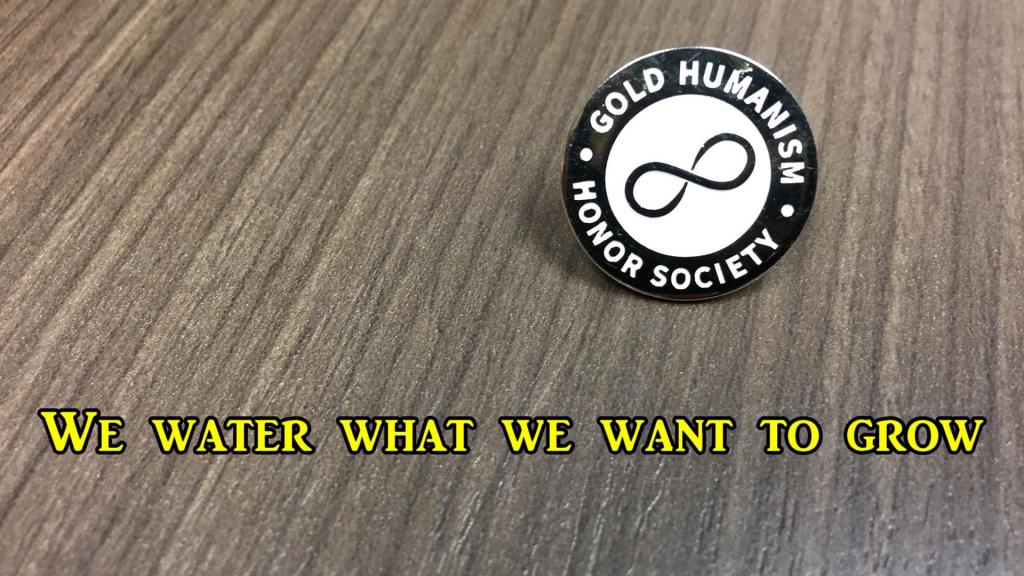
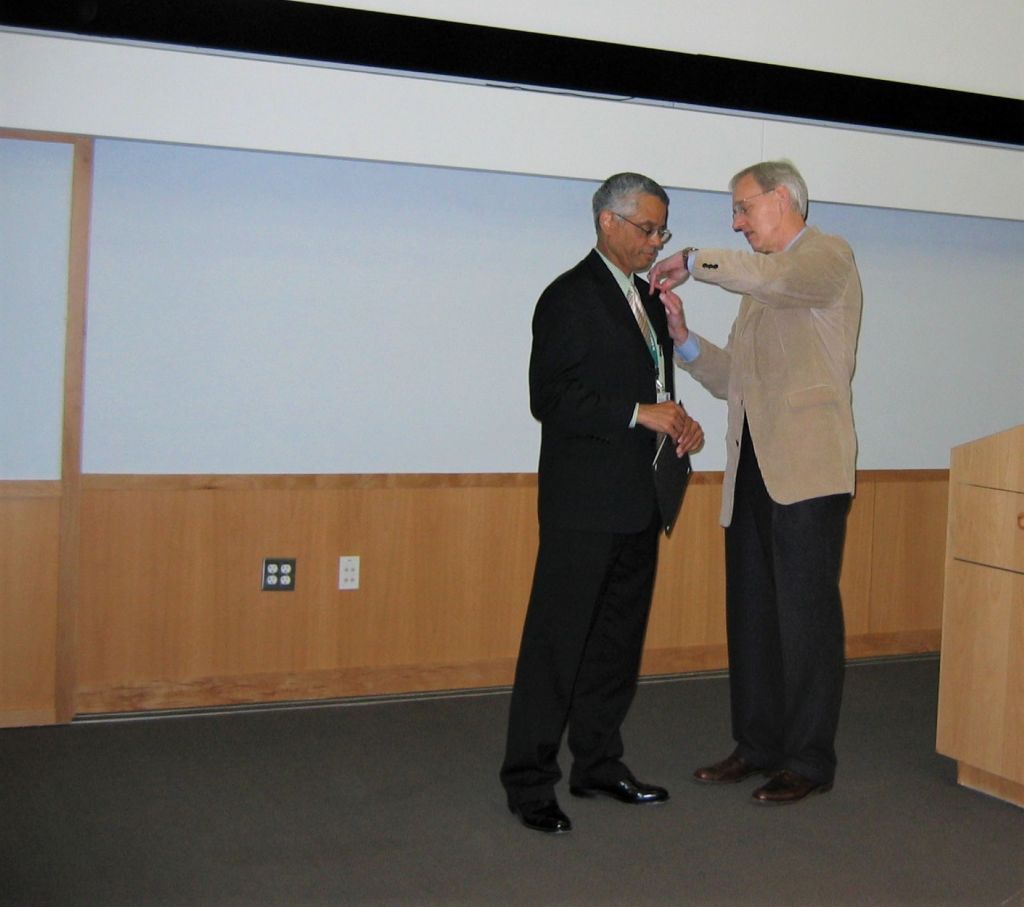
The reason I’m mentioning vinca is that way back early in my career as a consultation-liaison (C-L) psychiatrist at The University of Iowa Hospitals & Clinics, I dimly recall giving a short acceptance speech for winning a Leonard Tow Humanism in Medicine award from the Arnold P. Gold Foundation in 2006. I was nominated for it by one of the psychiatry residents and another faculty member.

In my speech I mentioned cutting out all of the vinca (which I thought was a weed) in the back yard. I was pretty proud of getting that job done—until Sena got home and found out. She was less than thrilled about my accomplishment and explained that vinca was not a weed. In fact, she wanted it to grow.

I still have the speech and one of the points I made was, “…we water what we want to grow.” The speech is below:
Good morning distinguished guests including graduating medical students, Dean______.
Today we gather to reward a sort of irony. We reward this quality of humanism by giving special recognition to those who might wonder why we make this special effort. Those we honor in this fashion are often abashed and puzzled. They often don’t appear to be making any special effort at being compassionate, respectful, honest, and empathic. And rewards in society are frequently reserved for those who appear to be intensely competitive, even driven.
There is an irony inherent in giving special recognition to those who are not seeking self-aggrandizement. For these, altruism is its own reward. This is often learned only after many years—but our honorees are young. They learned the reward of giving, of service, of sacrifice. The irony is that after one has given up the self in order to give back to others (family, patients, society), after all the ultimate reward—some duty for one to accept thanks in a tangible way remains.
One may ask, why do this? One answer might be that we water what we want to grow. We say to the honorees that we know that what we cherish and respect here today—was not natural for you. You are always giving up something to gain and regain this measure of equanimity, altruism, trust. You mourn the loss privately and no one can deny that to grieve is to suffer.
But what others see is how well you choose.
I didn’t write down the anecdote about the vinca. I think I was also trying to make the point that vinca can be thought of as an invasive “weed” as well as a pretty garden plant. Furthermore, while the vinca alkaloid (for example, vinblastine) can be an effective treatment for some cancers, it can also cause neuropsychiatric side effects, which can mimic depression. That’s where a C-L psychiatrist could be helpful, showing how medicine and psychiatry can integrate to move humanism in medicine forward.
Anyway, ever since then, vinca has often been a part of Sena’s garden, including the one where we live now. And, whenever we walk on any of the trails in Iowa City or Coralville, we always notice it carpeting the woods.
We can probably apply the little law “we water what we want to grow” to many things in life. We can choose to apply it to the world in which we live by creating a safe home to shelter a happy family, doing useful work in the garden while practicing kindness, gratitude, and patience.
We can start by planting an idea like a tree.


I read Dr. Moffic’s article, “The United States Psychiatric Association: Social Psychiatric Prediction #4”. I think the rationale for renaming the American Psychiatric Association makes sense.
However, it also got me thinking about the names of other associations connected to the APA (here meaning American Psychiatric Association). One of them is the Black Psychiatrists of America, Inc. We make up about 2% of psychiatrists in the United States.
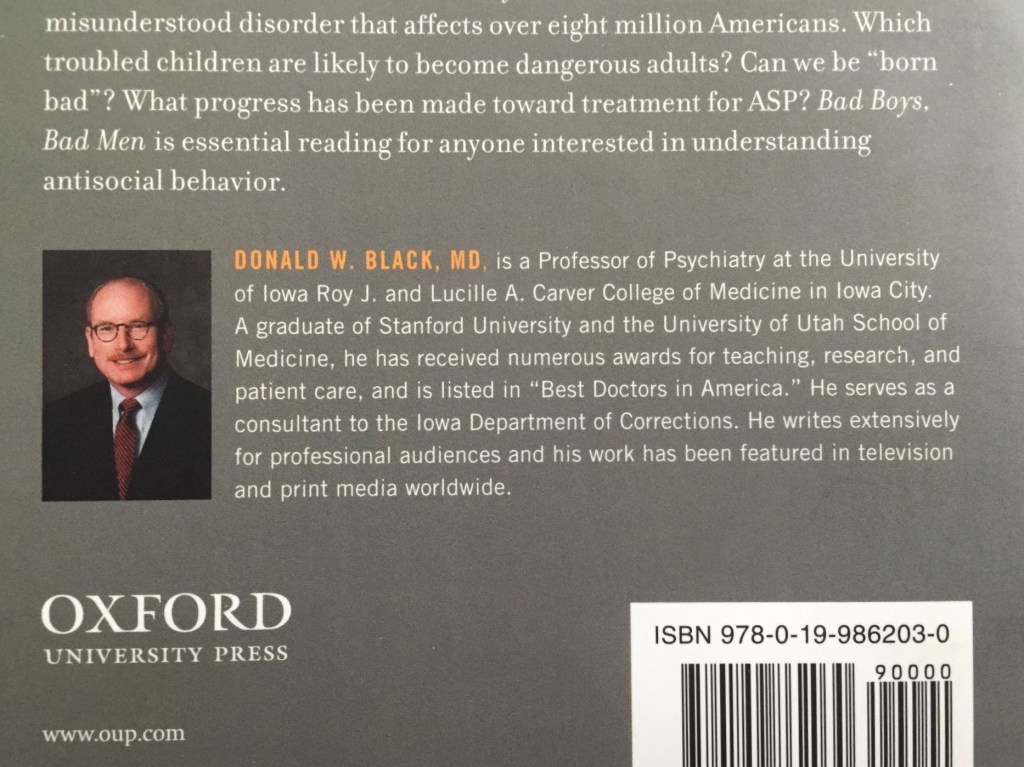
It also reminded me to once again do a web search for the term “Black psychiatrists in Iowa.” It turns out the results would lead to a repeat of my previous post “Black Psychiatrists in Iowa” on May 7, 2019. Nothing has changed. My colleague Dr. Donald Black, MD is still coming up in the search. Just as a reminder, he’s not black.


It probably comes as no surprise to readers of my blog that this also reminds me of a couple of Men in Black scenes.
Video of Men in Black scene, Dr. Black and Dr. White quotes.
And my post still appears high up in the list of web sites. There has also not been published a more recent edition of the Greater Iowa African American Resource Guide than the one in 2019. You can still find my name and that of Dr. Rodney J. Dean listed in the 2019 edition as the only black psychiatrists in Iowa.
In case you haven’t noticed, I’m retired. I have never considered changing my name and title to Dr. James Caramel Brown. If you noticed that the “Caramel Brown” part is from Men in Black 3 (Agent J talking about what Agent K should say about his skin color in his eulogy for him), give yourself a pat on the back.
Agent J: Can you promise me something, if I go first, you’ll do better than that at my funeral? Yeah, something like, uh: “J was a friend. Now there’s a big part of me that’s gone. Oh, J, all the things I should have said, except I was too old and craggy and surly and just tight. I was too tight. Now, I’m gonna just miss your caramel-brown skin.”
Agent K: I’ll wing something.
Anyway, I’m not sure what to do about renaming the American Psychiatric Association. But I think whoever is in charge of google search results for the term “black psychiatrists in Iowa” could improve on the current situation.
Today, I read Dr. George Dawson’s blog post, “How I ended up in a high-risk pancreatic cancer risk screening clinic.” As usual I was impressed with his erudition, scientific literacy, and rigorous objectivity, even as it pertained to a deadly disease which runs in his family genetic history. I couldn’t help admiring his courage.
And, whether this is a random connection or not, this somehow led to my remembering Dr. George Winokur, a giant in the scientific study (including genetics) of psychiatric diseases, especially mood disorders. He died of pancreatic cancer shortly after he was diagnosed with it in the spring of 1996.
Dr. Winokur was chair of the University of Iowa Department of Psychiatry from 1971 to 1990. He remained on faculty, actively involved in research and teaching up until the day of his death in October of 1996.
I was a resident in psychiatry at University of Iowa from 1992-1996 and I have a clear recollection of meeting with Dr. Winokur in his office during my last year, when I was preparing for job interviews. I knew he had been diagnosed with pancreatic cancer.
He had been actively recruiting me to accept a position in the department and did so even as we spoke briefly. I remember noticing that he gripped an electrical conduit on the wall next to his desk so tightly that I wondered if he were in pain.
He was the main reason I stayed in Iowa. He had a great sense of humor. All of us residents loved him. There was even a list of his “commandments” all new residents received when they began their residencies at Iowa.
Winokur’s 10 Commandments
I never got the impression that George Winokur recruited me because I was black, although it was pretty obvious to me that I would be the first black University of Iowa psychiatry department faculty member. He had too much class to make that an issue.
I’ve known a few classy psychiatrists. Maybe the connection is not so random.
I’m going to talk a little bit about fathers. Mothers are important too, but I’m a guy and I can talk about mothers another day. Because it’s a touchy subject, I’m going to begin with a Men in Black (MIB) joke, like I always do when I’m being defensive. There’s this MIB 3 scene in which Agent K and Agent J have this exchange:
Agent K: I used to play a game with my dad, what would you have for your last meal. You could do worse than this (explanation for this: they’re sitting in a restaurant and an eyeball in Agent K’s soup swivels around and stares at him).
Agent J: Oh, okay, I used to play a game with my dad called catch. Except I would throw the ball and it would just hit the wall, cause—he wasn’t there.
Agent K: Don’t bad mouth your old man.
Agent J: I’m not bad mouthing him, I just didn’t really know him.
Agent K: That’s not right.
Agent J: You’re damn right, it’s not right. A little boy needs a father.
On one level, this scene is just another way of showing the father/son, teacher/student, mentor/mentee relationship Agents K and J had with each other. By extension, their interaction says something about what happens in similar real-life relationships—in the shallow, cliché ways that movies always do.
I sometimes think about the relationship I had with learners when I was a teaching consultation-liaison (C-L) psychiatry. Often, I say to myself that I never had a mentor and I was never a mentor.
That’s not true. Although I never had a mentor who was formally assigned to me, there was more than one faculty member in the psychiatry department with whom I had an informal mentor/mentee relationship. And I was an informal mentor to at least a few trainees.
However, I was middle-aged by the time I entered medical school, which probably set the stage for awkward relationships with my fellow students and some teachers, partly because I was either the same age as or older than them.
That doesn’t mean I was wiser than them. It just means that I was conflicted about them. Later, in residency, I learned about transference and countertransference. In fact, I focused on the psychodynamic as well as the medical issues in teaching trainees. In the first C-L manual I wrote (the forerunner to the book I and my co-editor published later), I devoted a large section to psychodynamic factors relevant to doctor-patient relationships.

So, if you’re wondering when I’m going to start bad-mouthing my old man, you can stop wondering. I’m not going there. He wasn’t a hero, like Agent J’s father was (you need to see the movie to get this angle).
My dad was funny. I don’t think I got my own sense of humor from him, but it makes sense why I would have one—and just because “he wasn’t there” doesn’t explain everything. It never does.
Fathers can be a pain in the ass, not just because of dad jokes. Fathers can be a pain in the brain, too. Ask anybody who was a latchkey kid; I was one of those. We really don’t belong to any specific generation.
We also can’t just up and time travel like Agent J and find out about the father we never really knew. Mostly, it’s just bits and pieces, like a matchbook with a name and address from somebody on your paper route. The path it can lead to doesn’t always mean you find out that “Your daddy was a hero,” like a young Agent K tells young James (who becomes Agent J in the future) after he neuralyzes him to shield him from the hard truth about his father.
You’ll have to watch the movie to get that one.