


The University of Iowa Stead Family Childrens Hospital in Iowa City has ranked in 9 pediatric specialties, including pediatric behavioral health by U.S. News & World Report!
Category: University of Iowa
University of Iowa Writing Programs Get High Ranking from U.S. News & World Report

The University of Iowa ranks No. 9 across all universities in the country for its power in the writing disciplines., according to the 2024 U.S. News & World Report.
The school is well known for its writing programs of which the The Writers Workshop is the best known.
The University of Iowa also gives medical students a leg up on writing in its Writing and Humanities Program, which offers courses such as writing and medicine and editorial writing.
This reminds me of a couple of things, one of which was the University of Iowa medical school note service. Many medical schools have note services so that not all students have to write their own lecture notes. It’s ironic in a way that one of the best known public medical schools didn’t encourage all the medical students to labor over their own class notes. I volunteered once to write notes for the class. It was hard work.
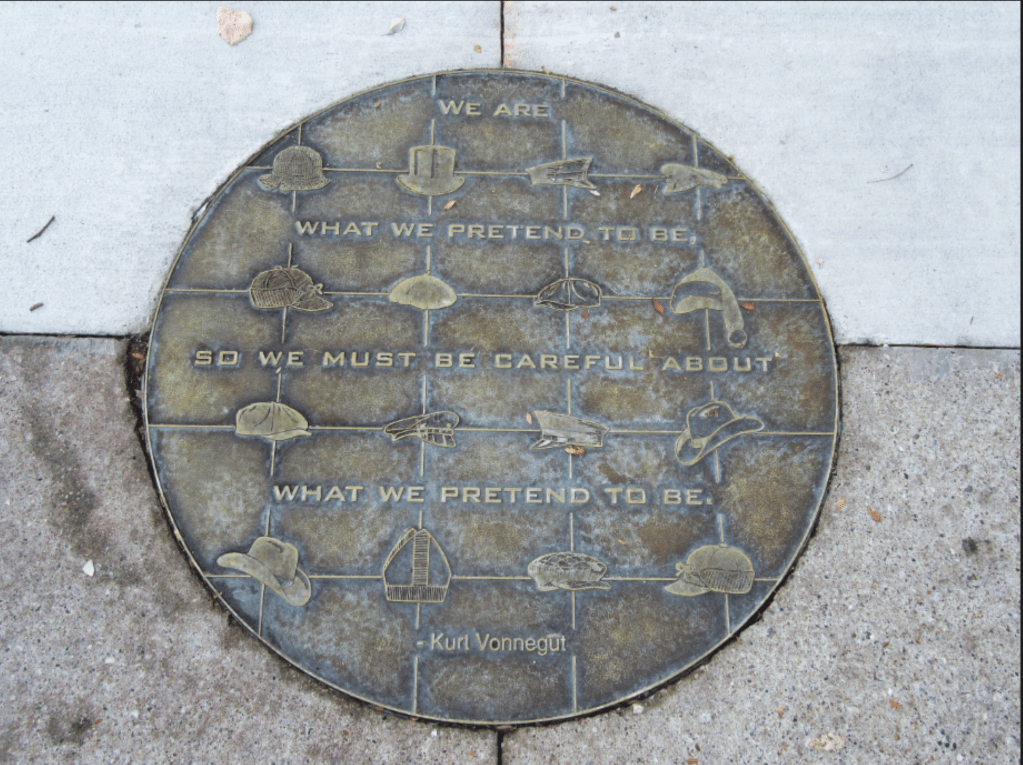
The other thing writing education at the University of Iowa reminds me of is the Iowa Avenue Literary Walk. There are several plaques along Iowa Avenue which honor famous authors who had Iowa connections, often through the Iowa Writers Workshop. My favorite is one by Kurt Vonnegut, a former teacher at the workshop.
Thoughts on the Homeless Mentally Ill

The homeless man who lives on the sidewalk outside our hotel reminds me of a couple of things. One is Dr. Gerard Clancy, MD who is University of Iowa Health Care Professor of Psychiatry, Professor of Emergency Medicine, and Senior Associate Dean of External Affairs.
I remember Gerry, who was in the department of psychiatry when I was a resident. I saw his picture in the newspaper and hearing about him riding a bicycle around Iowa City doing a sort of outreach to the homeless mentally ill.
I found an archived article mentioning him published in 1995 in the Daily Iowan. The story starts on the bottom of the front page, entitled “I.C. opens new doors for area’s mentally ill.” It continues on page 9A.
The story mentions Dr. Clancy and what was called then the Clinical Outreach Services and the Emergency Housing Program (EHP). The challenges then sound a lot like what they are now: long waiting lists for psychiatric evaluation and treatment, a lack of funding for the treatment of mental illness, and a lack of preventive care. The most common mental illnesses in the homeless mentally ill are chronic schizophrenia, schizoaffective disorder, and bipolar disorder. The idea of reaching out to them “on their own turf” as Clancy was quoted, was to help them feel more comfortable talking about their mental illness.
The housing situation for this population of those struggling with mental illness was dismal then and it’s still dismal.
The homeless guy I’ve been calling Bob lives on the sidewalk next to a busy street. It’s just my opinion that he’s mentally ill based on my observations of his behavior. I’ve never tried to talk to him. However, Bob gets visits from people who obviously have differing views about the way he lives.
Some of them do talk to him and, although I can’t hear their conversations, the actions tell me important things. Some bring him what I call “care packages,” often food, water, and other items. They may start by acting kind, although may get impatient with him. Others try to clean up his sidewalk, and may criticize him. The police occasionally visit and have so far not taken him into custody.
It looks like things have not changed much since 1995 regarding the homeless mentally ill based on what I write here about my observations. In fact, it’s easy to find current news stories that say things are getting worse.
At the beginning of this post, I said I found a couple of things. The other thing was a very thorough teaching presentation about the current state of formal outreach to this population. It’s available on the web as a power point presentation by another University of Iowa faculty, Dr. Victoria Tann, MD, entitled “Assertive Community Treatment 101.”
Dr. Tann is currently an IMPACT Team psychiatrist. It’s an excellent source of background on the history of this effort at outreach to the homeless mentally ill. It also summarizes what’s happening with the program now.
Back to the Stanley Museum of Art
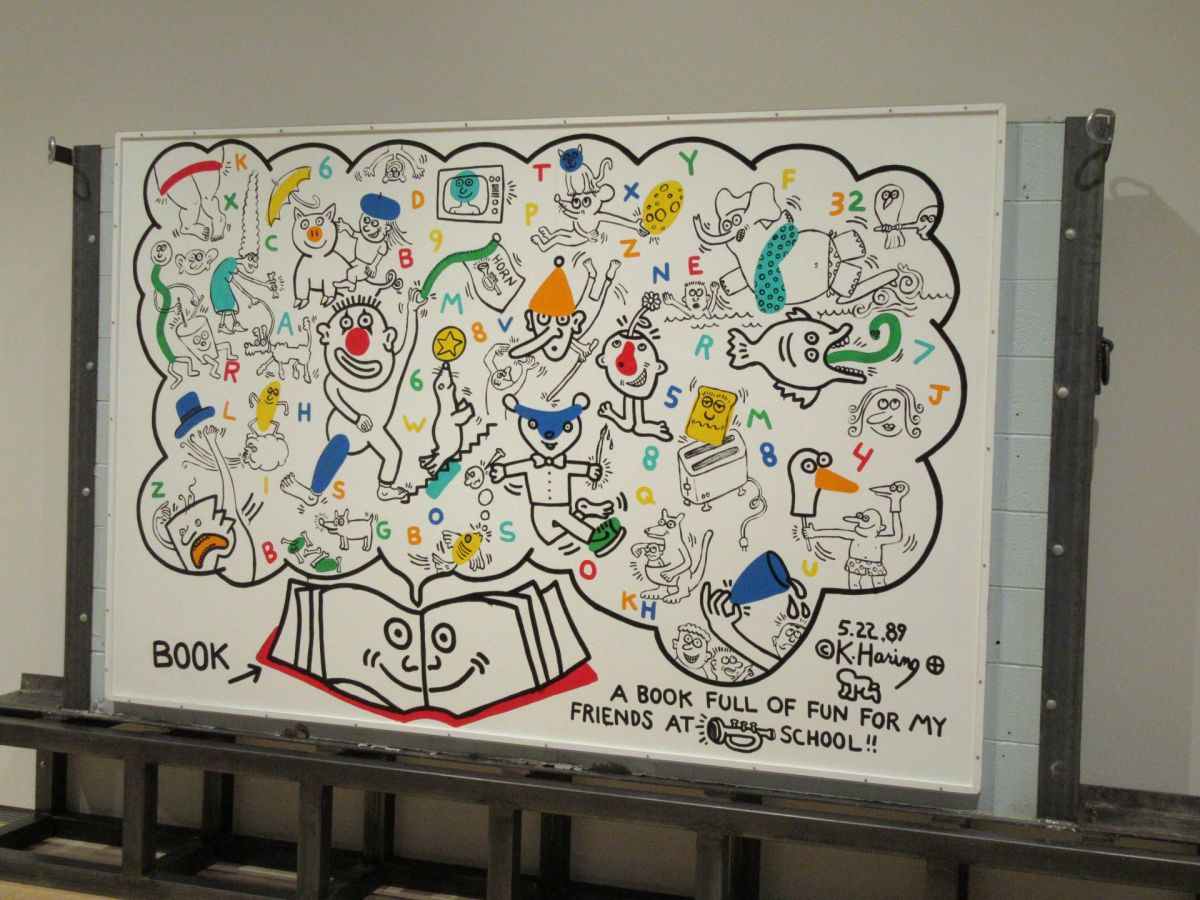
We went for a return visit to the Stanley Museum of Art the other day. It’s been a couple of years. There were a couple of head sculptures outside in the front of the building. They were in honor of one of my former medical school teachers, Dr. Richard Kerber. And the Keith Haring exhibit is excellent. He visited Horn Elementary School in 1989.
Rounding at Iowa: New Treatments for Alzheimer’s Disease

This is one of the latest Rounding@Iowa podcasts and it’s about new treatments for Azheimer’s Disease, with one specific agent called Lecanemab.
I’m an old psychiatrist, and I remember my clinical impresson of the previous medications for Alzheimer’s Disease, one of which was Donepezil. The scientific literature seemed to suggest that patients and families were more impressed with Donepezil than clinicians were.
According to Dr. Shim, one of the participants in the podcast, it’s been 20 years since there has been a new treatment for Alzheimer’s Disease-and the long term effectiveness of Lecanemab is uncertain.
In addition, there are significant risks associated with the agent as well. As you can guess, it’s very expensive, and while Medicare pays for some of the cost, the podcast participants mentioned that it was difficult to get some treatment monitoring imaging studies covered.
Patients and their physicians need to have a full discussion of the risks and benefits of treatments for Alzheimer’s Disease. It’s just as important to avoid the use of certain drugs that are known to worsen cognitive function, such as benzodiazepines and anticholinergics.

89: Tick-borne Illnesses – Rounding@IOWA
Join Dr. Clancy, Dr. Appenheimer & Dr. Barker as they discuss prevention, diagnosis and treatment of various tick-borne illnesses. CME Credit Available: https://uiowa.cloud-cme.com/course/courseoverview?eid=82296 Host: Gerard Clancy, MD Senior Associate Dean for External Affairs Professor of Psychiatry and Emergency Medicine University of Iowa Carver College of Medicine Guests: Ben Appenheimer, MD Clinical Associate Professor of Internal Medicine-Infectious Diseases Assistant Director, Infectious Diseases Fellowship Program Associate Clinical Director, Infectious Diseases Co-Medical Director, TelePrEP, University of Iowa Health Care University of Iowa Carver College of Medicine Jason Barker, MD Associate Professor of Internal Medicine-Infectious Diseases University of Iowa Carver College of Medicine Financial Disclosures: Dr. Gerard Clancy, his guests, and Rounding@IOWA planning committee members have disclosed no relevant financial relationships. Nurse: The University of Iowa Roy J. and Lucille A. Carver College of Medicine designates this activity for a maximum of 1.0 ANCC contact hour. Pharmacist and Pharmacy Tech: The University of Iowa Roy J. and Lucille A. Carver College of Medicine designates this knowledge-based activity for a maximum of 1.0 ACPE contact hours. Credit will be uploaded to the NABP CPE Monitor within 60 days after the activity completion. Pharmacists must provide their NABP ID and DOB (MMDD) to receive credit. JA0000310-0000-26-038-H01 Physician: The University of Iowa Roy J. and Lucille A. Carver College of Medicine designates this enduring material for a maximum of 1.0 AMA PRA Category 1 CreditTM. Physicians should claim only the credit commensurate with the extent of their participation in the activity. Other Health Care Providers: A certificate of completion will be available after successful completion of the course. (It is the responsibility of licensees to determine if this continuing education activity meets the requirements of their professional licensure board.)
In Memory of L. Jay Stein
I was thinking of one of the Johnson County judicial mental health referees I often worked with years ago. L. Jay Stein died in 2014. I looked up his obituary the other day and was a little surprised to find I had written a remembrance for him. I’d forgotten it.
“I will always remember my first encounters with Judge Stein. I was a first-year resident in psychiatry at The University of Iowa Hospitals & Clinics. He often presided at mental health commitment hearings at which I was often the nervous trainee providing “expert testimony” as the treating physician. Jay taught me and countless other psychiatry residents about the importance of procedure. His knowledge was prodigious. But it was his compassion, his fairness, and his inimitable sense of humor I will always treasure.”
Judge Stein’s vocabulary was impressive. Even his recorded telephone automatic replies sounded amusingly erudite. Occasionally, when I had a question about legal procedures in mental health I would call him but get his answering machine. These out of office replies were entertaining and sounded very much like the way he did during commitment hearings. I can’t remember all of it, but it began with something like, “Once again, your request has been denied…” It made me think of what I might hear at a parole hearing—not mine of course.
L. Jay Stein was wise and funny.
Rounding At Iowa: Smoking and Vaping
I just want to give a shout out to University of Iowa Health Care and the Rounding@Iowa podcast for an outstanding presentation on the hazards of smoking tobacco, vaping, and dabbing.
The program originally aired on May 14, 2024 and the guests included two ICU doctors who are pulmonologists I’ve worked with as a psychiatric consultant. They are very dedicated.
There was a third guest and he is a patient who vaped and suffered disastrous consequences leading to lung transplant surgery. His insights are invaluable.
Breathing is good; not breathing is bad.
89: Tick-borne Illnesses – Rounding@IOWA
Join Dr. Clancy, Dr. Appenheimer & Dr. Barker as they discuss prevention, diagnosis and treatment of various tick-borne illnesses. CME Credit Available: https://uiowa.cloud-cme.com/course/courseoverview?eid=82296 Host: Gerard Clancy, MD Senior Associate Dean for External Affairs Professor of Psychiatry and Emergency Medicine University of Iowa Carver College of Medicine Guests: Ben Appenheimer, MD Clinical Associate Professor of Internal Medicine-Infectious Diseases Assistant Director, Infectious Diseases Fellowship Program Associate Clinical Director, Infectious Diseases Co-Medical Director, TelePrEP, University of Iowa Health Care University of Iowa Carver College of Medicine Jason Barker, MD Associate Professor of Internal Medicine-Infectious Diseases University of Iowa Carver College of Medicine Financial Disclosures: Dr. Gerard Clancy, his guests, and Rounding@IOWA planning committee members have disclosed no relevant financial relationships. Nurse: The University of Iowa Roy J. and Lucille A. Carver College of Medicine designates this activity for a maximum of 1.0 ANCC contact hour. Pharmacist and Pharmacy Tech: The University of Iowa Roy J. and Lucille A. Carver College of Medicine designates this knowledge-based activity for a maximum of 1.0 ACPE contact hours. Credit will be uploaded to the NABP CPE Monitor within 60 days after the activity completion. Pharmacists must provide their NABP ID and DOB (MMDD) to receive credit. JA0000310-0000-26-038-H01 Physician: The University of Iowa Roy J. and Lucille A. Carver College of Medicine designates this enduring material for a maximum of 1.0 AMA PRA Category 1 CreditTM. Physicians should claim only the credit commensurate with the extent of their participation in the activity. Other Health Care Providers: A certificate of completion will be available after successful completion of the course. (It is the responsibility of licensees to determine if this continuing education activity meets the requirements of their professional licensure board.)
Another Look at the C-L Psychiatry Pecha Kucha
Back in 2018, one of my emergency room staff physicians asked me to do a Pecha Kucha on what a consultation-liaison psychiatrist does. If you know what a pecha kucha is, you can understand why it was challenging for me to put it together and present it.
Although you may have seen the video I made of the pecha kucha 5 years ago on this blog, I think it’s OK to present it here again.
Briefly, PechaKucha is Japanese for “chitchat.” It’s a presentation format using 20 slides displayed for 20 seconds each. It took a while to rehearse to get it right.
I think it’s also worth emphasizing because most of the ideas in it are still relevant to consultation-liaison psychiatry. See what you think.
Thoughts on Copyright Issues Related to Consultation Psychiatry and Dad Jokes

I want to gas; I mean talk about copyright as it relates to consultation psychiatry or telling dad jokes. By the way, those aren’t the same.
I used to teach medical students and residents how to do certain quick bedside cognitive tests for delirium and dementia. Over the years the instructions about how to administer them (and the restrictions over using them at all) have changed slightly. The major point to make is that they have been copyrighted, which usually means you have to pay to play.
One of them, the Mini Cog, despite being copyrighted, does not require you to pay for the privilege of using it. The video below shows part of it. I didn’t do a comedy bit about the short term recall of 3 objects. The video also flickers when I show the delirium order set; just pause it to stop the flickering.
There used to be a cognitive assessment called the Sweet 16, which started off being non-copyrighted, but then became copyrighted. At first the Sweet 16 mysteriously just disappeared from the internet. You can now download it from the internet, but it’s clearly marked as copyrighted.
The reason the Sweet 16 became unavailable is because a company called Psychological Assessments Resource (PAR) acquired the copyright and then started enforcing it. I found out about this when I could not obtain the PAR version of a cognitive assessment very similar to the Sweet 16 called the Mini Mental State Exam (MMSE) unless I forked over at least $100.
I then started teaching trainees how to use the Montreal Cognitive Assessment (MoCA) because it was free to use without any strings attached. Then it also was copyrighted although you can use it under certain conditions.
Moving right along to telling dad jokes, I found out that dad jokes (and indeed, any joke) can be copyrighted, at least in theory. In fact, it’s hard to enforce the copyright on jokes, even when you can prove originality. Here’s an example of a dad joke I think I made up:
What do you get when you cross marijuana with a Mexican jumping bean? A grasshopper.
Note: this joke may become more important now that the DEA, according to news agencies, plans to reclassify marijuana from Schedule I to III in the near future.
Sena thought it was funny (the joke, not the DEA), which probably means it’s not, technically, a dad joke. That’s according to the authority about dad jokes, Dad-joke University of Humour, (DUH). I’m far from a joke teller at all, as Sena (and anyone else who knows me) would assert. On the other hand, I did graduate from DUH and have a diploma to prove it. You can now give me money.

Furthermore, I also investigated whether something called anti-jokes can be copyrighted. According to the internet, the answer seems to be no. Here’s my attempt of the anti-joke:
Knock, knock.
Who’s there?
The doorbell salesman.
See what I did there? In case you didn’t know, experts say that Knock-Knock jokes are among the hardest to copyright for reasons I suggest you look up later. If you also frame the Knock-Knock joke as an anti-joke (stay with me here), the literalness and mundanity of the so-called punch line makes it virtually impossible to copyright. And, like the dad joke, it’s usually not funny—although there can be exceptions.
Just for the sake of incompleteness, I’ll mention the concept of copyleft, which is not the same as open-source. Although this is usually applicable to computer software, you could broaden it to include dad jokes—I think. Copyleft could mean you can use or modify a dad joke (or anti-joke), spread it freely at parties and whatnot as long as it’s bound by some condition. This includes paying me (no personal checks, please).
What pet do inventors have a love-hate relationship with? A copycat.
You’re welcome.
Svengoolie Movie Trilogy of Terror!
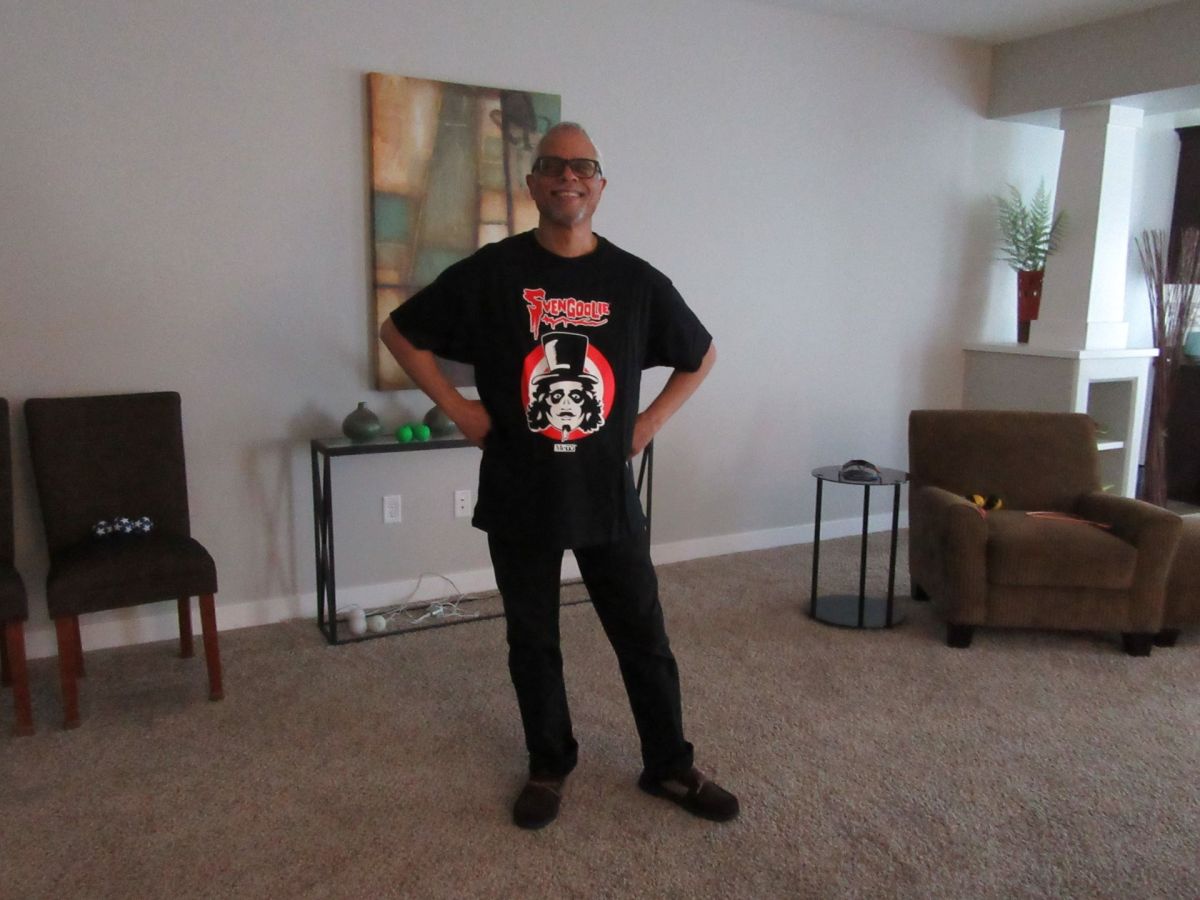
Last Saturday we watched the movie Trilogy of Terror on the Svengoolie show. Well, we tried anyway. There were a lot of interruptions from severe weather warnings. We didn’t mind them because you ignore them at your peril. It’s hard to forget the 2020 derecho in Iowa, which affected a lot of Iowans, including us.
Trilogy of Terror had some psychiatric aspects to it that reminded me how Hollywood frequently gets it wrong when portraying them in films—but sometimes hits the nail on the head.
Although we missed parts of the first and second parts of the movie, it wasn’t difficult to figure out the psychological angle. Both “Julie” and “Millicent and Therese” made me think of antisocial personality disorder (ASPD). The male college graduate student was a pretty good example of a predatory guy lacking any conscience and feeling no remorse for his bad behavior against his apparently meek and defenseless teacher, Julie.
But then the tables were turned and it was Julie who was actually the convincing, coldly calculating and remorseless psychopathic serial killer. She kept a scrapbook of the newspaper stories about her many victims.
One of my colleagues wrote the book about ASPD. Dr. Donald Black, MD, is the author of Bad Boys, Bad Men: Confronting Antisocial Personality Disorder (Sociopathy). In it he recounts the story of serial killer John Gacy. He was diagnosed with ASPD at the University of Iowa. He collected a great deal of data about antisocial men and also acknowledges that women can be diagnosed with ASPD. He has also co-edited and published the Textbook of Antisocial Personality Disorder.


The “Millicent and Therese” part of the movie displayed how a woman can be diagnosed with ASPD. This was the character Therese—who was also Millicent, a very strait-laced alter personality, which makes this also a case of what you could call dissociative identity disorder (DID), which may be related to severe trauma. This used to be called multiple personality disorder. What was interesting about this part of the movie was that both identities were being managed somehow by a family physician, not a psychiatrist—which is not at all plausible.
The last part of Trilogy of Terror is “Amelia,” in which Amelia buys a Zuni fetish doll (named “He Who Kills”) which she intends to give to her boyfriend. However, she’s in a hostile, dependent relationship with her mother who controls her and interferes with every aspect of her life. Of course, the doll comes to life and tries to kill her.
The struggle between Amelia and the doll makes me think about her internal struggle with angry and probably murderous feelings about her controlling mother. Amelia finally internalizes the doll’s rage (actually her own) when he emerges from the oven where she shoved him in an apparently futile attempt to burn him to a crisp. What it looks like is that she inhaled the smoke, finally owning her own rage by internalizing the doll’s smoky remains. This transforms her into a vengeful killer (now grinning with the sharp teeth of the doll) who calls her mother to invite her over to her apartment with the obvious plan to cut her to pieces with a large knife.
This is probably not a movie for kids or sensitive adults, which Svengoolie acknowledges several times during the show. This is why I like the segment with Kerwyn, the dad joke telling chicken with teeth who is voiced by Rich Koz, who also plays Svengoolie. Usually during that segment he tells a series of jokes, repeating the lines a couple of times, seemingly in an effort to teach you how to tell dad jokes. There’s also a Kerwyn joke of the week event, in which he tells a joke submitted by a fan. The joke video takes a few seconds to load, so be patient.
 Go Retire Psychiatrist