
I watched the first half of the Colts vs 49ers game last night and I thought Philip Rivers didn’t look half bad for a 44-year-old guy who’s been out of the game for five years. Did you know he has 10 kids? OK, now that I’ve got that out of my system and that would be, what—the 44th time you’ve heard that since he took the field?
So what the Colts lost? His big family was up in the stands going crazy, cheering him on.
I read an article this morning which had Steve Young saying he could make a comeback at his age—which is 64. I couldn’t believe it. The same story mentions that George Blanda played for the Oakland Raiders when he was 48 back in 1975.
It got me wondering whether I could make a comeback as a general hospital consulting psychiatrist. Could I gallop up 6-8 floors of University of Iowa Health Care? You bet your bottom dollar—I couldn’t.
It’s hard to retire. Every once in a while, I miss hiking up and down the hospital with my camp stool, deftly swinging it around and sitting with the patients and families, telling medical students and residents all kinds of lies (I mean “wise old adages and pearls of clinical wisdom”).
I get a kick out of just wondering what it would be like. I get a vision of myself with a big, golden glowing aura of greatness around my head—until I come to my senses. Hey, nobody’s going to pay me a quarter million dollars to run the consult service for the few months I’d be able to limp around the hospital, falling off my camp stool when my legs go numb or the chair breaks.
It’s not like I can just throw a football like it’s nothing after 5 years. I’d have to prove I still have enough clinical smarts to figure out how to introduce myself (Hi! I’m Philip Rivers and you need to go long!”).
The Maintenance of Certification Circus is still a thing and it’s worse. I’m not saying doctors don’t undertake the arduous task of essentially retraining to be what they once were—because that’s not good enough anymore.
Last night, the camera caught Phil more than once being just as hard on himself as he was with other members of the team who weren’t in the right spot at the right time. Most physicians are perfectionists and if you’ve been out of the game for a while and you try to squeeze back in, you could wind up mumbling to yourself, “They don’t make footballs like they used to!”
I didn’t stay up for the second half of football game. It wasn’t because of anything Philip did or didn’t do on the field.
This just in! University of Iowa Psychiatrist Dr. Susan Shen, MD, PhD, is an assistant professor of psychiatry at The University of Iowa Carver College of Medicine and, hold on to your hat, she’s the first female psychiatrist, the first from Iowa, and only the third psychiatrist overall to receive to win the Avenir Award (French for “future), a highly competitive grant!
The $2.3 million dollar grant will help fund her lab’s research into the underpinnings of substance use and psychiatric disorders. The grant is administered through the National Institute on Drug Abuse (NIDA), one of the National Institutes of Health (NIH).
Sena alerted me to an article about the 28th anniversary of when the first Men in Black movie hit the theaters in 1997. The author praises it and says it’s still pretty good.
I can’t remember the first time I saw it, but it was probably not in 1997. I was in my second year of being an assistant professor of psychiatry at the University of Iowa Hospitals & Clinics (now called University of Iowa Health Care). I was too busy to do much of anything except run around the hospital responding to requests for psychiatry consultations from medicine and surgery. I did that a long time.
I’ve been blogging since 2010. I cancelled my first blog which was called The Practical Psychosomaticist. I then restarted blogging, calling it Go Retire Psychiatrist. One blog that pays homage to my career and to the Men in Black films is “The Last White Coat I’ll Ever Wear.”
It’s part reminiscence and part comedy in the style of Men in Black dialogue and jokes. Since I retired, I have not been back to the hospital except for scheduled appointments in the eye and dentistry clinics. I don’t know if I’ve ever reconciled myself to being retired. If someone were to tell me “We have a situation and we need your help” (think Men in Black II), I would probably say something like “There is a free mental health clinic on the corner of Lilac and East Valley.”
I watched the Svengoolie show movie “Tarantula” last night, although I fell asleep for what turns out to have been about 20 minutes or so during the second half hour of this 1955 film about radioactive nutrient producing a giant tarantula. I had to catch up on what I missed on the Internet Archive.
Don’t get me wrong, the movie didn’t put me to sleep; in fact, there were various segments that reminded me of various tangents I’m about to go off on.
Anyway, the film was directed by Jack Arnold and starred John Agar (Dr. Mass Hastings), Mara Corday (Stephanie ‘Steve’ Clayton), and Leo G. Carroll (Prof Gerald Deemer, who I guess was in a lot of Hitchcock films including North by Northwest, which Sena has seen). Raymond Bailey (Townsend, Arizona dept of agriculture scientist) had an interesting line I’ll mention later. Bailey also played the banker Milburn Drysdale in the Beverly Hillbillies TV show in the early ‘60s-early ‘70s.
The short summary of this film is that it’s one of several related to the fear of radioactivity-linked science gone bad leading to the creation of really big bugs running amok in tiny towns in the desert southwest. The main angle here is Prof Deemer’s scientific work on preventing world starvation from overpopulation by creating a nutrient that would, if mixed with the evil radioactive isotope, cause hungry tarantulas to grow to enormous size, in turn leading to cattle mutilations that would prevent long wait times for motorists waiting for cows to cross Route 66, consequently unblocking the path to McDonald’s restaurants, although the food chain interruption from the beef shortage caused by tarantula predation would eventually result in the loss of big macs leading to cannibalism, thereby cancelling world hunger by population reduction.
Scientists never think this one through.
But there are other things to talk about with respect to this movie. One of them is the word “acromegalia.” I know about acromegaly, but the term “acromegalia” was a new one to me, although it turns out to be an old term. Acromegaly is the usual name for the medical condition. Why the writers chose this word is a mystery. Both mean a rare pituitary gland problem which produces too much growth hormone leading to gigantism in which the hands, feet, and face grow bigger.
Another fascinating thing about the film is that I think I can hear Dr. Deemer call the radioisotope a specific name, something that sounds sort of like “ammoniac.” In the internet archive version, see if you can hear it at about 27:47.
Sena can hear it too. But I can’t find any reviewers who mention it and even AI denies that the radioisotope is given a name in the movie. Also, if it was made just for the movie, it doesn’t make sense because most isotopes’ names end in “-ium,” so no made-up word for it should sound like “ammoniac” which makes you think of ammonia, something somebody would wave under your nose to smell if you fainted from the sight of the giant tarantula.
Another interesting thing is the dialogue between Dr. Hastings and an Arizona Agricultural Institute scientist, Dr. Townsend (played by Raymond Bailey). The gist of the interaction is that Dr. Hastings brought a specimen of giant tarantula venom for Dr. Townsend to analyze, but when he says he found giant pools of it, Townsend is incredulous and accuses Hastings of either having a nightmare or being the biggest liar since Baron Munchausen. On the internet archive this exchange happens at about 59:07.
This is priceless. I know about Baron Munchausen because, as a consulting psychiatrist for many years I saw patients who had the syndrome which used to be called Munchausen’s Syndrome (now called Factitious Disorder) which is essentially a mental disorder in which patients claim to have diseases which they don’t actually have but fake them and lie to doctors about it. I gave lectures about the syndrome. There’s a fascinating literature about it and, the odd thing is that the real Baron von Munchhausen was a famous adventurer and raconteur—but he was not a liar.
What many people don’t know is that it was actually a fellow named Rudolf Erich Raspe, a German scientist and scholar who wrote a book about the baron which was mostly made up. Raspe was the liar, not Baron Munchhausen.
A person with Factitious Disorder was hospitalized at University of Iowa Health Care back in the 1950s and a long case report about it was published in the Journal of the American Medical Association (JAMA). Further, a physician named William Bennett Bean, MD in the Department of Medicine at the University of Iowa wrote a very long poem about this which you can access. There was also a fascinating case report published in 1980 in the New England Journal of Medicine (NEJM) by medicine residents claiming they had seen a patient who lied about having Factitious Disorder (Factitious Munchausen’s Syndrome). The residents later admitted that they made up the story. I summarized most of this in a blog post a few years ago.
Finally, there is a line by Dr. Hastings at about 1:04:45 which reminded me of a Verizon commercial years ago: “Can you hear me now?”
I think that’s more than enough about this movie, which I would give a rating of 4/5 mainly because it evoked so much from the deep recesses of my memory.
Shrilling Chicken Rating 4/5
Addendum: I couldn’t shake an urge to comment on a gesture of earlobe tugging that Dr. Matt Hastings engaged in while asking Prof Deemer about how quickly Jacobs developed his physical malformations. You can find this on the Internet Archive at time 28:36. Deemer dismisses it as acromegalia and nothing more but finally suggests Hastings could see that an autopsy be performed on Jacobs. I suspect Hasting’s earlobe tug might be dismissed as simple overacting, but there could be other interpretations.
There was a lot to digest in today’s CDC ACIP meeting on Covid-19 vaccines. I missed the morning sessions but managed to see a few of the afternoon presentations.
The presentation by Dr. Retsef Levi, PhD, MIT, ACIP Work Group Chair, the Covid -19 Vaccine Discussion Framing Work Group (WG) was basically pretty critical of the Covid-19 vaccines in general.
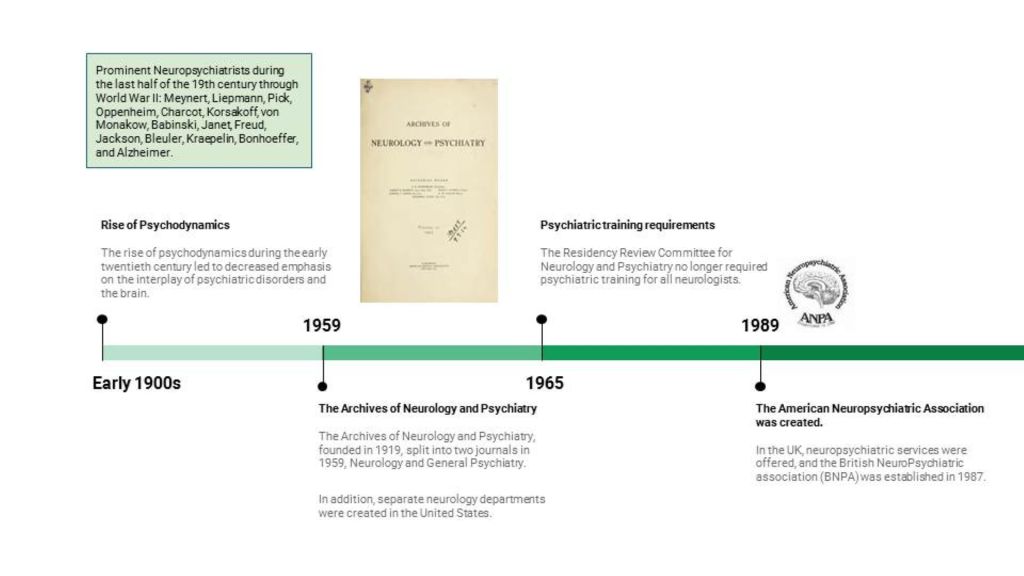
The opposing reply to this (favorable to vaccines) was put together by University of Iowa’s Dr. Stanley Perlman, Dr. H. Bernstein, and Dr. M. Miglis, Additional Workgroup Considerations in Covid-19 Vaccination Policy and Practice.
For a change, I listened to the Public Comment section. I usually have not paid attention to them because most of the speakers were opposed to vaccines. Today was different. All of them were strongly supportive of vaccines.
There is a bottom line to this. I watched the voting session, which was very interesting. There were 4 voting questions. I had to take pictures of them because they were not included in the on-line schedule. It was easily the most interesting session of the afternoon, at least for me.
Voting question 1: all but one member voted “yes,” the committee chair Kulldorff voted “no.”
Voting question 2: one member suggested striking this one, but they voted anyway. What’s worrisome is that it was split between the yes and no votes; only the chair, Kulldorff, could break it and he voted “no.” Looks like common sense won; otherwise it would have made access very difficult.
Voting question 3: The video lost audio for a long time, but eventually it turned out that the votes were “yes” unanimously on the assumption that pharmacists counted as “health care providers.”
Voting question 4: The votes were all “yes,” mainly because they decided that pharmacists could make this work. One member questioned the wording which suggested that you needed to talk to your doctor about getting the vaccine because of the wording “shared clinical decision-making.” They glossed over it.
It looks like access to the Covid-19 vaccine will remain mostly open for now.
How about some good news? This just in, University of Iowa Physician-Scientist, Dr. Michael Welsh, wins the 2025 Lasker Award for his research on cystic fibrosis.
His work and the work of two other researchers with whom he’ll share the award set the stage for the development of new drugs which saves the lives of those who suffer from cystic fibrosis.
I learned from the article that the cystic fibrosis gene was discovered in 1989; I was a second-year medical student then. Since then, the development of new treatments has meant that many people who died in early adulthood now can live into their 80s.
Iowa's cancer rates are among the highest in the country, and they are rising. In this episode of Rounding@Iowa, Dr. Gerry Clancy and guest experts Dr. Mary Charlton and Dr. Mark Burkard discuss the data, risk factors, and prevention strategies clinicians can use to make a difference. CME Credit Available: https://uiowa.cloud-cme.com/course/courseoverview?P=0&EID=81274 Host: Gerard Clancy, MD Senior Associate Dean for External Affairs Professor of Psychiatry and Emergency Medicine University of Iowa Carver College of Medicine Guests: Mark E. Burkard, MD, PhD Professor of Internal Medicine-Hematology, Oncology, and Blood and Marrow Transplantation University of Iowa Carver College of Medicine Director, University of Iowa Health Care Holden Comprehensive Cancer Center Mary Charlton, PhD Professor of Epidemiology Director, Iowa Cancer Registry Iowa College of Public Health Financial Disclosures: Dr. Clancy, Dr. Burkard, Dr. Charlton, and Rounding@IOWA planning committee members have disclosed no relevant financial relationships. Nurse: The University of Iowa Roy J. and Lucille A. Carver College of Medicine designates this activity for a maximum of 0.75 ANCC contact hour. Pharmacist and Pharmacy Tech: The University of Iowa Roy J. and Lucille A. Carver College of Medicine designates this knowledge-based activity for a maximum of 0.75 ACPE contact hours. Credit will be uploaded to the NABP CPE Monitor within 60 days after the activity completion. Pharmacists must provide their NABP ID and DOB (MMDD) to receive credit. UAN: JA0000310-0000-25-090-H99 Physician: The University of Iowa Roy J. and Lucille A. Carver College of Medicine designates this enduring material for a maximum of 0.75 AMA PRA Category 1 CreditTM. Physicians should claim only the credit commensurate with the extent of their participation in the activity. Other Health Care Providers: A certificate of completion will be available after successful completion of the course. (It is the responsibility of licensees to determine if this continuing education activity meets the requirements of their professional licensure board.) References/Resources: Iowa Cancer Plan
This is a fascinating topic and the discussion ran for close to an hour, which is longer than usual because there’s a lot to say about it. The substances include a lot of chemicals that are not illegal and, in some cases, easily available in convenience stores and gas stations. In fact, the name for one of them is gas station heroin, which is tianeptine, approved in other countries as an antidepressant.
The discussion also included substantial information (or maybe better said, lack of enough information) about bath salts (usually cathinones), kratom, and something I’ve never even heard of: diamond shruumz (chocolate bars which can contain various substances not limited to psilocin). Remember that guy who chewed the face off of somebody in Miami in 2012? That was attributed to intoxication with bath salts.
This is way beyond the 1970s stuff like window pane or blotter (LSD) and pot. Many people end up in emergency rooms for evaluation of what looks like poisoning from multiple drugs. The stickler is the possibility that they got poisoned from something bought at a convenience store. Often it’s difficult to tell what the person ingested.
One of the takeaways from this podcast is that, whenever possible, try to get a history from the patient. They might just tell you what you need to know.
I just discovered this Community Psychiatry Podcast site today. A couple of days ago Dr. Emily Morse, DO, of The University of Iowa Health Care gave a 20-minute interview that outlines how the psychiatry department leverages community psychiatry outreach to address the challenges those experiencing homelessness face.
Introduction: “Emily Morse, DO, is a Clinical Associate Professor of Psychiatry at the University of Iowa where she was first drawn to community-based care during her residency training. Her current clinical work spans a variety of settings which include outreach clinics embedded within local permanent supportive housing programs in partnership with Shelter House in Iowa City—an organization that provides comprehensive support services to help individuals move beyond homelessness. She also works as part of interdisciplinary teams that reach patients across Iowa, including one focused on individuals with intellectual and developmental disabilities, and another providing reproductive and perinatal mental health care. Along with her clinical work, she is active in medical education as a psychiatry clerkship co-director, and she enjoys working alongside residents and fellows while aiming to provide accessible, collaborative, and relationship-centered care.”
Dr. Morse provides a view of psychiatry that goes beyond the idea of scheduled appointments in the psychiatry clinic.
This is also a great way to get beyond the politicization of this issue we typically hear about in the national and local news almost every day.
I just found out that Leonard Tow died on August 10, 2025. In humility, I express my gratitude and respect for his creation of the Tow Foundation, a big part of that being the Humanism in Medicine Award, of which I am one of the many recipients over the years. I hope this great tradition goes on forever, a reminder to doctors, patients, and families of the great rewards and greater responsibilities in medicine.
I thank Dr. Jeanne M. Lackamp, now Chair of the Department of Psychiatry, Psychiatrist in Chief for University Hospitals and Director of the University Hospital Behavioral Health Institute for nominating me and Dr. Jerold Woodhead, Professor Emeritus in Pediatrics at University of Iowa Health Care for placing the pin in my lapel. That was in 2007.
Leonard Tow established the Humanism in Medicine award to foster the development of humanistic doctors. They exemplify compassion and respect for others, humility and empathy.
That is how I will remember Leonard Tow.
On my lapel; in my heartLeonard Tow Humanism in Medicine lapel pinGetting the pin
I’ve been looking for other ways that Iowa addresses mental illness and its impact on homelessness and other adverse outcomes since my last post on the issue.
It turns out that, despite Iowa ranking 51st out of all U.S. states for the low number of psychiatric beds according to the Treatment Advocacy Center statistics (in 2023, it had just two beds per 100,000 patients in need), a new mental health court established in in May of 2023 has made substantial progress in reducing the number of crisis contacts, psychiatric hospitalizations, and days in the hospital. Arrests, jailings, and days in jail were also reduced.
Participants in the new program include the University of Iowa Health Care, Iowa City VA Hospital, the Abbe Center, Guidelink Center, National Alliance for the Mentally Ill (NAMI), Shelter House, and several other mental health service agencies in Johnson County.
The Johnson Mental Health Court continues to operate since June of this year when the pilot program’s funding from the East Central Iowa Mental Health Region was supposed to have ended on June 30, 2025, due to the change in mental health regions. This is a program for patients under involuntary mental health commitment that avoids incarceration and placement in a state psychiatric hospital.
This civil mental health program didn’t exist until well after I retired and I hope for its continued success.