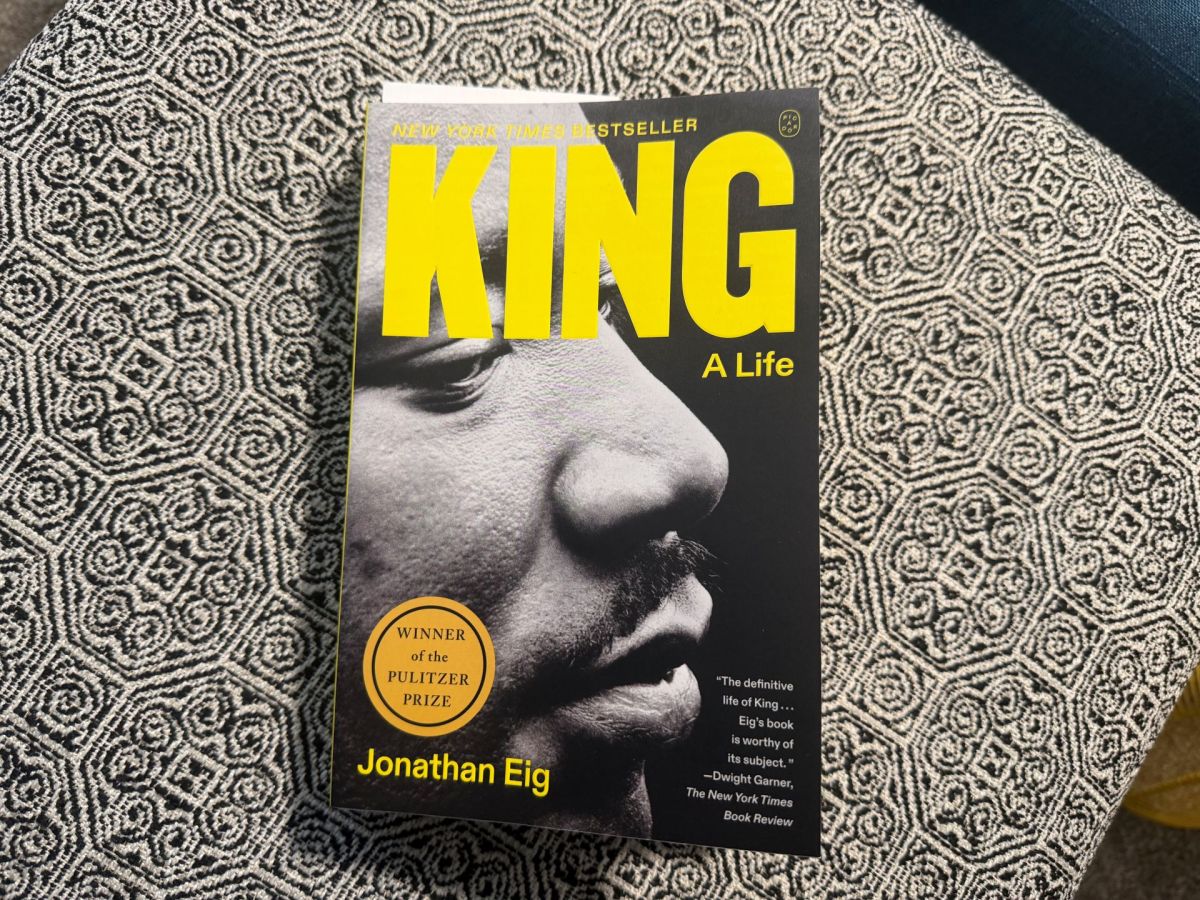
I’m just checking in to let you know I’m still reading Jonathan Eig’s biography of Dr. Martin Luther King Jr. I’m in the last section. I plan to read The Autobiography of MLK Jr., edited by Clayborne Carson next.
I’m not ready to share much right now in the way of my impressions other than to say that it’s at least as painful to read from an emotional standpoint as the other books by great authors I’ve read and which have prompted visits by invitation to The University of Iowa College of Medicine in the past to present the MLK Jr Distinguished Lectures:
“Our Hidden Conversations: What Americans Really Think About Race and Identity” by Michele Norris.
“Caste: The Origins of Our Discontents” by Isabel Wilkerson (who also wrote “The Warmth of Other Suns: The Epic Story of America’s Great Migration,” which won the Pulitzer Prize).
Our Hidden Conversations by Michele NorrisCaste and The Warmth of Other Suns by Isabel Wilkerson
These are often riveting page turners but I need to take a break every so often because of the terrible events described.
I discovered that the University of Iowa made a video presentation of Jonathan Eig’s speech for the Martin Luther King Distinguished Lecture on January 21, 2026. Mr. Eig wrote the MLK biography, “King: A Life” which was published in 2023. We just got a copy of it along with “The Autobiography Of MLK. We’re reading them now. We both watched the one-hour long video, which is available only in Panopto format to University of Iowa employees who could not attend the event in person.
He’s an engaging, humorous, and humble guy who spoke without using notes and ad libbed the entire talk which covered the most important events and people in King’s life including his wife and several other famous people in the civil rights era of the 1960s.
He had an interesting anecdote about the young National Park Service ranger, Gordon, “Gunny” Gundrum who adjusted King’s microphone repeatedly while he was giving his “I Have a Dream” speech in Washington in 1963. It was caught on camera and interpreted by some as an effort to interfere with the speech. In fact, it was because King was only 5’7” tall and his face was obscured by the microphone. Eig questioned him about it (yes, he was still alive) and at first Gundrum didn’t even recall doing it.
Sena wondered why Eig didn’t mention Rosa Parks in his presentation. In his book, he describes her refusal to take a back seat on a city bus as the catalyst for the Montgomery bus boycott, and her role in considerable detail.
On the other hand, Eig pointed out that King’s wife, Coretta, was the one who taught King about activism in the first place since she had been involved doing that before they ever met.
Eig mentioned that King has attempted suicide twice in his adolescence. On the other hand, even though I’m only partway through his book, I recall these were described early and involved being upset about his grandmother on a couple of occasions. One when his brother slid down a banister, hit his grandmother in the head and knocked her out cold. The other was when she actually died. He was not seriously injured in either incident. Eig also shared that King was psychiatrically hospitalized several times. Some suggested he undergo regular outpatient psychiatric treatment, but he declined because of the stigma.
One of his more moving anecdotes was about what King said just before he was gunned down at the Lorraine Motel in Memphis in 1968. King had stepped outside to get some fresh air. It was a cold and one member of his group suggested he go inside and get a jacket. King replied, “Yes, I will.” As he turned to do so, he was shot and killed. The way Eig framed King’s last words made you think of that statement as an affirmation of how he’d responded to the many challenges and demands in his life.
I got a picture of a banded Red-tailed Hawk today in our back yard. It was pretty exciting. I can’t remember ever seeing one banded. I’ve gotten pictures of them occasionally, most recently before this in July, 2025. That one wasn’t banded.
I checked on the web for any reports of who might be tagging Red-tailed Hawks in Iowa. In recent months there have been a few sightings posted on social media sites. Other birds are being banded as well. There are people who are licensed by the United States Geological Survey (USGS) to tag birds.
The Hitchcock Nature Center in Pottawattamie County is located in Honey Creek, Iowa, which is near Council Bluffs.
The Iowa Raptor Project is involved in conservation, education, and rehabilitation of birds of prey.
OK, until I saw this video, I admit I thought the snipe was an imaginary bird, an idea I got from the movie “Up.”
This just in! University of Iowa Psychiatrist Dr. Susan Shen, MD, PhD, is an assistant professor of psychiatry at The University of Iowa Carver College of Medicine and, hold on to your hat, she’s the first female psychiatrist, the first from Iowa, and only the third psychiatrist overall to receive to win the Avenir Award (French for “future), a highly competitive grant!
The $2.3 million dollar grant will help fund her lab’s research into the underpinnings of substance use and psychiatric disorders. The grant is administered through the National Institute on Drug Abuse (NIDA), one of the National Institutes of Health (NIH).
We’re going to get about a foot of snow starting tonight according to the weather report. There are webcams about Iowa that will document the storm, which will occur across most of the state.
We’ve charged up the batteries in the Voltask electric snow shovel, which got quite a workout last winter. We took videos of using it that racked up over 5,200 views. Search my site with the term “electric snow shovel.”
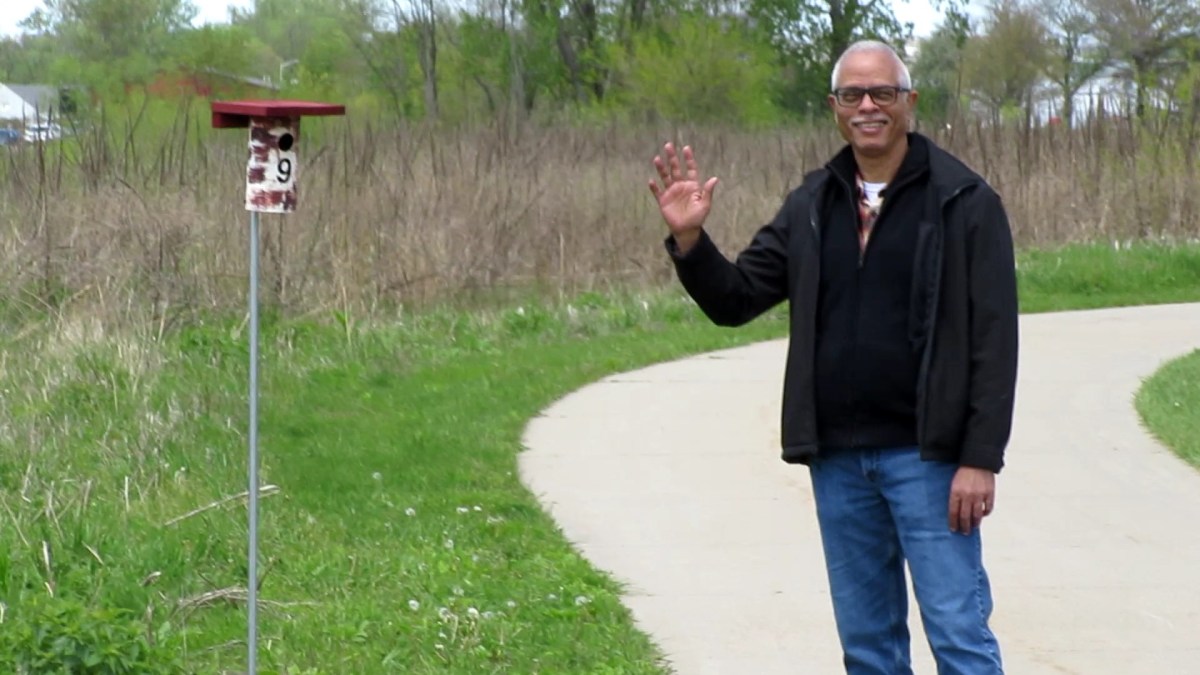
Over three years ago, I posted about a waving man we used to see a lot of on a busy street in Iowa City (yes, we have them). He worked at the grocery store and waved at traffic whether he was walking to work or leaving. He still works there but we don’t drive that route much anymore so we don’t see him out waving.
Occasionally I’ll see news stories about men who wave at people driving by. They always look like they have a great time being friendly. I think most of us get a big kick out of it.
I saw another story today about a guy named Kent Proudfit in Urbandale, Iowa who does the same thing. After a while I wondered why I saw only stories about men do the waving thing. And then I found a story about a 74-year-old woman named Patricia Bracey who’s a waver in Chesterfield, Virginia. She says the Lord told her to do it.
So, waving at people driving by is an equal opportunity activity for cheering up others. I get the sense that it’s mostly older people who sit or stand by the side of the road and wave at folks driving by.
On the other hand, there is another phenomenon that works on the same principle of helping others feel good. It’s the Iowa Hawkeye Wave at the end of the first quarter of the football game in which the all the players, staff, and tens of thousands of fans of all ages in the stands get up at wave at the kids and their families in the University of Iowa Stead Family Children’s Hospital. It’s now called one of the greatest traditions in college sports. It got started in 2017, which is not such a very long time ago.
There’s a new podcast in town from The University of Iowa Health Care and the title is “When to Suspect Atypical Recreational Substances.”
This is a fascinating topic and the discussion ran for close to an hour, which is longer than usual because there’s a lot to say about it. The substances include a lot of chemicals that are not illegal and, in some cases, easily available in convenience stores and gas stations. In fact, the name for one of them is gas station heroin, which is tianeptine, approved in other countries as an antidepressant.
The discussion also included substantial information (or maybe better said, lack of enough information) about bath salts (usually cathinones), kratom, and something I’ve never even heard of: diamond shruumz (chocolate bars which can contain various substances not limited to psilocin). Remember that guy who chewed the face off of somebody in Miami in 2012? That was attributed to intoxication with bath salts.
This is way beyond the 1970s stuff like window pane or blotter (LSD) and pot. Many people end up in emergency rooms for evaluation of what looks like poisoning from multiple drugs. The stickler is the possibility that they got poisoned from something bought at a convenience store. Often it’s difficult to tell what the person ingested.
One of the takeaways from this podcast is that, whenever possible, try to get a history from the patient. They might just tell you what you need to know.
OK, so Sena picked all the patio tomatoes and most of them didn’t turn red, especially the slicers. She’s done with growing vegetables. I saw an article about why tomatoes don’t turn red and it makes sense. The featured image shows the patio tomatoes in the plastic bucket for comparison with the red store-bought tomatoes. The bigger green ones are the slicers.
I’m a little leery about eating green tomatoes. According to another article, it’s safe to eat them as long as you don’t gorge on a lot of them. You’d have to eat about a pound and a half to get the amount of some compounds called solanine, atropine, and tomatine, which would turn you into an extraterrestrial. And University of Iowa researchers discovered green tomatoes have an alkaloid called tomatidine which may actually build muscles (don’t tell teenage boys!).
I noticed the headlines about the DEI flap at The University of Iowa, the one with the official apparently spilling the beans about University of Iowa’s DEI program not going away despite being illegal while maybe being unaware of being filmed. I’m not going to retell the story.
However, it does remind me of a time back in the 1970s in the days of affirmative action when I was a freshman student at Huston-Tillotson College (now Huston-Tillotson University) in Austin, Texas.
I learned about tenacity to principle and practice from a visiting African American professor in educational psychology from the University of Texas. It was 1975. Dr. Melvin P. Sikes paced back and forth across the Agard-Lovinggood auditorium stage in a lemon-yellow leisure suit as he talked about the importance of bringing about change in society.
He was a scholar yet decried the pursuit of the mere trappings of scholarship, exhorting us to work directly for change where it was needed most. He didn’t assign term papers, but sent me and another freshman to the Austin Police Department. The goal evidently was to make them nervous by our requests for the Uniform Crime Report, which Dr. Sikes suspected might reveal a tendency to arrest blacks more frequently than whites. He wasn’t satisfied with merely studying society’s institutions; he worked to change them for the better. Although we were probably just as nervous as the police were, this real-life lesson about the importance of applying principles of change directly to society was awkward.
Nothing like confronting social issues head on, right?
We would have preferred a term paper. We sat in the police station looking at the Uniform Crime Report, which was the only resource we could get. I think we were there a couple of hours; it felt a lot longer than that. The officer who got us the paperwork was polite, but a little stiff and wasn’t really open to anything like an interview or anything close to that. I can’t remember what we came up with as a write-up for what felt like a fiasco. I’m pretty sure we didn’t bring about anything even close to change. It was a humbling experience. Maybe that was the point but I’ll never know.
Dr. Melvin P. Sikes was a member of the Tuskegee Airmen although he didn’t see combat. He was the dean of two historically black colleges, a clinical psychologist, and a University of Texas professor. He died in 2012 after a long and successful career as a psychologist, teacher, and author.
I found a podcast about him which was sponsored by the Hogg Foundation for Mental Health and which aired February 15, 2024. It’s an hour long, but there are segments of interviews of him in 1972 that I consider fascinating. A couple of times he says something which I wish the interviewer had allowed him to expand on. The gist of it is that we need to have a system of education which allows people to speak from the standpoint of pride rather than rhetoric. I think what he might have meant is that it would be wonderful if we felt secure and confident in ourselves to express our minds sincerely. The word “rhetoric” makes me think of talk that is persuasive, even impressive, but maybe insincere. I think it still fits today.
We’ve lived in the Iowa City area for over 37 years and never heard of the Brain Rock until today. I don’t know how we ever missed it. It’s a work of art called Ridge and Furrow created by artist Peter Randall-Page, a world-famous artist from the United Kingdom.
It’s been called the Brain Rock for obvious reasons because the stone has what you might call gyri and sulci all over its surface. It has recently been relocated from the T. Anne Cleary walkway outside the Pomerantz Career Center to the Medical Education and Research Facility (MERF).
As Randall-Page says, if you trace the line from one side of the sculpture you can follow it to its end on the—far side of the rock, I guess you’d call it.
The other interesting thing about the Brain Rock is that a couple of intoxicated college students urinated on it back in November of 2021. No mention of whether they were trying to trace the furrow. Maybe they’d heard of the urinating sculpture and fountain called Piss in Prague.












 Go Retire Psychiatrist