
Thoughts on “The Next Chapter: Blazing New Trails (1998-2047)

The final presentation of the series night before last, Uncovering Hawkeye History in honor of the 175th anniversary of the University of Iowa was a fascinating review of the changes in architecture of the campus, how local and national politics influenced the university and vice versa, as well as the expansion of the role of philanthropy to support its mission over the years. A YouTube video of the recorded presentation will be posted here at a later date.

There was not enough time to do much more than briefly mention the new trails being blazed by three leading programs. However, you can read more about them in Iowa Magazine.

Craig Kletzing is the principal investigator for NASA’s TRACERS mission. He’s a UI physics and astronomy professor who secured the largest research grant in the history of The University of Iowa in 2019 to study the interactions of the magnetic fields of the sun and the Earth.

Christopher Merrill is the director of the International Writing Program and professor of English. Merrill has made cultural diplomacy mission to over 50 countries. He once served on the U.S. National Commission for UNESCO and the National Council on the Humanities.

Dr. Patricia Winokur, the executive dean of the Roy J. and Lucille A. Carver College of Medicine, physician and professor of internal medicine—infectious diseases, and leader of Iowa’s Covid-19 vaccine clinical trials. Dr. Winokur is a nationally recognized leader in the field of infectious diseases. She created the UI Vaccine and Treatment Evaluation Unit, one of the top vaccine research programs in the country and one of only nine nationwide funded by the National Institute of Allergy and Infectious Diseases.

At the end of the presentations, university archivist David McCartney announced that he will be retiring as soon as next week. He wished everyone well and the presenters I’m sure all wish him well.

He has held the archivist position since 2001. He has led a very interesting and varied life. A story posted in The Academic Archivist on November 12, 2020 by Katie Nash, MLIS, CA reveals he got his undergraduate degree in journalism from the University of Wisconsin-Madison. He received his MA in history and MLS (master’s degree in library and information studies) in 1998, both from the University of Maryland at College Park.

He also was a reporter for radio stations in Alaska and the Midwest. I’ll bet that was interesting. He was between warehouse jobs in the summer of 1992 when he drove around the Midwest, researching Carrie Chapman Catt, the woman suffrage leader and founder of the League of Women Voters. It turns out Catt grew up near David’s hometown. That work led to publishing a collection of Catt’s papers in a catalog.

David has done a great many things. He believes that his profession’s worth and legitimacy are being challenged, and that the value of the work he and others do is often unrecognized. He firmly believes that institutions and corporations have to understand their responsibility to maintain a strong archives and records management program. He’s very motivated to advocate for his profession.

I probably would not have looked for any further information about David McCartney had he not announced his retirement at the close of the final presentation of this series. He made his point simply and humbly, saying the challenges of keeping up with the technology demands of his job were part of the reason for his retirement.

He even said he hoped he would see the presenters in the Ped Mall (officially named City Plaza), a pedestrian mall in downtown Iowa City near the UI campus, built in 1979 as the centerpiece of the city’s urban renewal project. It’s a popular gathering place for students and locals. There are concerts, jazz festivals, and art shows.

As a relatively recent retiree myself in June 2020 (19 months or 86 weeks or 606 days ago but who’s counting?), I can relate to David on this issue. Many of those I worked with were sad to see me go. I think many will be sad to see David go.
Return to the Sun Room

We have a sun room again. We moved into this house a little over a year and half ago. It has taken a little time to get it comfy. For the last couple of weeks, I’ve been sitting in there on Friday nights listening to the KCCK Jazz Radio ‘da Friday Blues show hosted by John Heim, aka Big Mo. I used to do that regularly but we’ve not lived in a house with a sun room for several years. The Big Mo blues show has been a favorite of mine for a long time.

I suppose I could have listened to it in another room in the other homes we’ve lived in. But it wouldn’t have felt right. I connect sun rooms with ‘da Friday Blues on KCCK 88.3.

It’s hard to believe Big Mo is still doing the show. He suffered an accidental neck injury a few years ago that left him paralyzed from the neck down. He was hospitalized at the University of Iowa and went to rehab from there. He still sounds great. He retired from teaching in 2004. He hasn’t retired from having a good time and helping others enjoy music and life. There’s a lesson in that for us all.

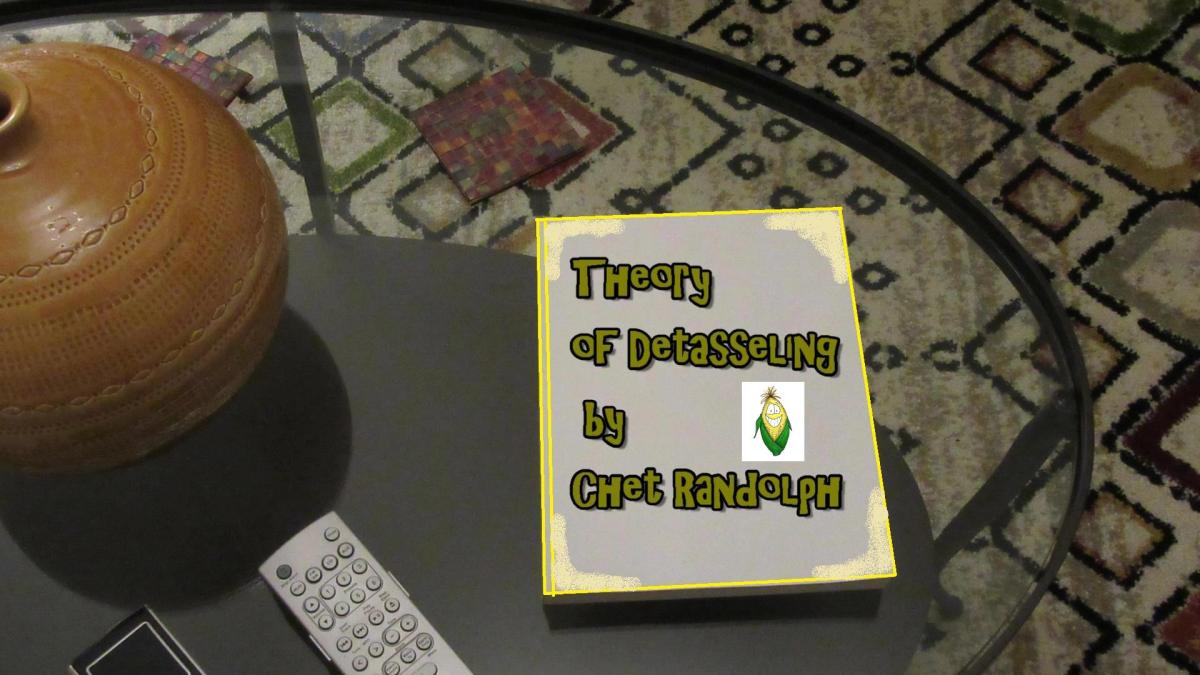
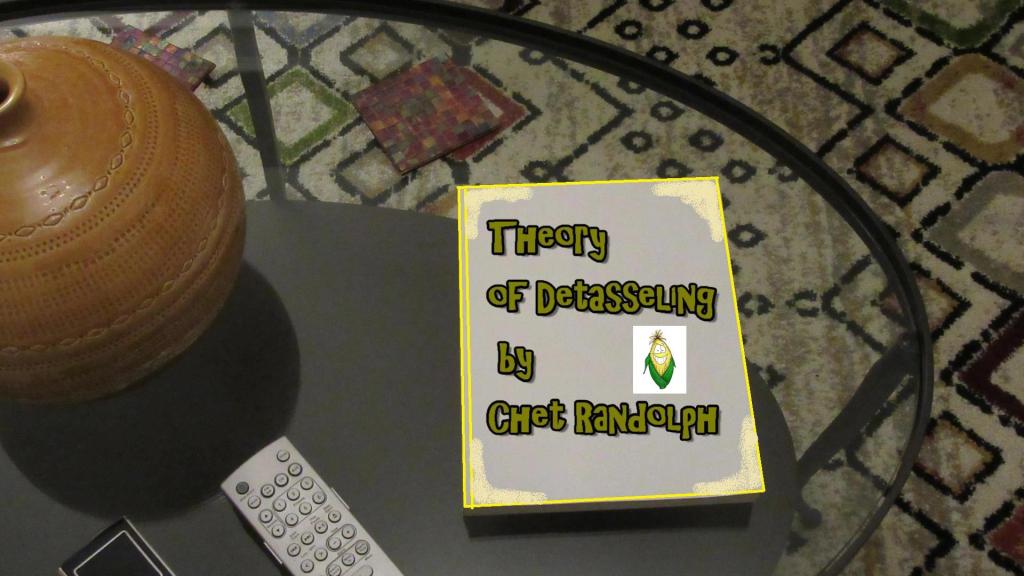
Anyway, we have a great sun room again. We have a nice coffee table in there, with the mandatory coffee table book. Chet Randolph really didn’t write that book, Theory of Detasseling—but he could have.

coffee table book

 Here’s a tune from tonight’s show that fits the season.

An Old Dog’s Approach to Replacing Electrical Outlets and Other Thoughts

Since retirement, I’ve been very gradually casting about for another identity now that I’ve given up my professional identity. It doesn’t come naturally. I’m definitely not a handyman, although I’ve been learning a few skills.

For some reason, a large number of our electrical outlets didn’t hold power cords tightly enough. They were either cheap or worn out or both. Appliances would stop running because the electrical plugs fell out of the outlets.

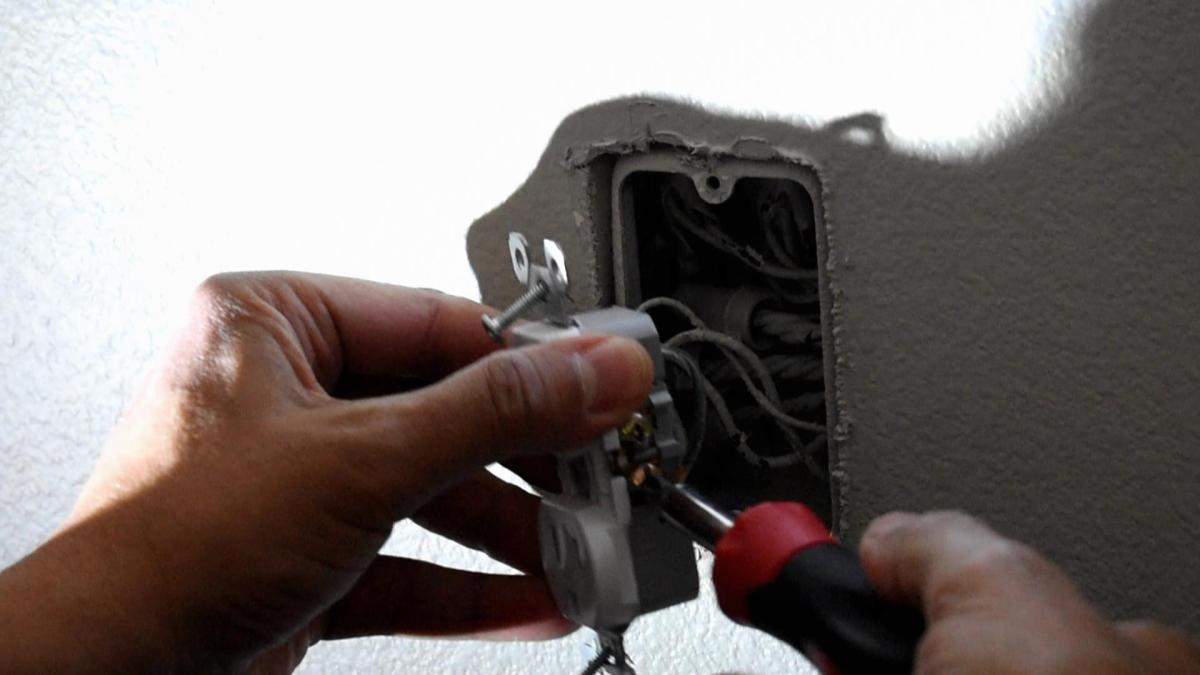
That led to Sena picking up an 85 gross of various replacement outlets, which led to losing one of my best excuses for not getting the vacuuming done. Since then, I’ve replaced a large number of outlets (see “instructional” video below). Toggle switch replacements are another item high on the list of vital electrical equipment to replace, mainly because they also get loose with age.

Funny how that doesn’t work for me. I get tighter in my joints as I age, which makes it very hard for me to sit cross-legged on the floor while replacing outlets. Standing up is even harder. That excuse doesn’t work either.

I’m pretty keen on checking outlets and the like for power before I start messing around changing them. I use a UL approved voltage tester for that—an electric can opener. Don’t let that get around. I always shut the power off at the circuit breaker to be safe.

Another skill comes to mine. Yesterday I had to install a soundbar on our TV for the first time. After Sena returned that one for a refund because it didn’t seem to improve on the TV’s audio, I installed a sound bar and subwoofer made by a different company.

I had a heck of a time getting it to work. It came with enough cords to hook it up, either by optical cable or something called HDMI ARC cable. Apparently, ARC stands for Audio Return Channel. I still don’t yet know why that makes it different from a regular HDMI cable.

What should have been a 10 to 15-minute hookup ended up taking most of an hour because neither cable worked. It was mysterious. I even hooked up both of them. The sound bar was soundless. In disgust, I yanked out the HDMI ARC—and abruptly the sound bar was loudly functional. Just prior to that I think I had moved the power plug from a power strip to a wall outlet. I figured the power strip might have just got old.

On the other hand, I had switched the sound bar plug and a CD player plug on the power strip which had been working fine and the sound bar still didn’t work. It was either aliens or luck. Sometimes it’s better to be lucky than good. I’m thinking about trying that HDMI cable again.

I have changed only in very small ways over the last 19 months (837,755 minutes; 50,265,308 seconds) since retirement. Some people say you can’t teach an old dog new tricks. I wonder if some people are just being ironic.

Retiree Musings

I’ve just discovered a web site that calculates the time that has passed since an event occurred. So, it calculated that I’ve been retired for 19 months—or 580 days, or 13,909 hours and so on. But I’m not counting.

What has been happening since then? I’ve had the usual problems with letting go of my professional identity, still having them in fact. I’ve posted a quote from another retired psychiatrist, H. Steven Moffic, MD.:

Plan for retirement, even if you don’t plan to retire. This means sound financial planning, developing other interests, and nurturing your relationships with significant others. Retire, even if you are not retired. Take enough time off periodically, and completely, with no connections to work, so that you can feel emotionally free from concerns about patients and practice. Of course, there is no reason to retire if you really love your work and relationships just as they are.

H. Steven Moffic, MD

There was also an article entitled “When Should Psychiatrists Retire?” written by Dinah Miller, MD. It was published in Clinical Psychiatry News January 2022 issue, Vol.50, No. 1 as well as Medscape on November 17, 2021. There is no consensus on the answer to the question, although there are several opinions by the commenters.

There are a lot of articles out there about what it’s like to lose your professional identity and the potential consequences of that. One thing I’m learning is that, while I may not be fully reconciled with losing my identity as a consult-liaison psychiatrist, I’m gradually starting to have more fun just being a clown sometimes, which pre-dated my becoming a doctor.

Maybe I just need to grow up, but my interests are everyday stuff I tend to make fun of.

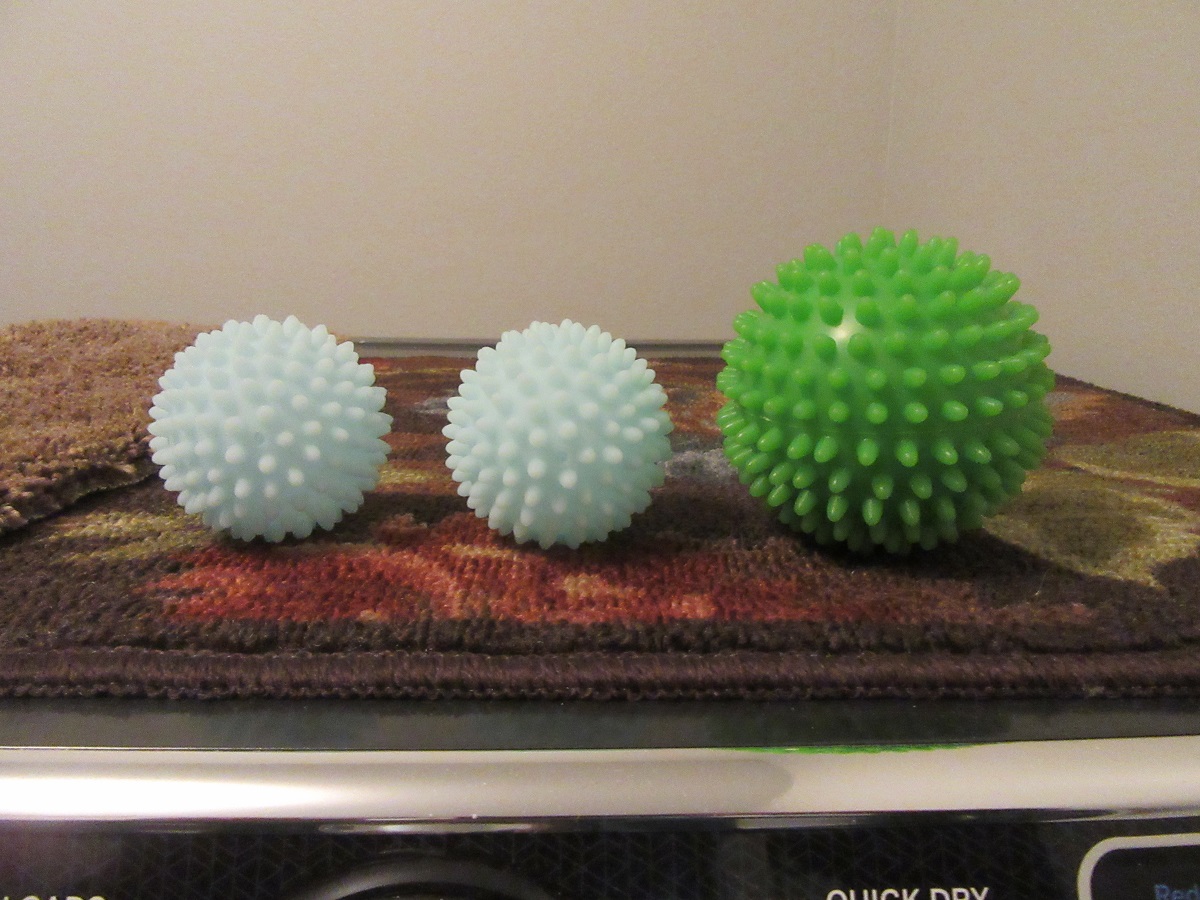
Like dryer balls. Now, I don’t want to offend anybody who believes that dryer balls are effective at drying clothes quicker and the like—but the jury is still out on that claim.

In fact, there are many articles on the web, both pro and con about dryer balls. One of them is by somebody who did what sounds like an exhaustive study (just with his own laundry; you won’t find it published in any journal). He swears by them. Then there was the article which pretty much debunked dryer balls. It mentioned an “in-depth experiment” by an 8th grader in 2013 proving that they don’t reduce dryer time. My wife, Sena, says they don’t work. One ball got snagged in a fitted sheet pocket.

What I don’t get is why dryer balls look so much like the spiky massage balls (hint, it’s the green ball; the dryer balls also have holes in them). I think everybody just takes for granted that massage balls work. Sena says it works. She also has what she calls a massager which looks vaguely like a headless alien doing the downward dog yoga thing.

But what I find puzzling is why I can’t find any mention on line of clamshell eyeglass cases which have a steel trap-like spring-loaded hinge. You don’t want to get your fingers caught in them. They should have a safety protocol for use—so of course I came up with one.

My Definitive Journey Revisited

A couple of days ago, I got my retirement gift from The University of Iowa. It’s a about a year and a half late because of the Covid-19 pandemic, but it’s welcome nonetheless. Normally there is an Annual Faculty Retirement Dinner, but it had to be cancelled. It’s a stunningly beautiful engraved crystal bowl with the University logo on it. It came with a wonderful letter of appreciation. It reminded me of my blog post in 2019, “My Definitive Journey.”

It’s a definitive symbol of the next part of my journey in life. For years I’d been a fireman of sorts, which is what a general hospital psychiatric consultant really is. The other symbols have been the fireman’s helmet and the little chair I carried around so that I could sit with my patients. I have changed a little.

I still have my work email access, which I’m ambivalent about, naturally. I check it every day, partly because of Fear of Missing Out (FOMO), but also to delete the junk mail. I still get a lot of it. I get a rare message from former trainees, one of whom said it “pained” her to learn I’m now Professor Emeritus.

I have not seriously considered returning to work. That doesn’t mean I have not been occasionally nostalgic for some aspects of my former life.

The poem, “El Viaje Definitivo” by Juan Ramon Jimenez evokes mixed feelings and thoughts now. I have gone away. But in looking back at the past, I now see now that the birds didn’t always sing. The tree was not always green.

I don’t miss my former home, the hospital, as keenly now, which is now a much harder place to work since the Covid-19 pandemic began.

And there is little that is definitive about my journey forward from where I now stand. I’m a little less afraid than I was over a year and a half ago. And the birds sing where I am now, sometimes more clearly than before.

El Viaje Definitivo (The Final Journey)

… and I will go away.

And the birds will stay, singing

And my garden will stay

With its green tree

And white water well.

And every afternoon the sky will be blue and peaceful

And the pealing of bells will be like this afternoon’s

Peal of the bell of the high campanile.

They will die, all those who loved me

And every year the town will be revived, again

And in my circle of green white-limed flowering garden

My spirit will dwell nostalgic from tree to well.

And I will go away

And I will be lonely without my home

And without my tree with its green foliage

Without my white water well

Without the blue peaceful sky

And the birds will stay

Singing

                                –Juan Ramon Jimenez

Moderna Booster Jab Today and Mindful Zombies

I got my Moderna Covid-19 booster jab this morning. That was quick. A guy (probably about my age, I’m not sure) waiting for his booster behind me chuckled and asked, “Did she even let you sit down for it?” I was in and out that fast. It’s the same as the primary series, only half-dose. Sena and I are now both fully vaccinated and boosted.

According to the FDA and CDC guidelines, I could have gotten a heterologous booster, but I stuck with what I got for my primary series. There was no problem with vaccine supply; it was already on the shelf, so the only thing different was the smaller dose. Since there’s not much else to say about it, we’ll move on to other more exciting news.

Sena ordered the Zombie cribbage game I just had to have. It won’t get here by Halloween, but that’s OK. I know the board is a folding plastic affair and there’s only enough peg holes for what would be half a full game (61 instead of 121). The pegs are zombie figures—which may or may not fit in the holes.

But it’s zombies! This is what happens to you in retirement, people. My gratitude to Sena for getting Zombie cribbage will be to play Scrabble with her.

That reminds me of a cribbage story I read on the web about a game between a couple of old guys in a senior community in Minnesota. One of them, Harry, was 108 years old and the other, Don, was 105. They were long time cribbage players, but they’d never played each other. The young guy won. As soon as he did, he got back on his walker, saying, “Just another game,” and left. In fact, neither player got as excited about the affair as everyone else including spectators, family, and staff, talking it up like it was a championship boxing match. Don’s family said that his attitude about the win was probably part of the reason for his longevity.

I liked Don’s reaction to winning the game. I don’t know if Don’s approach to cribbage is the same as it is to life in general. Maybe it’s about living in the present. When something is over, it’s in the past and it’s time to move on. There’s probably no point in worrying about the future either, especially when you get pretty old. There’s not much of it left.

Maybe this mean that retirees should be more like zombies—we should just play cribbage, eat brains mindfully, and forget about tomorrow. You’re welcome.

Congratulations to 2021 UI Physicians Clinical Awards Winners

I was so happy to see the winners of the 2021 University of Iowa Physicians Clinical Awards winners. I have a special bias for a couple of them because I worked with them for years in my capacity as psychiatric consultant in the general hospital prior to my retirement in June of 2020.

Dr. Kevin Doerschug, MD, the winner of the Excellence in Our Workplace Award, actually rotated on the psychiatry consult service when he was a trainee. He and I saw each other frequently in the Medical Intensive Care Unit (MICU). He is one of the kindest doctors I have ever met. Dr. Dilek Ince, MD, the winner of the Best Consulting Provider Award, is a thorough and tireless clinician. As consultants, our paths often crossed in the hospital.

I congratulate all the winners. Iowa is so fortunate to have you.

Can Cribbage Cultivate Congeniality?

Sena and I have been playing cribbage since late 2019. It’s a two-hander card game played on a board with pegs for keeping score. It’s been around for about 400 years and some have asked whether it’s a dying game, played mainly by codgers in retirement homes. The question is whether it can promote positive attributes like congeniality.

Actually, it’s a pretty popular game, especially for, some reason, in California where there are over 40 local cribbage clubs according to the American Cribbage Congress (ACC), the big boss organization in North America, established in 1980. Most states in the U.S. have only a few. Iowa has one in Ankeny.

If you look at the ACC website, you’ll find a section called the ACC Cribbage Club Code of Congeniality. It’s under the Clubs section. The wording is in some ways a bit ambiguous, probably because many of the members are very competitive. There are a lot of tournaments, including an annual Grand National. The most recent one was held in Sacramento in late September, just last month. Even though it’s a pretty big deal, attracting players from just about everywhere on the planet and possibly beyond, I can’t find out who the winner was from the website. Maybe that person is too congenial to brag.

Anyway, the ACC Code of Congeniality has a tone, for lack of a better word. For example, take this item:

“We pledge to not force new players to play a game in fifteen minutes. (We will, instead, be tolerant and not complain, remembering that we too, started slow.”)

Sena and I never can finish a game in 15 minutes, and we’ve been playing for going on a couple of years. That pledge as well as the others have an almost Mark Twain-like ring to them. It’s as though whoever wrote it was snickering behind her hand. Or maybe the ACC leadership got wind of a few complaints from new members who got horsewhipped for dragging the games out to 17 minutes or even longer. Actually, it’s the subtle sense of humor expressed in the Code of Congeniality that I appreciate.

The ACC also has a Code of Ethics which extols “true sportsmanship and respect for others, without rancor, animosity, or overwhelming self-interest during competition.”

The ACC publishes its tournament rules and it is to be contrasted with something called kitchen table cribbage. Except on my blog and YouTube video, you’re unlikely to find the term Kitchen Table Cribbage anywhere on the web.

There was a man named Peter Worden who traveled around the world, teaching people how to play cribbage, love it, and make new friends. His short documentary about his travels and adventures is called the Cribsionary. A photograph shows him hiding his face with his cards—I don’t know why. He says cribbage is 50% luck and 50% skill. There are those who have different opinions about that. He also says he likes the quotation:

It’s easy to agonize over such situations but quite profitless; sometimes one is faced with a scattered collection, at other times there’s an embarrassment of riches.

Peter Worden?

I could not find this quotation in its entirety anywhere on the web. Well, I found the “embarrassment of riches” part, the authorship of which seems to be in some doubt. This seems to capture how one feels about the hand one is dealt in a cribbage game—and perhaps in life. He doesn’t take credit for the quote, but I’m going to take a chance and give it to him.

Cribbage is a lot of fun and there are variety of handsome and even whimsical boards on which to score your points. The ACC prefers a special board for tournaments which makes it easier to avoid pegging mistakes.

We prefer a jumbo board (bigger numbers and pegs), but have played on one shaped like the number 29, the highest score you can make. The odds of getting that hand score are 1 in 216,580. You want to keep playing just to see if you ever get it. You’ll have a lot of fun on the quest.

It might also be a way to foster congeniality in society. We sure need it.

Stretching Our Legs on the Terry Trueblood Trail

We got out on the Terry Trueblood Trail today to stretch our legs, feel the breeze, and free our minds of the daily news, which is usually bad. It’s nice to just listen to the wind and the birds on the lake.

We see something interesting every time we walk the trail. Caterpillars were pretty busy, trying to cross the sidewalk without getting crushed by bicycle wheels. Some don’t make it. The grasshoppers are a little sluggish.

There’s a myth about woolly bear caterpillars. If they’re all black, some people say it predicts a really bad winter. The longer the brown color band, the milder the winter. We didn’t see any woolly bears today, just some nervous caterpillars trying to avoid getting smashed.

Waiting for Another Jab

I’m still waiting for my Moderna booster, which has to be blessed by the CDC Advisory Committee on Immunization Practices (ACIP). Every time I check the schedule for their next meeting on October 20, 21, I still see a draft agenda. The CDC still does not recommend heterologous boosting, although last week the FDA advisory committee discussed the preliminary results from an ongoing study about it and the data showed it was safe and resulted in impressive boosting. They had a discussion question about it, but there was no vote.  

My wife Sena, got her Pfizer booster last week. She had a sore arm for about a day and no other side effects. When I got my first Moderna shot, my left arm swelled up and got red and sore. If I had gotten another injection in the other arm, I would have looked buff.

I just remembered that when I was playing junior league baseball, I got hit with a bat in that same arm in the same spot. I think it took longer for that to heal up. I always struck out anyway. I think the pneumovax I got last month hurt more than the COVID shot.

After my second jab, I got pretty tired for about a day, but still exercised and didn’t really limit my activities beyond my usual laziness. I was still able to sprint away at top speed from Sena when she came looking for me to do some chores. She didn’t have any side effects at all from her primary series.

Before the vaccines were available about a year and a half ago and I was still working at the hospital as a psychiatric consultant, I saw patients who had COVID-19. In the general hospital, all of them were pretty sick, although at that time we were not supposed to see any ICU COVID-19 patients. I saw a patient with a catatonic-like syndrome, who didn’t respond to an intravenous benzodiazepine challenge test (see yesterday’s post about the catatonic variant of delirium). I always wore the proper Personal Protective Equipment (PPE).

Anyway, it sounds like more and more people are getting COVID-19 vaccines. I believe it’s the right thing to do. I’m not a big fan of mandates. Million-dollar lotteries didn’t seem to get the vaccination rates up very much. I don’t think scaring people is the ideal way to motivate them. I guess it’s up to you.