Hiked out to the mall today and watched the Zamboni smoothing out the ice-skating rink. It can help skaters a little.
It was pretty crowded this afternoon and there were several beginners. They’re easy to pick out because they fall a lot and tend to pull themselves along using the handrails along the sides of the rink. I think a few made the most contact with the ice not so much with their skates as with their knees and elbows.
I can’t remember if I had as much trouble turning left and right as one guy. But I’m pretty sure I fell just as hard when I first learned how to skate. He did fine in a straight line, but turning was his downfall—literally.
There was a short kid out there who was fast and nimble. He was evidently a hockey player and somebody was training him.
There are certain balance aids like stacked pylons. A little bitty girl used those twice for about 2 seconds each and figured she’d had enough.
There were more experienced skaters, but all of them were learning—and falling. They just picked themselves up and tried again. I guess that’s the main thing.
Over three years ago, I posted about a waving man we used to see a lot of on a busy street in Iowa City (yes, we have them). He worked at the grocery store and waved at traffic whether he was walking to work or leaving. He still works there but we don’t drive that route much anymore so we don’t see him out waving.
Occasionally I’ll see news stories about men who wave at people driving by. They always look like they have a great time being friendly. I think most of us get a big kick out of it.
I saw another story today about a guy named Kent Proudfit in Urbandale, Iowa who does the same thing. After a while I wondered why I saw only stories about men do the waving thing. And then I found a story about a 74-year-old woman named Patricia Bracey who’s a waver in Chesterfield, Virginia. She says the Lord told her to do it.
So, waving at people driving by is an equal opportunity activity for cheering up others. I get the sense that it’s mostly older people who sit or stand by the side of the road and wave at folks driving by.
On the other hand, there is another phenomenon that works on the same principle of helping others feel good. It’s the Iowa Hawkeye Wave at the end of the first quarter of the football game in which the all the players, staff, and tens of thousands of fans of all ages in the stands get up at wave at the kids and their families in the University of Iowa Stead Family Children’s Hospital. It’s now called one of the greatest traditions in college sports. It got started in 2017, which is not such a very long time ago.
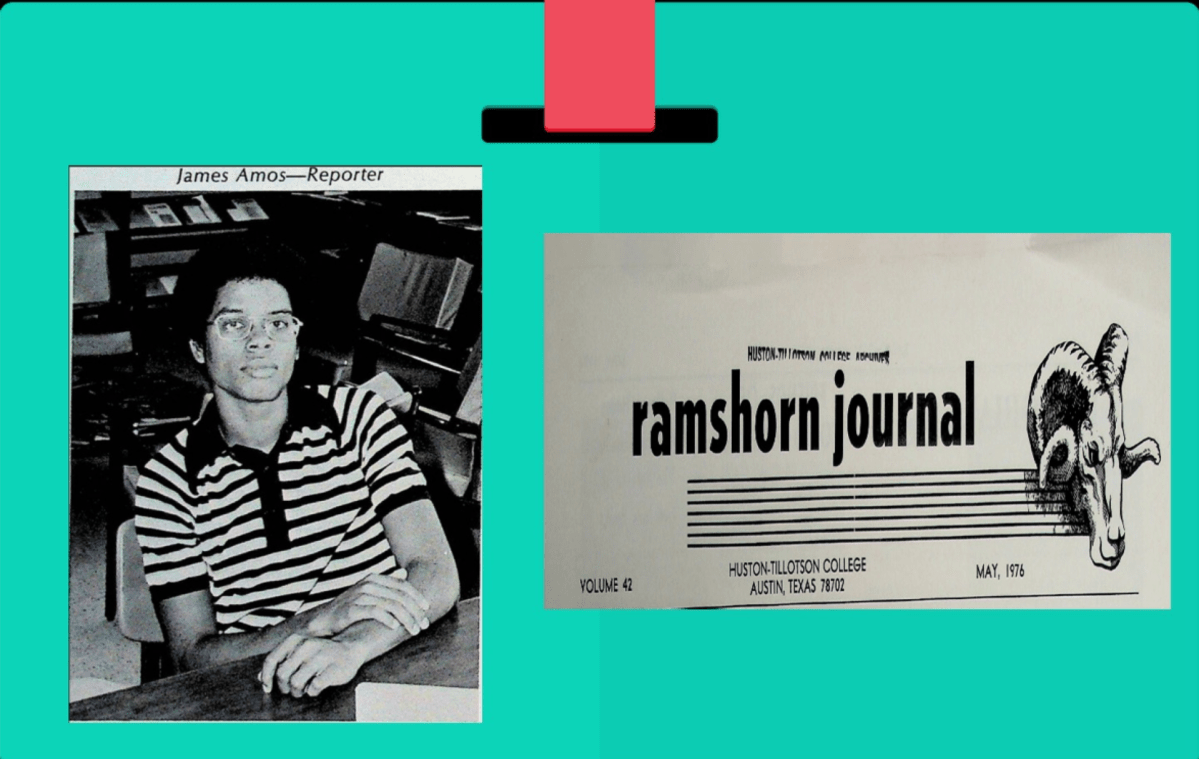
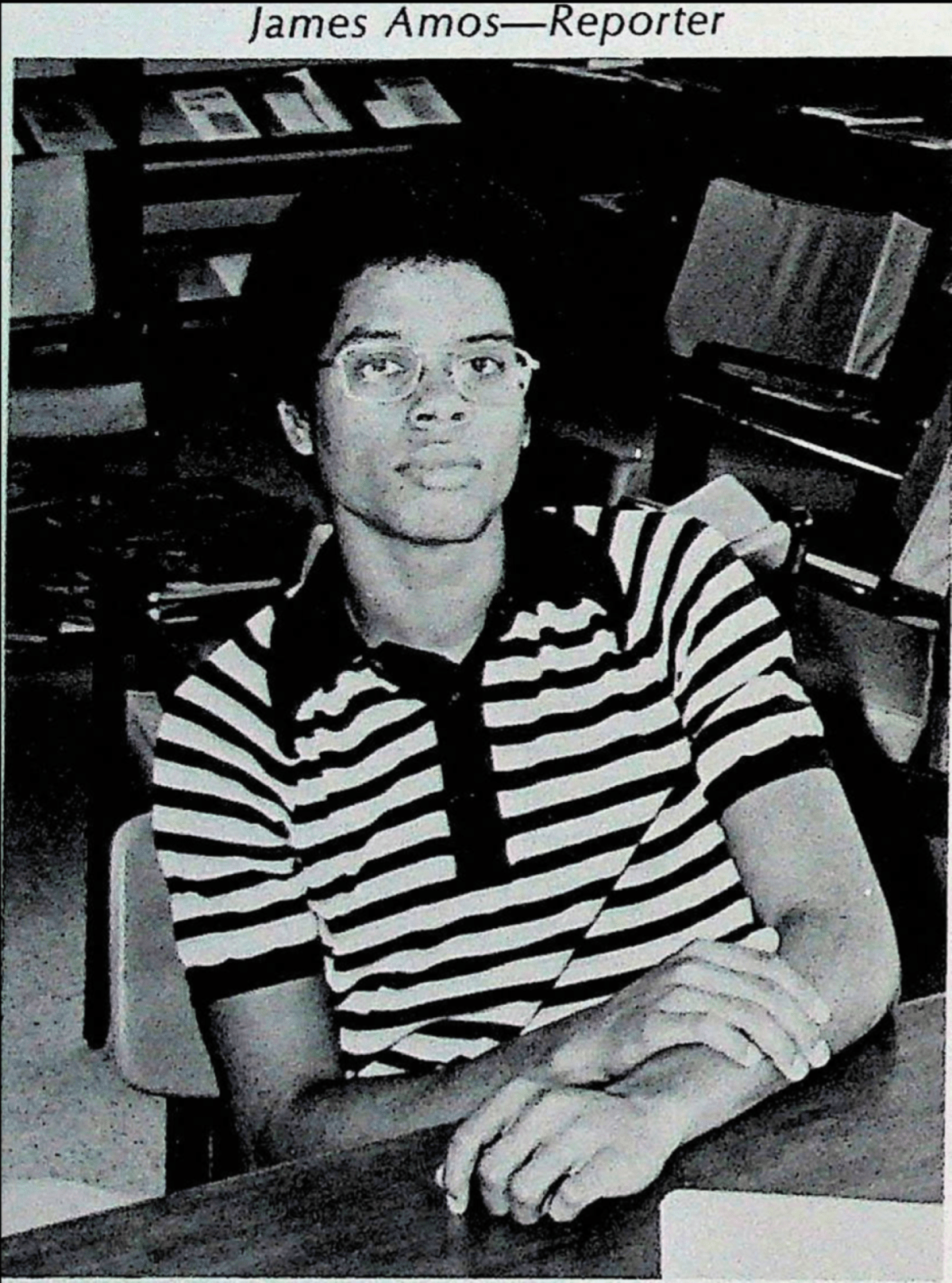
I feel like I should put on my Huston-Tillotson College (H-TC) news reporter press tag for this brief announcement, which you can get pretty much anywhere on the web anyway. Just a reminder, I was a reporter for the Ramshead Journal back in the 1970s for H-TC (now H-T University).
The breaking news is that the Moody Foundation recently gave H-TU a large gift of $150 million. It’s the largest gift to a single Historically Black College and University (HBCU) in history. Furthermore, the philanthropist MacKenzie Scott gave a $70 million gift to the United Negro College Fund recently to be divided among the 37 HBCUs. H-TU will also get a piece of that.
For more details about these donations, see the pbs story.
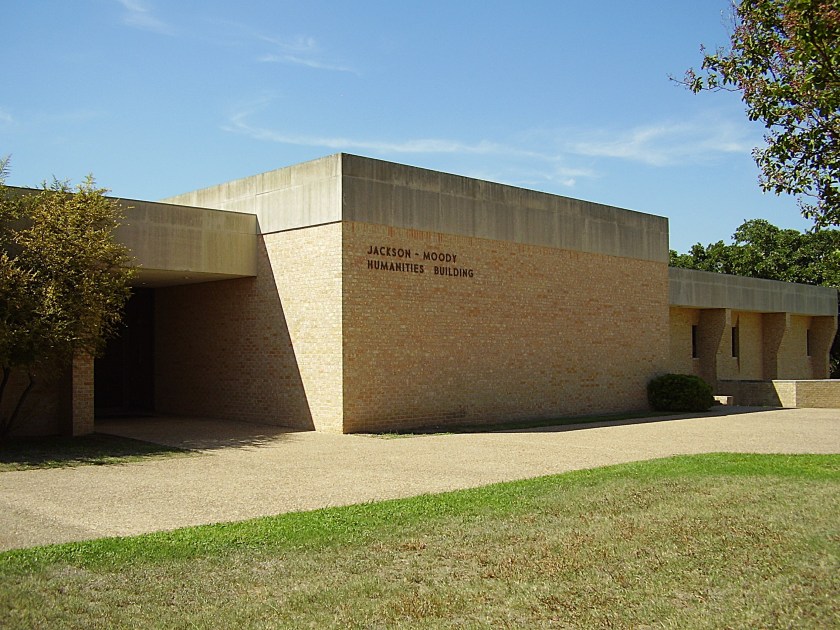
As an aside, the Jackson-Moody Humanities building on campus was named after the Moody Foundation, which covered the financial cost of construction. E.W. Jackson was a former trustee and donor. I took my English, Literature, and Spanish classes there.
picture is in the public domain
The other news is that H-TU rose in the National rankings and is now the #1 private HBCU in Texas for 2026.
A big congratulations to Huston-Tillotson University!
Well, we finally got new phones after several years. I think we bought the old ones from Fred Flintstone. I probably should have got a new phone after the battery swelled up in it so big it was starting to split the case. That was over 5 years ago. I have an iPhone 17 Pro now.
Sena’s always had a flip phone. She got one that still folds up, but it’s a lot nicer. It’s a Galaxy Z Flip7.
I think these phones have a feature that allows you to call extraterrestrials to order pizza. Don’t ask for extra cheese.
I remember we got along OK without portable phones at all for years until a big snowstorm made the streets impassable and I decided I had to sleep in my chair in my office at the hospital. We had only one car. I tried to call Sena to warn her not to drive in the snowstorm, but she’d already left to come pick me up. She got stuck on the way but managed to get unstuck and drove back home. I had no way to get a hold of her while she was out on the road.
We both got flip phones after that. I later got an iPhone triple zero, which ran OK most of the time on diesel. One of the residents talked me into buying one. It was a lesson in evolution. I guess we’re still evolving.
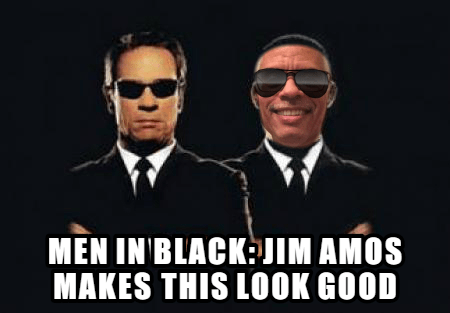
As a big fan of the Men in Black (MIB) movies, my burning question is: Will there be an MIB 5 or not?
Probably not in my lifetime, which is sad. I’m not really as big a fan of any other films, despite what you might think of my Svengoolie movie reviews—which are always tongue in cheek.
I didn’t see the first MIB film when it came out in 1997 because I was too busy starting my career as a psychiatrist. It’s my favorite, but I can’t remember the first time I saw it. I’ve always thought the chemistry between Will Smith and Tommy Lee Jones was priceless. One of my favorite quotes from that was:
Edwards: Why the big secret? People are smart. They can handle it. (this relates to why the subject of extraterrestrials on the planet is kept a big secret).
Kay: A person is smart. People are dumb, panicky dangerous animals and you know it. Fifteen hundred years ago everybody knew the Earth was the center of the universe. Five hundred years ago, everybody knew the Earth was flat, and fifteen minutes ago, you knew that humans were alone on this planet. Imagine what you’ll know tomorrow.
I Iiked the first sequel, MIB II (2002), although not as much as the first movie. And I just found out what Frank the pug meant by his question to Agent J about missing Laura. I always thought I heard Frank ask him: “What? Still sit and shiver?” That doesn’t make sense, of course. What Frank actually asked is “What? Still in shiva?” I finally just looked up the word “shiva.” Turns out it’s a Jewish term, loosely translated meaning a period of mourning, in this context of losing his girl.
I thought the third sequel, MIB 3 (2012) was really funny (all of them are funny). I always thought this one about time travel and getting trapped in the year 1969 was on target, partly because it was historically accurate. I lived through that era. Somehow, being able to laugh about it might be healing, in a way.
Jeffrey Price: Do not lose that time device or you will be stuck in 1969! It wasn’t the best time for your people. I’m just saying; it’s like a lot cooler now.
Agent J: How will I know if it works?
Jeffrey Price: You’ll either know…or you won’t.
I never watch MIB International (2019). Nothing against the actors; it just doesn’t do for me what Agents J and K do.
Anyhow, I doubt there’s ever going to be an MIB 5. I just wish the cable networks had not recently stopped showing reruns of the movies. Now it looks like the only way to see them is to subscribe to a streaming service, which is way too expensive just to feed nostalgia. I checked the Internet Archive. Comments on the videos mention their low quality. I know they’re available on DVD, but we don’t have a player anymore. I know I could play them on my computer, but I’m too lazy to sit at my desk. It’s just not the same as watching them while sitting in the living room in a really comfortable chair.
I’ve seen them so many times, I’ve practically memorized them anyway.
I watched the Svengoolie show movie “Tarantula” last night, although I fell asleep for what turns out to have been about 20 minutes or so during the second half hour of this 1955 film about radioactive nutrient producing a giant tarantula. I had to catch up on what I missed on the Internet Archive.
Don’t get me wrong, the movie didn’t put me to sleep; in fact, there were various segments that reminded me of various tangents I’m about to go off on.
Anyway, the film was directed by Jack Arnold and starred John Agar (Dr. Mass Hastings), Mara Corday (Stephanie ‘Steve’ Clayton), and Leo G. Carroll (Prof Gerald Deemer, who I guess was in a lot of Hitchcock films including North by Northwest, which Sena has seen). Raymond Bailey (Townsend, Arizona dept of agriculture scientist) had an interesting line I’ll mention later. Bailey also played the banker Milburn Drysdale in the Beverly Hillbillies TV show in the early ‘60s-early ‘70s.
The short summary of this film is that it’s one of several related to the fear of radioactivity-linked science gone bad leading to the creation of really big bugs running amok in tiny towns in the desert southwest. The main angle here is Prof Deemer’s scientific work on preventing world starvation from overpopulation by creating a nutrient that would, if mixed with the evil radioactive isotope, cause hungry tarantulas to grow to enormous size, in turn leading to cattle mutilations that would prevent long wait times for motorists waiting for cows to cross Route 66, consequently unblocking the path to McDonald’s restaurants, although the food chain interruption from the beef shortage caused by tarantula predation would eventually result in the loss of big macs leading to cannibalism, thereby cancelling world hunger by population reduction.
Scientists never think this one through.
But there are other things to talk about with respect to this movie. One of them is the word “acromegalia.” I know about acromegaly, but the term “acromegalia” was a new one to me, although it turns out to be an old term. Acromegaly is the usual name for the medical condition. Why the writers chose this word is a mystery. Both mean a rare pituitary gland problem which produces too much growth hormone leading to gigantism in which the hands, feet, and face grow bigger.
Another fascinating thing about the film is that I think I can hear Dr. Deemer call the radioisotope a specific name, something that sounds sort of like “ammoniac.” In the internet archive version, see if you can hear it at about 27:47.
Sena can hear it too. But I can’t find any reviewers who mention it and even AI denies that the radioisotope is given a name in the movie. Also, if it was made just for the movie, it doesn’t make sense because most isotopes’ names end in “-ium,” so no made-up word for it should sound like “ammoniac” which makes you think of ammonia, something somebody would wave under your nose to smell if you fainted from the sight of the giant tarantula.
Another interesting thing is the dialogue between Dr. Hastings and an Arizona Agricultural Institute scientist, Dr. Townsend (played by Raymond Bailey). The gist of the interaction is that Dr. Hastings brought a specimen of giant tarantula venom for Dr. Townsend to analyze, but when he says he found giant pools of it, Townsend is incredulous and accuses Hastings of either having a nightmare or being the biggest liar since Baron Munchausen. On the internet archive this exchange happens at about 59:07.
This is priceless. I know about Baron Munchausen because, as a consulting psychiatrist for many years I saw patients who had the syndrome which used to be called Munchausen’s Syndrome (now called Factitious Disorder) which is essentially a mental disorder in which patients claim to have diseases which they don’t actually have but fake them and lie to doctors about it. I gave lectures about the syndrome. There’s a fascinating literature about it and, the odd thing is that the real Baron von Munchhausen was a famous adventurer and raconteur—but he was not a liar.
What many people don’t know is that it was actually a fellow named Rudolf Erich Raspe, a German scientist and scholar who wrote a book about the baron which was mostly made up. Raspe was the liar, not Baron Munchhausen.
A person with Factitious Disorder was hospitalized at University of Iowa Health Care back in the 1950s and a long case report about it was published in the Journal of the American Medical Association (JAMA). Further, a physician named William Bennett Bean, MD in the Department of Medicine at the University of Iowa wrote a very long poem about this which you can access. There was also a fascinating case report published in 1980 in the New England Journal of Medicine (NEJM) by medicine residents claiming they had seen a patient who lied about having Factitious Disorder (Factitious Munchausen’s Syndrome). The residents later admitted that they made up the story. I summarized most of this in a blog post a few years ago.
Finally, there is a line by Dr. Hastings at about 1:04:45 which reminded me of a Verizon commercial years ago: “Can you hear me now?”
I think that’s more than enough about this movie, which I would give a rating of 4/5 mainly because it evoked so much from the deep recesses of my memory.
Shrilling Chicken Rating 4/5
Addendum: I couldn’t shake an urge to comment on a gesture of earlobe tugging that Dr. Matt Hastings engaged in while asking Prof Deemer about how quickly Jacobs developed his physical malformations. You can find this on the Internet Archive at time 28:36. Deemer dismisses it as acromegalia and nothing more but finally suggests Hastings could see that an autopsy be performed on Jacobs. I suspect Hasting’s earlobe tug might be dismissed as simple overacting, but there could be other interpretations.
I think I found a pair of articles from the mid-1970s in the Huston-Tillotson College Ramshorn Journal that might have a connection to each other, even though the authors didn’t know it at the time.
One of them was written by yours truly and published in December of 1975, entitled “H-TC Sponsors Education Seminar.”
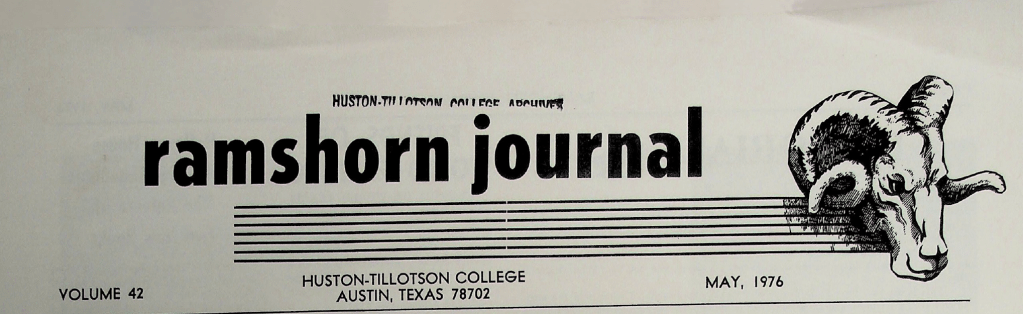
The other is a New York Times editorial from January 1976 which was reprinted in the May 1976 volume of the Ramshorn Journal and was written by Christopher F. Edley, a very successful lawyer and, at the time, the Executive Director of the United Negro College Fund.
Both were written about the same time, in the era of the civil rights struggles. I’m not comparing myself to the brilliant and accomplished Mr. Edley. And I’m just going to admit that I really don’t remember much about the trip to Houston for the Education Seminar about which I wrote my article, despite my being a participant. But I think it’s hard not to notice the language I used in my description of the importance of what the education seminar was all about. While much of the text is rather dry, when I discuss what was emphasized, I sound a little more intense. I may not remember much of what we specifically did and said but I caught the tone.
When I say the trip was not a guided tour, I mean that both faculty and students were serious about what the main message was for us—as black people. We had to measure up in a way that implied that we had to be better than best. That whole section starting with “Throughout the program, our people were reminded that any person who aspires to a position with any company must fulfill particular criteria.” It was as if I were saying we had to be perfect to make up for being black. We had to be the exemplars.
The individual must exhibit creativity, aggressiveness, ambition, self-confidence, initiative, dedication, maturity, and an ability and willingness to cooperate and effectively communicate with other people. The individual must punctual and reliable. Industry demands nothing less than high-gear performance. But they pay handsomely for that high-gear performance.
As I read this now, I get caught up on all the exhortations to be scrupulous, alert, and so on because, after all, we’re in a corporate jungle which is all about survival. I could have recast the last sentence above as “But they pay dearly for that high-gear performance”—which refers to the candidate, not the one doing the hiring.
I admit that how I wrote the story may reflect my reaction to rather than the reality of the emphasis of speakers at the seminar. But I did get the impression that I, as a black person, would be held to a higher standard than a white person. And I was uncomfortable about that.
When I turn to the New York Times article by Mr. Edley, I again am impressed with the struggle for fairness and justice, which didn’t seem forthcoming. He expressed the same sense of unfairness that I felt in Houston. The tone is almost one of outrage. He described the black people who were going to college in those days as most likely being the first ones in their families to go to college.
That’s what I was.
Mr. Edley was expressing frustration about blacks and browns just being able to get to the door of opportunity. I got the message that the struggle would go on forever—even if we got in the door. We didn’t just have to prove we were equal. We had to prove we were better.
Anyway, as I read the articles I wrote for the Ramshorn Journal 50 years ago, I begin to realize why I had no memory of having written them. It gradually becomes less strange that I still don’t really remember much of my time at Huston-Tillotson College, one of the historically black colleges and universities (HBCU) in America. But I needed that experience, even if I did pay dearly for it.
Click in the gallery; click on the picture, click the icon with an “i” in a circle, click view full size, click the plus sign to enlarge the image.
I’m thinking about the upcoming commemoration of the 24th Anniversary of the 9/11/2001 attack on America. There will be the annual event in New York City.
In Muscatine, Iowa, there will be the annual Patriot Day ceremonies sponsored by the City of Muscatine and the Muscatine Fire Department. After the morning ceremony, the Memorial Stair Climb will begin at 8:52 a.m. at the Muscatine High School football stadium bleachers.
The KCRG news reported on August 7, 2025 that 3 more World Trade Center victims were identified last month by DNA testing. The New York medical examiner’s office continues testing the remains recovered from the wreckage.
Like many people, I remember where I was and what I was doing when the attack happened in 2001. I was the general hospital psychiatric consultant on duty at the hospital at the time. I was hustling up the stairs back to my office after responding to a consultation request.
I happened to glance at the big television screen on the wall of the main floor lobby in the south part of the hospital. I watched in horror as a newscast showed the fire and smoke coming from one of the towers, which I later learned came from the plane crashing into the building. The rest of the day was full of reports of the attack.
When we visited New York City in 2017, we saw the Memorial & Museum Plaza as well as the Survivor Tree, the Callery Pear. It was discovered at Ground Zero, scarred and scorched but alive and replanted at the Memorial in 2010 after being nursed back to health at the city nursery. It is still alive and well today. It remains a symbol of strength, hope, and a reminder of our connection to each other.
Today, the Big Mo Pod Show was about how blues music can you help you “exorcise your demons” as Big Mo himself put it today. Isn’t that what it’s always about? And I can’t explain how that even works.
After a short break during the Thanksgiving holiday your hosts are back at it again with another episode! This week features the usual mix of blues eras you’ve come to expect along with a few Californian artists, tune in to see which ones! Songs featured in the episode: Solomon Hicks – “Further On Up The … Continue reading
But I don’t always understand how it works. I’m going to admit I’m not sure at all how one song last night by Toranzo Cannon would help anybody, and that’s “I Hate Love.” Of course, it’s contradictory and ironic. I’m not going to pretend I know what blues music is all about and how it can sometimes heal your inner soul pain.
But a lot of people believe that blues can help you get past the pain and it seems that it works paradoxically. I don’t always get it. But I’ve been listening to the Big Mo Blues Show for years.
That reminds me. We had a couple of guys install motorized window shades yesterday and one of them was a blues musician. He plays bass guitar and I gather he plays in local bands. He wore the best hat; it’s a fedora! Sena and I sort of ribbed him about it, but I had a fedora like that once, decades ago. It was gray with a narrow leather band. I don’t have it anymore.
I told him that I wore it while I was interviewing for residency. I wore it to dinner in a hotel in St. Louis, Missouri and a woman passing through the hotel restaurant looked at me and said with a grin, “Wear that hat!”
Sena reacted as if she’d never heard that story before. The fedora guy thought it was funny. Fedora man had that style to him that I think is fairly common in musicians. They look and may act in a way that makes you notice them. I don’t think you can always tell what somebody does just by the way he or she dresses. But when he told us he was a musician who liked the blues, that didn’t surprise us.
What did surprise us was that he didn’t recognize the name of a prominent blues musician in Iowa and a lot of other places—Kevin Burt. But he did have a sense of humor.
I think most blues musicians have a kind of slant sense of humor. It probably comes out in some of the music. I’m more drawn to blues music that makes me chuckle. On the other hand, I liked one song on the blues show last night they didn’t discuss today on the pod show. It’s not funny and I had a hard time finding the lyrics for it. It’s “I’ll Always Remember You” by the Robert Cray Band. I found a couple of sites I think got the lyrics below wrong and didn’t make sense. The way I heard the song the lines went like this:
“Old clothes and worn-out shoes Empty bottles and a book that’s way past due.”
The line I keep finding that I think is wrong is the second one, which is often written as “Empty bottles and I put this way past due.”
I think the line “a book that’s way past due” makes more sense because it conveys a sense of regret, waste and loss and promises not kept and opportunities lost and probably a half-dozen other ideas that you probably can’t easily encapsulate. It evokes sorrow that is only partly fixed by the letter’s promise— “I’ll always remember you.”
That may not completely heal you, but it’s a little like something I read about kintsugi. It’s about mending broken pottery with gold in a literal sense. In a metaphorical sense, it’s about repairing what might be broken emotionally broken in us and, despite not being the same as we were before we were broken, we’re somehow still functional and healed though not perfect. A psychiatry resident blogger wrote about that.
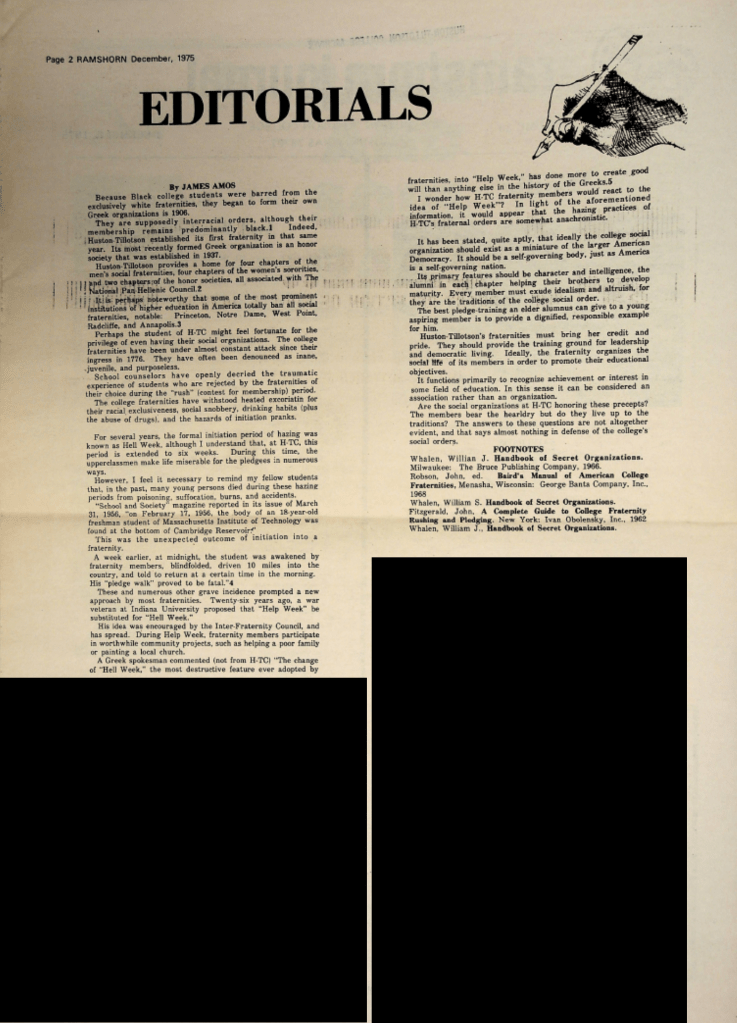
This is the 2nd editorial I wrote in 1975 about fraternities during my freshman year at Huston-Tillotson College (now Huston-Tillotson University, one of the Historically Black Colleges and Universities, HBCUs). There are a couple of misspelled words (“incidence” should be incidents; “altruish” should be altruism).
On the whole, it’s a more developed piece than the editorial about college hazing. I thought then and still think that Help Week should be substituted for Hell Week.
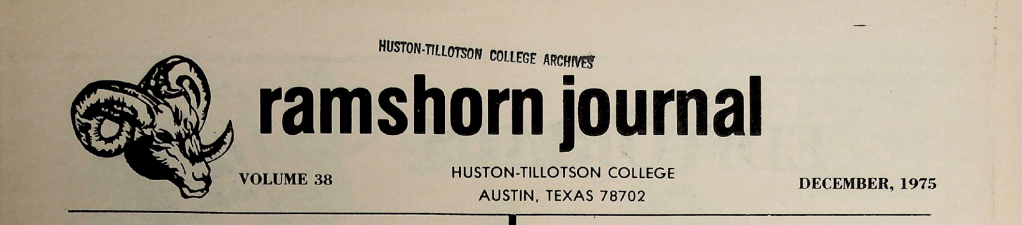
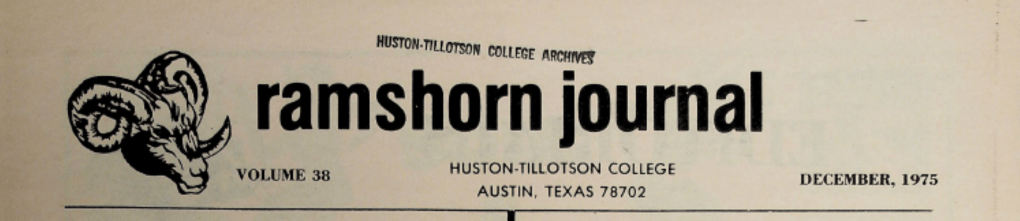
ramshorn journal vol 38, dec 1975 Click the image; Click the little icon circle with i; hover over the image and click the plus sign to enlarge.
Ramshorn Journal dec 1975another editorial on fraternity hazing















 Go Retire Psychiatrist