
An Old Blog Post About My College Days in Texas

There’s something embarrassing yet fascinating about reading my old blog posts from years ago. The one I read yesterday is titled simply “I Remember HT Heroes.” I make connections between my undergraduate college days at Huston-Tillotson College (now Huston-Tillotson University (an HBCU in Austin, Texas) and my early career as a consultation psychiatrist at The University of Iowa Hospitals & Clinics (now rebranded to Iowa Health Care).

My first remark about getting mail from AARP reminds me that organization is sponsoring the Rolling Stones current tour, Hackney Diamonds. And the name of my specialty was changed from Psychosomatic Medicine to Consultation-Liaison Psychiatry in 2017.

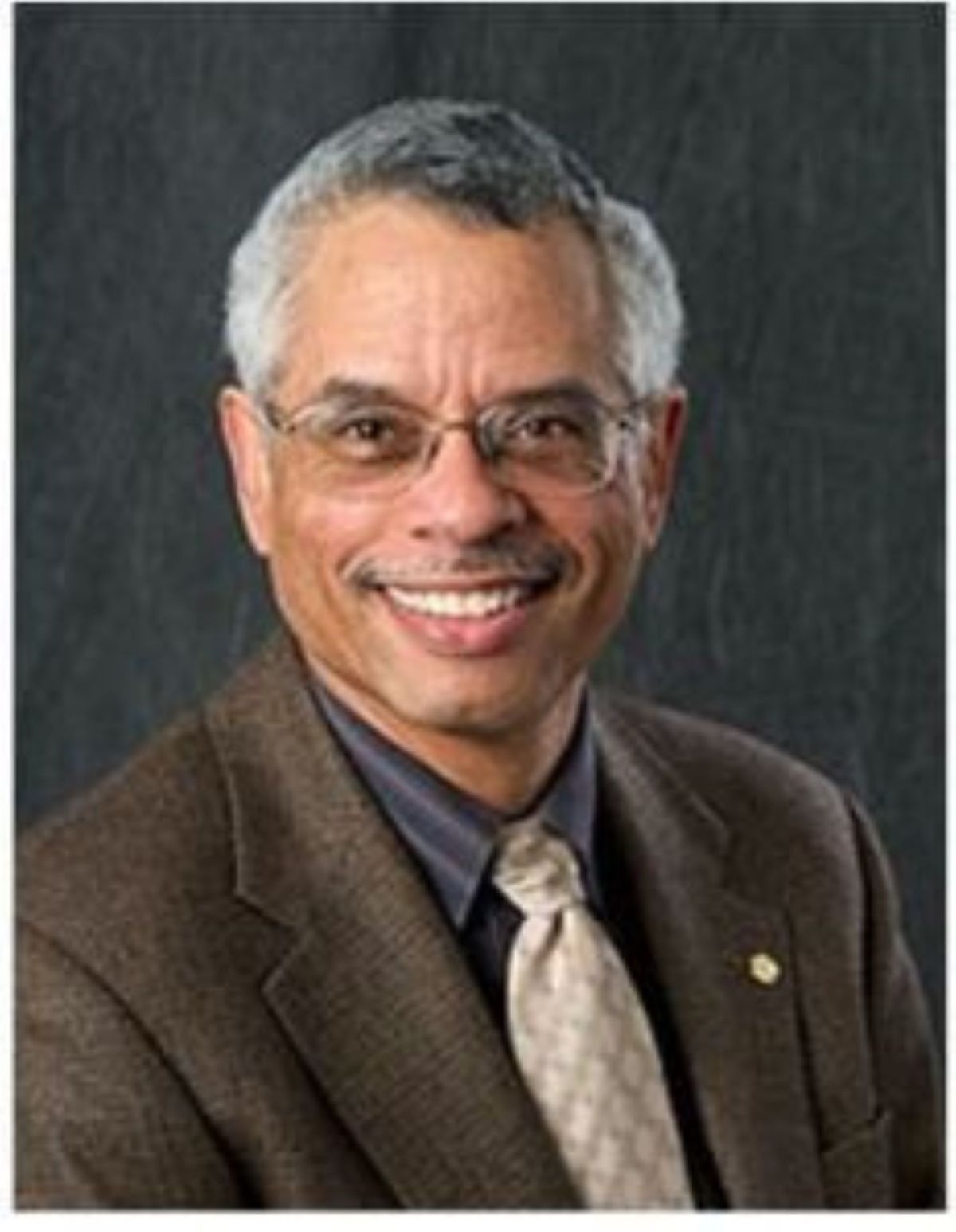
The photo of me attached to the original post reminds me of how I’ve gotten older—which also makes me hope that I’ve gotten wiser than how I sound in this essay. The pin in my lapel is the Leonard Tow Humanism in Medicine award I received in 2006.

I Remember HT Heroes

Getting membership solicitations in the mail from the American Association of Retired Persons (AARP) is a sure sign of aging, along with a growing tendency to reminisce. Reminiscence, especially about the seventies, may be a sign of encroaching senility.


Why would I reminisce about the seventies? Because I’m a baby boomer and because my ongoing efforts to educate my colleagues in surgery and internal medicine about Psychosomatic Medicine, (especially about how to anticipate and prevent delirium) makes me think about coming-of-age type experiences at Huston-Tillotson College (Huston Tillotson University since 2005) in Austin, Texas. Alas, I never took a degree there, choosing to transfer credit to Iowa State University toward my Bachelor’s, later earning my medical degree at The University of Iowa.


Alright, so I didn’t come of age at HT but I can see that a few of my most enduring habits of thought and my goals spring from those two years at this small, mostly African-American enrollment college on what used to be called Bluebonnet Hill. I learned about tenacity to principle and practice from a visiting professor in Sociology (from the University of Texas, I think) who paced back and forth across the Agard-Lovinggood auditorium stage in a lemon-yellow leisure suit as he ranted about the importance of bringing about change. He was a scholar yet decried the pursuit of the mere trappings of scholarship, exhorting us to work directly for change where it was needed most. He didn’t assign term papers, but sent me and another freshman to the Austin Police Department. The goal evidently was to make them nervous by our requests for the uniform police report, which our professor suspected might reveal a tendency to arrest blacks more frequently than whites (and yes, we called ourselves “black” then). He wasn’t satisfied with merely studying society’s institutions; he worked to change them for the better. Although I was probably just as nervous as the cops were, the lesson about the importance of applying principles of change directly to society eventually stuck. I remember it every time I encounter push-back from change-resistant hospital administrations.


I’m what they call a clinical track faculty member, which emphasizes my main role as a clinician-educator rather than a tenure track researcher. I chose that route not because I don’t value research. Ask anyone in my department about my enthusiasm for using evidence-based approaches in the practice of psychiatry. I have a passion for both science and humanistic approaches, which again I owe to HT, the former to Dr. James Means and the latter to Dr. Jenny Lind Porter. Dr. Means struggled to teach us mathematics, the language of science. He was a dyspeptic man, who once observed that he treated us better than we treated ourselves. Dr. Porter taught English Literature and writing. She also tried to teach me about Rosicrucian philosophy. I was too young and thick-headed. But it prepared the way for me to accept the importance of spirituality, when Marcia A. Murphy introduced me to her book, “Voices in the Rain: Meaning in Psychosis”, a harrowing account of her own struggle with schizophrenia and the meaning that her religious faith finally brought to it.


Passion was what Dr. Lamar Kirven (or Major Kirven because he was in the military) also modeled. He taught black history and he was excited about it. When he scrawled something on the blackboard, you couldn’t read it but you knew what he meant. And there was Dr. Hector Grant, chaplain and professor of religious studies, and champion of his native Jamaica then and now. He once said to me, “Not everyone can be a Baptist preacher”. My department chair’s echo is something about how I’ll never be a scientist. He’s right. I’m no longer the head of the Psychosomatic Medicine Division…but I am its heart.


I didn’t know it back in the seventies, but my teachers at HT would be my heroes. We need heroes like that in our medical schools, guiding the next generation of doctors. Hey, I’m doing the best I can, Dr. Porter.

Shout Out to the European Delirium Association

I just want to give an enthusiastic shout out to the European Delirium Association (EDA). I rediscovered the website. It’s updated and an extremely helpful organization in the study of delirium. It provides excellent education about the disorder.

I met one of the past presidents of the EDA, Alasdair MacLullich back in the early 2010s. In fact, while I was staffing the University of Iowa Hospital consultation-liaison service, he was generous enough to send us one of the pieces of technology which was designed to test for delirium: The Edinburgh Delirium Test Box or Delbox.

I wrote a blog post years ago about the EDA. At that time, the group published a newsletter called the Annals of Delirium. Here’s an excerpt from one of the issues in 2010:

Delirium has a long way to go before it gets the attention it deserves, before it is present in the public consciousness in the way cancer is, or even HIV. Bearing in mind the prevalence of delirium and the impact it has on patients and families we may believe it is only a matter of time, but I believe that the process is going far too slowly. Some countries are doing better than others and some areas of medicine are making greater inroads, which can only benefit us all in the long run. In the UK, however, if you search for delirium on the BBC website you are directed to the music page and the group Delirium Tremens.

I remember thinking that the anecdote reminded me of how that sounded a lot like the way things were going in the United States at that time.

And the EDA announcement about the new delirium organization in the U.S. that was just getting it’s start around that time, in 2011—the American Delirium Society (ADS).

There are educational videos about delirium on the EDA website and I’m excited to learn more about them.

Further, there was a sort of word search game I rediscovered that was made by the EDA. Some of the words are on the diagonal. Give it a shot! I finished it, but it was very challenging. If you need the key, please comment.

Gratitude to Pastor Robert Stone

I came across a couple of items that prompted my renewed gratitude. One of them was an article in Bloomberg on the web, “US Medical Schools Grapple With First Admissions Since End of Affirmative Action” by Richard Abbey, Ilena Peng, and Marie Patino, published on December 14, 2023. It’s about how hard it is for black students to get into and graduate from medical school. Just getting to college is a major hurdle.

The other item is an obituary of one of the most important persons in my life, Pastor Robert Leroy Stone. He authorized scholarships for two years of my undergraduate college education, which were at Huston-Tillotson College (now Huston-Tillotson University, one of the HBCUs) in Austin, Texas. That was back in the 1970s, ancient history now. The issue of Affirmative Action was widely discussed during that time.

As usual, I’m dumbfounded by how often I miss the passing of the critically important people who made my success in life possible. And there is this astonishing connection which followed me even to Iowa City—but of which I was unaware. After he retired, Pastor Stone moved from Mason City to Iowa City in November of 2001. At that time, I had graduated from The University of Iowa College of Medicine, finished my residency in psychiatry in 1996, and was on staff in University of Iowa Dept of Psychiatry. I never knew he was so close. He died in 2002.

Pastor Stone was a Board Member and Chair of the Mason City YMCA, where I lived for a while. He was also a Member of the Board of Chemical Dependency Services of North Iowa as well as the Mental Health Center of North Iowa.

Although I didn’t graduate from Huston-Tillotson College, I was able to transfer credit to Iowa State University. And from there I went to medical school at The University of Iowa.

I’ve read other stories about how hard it is for Black students to get into and finish medical school. My path was indirect and not easy, but Pastor Stone made it possible. And for that, I am grateful.

Time for Another Blast from the Past

I found an interesting blog post from my previous blog, The Practical Psychosomaticist. I wrote it in 2011 and it’s about the patient experience of delirium. I was delirious briefly after a colonoscopy many years ago. I don’t remember much about it. But from what Sena tells me about it, it was similar to other delirium episodes I’ve seen in the hospitalized medically ill. Thankfully, it was not severe.

“Recalling the Experience of Delirium: The Delirium Experience Questionnaire (DEQ)

Have you ever been delirious and recalled the experience? Many patients do and they usually are frightened by the experience which can be marked by delusions and hallucinations that are remembered as fragments of a harrowing nightmare. This has been studied by Breitbart, et al using an instrument they developed called the Delirium Experience Questionnaire (DEQ). In the article there’s a description of the scale:

The DEQ is a face-valid, brief instrument that was developedby the investigators specifically for this survey study andassesses recall of the delirium experience and the degree ofdistress related to the delirium episode in patients, spouses/caregivers,and nurses. The DEQ asks six questions of patients who haverecovered from an episode of delirium including: 1) Do you rememberbeing confused? Yes or No; 2) If no, are you distressed thatyou can’t remember? Yes or No; 3) How distressed? 0–4numerical rating scale (NRS) with 0 = not at all and 4 = extremely;4) If you do remember being confused, was the experience distressing?Yes or No; 5) How distressing? 0–4 NRS; and 6) Can youdescribe the experience? This final question allowed for a qualitativeassessment of the delirium experience through the verbatim transcriptionof patients’ description of the experience (not reported inthis paper). In addition, spouse/caregivers and nurses wereeach asked a single question: 1) Spouse/caregiver: How distressedwere you during the patient’s delirium? 0–4 NRS; 2) Nurse:Your patient was confused, did you find it distressing? 0–4NRS. The DEQ was administered on resolution of delirium[1].

54% of patients recalled their delirium experience. Perceptual disturbances were among the best predictors of recall. Delusions were the most significant predictor of distress. Patients with hypoactive delirium were just as distressed as those with hyperactive delirium. Mean distress levels for patients were rated at around 3 by patients and their nurses and close to 4 by family members.

In another more recent and similar study using the DEQ, the numbers were even more sobering. 74% of patients recalled being delirious and 81% reported the experience as distressing with a median distress level of 3[2].

In my work as a consultant, I’ve interviewed many patients who are delirious and their relatives and friends, who suffer as well from the experience of watching someone they love suffer from delirium. It’s very difficult to watch this kind of mental torture caused by medical disorders and medications.

The 6th question of the DEQ often produced accounts that sound terrifying. The point of the article was that the subjective report of delirium sufferers confirms that the distress levels are very high indeed and remind us of the major reason for developing systematic methods of preventing it or detecting it early and managing the syndrome—reducing suffering.”

1.            Breitbart, W., C. Gibson, and A. Tremblay, The Delirium Experience: Delirium Recall and Delirium-Related Distress in Hospitalized Patients With Cancer, Their Spouses/Caregivers, and Their Nurses. Psychosomatics, 2002. 43(3): p. 183-194.

2.            Bruera, E., et al., Impact of delirium and recall on the level of distress in patients with advanced cancer and their family caregivers. Cancer, 2009. 115(9): p. 2004-12.

Whirlpool Care Counts Laundry Program Cleans Up!

Sena and I just recently saw the TV commercial about the Whirlpool Care CountsTM Laundry Program, which has been providing washers and dryers for schools. It was launched to address school absenteeism, one cause of which is bullying of kids who don’t have clean clothes. They are also more likely to drop out of school.

It turns out this program has been going on since 2015. And there’s an Iowa connection. In 2017, Morris Elementary in Des Moines got a new washer and dryer (Des Moines Register, “Iowa teacher meets New Yorker on Instagram, and needy school gets a big lift” by Laura Rowley, published Oct 7, 2019, accessed 12/13/2023).

According to the Whirlpool’s website about it, there are over 150 programs in schools across 40 states.

The website even lists research studies demonstrating the link between a lack of clean clothes and school attendance rates.

We reminisced about what we did about this issue when we were in grade school. We don’t remember skipping school because of dirty clothes. We managed by washing them by hand, or in my family, using an old hand wringer as well. We hung clothes out to dry on the line in the back yard. Sena did that and also used a fan.

I was sometimes bullied, but it was related to being black rather than having old clothes. I didn’t change my outfit every day because I didn’t have enough clothes for that.

When I got old enough, I delivered the Des Moines Register. Talk about nickel and diming. The rates were pretty low compared to today, but I still had some customers who complained about the price. I walked my route to collect subscription fees. I was not a great salesman but I was a steady worker, delivering papers in any weather, even dragging them in a wagon through knee deep snow.

You could buy things with your money through the paper’s main office. The first thing I bought was an alarm clock with a glass face through which the clockwork was visible. I didn’t really need an alarm clock to get me out of bed to deliver papers. I was a light sleeper even then. I just thought the clock was cool.

I saved enough money (mostly in quarters) to buy my first bicycle. It cost about $20 at Ralph’s Bicycle & Hobby Shop in Mason City. It was used and I think it was a 24 inch. I did not do wheelies.

I don’t remember buying clothes.

I remember collecting from a young couple who were obviously newlyweds. They would often both come to the door wrapped in nothing but big bath towels. I wondered if they even had any clothes. Maybe they didn’t have any laundry facilities.

Anyway, I think the Whirlpool program is a great idea.

Rearranging My Books

The other day, I finally rearranged my bookshelf. I’ve put it off for a long time. While I was doing it, I remembered where I spend the most time in my thoughts. I don’t have a very broad library, which probably illustrates where my mind wanders. It has changed very little over the years. Retirement affected it some, but not a great deal. After I rearranged the books, it was not just better organized. It made me think about the past, the present, and the future.

I have a lot of books by Malcolm Gladwell for some reason. The Tipping Point was published around the time when all of my immediate family members died for one reason for another. They died within a few years of each other. It was a difficult time. I remember hoping I would just get through it. I did.

I’m still a fan of Stephen Covey. The 7 Habits Manual for the Signature Program marks a time when I was contemplating leaving my position at The University for a position in private practice. It didn’t work out, and it’s just as well.

Of course, there are many books about consultation psychiatry, including the one I wrote with my former Dept. of Psychiatry Chair, Robert Robinson. Every once in a while, I search the web to find out what former colleagues and trainees are doing now. I can’t find a few, which makes me wonder. A couple have died. I’m a little less eager to look around each time I find out about those. Finding obituaries is a sad thing—and it makes me a little nervous about my own mortality. One or two have apparently simply dropped off the face of the earth.

I read some books for fun. I’m a fan of humorists, which is no surprise. The most recent is The Little Prince. That book and others like it inspire me.

I like books that make me laugh and give me hope. It’s difficult to sustain hope in humanity, if you read much of the news, which I tend to avoid.

I feel better when we go out for walks. Recently we did that about a week ago when there were a couple of warm days. On one day, we saw a couple of bald eagles and northern shovelers (the latter of which we’ve never seen before), at Terry Trueblood Recreation Area.

On another warm day we saw a couple Harvest Preserve staff members preparing to hang a big Christmas wreath on the side of a barn on the property that faces Scott Boulevard. They’d got some evergreen branches from an “overgrown Christmas tree farm.” It had a big red bow. They were going to decorate it further and hang it. We hoped it would be finished by the time we returned that day, but it wasn’t done.

When we returned a day later, it was very cold but the wreath was on the barn wall and it was festooned with gorgeous decorative balls. It was worth waiting for.

Video music credit:

Canon and Variation by Twin Musicom is licensed under a Creative Commons Attribution 4.0 license. https://creativecommons.org/licenses/by/4.0/

Artist: http://www.twinmusicom.org/

When Should Psychiatrists Retire?

In answer to the question in the title, I’ll confess right away I don’t know the answer. The impetus for my writing this post is the Medscape article about an 84-year-old physician who was forced to take a cognitive test required by her employer as a way of gauging her ability to continue working as a doctor. She’s suing her employer on the grounds that requiring the cognitive test violated the American with Disabilities Act (ADA), the Age Discrimination in Employment Act, and two other laws in her state.

I didn’t retire based on any cognitive test. I recall my blog post “Gauging My Readiness for Retirement,” which I posted in 2019 prior to my actual retirement. In it I say:

I spent 4 years in medical school, 4 years in residency, and have worked for more than 23 years as a psychiatrist, mostly as a general hospital consultant. Nothing used to jazz me as much as running around the hospital, seeing patients in nearly all specialties, evaluating and helping treat many fascinating neuropsychiatric syndromes, teaching medical students and residents, and I even wrote a book.

On the other hand, I don’t want to hang on too long. When people ask me why I’m retiring so early (“You’re so young!”), I just tell them most physicians retire at my age, around 65. I also say that I want to leave at the top of my game—and not nudged out because I’m faltering.

In it, I mention a blog post written by a physician blogger, Dr. James Allen. The title is “When Physicians Reach Their ‘Use By Date.’ At the time I didn’t make a link to his post because the web site was not listed as secure.

Since that time, the web site has become secure, and you can read the post here. Dr. Allen lists anecdotes about physicians who ran close to or past their “use by” date.

Dr. Allen’s point is that we often don’t realize when we are past our “use by” date. That applies to a lot of professions, not just medicine.

There’s been a shortage of psychiatrists for a long time and it’s not getting better, the last I heard. All in all, I’m OK with the timing of my retirement.

I note for the record that I have not seen any mention in the news that the Rolling Stones have ever been required to take a cognitive test to continue working. I also want to point out that they are around 80 years old and their 2024 tour is sponsored by the AARP, the organization formerly known as the American Association of Retired Persons. I heard that the Rolling Stones new song, “Angry” is up for a Grammy.

I doubt anyone is angry about the obvious fact they’re not even thinking about retiring.

On Retiring from Psychiatry

I found this very uplifting and thought-provoking article on retiring from psychiatry by Juan C. Corvalan.

He sounds like he’s successfully navigating his retirement. On the few occasions I’ve felt compelled to make a remark about my own retirement, I typically say something like “It’s a mixed blessing.”

My retirement is a process, unfolding as time passes. It was difficult in the beginning, which was only a little over 3 years ago. It’s not what I would call easy even now.

What gave me joy since I retired were getting messages from the learners I was privileged to teach. Some of them I’d not heard from in many years. Someone from my department said, “We miss you.” I answered that, in some ways, I never left.

Time itself feels different. The days go by so quickly that I want time to slow down.

I like Corvalan’s way of expressing himself. He’s a writer and likes to talk about words and their meaning. He talked about the definition of the Spanish word for retirement, which is jubilacion, which reminds me of the English word “jubilation.”

Retirement has been, at times (perhaps often), anything but cause for jubilation.

On the other hand, I can think of several things I will never miss about being a psychiatrist. I don’t write about them, as a rule. In fact, I tend to write about anything but psychiatry: cribbage, juggling, making wisecracks about extraterrestrials.

I really appreciate colleagues like George Dawson, MD (who writes the blog Real Psychiatry), H. Steven Moffic, MD (who writes the articles “Psychiatric Views on the Daily News”), Ronald Pies, MD, Editor in Chief Emeritus of Psychiatric Times, and Jenna, the psychiatry resident who writes the blog “The Good Enough Psychiatrist,” who is very far from retirement, unlike me and the other writers just mentioned.

And I appreciate Dr. Corvalan’s excellent essay on retirement from psychiatry.

Reference:

Corvalan JC. A Retired Psychiatrist on Retirement: Rejoicing Jubilatio. Mo Med. 2022 Sep-Oct;119(5):408-410. PMID: 36338006; PMCID: PMC9616447.

Happy 46th Wedding Anniversary!

It was 46 years ago today Sena and I were married at the Little Brown Church in the Vale in Nashua, Iowa. I was a skinny guy with a big afro. She was and is a beautiful bride.

We cut the wedding cake together. We fed each other big bites. It was the biggest event of our lives.

There were other big events. The trip to Vegas and marveled at the Bellagio fountains. The helicopter ride over the Niagara Falls. The view over New York City from the Empire State Building. That was my first senior discount ticket. Sena holding a little alligator in Miami. The Lincoln Book Tower in Washington, D.C. Festooned with the birds of Hawaii.

Wherever we went, whatever we did, we were always together. She’s always fearless. She’s gone with me wherever I went, even when I was wrong. I am often wrong—but I was right about marrying her.

Food for Thought

I’m giving a shout-out to a couple of child psychiatrists, one I know only from a blog, The Good Enough Psychiatrist. The other is an assistant professor in the University of Iowa Child Psychiatry Dept. I’ve never met her.

Since Jenna gives her name in the About Me section of her blog, I’m going to call her that because it’s easier. Jenna writes many thought-provoking posts, but I really admire the one titled “Amae.”

Dr. Ashmita Banerjee, MD wrote an essay titled “The Power of Reflection and Self-Awareness.” It’s published on line in the Mental Health at Iowa section of The University of Iowa web site.

As a relatively recently retired consultation-liaison psychiatrist who is also a writer, I feel a strong connection to them. In addition to being very glad that extremely talented persons are filling the ranks of a specialty which suffers from a serious manpower shortage, I get a big kick out of reading what really smart people write.

Here’s where a geezer retired psychiatrist starts kidding around. Jenna, a fellow blogger, is used to my habit of deploying humor, admittedly often as a defense. Dr. Banerjee doesn’t know me.

What is it about these essays that reminds me of the X-Files episode “Hungry”? It’s a Monster of the Week episode from the monster’s perspective. This monster looks like a human but sucks brains out of people’s skulls. He’s conflicted about it and even sees a therapist. But in the end his dying words were, as Agent Mulder shoots him down, “I can’t be something I’m not.”

If you read Dr. Banerjee’s essay and followed one of the links, you would have caught the clue that I actually read it because I consciously substituted the word “What” for “Why” in the previous paragraph. I could have as easily asked why instead of what—but it’s less helpful in gaining self-awareness.

And I haven’t sucked anybody’s brains out of their skulls in, what, over two weeks now! Upon reflection, I’m very aware of being incorrigible. Food for thought.

Jenna’s description of the Japanese concept of the word “amae” and Dr. Banerjee’s examination of the Japanese word “kintsukuroi” fascinated me. What made both writers consider human emotions using a language which captures the nuances so deftly?

I was a first-generation college student. There was a time in my life that a path to medical school seemed impossible. At times I probably thought I was trying to be something I’m not.

I’m just grateful for the new generation.