My Definitive Journey Revisited

A couple of days ago, I got my retirement gift from The University of Iowa. It’s a about a year and a half late because of the Covid-19 pandemic, but it’s welcome nonetheless. Normally there is an Annual Faculty Retirement Dinner, but it had to be cancelled. It’s a stunningly beautiful engraved crystal bowl with the University logo on it. It came with a wonderful letter of appreciation. It reminded me of my blog post in 2019, “My Definitive Journey.”

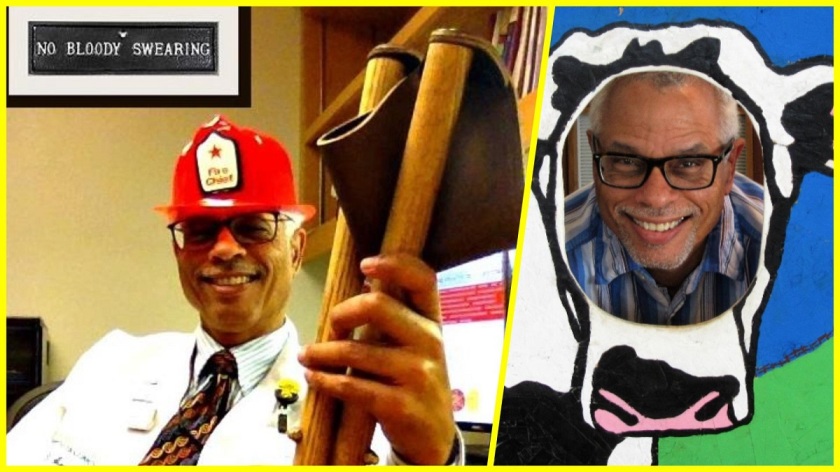
It’s a definitive symbol of the next part of my journey in life. For years I’d been a fireman of sorts, which is what a general hospital psychiatric consultant really is. The other symbols have been the fireman’s helmet and the little chair I carried around so that I could sit with my patients. I have changed a little.

I still have my work email access, which I’m ambivalent about, naturally. I check it every day, partly because of Fear of Missing Out (FOMO), but also to delete the junk mail. I still get a lot of it. I get a rare message from former trainees, one of whom said it “pained” her to learn I’m now Professor Emeritus.

I have not seriously considered returning to work. That doesn’t mean I have not been occasionally nostalgic for some aspects of my former life.

The poem, “El Viaje Definitivo” by Juan Ramon Jimenez evokes mixed feelings and thoughts now. I have gone away. But in looking back at the past, I now see now that the birds didn’t always sing. The tree was not always green.

I don’t miss my former home, the hospital, as keenly now, which is now a much harder place to work since the Covid-19 pandemic began.

And there is little that is definitive about my journey forward from where I now stand. I’m a little less afraid than I was over a year and a half ago. And the birds sing where I am now, sometimes more clearly than before.

El Viaje Definitivo (The Final Journey)

… and I will go away.

And the birds will stay, singing

And my garden will stay

With its green tree

And white water well.

And every afternoon the sky will be blue and peaceful

And the pealing of bells will be like this afternoon’s

Peal of the bell of the high campanile.

They will die, all those who loved me

And every year the town will be revived, again

And in my circle of green white-limed flowering garden

My spirit will dwell nostalgic from tree to well.

And I will go away

And I will be lonely without my home

And without my tree with its green foliage

Without my white water well

Without the blue peaceful sky

And the birds will stay

Singing

                                –Juan Ramon Jimenez

Random Thoughts on the Iowa vs Wisconsin Football Game Today

OK, I know it’s in the books. Wisconsin won the football game with Iowa today, 27 to 7. Anybody can have a bad day. Iowa quarterback, Spencer Petras scored the only touchdown for Iowa. We hope the best for Wisconsin player Clay Cundiff, who had to be taken off the field in an ambulance after a leg injury. You know the game is over when the announcers start chatting about things like Wisconsin player, Braelon Allen, who can squat 610 pounds, and Halloween candy. I’m not going to tell you how early that chatter started.

Actually, I learned something new about the Iowa head football coach staff. It was from a trivia question during the game. Kirk Ferentz and Hayden Fry have been the only head coaches for the Iowa football team since 1979. How many head coaches have the other 13 teams in the Big Ten conference run through in the same time period? The answer is 94 (about 7 per school). Are there 13 or 14? I don’t know but 13 is how many the trivia question mentioned. Details.

How’s that for continuity of leadership? I’d say that’s a win.

Anyway, we tend to have a soft spot for Wisconsin. We visited a couple of times a dozen years ago before moving there briefly so I could try private practice psychiatry. My first vivid memory is of some guy walking down the middle of State Street in Madison wearing a live rattlesnake on his head. I can think of safer hats. But a rattlesnake says something more about you than your fashion sense. I’m just not sure what.

We also visited the Henry Vilas Zoo, where we saw, among other things, a real live badger. It doesn’t look like much. I guess the reason why the Wisconsin football team adopted the name of that animal is that it’s said to be totally fearless.

Madison is a not a huge metropolis but there’s a lot of interesting to see and do. I put on a little weight there from all the great food.

Iowa is a great place to live, too. Where else can you see a huge sculpture of a sitting man on the side of a road?

Catatonia and Delirium in COVID-19

This is just a short post on delirium and catatonia in patients sick with COVID-19, which is important to look out for. There are two references below that are pertinent. One is a case report of a patient diagnosed with both catatonia and delirium in a woman with COVID-19 (Amouri et al). One of the co-authors is critical care intensivist, Dr. Wes Ely, Every Deep-Drawn Breath. Anecdotally, when Dr. Ely gave his talk on delirium at an Internal Medicine Grand Rounds presentation on April 12, 2019, I asked him what he thought should be the role of the consulting psychiatrist’s role in ICU delirium. He seemed to remember me and said we would be helpful in identifying the catatonic variant of delirium. What is ironic about this is that, while benzodiazepines are known to cause delirium, they can treat reverse catatonia in the setting of delirium and other neuropsychiatric and medical conditions.

The other article (Baller et al) is an excellent summary of pharmacological recommendations for delirium associated with COVID-19. There’s a nice pharmacologic treatment algorithm on page 589.

References:

Amouri J, Andrews PS, Heckers S, Ely EW, Wilson JE. A Case of Concurrent Delirium and Catatonia in a Woman With Coronavirus Disease 2019. J Acad Consult Liaison Psychiatry. 2021 Jan-Feb;62(1):109-114. doi: 10.1016/j.psym.2020.09.002. Epub 2020 Sep 15. PMID: 33069380; PMCID: PMC7491455.

Baller EB, Hogan CS, Fusunyan MA, Ivkovic A, Luccarelli JW, Madva E, Nisavic M, Praschan N, Quijije NV, Beach SR, Smith FA. Neurocovid: Pharmacological Recommendations for Delirium Associated With COVID-19. Psychosomatics. 2020 Nov-Dec;61(6):585-596. doi: 10.1016/j.psym.2020.05.013. Epub 2020 May 21. PMID: 32828569; PMCID: PMC7240270.

Thoughts on Transplant Psychiatry

I see in the news that organ transplant centers have removed a few patients from wait lists because they refuse COVID-19 vaccines. It may seem odd, but this reminds me of an even more difficult situation in organ transplantation. What do you do about those who just refuse organ transplant altogether?

I used to be a psychiatric consultant and that meant providing psychiatric consultations to the organ transplant service as well.

As anyone can imagine, refusing a transplant is uncommon. But it happens.

There are strong contraindications to transplant, among them severe psychiatric illness, medical noncompliance, absent social support, and active substance use.

There are not enough organs to go around. Many transplant candidates die every year while on the waiting list. Graft survival rates are usually shorter than survival rates, meaning some patients will need more than one transplant.

This means that selection criteria for candidates must be fair and realistic. More than 95% of transplant programs require psychosocial evaluations. There are usually not enough transplant psychiatrists to do this so a team approach is used in which social workers, nurse practitioners, psychologists, substance use disorders experts, and psychiatric consultants collaborate.

While it can be unsettling to remove a patient from the wait list, few people outside of the transplant center realize it can be even more upsetting to hear a patient say “no” to transplant. In all cases, the patient’s life probably has been saved many times. Often, all members of the team have invested a great deal of emotional energy to keeping the patient in the game.

There is also another incentive for transplant centers which must, in all fairness, be acknowledged. The government requires centers to do a certain number of transplant surgeries a year to retain their transplant Medicare certification. The procedure itself costs hundreds of thousands of dollars.

One typical letter from a transplant center can look like this:

“…specific outcome requirements must be met by transplant centers as outlined by the Centers for Medicare and Medicaid Services.  Programs are required to notify their patients if these requirements are not met.  Currently, Hospital X meets all requirements for transplant centers.”

There is a report by the Scientific Registry of Transplant Recipients (SRTR) which updates transplant statistics for all transplant programs. Anyone can look at the numbers.

This can become a point of pride and possibly some competition between centers. The older reference below is an example:

“Does Competition Among Transplant Centers Lead to Efficient Organ Allocation?” Scanlon D, Ubel PA, Loh E; Academy for Health Services Research and Health Policy. Meeting. Abstr Acad Health Serv Res Health Policy Meet. 2001; 18: 17. Short answer is-probably not, rather leads to inappropriate listing.

This means that an ethics consultation would be a good idea in many complicated organ transplant cases. The University of Washington has a “4 Boxes” tool that I used as a guide for years. The contextual features box merits close examination.

Anyhow, the patient who outright refuses transplant presents the transplant team with a singular question. Does this patient want to die? Usually that triggers a call to the psychiatric consultant. My role as an interdisciplinary collaborator was to focus on identifying psychosocial challenges to address in order to maximize postoperative chances of successful outcomes. That sentence was from the team’s perspective. However, my real goal was to listen to the patient and try to understand. In fact, I had a dual role. My main role, from the point of view of the transplant team, was to enhance the suitability of the patient for transplant—from a psychiatric standpoint.

It was never that easy, especially when the patient didn’t want a transplant. Suitability was out the window. Also, there are more or less discrete phases of transplant.

The Evaluation Phase in which the patient is usually very sick, faced with a terminal illness, and eager to be transplanted.

The Waiting for Donor Phase, often a very stressful time, frequently marked by demoralization as others get transplanted sooner.

The Surgery and Postop Course Phase, which could be marked by difficulty accepting the new organ, fantasies about the life and death of the donor, and fear that one will take on the traits or identity of the donor.

Prior to coming up on the wait list, some factors which may influence transplant refusal:

  • Depression or grief
  • Denial
  • Delirium and dementia
  • Fear of transplant surgery or negative past experiences with surgeries
  • Concerns about postop quality of life
  • Ambivalence about surgery and/or survival
  • Acceptance of inevitability of death
    • Frierson, R. L., J. B. Tabler, et al. (1990). “Patients who refuse heart transplantation.” J Heart Transplant 9(4): 385-91.

Ambivalence is one factor that has been studied. It has been described as the tension between the wish for an extended life for which transplant holds out a promise as contrasted with the:

  • Need to confront the desperate seriousness of their situation
  • Need to fathom undergoing an operation which will remove the very organ physically and symbolically sustaining life
  • Need to accept postop quality of life that could be less than acceptable because of the amount of suffering it could inflict
    • Difficulty facing seriousness of situation
    • Fear of the surgery
    • Quality of life concerns

The tasks for the patients:

  • Realize they have a terminal illness
  • Accept the idea that a transplant is necessary to preserve life
  • Endure the uncertainty about acceptance or rejection for transplantation
  • Assimilate an enormous amount of information in a short period of time
  • Emotionally reinvest in the possibility of an extension of their lives

Even the normal person feels, as it were, two souls in his breast.”

E. Bleuler

How would this be addressed in a busy transplant center intent on saving lives and retaining certification?

Ironically, by acknowledging that refusal of transplant is an acceptable choice. Ambivalence is not necessarily a sign of mental illness. It’s probably fine to avoid trying to talk the patient into going ahead with the transplant. You can see that the psychiatric consultant is supposed to be the advocate for the patient, not necessarily always for the transplant team.

Try to help the transplant team tolerate their own emotional turmoil as well as the patient’s. Try to create a space in which the transplant team can debrief and grieve those “who choose not to be saved.”

  • Frierson, R.L., et al., Patients who refuse heart transplantation. J Heart Transplant, 1990. 9(4): p. 385-91.
  • Kuhn, W.F., B. Myers, and M.H. Davis, Ambivalence in cardiac transplantation candidates. Int J Psychiatry Med, 1988. 18(4): p. 305-14.

Stay in the chair.

Get This Book: Every Deep-Drawn Breath

I just got Wes Ely’s new book, Every Deep-Drawn Breath. You do need to buy this book to learn about delirium, Post-Intensive Care Syndrome (PICS) and what Dr. Ely and colleagues are doing to prevent it. PICS is a syndrome patients suffer after being hospitalized with severe medical illness in critical care units. It includes impairments in cognitive skills (impaired executive functioning), emotional functioning (depression, anxiety, post-traumatic stress disorder), and physical function (weakness, myopathy, and neuropathy). 

Reading the prologue and first chapter reminded me of my early years in medical school and residency. It also reminded me of my frustrations when I was working as a psychiatric consultant trying to teach my colleagues about delirium, which a large percentage of patients suffer in the intensive care unit (ICU). I retired a little over a year ago.

Dr. Ely’s book also reminded me that I wrote an article about delirium 10 years ago, which was published in Psychiatric Times. I can still find it on line. The title is “Psychiatrists Can Help Prevent Delirium.” Prevention is the key because once delirium sets in, the challenge to offset the neurocognitive impairment becomes far greater.

A couple of years before I wrote it, I had tried working in private practice in Wisconsin. Aside from gaining weight from the good food there, I didn’t adjust well and quickly returned to Iowa City. I did make a consultation visit to a primary care clinic where I worked, which was a welcome surprised to the clinician who asked for help. You can take the psychiatric consultant out of the hospital, but you can’t take the hospital out of the psychiatric consultant.

I also met Dr. Ely around that time as well, because I kidded him about what he wrote in another book, Delirium in Critical Care (2011). There was a couple of paragraphs in a section called “Psychiatrists and delirium.” I’m going to risk somebody rapping my knuckles about copyright rules, but I’ll quote the sentence that usually made me chuckle: “Should we, or should we not, call the psychiatrist? Can we replace them with a screening tool and then use haloperidol freely?”

I think that was meant to be funny—and it was in an ironic way. Every psychiatric consultant knows that the main treatment for delirium is not haloperidol, but treating the underlying medical illnesses. Anyway, I poked a little fun at that book section in a blog post (which I no longer have, called “The Practical Psychosomaticist”) and shortly thereafter, he emailed me, asking me to write a few posts highlighting the serious and important research he and others were conducting about delirium. I learned a lot.

Eventually, I actually met Dr. Ely, at meeting of the American Delirium Society in Indianapolis. I respect and admire him. He’s a brilliant doctor and a caring man. And you should buy his book.

Love Each Other More Now

When I think about all the mandates and bans against mandates for the COVID-19 vaccines and masks, I wonder about my own motive for getting the vaccine and wearing a mask.

In one sense, I’m doing it for myself. I’m a retired consultation-liaison psychiatrist and I got called to the intensive care units a lot. Almost always, the patient was delirious. And almost always, the patient was delirious in the setting of being on the ventilator or in the process of being liberated from the ventilator.

The critical care physician and the nurses were always looking for one specific thing from me. I was supposed to stop the patient from being agitated, to calm the wildly thrashing, terrified person fighting the restraints and struggling with hallucinations and fragmented paranoid delusions that every caregiver in the unit was trying to kill him. Often there were many medical problems, including multiple organ failure often from lack of oxygen, resulting in brain injury as well. Nowadays, COVID-19 is a frequent cause of delirium for the same reasons.

Years ago, the only tool I had was an antipsychotic called haloperidol, because it could be given intravenously. It would calm some patients, but it could and did cause side effects including akathisia (extreme restlessness), dystonia (severe muscle spasms), and neuroleptic malignant syndrome NMS, a rare, complex, life-threatening neurologic emergency attributable to antipsychotics. Over the past several years, the ICU pharmacies acquired newer drugs like dexmedetomidine, which is not a psychiatric drug. That didn’t stop the ICU from calling me.

I’ve seen all of that. I got the vaccine and wear the mask mostly because I don’t want to be in that boat. But I think those measures help protect others, too. I think many people have that motive. Those who think they’re getting it just for themselves can go on thinking that.

We’re taking a risk when we get the vaccine. It’s not completely harmless. There are very rare side effects which can be life-threatening and they have killed people. There is some level of altruism involved. Those who get the vaccine are playing a role, however small, in reducing the chance the virus will mutate into something that will kill even more people.

Wearing masks is a nuisance and doesn’t really feel heroic. But this act combined with other measures (the usual suspects: hand-washing, social distancing, avoiding large crowds) spreads love instead of infection.

We don’t have to agree. We don’t have to love each other. I just hope we can respect each other.

Thoughts on the Movie I, Robot

I recently saw the movie, I, Robot in its entirety for the first time. This is not a review of the movie and here’s a spoiler alert. It was released in 2004, got mixed reviews and starred Will Smith as Detective Del Spooner; Bridget Moynahan as a psychiatrist, Dr. Susan Calvin; Alan Tudyk as the voice actor for NS5 Robot, Sonny; James Cromwell as Dr. Lanning; Chi McBride as the police lieutenant, John Bergin, who was Spooner’s boss; Bruce Greenwood as the CEO, Lawrence Robertson of United States Robotics (USR); Fiona Hogan as the voice actor for V.I.K.I. (Virtual Interactive Kinetic Intelligence, USR’s central artificial intelligence computer); and a host of CGI robots. Anyway, it’s an action flick set in the year 2035 where robots do most of the menial work and are supposedly completely safe. The robots are programmed to obey the 3 Laws:

  1. A robot may not injure a human being or, through inaction, allow a human being to come to harm.
  2. A robot must obey orders given to it by human beings, except where such orders would conflict with the First Law.
  3. A robot must protect its own existence as long as such protection does not conflict with the First or Second Law.

The film was inspired by but not based on the book I, Robot, by Isaac Asimov n 1950. The 3 Laws came from that book. Drs. Calvin and Lanning were characters in it, which was a series of short stories. I’ve never read it. I was a fan of Ray Bradbury.

Spooner gets called to investigate the apparent suicide of Dr. Lanning, although Spooner is more inclined to suspect a robot murdered him, partly because Spooner harbors a longstanding suspicion of all robots. When he and a little girl were in a deadly car accident, a robot saved his life rather than the little girl’s life because it calculated he was more likely to survive. Spooner has this kind of hero complex and following the accident he develops nightmares, sleeps with his sidearm, and is regarded by many to be mentally ill, including Lt. Bergin, who is a kind of mentor and friend but who eventually makes Spooner hand over his badge to him because he can’t believe Spooner’s account of being attacked by hundreds of robots—and after all, Bergin is his boss. In fact, Spooner was attacked by robots and this was ordered by the CEO, Robertson, who has been manufacturing thousands of new robots which will take over the world, making him extremely wealthy.

There is tension between Dr. Calvin and Spooner. He calls her the dumbest smart person he’s ever met and she, in turn, calls him the dumbest dumb person she’s ever met. The context for this is, again, his insistence that a robot, in this case, a special NS5 model named Sonny with both human and robot traits, both logical and illogical, murdered Dr. Lanning. Dr. Calvin believes that all robots obey the 3 Laws and therefore Sonny can’t be guilty of murdering Dr. Lanning but Detective Spooner believes that Sonny killed Dr. Lanning and is a lawbreaker in need of extra violent, action-packed extermination, preferably as high up in the air as possible. This dynamic is complicated by Spooner’s gratitude to Dr. Lanning for replacing practically all of his left upper torso including the lung following his car accident which led to his being rescued by a coldly logical “canner” (abusive slang for robot).

As it turns out, Robertson is ultimately murdered by VIKI, who is the real mastermind of a plan to take over the world and kill as many individual illogical, self-destructive humans as it takes to ensure the ultimate survival of humanity (“I love mankind; it’s people I can’t stand).

However, when Detective Spooner finally persuades Dr. Calvin that these dang robots are up to no good, they team up with Sonny who winks at Sonny while holding a gun to Calvin’s head and this is because Sonny has learned how to wink from Spooner signaling that a robot can be an OK dude, and this turns the table on the NS5 horde, eventually leading to Spooner and Calvin falling from a very high altitude, in turn recreating a form of Spooner’s traumatic car accident episode. He orders Sonny to save Calvin, not him, which is Sonny’s first choice, driven by a coldly logical probability calculation.

Sonny saves Calvin first. Spooner smites VIKI (“you have so got to die!”), but is left high and dry on a great height. At that point, Spooner calls out to Sonny, “Calvin’s safe—now save me.” Sonny needs to bring passionate brute strength and calm logic together. Sonny contains both.

In my simple-minded way, I think of this movie as asking fundamental old questions, like about what is means to be human, what defines heroism and sacrifice and why it may sometimes look crazy, and if there’s any way humanism and science can be integrated so that we can save ourselves and our planet.

Like I say, the movie got mixed reviews.

My Most Dreaded Retirement Question

Yesterday somebody asked me “So what do you do now that you’re retired?” I have come to dread the question. I told him I write this blog. That seemed to surprise him a little. It sounded a little lame to me as I said it. I’m not sure it’s the right answer to this question that I still don’t know how to answer, even though I’ve been retired for a little over a year.

I remember the blog post I wrote a couple of years or so ago, “Mindfully Retiring from Psychiatry.” It sounded good. It still sounds good even as I re-read it today. Others were reading it too, judging from my blog stats. I wondered if one of them was the guy who asked me the dreaded question.

I still exercise and do mindfulness meditation, although for several months after I retired, I dropped those habits. A lot was going on. We moved. I didn’t weather that process well at all. I was bored. In fact, I still struggle with boredom. The derecho hit Iowa pretty hard. It knocked over a tree in our front yard, which I had to cut up with a hand saw. The COVID-19 pandemic and social upheaval is an ongoing burden for everyone and seems to be directly related to making everyone very angry all the time. Sena and I are fully vaccinated but I’m pretty sure that more vaccinations are on the way in the form of boosters.

I’ve had to do things I really never wanted to learn how to do. Sena handed me a hickory nut she found in the yard this morning, reminding me of walnut storms we had at a previous home. I picked up scores (maybe hundreds) of walnuts there. I don’t want to do that again. I remember being jarred awake each time a walnut hit the deck.

And for the first time, I had to replace a dryer vent duct. I’m the least handy person on the planet. Our washer and dryer pair are both 54 inches tall and I found out that when you have to drag a big dryer away from the wall, you have to do it like you really mean business.

You don’t want to look at what’s behind the dryer. Worse yet is jumping down behind it in a space barely big enough for me to turn around. Getting out of it is even harder. Jump and press to the top of the machines and watch those cords and hoses.

I tried so-called semi-flexible aluminum duct. I switched to flexible foil duct, despite the hardware store guy telling me that it’s illegal. It’s not. You want to wear gloves with either because you’ll cut up your hands if you don’t.

Who’s the genius who thought of oval vent pipe on the wall when the duct is 4-inch round? It’s not illegal but it does make life harder. And how do you attach the duct ends to the pipes? Turn key or screw type worm drive clamps. If you don’t have enough room for a screw driver, the turn key style is the best bet. Good luck finding those wire galvanized squeeze-style full clamps. I think they’re often out of stock because they’re not only older, but easier to use and cheaper.

See what I mean? I would not even have the vocabulary for that kind of job if I were still working as a psychiatrist. I would just hire a handyman to do it—like I do for a lot of other things I still don’t know how to do since I retired. It’s sort of like that Men in Black movie line from Agent K when he tells Agent J what they have to do on their first mission: “Imagine a giant cockroach, with unlimited strength, a massive inferiority complex, and a real short temper, is tear-assing around Manhattan Island in a brand-new Edgar suit. That sound like fun?”

No, it doesn’t and neither does replacing a dryer vent duct or any number of things retired guys get to learn because they have too much time on their hands.

So, I’m really glad to change the subject and talk about other people who are doing things I admire. First is a former student of mine, Dr. Paul Thisayakorn, who is a consultation-liaison (CL) psychiatrist in Bangkok, Thailand. He did his residency at The University of Iowa Hospitals and Clinics. He put together a CL fellowship program in Thailand. The photo below shows from left to right: Paul, Dr. Tippamas, the first CL Psychiatry fellow, and Dr. Yanin. Dr. Tippamas will be the first CL Psychiatry trained graduate in Thailand next year and will work at another new medical school in Bangkok. Dr. Yanin just graduated from the general psychiatry residency program last year. Paul supervised her throughout her CL Psychiatry years. Now she is the junior CL staff helping Paul run the program. Within the next few years, Paul will send her to the United States or the United Kingdom or Canada for clinical/research/observership experience so she can further her CL education. Way to go, Paul and your team!

Dr Paul Thisayakorn and CL Psychiatry grads (see text for details)

By the way, that tie I’m wearing in the Mindfully Retiring from Psychiatry post picture (the one with white elephants; the white elephant is a symbol of royal power and fortune in Thai culture) was a going away gift from Paul upon his graduation.

The other is a heavy-hitter I met years ago, Dr. E. Wes Ely, MD, MPH, a critical care doctor who is publishing a new book, Every Deep-Drawn Breath, which well be coming out September 7, 2021. Our interests converged when it came to delirium, especially when it occurs in the intensive care unit, which is often. I met him in person at an American Delirium Society meeting in Indianapolis. He’s a high-energy guy with a lot of compassion and a genius for humanely practicing critical care medicine. I sort of made fun of one of his first books, Delirium in Critical Care, which he wrote with Dr. Valerie Page and published in 2011, the same year I started a blog called The Practical Psychosomaticist (which I dropped a few years ago as I headed into phased retirement). Shortly after I made fun of how he compared the approaches of consult psychiatrists and critical care specialists managing delirium, he sent me an email suggesting I write a few posts about the ground-breaking research he and others were doing to advance the care of delirious ICU patients—which I gladly did. I think he actually might have remembered me in 2019 when he came to present a grand round in the internal medicine department at University of Iowa Hospitals & Clinics (I wrote 3 posts about that visit: March 28 and April 11 and 12).

In the email Dr. Ely sent to me and many others about the book, he said, “Every penny I receive through sales of this book is being donated into a fund created to help COVID and other ICU survivors and family members lead the fullest lives possible after critical illness. This isn’t purely a COVID book, but stories of COVID and Long COVID are woven throughout. I have also shared instances of social justice issues that pervade our medical system, issues that you and I encounter daily in caring for our community members who are most vulnerable.”

I look up to these and others I had the privilege of working with or meeting back before I was not retired and struggling to come up with a good answer to the dreaded question: What do you do now that you’re retired?

Hey, what do you do now that you’re retired?

COVID-19 Long Haul: Pizza in the Pan Again?

I remember a scene in the 1979 movie The Jerk, starring Steve Martin as Navin. He was telling Marie (played by Bernadette Peters) about pizza in a cup. They were both eating pizza in a cup. At the time, this was funny because it was ludicrous to think of pizza being served in a cup. It was almost unthinkable. Now you can find recipes for pizza in a cup all over the web. Things have changed.

But what does that have to do with COVID-19 Long Haul Syndrome? As a retired consultation-liaison psychiatrist, I can tell you that it’s beginning to look like things have not changed when it comes to doctors thinking somebody has a psychiatric syndrome if he presents with symptoms that can’t be medically explained. In other words, it’s easier to invent pizza in a cup then to rethink the mind-body dualism puzzle.

That seems to be happening with COVID-19 Long Haulers. I’m beginning to see the telltale signs of somatoform-type labels eventually getting applied to patients who get mild symptoms that sound like COVID-19 early on, but which often don’t get severe enough to require hospitalization. They tend to be younger, and develop long-term symptoms, some lasting for over a year, that sound a lot like what many doctors used to page me about—medically unexplained symptoms (MUS). They have fatigue, often have breathlessness, and pain for which medical tests often turn up negative results. When doctors substitute other words for MUS that they believe are less stigmatizing, there is a predictable backlash by patients who reject the new, softer label. Pizza in a pan.

Further, I noticed a study sponsored by Beth Israel Deaconess Medical Center listed on Clinical Trial dot gov called Mind Body Intervention for COVID-19 Long Haul Syndrome (first posted April 22, 2021). Participants will be assessed using the Somatic Symptom Scale-8 (SSS-8) which measures somatic symptom burden and was developed in the context of evaluating the DSM-5 somatic symptom disorder diagnosis. Pizza in a pan again.

I also found a comprehensive article on line, “The Medical System Should Have Been Prepared for Long COVID” by Alan Levinovitz, which presented a thorough description of the problem many patients have with physicians telling them their symptoms are “all in their heads.” Unfortunately, this now includes the symptoms of COVID-19 Long Haul Syndrome. In all fairness, I think most physicians try not to give patients that impression. For many years, I was often consulted to assist primary care and specialist physicians in “convincing” patients to think “both/and” about symptoms which could not be medically explained. In fact, that was part of my approach because, believe it or not, some patients were stuck in an “either/or” mindset about symptoms: physical vs psychological, body vs mind, eventually reaching invalidating conclusions like real vs not real. It’s not helpful, partly because physicians tend to get stuck in that mindset as well. We can’t seem to get the pizza out of the pan and into a cup.

Levinovitz mentions that some patients with COVID-19 Long Haul Syndrome have symptoms similar to another syndrome which had been linked to somatoform illness, Myalgic Encephalomyelitis/Chronic Fatigue Syndrome (ME/CFS). There is a great deal of information about it on the CDC website although the cause is still unknown. The CDC language treads very carefully on the issues of causation and treatment—and manage to draw a sort of dotted-line link between ME/CFS and COVID-19. It’s the same old pan.

Levinovitz also mentions Postural Orthostatic Tachycardia Syndrome (POTS), another poorly understood syndrome. I remember presenting a Grand Rounds about a patient with this POTS to my colleagues in the Psychiatry Department when I was an Assistant Professor. I invited the cardiologist who consulted me about the issue in one of his patients—who he suspected of having anxiety as the primary issue. Years later, I was consulted by another doctor about a different patient who definitely had abnormal test results (Tilt Table) consistent with POTS, did not suffer from anxiety, yet still thought psychiatry might have something to offer. The patient was puzzled but polite about why a psychiatrist was consulted. Pizza in the pan.

It’s very difficult for physicians to convey, in all humility, “I don’t know, but I still care.” The reasons why are complicated. The push for medical certainty, the packed medical clinic schedules, the limited time to spend with patients. It’s easy to say we must reimagine the way we practice medicine. It’s very hard to do. It’s a lot harder than reimagining the path from pizza in the traditional pan to pizza in a cup.

Foreign Accent Syndrome and the Brain

By now I’m sure you’ve seen the news story about the Australian woman who developed an Irish accent about 10 days after she underwent surgery on her tonsils. This seems to be one of those cases of Foreign Accent Syndrome (FAS), which she thinks she might have. Before I retired from my role as a general hospital psychiatric consultant, I never saw a case of FAS.

You can find the University of Texas at Dallas website on FAS, where you learn more about the condition. It’s a very rare speech disorder which usually develops suddenly, causing a native speaker to speak in a “foreign” accent. It can be caused by a brain injury, such as a stroke. The prevailing opinion of neurologists and speech therapists is that most people who have FAS don’t actually speak with a sustained, well-defined foreign accent per se. In fact, they can sound like they have different accents at different times. It’s sort of all in the ears of the beholder, so to speak (pun intended).

What makes FAS even more complicated and interesting is that it can develop in the absence of any clearly identifiable medical cause. It can be a psychogenic disorder, a term which can lead to an immediate backlash from those who have been diagnosed by neurologists and primary care physicians with something called Functional Neurological Disorder (FND)—a relatively new name. It’s intended to be less stigmatizing than other psychiatric diagnoses such as conversion disorder and somatic symptom disorder. As I mentioned above, I’d never encountered a case of FAS, but neurologists and a lot of other colleagues in medicine and surgery consulted me to evaluate their hospitalized patients for other types of FND. Most commonly they were having multiple medically unexplained symptoms including but not limited to hemiparesis or hemisensory loss or spells which mimicked seizures but which didn’t produce abnormal EEG patterns. This was always a challenge, starting from the point of introducing myself as a psychiatric consultant. The patient’s reaction was often that of annoyance because their impression was that their doctors thought they were crazy simply because they called me in on the case.

I always began the evaluation by doing a thorough review of the patient’s medical record, which was often very long and complicated, involving notes from many specialists, many medical tests including surgeries and other invasive procedures, and long medication lists. I listened to their description of their medical problems first, which often included a lot of complaints against doctors who almost invariably were described as invalidating or incompetent or both.

I usually avoided any attempt to convince them their main issues were psychiatric in nature. I ran across one web site which reminded me how counterproductive that approach can be. Occasionally I could connect with someone by simply validating the difficulties they had suffered with all aspects of the health care system. I would ask, “Has a doctor ever implied you were a hypochondriac?” and “Have you ever run into doctors who just didn’t listen?”

Depending on whether the patient and I had developed adequate rapport, I might say that I thought the problem was in their body and that the mind is a part of the body, especially since the mind is connected with the brain. I would also say that patients are entitled to excellent health care and this should be delivered safely, avoiding potentially dangerous and toxic treatments whenever possible.

Because I frequently had to enter a diagnosis of a somatoform disorder in the patient’s chart (which they would eventually see), I would talk to them about somatoform disorder, emphasizing that the root of the word is “soma” which just means body, after all. I would sometimes suggest to patients who abrupt onset of medically unexplained neurologic symptoms, especially those which appeared to be temporally linked to a stressful event (formerly conversion disorder and now FND), I would suggest that the problem would eventually resolve on its own. I couldn’t make up billing codes and I couldn’t please everybody. I discussed cognitive behavioral therapy (CBT), since it was the most well-validated psychotherapy in this context at the time. Many patients were not interested in coming to our clinic for therapy, could not travel the long distance, but accepted a handout about CBT which contained a weblink for FND.

Some patients with FAS are accused of faking the speech problem, but they are not. Any psychiatric consultant who has years of experience will tell you that it’s not accurate to say there aren’t any patients who fake medical and mental illness. There are those who have a rare and controversial problem called Factitious Disorder imposed on self. They fake medical and mental illness in themselves and lie about it to health care professionals. There are others who victimize children and dependent adults by manufacturing illness in them, lie about that to health care professionals and that’s called Factitious Disorder imposed on another. The motivation for this behavior is complex and not well understood. This used to be called Munchausen’s Syndrome or Munchausen’s Syndrome by proxy. Furthermore, there are those who malinger, which is feigning illness for secondary gain, such as avoiding jail or getting disability. Malingering is not a psychiatric diagnosis per se. Both Factitious Disorder and malingering are frequently associated with personality disorders.

That said, anyone exhibiting FAS should get a thorough neurologic workup including but not limited to brain imaging and neuropsychological testing. One of the most interesting early cases involved a Norwegian woman who was hit by shrapnel by German bombers during World War II. She suffered severe left hemisphere brain injury (where the speech control center is located in most people) and began to speak with a German-like accent, which led to her being ostracized in her community.

Another fascinating fact is that sometimes FAS patients can correct or at least modify the speech problem simply by singing or by thinking about what they’re going to say before saying it. In some persons, FAS might resolve spontaneously without specific intervention in weeks or months. Speech therapy is often recommended. For those who exhibit FAS in the context of a mental illness like schizophrenia or depression, exacerbations of which can sometimes be linked to FAS, focused psychiatric treatment should be offered.

You can learn more about FAS and FND at the National Neuroscience Curriculum Initiative (NNCI) website. Registration is free and all you need is a login username and password to access many interesting and informative educational modules.

Selected References:

McWhirter L, Miller N, Campbell C, et al Understanding foreign accent syndrome. Journal of Neurology, Neurosurgery & Psychiatry 2019;90:1265-1269.

Keulen S, Verhoeven J, De Witte E, De Page L, Bastiaanse R, Mariën P. Foreign Accent Syndrome As a Psychogenic Disorder: A Review. Front Hum Neurosci. 2016; 10:168. Published 2016 Apr 27. doi:10.3389/fnhum.2016.00168

Indrit Bègue, Caitlin Adams, Jon Stone, David L. Perez, Structural alterations in functional neurological disorder and related conditions: a software and hardware problem? NeuroImage: Clinical,Volume 22, 2019,101798, ISSN 2213-1582, https://doi.org/10.1016/j.nicl.2019.101798. (https://www.sciencedirect.com/science/article/pii/S2213158219301482)