The 2023 Scouting for Food drive is on! The Hawkeye Area Council announcement just arrived on our doorknob the other day. Pickup day is October 28, 2023. Instructions:
Prepare non-perishable food items (canned or boxed)
Place donations in a clean bag or box
Put them out by your doorstep by 8 AM
Make sure it’s visible from the street
The food drive supports local families in need. All items collected will be distributed locally. If your bag is not picked up by noon, please deliver to local food pantry.
The other day, Sena and I were talking about growing up in Mason City, Iowa. As kids, both of us were the ones who lugged the groceries home. That was back in the days of paper sacks and, for me and her, food stamps. The food stamp program got started during the Great Depression. The goal was to keep people from starving and farmers from going under. In other words, it was kindness.
Food stamps were a sign of hard times and I don’t think that has changed much, except now I think you get a debit card instead of stamps.
I did grocery shopping at Fareway Store, which got its start in Boone, Iowa. Sena did hers at Grupps Food Center.
When it comes to shopping, I followed what my mother put on a list. I got the items and paid with food stamps. I can’t remember ever coming up short. I think I just gave them the cashier the stamps and they took what was needed to cover the price. I walked to Fareway and then I just walked home carrying two or three paper sacks of groceries. It was about a mile trip up and a mile back. My arms were pretty sore when I got home.
On the other hand, Sena came up short on stamps one day. It was embarrassing enough to have to pay using food stamps. But it was awkward as hell when you didn’t have enough to pay. At that time, the cashier was a guy named Bud Grupp. Bud was Carl Grupp’s son. Carl bought the store in the early 1960s.
Bud counted out the stamps and had to tell Sena that there wasn’t enough. She didn’t know what to say. People were lined up behind her and they could probably tell something was wrong. Bud just said “We’ll put you on credit,” and that was that. He sacked all of the groceries like there was nothing out of the ordinary. Sena didn’t know what was done about the balance on credit, whether it was ever settled or it became just a running bill that never got paid off.
Sena also had to walk home carrying bags of groceries. One winter day during a light snowfall, she dropped all of the bags in the snow. They got wet and all torn up. A woman saw it, came out of her house with some bags and helped Sena get the groceries sacked up again. She got home alright.
About a year ago, Sena was in line waiting to check out groceries. An elderly woman was ahead of her and came up short on money to pay for her few items. She fished in her purse and looked embarrassed and pathetic. Sena was thinking about paying for them herself but just before she could, a guy behind her handed the cashier his credit card and told her he would cover it.
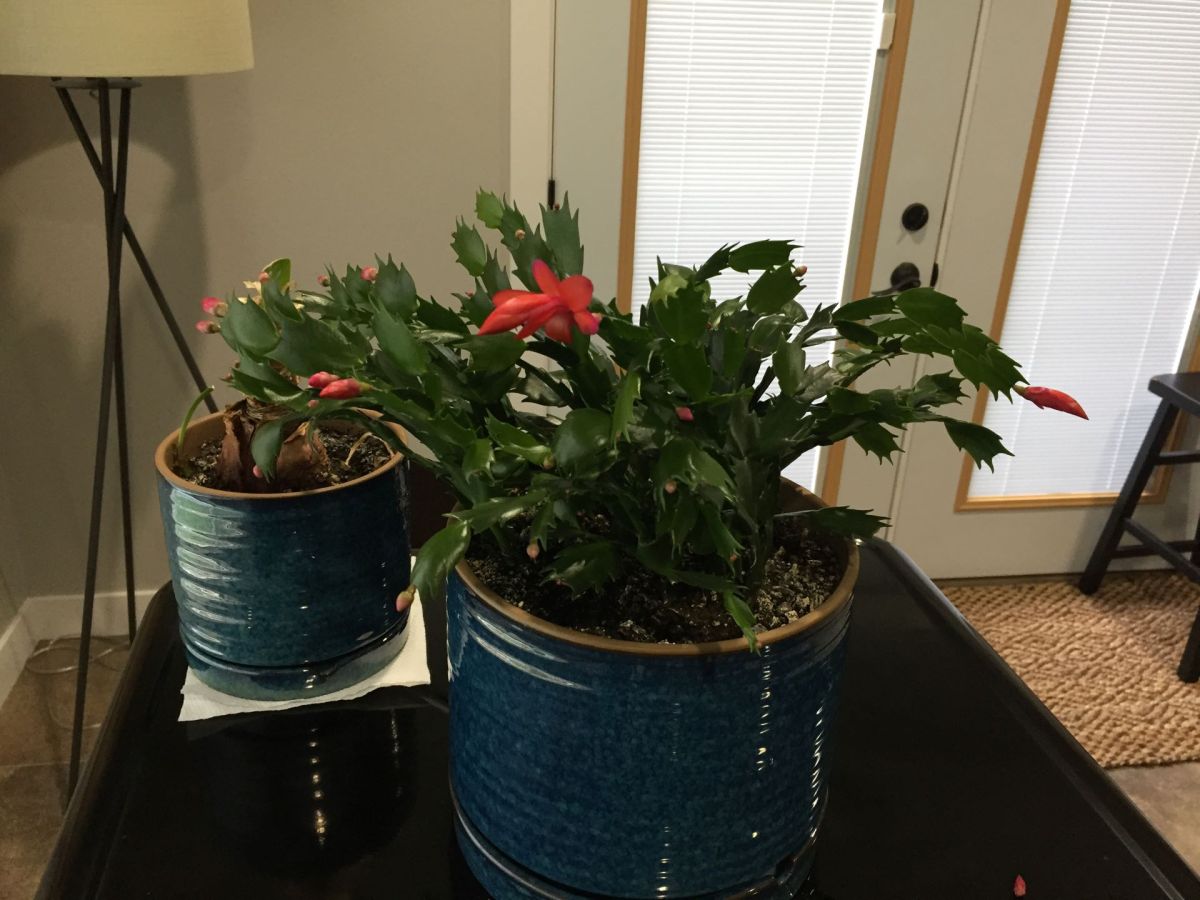
Regardless of what you see in the news, kindness is still out there. Our Christmas cactus is already blooming.
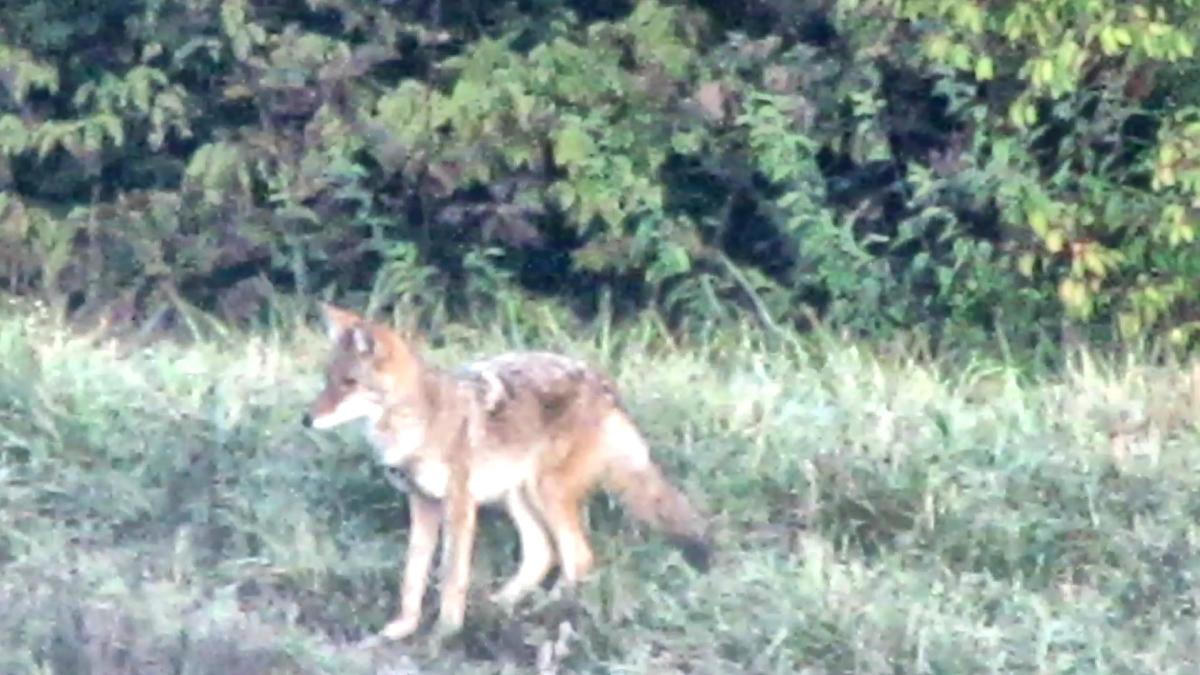
We again caught sight of the fox. It was hunting for breakfast, and this time it caught a mouthful of—mouse or mole, but whatever it was the hunter gulped it down in a hurry.
It got pretty close to our neighbor’s fence while circling the outlot. Just like the tabby cat, it switches its tail when it’s about to catch a meal.
We think this is a red fox rather than a gray, but we’re not naturalists. The web reference I read says both red and gray foxes don’t chew their food, but swallow it whole, which is what this one did.
Foxes walk on their toes (called digitigrade), which is probably why I thought this one had a funny-looking gait. I thought at first it was lame when it was walking in the tall grass.
Yesterday, Sena called me to the window in the sun room to see the “tabby cat.” When I got there, it looked a lot more like a fox. It was hunting in the outlot and it may have caught a rodent. It also seemed to be flea bitten.
When we first moved in to this house a few years ago, I saw a fox moving her kits from the outlot way off north somewhere, probably to another part of the woods. I guess she didn’t like the neighborhood. It was beginning to get a bit noisy from all the construction on the new neighborhood.
This was not the same fox. It looked quite at home.
The other day we put in about a 2.5 mile walk on the Clear Creek Trail in Coralville. We haven’t been there in a long while. It gets really quiet along the wooded trail. Sometimes even the birds don’t sing.
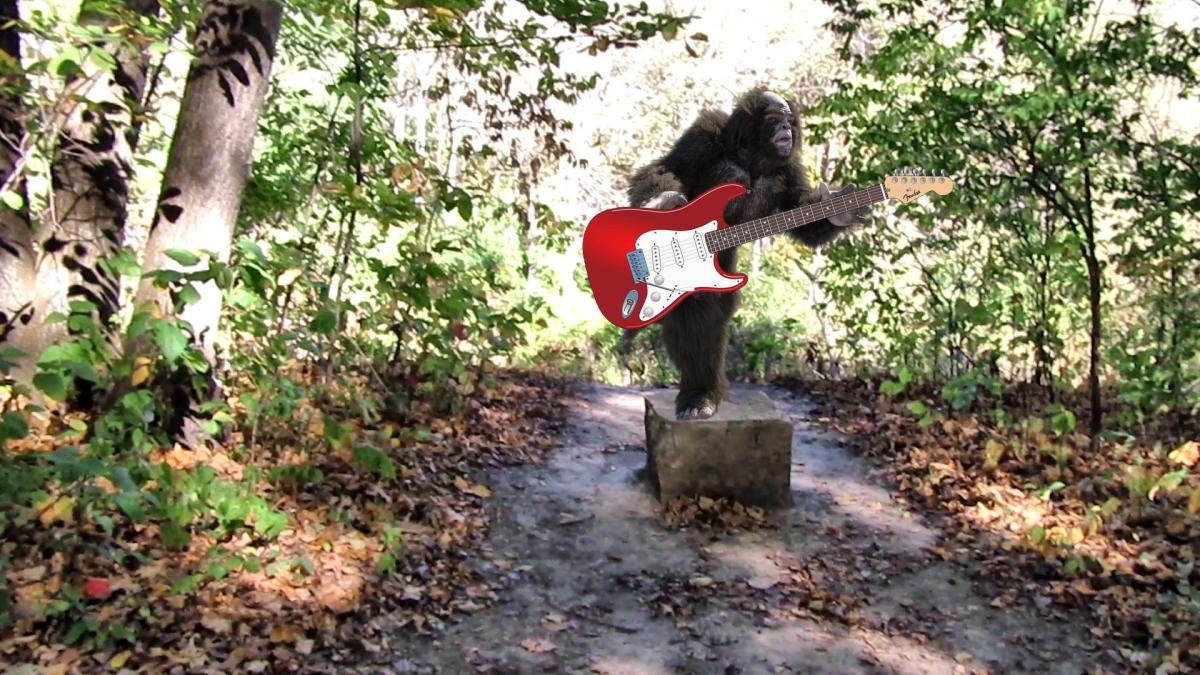
It was pretty quiet except for some strange knocking noises. You know, Sena has taken the lead in spotting Bigfoot in our walks in three parks, counting our latest trek. She saw Bigfoot in Hickory Hill Park, Terry Trueblood Recreation Area, and now again on the Clear Creek Trail.
She’s a Bigfoot hunter, there’s no doubt. This Bigfoot we saw a couple days ago was different. It obviously was interested in helping the Hawkeye football team with their offense. It eats plant-based cheese for some reason. I always thought it preferred beef jerky.
We found out we missed the wheat paste murals posted on various buildings in Coralville this past summer. It’s the 150th anniversary of the city of Coralville in Iowa this year. You can find out more about it on the Coralville Public Library web site.
We drove around and found some of the murals were still up. They generally last about 2-3 months. There were murals on West Music and the Coralville Recreation Center, but they were gone.
In our YouTube, the murals we found are in order of appearance on the video:
The ice block mural is on Randy’s Flooring on 2nd Street. It’s a picture of the Jacob C. Hotz Ice Company Employees circa 1900s-1910s. They’re on the Iowa River. Workers were paid 10 cents an hour. Talk about your minimum wage.
The mural of 3 ladies who we don’t know anything about and the “Watch It Grow” image are on the Coralville Public Library in the 5th St. Plaza.
The long timeline mural is on the Coralville Community Food Pantry on 13th Avenue.
The Blue Top Motel mural is on Chong’s Supermarket on 2nd Street. According to the Coralville Public Library, the Blue Top motor court was built in the 1940s. No mention whether lodgers were abducted by extraterrestrials.
The mural of two fishermen with the two huge flathead catfish as big as a man’s leg they landed in the 1920s in the Iowa River is on the Iowa River Power Restaurant on 1st Avenue. This is my personal favorite. All I ever caught in my wasted childhood were bullhead as big as my fist.
You can see fishline and bobbers floating in the Iowa River. You can even see a handsome sculpture of a dragonfly sitting on a bobber on one side of the river. We saw one guy with at least three fishing poles rushing around to different spots next to the Iowa River Power Restaurant. I think he was hoping to land a big flathead—but all we saw him catch was a snag.
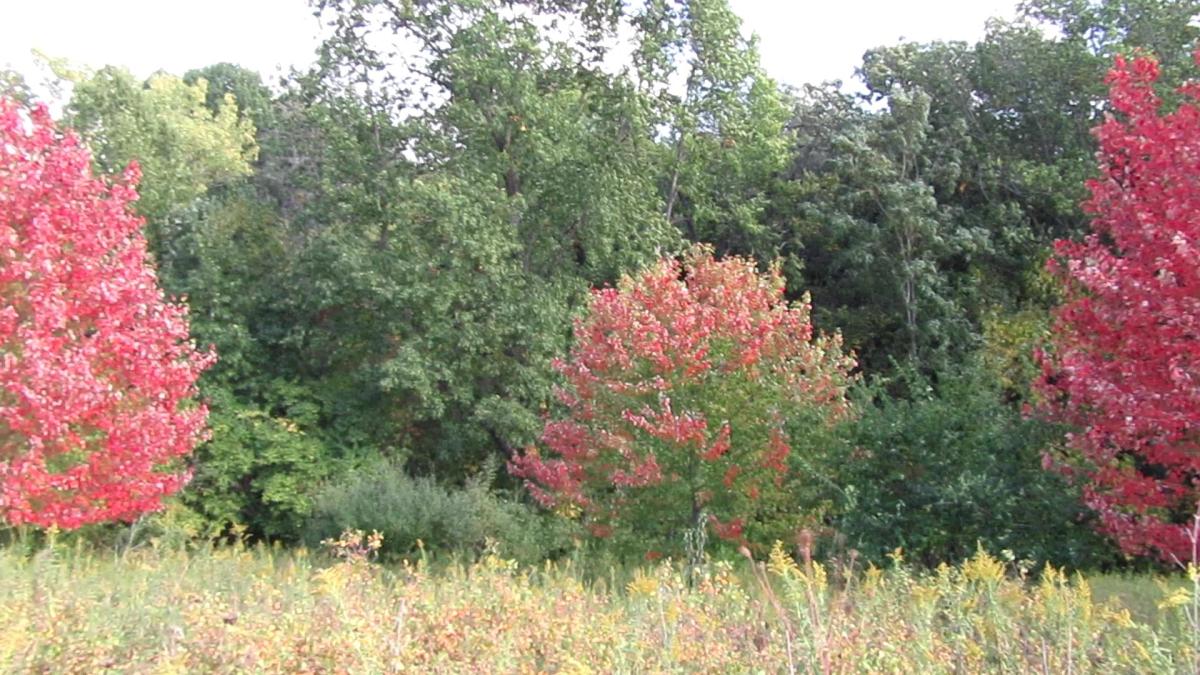
The other day we took a walk in a different direction on Scott Boulevard. Sometimes the scenery is just as beautiful in the west as it is in the east.
There were three trees turning a bright red. Maybe there were maples. The birch trees are pretty any time of the year, but for some reason they’re majestic in the fall.
I don’t know what kind of birds those were soaring in the sky, but they were magical.
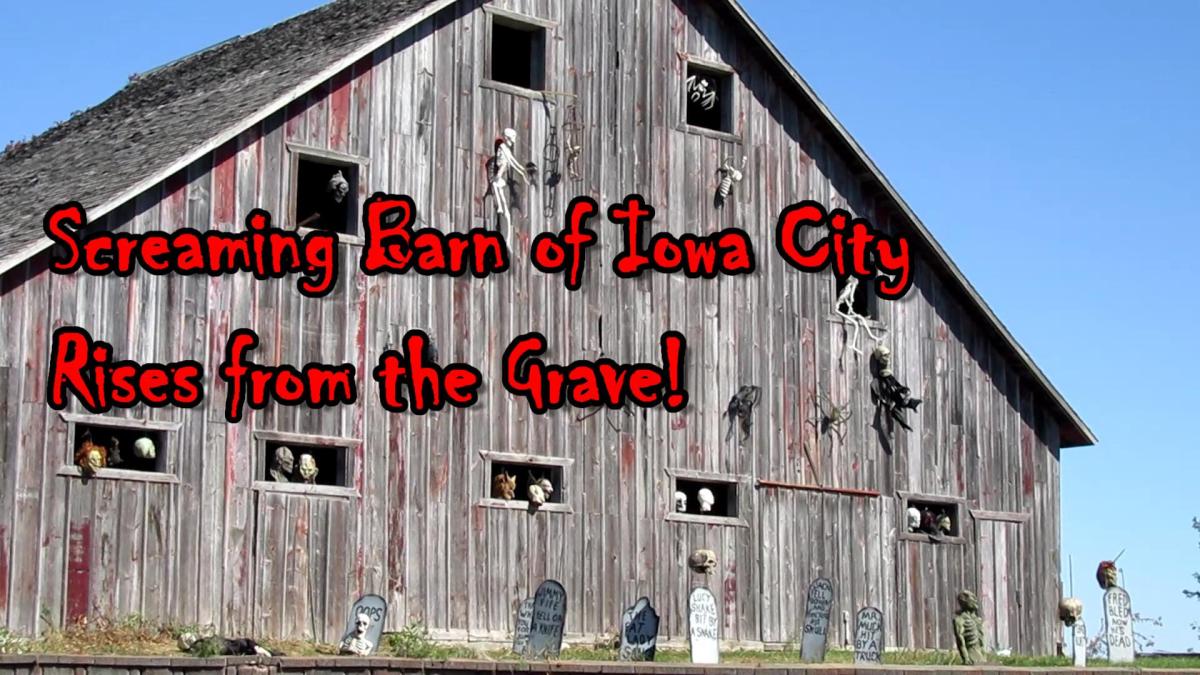
Harvest Preserve made the Screaming Barn of Iowa City rise from the grave only a couple of days after I mentioned it after our autumn walk on October 2 (Monday). Halloween is the inspiration!
It looks great! There were enhancements in addition to the returning theme of grisly epitaph dad jokes.
It should be visible to a lot more drivers on Scott Boulevard in that area, mainly because of traffic detours from street construction.
What’s also different is a safety barricade which is for the safety of walkers. It stretches across the street entrance to the barn from Scott Boulevard. You can get great pictures from across the street near the Harvest Preserve entrance gate.
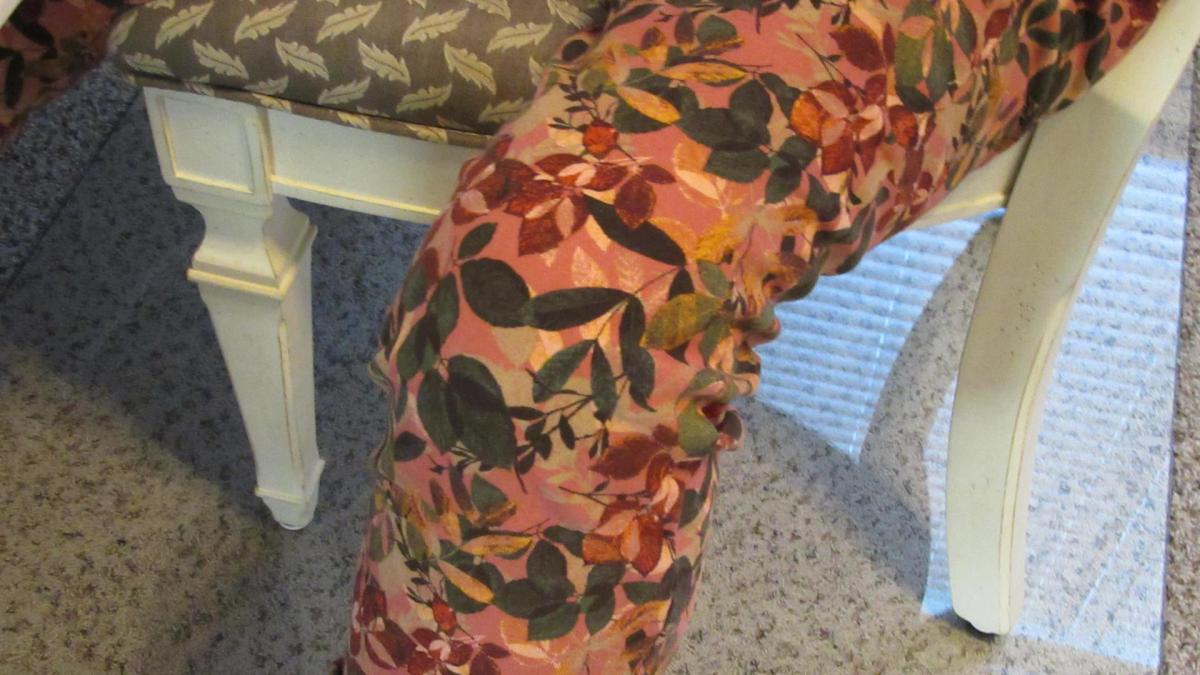
Sena got some new pants with an autumn leaves print. It fit really well with the colors we saw on a walk down Scott Boulevard.
We always see something a little different along the way. We never noticed that the Sitting Man pedestal has a hole in it shaped like a heart. It could have been chipped into the stone intentionally.
There was a lot of golden rod but we didn’t see any ragweed—which I’m very allergic to this time of year.
The trees around the Harvest Preserve property are changing colors. The old barn across the street from it looks a little more weathered. We don’t know whether the staff will decorate it into a haunted house again for Halloween. They did that last year and it was a hoot.
The walk up the hill to the Sitting Man seemed a little steeper this year. I don’t remember exactly when I got so bow-legged. A runner easily ran up the hill and still had breath to say “Hi” on the way back down. He never missed a step, even though I personally know there are a lot of irregularities in the ground.







 Go Retire Psychiatrist