The Extraterrestrial and Mutilated Soybean Hybridization Program in Iowa

After watching a number of TV shows about extraterrestrials (ETs), I had this vivid dream about ETs invading Iowa.

Apparently, I had somehow driven out on some highway that was not clearly marked, maybe Highway 20 which the National Weather Service always mentions as a sort of boundary line between a howling, disastrous tornadimohurricannibalistic storm and utter tranquility a few miles north of us.

I got out of the car and noticed up in the sky a gigantimonguous craft shaped like a triquetra. It was eerily silent as it passed just inches above my head and it glowed multiple colors like the NBC peacock.

Suddenly, 3 beings who resembled the 3 stooges (except their heads were tiny) floated out of the craft and took me hostage. They kept arguing amongst themselves about how they were going to exsanguinate me and then fuse me with a soybean plant they had previously mutilated. Apparently, they had tipped a few cows in the process and slipped in the pasture, falling into an area full of cow pies.

I told them they smelled bad and suggested they try Mando, the deodorant that is nothing like the scented stuff which, if you apply it, is exactly like turning up your car radio when the engine rattles—hey, it just masks the problem.

I guess that hurt their feelings and they told me they were going to stick some kind of implant in my nose so they could track me because they could hear my nose whistle and find me anywhere. I told them I’m allergic to ET implants and I would just sneeze it out. I had them there.

Then they tried to communicate with me telepathically but I knew how to counter that trick. I just thought really hard about good barbecued ribs, which made them hungry. They asked me where they could find a decent rib joint and I told them how to get to Jimmy Jack’s Rib Shack in Iowa City.

So we head on over there and I help them order. They weren’t sure what to drink, so I suggested water because I saw this trick in the movie, Signs. It didn’t work as I expected and they just acted like they were drunk.

Then, of all things, they wanted to go to Area 51, and we just zipped over there. On the way, they picked up Bob Lazar who drew pictures of them. He asked me why they had barbecue sauce all over their faces and I just told him they had bad manners.

Finally, I woke up and I swear I’m going to limit how much kale I eat next time.

Another Silly Bill in the Iowa Legislature

I saw a story in the Iowa Capital Dispatch by Robin Opsahl today that there’s a bill in the Iowa legislature which seeks to make the drugs ivermectin and hydroxychloroquine over-the-counter (OTC) in Iowa. It doesn’t actually specify the reason why but it’s probably because some Iowans want the drugs available to treat Covid-19. I think the motivation sounds similar to the bills introduced in March of 2025 which were designed to make it illegal to get mRNA vaccines for Covid-19 in Iowa. They both died in funnel week last year.

The bill was discussed yesterday and, while there were 3 commenters in favor of it, there are several reasons to be suspicious of whether it would be a good thing for Iowans. Both ivermectin and hydroxychloroquine were studied for evidence of efficacy for Covid-19 and the studies failed to show that.

The FDA has made it clear that it doesn’t recommend either ivermectin or hydroxychloroquine for treatment of Covid-19.

However, the Iowa bill HF 2056 seeks to make both available OTC and require pharmacies not only make it available but protect the pharmacist from legal or criminal liability for any harms that might result from its use.

While you can find news stories saying simply that 4 states (Tennessee, Idaho, Arkansas, and Idaho) have adopted similar laws, there is at least one recent follow up news story indicating that the pharmacists still have some reservations.

A Boise, Idaho pharmacist says he’ll dispense ivermectin to callers—as long as they have a doctor’s note. Most callers don’t have a parasitic infection. The pharmacist points out that, while the Idaho law says he can dispense ivermectin without a prescription, the FDA hasn’t approved it to be used this way. “It’s not designed or packaged for retail sale,” according to the pharmacist. It’s not made for OTC use.

There’s also a hitch when it comes to health insurance coverage for OTC drugs, implying you might have to pay out of pocket. Arkansas and Tennessee pharmacists say that, despite the law change allowing OTC sale of ivermectin in their states, they won’t sell it that way.

I hope their example will be followed by the other states who seem to be going the same way as Iowa. On the other hand, I’m pretty sure there might be plenty of conscientious objectors in Iowa who might slow down the legal push to get either hydroxychloroquine or ivermectin OTC.

Just because lawmakers put in a lot of language in a bill in an effort to persuade pharmacists that they won’t get sued or go to jail if they always give the customers what they want doesn’t mean they’ll obey a law based on misinformation and which makes them disobey their principles. I don’t understand how the legislative machinery works but I’m hoping the fate for this bill will be the same as what happened to those from last year.

What Questions Should We Ask on MLK Day?

I ran across this quote from Dr. Martin Luther King, Jr. in my notes:

“Human progress is neither automatic nor inevitable… Every step toward the goal of justice requires sacrifice, suffering, and struggle; the tireless exertions and passionate concern of dedicated individuals.”

― Martin Luther King Jr.

This week we’ll be getting the two biographies of Martin Luther King, Jr. One of them is a biography published a couple of years ago by Jonathan Eig, titled “King: A Life.” The other is an autobiography, “The Autobiography of Martin Luther King, Jr.”

This morning, I was focused on puzzling over Eig’s book, in which there is a focus of how depression affected Dr. King. Gradually, I found out more about his struggles with mental health than I ever knew, and people were aware of them many years before Eig.

Dr. King never shared his emotional problems with anyone while he was alive in order to avoid the stigma in those times. Initially I asked “Why?” type questions. Why does anyone dig into a person’s private health information? That’s called PHI for short and it’s not supposed to be readily available to just anybody. Health professionals know that.

And then I remembered something I learned gradually over the course of my career as a psychiatrist. It’s hard to frame useful answers to “Why?” questions. It’s often more helpful to ask “What?” questions, mainly because they lead to actionable replies about things we might need to change.

What did I do as a teacher before I retired from consultation-liaison psychiatry in order to train those who would improve on what I did?

I shared with my students what I thought would be most helpful to them in their careers going forward:

The shortage of psychiatrists in general, and of C-L psychiatrists specifically, still leads me to believe that George Henry was right when he said:

“Relegating this work entirely to specialists is futile for it is doubtful whether there will ever be a sufficient number of psychiatrists to respond to all the requests for consultations. There is, therefore, no alternative to educating other physicians in the elements of psychiatric methods.”– George W. Henry, MD, 1929 (Henry, G.W., SOME MODERN ASPECTS OF PSYCHIATRY IN GENERAL HOSPITAL PRACTICE. Am J Psychiatry, 1929. 86(3): p.481-499.)

There was so much in Henry’s paper published in 1929 that still sounds current today. I can paraphrase the high points:

  • Practice humility and patience
  • Avoid psychiatric jargon
  • Stick close to facts; don’t get bogged down in theories
  • Prevent harm to patients from unnecessary medical and surgical treatment, e.g. somatization
  • “The psychiatrist deals with a larger field of medical practice and he must consider all of the facts.”
  • The psychiatrist should “…make regular visits to the wards…continue the instruction and organize the psychiatric work of internes…attend staff conferences so that there might be a mutual exchange of medical experience”
  • Focus on “…the less obvious disorders which so frequently complicate general medical and surgical practice…” rather than chronic, severe mental illness

The advantages of an integrated C-L Psychiatrist service (here I mean integrating medicine and psychiatry; mind and body) are that it increases detection of all mental disorders although that requires increasing the manpower on the service because of the consequent higher volume demand in addition to other requests, including but not limited to unnecessary consultation requests.

Further, what still astonishes me is the study which found that among consultee top priorities was an understanding of the core question (Lavakumar, M. et al Parameters of Consultee Satisfaction With Inpatient Academic Psychiatric Consultation Services: A Multicenter Study. Psychosomatics (2015). The irony is that the consultees frequently do not frame specific questions (Zigun, J.R. The psychiatric consultation checklist: A structured form to improve the clarity of psychiatric consultation requests. General Hospital Psychiatry 12(1), 36-44; (1990).

Moreover, it is sometimes necessary to give consultees bad news. A consultant should be able to tell a colleague what he or she may not what to hear. This principle is applicable across many disciplines and contexts. And it is best delivered with civility.

A former president of the ACLP said:

“A consultation service is a rescue squad.  At worst, consultation work is nothing more than a brief foray into the territory of another service…the actual intervention is left to the consultee.  Like a volunteer firefighter, a consultant puts out the blaze and then returns home… (However), a liaison service requires manpower, money, and motivation.  Sufficient personnel are necessary to allow the psychiatric consultant time to perform services other than simply interviewing troublesome patients in the area assigned to him.”—Dr. Thomas Hackett.

I don’t think it’s too much to expect things to improve. Speaking of improvement, Stephen Covey called it “sharpening the saw,” one of the 7 habits of highly effective people. For this, The University of Iowa Hospitals and Clinics C-L Psychiatry has the Clinical Problems in Consultation Psychiatry or CPCP. This was started by Dr. Bill Yates in the 1990s, and it was originally called Problem-based Learning. “PBL…emphasis on the development of problem-solving skills, small group dynamics, and self-directed methods of education…most common types of problem categories identified for the conference were pharmacology of psychiatric and medical drugs (28%), mental status effects of medical illnesses (28%), consultation psychiatry process issues (20%), and diagnostic issues (13%) …PBL conference was ranked the highest of all the psychiatry resident educational formats.”

  • Yates, W. R. and T. T. Gerdes (1996). “Problem-based learning in consultation psychiatry.” Gen Hosp Psychiatry 18(3): 139-144.Yates, W. R. and T. T. Gerdes (1996). “Problem-based learning in consultation psychiatry.” Gen Hosp Psychiatry 18(3): 139-144.
    • Covey, S. R. (1990). The seven habits of highly effective people: restoring the character ethic. New York, Simon and Schuster.         

What did I do when burnout made me a less effective teacher? In 2012 I started getting feedback from colleagues and trainees indicating they noticed I was edgy, even angry, and it was time for a change.

After reflecting on the feedback from my colleagues and students, I enrolled in our university’s 8 week group Mindfulness-Based Stress Reduction (MBSR) program. Our teacher debunked myths about mindfulness, one of which is that it involves tuning out stress by relaxing. In reality, mindfulness actually entails tuning in to what hurts as well as what soothes.

Maybe we should ask what helped Dr. Martin Luther King, Jr. persevere in spite of the inner turmoil and external pressure.

Fractured Numismatics

I saw this article on the web about certain coins (state quarters) that might be worth a lot of money. I just raided our piggy bank for pennies and other chicken feed a couple of months ago and knew we had some quartesr.

As it turns out we have a couple of the year 2000 S. Carolina quarters; one was a P and the other a D.

“2000 South Carolina quarter

The 2000 South Carolina quarter was one of the first State quarters to be released. It may have extra value if it has extra strikes during the minting process instead of one strike.

A 2000-P 25C South Carolina (Regular Strike) had an auction record of over $3,000, according to the PCGS, valued due to its MS69 grade. Very few coins in this condition exist.

Estimated worth: $500-$2,500”

I peered at them with a magnifying glass but couldn’t really tell if it was valuable. We looked for a coin shop on line to see if we could get some assistance with grading the coins. There’s a coin and gun shop right here in town. Apparently, coin shops often deal in guns as well. The neighborhood looked a little rough.

So, I checked on the internet on a couple of coin collectors web sites and found an interesting YouTube on S. Carolina state quarters alone. There was a quarter worth about $3,500.

 I saw another one on eBay that somebody was asking $2,500 for. On the other hand, I found another seller who had a quarter going for $23.

We’re not sure if one of our quarters is worth grading. Here’s a picture of it:

Saw a Banded Red-tailed Hawk in Our Back Yard!

I got a picture of a banded Red-tailed Hawk today in our back yard. It was pretty exciting. I can’t remember ever seeing one banded. I’ve gotten pictures of them occasionally, most recently before this in July, 2025. That one wasn’t banded.

I checked on the web for any reports of who might be tagging Red-tailed Hawks in Iowa. In recent months there have been a few sightings posted on social media sites. Other birds are being banded as well. There are people who are licensed by the United States Geological Survey (USGS) to tag birds.

The Hitchcock Nature Center in Pottawattamie County is located in Honey Creek, Iowa, which is near Council Bluffs.

The Iowa Raptor Project is involved in conservation, education, and rehabilitation of birds of prey.

OK, until I saw this video, I admit I thought the snipe was an imaginary bird, an idea I got from the movie “Up.”

Snow Squalls Predicted in Iowa Today!

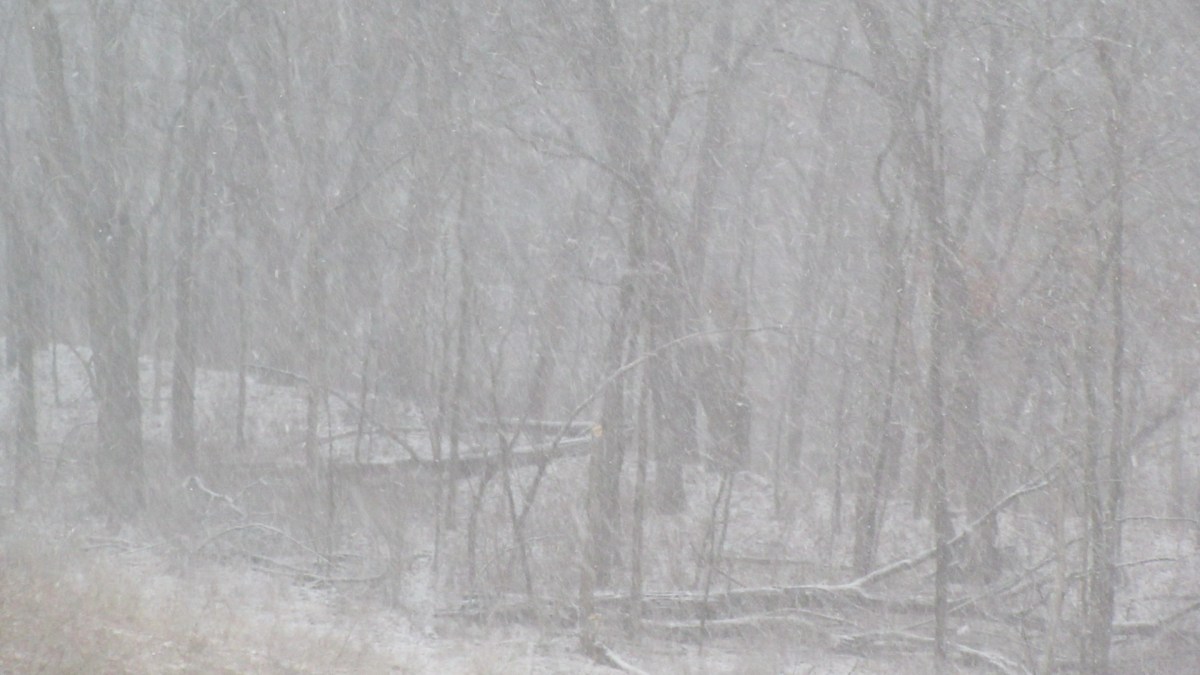
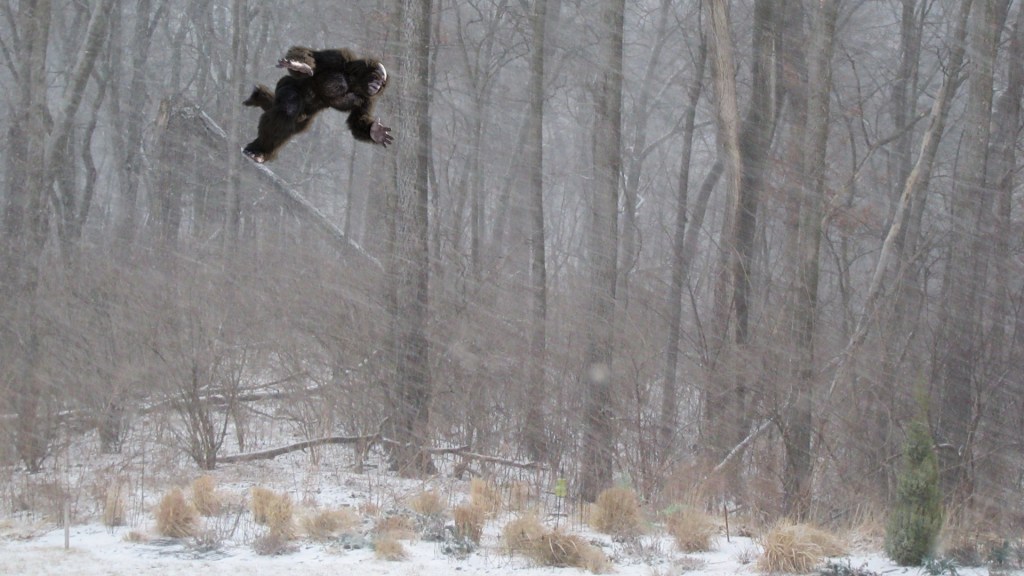
The National Weather Service predicts “snow squalls” for parts of eastern Iowa today in the afternoon.

Sena recognized the guy in the GIF above as W.C. Fields and wondered if there were any other videos of this scene with audio as well. They aren’t hard to find.

Dr. Martin Luther King Jr Day Events 2026

Here’s a list of events I know of so far regarding the observance of Dr. Martin Luther King Jr Day:

The city of Iowa City has day of service and other events you can find at this link.

The city of Coralville has events starting on January 16th and more, which you can learn about here.

The Iowa Children’s Museum has scheduled events that sound very fun and interesting for families and which you can find out more about here.

Glue Myself to My Biography

There’s a reason for why I so often tell Dad jokes. In keeping with my post from yesterday about Dr. Martin Luther King, Jr’s biographies:

I glued myself to my autobiography. You may not believe it, but that’s my story and I’m sticking to it.

We’ve ordered a couple of biographies about Dr. King. One of them is his autobiography and the other is Jonathan Eig’s book, “King: A Life.”

I’m getting to be too old to write my own autobiography—guess it’ll have to be done by autopen. Sorry about that one (no I’m not).

I’m a psychiatrist so I know when I’m using humor as a defense mechanism. A lot of good that does.

I’ve never seriously considered writing my autobiography. I could have it tattooed on my back—it would be my backstory.

Seriously—no, I guess that’s impossible. On the other hand, every year about MLK Day, I think about the blog I wrote that the Iowa City Press Citizen published in 2015 on January 19th. It’s becoming almost something like a tradition. I think I need to repost it annually around this time. The title is “Remembering our calling: MLK Day 2015.” 

“Faith is taking the first step, even when you don’t see the whole staircase.”

-Martin Luther King, Jr.

That quote is interesting because Jonathan Eig’s biography of MLK can be said to reveal more of the staircase, so to speak, at least from the standpoint of his flaws as well as his strengths. But I stray from the tradition:

As the 2015 Martin Luther King Jr. Day approached, I wondered: What’s the best way for the average person to contribute to lifting this nation to a higher destiny? What’s my role and how do I respond to that call?

I find myself reflecting more about my role as a teacher to our residents and medical students. I wonder every day how I can improve as a role model and, at the same time, let trainees practice both what I preach and listen to their own inner calling. After all, they are the next generation of doctors.

But for now, they are under my tutelage. What do I hope for them?

I hope medicine doesn’t destroy itself with empty and dishonest calls for “competence” and “quality,” when excellence is called for.

I hope that when they are on call, they’ll mindfully acknowledge their fatigue and frustration…and sit down when they go and listen to the patient.

I hope they listen inwardly as well, and learn to know the difference between a call for action, and a cautionary whisper to wait and see.

I hope they won’t be paralyzed by doubt when their patients are not able to speak for themselves, and that they’ll call the families who have a stake in whatever doctors do for their loved ones.

And most of all I hope leaders in medicine and psychiatry remember that we chose medicine because we thought it was a calling. Let’s try to keep it that way.

You know, I’m on call at the hospital today and I tried to give my trainees the day off. They came in anyway.

I used to joke that they would erect a playdoh statue of me in the Quad (Quadrangle Hall was there) on the University of Iowa campus someday. Unfortunately, the Quad was demolished in 2016, so I guess I can’t put that in my autobiography.

Since I retired in 2020, I keep meaning to write my memoirs, but I never get around to it. I guess that makes it my oughta biography.