The Connection Between The University of Iowa and Factitious Disorder

I found another old blog post, Thoughts on Munchausen’s Syndrome, which reminded me of a psychiatric disorder I saw probably more frequently than most psychiatrists unless they are consultation-liaison specialists. I wrote it in June of 2011. I still don’t understand the disorder and I doubt anyone else does either. The interesting connection to Iowa is that a patient with Factitious Disorder was admitted to the University of Iowa Hospital in the 1950s. The treating doctor published a paper about him in the Journal of the American Medical Association.:

“I ran across an old poem written by William Bennett Bean, M.D., who was a physician in the Department of Medicine at the University of Iowa. It’s called “The Munchausen Syndrome” and it was published in 1959 [1]. Dr. Bean was Professor and Chairman of the Department of Medicine at the University of Iowa in 1948. Of course, he did more than write interesting poetry. He specialized in nutrition. He was named the Sir William Osler Professor of Medicine at Iowa in 1970.  He was well-known as a clinician and teacher. He was also called a “masterful teller of tales”, which may explain in part why he wrote “The Munchausen Syndrome.”  One quotation is “The one mark of maturity, especially in a physician, and perhaps it is even rarer in a scientist, is the capacity to deal with uncertainty.”

The poem is about a psychiatric disorder about which there is a great deal of uncertainty, formerly called Munchausen’s Syndrome, now known as Factitious Disorder. It’s based on an actual case of the disorder, an account of which was published in the medical literature [3]. An excerpt from the beginning of the work follows:

THE MUNCHAUSEN SYNDROME

By WILLIAM B. BEAN, M.D.

IOWA CITY, IOWA

The patient who shops around from doctor to doctor, the dowager alert for some new handsome young physician to hear her flatulent and oleagi­nous outpourings, the bewildered neurotic who has had a dozen operations for a thousand misunderstood complaints—these we recognize as interest­ing patients or as nuisances we have to deal with as charitably as we may. They occupy the lower end of the spectrum of humanity with all its in­finitely various people. Nearby reside the malingerer and the deadbeat, a shoplifter of medical aid who escapes just ahead of the policeman. At the frayed end of this spectrum we find a fascinating derelict, human flotsam detached from his moorings, the peripatetic medical vagrant, the itiner­ant fabricator of a nearly perfect facsimile of serious illness—the victim of Munchausen’s syndrome. This is the tale of such a patient. He had our medical department in an uproar off and on for forty days and forty nights. His Odyssey I outline here in verse. I find to my anguish that much of the verse does not scan, some does not rhyme, and all is obscure. I proceed.

THE MUNCHAUSEN SAGA

In the summer of Nineteen and Fifty-four At Iowa City, our hospital door,—

Mecca for hundreds every day—

A merchant seaman came our way—A part time wrestler, in denim jacket

Crashed through the door with a horrible racket,

Two hundred sixty pounds at least,

He was covered with blood like a wounded beast.

Try to excuse the tone of the piece; it was written in another era when a more intolerant attitude toward illness mimicry was viewed as malicious undermining of the physician-patient relationship. In fact, it’s virtually impossible to distinguish Factitious Disorder from Malingering. We think of the former as belonging in the category of mental illness and the latter as, well, not an illness at all, but lying in order to get something or to get out of something. Factitious Disorder is marked by lying as well and some try to make the case that the lying which patients with Factitious Disorder engage in, sometimes called “pseudologia fantastica” or pathologic lying, is somehow different from ordinary lying. According to Bean, it’s like this:

He gave us a history, in elegant diction, Which later we found was all out fiction. Carpenter, wrestler and bosun’s mate And stevedore. He could exaggerate! His body was covered with many a scar He said from surgeons near and far

His appendix went in County Cork A navel hernia in New York.

Once, he declared, in Portland, Maine,

A surgeon stripped out his saphenous vein. Surgical scars above one kidney

Came from an ectomy done in Sidney. Scarred, he was, on his abdomen

From a wreck, he said, when with women roamin.’ Another injury he wouldn’t reveal us

Messed up his left internal malleolus. From time to time, as he wove this story

He boasted of prowess and wealth and glory. By courage he ruled his fellow sailors

But he didn’t say much of his many jailors.

In fact, we understand very little about so-called pathologic lying, though the telling of tales is engaged in not just by psychiatric patients. One of the most fascinating consequences of the frustration physicians feel about Factitious  Disorder was the fraudulent case report about Factitious Munchausen’s Syndrome. The paper was published by a couple of resident physicians in the New England Journal of Medicine and was a spurious account of an emergency room patient named Norman U. Senchbau, who claimed to actually have Munchausen’s Syndrome and who demanded admission to hospital for treatment [2].  He supposedly confessed to having undergone many surgeries and to prove it, displayed many scars on his abdomen…which washed off with soap and water. Of course, the name of the patient is just an anagram of Baron Munchausen.

I occasionally get calls from internists and surgeons about patients whom they suspect of manufacturing illness for the sake of taking the role of patient (part of the definition of the disorder in the Diagnostic and Statistical Manual of Mental Disorders). As often as not, I have no clear idea of how to proceed with interviewing someone who probably does deliberately produce illness, other than to do my best to listen for understanding, to avoid confronting them, and to seek some way to interrupt their self-destructive behavior. In the end I don’t believe we now know much more than Bean did:

What do we know of the pathogenesis

Of hospital vagrants and doctors menaces? Maybe the person acts unenlightened

From a real disease which has him frightened. Does part of the reason he may vex you all Lurk in dark leanings homosexual?

What is the cause, and what are the reasons He wandered pitifully through the seasons? Lonely pilgrim out of orbit

Peace and quiet lost in forfeit.

Hospital haunters, doctor deceivers

Their acting confounds even nonbelievers. Derelicts lost in a cold society

Wanderlusting, without satiety.

Social pariah or medical freak

Whence does he come and what does he seek?

I cannot relieve my brain’s congestion By unveiling an answer to this question In the age of sputniks, the fall of parity We all should try to think with clarity.

L’Envoi

Princes and wise men of many conditions

Beautiful ladies and honored physicians

I’m sorry I cannot fasten my claws in

What causes the Syndrome named Munchausen, This off again, on again, gone again Finnegan

Comes in, than goes out and at length comes in again. Munchausen’s victims must be expected

To plague our lives unless detected.

Those we identify when we sight ’em

Should be restricted ad infinitum

So be alert for this great nonesuchman Munchausen syndrome’s flying Dutchman.

1.    Bean, W.B., The Munchausen syndrome. Perspectives in biology and medicine, 1959. 2(3): p. 347-53.

2.   Gurwith, M. and C. Langston, Factitious Munchausen’s syndrome. The New England journal of medicine, 1980. 302(26): p. 1483-4.

3.   Chapman, J.S., Peregrinating problem patients; Munchausen’s syndrome. Journal of the American Medical Association, 1957. 165(8): p. 927-33.”

Quiz Show on Delirium

Here’s an old post from February 15, 2011 from my previous blog The Practical Psychosomaticist called Quiz Show Versus Grand Rounds for Delirium Education:

“So you want to put on a game show contest to educate clinicians about delirium? Contact David Meagher, a psychiatrist in (where else?) Limerick, Ireland. He reported on this innovative educational workshop in the November 2010 Vol. 3 issue of the Annals of Delirium, the newsletter for the European Delirium Association (EDA). He also published the study which describes the contest in International Psychogeriatrics[1].

The workshop focused on clinician attitudes toward drug therapy for distressed delirious patients. It explored pre-existing attitudes and practice toward the use of medications to manage delirium and exposed participants to a very interactive educational event modeled after a popular TV quiz show. There were two teams (skeptics versus neuroleptics) furnished with a list of statements about delirium pharmacotherapy. The participants later completed a post-workshop questionnaire that explored changes in attitudes as a result of the workshop.

The participants were all experts on the subject and there was a good deal of variability in attitudes and practice. Some of the questions put to the teams involved using antipsychotics prophylactically to prevent delirium, the mechanism of action of antipsychotics, and what role benzodiazepines play in the treatment of non-alcohol withdrawal delirium.

One of the more puzzling findings was that the frequency of antipsychotic use was inversely proportional to the perception of the strength of supporting evidence. In other words, the less they knew about antipsychotics, the more often they used them. Most participants seemed to believe that the principal mechanism of action of antipsychotics is sedation, despite the lack of supporting evidence.

Some clinicians used antipsychotics to relieve the stress of caregivers rather than that of delirious patients, an example of patients getting the right treatment for the wrong reasons as observed by Meagher—and many of us in the field.

The workshop also highlighted the tendency of clinicians to focus on risk management rather than effective therapeutic intervention in the management of delirious patients with disruptive behavior and severe distress. This mainly relates to focus on the potential adverse effects of antipsychotics such as extrapyramidal side effects, metabolic, and cerebrovascular effects.

The quiz show activity was fun and challenging. The device of dividing the participants into two small teams with larger audience participation cut down on the anxiety that could be provoked by giving the “wrong answer”. The questions were true/false and didn’t always have clear right or wrong answers. It was highly interactive, a component of continuing medical educational (CME) activities that is increasingly encouraged because it’s more likely to lead to changes in clinician attitude and practice. The one-time Grand Rounds CME “seat time” is going the way of the dinosaur.

So a couple of findings from the quiz show post-activity questionnaire were that clinicians were more likely to use antipsychotics prophylactically and to use antipsychotics to manage hypoactive delirium.

 Our delirium intervention project group members are not quite as enthusiastic yet about these two interventions. We’re a bit more inclined at least initially to focus on non-pharmacologic multicomponent strategies such as the example below:

  • Minimize the use of immobilizing catheters, intravenous lines, and physical restraints
  • Avoid immobility, early mobilization
  • Monitor nutrition
  • Provide visual and hearing aids
  • Monitor closely for dehydration
  • Control pain
  • Monitor fluid-electrolyte balance
  • Monitor bowel and bladder functioning
  • Review medications
  • Reorient communications with the patient
  • Place an orientation board, clock, or familiar objects (ie, family photographs) in patient rooms
  • Encourage cognitively stimulating activities such as word puzzles
  • Facilitate sleep hygiene measures, including relaxation music or tapes at bedtime, warm drinks, and gentle massage
  • Minimize noise and interventions at bedtime, e.g., by rescheduling medication times

But I’m just as enthusiastic about interactive educational methods to engage learners in order to build a culture more likely to produce champions who will lead the delirium prevention effort—try the delirium multicomponent criss-cross puzzle below. The clues are contained in the list of multicomponent tactics above.”

  1. Meagher, D.J., Impact of an educational workshop upon attitudes towards pharmacotherapy for delirium. Int Psychogeriatr, 2010. 22(6): p. 938-46.

University of Iowa Ophthalmology Always a Top Contender

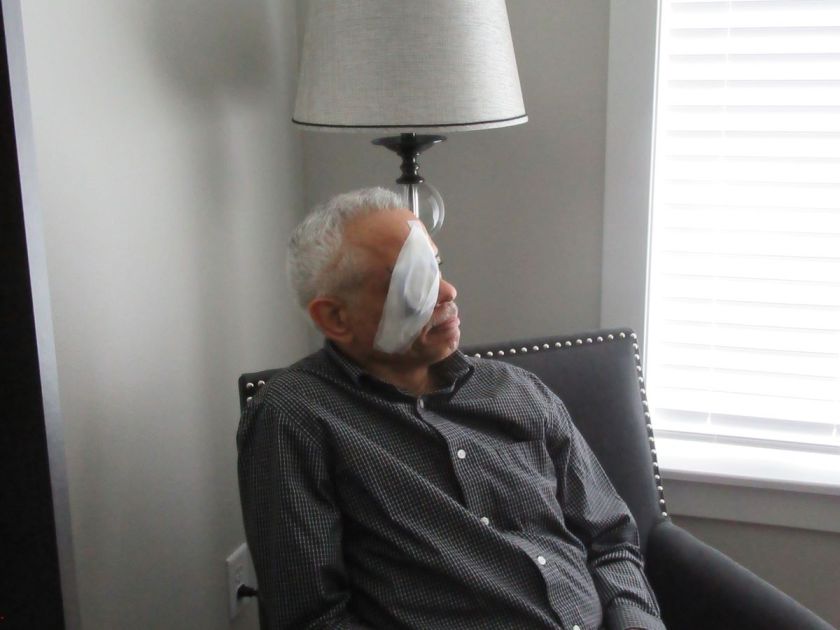
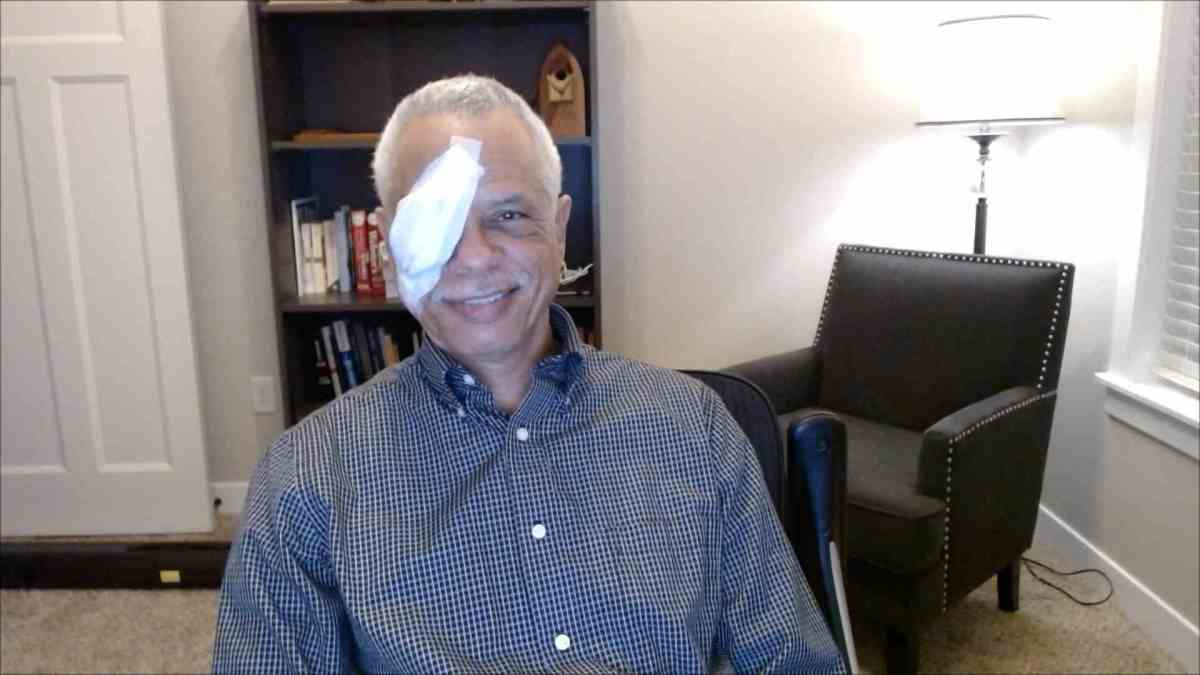
Well, I suppose I should tell you why you’re seeing these oldie blog posts from a different era in my career. It’s because I didn’t know whether I’d even be able to see well enough to write after my retinal detachment surgery, which was this past Friday. So, I scheduled a few posts from the past just in case.

The University of Iowa Ophthalmology Department is always highly ranked in the country according to U.S. News & World Report. It was seventh in 2021-2022.

I found out 3 weeks ago that I’ve been walking around with a detached right retina for years probably. One of the biggest risks for developing the condition is being over 50 years old. Hey, do you want to look like me by the time your fifty—ish?

I never could have been a contender

You know, what Sena and I think of whenever we hear about retinal detachment is Sugar Ray Leonard and his retinal tear in 1982 when he was at the top of his career. He almost didn’t have the surgery right away until a doctor told him might go blind if he chose to put it off. I think we pretty much stopped watching boxing because of how dangerous it is.

Don’t slap me on the head, I just had retinal detachment surgery!

Leonard’s description of his retinal detachment is classic: “The only thing I felt, I’d get hit in the eye and it swells, then all of a sudden it felt like a shade. It felt like a little shade opens in your eye — you don’t completely see the full picture. It looked like my eye was swollen, well… it felt like my eye was swollen because my vision at that time was getting worse because that curtain was coming down….

“I didn’t even know what (the doctor) was talking about. He said, ‘You have a detached retina.’ I said, ‘OK’. We thought we could come after the fight. Seriously,” said Leonard, who was told by the world renown surgeon Ronald G. Michels that holding off this surgery for another week could lead to blindness.”

He had the surgery right away.

I had a crack team of surgeons and the nursing and other staff were the best. I’m not going to bore you with a blow-by-blow account of the procedure. It did involve sharp objects. I got by with minimal sedation and pain control was good. They did a procedure called a scleral buckle (which is made of silicone) in which they tie this belt around the eye, cinch it tight until it pops like a grape, and then charge you $10 million. I think it’s covered by insurance, but check with your carrier just to make sure.

One thing that does tend to happen when I get sedation is an uptick in my baseline absent-mindedness. Shortly after we got home after the procedure, I couldn’t find my house keys or my car keys (don’t worry, I wasn’t driving). I even called the hospital to check if I’d left them there. Later, I happened to open the cupboard where I usually place them—and there they were. I had put them away and immediately forgot that I did it.

I’m now counting on Sena to give me the mandatory eye drops, 17 drops per hour from 6 nine-quart bottles until death. Don’t bother to eat, sleep, or go to the bathroom in any regular way—you’ll be too busy administering eye drops. Are we clear on that?

The swelling is already going down. I can carry around my eye in a bushel basket now instead of a wagon. Sena can barely look at it without cringing. But if I were to try to give myself the drops, they’d be dribbling down my shirt.

If you don’t get your eyes examined after you see what looks like a curtain coming down over your eye or see flashes of light—you should get your head examined. Psychiatrists will likely charge you only $10 million.

Picture credit Wikimedia: Not copyrighted material.

Cribbage 29 Board Rematch!

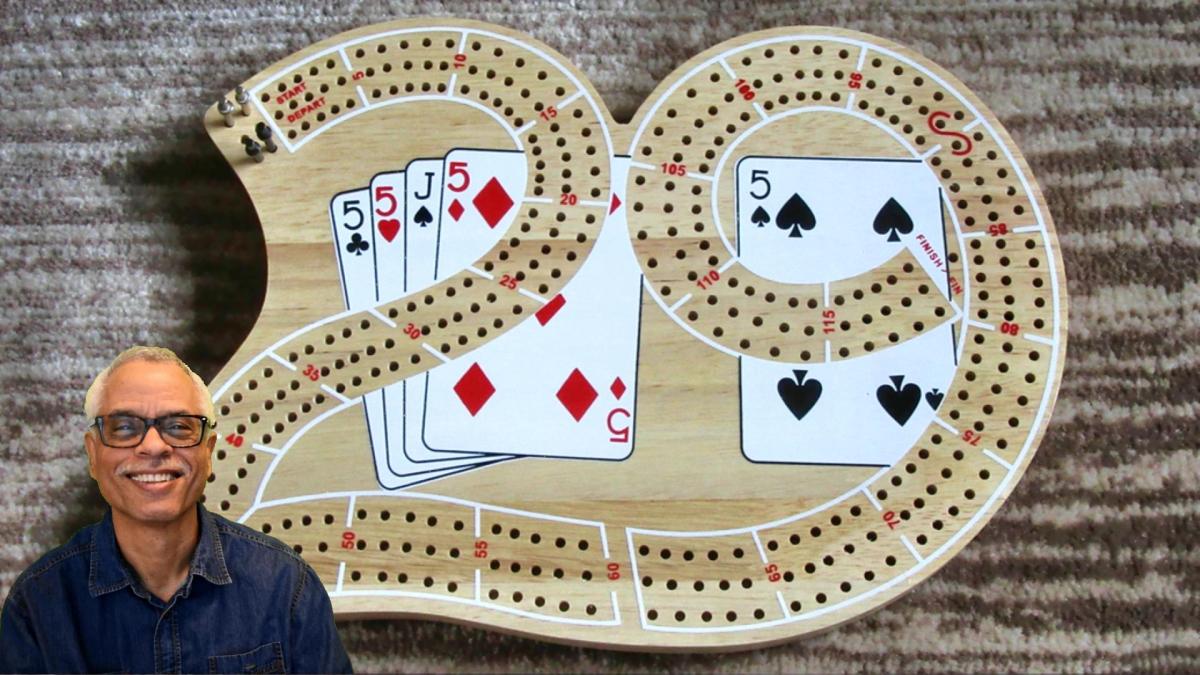
Today Sena and I held the Cribbage 29 board rematch and it was unparalleled in the history of the universe! We shot a video of it and posted it on YouTube. It’s about 28 minutes long and we had a blast playing the game.

The last time we played on the 29 board was a couple of years ago. We posted it to YouTube and it has over 700 views so far—and it’s still getting views. I won the first game. You’ll have to watch the video to find out who won today.

The odds of getting a 29-score hand in cribbage is 1 in 216,580. Needless to say, neither of us got one. It’s pretty much a once in a lifetime thing. When it happens, it usually gets reported to local newspapers.

Pegging Around Wisconsin

We played a game on our new Wisconsin cribbage board. We made some miscounts I’m sure, but it was because we had so much fun talking. We lived in Madison for a short time many years ago and managed to see quite a few sights in the south-central region of the state. And even after we moved back to Iowa, we made return trips to visit Wisconsin because there’s a lot to do there.

Madison itself is the capital of Wisconsin. One of my first impressions is that a number of fascinating people live there. I remember we were walking west on State Street, and I saw a guy walking in the middle of the street wearing a live rattlesnake coiled on his head. Sena missed that for some reason. He was moving carefully and slowly, probably to avoid rattling his headgear.

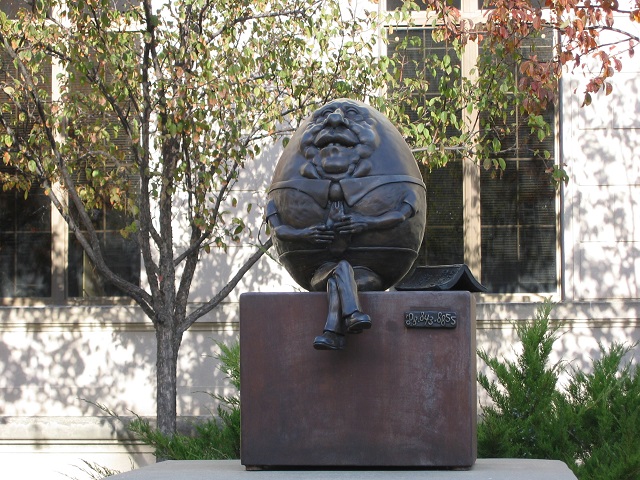
I don’t think the sculpture of Harry Dumpty is still standing in Madison, but for several years it was a distinctive bronze sculpture in front of the Madison Municipal Building just south of the intersection of Martin Luther King Jr. Boulevard and East Doty Street. I can’t see it on Google Maps nowadays.

I never knew the sculpture was Harry Dumpty. It sat above a large concrete wall with an inscription on it which I just assumed was connected to the sculpture and probably still sits there although we couldn’t find it in 2012 when we returned for a visit:

“David James Schaefer, 1955-2004
was a phenomenal phenomenon. Though plagued by the progressive debilities of cerebral palsy, “Schaefer” was an uncomplaining and generous friend to many. Disability Rights Specialist for the City of Madison in three different settings, his death of a heart attack in September 2004 made a hole in our community which cannot ever be filled.
Erected by the Friends of Schaefer at private expense.”

It turns out Harry Dumpty has no connection to David James Schaefer. In fact, Harry is one of several similar sculptures created by artist Brent George, who made him in 1997, saying he’s Humpty’s brother. If you look closely at the book sitting open next to Harry, it’s entitled “Harry Dumpty.” Brent George’s name is below it. Brent’s phone number is on the front of the wall. Evidently somebody called him and asked about the sculpture. Brent says there’s no connection between the sculpture and the inscription.

On the subject of art, the Madison Museum of Contemporary Art (on State Street) is a place to see. Although the art works are free to view on the web, they’re copyrighted and you can’t reproduce them without permission of the artists. However, at the time we were there in 2012 we saw Typewriter Eraser by Claes Oldenburg. I think it’s OK to share our picture of the giant one we saw in Washington, D.C. In 2015.

Typewriter Eraser in Washington, D.C.

One of the more relaxing times we had was having pizza for lunch at Paisan’s in Madison. We were outside and had that breathtaking view of Lake Monona, the breeze was coming off the water, cooling and refreshing—like the Moose Drool brown ale, which is not a Wisconsin brew; it’s made in Montana.

Wisconsin is known for its beer, among many other virtues. New Glarus Brewing Company is famous. I tried a few of the brews. One of them was Stone Soup. It had oil of clove in it and my lips got numb.

We took a dinner train ride at the Mid-Continent Railway Museum in North Freedom. It was great food and great company.

One of the more interesting stories about Monroe, Wisconsin is The Great Limburger Cheese War, which I mangled during the heat of the game. I first heard about it on a TV show; it seemed to me it was on Mysteries at the Museum, but when I googled it, I couldn’t find it.

We had a great time in Wisconsin. Maybe someday we’ll go back for a visit.

Wisconsin Memories

We’re just reminiscing on our time in Wisconsin years ago. We’re hoping this will be a prologue to making a video soon of us playing cribbage on our new Wisconsin board. Until then, you can check out the mini travelogue, including hanging out with the Fonz in Milwaukee. The big mansion in the video is Black Point Estate and Gardens in Lake Geneva.

It was during a July 2012 visit to Madison that I found, at Browzers Bookstore, an old medical book my class used in my first year, Robbins’ Pathologic Basis of Disease. My class used the nearly 7-pound red 3rd edition containing 1,467 pages. 

Also on that trip, we rented a couple of bicycles from Machinery Row Bicycles. We can’t imagine paying $7,500 for a bicycle, much less what looked like $25,000 for a double tandem.

We rode all the way out to Olbrich Botanical Gardens on a sweltering summer day. The Thai Pavilion shown in the video was a gift to the University of Wisconsin from the Thai government.

We never ran into a Bigfoot in Wisconsin, but there have reportedly been over 70 squatch sightings in the heavily wooded areas. Don’t tell the Appalachian Investigators of Mysterious Sightings (AIMS). Wild Bill would just cuss a blue streak and shout, “Hell, that ain’t no Appalachia!”

Mountain Monsters Mooners Mothballed

I just noticed that the Travel Channel may have cancelled the Bigfoot hunter parody Mountain Monsters show. There were 268 comments complaining about it and I don’t think any of them realized that the show is a parody.

The first time we saw it about a month ago we laughed ourselves silly. The second time I saw it, which was the following week, the whole gang of them mooned the camera. Maybe that’s why they got cancelled. Or maybe they knew they were going to be cancelled and mooned the camera as a parting shot.

I’m not sure why anyone tries to produce a serious show about Bigfoot and cryptid chasers. You never see anything. The camera pans and the flashlights stab the dark forest, bigfoot hunters whistle, howl, knock on trees, and—the woods are empty.

The only Bigfoot I’ve ever seen in these shows is a GI Joe style doll strapped to a guy’s backpack.

The serious Bigfoot hunters all talk in loud stage whispers, say swear words so they can get bleeped, which supposedly is more realistic, yet never find so much as a turd proving that the beast moves its bowels occasionally.

That’s why Mountain Monsters was so funny. You knew they were lampooning the whole idea and looked like they were having a great time doing it. Whoever saw a Smoke Wolf outside of a cartoon panel?

We fell over laughing at Wild Bill imitating a Bigfoot having diarrhea in the woods. Where could you find a gun like his but in the Walmart toy section?

Americans need to laugh more. That’s why the Travel Channel should sign those guys up for another season.

But please—no more mooning.

Update: I think you can view episodes on Dailymotion at this link.

Featured image picture credit: pixydotorg.

Wisconsin Cribbage Board Arrives

We got the Wisconsin state map cribbage board yesterday and there’s a little story behind it, right off the bat. It was delivered by the United States Postal Service (USPS) and I remember the slap as it hit our porch from the USPS worker just tossing the package.

When we opened the package, it turned out to be not the board we ordered. It was not as thick as the Iowa cribbage board and it didn’t have a storage space on the back for pegs. The packing material for the Wisconsin board was not as interesting as that used for the Iowa board, which was packed using a local newspaper with a sermon on one of the pages, “In times like these we turn with trust to God.”

In contrast, the Wisconsin board was shipped from the same place in Minnesota, but this time in a plain white USPS envelope, conventionally secured with eBay tape, bubble wrap, and a plain brown shopping bag. No sermons.

Wisconsin cribbage board packing

Sena arranged to return it for a refund (which was the only choice other than having the exact same item reshipped from the seller), carefully rewrapped it and drove out to a couple of the UPS stores—both of which happened to be closed yesterday. She was late by just a couple of minutes.

This morning we noticed that the seller sent an email apologizing about shipping us the wrong board and offered us the choice of shipping it back for the full refund or keeping it at 70% off the price. We took the latter.

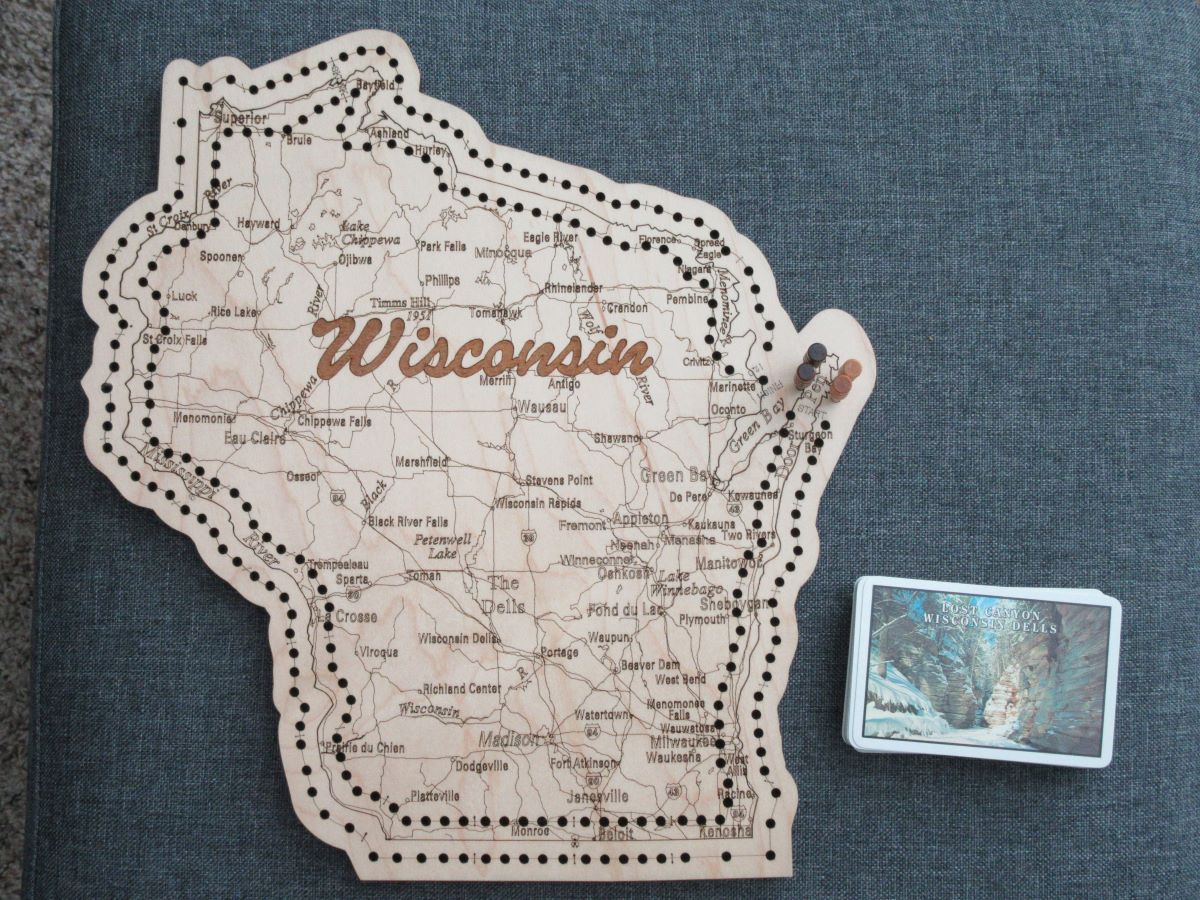
We’re now brushing up on our memories of Wisconsin, chuckling at our snapshots, and considering using the deck of cards we got at Lost Canyon gift shop at Wisconsin Dells, where we took the horse-drawn wagon tour 13 years ago.

Lost Canyon wagon tour in Wisconsin Dells

Scrabble Babble

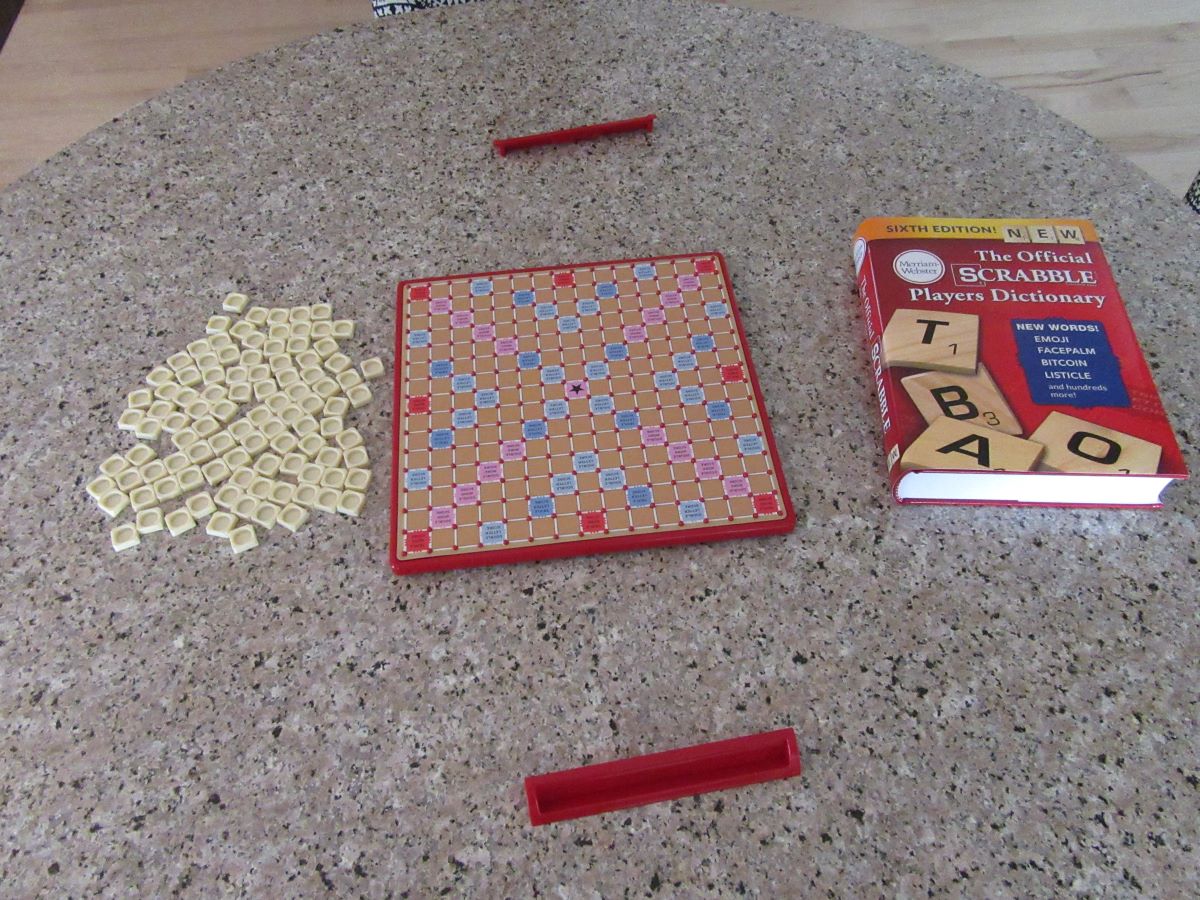
The other day Sena and I played a close game of scrabble—close that is until I challenged her play of the word “Xi.” I lost a turn because in our brand spanking new Scrabble dictionary it’s defined as a Greek letter.

Later, I knew better than to challenge her play of “Ka,” which I looked up after the game. It means the spiritual self of a human being in Egyptian religion. I ended up losing the game.

She plays a Scrabble video game and got a Bingo recently, which got her 80 points. On the web a Bingo is defined as playing all seven tiles, and you get 50 points. I guess that’s the difference between playing the video Scrabble game and playing a human being, whether of the Egyptian religion or not.

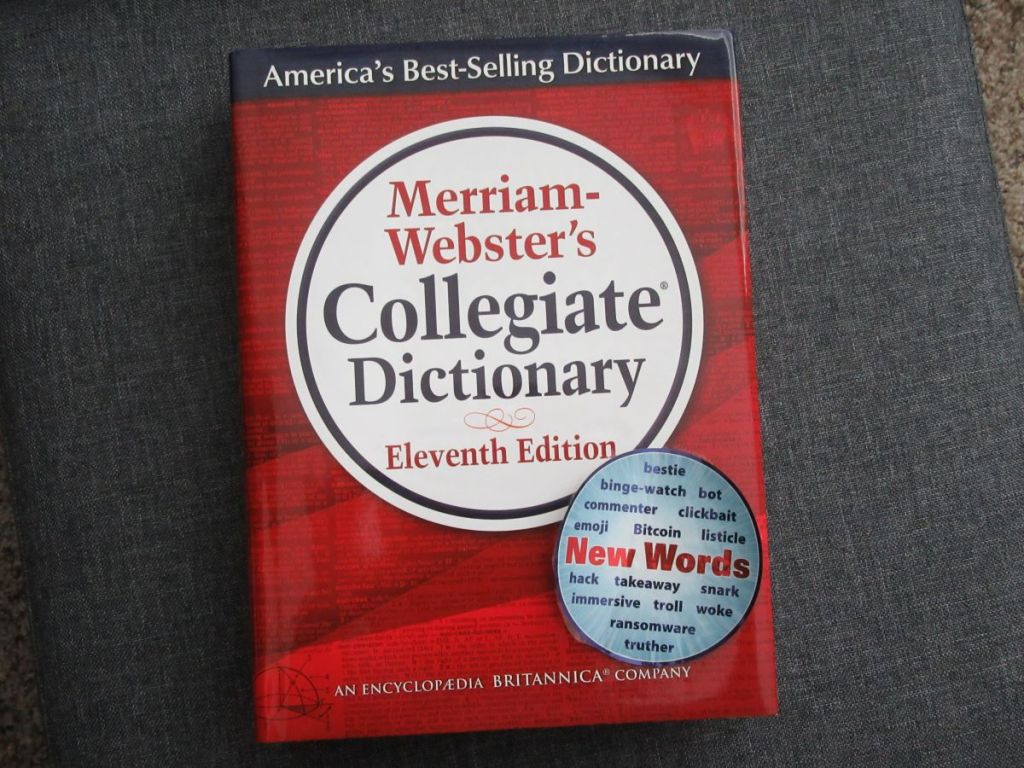
We also used a brand-new Merriam-Webster’s Collegiate Dictionary, Eleventh Edition, during a different game. We used that and I challenged her play of “dic.” I guess you know what’s coming.

As you can probably guess, “dic” is not a word, but those of us with dirty minds know full well that “dick” is a slang term that can mean penis, detective, or surprisingly, nothing. The nothing definition reminded me of the Men in Black scene in which the soon-to-be Agent J is riding down the elevator with Agent K, explaining that because he was chosen by the MIB organization, that means they recognize all of his skills. Agent K makes the deflating remark that all of his skills mean “precisely dick.”

I know you’ll be fascinated to learn that the nothing meaning of dick is not in the Scrabble dictionary nor is it in the Merriam-Webster’s Collegiate Dictionary.

So, remember that the next time you play Scrabble. On the other hand, if you don’t play Scrabble, this means precisely—detective.

Musing on Coincidences

We’re waiting for another state road map cribbage board, this one is Wisconsin. If you’ve seen the cribbage game video we made, “Pegging Around Iowa,” you get the idea.

We’ve been to Wisconsin, briefly. It’s a complicated story. It was roughly 13 years ago. We moved to Madison so I could make another stab at private practice psychiatry.

During the lunch break between interviews, I read The Onion for the first time. It was set up as a college newspaper in which none of the stories were factually accurate—and wildly satirical. I thought it was really funny. It started back in 1988 in Madison, Wisconsin. It’s now based in Chicago. They published a large paperback book entitled The Onion Book of Known Knowledge: A Definitive Encyclopaedia of Existing Information.

I’m pretty sure none of the information was true. I owned a copy, but the print was so small, I couldn’t read it without a magnifying glass. It either got lost in one of our moves or I got rid of it.

Scott Dikkers was one of the originators. Coincidentally, in 1993 he was interviewed by a columnist for The Daily Iowan, the University of Iowa college newspaper. Scott also wrote a cartoon called Jim’s Journal. This is another coincidence because I kept a sort of diary in between blogs for a while a few years ago. I called it Jim’s Journal. Back in 1993 I wasn’t paying attention then to The Onion or much of anything else except surviving my first year of residency in psychiatry at Iowa.

The Onion was one of my favorite reminders of Madison. We loved living there, but unfortunately, I disliked private practice. We moved back to Iowa, but not before doing a lot of fun things in Madison and places nearby.

Another coincidence that is admittedly minor is that, several years ago I accidentally walked into an auditorium ready to present my Grand Rounds lecture to a crowd. The only hitch was that it was the wrong crowd. I had arrived early and the previous group was still in the auditorium. That was embarrassing. When it was time for my performance, I sort of ad libbed a series of jokes about my blunder. This got me an award from the residents—Improvisor of the Year.

I think I also blogged about the experience and used a feature image of myself with the caption, “And now for the juggling of produce,” a reminder of my clownish performance at the Grand Rounds. If you look closely, you can see one of the produce items is—you guessed it, an onion.

Years later, I happened to find a video of older people being interviewed on their 100th birthday. They were in Madison. I left a comment saying I thought it was a gas. I still do. Coincidentally, I worked at St. Mary’s Hospital, albeit briefly. I left that comment in 2012, about 3 years after I returned to Iowa.

And, coincidentally I found another video that sends pretty much the same message, pertinent to our times. It was taken for a January 2021 news story about a lady named Mary Gerber who was celebrating her 100th birthday who had volunteered for 33 years at St. Mary’s Hospital and got her first Covid-19 vaccine. 

These coincidences happen only occasionally, but continue to reverberate in our lives, even to this day. I think of the 2002 alien invasion film, Signs. In it, the lead character is Graham Hess, a local pastor who has given up being a minister because he’s lost his faith related to his wife dying in a car accident. He and his brother Merrill are discussing the many lights in the sky (UFOs) that have been seen recently. I think of what he says,

People break down into two groups. When they experience something lucky, group number one sees it as more than luck, more than coincidence. They see it as a sign, as evidence, that there is someone up there, watching out for them. Group number two sees it as just pure luck. Just a happy turn of chance. I’m sure the people in group number two are looking at those fourteen lights in a very suspicious way. For them, the situation is a fifty-fifty. Could be bad, could be good. But deep down, they feel that whatever happens, they’re on their own. And that fills them fear. Yeah, there are those people. But there’s a whole lot of people in group number one. When they see those fourteen lights, they’re looking at a miracle. And deep down, they feel that whatever’s going to happen, there will be someone there to help them. And that fills them with hope. See what you have to ask yourself is what kind of person are you? Are you the kind that sees signs, that sees miracles? Or do you believe that people just get lucky? Or, look at the question this way: Is it possible that there are no coincidences?

Merrill answers “I’m a miracle man.”

I’m not sure yet what group I fall into. Things happen sometimes that make me hope there are miracles.