So, I Got the Covid-19 Booster Today

After giving the Covid-19 summer booster a lot of thought, I got it today. What the heck. I’m an old guy and the experts all agree that the summer surge is real, including the current leaders of the FDA Center for Biologics Evaluation and Research (Vinay Prasad, M.D., M.P.H and Martin A. Makary, M.D., M.P.H.).

 I read their article “An Evidence-Based Approach to Covid-19 Vaccination” published in the New England Journal of Medicine on May 20, 2025. It sounds like they’re going to require placebo-controlled trials for new vaccines for almost everybody except those over age 65 and high risk because they’re not recommending it for certain other groups such as healthy children.

I didn’t think it was worth the wait for the upcoming CDC ACIP meeting on June 22, 2025 in order to decide whether or not to get the summer vaccine. It’s the same one I got last fall and the same one the FDA advisory committee decided at this month’s meeting would be appropriate going forward (the JN.1 lineage).

It wasn’t like there was a long wait time to get the vaccine today. There wasn’t a line. I scheduled it but I didn’t have to because I got right in.

It’s true that vaccine uptake has been low. However, I think on balance they’ve been proven to be safe and effective so I’m not sure that placebo-controlled trials are warranted. I guess we’ll just have to agree to disagree.

Reference:

An Evidence-Based Approach to Covid-19 Vaccination

Authors: Vinay Prasad, M.D., M.P.H., and Martin A. Makary, M.D., M.P.H.Author Info & Affiliations

Published May 20, 2025

DOI: 10.1056/NEJMsb2506929

An Anecdote About “Supportive” Psychotherapy

I just read Dr. George Dawson’s excellent blog post on supportive psychotherapy (“Supportive Psychotherapy—The Clinical Language of Psychiatry.” If you’re looking for an erudite and humanistic explanation of supportive psychotherapy, I think you’re unlikely to find anything superior to Dr. Dawson’s essay.

Now, about my take on “supportive” psychotherapy—there’s a reason why the word supportive is wrapped in quotes. It’s because I have a sort of tongue in cheek anecdote about it based on my experience with a staff neurologist in the hospital. It was long enough ago that I’m not sure what level of training I was in exactly. I was either a senior medical student or a resident doing a rotation on an inpatient neurology unit.

Dr. X was staffing the neurology inpatient service and I happened to overhear a brief conversation he had with the psychiatry consultants about what approach to adopt with a patient who he believed had a gait problem due to a psychological conflict. He wanted a psychological approach, preferring something on the psychodynamic side. I remember the psychiatric consultant said flatly, “We’re pretty biological.” I can’t remember what their recommendation was, but he disagreed. Later in the day, Dr. X gathered all of the trainees and we rounded on the patient in his hospital room.

We all crowded into the room with the patient, who had a severe problem walking due to what seemed to be unexplained hemiparesis. This is where the “supportive” element of Dr. X’s approach to psychological treatment came in.

Whether due to a deformity or past injury (I can’t recall which), Dr. X walked with a pronounced limp. He asked the patient if he would be willing to try walking vigorously with him across his room. Dr. X promised to assist him up and made it very clear that, despite his own limp, he was going to walk with the patient as normally as possible, together using both their legs.

The patient was very hesitant. Dr. X offered a lot of reassurance and encouragement—and then hoisted him up out of bed and marched with him across the room, ensuring that the only way this could happen was if he used both legs. The scene was comical, Dr. X limping but strongly moving in one direction while hauling the patient along with him.

The patient did it—twice and with increasing speed while obviously using both legs, never collapsing to the floor while Dr. X effusively praised him. He looked embarrassed and also seemed genuinely grateful for this miraculous cure. I was impressed.

I’m calling this a form of supportive psychotherapy partly in jest, but also to make a point about what support can mean, both literally and figuratively speaking, under certain circumstances according to how differently trained health care professionals might define psychiatric help.

Later in my career as a psychiatric consultant in the general hospital, I often found that many medical generalists and specialists preferred patients with these kinds of afflictions be transferred to psychiatric wards.

I don’t recall Dr. X ever suggesting that.

The personal identities of both doctor and patient were de-identified.

The FDA VRBPAC  Meeting Today on Covid-19 Vaccines for 2025-26

The FDA VRBPAC meeting today on the Covid-19 vaccines for 2025-26 is so far leading me to believe that the best choice for the voting question-

Based on the evidence presented, please discuss considerations for the selection of JN.1 and/or a specific JN.1-lineage strain for COVID-19 vaccines (2025-2026 Formula) to be used in the U.S.

-might just be sticking with last year’s Covid-19 JN.1 lineage vaccine rather than targeting the newest LP.8.1 strain. The strains so far aren’t suggesting a seasonal pattern. Some strains only last for weeks and it seems getting or making a vaccine for a Covid-19 strain that disappears by the time the manufacturer rolls out a vaccine for it could turn out to be a waste of time.

Neverthe less, all three of the industry presenters are calling this a “seasonal” update to their Covid-19 vaccine products. They’re hedging their bets, so to speak, and would be ready to market a vaccine targeting LP.8.1 if the FDA decides to license the product.

I’ve held off getting the JN.1 vaccine so far in anticipation of today’s meeting, to see if there’s any reason not to get it based on today’s decision.

But the day is young. I’ll probably be making periodic updates to this post today. I think Dr. Jerry Weir’s slides are excellent, as usual.

“Voting Question
For the 2025-2026 Formula of COVID-19 vaccines in the U.S., does the committee recommend a monovalent JN.1-lineage vaccine composition?
Please vote “Yes” or “No” or “Abstain”

“Discussion Topic
Based on the evidence presented, please discuss considerations for the selection of
JN.1 and/or a specific JN.1-lineage strain for COVID-19 vaccines (2025-2026 Formula) to be used in the U.S.”

Update: Of course, the committee voted unanimously for the JN.1 lineage because there was no alternate choice. The only choice for the members was to vote for the JN.1-lineage or against it. Although I agree with the “vote,” I think they should have had the alternate of LP.8.1 available, otherwise why have a vote at all? I wonder what the FDA will do now.

FDA Vaccines and Related Biological Products Advisory Committee Meeting May 22, 2025

The meeting of the FDA VRBPAC on the composition of Covid-19 vaccines will be tomorrow, May 22, 2025 at 8:30 am-4:30 pm EST. Some materials have recently become available on the FDA website.

The briefing document indicates that there will be a discussion of the most recent Covid-19 variants and whether the current vaccine needs to be modified as the viral antigenic strain has mutated.

The World Health Organization has formed a new technical advisory group: “Technical Advisory Group on COVID19 Vaccine Composition (TAG-CO-VAC) to review and assess the public health implications of emerging SARS-CoV-2 variants of concern (VOCs) on the performance of COVID-19 vaccines and to provide recommendations to WHO on proposed modifications to COVID-19 vaccine antigen composition. Recently, the TAG-CO-VAC advised that a monovalent JN.1 or KP.2 vaccines remain as appropriate vaccine antigen, while a monovalent LP.8.1 is a suitable alternative vaccine antigen (Ref: https://www.who.int/news/item/15-05-2025-statement-on-the-antigen-composition-of-covid-19-vaccines) to be included in the composition of COVID-19 vaccines (2025-2026 Formula).”

The VRBPAC meeting topics:

“On May 22, 2025, VRBPAC will meet in open session to discuss and make recommendations on the selection of the 2025-2026 Formula for COVID-19 vaccines for use in the U.S. The committee will be asked to discuss available evidence on recent and currently circulating SARS-CoV-2 variants, including data from virus surveillance and genomic analyses, antigenic characterization analyses, vaccine effectiveness and clinical immunogenicity studies of current U.S.- authorized/approved COVID-19 vaccines and nonclinical immunogenicity studies of candidate vaccines expressing or containing updated Spike antigens.”

The attendees include:

The TAG-CO-VAC presenter:

Kanta Subbarao, M.B.B.S., M.P.H. Professor Department of Microbiology and Immunology Faculty of Medicine Laval University (Laval University is in Quebec City, Quebec, Canada).

There’s an Iowa City member on the committee roster:

Stanley M. Perlman, M.D., Ph.D. Expertise: Pediatrics, Infectious Diseases Term: 08/23/2022 – 01/31/2026 Professor University of Iowa Distinguished Chair Department of Microbiology and Immunology Carver College of Medicine University of Iowa, Iowa City, IA 52242.

And the acting chair of the meeting will once again be: Arnold Monto, M.D. Expertise: Epidemiology Term: 02/01/2022 – 01/31/2026 Thomas Francis Jr. Collegiate Professor Emeritus of Public Health and Epidemiology School of Public Health University of Michigan Ann Arbor, MI 48109.

Vaccine manufacturer presentations will be from Moderna, Pfizer, Novavax, and Sanofi.

FDA VRBPAC Meeting to Discuss Covid-19 Vaccines

The FDA VRBPAC meeting to discuss Covid–19 vaccines is scheduled for May 22, 2025, 8:30 a.m. – 4:30 p.m. ET. The committee will meet in open session to discuss and make recommendations on the selection of the 2025-2026 Formula for COVID-19 vaccines for use in the United States. The meeting presentations will be heard, viewed, captioned, and recorded through an online teleconferencing and/or video conferencing platform.  

I couldn’t see any specifics about the forthcoming meeting. I assume there will be updates.

May Mental Health Awareness Month Calendar and Checklist (look below this sticky post for other new posts)

May is Mental Health Awareness Month!

This is May and it’s Mental Health Awareness Month. I just found out about something exciting and it’s the Iowa Healthiest State Initiative.

See the Calendar of Events and the Checklist.

Procrastinate on Getting the Covid Vaccine?

This post is sort of my thinking out loud about whether or not I should get the Covid vaccine ahead of this summer that was approved last year as being appropriate to get twice a year by the CDC—once in the fall along with the flu shot and once to protect against the Covid summer surge that some experts argue has been happening every summer since the pandemic onset.

The trouble is that the dominant subvariant is no longer the JN.1 or KP.3.11. The currently dominant circulating bug is LP.8.1 according to the CDC Nowcast chart.

And what confuses me is that one expert still recommends getting the September 2023 updated vaccine, but recommends getting the “bivalent booster.”

And a recent article from the University of Minnesota Center for Infectious Disease Research and Policy (CIDRAP) says that a preprint study (not yet peer-reviewed) says the current Covid vaccine was only 53% effective against hospitalization and 39% medically attended Covid-19. Most patients got the vaccine targeting the XBB.1.5 variant. I think that’s related somehow to the KP.2 variant. I have a vague memory of hearing about the XBB.1.5 during the CDC meeting in September 2023.

I’m a retired psychiatrist, not a retired virologist. The information available to the public seems confusing to me and I imagine I’m not the only one so affected.

The CDC is recommending the 2024-2025 Covid-19 vaccines, which target the JN.1 variant, which is now 0% of circulating variants on the list. But I’m not sure whether the current vaccines would be as protective against the different variants now dominant.

The CDC April indicators show downward trends for test positivity, ER visits, hospitalizations, and deaths.

On the other hand, an August 2024 article from Johns Hopkins warns that Covid-19 rates have consistently risen in July-August risen since 2020. The author says that it’s still unclear whether Covid-19 will continue to have dual seasonality. Other factors that affect this in addition to the emergence of more transmissible variants are human behavior, such as staying in air-conditioned spaces more and traveling.

My big question is should an old guy get the 2024-2025 Covid-19 vaccine or just wait and see, especially in light of the difficult political situation with HHS sounding like it might require new, placebo-controlled trials of some vaccines before “tweaking” them to target more current variants—which could take several months.

But it doesn’t look like there’s a plan to tweak the 2024-2025 Covid-19 vaccine in any case. I’m probably worrying too much, but I’m on the fence. I’m already too good at procrastinating.

Fart Around for Your Health!

How many farts can old fart fart if an old fart walks to fart? I’m sure you’ve heard that one by now after a recent news article suggested that farting while going for a walk on the street after dinner (or any meal) could make you healthier.

It’s not like the only reason is that you get rid of gas and increase intestinal motility to prevent constipation. Some medical experts say it can help control blood sugar.

But you have to fart walk within an hour of finishing a meal to control the glucose spike. You could call it the fart walk sweet spot. There are social implications, especially if the fart walk becomes a growing trend.

What the heck should you wear on fart walks? Windbreakers.

For some reason, Artificial Intelligence (AI) has a lot to say about flatulence, but I usually pass gas over it to move on to other websites to find what might be more reliable information than you get from AI.

While farting a couple dozen times a day can be normal, if you can’t leave your house because of your Frequency Of Odoriferous Farting Impulse (FOOFI), you might want get it checked out.

Eating a lot of fiber-rich foods can lead to digestive problems that can lead to excessive flatulence. Have you noticed that when you’re in a crowd, people tend to sprint away from you? When you’re in an elevator, do people push any button to get off, even if it’s in the basement, or even between floors?

By the way, did you hear about the guy who farted on an elevator? It was wrong on so many levels.

The food choice thing can be the downside of what often happens when you follow the advice of health care professionals who tell you to avoid carbs and eat more fruits and vegetable. This can happen to guys who hit middle age and start to get that big belly. I’m not sure that the diet change will help much, especially since new studies show that guys can produce more belly fat cells as they get older.

What do you call a large, hairy cryptid who eats too much beef jerky? Bigfart.

Certain diseases can be linked to farting, like irritable bowel syndrome, celiac disease, bowel obstruction, and constipation. Funny, I thought farting was supposed to prevent constipation.

What do you say to someone who has made a commitment to daily fart walks? Conflatulations!

Earth Day Trees and Other Thoughts

Today is designated Earth Day although there is such a thing as Earth Month. Among the several trees Sena planted in our back yard trees are a few that we hope exemplify the Earth Day theme, which is Our Power, Our Planet.

One of them is a dogwood, which we’re hoping will bloom soon. Dogwoods represent joy and rebirth. There are a couple of crab apple trees, a red jewel and a perfect purple. Crab apple trees represent love and all are very special to Sena and me.

Love, joy, and rebirth. They can all be linked to power, which can be the power of will. The will to respect the planet also implies respecting each other. Practicing humility can be a kind of power.

The power to be still and listen to each other can make us more open to change.

On that note, because I can’t go for long without joking around, I should retell the story about me and the walking dead meditation. About 13 years ago, I had an even more serious case of not listening to others than I do now, if you can believe that. It eventually led to my choosing to take the Mindfulness Based Stress Reduction (MBSR) class ( see this current University of Iowa mindfulness essay). I wrote an essay for the Gold Foundation and it’s still available (I updated the links):

How I left the walking dead for the walking dead meditation (August 13, 2014)

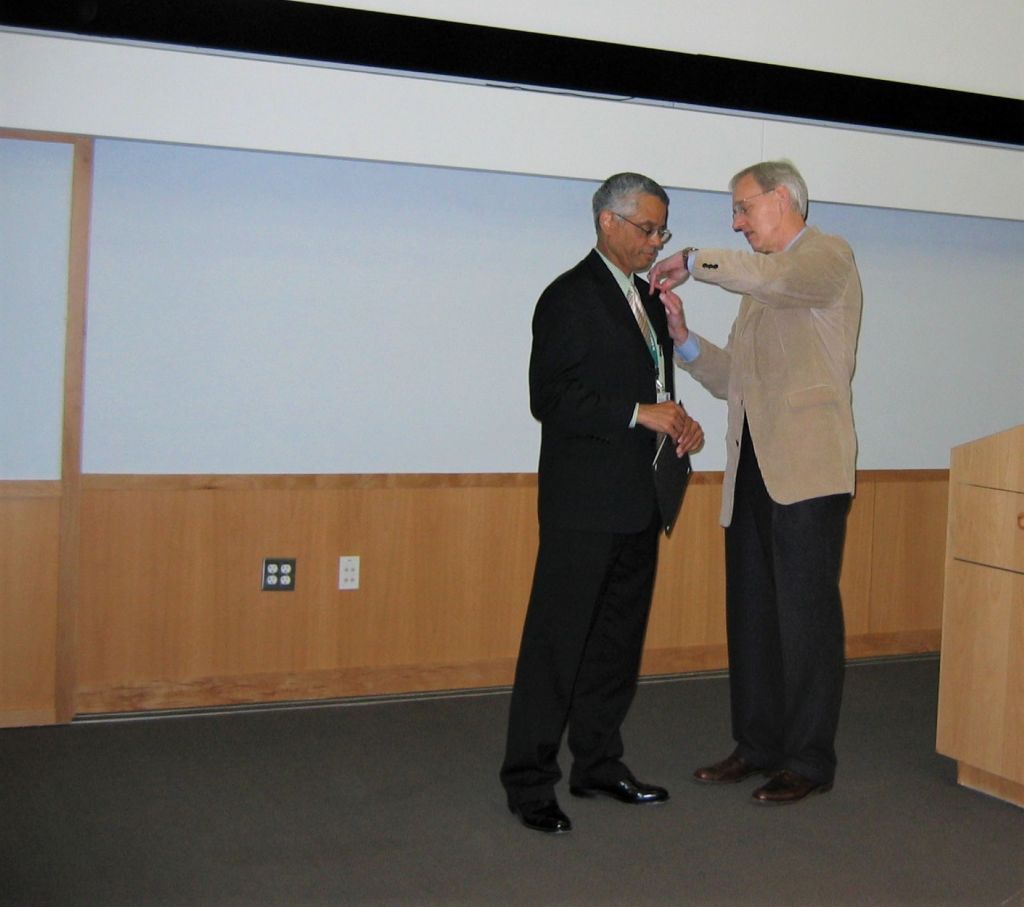
When I was awarded the Leonard Tow Humanism in Medicine Award in 2007, I was the last person I thought would ever suffer from physician burnout. Early in my career I had won several teaching awards and had even edited a 2006 Psychiatric Times Special Report on Stress.

About a year or so later, I bought Jon Kabat-Zinn’s book on Mindfulness-Based Stress Reduction (MBSR), Full Catastrophe Living, because I was dimly aware of the burden of stress weighing on me as a consulting psychiatrist in an academic medical center. I didn’t get much out of Kabat-Zinn’s book on my first read. But then in 2012 I started getting feedback from colleagues and trainees indicating they noticed I was edgy, even angry, and it was time for a change.

Until then, I’d barely noticed the problem. Like most physicians, I had driven on autopilot from medical school onward.  I had called myself “passionate” and “direct.” I had argued there were plenty of problems with the “system” that would frustrate any doctor. I had thought to myself that something had to change, but I never thought it was me.

After reflecting on the feedback from my colleagues and students, I enrolled in our university’s 8 week group MBSR program. Our teacher debunked myths about mindfulness, one of which is that it involves tuning out stress by relaxing. In reality, mindfulness actually entails tuning in to what hurts as well as what soothes. I was glad to learn that mindfulness is not about passivity.

But I kept thinking of Kabat-Zinn’s book, in which he described a form of meditation called “crazy walking.” It involved class members all walking very quickly, sometimes with their eyes closed, even backwards, and crashing into each other like billiard balls.  I hoped our instructor would not make me “crazy walk” because it sounded so—crazy. I dreaded crazy walking so intensely that I considered not attending the 6-hour retreat where it might occur.

We didn’t do crazy walking. Instead, we did what’s called the “walking meditation.” Imagine a very slow and deliberate gait, paying minute attention to each footfall—so much so that we were often off balance, close to crashing into each other like billiard balls.

I prefer to call this exercise the “walking dead meditation” because it bore a strong resemblance to the way zombies move. One member of the class mentioned it when we were finally permitted to speak (except for the last 20 minutes or so, the retreat had to be conducted in utter silence). It turned out we had all noticed the same thing!

Before MBSR, I was like the walking dead.  I was on autopilot — going through the motions, resisting inevitable frustrations, avoiding unstoppable feelings, always lost in the story of injustices perpetrated by others and the health care system.

In practicing mindfulness, I began noticing when my brow and my gut were knotted, and why. Just paying attention helped me change from simply reacting to pressures to responding more skillfully, including the systems challenges which contribute to burnout. About halfway through the program, I noticed that the metaphor connecting flexibility in floor yoga to flexibility in solving real life problems worked.

Others noticed the change in me. My professional and personal relationships became less strained. My students learned from my un-mindfulness as well as my mindfulness, a contrast that would not have existed without MBSR.

As my instructor had forewarned, it was easy for me to say I didn’t have time to practice meditation. I had to make the time for it, and I value the practice so much that I’ll keep on making the time. I will probably never again do the walking dead meditation.

But I’m no longer one of the walking dead.

This post was written by Dr. James J. Amos, Clinical Professor of Psychiatry in the UI Carver College of Medicine at The University of Iowa in Iowa City, Iowa. He has co-edited a practical book about consultation psychiatry with Dr. Robert G. Robinson entitled Psychosomatic Medicine: An Introduction to Consultation-Liaison Psychiatry. As a clinician educator, among Dr. Amos’s most treasured achievements is the Leonard Tow Humanism in Medicine Award. He blogs at https://retirepsychiatrist.com/

Below was my acceptance speech for the award:

Today we gather to reward a sort of irony.  We reward this quality of humanism by giving special recognition to those who might wonder why we make this special effort. Those we honor in this fashion are often abashed and puzzled. They often don’t appear to be making any special effort at being compassionate, respectful, honest, and empathic. And rewards in society are frequently reserved for those who appear to be intensely competitive, even driven.

There is an irony inherent in giving special recognition to those who are not seeking self-aggrandizement. For these, altruism is its own reward. This is often learned only after many years—but our honorees are young. They learned the reward of giving, of service, of sacrifice. The irony is that after one has given up the self in order to give back to others (family, patients, society), after all the ultimate reward—some duty for one to accept thanks in a tangible way remains.

One may ask, why do this? One answer might be that we water what we want to grow. We say to the honorees that we know that what we cherish and respect here today—was not natural for you. You are always giving up something to gain and regain this measure of equanimity, altruism, trust. You mourn the loss privately and no one can deny that to grieve is to suffer.

But what others see is how well you choose.

I’m still practicing mindfulness-more or less. Nobody’s perfect. We hope the dogwood tree blooms soon.