There is no swimming at the Terry Trueblood Recreation Area because E. coli has been detected in Sand Lake. Check Iowa City parks web site for updates.

It’s 97 degrees and with the heat index it feels like 103 this afternoon. There is an Excessive Heat Warning today. I was going to replace the sun room door jambs weather stripping today—but decided against it. I’d have to turn off the air conditioning and leave the door open. I did that yesterday when replacing weather stripping elsewhere in the house.
It takes a while to cool back down.
I’m reminded of working as a survey crew assistant way back when, working on new asphalt airport runway construction sites. That gets pretty hot.
On a 90-degree day, the asphalt temperature can get up to 110 degrees. Now imagine you have to work next to the asphalt paving machine. The asphalt mix usually arrives at the job site at a temperature of 275 to 300 degrees Fahrenheit.
I don’t recall ever seeing anyone pass out from the heat on those job sites. But it was awfully hard to drag yourself up and down the runway.
Temperatures today are nowhere near what it is on an asphalt paving job—but if you don’t have to work out there, it’s a lot safer to stay indoors with the air conditioning on than to venture out for very long in 100-degree temperatures.
You can risk heat exhaustion or heat stroke on days like this. Read about the different kinds of heat stress at the University of Iowa web site.
And from the time I started writing this post to the time I stopped, the temperature got up to 105 degrees with the heat index.
Stay cool.
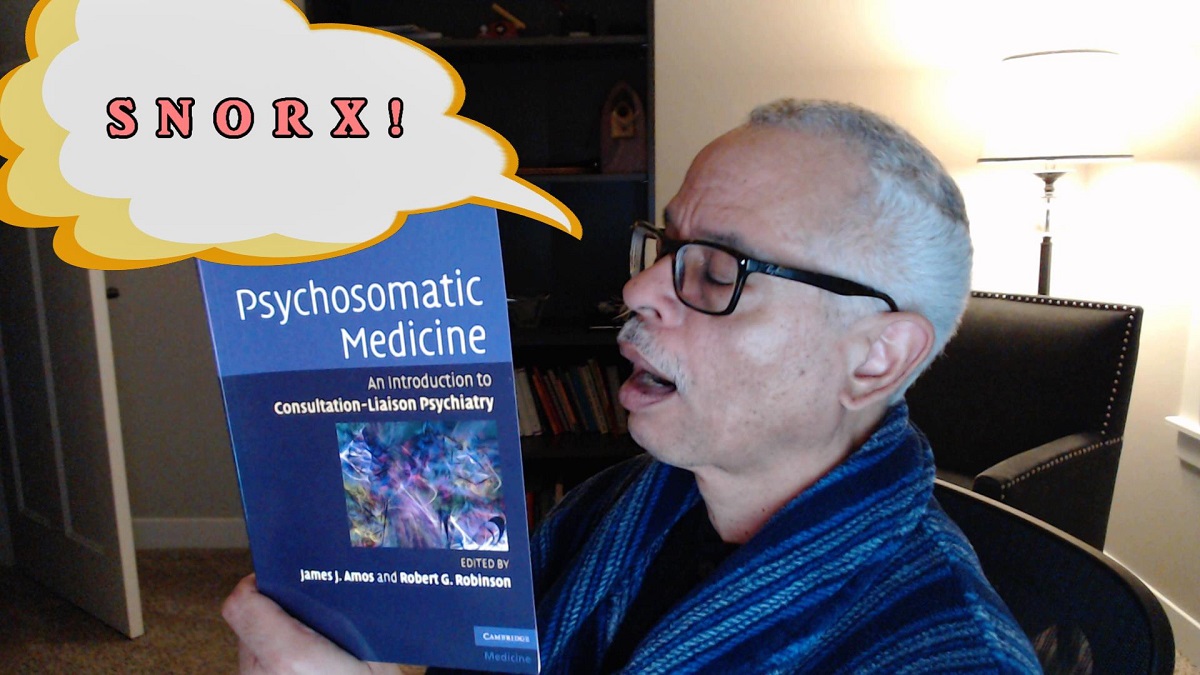
I read a short article, “The case for pursuing a consultation-liaison psychiatry fellowship” by Samuel P. Greenstein, MD in Current Psychiatry (Vol. 1, No. 5, May 2022). After 3 years as an attending, he found his calling as a C-L psychiatrist, especially after getting teaching awards from trainees. But when he applied to academic institutions for position as a C-L academic psychiatrist, people kept advising him to complete a fellowship training program in the subspecialty first. He gave it careful thought and did so, even he called it going “backwards” in his career.
On the other hand, he believes C-L fellowships will help meet the challenges of addressing rising health care costs and improving access to what most people see as the critically important goal of providing access to integrated mental health and medical care.
I’ve been retired from consultation-liaison psychiatry for two years now. I get an enormous sense of achievement on the rare occasions when I hear from former trainees who say things like “For me you were…one of the most outstanding attendings I had at my time at Iowa.” And “I can at least take comfort that University of Iowa is still at the forefront of psychiatry.”
Several years ago, one of the residents suggested starting a Psychosomatic Medicine Interest Group (PMIG). This was before the name of the subspecialty was formally changed to Consultation-Liaison Psychiatry in 2018. I know many of us were very pleased about that.
I sent a short survey (see the gallery below the slide show) to the faculty and residents in an effort gauge support for the idea and readiness to participate. I used a paper published at the time to guide the effort, (Puri NV, Azzam P, Gopalan P. Introducing a psychosomatic medicine interest group for psychiatry residents. Psychosomatics. 2015 May-Jun;56(3):268-73. doi: 10.1016/j.psym.2013.08.010. Epub 2013 Dec 18. PMID: 25886971.).


You’ll notice on slide 4 one faculty member’s comment, “I think it doesn’t matter whether faculty are certified in PM.” As Dr. Greenstein discovered, it probably does matter, at least if you want to be board certified.
I was initially certified by the American Board of Psychiatry & Neurology (ABPN), but I objected to the whole Maintenance of Certification (MOC) program, as did many other psychiatrists. I eventually declined to continue participating in the MOC process. However, I notice that the Delirium Clinical Module that I and a resident put together is still accessible on the ABPN website.
Although response numbers were low, there was clearly an interest in starting the interest group. There was also an incentive to reapply to the ACGME for approval of a Psychosomatic Medicine (Consultation-Liaison Psychiatry now) fellowship.
My attempt years earlier had been frustrating. While it was approved, I couldn’t attract any fellows, forcing me to withdraw it without prejudice (meaning another application for approval could be attempted). Fortunately, that situation changed later. The Psychiatry Department at The University of Iowa now has an early career C-L psychiatrist who graduated from the reinstated C-L fellowship.
As the saying goes, “What goes around comes around.” Although the origin of that saying might have originated in the 1970s, at least one person thought his grandmother had her own version in the 1950s: “You get what you give.”
I got a nice surprise recently after my one-month follow-up postop clinic visit following my retinal detachment surgery. The scheduling desk clerk gave me a pair of post-dilation sunglasses. That was the first time in years that I’ve been offered them after getting mydriatic drops for eye clinic exams.
The last time I got mydriatic drops, I didn’t get a pair of post-dilation sunglasses and I had to drive myself home. It was pretty uncomfortable and I almost stopped along the way to just park somewhere. I was really light sensitive and I don’t have a regular pair of sunglasses. My eyes were tearing and I had a strong urge to squint so tight, I’d have been driving blind.
That experience was the inspiration for my blog post “Mydriatic Madness” on March 16, 2022.
The eye clinics I’ve been to in past years always used to hand out post-dilation glasses after eye exams in which pupillary dilation was done. It was automatic.
However, in recent years it seems this practice has been abandoned—until just a couple of days ago. The scheduling clerk offered me a pair, for which I was grateful.
Ironically this was after she gave me a form to evaluate whether any of the nurses and doctors had washed their hands before examining me. For the life of me I couldn’t recall if any of them had! I felt embarrassed for them because the rating form was a yes/no format. Essentially, I had to say “no” across the board.
And yet the pair of dilation glasses was the first such courtesy I’ve encountered in years after an eye examination. It’s really more than a courtesy. It could be a safety issue if you’re driving after the exam. And it was the scheduling clerk’s responsibility, evidently. The glasses are kept in a little slot and if you’re not standing in just the right place, you wouldn’t even see them.
I’m not sure if the scheduling clerk ought to be the one offering the glasses. Wouldn’t it be more appropriate for a health care professional to do that? I guess I’m quibbling in a situation where nobody offers them.
Maybe the patients should learn to just ask for post-dilation glasses. They’re even a little stylish. Mine look like what you can buy on Amazon (Scheaffer-Vicron Slip-in) for about $16 for a pack of 25. That’s about 64 cents each so it’s not breaking any eye clinic budget to offer them for free.
And hand-washing should be automatic—or at least noticing when it’s done in front of you.