Cannabinoid Hyperemesis Syndrome in the News

I just saw a news item today that is interesting for two reasons, at least to me. It’s about people who have Cannabinoid Hyperemesis Syndrome. The physician interviewed for comments about it is Dr. Chris Buresh who used to be an emergency department physician at the University of Iowa. He’s now at the University of Washington UW Medicine and Seattle Children’s Hospital.

His comment was published in a couple of local newspapers and he pointed out that even small amounts of marijuana can make people start throwing up.

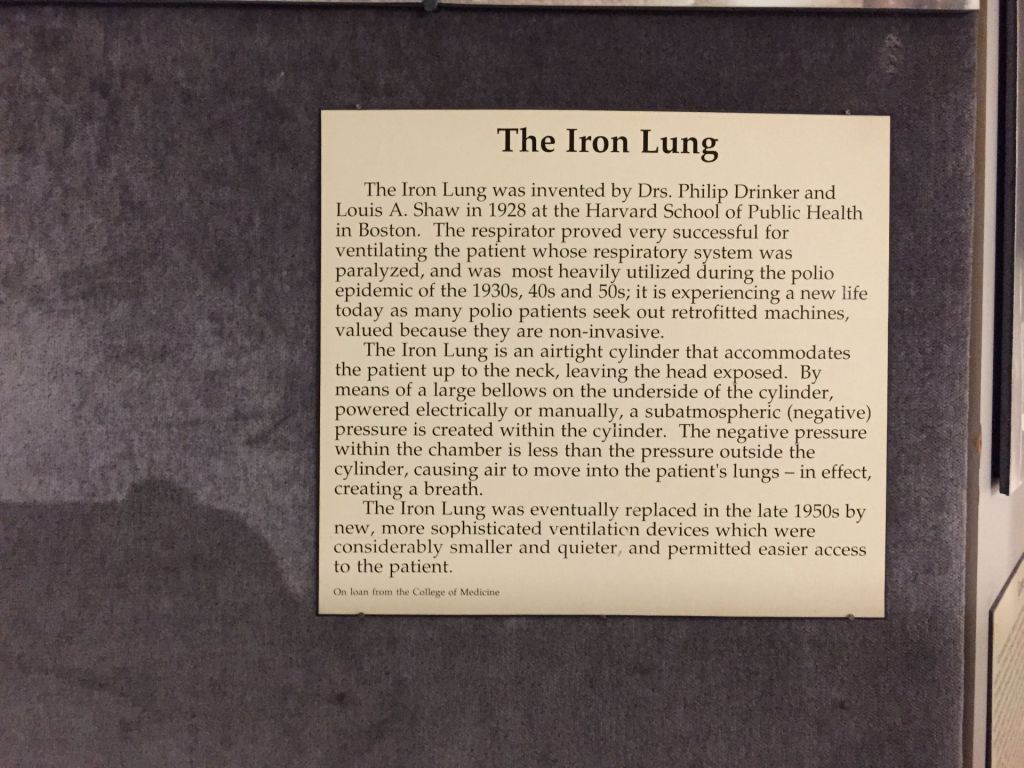
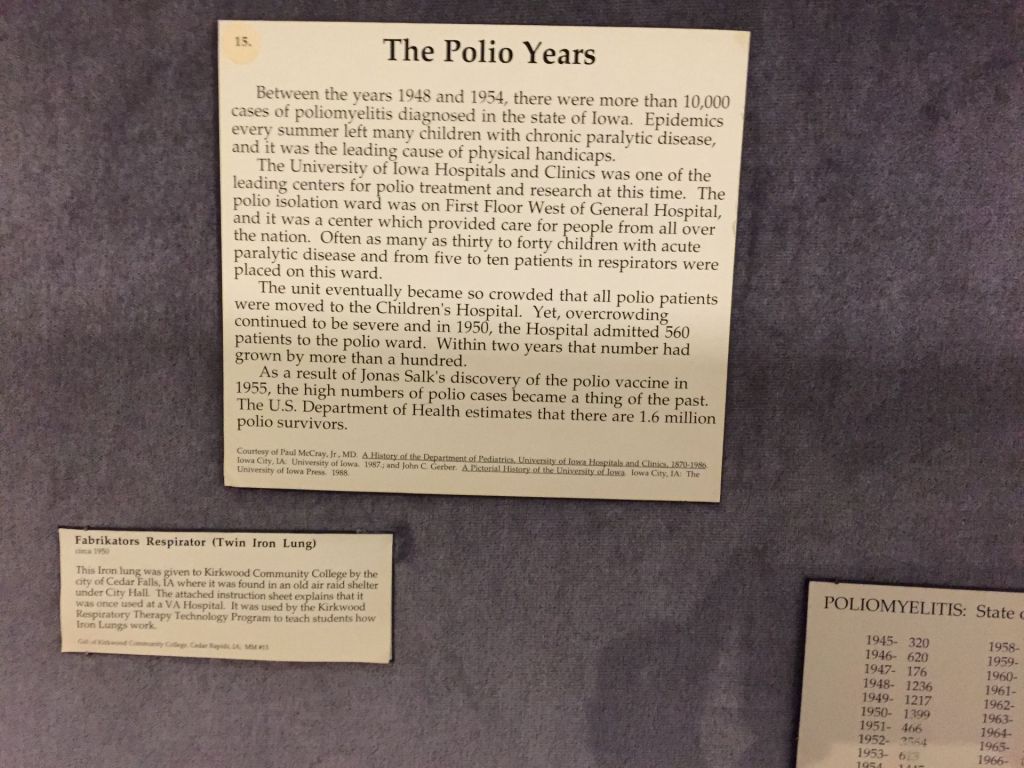
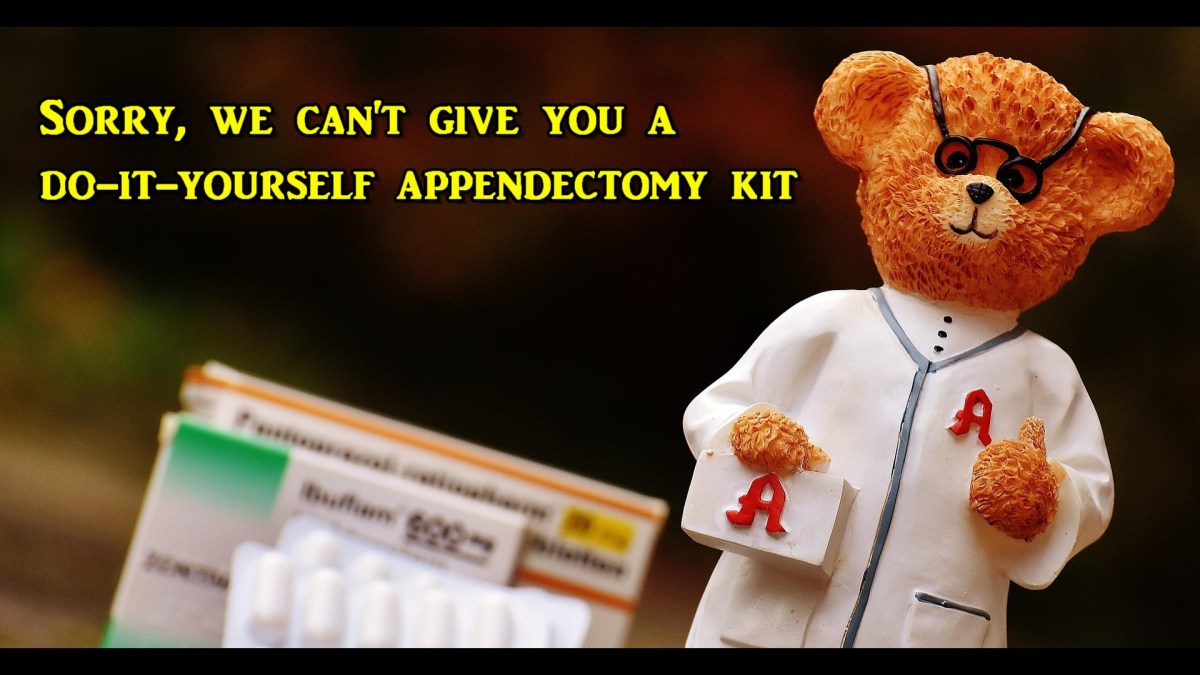
The other reason it’s interesting to me is that I gave a grand rounds on eating disorders back in 2016. I had a slide on Cannabinoid Hyperemesis Syndrome (see featured image above). There’s a reference from 2016 that probably is still useful.

  • Brewerton, T. D. and O. Anderson (2016). “Cannabinoid hyperemesis syndrome masquerading as an eating disorder.” International Journal of Eating Disorders.

Working on a Simple Plan to Stay Fit?

I saw a couple of web resources about staying healthy and fit that seem to make sense to me. One of them was actually a YouTube video by a personal trainer advising people to stop doing certain kinds of workouts that could be unhealthy. He recommended avoiding certain kinds of weight lifting exercises, especially for those over 40. I’m way over 40 and I agreed with him.

The video was posted about 2 months ago and there are so far 725,000 view and well over 2,000 comments, both for and against the trainer’s advice. Many of the older commenters disagreed with slowing down after the age of 40.

I’m 70 and I’m a minimalist when it comes to exercising. I’ve slowed down from daily exercise, but I still enjoy juggling, riding an exercise bicycle, limited use of dumbbells, body weight squats, a step platform routine, planks, stretching and wrestling grizzly bears. I occasionally go for walks when the weather permits.

I remember trying to lift really old barbells in the free weight room at the YMCA when I was a kid. I dropped them once and the director directed me out of the room. After they got a weight machine, a guy bet me and a friend a dollar that he could jump over a broom handle (in another variant of this stunt you try to jump over a dollar bill, I think) while bent over and grasping his toes. He did it but we couldn’t. We didn’t pay him any money. I still can’t do that trick. Nobody recommends doing this as a regular fitness exercise.

On the other hand, patient YMCA teachers taught me how to swim and helped me get over my severe headaches related to my initial fear of the water.

The other web source is an article that actually recommends we stop focusing on working out. In fact, the title is “Stop focusing on working out”—a professor says you should follow these five science-backed steps to improve your wellness instead.”

There are so far no comments on it. The authors have five suggestions:

Make movement fun

Be socially active

Use mindfulness as a stress buster

Be kind to yourself and others

Prioritize quality sleep

The last one usually is difficult for me. Ever since kindergarten, when the teacher wanted the class to take a nap, I’ve had trouble sleeping. The teacher never understood that. I also tend to be shy. I like playing cribbage, though my wife is my only partner. I still practice mindfulness meditation. Juggling is a fun movement activity and it’s also beneficial exercise.

I think it might be a little safer to try to jump over a dollar bill while squatting and grabbing your toes than squatting with barbells if you’re 70. You’re welcome. That’ll be one dollar, please.

When it Comes to AI, What Are We Really Talking About?

I’ve been reading about artificial intelligence (AI) in general and its healthcare applications. I tried searching the web in general about it and got the message: “An AI Overview is not available for this search.”

I’m ambivalent about that message. There are a couple of web articles, one of which I read twice in its entirety, “Are we living in a golden age of stupidity?” The other, “AI, Health, and Health Care Today and Tomorrow: The JAMA Summit Report on Artificial Intelligence”was so long and diffuse I got impatient and tried to skip to the bottom line—but the article was a bottomless pit. The conflict-of-interest disclosures section was overwhelmingly massive. Was that part of the reason I felt like I had fallen down the rabbit hole?

I recently signed an addendum to my book contract for my consult psychiatry handbook (published in 2010, for heaven’s sake) which I hope will ultimately protect the work from AI plagiarism. I have no idea whether it can. I delayed signing it for months, probably because I didn’t want to have anything to do with AI at all. I couldn’t discuss the contract addendum with my co-editor Dr. Robert G. Robinson MD about the contract addendum because he died on December 25, 2024.

I found out today the book is old enough to find on the Internet Archive as of a couple of years ago. One notice about it says “Borrow Unavailable” and another notice says “Book available to patrons with print disabilities.”

All I know is that an “archivist” uploaded it. The introduction and first chapter “The consultation process” is available for free on line in pdf format. I didn’t know that until today either.

Way back in 2010 we didn’t use anything you could call AI when we wrote the chapters for the book. I didn’t even dictate my chapters because the only thing available to use would have been a voice dictation software called Dragon Naturally Speaking. It was notorious for transcribing my dictations for clinic notes and inserting so many errors in them that some clinicians added an addendum warning the reader that notes were transcribed using voice dictation software—implying the author was less than fully responsible for the contents. That was because the mistakes often appeared after we signed off on them as finished, which sent them to the patient’s medical record.

Sometimes I think that was the forerunner of the confabulations of modern-day AI, which are often called hallucinations.

Now AI is creating the clinic notes. It cuts down on the pajama time contributing to clinician burnout although it’s not always clear who’s ultimately responsible for quality control. Who’s in charge of regulatory oversight of AI? What are we talking about?

Cribbage Could Help Preserve Your Brain Health!

I just saw an article that working on your cognitive skills might make you less susceptible to dementia. There are some websites that help you, but I think some, like BrainHQ, could cost you money.

On the other hand, there is some evidence that playing card games can help protect your brain. I think cribbage could be one of them, although it’s tough to find specific studies on it.

I checked around and found a few studies about how playing games like solitaire and hearts could help keep you sharp. On the other hand, when I was a young man, I worked on a land survey crew. We played hearts over lunch hour and when it rained. I consistently lost.

But for the last several years, Sena and I have regularly played cribbage, a card game that calls for some math skills, concentration, attentiveness, and strategy.

The one problem I see with picking cribbage as one of your main sources of cognitive stimulation is that many people see it has an old person’s game. They should try playing cribbage with someone who really knows how to play.

Cribbage players tend to be older; many tend to be over 50. The American Cribbage Congress (ACC) is the major organization for cribbage and they hold lots of tournaments, both local (called grass roots clubs) and national. They always welcome new and younger players. In general, you need to be able to play a game in 15 minutes in tournaments.

We have tried to finish a cribbage game in 15 minutes, but we can’t seem to do it in less than 20 minutes. I always know when Sena wants to play. She like to use the automatic card shuffler (I like to shuffle manually) and whenever I hear the card shuffling machine (which is loud enough to hear from all over the house), I know it’s time for a game!

Walking the Clear Creek Trail Today

Took a quick hike on the Clear Creek Trail this afternoon. Last week, my step counter logged about 5 miles or so when I walked out to the mall. I paid dearly for that; I could barely limp around the house for a day and a half. Today, I got about 7,500 steps which now gives me an average of about 10,850 steps over the last week. But I burned only 30 calories per day over the last month. Walking 10,000 steps usually burns 300-500 calories.

Not good if I’m going to get rid of a belly which could threaten to qualify me to play Santa Claus at the mall—eventually (I’m exaggerating—a little). The web tells me I have to burn 3,500 calories by exercise to lose a pound or 500 calories per day over a week.

One incentive to walk more frequently (at least until the snow flies) is to walk where I can see interesting scenes in nature, like today. I’m pretty sure I saw a downy woodpecker because it was pretty small, which distinguishes it from a hairy woodpecker—otherwise they look a lot alike. And I caught a chipmunk trying to hide from me.

On the other hand, I saw an article indicating that you could get good results from working out 2 days a week. They always quote a study, which in this case was published in the open access journal Obesity. It says that a weekend warrior can get the same results at losing belly fat as those slogging away every day. Maybe.

I’m not a weekend warrior. In fact, lately I’m a peacenik when it comes to exercise. I’d rather sit on a bench than bench press.

CDC ACIP Highlights on Covid 19 Vaccine

There was a lot to digest in today’s CDC ACIP meeting on Covid-19 vaccines. I missed the morning sessions but managed to see a few of the afternoon presentations.

The presentation by Dr. Retsef Levi, PhD, MIT, ACIP Work Group Chair, the Covid -19 Vaccine Discussion Framing Work Group (WG) was basically pretty critical of the Covid-19 vaccines in general.

The opposing reply to this (favorable to vaccines) was put together by University of Iowa’s Dr. Stanley Perlman, Dr. H. Bernstein, and Dr. M. Miglis, Additional Workgroup Considerations in Covid-19 Vaccination Policy and Practice.

For a change, I listened to the Public Comment section. I usually have not paid attention to them because most of the speakers were opposed to vaccines. Today was different. All of them were strongly supportive of vaccines.

There is a bottom line to this. I watched the voting session, which was very interesting. There were 4 voting questions. I had to take pictures of them because they were not included in the on-line schedule. It was easily the most interesting session of the afternoon, at least for me.

Voting question 1: all but one member voted “yes,” the committee chair Kulldorff voted “no.”

Voting question 2: one member suggested striking this one, but they voted anyway. What’s worrisome is that it was split between the yes and no votes; only the chair, Kulldorff, could break it and he voted “no.” Looks like common sense won; otherwise it would have made access very difficult.

Voting question 3: The video lost audio for a long time, but eventually it turned out that the votes were “yes” unanimously on the assumption that pharmacists counted as “health care providers.”

Voting question 4: The votes were all “yes,” mainly because they decided that pharmacists could make this work. One member questioned the wording which suggested that you needed to talk to your doctor about getting the vaccine because of the wording “shared clinical decision-making.” They glossed over it.

It looks like access to the Covid-19 vaccine will remain mostly open for now.

Public Comments on Upcoming CDC ACIP Meeting Posted

I have just noticed that there are over 5,000 comments posted on the comments section of regulations.gov in the section entitled Meeting of the Advisory Committee on Immunization Practices-September 2025.

The link to the comment section is on the CDC ACIP meeting announcement web page, “Written Public Comments.”

This is the first time I’ve seen a written comment section like this for the meetings. I think it gives people a sense of what health care professionals and others think about how things are going with the current approach to preventive medicine at the CDC.

Upcoming CDC ACIP September Meeting on MMVR & Covid-19 Vaccines

The upcoming meeting on the MMVR and Covid-19 vaccines will include voting on the MMVR and Covid-19 vaccines. Usually, the committee posts the actual voting questions, which so far I have not seen on the meeting agenda. I’ll be looking for them in the next couple of days.

Here is the link to the Center for Infectious Disease and Policy (CIDRAP) at the University of Minnesota article which bears directly on the meeting topics.

CDC ACIP Meeting Agenda Posted

I just noticed that the CDC ACIP draft agenda for upcoming meeting on September 18th and 19th has been posted. There will be votes on the MMRV, Hepatitis B, and Covid-19 vaccines.