


Iowa Governor Kim Reynolds has ordered all Iowa flags to be flown at half-staff until the final day of interment in honor of two Iowa soldiers killed in Kuwait: Major Jeffery O’Brien, 45, of Waukee, Iowa and Sgt. Declan Coady, 20, of West Des Moines, Iowa.
Category: current events
Iowa Ivermectin Bill Heads to the Senate
I see the Iowa House passed HF 2676 including the ivermectin section which would make the anti-parasite drug available over-the-counter (OTC) in Iowa, despite arguments against it about the medical indications for the drug, which don’t include treatment of cancer and Covid-19 infection. There’s a high probability that some people might use it to treat those conditions. It now goes to the Senate.
It’s worth pointing out that a stand-alone version of this bill died in the first funnel. The text of this alternative bill, which is sponsored by Governor Reynolds, is distinctly different from the first one. It uses permissive language saying a pharmacist “may” (instead of “shall”) make this prescription drug used to treat parasite infections in humans and animals available OTC to those who want it for what some might call off-label use.
Recall the original version of this bill said the “medical director” of a pharmacy should write a “standing order” for ivermectin to be available “OTC.” This probably blurs what’s actually implied, which is that someone with “prescriptive authority” write the standing order, such as a physician.
This is clarified in the laws recently passed in June of 2025 in the Louisiana legislature stating that “pharmacists can dispense ivermectin to adults pursuant to a standing order issued by a health care professional with prescriptive authority. When administering ivermectin to a patient, the rule requires pharmacists to provide information on indications and contraindications. A screening risk assessment tool is also required. Pharmacists may charge an administrative fee for these services.”
It looks like Iowa might be taking a slightly different approach. By the state making ivermectin OTC in the first place, the “standing order” piece is bypassed to avoid the apparent contradiction of ivermectin (a prescription drug) having both OTC and prescription features.
But it gets more complicated than that because Iowa has authorized a collaborative drug therapy management arrangement by which a licensed prescriber may allow an authorized pharmacist to prescribe certain drugs. Further, even though states can’t override FDA classification of a drug, they can decide on whether a drug needs a prescription or not. Would it make sense to ask what reason would there be for legislators to seek non-prescription status for a drug—other than expedience?
Under this bill, a pharmacist can’t be sued or be held criminally liable if patients suffer injury or even death by taking ivermectin for an indication which doesn’t make sense to medical science. By contrast, if someone suffers an adverse effect from a vaccine, patients and families have access to the Vaccine Injury Compensation Program and if that’s not effective, they can file lawsuits in state and federal courts. If this sounds unfair, there’s a reason for that which people might not discover until it’s too late. A strong mitigating factor is the pharmacist’s ethical standards.
The FDA has provided guidance about unapproved (off-label) use of FDA-approved drugs. It’s possible to use an approved drug for an unapproved use. However, the major reason why a physician might consider doing this is usually because an approved drug is not available to treat a patient’s condition.
In this case, ivermectin is approved for treatment of parasitic infections and there’s no credible scientific evidence it’s effective for treatment of Covid-19 or certain types of cancers. Off label use is not illegal in the U.S. Insurance may or may not cover the cost. There are a number of drugs used off-label, including the popular drug Ozempic, approved for diabetes and used off-label for weight loss.
I hope the Senate considers the potential for medical trouble with HF 2676.
Oppose Iowa Legislature Bill HF 2171 That Seeks to Eliminate Vaccine Requirements in Public Schools
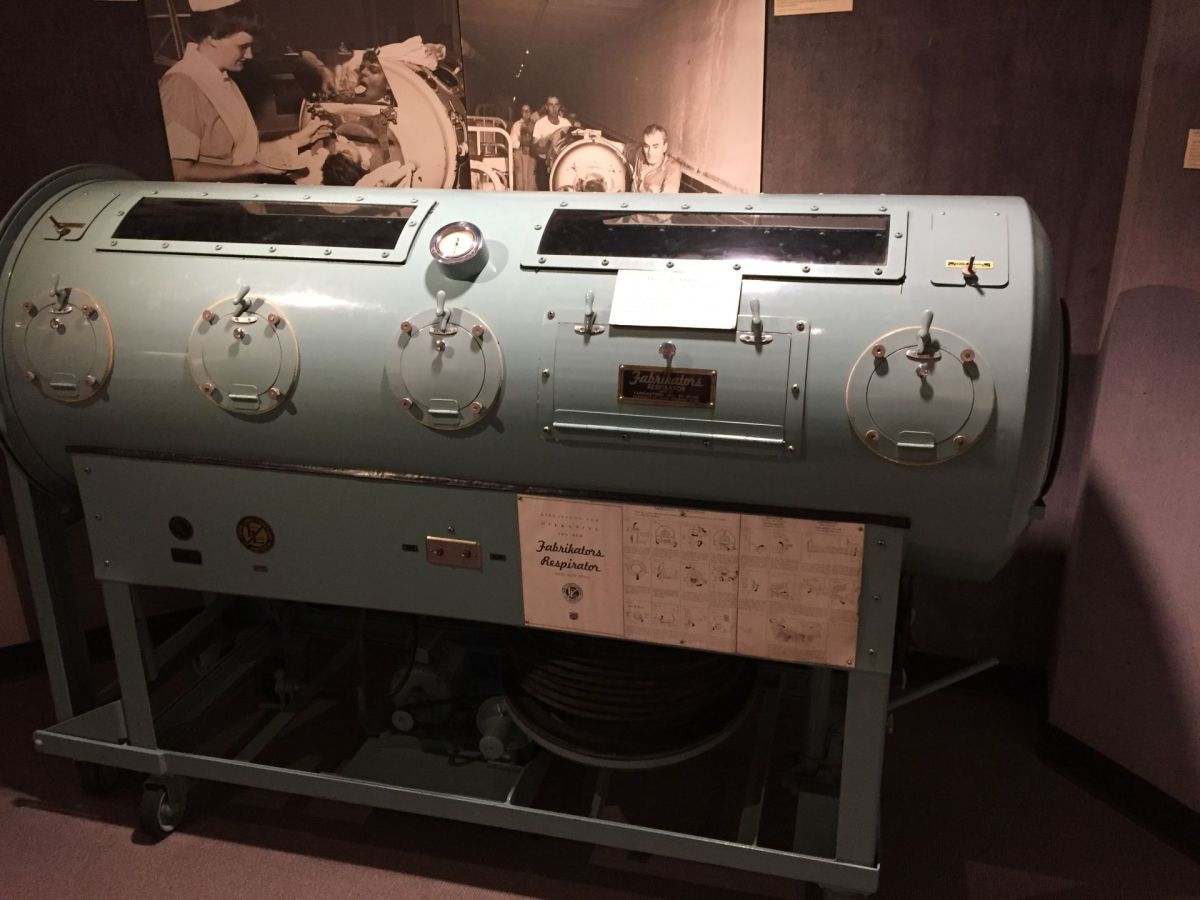
I have been reading the public comments on the Iowa Legislature bill HF 2171 that, if passed, would eliminate the requirement for vaccines in public schools against many diseases such as poliomyelitis, diphtheria, pertussis, tetanus, rubeola, rubella, and varicella. People are overwhelmingly opposed to it and it’s beyond me how it got past the first funnel.
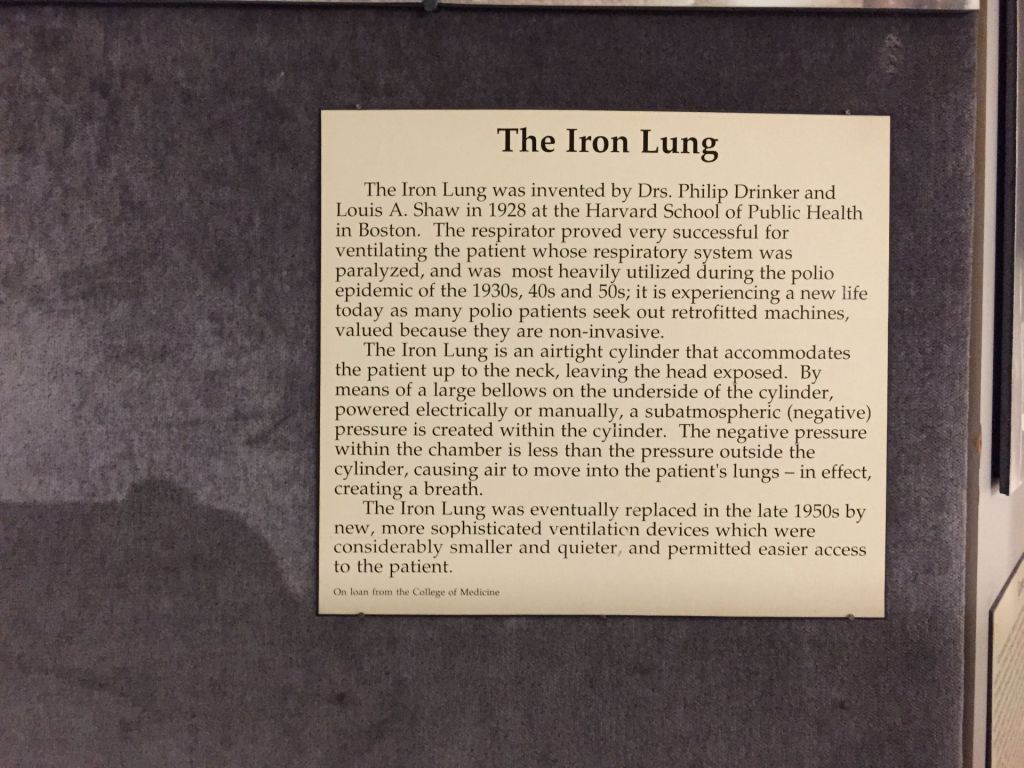
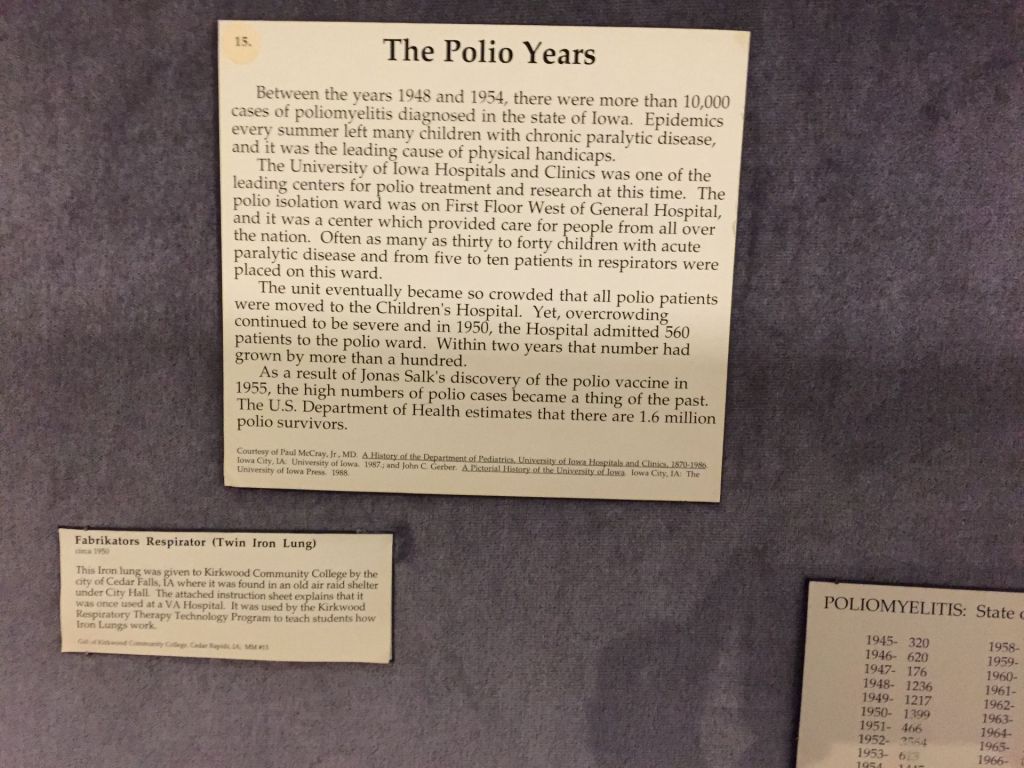
I’ve added some photos documenting the history of polio from the University of Iowa Health Care Medical Museum.
Iowa Legislature Ivermectin Bill A Game of “Captain, May I?”

I’ve been comparing the Iowa legislature bills on allowing ivermectin to be available over-the-counter in pharmacies. There were two of them and then there was one.
In the first bill, HF 2056, the language in it seemed to strongly direct pharmacists to make ivermectin available by using the word “shall”:
- ” The medical director of the department shall establish a standing order authorizing the dispensing of hydroxychloroquine and ivermectin by a pharmacist.
Notwithstanding any provision of law to the contrary, a pharmacist shall dispense hydroxychloroquine or ivermectin to a patient who is at least eighteen years of age, upon the request of a patient, pursuant to a standing order established by the medical director of the department in accordance with this section.”
The bill goes to say that “A pharmacist shall be immune from criminal and civil liability arising from any damages caused by the dispensing or use of…” these agents.
In Governor Reynolds version of the bill (included in HF 2676, successor to HSB 964), at least today, uses the word “may”:
“Sec. 17. NEW SECTION. 126.24 Ivermectin—prescription drug order not required.
- A pharmacist or pharmacy may distribute ivermectin for human consumption as an over-the-counter medicine.
- A pharmacist or pharmacy shall not be subject to professional discipline or civil or criminal penalties for the distribution of ivermectin pursuant to this section.”
I think the word “may” in Governor Reynolds’s bill implies a pharmacist can distribute ivermectin, but is not necessarily required to do so. In the HF 2056 bill (which died in the first funnel) the word “shall” implies the pharmacist must do so. Hydroxychloroquine is not mentioned in the governor’s version of the bill.
Although neither of these bills mentioned why the ivermectin bill is being introduced, I think it’s clear that some people think it could be an alternative to vaccines for Covid-19. Because research shows ivermectin is ineffective for treating Covid-19 and because they’re not FDA approved for that, I doubt any pharmacist would choose to do what the bill says.
This seems to be turning into a weird game of “Captain, May I?” I think the majority of pharmacists would rather not play.
Iowa Legislature Offering Cheese and Crackers on the Bill of Fare
I heard a song entitled “Cheese and Crackers” on the Big Mo Blues Show last night. I’ve heard a few times over the years, but I never looked up what it meant until today.
The song was originally written by a rockabilly singer named Hayden Thompson, although I’ve only heard it sung by blues artist Roscoe Gordon. According to a Reddit social media thread, “Cheese and Crackers” was the B side of a record by Thompson and the A side was “Shoobie Oobie.” Thompson couldn’t find anyone to arrange the “Cheese and Crackers” lyrics at a recording studio and left in a huff, leaving the lyrics on the piano.
Roscoe found it and put it in an R&B arrangement. Billboard magazine called it the strangest new release of the week. The song is about a guy repeatedly being offered cheese and crackers although he doesn’t like or want them. According to a Wikipedia article, the term “cheese and crackers” is a kind of mild swear word chilled down from “Jesus Christ.”
That’s funny, because that’s how I feel about all the anti-vaccine bills coming out of the Iowa Legislature this year. One of them is SF 2095, which seeks to penalize private postsecondary colleges and universities if they don’t accommodate students who want to be exempt from all vaccines for any reason and to find clinical training programs who will accept them. An excerpt from the bill:
“A postsecondary school offering a degree requiring a clinical rotation shall, upon request of a student enrolled in the degree program, identify a clinical rotation placement where the student will be permitted an exemption from any vaccination requirements imposed by the placement location during the duration of the student’s clinical rotation.
A postsecondary school not in compliance shall not qualify as an eligible institution for the purposes of Iowa tuition grant.”
The other punishment could be a fine. Unless I’m looking on the web in the wrong place, I don’t find any such facility anywhere in Iowa. That would mean the postsecondary private school would be punished for something it can’t control. I’m pretty sure that would be called unjust—or maybe tricky if the goal is to coerce clinical training program leaders to loosen up their vaccine exemption policies. Right now, the only exemptions are religion or medical.
This sounds like the Iowa legislature is offering us cheese and crackers. No thank you.
Update to the Anti-Vaccine Bills in Iowa Legislature

This is just a quick update to the Iowa legislature anti-vaccine bills as far as which ones have passed what is called the first funnel. Here’s a link to the definition of a funnel.
Which bills got past the first funnel:
SF 2095: This bill is about private colleges or universities that would be punished if they don’t make accommodations for students in health care education program who want to avoid getting vaccines.
HF 2171: This bill would remove the requirement for children in primary and secondary schools to get vaccinations. I think this bill is dangerous and unnecessarily puts children at risk for infectious diseases including diphtheria, pertussis, tetanus, poliomyelitis, rubeola, rubella, and varicella.
Which bill didn’t get past the first funnel:
HF 2287: This was the bill that sought to make vaccine manufacturers who want to sell their products in Iowa give up their immunity from lawsuits under the Childhood Vaccine Injury Act.
I couldn’t find out where the ivermectin over-the-counter bills (HF 2056 and HSB 694) were in the funnel as of today.
That make 5 bills in the Iowa legislature that are anti-vaccine-5 bills too many.
Iowa Legislature Bills I Could Live Without
I should stop reading the news. I’ve just found a couple of other Iowa Legislature bills that are anti-vaccine.
One of them is the HF 2287 I mentioned yesterday that would make vaccine manufacturers steer clear of Iowa altogether.
Another two I just discovered today:
HF 2171: This one which seeks to make vaccines for school age children voluntary. No child in elementary or secondary school in Iowa would have to be vaccinated against diphtheria, pertussis, tetanus, poliomyelitis, rubeola, rubella, and varicella. This is not safe for anyone.
SF 2095: This one seeks to exempt students from vaccines in medical, nursing, or other health care-related degree programs.
There’s a news article about SF 2095 which makes it clear what it is about. I don’t understand why a person studying medicine or any other health care-related degree program would not need to get vaccinated against communicable diseases. This bill would require private schools to provide some other alternative training program instead of those that require vaccinations. If they don’t, they’d be penalized, either by losing access to the Iowa Tuition Grant Program—or getting fined. None of that makes sense to me. If you’re in training to be a doctor, you should get vaccinated. If you don’t understand why vaccinations are vital to practicing medicine, you shouldn’t be in medicine.
If I sound like a curmudgeon about all this, so be it. I’m a retired doctor and I graduated from the University of Iowa College of Medicine in 1992. I spent my career practicing consultation-liaison psychiatry, so I was always at the interface between medicine and psychiatry. It was always a challenge for me to balance the art and science of medicine. And I didn’t always do it very well.
But I’m puzzled by what looks like an awkward imbalance in the view of medicine today. I’m a little cranky about it, and I like to think my age entitles me to react that way sometimes. I could add a quote from William Osler here, but I’m more prone to jokes as a I get older, probably because I know I’m no wiser than anyone else.
Did you hear Chuck Norris got the Covid vaccine? The vaccine is now immune to everything.
Iowa Vaccines and Legislature Proposed Bill Deja Vu

I see we have yet another bill introduced in the Iowa legislature seeking to make vaccine manufacturers liable for “design defects” resulting in injuries related to vaccines. This feels like déjà vu. Last year HF 712 targeted the Covid 19 vaccine. The bill died in the funnel. This year, the same sponsors introduced HF 2287—which is a similar bill that would target all vaccines.
One news story indicated that the sponsors were open to adding an amendment that would allow vaccine manufacturers to distribute vaccines in Iowa as long as patients sign a form that waives their right to sue the manufacturer as long as they are informed of the risks. I’m not sure how the forms would be made available to the public.
I thought patients, under the National Childhood Vaccine Injury Act of 1986, already have access to the Vaccine Injury Compensation Program (NVICP). Even if they don’t get compensated through that program, they can still sue the manufacturers. I thought the “design defect” issue had been dealt with.
This new bill broadens the products in that it looks like it includes all vaccines, even those children typically get. There are already many parties have gone on record opposing HF 2287, including but not limited to:
Pharmaceutical Research and Manufacturers of America
Iowa Medical Society
Iowa Pharmacy Association
Iowa Association of Rural Health Clinics
Iowa Public Health Association
Iowa Chapter-American Academy of Pediatrics
I think vaccine manufacturers will avoid Iowa if this bill becomes law. It could lead to an uptick in the communicable diseases burden, as though we need any more of that.
Update to the Iowa Legislature Bill to Make Ivermectin Available Over the Counter
Pursuant to my previous post about the debate in the Iowa Legislature over a proposed bill to make Ivermectin available over-the-counter (OTC) in Iowa, it looks as though hydroxychloroquine was recently dropped from the bill. Although few people say it out loud, in my opinion, it’s no secret that the main reason for the bill is to make ivermectin available to those who want to use it to treat Covid-19, despite there being no convincing evidence that it’s effective for that.
However, yet another bill was introduced by the governor which has its own ivermectin promotion section; so, there are now two ivermectin bills. They look the same.
The Iowa Board of Pharmacy is opposed to them because the language obliges them to comply with dispensing ivermectin to patients even if it might potentially harm them.
Although the bill removes penalties for dispensing ivermectin, there seem to be no specific penalties to pharmacists for refusing to do so. About 3 years ago, a pharmacist refused to fill a prescription for ivermectin that was intended for treatment of Covid-19.
A similar bill in Utah was not passed about 4 days ago. Supporters of the bill appeared to be engaging in passing misinformation about ivermectin for Covid-19, claiming there was “plenty of data” supporting its effectiveness for it. In fact, the FDA has not approved its use for treatment of Covid-19.
I wonder if there might be a justification for a kind of civil disobedience by pharmacists by refusing to give OTC ivermectin to patients. The other question is what does the Iowa Board of Medicine think about this? Is it right to leave physicians out of the loop in this situation?
It seems ironic that a legislator who is an internist, Dr. Austin Baeth, is on the right side of this debate by opposing the bills, yet the state medical board seems to be silent. Would it be appropriate for the state medical board to take a public position about this issue as the pharmacy board has?
Groundhog Day Finally Explained
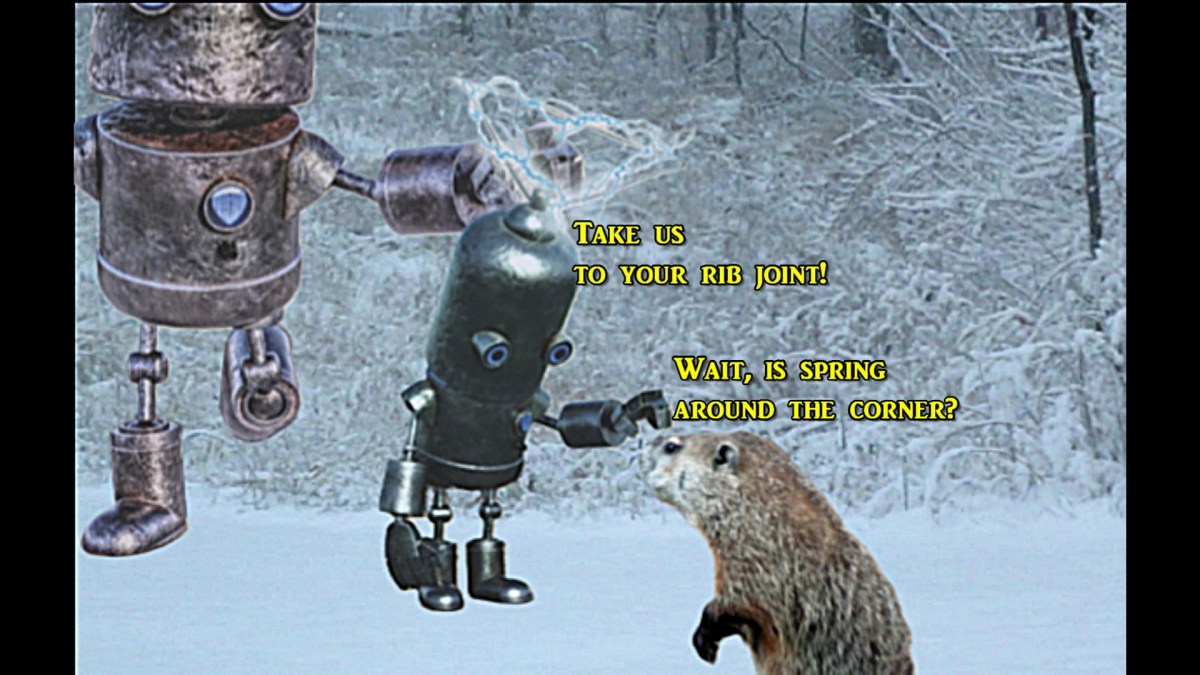
Well, by now everybody has heard the official news about what Punxsutawney Phil saw this morning since it’s Groundhog Day. On the other hand, the unofficial news is this: for some reason he saw extraterrestrials instead of his shadow. I know about it only because a drunken official calling me from the Pentagon spilled the beans to me and abruptly hung up just before he passed out.
Apparently, they were looking for a decent rib joint, which they’re always on the lookout for after traveling halfway across the galaxy.
You have to question the ETs preference for using so much fuel and creating missing time and hallucinations for thousands of people gathered for this time-honored and totally bogus event which the editors of The Old Farmer’s Almanac repeatedly try to debunk in a futile attempt to educate us about the seasons.
What almost nobody knows is that recently declassified government documents obtained by Brer Rabbit has led to the discovery of yet another conspiracy to hoodwink the American people about the ETs preoccupation with finding the best BBQ rib joint in the galaxy, which is genetically linked to their inability to distinguish humans from woodland creatures whose only real purpose in life is to dig holes in the ground so they can secretly write books circulated only amongst groundhogs about how silly it is for humans to call them ridiculous names like “whistle pigs.”
The truth is groundhogs know perfectly well how the seasons change and it has nothing to do with them—it’s all about the tooth fairy. But…ETs can’t handle the truth, as Col. Jessup has repeatedly pointed out in countless memes and gifs over the years.
We can only hope this deplorable state of affairs will be rectified when scientists eventually back engineer and reverse the polarities of the device (which is, trust me, stored in a cardboard box in a garage in Area 51) ETs use to hypnotize the criminals amongst their own kind into endlessly flying around in their souped up Tic-Tac UFOs in the absolutely pointless search for the perfect rib joint—all because the ET leaders can’t come up with a better solution to close the gaps in their worthless criminal justice system.
I hope I have made all this clear. Happy Groundhog Day!
 Go Retire Psychiatrist