I just sat through the two and a half hour long House Committee Oversight and Accountability hearing dramatically entitled: “Unidentified Anomalous Phenomena: Exposing the Truth.” The impression I got is that somebody still thinks we can’t handle the truth.
This is the second congressional hearing on UAPs I’ve seen. I have to admit, I thought of Agent K’s line to a low ranking MIB agent in the movie Men in Black 3. It’s in the scene in front of what’s obviously a flying saucer as Agent J is administering a neuralyzer blast to the unlucky human witnesses, who will of course forget what they just saw:
“Check the composition of the fuel units and run a scan on the surface deposits. I want to know who was driving that thing.” Me too.
I don’t think this meeting was much different than the one last July. There were 4 witnesses, one of whom was Luis Elizondo (“I believe what I believe in.”). There were quite a few “I don’t know” and “I’d be happy to answer that question in a closed session” type of answers.
Dr. Gold was the scientist who seemed to play a role similar to retired Commander David Fravor played last year, with an engaging, good humored, “stick to the facts” demeanor.
Nobody talked much about the closed session meetings the previous group had after last year’s meeting, except to point out that the “overclassification” of information about UAPs continues and we still don’t know “…who was driving that thing.”
Yesterday, Sena and I talked about a recent news article indicating that a federal judge ordered the Environmental Protection Agency (EPA) to review the allowed level of fluoride in community water supplies. The acceptable level may not be low enough, in the opinion of the advocacy groups who discussed the issue with the judge, according to the author of the article.
A few other news items accented the role of politicians on this issue. This seems to come up every few years. One thing leads to another and I noticed a few other web stories about the divided opinions about fluoride in “your precious bodily fluids.” One of them is a comprehensive review published in 2015 outlining the complicated path of scientific research about this topic. There are passionate advocates on both sides of whether or not to allow fluoride in city water. The title of the paper is, “Debating Water Fluoridation Before Dr. Strangelove” (Carstairs C. Debating Water Fluoridation Before Dr. Strangelove. Am J Public Health. 2015 Aug;105(8):1559-69. doi: 10.2105/AJPH.2015.302660. Epub 2015 Jun 11. PMID: 26066938; PMCID: PMC4504307.)
This of course led to our realizing that we’ve never seen the film “Dr. Strangelove Or: How I Learned to Stop Worrying And Love the Bomb,” a satire on the Cold War. We watched the entire movie on the Internet Archive yesterday afternoon. The clip below shows one of the funniest scenes, a dialogue between General Jack Ripper and RAF officer Lionel Mandrake about water and fluoridation.
During my web search on the fluoridation topic, one thing I noticed about the Artificial Intelligence (AI) entry on the web was the first line of its summary of the film’s plot: “In the movie Dr. Strangelove, the character Dr. Cox suggests adding fluoride to drinking water to improve oral health.” Funny, I don’t remember a character named Dr. Cox in the film nor the recommendation about adding fluoride to drinking water to improve oral health. Peter Sellers played 3 characters, none of them named Cox.
I guess you can’t believe everything AI says, can you? That’s called “hallucinating” when it comes to debating the trustworthiness of AI. I’m not sure what you call it when politicians say things you can’t immediately check the veracity of.
Anyway, one Iowa expert who regularly gets tapped by reporters about it is Dr. Steven Levy, a professor of preventive and community dentistry at the University of Iowa. He’s the leader of the Iowa Fluoride Study, which has been going on over the last several years. In short, Dr. Levy says fluoride in water supplies is safe and effective for preventing tooth decay in as long as the level is adjusted within safe margins.
On the other hand, others say fluoride can be hazardous and could cause neurodevelopmental disorders.
I learned that, even in Iowa there’s disagreement about the health merits vs risks of fluoridated water. Decisions about whether or not city water supplies are fluoridated are generally left to the local communities. Hawaii is the only state in the union which mandates a statewide ban on fluoride. About 90 per cent of Iowa’s cities fluoridate the water. Tama, Iowa stopped fluoridating the water in 2021. Then after a brief period of public education about it, Tama restarted fluoridating its water only six months later.
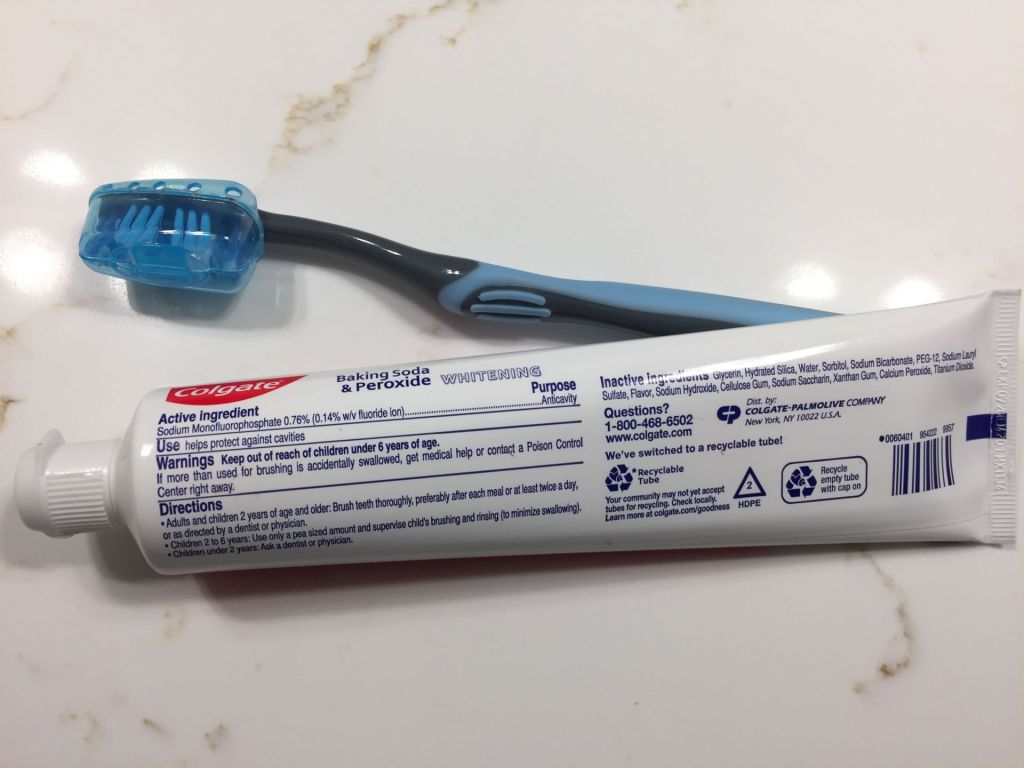
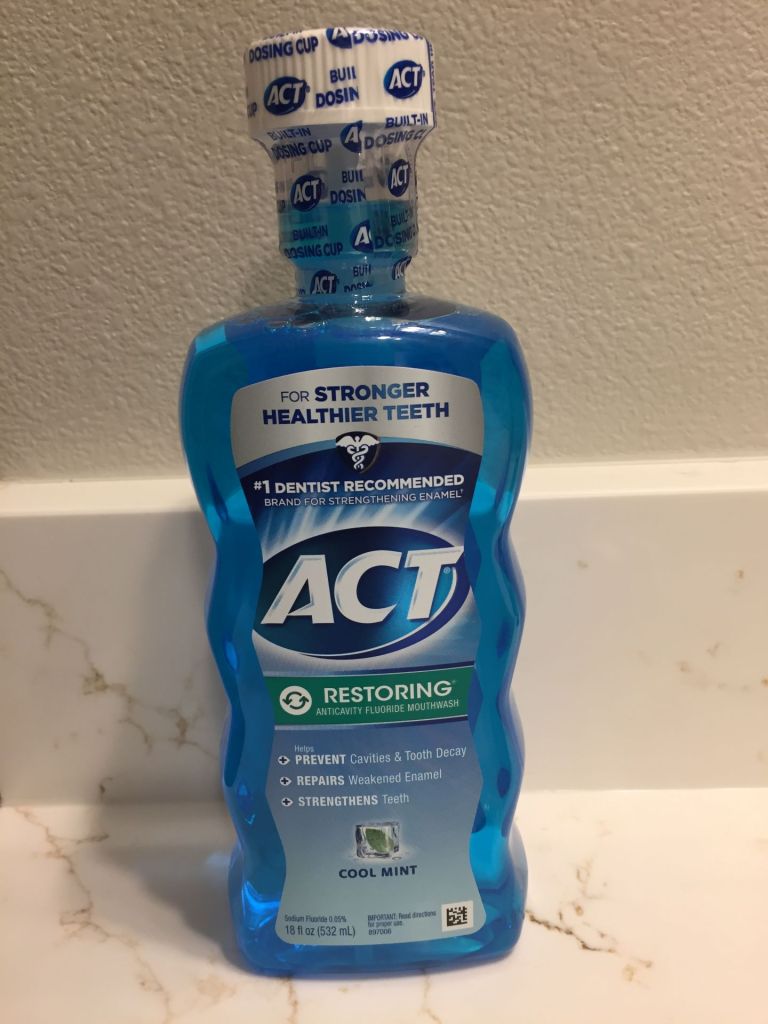
We use a fluoridated dentifrice and oral rinse every day. We drink fluoridated water, which we offer to the extraterrestrials who occasionally abduct us, but they politely decline because of concern about their precious bodily fluids.
I saw an article about the unreliable ability of humans to detect digital deepfakes in audio and video productions (Mai KT, Bray S, Davies T, Griffin LD. Warning: Humans cannot reliably detect speech deepfakes. PLoS One. 2023 Aug 2;18(8):e0285333. doi: 10.1371/journal.pone.0285333. PMID: 37531336; PMCID: PMC10395974.).
I was a little surprised. I thought I was pretty good at detecting the weird cadence of Artificial Intelligence (AI) speech patterns, which I think I can distinguish pretty well. Maybe not.
And there are some experts who are concerned about AI’s ability to mimic written and spoken grammar—but it continues to make stuff up (called “hallucinations”). In fact, some research shows that AI can display great language skills but can’t form a true model of the world.
And the publisher of the book (“Psychosomatic Medicine: An Introduction to Consultation-Liaison Psychiatry”) that I and my co-editor, Dr. Robert G. Robinson, MD wrote 14 years ago is still sending me requests to sign a contract addendum that would allow the text to be used by AI organizations. I think I’m the only who gets the messages because they’re always sent to me and Bob—as though Bob lives with me or something.
Sometimes my publisher’s messages sound like they’re written by AI. Maybe I’m just paranoid.
Anyway, this reminds me of a blog post I wrote in 2011, “Going from Plan to Dirt,” which I re-posted last year under the title “Another Blast from the Past.” Currently, this post is slightly different although it still applies. I don’t think AI can distinguish plan from dirt and sometimes makes up dirt, simply put.
And if humans can’t distinguish the productions by AI from those of humans, where does that leave us?
So, today we tried the new Wendy’s Pineapple Mango Frosty. Right off the top, I’ll tell you I couldn’t taste the pineapple mango flavor. It’s an OK vanilla. There are no bits of pineapple, mango, or Sponge Bob SquarePants in it.
That’s right, I said Sponge Bob SquarePants as in the cartoon guy who lives in a pineapple-shaped house—I guess.
I’ve never watched Sponge Bob and I don’t know anything about his pineapple house under the sea. I can tell you that the brown swirl in the bottom of the cup of the Frosty doesn’t taste like pineapple or mango. It’s vanilla with a brown swirl.
That doesn’t mean it’s bad. It just means I like vanilla. It’s how I feel about other ice cream flavors. If Sena doesn’t get vanilla for me, she gets Kemp’s Caribou Coffee flavored vanilla. Occasionally, I go crazy and eat French Vanilla.
There’s a meal you can get that follows the same Sponge Bob theme. It’s the Krabby Patty Kollab Burger, which comes with fries and a Pineapple Mango Frosty. I think the sandwich is a cheeseburger with Kollab, a top-secret sauce—likely thousand island. We skipped that. I’m still not sure why it’s called Kollab sauce, but the main ingredients are mayo and ketchup. If anybody knows what Kollab means, shout it out. All I can find is that it’s a store which makes picnic paraphernalia, like mats and maybe ants.
If Wendy’s ever makes a Kollab Frosty, look closely at it for anything that looks like little ants.
I like the Vanilla Frosty. I’m OK with Wendy’s Chocolate Frosty. But I’m going to hang on for the upcoming Salted Caramel Frosty in November.
I missed the October CDC meeting which resulted in a decision to recommend a 2nd dose of the Covid-19 vaccine for those 65 years and older and for the immunocompromised.
The Evidence to Recommendations (EtR) slides by Roper indicated Covid-19 circulates year round, peaking in late summer and winter.
The recommendation that those in the above-named populations should get 2 doses of Covid-19 vaccine spaced 6 months apart seems based on reasonable considerations.
It looks like the vaccine would be the same as the one previously recommended for this year.
I ran across a fascinating story about a study on Huntington’s disease published by members of the University of Iowa Health Care. The study examined how the Huntington’s disease gene might enhance brain development and function early in life prior to the onset of the devastating disease. It was published in The Annals of Neurology:
I also found an abstract for a paper about Woody Guthrie, a famous American musician and activist who was very creative in his early life, but sadly succumbed to the ravages of Huntington’s disease when he was 55 years old. I couldn’t access the full article without paying for it but the abstract was intriguing because I wondered whether the author suspected something similar to the premise of the study:
Ringman JM. The Huntington disease of woody guthrie: another man done gone. Cogn Behav Neurol. 2007 Dec;20(4):238-43. doi: 10.1097/WNN.0b013e31815cfee4. PMID: 18091075. Abstract: Woody Guthrie was an American songwriter, musician, writer, and political activist who died with Huntington disease (HD) in 1967 at age 55. His relatively brief creative life was incredibly productive with countless songs and a tremendous volume of letters to his name. His personal life was similarly driven with Woody having had 3 wives and at least 9 children and an insatiable appetite for traveling the United States. In this essay, I explore Guthrie’s art in relation to the development of the overt behavioral changes and chorea that characterized his illness. Woody’s most productive time artistically was in the 5 years immediately preceding the onset of overt symptoms of HD. I hypothesize that subclinical HD may have been an important driving force behind Woody Guthrie’s creativity.
If anybody knows, please comment.
Woody Guthrie was certainly an important figure in the American history of activism as well as music.
Usually, I would share the music of some of the artists I mention on this blog. On the other hand, one of the co-authors of the University of Iowa paper mentioned above is Doug Langbehn, my former colleague, who’s an accomplished musician and statistician. So instead, I thought I’d share the talent of Doug and his band.
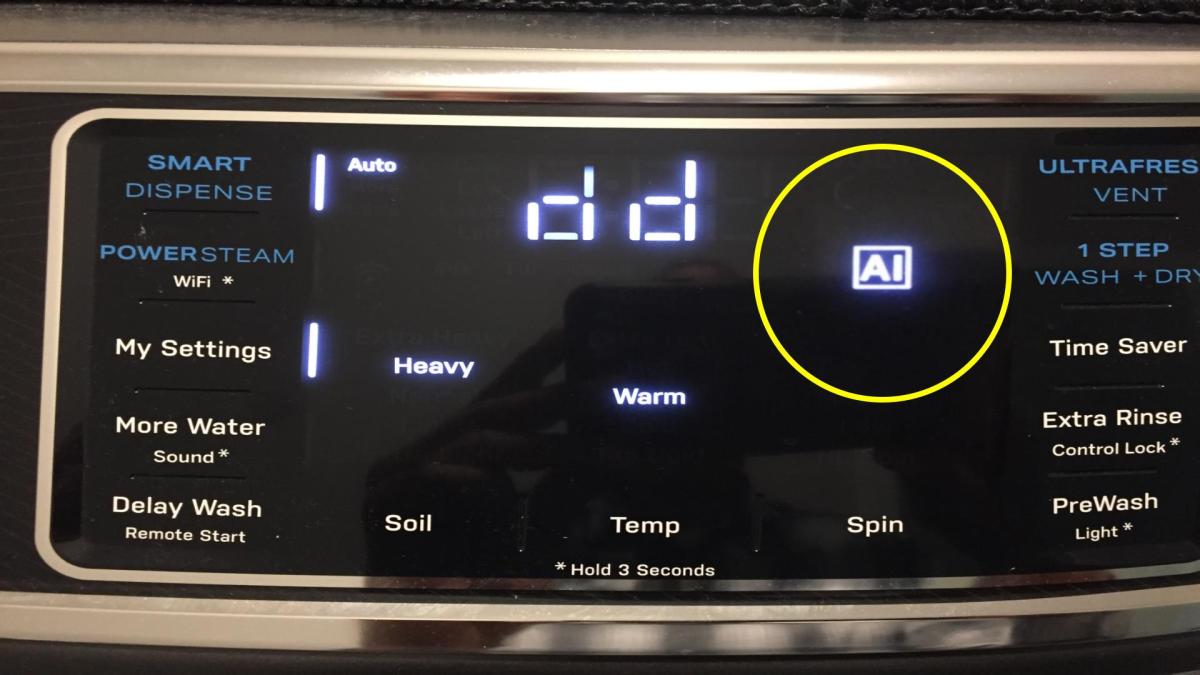
Recently we had somebody from the appliance store check our brand-new washing machine. The tech said “the noises are normal”—and then told us that many of the functions of the washer are run by Artificial Intelligence (AI). That was a new one on us.
Don’t get me wrong. The washer works. What sticks in the craw a little is that many of the settings we took for granted as being under our control are basically run by AI nowadays. I guess that means you can override some of the AI assist settings (which may be adjusted based on grime level, type of fabrics and the relative humidity in Botswana)—at least the ones not mandated by the EPA.
Incidentally, I tried to find some free images to use as featured images for this post. The problem is, many free pictures on the web are generated by AI these days, which is why I used the non-AI part of the Microsoft Paint app to make a crude drawing of an AI controlled washing machine.
I realize I’ll have to give up and accept the inevitable takeover of much of human society by AI. On the other hand, the prospect reminds me of the scene in an X-Files episode, “Ghost in the Machine.” A guy gets exterminated by something called the Central Operating System (COS).
Use extra detergent and add more water at your own risk.
The hurricane season this year continues to be deadly, and they are not named after women anymore. That stopped in 1979; how and why it stopped is quite a story in itself. The latest one is named Milton, which is a benign sounding name, but the storm is anything but that.
I was reminded of the custom of naming hurricanes after women last night when I reread E.B. White’s essay, “The Eye of Edna.” The essay is subtitled with place and date: Allen Cove, September 15, 1954. It was published in a collection “Essays of E.B. White in 1977 by HarperCollins. It was published originally in the New Yorker, according to an online quote from his essay.
I’m too young to remember Edna. When I did a web search of the term “The Eye of Edna,” I got many hits for both the essay and the hurricane. Reading White’s essay is a treat because he makes fun of how radio news reporters and the people in Maine who were listening to the radio reacted to the weather reports about Edna. Radio reporters often seemed disappointed about the lack of heavy rain and high winds.
I found the abstract of an article published a 1958 issue of the Journal of Meteorological Sciences which the driest summary of Hurricane Edna I could possibly imagine:
The eye region of Hurricane Edna (1954) is studied with the principal aid of radar and dropsonde data. Vertical sections show that over the eye there was a thick layer derived from the wall cloud which bounded the eye on the northeast. Precipitation fell from this upper layer into drier air beneath. A reasonable mechanism is thereby suggested by which large moisture values can become associated with air in the eye without producing the wet bulb potential temperatures or high winds characteristic of the rain-filled masses outside the eye.
Radar data giving the height of the “bright band” or melting level show that the warm core structure of Edna was most pronounced within the radius if maximum surface winds. The result is qualitatively confirmed by soundings and by comparison of surface winds and the speeds of radar weather elements in various portions of the storm. The radar photographs also show that heavy precipitation near the eye of Edna was bounded sharply in the western semicircle along an east-west line through the center of the storm. This boundary must be associated with a rather large change of vertical air speeds and therefore has special dynamic significance.”
If you read it the citation too quickly, you might misread the journal’s abbreviated name as my own. It’s actually J. Atmos—not J. Amos.
There is a much more vividly emotional account of Hurricane Edna in the Vineyard Gazette’s 2014 online story, along with a video.
The bottom line is hurricanes are deadly storms, no matter what people name them. Everybody, including E.B. White, would agree on that.
The University of Iowa Stead Family Childrens Hospital in Iowa City has ranked in 9 pediatric specialties, including pediatric behavioral health by U.S. News & World Report!
The short answer to the question above is “No, especially if you’re not tech savvy.”
I’m not tech savvy by any means and I quit downloading Windows preview updates long ago when I read web articles saying they could be buggy and lead to a lot of frustrating computer problems.
The latest Windows preview update has caused computer woes again for many people, enough to make it the subject of news reports.
You’ll find some experts saying you can hide the preview updates by pressing some buttons. And the Artificial Intelligence (AI) response to a web search about the issue suggests you should download and install any and all updates without discriminating whether or not they are previews.
In my opinion, I think the safest response to the Windows update preview download announcement is to ignore it and wait for the actual finished update, which usually shows up during the second week of the month.








 Go Retire Psychiatrist