On April 18, 2023 the FDA posted an update on the Covid-19 updated bivalent vaccine and the upcoming immunization strategy for this fall. According to the announcement:
“In June, the FDA will hold a meeting of its VRBPAC to discuss the strain composition of the COVID-19 vaccines for fall of 2023. Much like the FDA does yearly with the influenza vaccines, the agency will seek input from the committee on which SARS-CoV-2 variants and lineages are most likely to circulate in the upcoming year. Once the specific strains are selected for the COVID-19 vaccines, the FDA expects manufacturers to make updated formulations of the vaccines for availability this fall.”
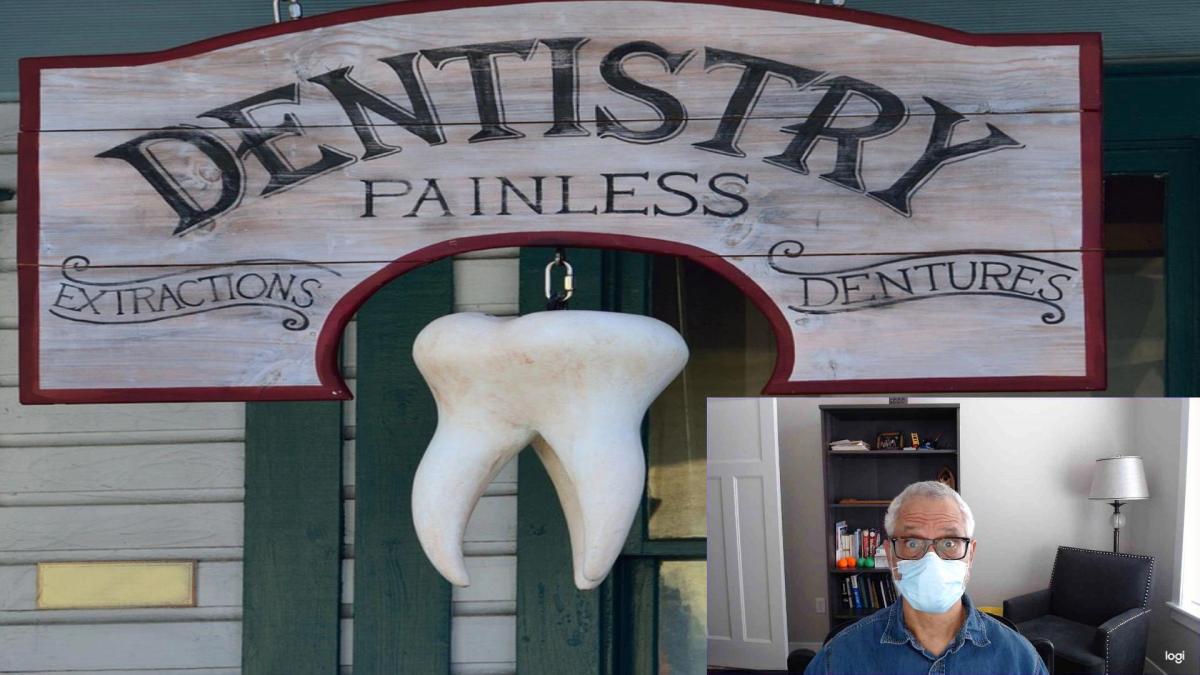
Tomorrow I’ll get to see how the new Covid-19 face mask policy works at the University of Iowa Hospital & Clinics. It goes into effect today. I’m going to see the dentist, as I have periodically for years, even during the Covid-19 pandemic. Of course, the idea of masked dental patients is ironic.
The rule change about masks being sort of optional is a little confusing.
It’s sort of optional because it looks like it’s not optional for unvaccinated health care employees. They still have to wear masks.
I wrote about this back in May of 2021, “Unmasked Means Fully Vaccinated?” That was back when bandanas were acceptable as face coverings.
So does being masked mean “not vaccinated?” It’s confusing because if masking is optional for patients and visitors, why are health care workers the exception? I’m not sure how anyone would enforce the policy.
If you can wear a mask just because you want to do that, how does that separate you from the unvaccinated person?
If masks are optional, then why are the entrance and exit policies not changing, including screening of patients, visitors, and staff? I didn’t see the guidance about what to do if anyone says they are symptomatic or unvaccinated and prefers not to wear a mask, other than to offer a mask (which is free!).
If it’s disrespectful to ask a patient or visitor to put on a face mask, why is it not disrespectful to require an unvaccinated health care worker to do so? There is one bullet point in the question-and-answer section about whether you can ask anyone to wear a face mask which says you can’t ask anyone, including “employee, colleague, patient, visitor, etc.” In the same section is the statement: “Whether or not to wear a mask is a personal decision that each person must make for themselves and for their own reasons.” Does that apply to getting a Covid-19 vaccine as well?
That said, I’m a staunch supporter of everyone getting a Covid-19 vaccine, if they don’t have medical or other exemptions. They don’t make you magnetic!
And I don’t think the recent Cochrane Review results on face masks really means they’re useless, which some news stories tend to convey. I think the Cochrane review does what most such reviews do, which is point out the problems with some controlled studies. And the reviews themselves may have unintended biases.
What’s the most important part of all this? Well, maybe the predicted snowstorm coming to Iowa tomorrow will prevent my dentist from getting to the clinic. And if that doesn’t work, maybe I could just exercise my right and privilege to wear my mask as a barrier to any nefarious procedures.
The FDA VRBPAC 178th annual meeting on future Covid-19 vaccine regimens includes two main discussion topics:
“Future periodic vaccination campaigns: Simplification of COVID-19 vaccine use:
Immunization schedule: Please discuss and provide input on simplifying the immunization schedule to authorize or approve a two-dose series in certain young children, and in older adults and persons with compromised immunity, and only one dose in all other individuals. Periodic update to COVID-19 vaccines:
Vaccine composition: Please discuss and provide input on the consideration of periodic updates to COVID-19 vaccine composition, including to the currently authorized or approved vaccines to be available for use in the U.S. in the fall of 2023.”
Among the members attending the web conference is University of Iowa Professor Stanley Perlman, MD, PhD, Departments of Microbiology and Immunology, Professor of Pediatrics, Mark Stinski Chair in Virology.
The meeting is today from 8:30 AM to 5:30 PM ET.
Update: Dr. Stanley Perlman MD, PhD from the University of Iowa will be the acting voting chairman of today’s meeting.
Update: Dr. Jerry Weir gave a clarifying and practical bird’s eye view of the issue at hand which began at 2:30 PM on the live play today (the meeting is being recorded). The questions and comments for Dr. Weir by Offit, Levy, and Chatterjee were also helpful to hear.
Update: Voting Question is:
“VRBPAC Voting question Simplification of current COVID-19 vaccine use:
Vaccine composition: Does the committee recommend harmonizing the vaccine strain composition of primary series and booster doses in the U.S. to a single composition, e.g., the composition for all vaccines administered currently would be a bivalent vaccine (Original plus Omicron BA.4/BA.5)?”
Remember, the 178th Annual Meeting of the FDA Advisory Committee on the future of Covid-19 Vaccination Regimens is this Thursday from 8:30 AM-5:30 ET.
The details so far include the voting question:
“Simplification of current COVID-19 vaccine use:
Vaccine composition: Does the committee recommend harmonizing the vaccine strain composition of primary series and booster doses in the U.S. to a single composition, e.g., the composition for all vaccines administered currently would be a bivalent vaccine (Original plus Omicron BA.4/BA.5)?”
The FDA 178th Meeting of the Vaccine and Related Biological Products Advisory Committee will meet in open session January 26, 2023 to discuss future Covid-19 vaccination regimens. The meeting will run between 8:30 AM-5:30 PM ET.
The CDC announced that a prelimary Covid-19 Vaccine Safety signal has been identified in a recent update on their website:
“Following the availability and use of the updated (bivalent) COVID-19 vaccines, CDC’s Vaccine Safety Datalink (VSD), a near real-time surveillance system, met the statistical criteria to prompt additional investigation into whether there was a safety concern for ischemic stroke in people ages 65 and older who received the Pfizer-BioNTech COVID-19 Vaccine, Bivalent. Rapid-response investigation of the signal in the VSD raised a question of whether people 65 and older who have received the Pfizer-BioNTech COVID-19 Vaccine, Bivalent were more likely to have an ischemic stroke in the 21 days following vaccination compared with days 22-42 following vaccination.
This preliminary signal has not been identified with the Moderna COVID-19 Vaccine, Bivalent. There also may be other confounding factors contributing to the signal identified in the VSD that merit further investigation. Furthermore, it is important to note that, to date, no other safety systems have shown a similar signal and multiple subsequent analyses have not validated this signal:
A large study of updated (bivalent) vaccines (from Pfizer-BioNTech and Moderna) using the Centers for Medicare and Medicaid Services database revealed no increased risk of ischemic stroke
A preliminary study using the Veterans Affairs database did not indicate an increased risk of ischemic stroke following an updated (bivalent) vaccine
The Vaccine Adverse Event Reporting System (VAERS) managed by CDC and FDA has not seen an increase in reporting of ischemic strokes following the updated (bivalent) vaccine
Pfizer-BioNTech’s global safety database has not indicated a signal for ischemic stroke with the updated (bivalent) vaccine
Other countries have not observed an increased risk for ischemic stroke with updated (bivalent) vaccines”
The CDC says it’s “very unlikely that the signal in VSD represents a true clinical risk…” The data and additional analyses will be discussed at the January 26, 2023 meeting of the FDA’s Vaccines and Related Biological Products Advisory Committee.
No changes are recommended to the current Covid-19 vaccination practice:
“CDC continues to recommend that everyone ages 6 months of age and older stay up-to-date with COVID-19 vaccination; this includes individuals who are currently eligible to receive an updated (bivalent) vaccine. Staying up-to-date with vaccines is the most effective tool we have for reducing death, hospitalization, and severe disease from COVID-19, as has now been demonstrated in multiple studies conducted in the United States and other countries:
Data have shown an updated COVID-19 vaccine reduces the risk of hospitalization from COVID-19 by nearly 3-fold compared to those who were previously vaccinated but have not yet received the updated vaccine.
Data have shown that the updated COVID-19 vaccine also reduces the risk of death from COVID-19 by nearly 19-fold compared to those who are unvaccinated.
Other preliminary data from outside the U.S. have demonstrated more than 80% protection against severe disease and death from the bivalent vaccine compared to those who have not received the bivalent vaccine.
Overall safety data for the bivalent COVID-19 vaccines are available here.
Once again, no change is recommended in COVID-19 vaccination practice, which can be found here.”
University of Iowa Health Care participated in research which demonstrates that people over age 65 who got the updated bivalent Covid-19 vaccine booster:
“84% less likely to be hospitalized with COVID-19 compared with unvaccinated people
73% less likely to be hospitalized with COVID-19 compared with people who received monovalent mRNA vaccination alone but had not received the bivalent booster dose.”
There was a countdown on Sunday for the new season for Highway Thru Hell. That’s the explanation for the featured image. The show has been on a while; this is season 11.
Season 11, for the first few episodes will deal with the catastrophic floods that devastated British Columbia in November of 2021. It took a huge toll on everybody, including the tow truck businesses. That’s one reason why I think, out of the plethora of reality shows that are faked on TV—Highway Thru Hell is not.
There are times when I wondered about the show’s authenticity, of course. One episode featured a potential new hire named “Jack Knife,” which brings to mind what the heavy tow trucks do, which is to drag huge jack-knifed semi-trucks out of ditches along the highways. The episode actually showed a segment of Jamie Davis, the owner of the major tow truck business on the show, in which he confirms that Jack Knife is the guy’s real name. It doesn’t look like he was hired.
There is a kind of irony about the kinds of jobs I’ve had and how similar or not they were to the Highway Thru Hell type of work.
You’d think that when I was working as a survey crewman back when I was a young, I would think it was similar to Highway Thru Hell. In fact, I worked for professional consulting engineers. I had a regular schedule with set hours. I had the right equipment for the right job. When work slowed down, meaning the company didn’t have a big contract for a highway relocation or whatnot, I and other guys would fill the time and to look busy, we would tie up redheads.
I’ve set up that joke before. We didn’t tie up red-headed women. You tied red ribbon as flagging around nails to use as measuring points for property or airport runway lines and the like. It makes them easier to see. If you were lucky and had some drafting skills, like me, in the winter months you’d work on drawing up survey plots and other plans for blueprints. I worked in pretty bad weather sometimes, in the winter. I never had to do anything that was dangerous. I got plenty of sleep.
But I never worked as hard as tow truck operators. When it’s slack time for them, some are laid off, which is never a good thing. But when they’re busy, they’re up all day and sometimes all night. The calls to haul trucks out of the ditch are unpredictable. And the conditions are always dangerous.
The irony is that it wasn’t until after I graduated medical school, got my medical license, and finished my residency in psychiatry that, as I look back on it now, that my work sort of resembled the chaos of workers on Highway Thru Hell. And being on call as a resident did sometimes result in my face nearly falling in my dinner because of sleep deprivation.
Like Highway Thru Hell, working as a psychiatric consultant was a lot like being like a fireman, which is similar to towing. I got called, often to emergencies, and had to work in conditions which were dangerous, mainly because of violent patients. Like towing, the work load was feast or famine. The job often called for creative solutions to apparently impossible challenges.
Much of the time, the Highway Thru Hell workers’ worst enemy was Mother Nature, just as it was in during the catastrophic floods of November 2021. For many psychiatrists and other physicians, it seems like the worst enemy was burnout, especially during the Covid-19 pandemic.
There is no quick fix in either case. We can work together and help each other.
I got a wonderful holiday greeting from one of my favorite past residents, Paul Thisayakorn, MD. He’s running a top-notch Consultation-Liaison Psychiatry (CL-P) Service and a brand-new C-L Fellowship in Thailand. I could not be more excited for him and his family. His wife, Bow, runs the Palliative Care Service.
He and Bow answered our holiday greeting to them. In it I remarked about my brief episode of mild delirium immediately following my eye surgery for a detached retina and mentioned a nurse administering the CAM-ICU delirium screening test. One of the questions was “Will a stone float on water?” I answered it correctly, but joked in the greeting message that I said “Yes, but only if it really believes.”
His remark was priceless: “We actually did a CAM-ICU in the morning when I received this email from you. I told my fellow and residents about you and what you taught me how to be a practical psychosomaticist. They also learned about how stone floats on the water.”
Paul made an awesome contribution to the Academy of C-L Psychiatry knowledge base during the height of the Covid-19 Pandemic. Things were tough there for a long time. Paul tells me they are still practicing some elements of the Covid protocol. Thailand is gradually opening back up.
This is the second year for his C-L Psychiatry fellowship program at the Chulalongkorn Psychiatry Department. They graduated their first C-L fellow and there are now two other fellows in training.
Under Paul’s strong leadership, they’ve gathered a group of interested Thai psychiatrists and founded the Society of Thai Consultation-Liaison Psychiatry just this past October.
And he was given an assistant professor position at the university. Paul and his team are in the featured image at the top of this post. Paul’s the guy wearing glasses in the middle.
He’s not all work and no play, which is a wonderful thing. He jogs and meditates and he has the most beautiful family, two great kids growing fast and a wife who is both a devoted partner and the leader of the Palliative Care service.
As a teacher, I couldn’t ask for a better legacy. I still have the necktie with white elephants that he gave me as a gift. In Thai culture, the white elephant is a symbol of good fortune (among other things), which is what Paul was wishing for me. Of course, the feeling is mutual.
I wish Paul well in the coming new year. And to all those who read my blog, have a happy new year.







 Go Retire Psychiatrist