Elevator Pitch for a Very Slow Elevator

This is a follow up to yesterday’s post about elevator pitches. I’m using one of the standard formats below. The first step is to find a really slow elevator.

Who am I?

I’m a retired consultation psychiatrist, slowly evolving beyond that backwards in time to something else I’ve always been. I’ve been a writer since I was a child. My favorite place was the public library. I walked there from my house. I stayed there as long as I could. It was place of tall windows where I could look out and see trees which swayed like peaceful giants. I borrowed as many books as I could carry in my skinny arms and walked all the way back home. Then I picked up a pencil. I wrote short stories which I bound in construction paper. I read them to my mother, who always praised them and called me gifted whether I deserved it or not. I lived inside my head. My inner world was my whole world.

What problem am I trying to solve?

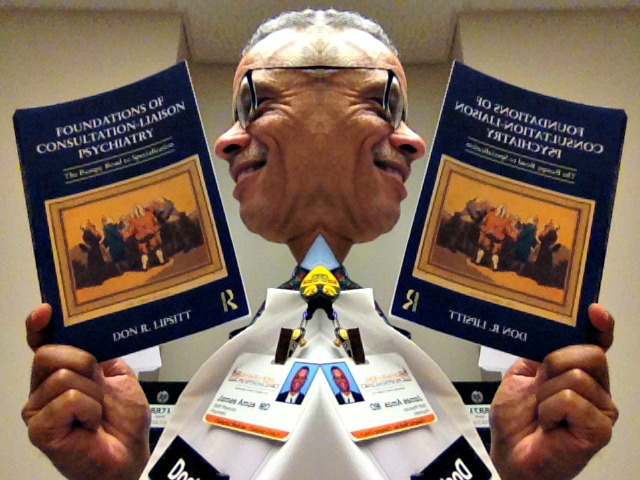
The problem was that I forgot who I was as I got older. I forgot for a long time about being a writer. I evolved into the outer world, adopting other forms. I put down the pencil, but never for very long. I changed what I did and made, but I always lived in my head. People told me “Get out of your head.” I tried, but didn’t know how. I wrote less and less. When I did write, I realized that I was no genius, not gifted—but still driven to write. I was so busy in college, medical school, residency, and in the practice of consultation psychiatry, I didn’t write for a long time. But later I returned to it as the main way to teach students. I even co-edited and published a book, Psychosomatic Medicine: An Introduction to Consultation-Liaison Psychiatry, with my former department chair, Dr. Robert G. Robinson. On the Psychiatry Department web page, in the Books by Faculty section, the book is in the subsection “Classic.” Inside the cover of my personal copy is a loose page with the quote:

A classic is something that everybody wants to have read and nobody wants to read.

Mark Twain

I’m pretty sure I put it there. Part of the preface was my idea because of my admiration for Will Strunk, who I learned about in an essay by E.B. White (“Will Strunk,” Essays of E.B White, New York, Harper Row, 1977). We informally called the work The Little Book of Psychosomatic Psychiatry:

The name comes from Will Strunk’s book, The Elements of Style, which was, as White says, “Will Strunk’s parvum opus, his attempt to cut the vast tangle of English rhetoric down to size and write its rules and principles on the head of a pin. Will himself hung the title “little” on his book and referred to it sardonically and with secret pride as “the little book,” always giving the word “little” a special twist, as though he were putting a spin on a ball.”

I guess our little book was, in a way, my own parvum opus.

Obviously, I don’t write the way Strunk would have wanted. But it’s my way, and I’m finding my way back to it, back to the path I was on in the beginning of my life, back to who I am.

What solution do I propose?

Almost two years ago, my solution to the challenge of rediscovering who I am, I suppose, was interrupting my medical career, but that would be dishonest. I did it because of my chronological age or least that was what I told myself. Burnout was the other reason. That said, despite my love of teaching students, I missed something else. And I knew if I kept working as a firefighter, which is what a general hospital consultation psychiatrist really is, I might lose what I loved best, which was writing for its own sake and for sharing it with others. It sounds so simple when I say it. Why has this been so hard, then? Obviously, I’m not going to recommend to those who are writers at heart lock themselves in a garret and do nothing but write. We would starve.

I think this is where mindfulness helped me. I couldn’t ignore my love of writing. I was better off just accepting it. But until I learned mindfulness in 2014 as a part of a Mindfulness Based Stress Reduction (MBSR), which I took mainly because I was struggling with burnout, I would either just ruminate or act on autopilot. I still do those things, just less often. Mindfulness is not miraculous. It’s not for everyone. It can be a part of transitioning to a healthier life. I exercise too. I don’t rigidly always without fail adhere to my schedule. I miss some days. I accept that and just go back and try again.

What is the benefit of my solution?

I think the benefit of adopting mindfulness and other healthy practices, at least for me, is that sooner or later (in my case much later), I made a sort of uneven peace with the loss of my professional routines, my professional identity, my work, as the single most important way to live. I still have a lot to learn, including how to be more patient, how to listen to others, how to get out of my head for what I know will be only a short time. Most of all, I’ve reintegrated writing into my life and it brings me joy. If you’re going through anything like that, then maybe seeing my struggle, my wins and losses, will help you keep going. It gets better.

This elevator pitch is way longer than 45 seconds.

Featured image picture credit Pixydotorg.

Snow Day Reflections on Elevator Pitches

I got up early this morning, partly because I knew I wanted to shovel the snowdrifts from last night, and partly because I heard my neighbor’s snowblower, shortly after 5:00 a.m.

I don’t have a snowblower. I’d rather shovel. It was the wet, heavy stuff. It was still coming down when I charged outside without breakfast, not even coffee.

While I was slogging away at the snow, I kept thinking about how to update my YouTube trailer. It’s been about a couple of years since I made the last trailer. I’m evolving since my retirement from the hospital where I worked as a consulting psychiatrist. I guess it’s time to update my About page on this blog as well.

The further I get in time away from work, the more I wonder what I’m evolving into. Work is not my focus. Sena and I got a big kick out of doing the Iowa cribbage board video. It brought back memories of our travels in Iowa.

I noticed my YouTube trailer is long by usual standards. It’s about 2 minutes. I found instructions for making it on YouTube. It’s supposed to be no longer than 30-45 seconds. Technically it’s supposed to be sort of like an elevator pitch.

I tried to develop elevator pitches back when I was working. There’s all kind of guidance for them on the web.

The framework is designed for those who are job seekers and students and salesmen. I tried googling “elevator pitches for retirees” and didn’t get any real hits.

I’m not trying to sell anything. I’m not competing for a job. The basic format for an elevator pitch could include:

  • Who are you?
  • What problem are you trying to solve?
  • What’s your proposed solution?
  • What’s the benefit of your solution?

I guess the answer to the first one is that I’m a retired psychiatric consultant. I’m not sure who in his right mind would be interested in that. If I shorten it to just “retiree,” that doesn’t seem to gain much traction.

The second one is even harder. Frankly, the problem I’m trying to solve is deeply personal although arguably could be applied to any retiree. I’ve been trying to adjust to no longer having a professional identity. I know George Dawson, MD remarked that he had little trouble with the meaningfulness issues with which one could wrestle after retiring from one’s profession, some after several decades of work.

I’m actually still wrestling with it and I would say it’s normal, at least for me. The loss of my professional identity was a real struggle for at least a year after my last day of work on June 30, 2020. I often failed to cover it up with a sense of humor, although I never fully lost that trait.

I don’t have a solution, and therefore can’t propose one. I have discovered other interests, which have gradually overtaken the one which kept my mind on the hospital most of the time, even when I was not at the hospital. I know I never really seriously considered the solution of going back to work in my former role. Some of my colleagues did, though. I hope they were happier when they did.

Since I don’t have a solution to the problem of adapting to retirement, I can’t really talk about the benefit. On the other hand, I notice I’m changing very slowly from being the firefighter psychiatric consultant to whatever I am now.

I think mindfulness meditation has been helpful, which I started in 2014 mainly as a way to cope with burnout. I was in a class with several others who had various reasons for being in the Mindfulness Based Stress Reduction (MBSR) class at the hospital. The class is no longer given there, and my teacher, Bev Klug, retired. However, resources for it are available elsewhere on the University of Iowa campus.

Maybe I have the beginnings for an elevator pitch after all.

Thoughts on Near-Death Experiences

There is a very interesting Medscape article on Near Death Experiences (NDEs), “Young Doctor Explores Near-Death Experiences – Medscape – Jan 13, 2022.” The story was written by Stephanie Lavaud. It was a transcript of an interview with a general practitioner from, Francois Lallier, MD, PhD, from Reims University Hospital in France. He conducted a retrospective study on NDEs for his general medicine dissertation. He discussed the results in his book, Le mystere des experiences de mort imminente (translation: The Mystery of Near-Death Experiences).

It has so far collected several interesting comments. I submitted a couple.

One of them was about a teacher and colleague of mine, Dr. Russell Noyes, Jr, MD, Professor Emeritus University of Iowa. He published several articles about NDE related to traumatic accidents, mainly in the 1970s. Lallier used the Greyson Near-Death Experience Scale for his study, and this scale was based on the work of Noyes and others.

He also participated in a Iowa Public Radio Show in 2018. Dr. Noyes collected over 200 personal accounts of NDEs but declined to publish them. I don’t recall that Dr. Noyes ever discussed his interest in this area with me.

My other comment was a correction to a mistake in my first comment, in which I said no patient I saw in my career as a consult-liaison psychiatrist ever reported a Near-Death Experience to me. I remembered one later. It occurred decades ago but I had forgotten about it. I included the patient’s NDE self-report in a grand rounds presentation, which was not mainly about NDEs.

As a consultation-liaison psychiatrist, I saw many patients with severe medical illness and I can recall only one patient who described an experience of NDE. Delirium was a common syndrome in most of the patients I saw, especially those in the intensive care units.

I think it’s possible that some of the cases of NDE might be attributable to delirium. Vivid and compelling hallucinations and delusions are common symptoms of delirium. The catatonic variant of delirium, which can be caused by severe benzodiazepine withdrawal and other psychiatric disorders can lead to the rare Cotard’s syndrome, marked by the nihilistic delusion that one is dead or even paradoxically immortal, has lost one’s body, is rotting internally or is without limbs and other body parts. The line between NDEs and neuropsychiatric disease can sometimes be thin. However, I don’t categorically dismiss NDEs as mental illness.

Dr. Noyes was very familiar with delirium. He was one of my first teachers in the practice of consultation-liaison psychiatry. He taught me and countless other trainees and early career psychiatrists about anxiety, somatoform disorders, and delirium. He knew the difference between neuropsychiatric illness and NDEs.

In the National Public Radio interview, he explained that after consulting with an attorney who cautioned about the possibility of lawsuits related to breach of confidentiality (obtaining releases of information consents after so much time had passed would have been next to impossible), he decided against publishing his collection of personal accounts of NDEs.

The Medscape article author pointed out that many doctors usually take little interest in the issue of NDEs with patients. Lallier said this is because it’s not normally a part of medical school curriculum. On the other hand, one doctor pointed out in the comment section that he had been conducting NDE research for a decade and had published a series of articles in a peer-reviewed journal. Dr. John Hagan III reported that the articles were included in a medical textbook for physicians in 2017, The Science of Near-Death Experiences, copyrighted by the Missouri State Medical Association (MSMA). Dr. Hagan added that the MSMA passed a resolution which was sent to the national US medical organizations asking that all medical school curricula include education on NDEs.

Even the titles of the books I mention in this post are interesting: The Mystery of Near-Death Experiences and The Science of Near-Death Experiences. The mystery vs the science—or the mystery and the science? They seem almost analogous to bookends, or maybe the Janus head, which is fun to speculate about.

The Janus head used to be the logo for the Academy of Consultation-Liaison Psychiatry (ACLP). It was replaced by some nondescript design for reasons I don’t understand. It reminds me of waves, which could lead to seasickness.

Janus was a god in Roman mythology and is typically represented as having two heads, each facing opposite directions. Janus was the god of doors, gateways, and transitions. He held a key in one hand to open gates and a staff in the other to guide travelers. He is said to represent the middle ground between the abstract and the concrete, between life and death—and perhaps between mystery and science.

University of Iowa Health Care Black History Month Lecture: “Pursuing Health Equity—A Call to Action”

Yesterday Sena and I listened to the Zoom lecture “Pursuing Health Equity—A Call to Action,” delivered by Louis H. Hart, III, MD from noon to 1:00 PM. Dr. Hart is the inaugural Medical Director of Health Equity for Yale New Haven Health System and Assistant Professor of Pediatrics and faculty member in the Yale School of Medicine. The lecture was sponsored by the University of Iowa Office of Diversity, Equity, and Inclusion in the College of Medicine. The introductory remarks about him were that his “leadership work addresses unjust structural and societal barriers that lead to inequitable health outcomes for the patients we serve.” His lecture was intended to “focus on efforts to ingrain an equity lens into clinical operations.”

Sena and I talked a lot about Dr. Hart’s presentation, as usual in a spirited way. We don’t always agree on everything and we’re not shy about saying so to each other. The lecture was recorded. However, since I don’t know when it might be publicly available, I looked on the web, and as luck would have it, I found a YouTube (see below) of a similar lecture he gave on June 22, 2021 in New York. The message was basically the same, and included many of the same slides.

Dr. Hart is very committed and passionate about health equity. Calls to action typically, as you’d expect, are delivered with passion, which sometimes entails emphasizing the “whys” of what must be done over the “hows” regarding implementation of changes to our health care system.

He began by letting the audience know that we’d all probably be a little uncomfortable about some parts of his message. He had a little original one-liner about comfort zones, which I unfortunately can’t recall exactly, but it conveyed a message similar to the one below:

A comfort zone is a beautiful place, but nothing ever grows there.

John Assaraf

In the YouTube video below, Dr. Hart reminds me of myself in my role as a consultation-liaison psychiatrist many years ago, when I was trying to persuade our general hospital medical staff to take delirium much more seriously, stop seeing it as a psychiatric problem, and treat it as a complication of severe medical disease. I got acquainted with a famous critical care doctor, Wes Ely, MD, who recently published a fascinating book, “Every Deep Drawn Breath.” He has worked tirelessly for most of his career to teach his colleagues, nurses, and trainees, especially those in critical care, to get the point he made so succinctly in his research notebook: “Hypothesis: The lung bone is connected to the brain bone.” I wish we could keep it that simple.

I was a crusader at the time. I often took nurses and doctors and medical students out of their comfort zones, driven to ingrain in them the delirium lens that would help save patients from developing dementia and dying from the deadly syndrome of delirium.

My approach sometimes probably didn’t sit too well with my peers and my trainees. My call to action for preventing delirium likely moved a few clinicians—but just as likely alienated others.

I can see how some people might get that feeling from Dr. Hart in the video, although when I compare him with others who beat the drum loudly about structural racism in general and get pretty confrontational, I think he does a pretty fair job of moderating that approach. I get his passion and his urgency, which is for the most part balanced by his impressive ability to articulate all the “whys” about what must be done. I was reasonably confident he could collaborate with all of the people he needs to figure out the “hows.”

Now, to throw you a curve ball, I’m giving you the link to a podcast in which, if I close my eyes, I nearly don’t recognize Dr. Hart as he describes in polished detail the “hows” of his plan to improve health equity. It seemed almost miraculous. He’s just as passionate about his mission, but the crusader gives way to the thorough, confident, caring and even witty administrator presenting his very sophisticated vision of what the health care system of the future might look like. See what you think.

Our Impressions of University of Iowa Free Webinar Yesterday: The Stories That Define Us”

We were overall delighted with yesterday’s presentation, University of Iowa Free Webinar: “Breaking Barriers: Arts, Athletics, and Medicine (1898-1947).” It’s one in a series of 4 virtual seminars with two more scheduled this month, which you can register for at this link.

February 15: Endless Innovation: An R1 Research Institution (1948–1997)

February 22: The Next Chapter: Blazing New Trails (1998–2047)

The moderator was university archivist and storyteller, David McCartney.

Presenters include:

Yesterday’s presentation was recorded and will be uploaded to The University of Iowa Center for Advancement YouTube site at a later date.

McCartney did an excellent job as moderator, although got stumped from a question from a viewer about who was the first African American faculty member in the College of Medicine. He’s still working on tracking that down. It wasn’t me. I’m not that old and I am not risen from the dead, as far as I can tell; but to be absolutely clear, you should ask my wife, Sena. I was able to google who was the first African American graduate of the University of Iowa law school: Alexander Clark, Jr. McCartney thinks he might have been the first University of Iowa alumnus, although he couldn’t confirm that.

On the other hand, I could have been the first African American consulting psychiatrist (maybe the only African American psychiatrist ever) in the Department of Psychiatry at UIHC—but I can’t confirm that. Maybe McCartney could work on that, too.

 There are a few words about me in the department’s own history book, “Psychiatry at Iowa: The Shaping of a Discipline: A History of Service, Science, and Education by James Bass: Chapter 5, The New Path of George Winokur, 1971-1990:

“If in Iowa’s Department of Psychiatry there is an essential example of the consultation-liaison psychiatrist, it would be Dr. James Amos. A true in-the-trenches clinician and teacher, Amos’s potential was first spotted by George Winokur and then cultivated by Winokur’s successor, Bob Robinson. Robinson initially sought a research gene in Amos, but, as Amos would be the first to state, clinical work—not research—would be Amos’s true calling. With Russell Noyes, before Noyes’ retirement in 2002, Amos ran the UIHC psychiatry consultation service and then continued on, heroically serving an 811-bed hospital. In 2010 he would edit a book with Robinson entitled Psychosomatic Medicine: An Introduction to Consultation-Liaison Psychiatry.” (Bass, J. (2019). Psychiatry at Iowa: A History of Service, Science, and Education. Iowa City, Iowa, The University of Iowa Department of Psychiatry).”

And in Chapter 6 (Robert G. Robinson and the Widening of Basic Science, 1990-2011), Bass mentions my name in the context of being one of the first clinical track faculty (as distinguished from research track) in the department. In some ways, breaking ground as a clinical track faculty was probably harder than being the only African American faculty member in the department.

I had questions for Lan Samantha Chang and for Dr. Patricia Winokur (who co-staffed the UIHC Medical-Psychiatry Unit with me more years ago than I want to count.

I asked Dr. Chang what role did James Alan McPherson play in the Iowa Writers Workshop. She was finishing her presentation and had not mentioned him, so I thought I’d better bring him up. She had very warm memories of him being her teacher, the first African American to win a Pulitzer Prize for fiction, and a long-time faculty member at the Workshop.

She didn’t mention whether McPherson had ever been a director of the Workshop, though she went through the list of directors from 1897 to when she assumed leadership in 2006. You can read this on the Workshop’s History web page. I have so far read two sources (with Wikipedia repeating the Ploughshares article item) on the web indicating McPherson had been acting director between 2005-2007 after the death of Frank Conroy. One source for this was on Black Past published in 2016 shortly after his death, and the other was a Ploughshares article published in 2008. I sent an email request for clarification to the organizers of the zoom webinar to pass along to Lan Samantha Chang.

I asked Dr. Winokur about George Winokur’s contribution to the science of psychiatric medicine. Dr. George Winokur was her father and he was the Chair of the UIHC Psychiatry Department while I was there. She mentioned his focus on research in schizophrenia and other accomplishments. I’ll quote the last paragraph from Bass’s history on the George Winokur era:

“Winokur, in terms of research, was a prototype of the new empirical psychiatrist. Though his own research was primarily in the clinical realm, he was guided by the new neurobiological paradigm (perhaps in an overbalanced way) that was solidifying psychiatry with comparative quickness. New techniques in imaging and revelations of the possibilities in genetic study and neuropsychopharmacology lay ahead. George Winokur had helped the University of Iowa’s Department of Psychiatry—and American psychiatry as a whole—turn a corner away from subjectivity and irregularity of Freudian-based therapies. And once that corner had been turned there was no going back.”

George Winokur was the department chair at University of Iowa Hospitals and Clinics from 1971 to 1990 and had a unique and memorable style. George also had a rough sense of humor. He had a rolling, gravelly laugh. He had strict guidelines for how residents should behave, only slightly tongue-in-cheek. They were written in the form of 10 commandments. Who knows, maybe there are stone tablets somewhere:

Winokur’s 10 Commandments

  1. Thou shalt not sleep with any UI Psychiatry Hospital patient unless it be thy spouse.
  2. Thou shalt not accept recompense for patient care in this center outside thy salary.
  3. Thou shalt be on time for conferences and meetings.
  4. Thou shalt act toward the staff attending with courtesy.
  5. Thou shalt write progress notes even if no progress has been made.
  6. Thou shalt be prompt and on time with thy letters, admissions and discharge notes.
  7. Thou shalt not moonlight without permission under threat of excommunication.
  8. Data is thy God. No graven images will be accepted in its place.
  9. Thou shalt speak thy mind.
  10. Thou shalt comport thyself with modesty, not omniscience.

Quinn Early has a lot of energy and puts it to good use. His documentary of the sacrifices of African American sports pioneers, including “On the Shoulders of Giants” (Frank Kinney Holbrook) is impressive.

There was a good discussion of the importance of the book “Invisible Hawkeyes: African Americans at the University of Iowa during the Long Civil Rights Era”, edited by former UI faculty, Lena and Michael Hill.

Sena and I thought yesterday’s presentation was excellent. We plan to attend the two upcoming webinars as well. We encourage others to join.

Retiree Musings

I’ve just discovered a web site that calculates the time that has passed since an event occurred. So, it calculated that I’ve been retired for 19 months—or 580 days, or 13,909 hours and so on. But I’m not counting.

What has been happening since then? I’ve had the usual problems with letting go of my professional identity, still having them in fact. I’ve posted a quote from another retired psychiatrist, H. Steven Moffic, MD.:

Plan for retirement, even if you don’t plan to retire. This means sound financial planning, developing other interests, and nurturing your relationships with significant others. Retire, even if you are not retired. Take enough time off periodically, and completely, with no connections to work, so that you can feel emotionally free from concerns about patients and practice. Of course, there is no reason to retire if you really love your work and relationships just as they are.

H. Steven Moffic, MD

There was also an article entitled “When Should Psychiatrists Retire?” written by Dinah Miller, MD. It was published in Clinical Psychiatry News January 2022 issue, Vol.50, No. 1 as well as Medscape on November 17, 2021. There is no consensus on the answer to the question, although there are several opinions by the commenters.

There are a lot of articles out there about what it’s like to lose your professional identity and the potential consequences of that. One thing I’m learning is that, while I may not be fully reconciled with losing my identity as a consult-liaison psychiatrist, I’m gradually starting to have more fun just being a clown sometimes, which pre-dated my becoming a doctor.

Maybe I just need to grow up, but my interests are everyday stuff I tend to make fun of.

Like dryer balls. Now, I don’t want to offend anybody who believes that dryer balls are effective at drying clothes quicker and the like—but the jury is still out on that claim.

In fact, there are many articles on the web, both pro and con about dryer balls. One of them is by somebody who did what sounds like an exhaustive study (just with his own laundry; you won’t find it published in any journal). He swears by them. Then there was the article which pretty much debunked dryer balls. It mentioned an “in-depth experiment” by an 8th grader in 2013 proving that they don’t reduce dryer time. My wife, Sena, says they don’t work. One ball got snagged in a fitted sheet pocket.

What I don’t get is why dryer balls look so much like the spiky massage balls (hint, it’s the green ball; the dryer balls also have holes in them). I think everybody just takes for granted that massage balls work. Sena says it works. She also has what she calls a massager which looks vaguely like a headless alien doing the downward dog yoga thing.

But what I find puzzling is why I can’t find any mention on line of clamshell eyeglass cases which have a steel trap-like spring-loaded hinge. You don’t want to get your fingers caught in them. They should have a safety protocol for use—so of course I came up with one.

Legacy Blogger

I just found out today that my blog’s theme was retired. I don’t know when WordPress retired it, but it gives me a familiar feeling about retirement. Sena gets the credit for giving me the idea of changing the theme (which is how my blog looks on the web) because of the new year. As I looked over the themes, I saw a tiny notice beside the name of my own. “Your blog theme has been retired. Consider getting a new one, you geezer!”

The notice didn’t really say that, of course, but that’s how I felt. I’ve been blogging since 2011. I’ve never had a theme that was retired. I realized that if I changed my theme now, I couldn’t go back to the old, familiar creaky, cob-webbed, old-fashioned theme I’ve had now with my second blog. This one has the theme (using the word in a different sense) of—retirement. In fact, come to think of it, the word “old-fashioned” was used in the WordPress article explaining why some themes get retired.

So, I started looking at the themes seriously today. Most of them had the word “minimalist” attached to them. Frequently, I read how great they were for my “business.”

Hey, I’m retired. I’m not in any kind of business. There seems to be a lack of emphasis on a theme for hobby bloggers, some of whom are retired geezers.

Anyway, I dropped my old-fashioned theme and put on a new one. While I was at it, I got rid of a lot of old widgets. WordPress calls them “Legacy Widgets.” I couldn’t find a clear explanation for why they call them that. I did find a definition on the web. Essentially, in this context, I think it denotes software that has been superseded but is difficult to replace because of its wide use. What’s wrong with sliders? I don’t mean little sandwiches. I mean the featured images with post titles that slide across the theme page, showing off my best posts—or at least what I think my best posts were. Really, no themes with sliders? That’s what minimalism leads to, I guess.

I’m a legacy consulting psychiatrist, meaning I’m retired—something else to feel ambivalent about. Anyway, I kind of like the new theme.

Take a Cup of Kindness and Say Goodbye to 2021

It’s been a quiet day around here. It’s New Year’s Eve. I got a great message from a former resident who has started his own Psychiatry Consultation Fellowship training program in Bangkok, Thailand. Dr. Paul Thisayakorn and his wife are welcoming 2022 with their 2 lovely children and hoping 2022 will be a better year, as we are. The Covid pandemic has been hard around the world.

Paul also looks forward to establishing a C-L Psychiatry academic society in Thailand in the coming year. Paul did his psychiatry residency at University of Iowa and his C-L Psychiatry fellowship in Cleveland. Sena and I wish him and his family all the best in the new year.

Today was quiet, but tomorrow the big snowstorm will come. We’ll be digging out all day because the forecast is for 5-8 inches, high wind gusts, and ice. It’s Iowa, after all.

But for tonight we’ll take a cup of kindness and say goodbye to 2021.

And if you like MacLean’s version of Auld Lang Syne above, you might have a listen to another with the Scottish lyrics translated.

My Definitive Journey Revisited

A couple of days ago, I got my retirement gift from The University of Iowa. It’s a about a year and a half late because of the Covid-19 pandemic, but it’s welcome nonetheless. Normally there is an Annual Faculty Retirement Dinner, but it had to be cancelled. It’s a stunningly beautiful engraved crystal bowl with the University logo on it. It came with a wonderful letter of appreciation. It reminded me of my blog post in 2019, “My Definitive Journey.”

It’s a definitive symbol of the next part of my journey in life. For years I’d been a fireman of sorts, which is what a general hospital psychiatric consultant really is. The other symbols have been the fireman’s helmet and the little chair I carried around so that I could sit with my patients. I have changed a little.

I still have my work email access, which I’m ambivalent about, naturally. I check it every day, partly because of Fear of Missing Out (FOMO), but also to delete the junk mail. I still get a lot of it. I get a rare message from former trainees, one of whom said it “pained” her to learn I’m now Professor Emeritus.

I have not seriously considered returning to work. That doesn’t mean I have not been occasionally nostalgic for some aspects of my former life.

The poem, “El Viaje Definitivo” by Juan Ramon Jimenez evokes mixed feelings and thoughts now. I have gone away. But in looking back at the past, I now see now that the birds didn’t always sing. The tree was not always green.

I don’t miss my former home, the hospital, as keenly now, which is now a much harder place to work since the Covid-19 pandemic began.

And there is little that is definitive about my journey forward from where I now stand. I’m a little less afraid than I was over a year and a half ago. And the birds sing where I am now, sometimes more clearly than before.

El Viaje Definitivo (The Final Journey)

… and I will go away.

And the birds will stay, singing

And my garden will stay

With its green tree

And white water well.

And every afternoon the sky will be blue and peaceful

And the pealing of bells will be like this afternoon’s

Peal of the bell of the high campanile.

They will die, all those who loved me

And every year the town will be revived, again

And in my circle of green white-limed flowering garden

My spirit will dwell nostalgic from tree to well.

And I will go away

And I will be lonely without my home

And without my tree with its green foliage

Without my white water well

Without the blue peaceful sky

And the birds will stay

Singing

                                –Juan Ramon Jimenez

Congratulations to 2021 UI Physicians Clinical Awards Winners

I was so happy to see the winners of the 2021 University of Iowa Physicians Clinical Awards winners. I have a special bias for a couple of them because I worked with them for years in my capacity as psychiatric consultant in the general hospital prior to my retirement in June of 2020.

Dr. Kevin Doerschug, MD, the winner of the Excellence in Our Workplace Award, actually rotated on the psychiatry consult service when he was a trainee. He and I saw each other frequently in the Medical Intensive Care Unit (MICU). He is one of the kindest doctors I have ever met. Dr. Dilek Ince, MD, the winner of the Best Consulting Provider Award, is a thorough and tireless clinician. As consultants, our paths often crossed in the hospital.

I congratulate all the winners. Iowa is so fortunate to have you.