I ran across this quote the other day: littera scripta manet. The English translation is, I think, “the written word endures.”
Not to dwell too much on the prosaic side of the issue which is that, for me, often the word has been blurred because of problems with my vision. I just had retinal detachment surgery a little over a month ago and I’m making a good recovery. But early on I had a lot of trouble with blurry vision, tearing, and light sensitivity.
Just the other night though, I was able to read a section of a book without having as much blurred vision as I did before the surgery when I looked up from the page at something distant. I’ve been wearing progressive lenses for many years and it probably got worse because of the detached retina, which was chronic or maybe acute on chronic.
Now to get beyond trivialities, I saw the quote above in an issue of the University of Iowa publication, Iowa Magazine. It was in the last Old Gold column of University Archivist, David McCartney. He retired in March of this year. The title was “Old Gold: The Enduring Power of the Written Word.”
He notes the Latin expression is on the seal of the U.S. National Archives and Records Administration. McCartney’s point is that technology can undermine as well as strengthen the power of the written word. He identities Horace as the originator of the expression, “the written word endures.”
I went pecking around the internet and found out that a lot of people think an educator named Neil Postman was the originator of this quote. What makes me doubt this is that the original is in Latin, which suggests a much older origin. He was born in 1931 and died in 2003. Interestingly, Postman criticized the effect of technology on thought and culture.
A website that seems dedicated to explaining English translations of Latin indicates that the quote comes from a longer expression: Vox audita perit, littera scripta manet, which translates to “the spoken word perishes, but the written word remains.” One contributor says the originator was Horace. Another insists that “littera” does not mean word at all, although concedes that the proposed translation is correct, nevertheless.
Further, there is a Wikipedia entry which cites the Latin expression differently, “verba volant, scripta manent,” which in English is “spoken words fly away, written words remain.” The author says the proverb originated from a speech of senator Caius Titus to the Roman Senate.
Anyway, McCartney points out that the world is becoming increasingly digitized and that the average website lasts only a little over two and a half years. Some important digital records have been lost, unreadable (blurred?) because of improper management.
My previous blog survived about 7 years but is lost. Maybe that’s not such a bad thing. My current blog is a little over 3 years old. So far, I’m beating the odds as far as typical longevity, but is it worthwhile?
Both written and digital records have strengths and weaknesses in terms of durability. And deciding what to preserve and how is essential to any society. We need good stewards to help us decide.
Good luck in your retirement, David McCartney. I’m sure the University of Iowa treasures your stewardship. Let the written word endure unblurred.
I was looking at an early version of the handbook of consultation-liaison psychiatry that eventually evolved into what was actually published by Cambridge University Press. I wrote virtually all of the early version and it was mainly for trainees rotating through the consult service. The published book had many talented contributors. I and my department chair, Dr. Robert G. Robinson, co-edited the book.
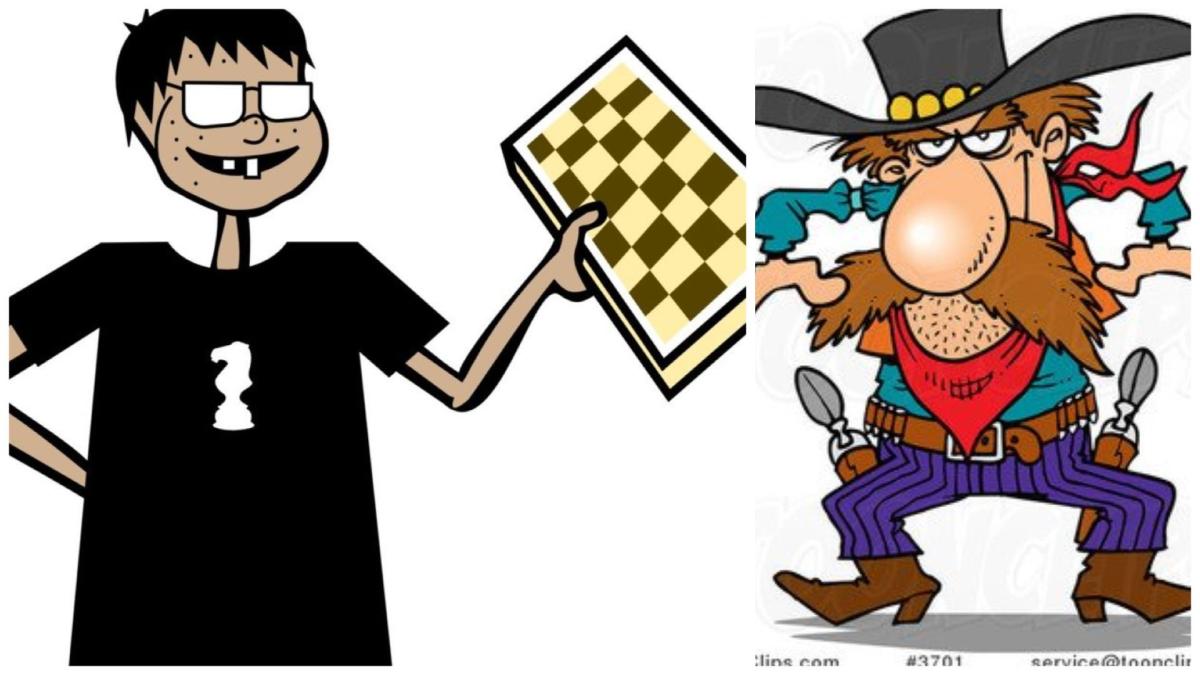
In the introduction I mention that the manual was designed for gunslingers and chess masters. The gunslingers are the general hospital psychiatric consultants who actually hiked all over the hospital putting out the psychiatric fires that are always smoldering or blazing. The main problems were delirium and neuropsychiatric syndromes that mimic primary psychiatric disorders.
The chess masters were those I admired who actually conducted research into the causes of neuropsychiatric disorders.
Admittedly the dichotomy was romanticized. I saw myself as a gunslinger, often shooting from the hip in an effort to manage confused and violent patients. Looking back on it, I probably seemed pretty unscientific.
But I can tell you that when I followed the recommendations of the scientists about how to reverse catatonia with benzodiazepines, I felt much more competent. After administering lorazepam intravenously to patients who were mute and immobile before the dose to answering questions and wondering why everyone was looking at them after the dose—it looked miraculous.
Later in my career, I usually thought the comparison to a firefighter was a better analogy.
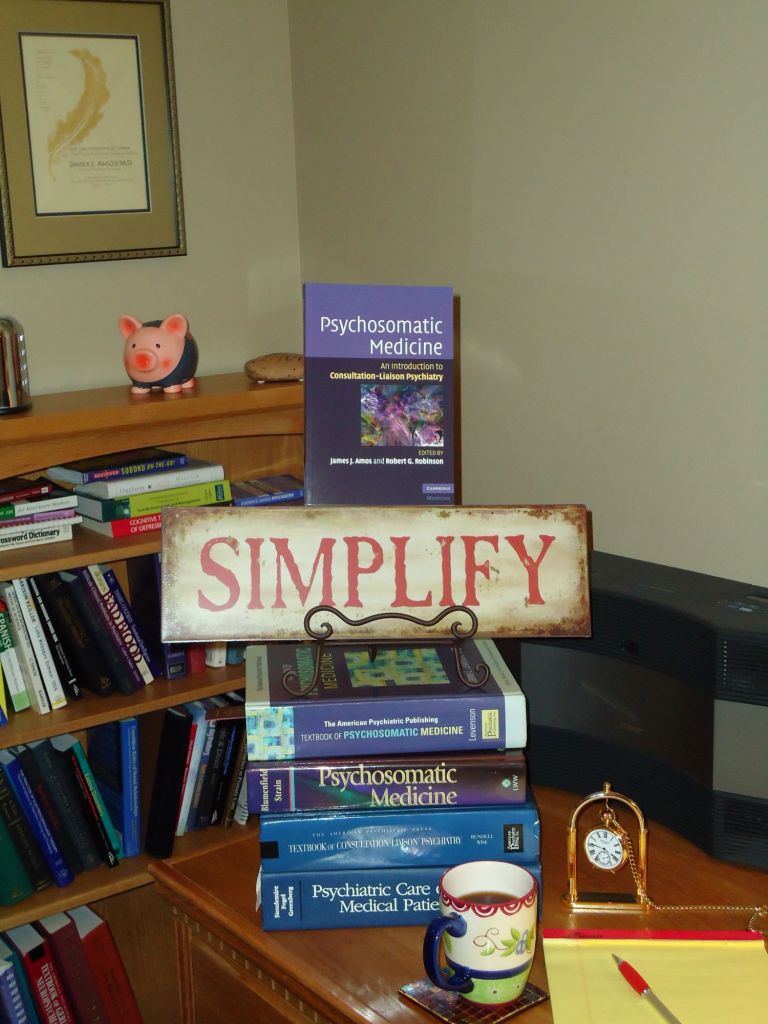
The 2008 working manual was called the Psychosomatic Medicine Handbook for Residents at the time. This was before the name of the specialty was changed back to Consultation-Liaison Psychiatry. I wrote all of it. I’m not sure about the origin of my comment about a Psychosomatic Medicine textbook weighing 7 pounds. It might relate to the picture of several heavy textbooks on which my book sits. I might have weighed one of them.The introduction is below (featured image picture credit pixydotorg):
“In 2003 the American Board of Medical Specialties approved the subspecialty status of Psychiatry now known as Psychosomatic Medicine. Long before that, the field was known as Consultation-Liaison Psychiatry. In 2005, the first certification examination was offered by the American Board of Psychiatry and Neurology. Both I and my co-editor, Dr. Robert G. Robinson, passed that examination along with many other examinees. This important point in the history of psychiatry began many decades ago, probably in the early 19th century, when the word “psychosomatic” was first used by Johann Christian Heinroth when discussing insomnia.
Psychosomatic Medicine began as the study of psychophysiology which in some quarters led to a reductionistic theory of psychogenic causation of disease. However, the evolution of a broader conceptualization of the discipline as the study of mind and body interactions in patients who are ill and the creation of effective treatments for them probably was a parallel development. This was called Consultation-Liaison Psychiatry and was considered the practical application of the principles and discoveries of Psychosomatic Medicine. Two major organizations grew up in the early and middle parts of the 20th century that seemed to formalize the distinction (and possibly the eventual separation) between the two ideas: the American Psychosomatic Society (APS) and the Academy of Psychosomatic Medicine (APM). The name of the subspecialty finally approved in 2003 was the latter largely because of its historic roots in the origin of the interaction of mind and body paradigm.
The impression that the field was dichotomized into research and practical application was shared and lamented by many members of both organizations. At a symposium at the APM annual meeting in Tucson, AZ in 2006, it was remarked that practitioners of “…psychosomatic medicine may well be lost in thought while…C-L psychiatrists are lost in action.”
I think it is ironic how organizations that are both devoted to teaching physicians and patients how to think both/and instead of either/or about medical and psychiatric problems could have become so dichotomized themselves.
My motive for writing this book makes me think of a few quotations about psychiatry in general hospitals:
“Relegating this work entirely to specialists is futile for it is doubtful whether there will ever be a sufficient number of psychiatrists to respond to all the requests for consultations. There is, therefore, no alternative to educating other physicians in the elements of psychiatric methods.”
“All staff conferences in general hospitals should be attended by the psychiatrist so that there might be a mutual exchange of medical experience and frank discussion of those cases in which there are psychiatric problems.”
“The time should not be too long delayed when psychiatrists are required on all our medical and surgical wards and in all our general and surgical clinics.”
The first two quotes, however modern they might sound, are actually from 1929 in one of the first papers ever written about Consultation Psychiatry (now Psychosomatic Medicine), authored by George W. Henry, A.B., M.D. The third is from the mid-1930s by Helen Flanders Dunbar, M.D., in an article about the substantial role psychological factors play in the etiology and course of cardiovascular diseases, diabetes, and fractures in 600 patients. Although few hospital organizations actually practice what these physicians recommended, the recurring theme seems to be the need to improve outcomes and processes in health care by integrating medical and psychiatric delivery care systems. Further, Dr. Roger Kathol has written persuasively of the need for a sea change in the way our health care delivery and insurance systems operate so as to improve the quality of health care in this country so that it compares well with that of other nations (2).
This book is not a textbook. It is not a source for definitive, comprehensive lists of references about all the latest research. It is not a thousand pages long and does not weigh seven pounds. It is a modest contribution to the principle of both/and thinking about psyche and soma; consultants and researchers; — gunslingers and chess masters.
In this field there are chess masters and gunslingers. We need both. You need to be a gunslinger to react quickly and effectively on the wards and in the emergency room during crises. You also need to be a chess master after the smoke has cleared, to reflect on what you did, how you did it—and analyze why you did it and whether that was in accord with the best medical evidence.
This book is for the gunslinger who relies on the chess master. This book is also for the chess master—who needs to be a gunslinger.
“Strategy without tactics is the slowest route to victory. Tactics without strategy is the noise before defeat”—Sun Tzu.”
References:
1. Kathol, R.G., and Gatteau, S. 2007. Healing body and mind: a critical issue for health care reform. Westport, CT: Praeger Publishers. 190 pp.
2. Kornfeld, D., and Wharton, R. 2005. The American Psychiatric Publishing Textbook of Psychosomatic Medicine. Psychosomatics 46:95-103.
Below is an old post from a previous blog that I published on June 6, 2010. Although the title in my record is simply PM Handbook Blog, there must have been another title. Maybe it should have been more like The Chicken Has Finally Laid an Egg (you’ll get the joke later).
There are two reasons for posting it today. One is to illustrate how the Windows voice recognition dictation app works. It’s a little better than I thought it would be. The last time I used it, it was ugly. I’m using it now because I thought it might be a little easier than trying to type it since I still have problems with vision in my right eye because of the recent retinal tear injury repair. So, instead of doing copy paste, what you’re seeing is a dictation—for the most part.
On the other hand, I’m still having to proofread what I dictate. And I still find a few mistakes, though much fewer than I expected.
The other reason for this post is to help me reflect on how far the fellowship has come since that time. It did eventually attract the first fellow under a different leader. That was shortly after I retired. It was a great step forward for the department of psychiatry:
“Here is one definition of a classic:
“Classic: A book which people praise but don’t read.” Mark Twain.
When I announced the publishing of our book, Psychosomatic Medicine, An Introduction to Consultation Liaison Psychiatry, someone said that it’s good to finally get a book into print and out of one’s head. The book in earlier years found other ways out of my head, mainly in stapled, paperclipped, spiral bound, dog eared, pages of homemade manuals, for use on our consultation service.
It’s a handbook and meant to be read, of course, but quickly and on the run. As I’ve said in a previous blog, it makes no pretension to being the Tour de Force textbook in America that inspired it. However, any textbook can evolve into an example of Twain’s definition of a classic. The handbook writer is a faithful and humble steward who can keep the spirit of the classic lively.
We must have a textbook as a marker of Psychosomatic Medicine’s place in medicine as a subspecialty. It’s like a Bible, meant to be read reverently, venerated, and quoted by scholars. But the ark of this covenant tends to be a dusty bookshelf that bows under the tome’s weight. A handbook is like the Sunday School lesson plan for spreading the scholar’s wisdom in the big book.
Over the long haul, the goal of any books should mean something other than royalties or an iconic place in history. No preacher ever read a sermon to our congregation straight out of the Bible. It was long ago observed by George Henry that there will never be enough psychiatric consultants. This prompts the question of who will come after me to do this work. My former legacy was to be the Director of a Psychosomatic Medicine Fellowship in an academic department in the not-so-distant past. Ironically, though there will never be enough psychiatric consultants, there were evidently too many fellowships from which to choose. I had to let the fellowship go. My legacy then became this book, not just for Psychosomatic Medicine fellows, but medical students, residents, and maybe even for those who see most of the patients suffering from mental illness—dedicated primary care physicians.
My wife gave me a birthday card once which read: “Getting older: May each year be a feather on the glorious Chicken of Life as it Soars UNTAMED and BEAUTIFUL towards the golden sun.” My gifts included among the obligatory neckties, a couple of books on preparing for retirement.
Before I retire, I would like to do all I can to ensure that the next generation of doctors learn to respect the importance of care for both body and mind of each and every one of their patients. That’s the goal of our book. And may the glorious chicken of life lay a golden egg within its pages to protect it from becoming a classic.”
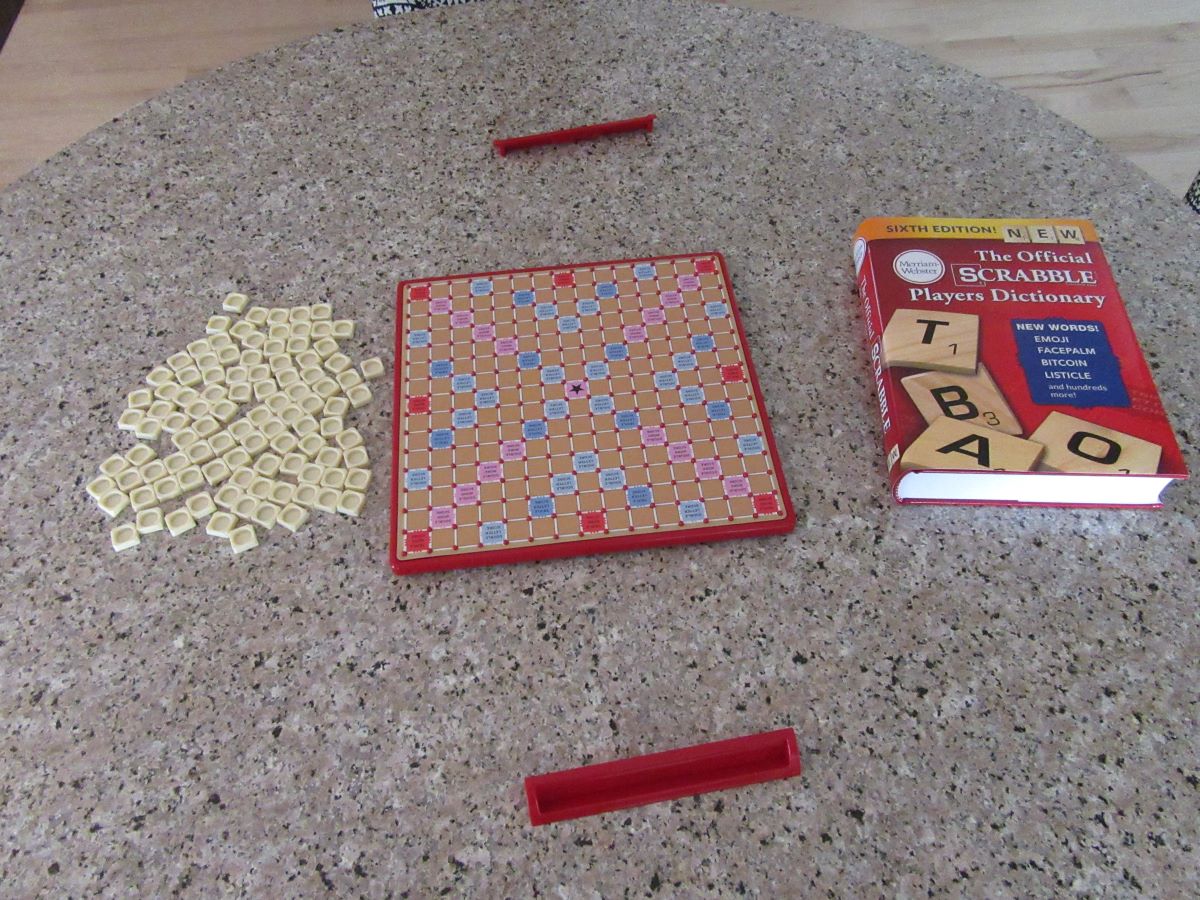
The other day Sena and I played a close game of scrabble—close that is until I challenged her play of the word “Xi.” I lost a turn because in our brand spanking new Scrabble dictionary it’s defined as a Greek letter.
Later, I knew better than to challenge her play of “Ka,” which I looked up after the game. It means the spiritual self of a human being in Egyptian religion. I ended up losing the game.
She plays a Scrabble video game and got a Bingo recently, which got her 80 points. On the web a Bingo is defined as playing all seven tiles, and you get 50 points. I guess that’s the difference between playing the video Scrabble game and playing a human being, whether of the Egyptian religion or not.
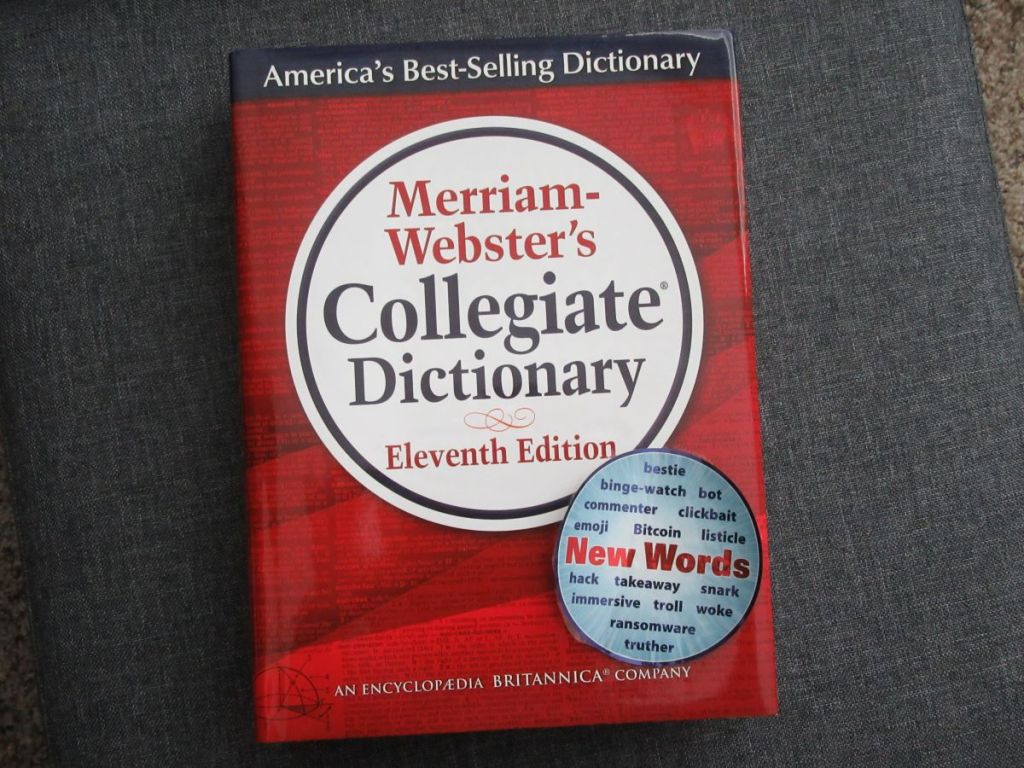
We also used a brand-new Merriam-Webster’s Collegiate Dictionary, Eleventh Edition, during a different game. We used that and I challenged her play of “dic.” I guess you know what’s coming.
As you can probably guess, “dic” is not a word, but those of us with dirty minds know full well that “dick” is a slang term that can mean penis, detective, or surprisingly, nothing. The nothing definition reminded me of the Men in Black scene in which the soon-to-be Agent J is riding down the elevator with Agent K, explaining that because he was chosen by the MIB organization, that means they recognize all of his skills. Agent K makes the deflating remark that all of his skills mean “precisely dick.”
I know you’ll be fascinated to learn that the nothing meaning of dick is not in the Scrabble dictionary nor is it in the Merriam-Webster’s Collegiate Dictionary.
So, remember that the next time you play Scrabble. On the other hand, if you don’t play Scrabble, this means precisely—detective.
I finished To Kill a Mockingbird by Harper Lee a couple of days ago. Calpurnia’s line toward the end of Chapter 12:
It’s not necessary to tell all you know. It’s not ladylike—in the second place, folks don’t like to have somebody around knowin’ more than they do. It aggravates ‘em. You’re not gonna change any of them by talkin’ right, they’ve got to want to learn themselves, and when they don’t want to learn there’s nothing you can do but keep your mouth shut or talk their language.
That stuck in my head until the end of the book. It reminds me of my time at an HBCU, Huston-Tillotson University (then Huston-Tillotson College) in Austin, Texas. I was the only black child in my classes in grade school while I was growing up in Iowa. Nobody noticed how I talked because I sounded like everybody else.
But I didn’t have a Texas twang at H-TC. I also tended to talk too much. Finally, one student asked me, “Why do you talk so hard?” Those were her exact words. I don’t remember my reply, or if I even had one. I hope I just shut up.
That doesn’t mean that black students all had a drawl or were terse. One of them I remember called himself Malachi. He didn’t have a drawl or twang. He pronounced it Ma-Lah-Chee, emphasis on the second syllable. He had an ordinary English name. One of the English professors tried to tell him that, if he was trying to model himself after the Hebrew prophet in the Bible, he should pronounce it Ma-Luh-Kai. He didn’t buy it.
And there was the guy I had to debate in philosophy and logic class. He talked way too much—which is a big part of the reason I lost the debate. I couldn’t get a word in edgewise. My professor hinted that being too polite by not interrupting was unlikely to help me in debates with bombastic opponents.
I have sometimes found myself either staying clammed up or talking too much, often at the wrong times with the wrong people.
I think there must be a happy medium somewhere. If I can’t talk the talk, is there a way to walk the talk? If I respect others, and believe we should all show respect for one another, I don’t have to drone on forever about it. I can hold the door open for them.
This is a follow up to yesterday’s post about elevator pitches. I’m using one of the standard formats below. The first step is to find a really slow elevator.
Who am I?
I’m a retired consultation psychiatrist, slowly evolving beyond that backwards in time to something else I’ve always been. I’ve been a writer since I was a child. My favorite place was the public library. I walked there from my house. I stayed there as long as I could. It was place of tall windows where I could look out and see trees which swayed like peaceful giants. I borrowed as many books as I could carry in my skinny arms and walked all the way back home. Then I picked up a pencil. I wrote short stories which I bound in construction paper. I read them to my mother, who always praised them and called me gifted whether I deserved it or not. I lived inside my head. My inner world was my whole world.
What problem am I trying to solve?
The problem was that I forgot who I was as I got older. I forgot for a long time about being a writer. I evolved into the outer world, adopting other forms. I put down the pencil, but never for very long. I changed what I did and made, but I always lived in my head. People told me “Get out of your head.” I tried, but didn’t know how. I wrote less and less. When I did write, I realized that I was no genius, not gifted—but still driven to write. I was so busy in college, medical school, residency, and in the practice of consultation psychiatry, I didn’t write for a long time. But later I returned to it as the main way to teach students. I even co-edited and published a book, Psychosomatic Medicine: An Introduction to Consultation-Liaison Psychiatry, with my former department chair, Dr. Robert G. Robinson. On the Psychiatry Department web page, in the Books by Faculty section, the book is in the subsection “Classic.” Inside the cover of my personal copy is a loose page with the quote:
A classic is something that everybody wants to have read and nobody wants to read.
Mark Twain
I’m pretty sure I put it there. Part of the preface was my idea because of my admiration for Will Strunk, who I learned about in an essay by E.B. White (“Will Strunk,” Essays of E.B White, New York, Harper Row, 1977). We informally called the work The Little Book of Psychosomatic Psychiatry:
The name comes from Will Strunk’s book, The Elements of Style, which was, as White says, “Will Strunk’s parvum opus, his attempt to cut the vast tangle of English rhetoric down to size and write its rules and principles on the head of a pin. Will himself hung the title “little” on his book and referred to it sardonically and with secret pride as “the little book,” always giving the word “little” a special twist, as though he were putting a spin on a ball.”
I guess our little book was, in a way, my own parvum opus.
Obviously, I don’t write the way Strunk would have wanted. But it’s my way, and I’m finding my way back to it, back to the path I was on in the beginning of my life, back to who I am.
What solution do I propose?
Almost two years ago, my solution to the challenge of rediscovering who I am, I suppose, was interrupting my medical career, but that would be dishonest. I did it because of my chronological age or least that was what I told myself. Burnout was the other reason. That said, despite my love of teaching students, I missed something else. And I knew if I kept working as a firefighter, which is what a general hospital consultation psychiatrist really is, I might lose what I loved best, which was writing for its own sake and for sharing it with others. It sounds so simple when I say it. Why has this been so hard, then? Obviously, I’m not going to recommend to those who are writers at heart lock themselves in a garret and do nothing but write. We would starve.
I think this is where mindfulness helped me. I couldn’t ignore my love of writing. I was better off just accepting it. But until I learned mindfulness in 2014 as a part of a Mindfulness Based Stress Reduction (MBSR), which I took mainly because I was struggling with burnout, I would either just ruminate or act on autopilot. I still do those things, just less often. Mindfulness is not miraculous. It’s not for everyone. It can be a part of transitioning to a healthier life. I exercise too. I don’t rigidly always without fail adhere to my schedule. I miss some days. I accept that and just go back and try again.
What is the benefit of my solution?
I think the benefit of adopting mindfulness and other healthy practices, at least for me, is that sooner or later (in my case much later), I made a sort of uneven peace with the loss of my professional routines, my professional identity, my work, as the single most important way to live. I still have a lot to learn, including how to be more patient, how to listen to others, how to get out of my head for what I know will be only a short time. Most of all, I’ve reintegrated writing into my life and it brings me joy. If you’re going through anything like that, then maybe seeing my struggle, my wins and losses, will help you keep going. It gets better.
This elevator pitch is way longer than 45 seconds.
A couple of nights ago Sena was looking at some old X-Files episodes on the web. It was on the Dailymotion site. For some reason, we could see them without login registration. I think it’s usually required. We watched the full length, The Unnatural episode two nights in a row without ads. It was an inconsistent experience. We saw it in both HD and non-HD modes and got slammed by ads at times and other times couldn’t access the show at all unless you logged in.
The weird thing was that all the subtitles and captions, and even the scenes were shown in mirror image. It turns out this mirror issue is not uncommon. I googled it and others have noticed it on YouTube as well as Dailymotion. You can flip the video out of mirror mode—often for the price of software being peddled for that purpose. The most common reason I saw given for the videos being mirrored was to avoid copyright strikes.
OK, so other than that, a lot of the old X-Files shows were available and Sena watched a little of the brutal episode “Home.” Sena can do a hilarious mimic of part of Mrs. Peacock snarling “I can tell you don’t have no children. Maybe one day you’ll learn… the pride… the love… when you know your boy will do anything for his mother.” Sena always ad libbed “the joy” to the “the pride, the love” phrase.
We used to watch the X-Files regularly, making popcorn downstairs in the kitchen and getting upstairs to watch it in bed just in time.
Anyway, we could watch the mirror version of “The Unnatural,” comfortably despite the backwards captions. This is one of our favorite episodes. There are many obvious references to racism and identity. I looked all over for a simplified plot summary, but found a lot of them have glaring mistakes, are too long, and wouldn’t fit with my simple-minded geezer interpretation. So, I’m going to cobble together something from reading a number of them. I’m not saying it’ll be straightforward.
I have to call it a Monster-of-The-Week (MOTW) episode because that’s what a lot of writers do. It refers to X-Files episodes that usually feature some paranormal creature or a criminal with a supernatural ability.
Here’s a tangent I can’t resist because we just watched Mountain Monsters Sunday night for the first time, and I think it was the first episode of the new season of this show which has been on for 8 seasons. It is surely a parody of several shows of the Bigfoot adventure type. It’s basically an ongoing MOTW series featuring a cast of characters who survive on sasquatch snacks and cryptid colas and stage uproarious, slapstick comedy searches for legendary creatures (some of which are apparently part of genuine local folklore) like Spear Finger, the Smoke Wolf, the Cherokee Death Cat, and a dozen others, some of which are unfortunately prone to violent attacks of diarrhea, which Wild Bill (arguably one of the funnies members of the cast) did a side-splitting impression of by hanging on to a couple of trees and sticking his butt way too far out in a stunningly hysterical pantomime of projectile Hershey squirts, all the while getting more and more bug-eyed, cursing a blue streak and brandishing a gun which looked like a kid’s toy you could find at Walmart. The camera angles are all too perfect. We laughed until we cried.
Anyway, getting back to The Unnatural, the show is basically the reminiscence of an ex-cop named Arthur Dales who was assigned to protect a black baseball player named Josh Exley from being killed by the Ku Klux Klan (KKK). Actually, Josh is an alien who shape-shifted into a black man because he loves the game of baseball. He can also sing the old Negro Spiritual “Come and Go with Me to That Land” on the team bus so well that it was recorded on YouTube and one commenter said he’d pay $100 for a full version of it.
The episode starts with Fox Mulder finding an old newspaper clipping about a baseball game in 1947 in Roswell, New Mexico, the site of so many UFO crashes that the local landfill could not keep up with all the debris local ranchers were trucking in from the fields. He finds a story which shows a picture of an Alien Bounty Hunter in it. This is an executioner who also shape shifts and knocks off other aliens who misbehave by threatening to expose the alien colonization project going on at the time.
The KKK is threatening the team of black players and the head of the gang is the Alien Bounty Hunter. He’s after Exley because he threatens to expose the project simply because he loves to smack home runs and, even though Exley thinks the game of baseball is meaningless, it’s perfect because you can chew tobacco and get knocked out by wild pitches—which leads to him getting beaned and bleeding green blood on the catcher’s mitt. He wakes up speaking alien but because he remembers he’s from Macon, Georgia, everybody thinks he’s OK. The catcher’s mitt is sent to the lab guy for analysis.
Officer Dales finds out Exley is an alien after he breaks into his room and sees him in his alien form. After Dales wakes up from fainting a half dozen times, Exley tells him that he’s an alien; he’s forbidden from intermingling with humans, and he masquerades as a black baseball player because he loves the game and to escape notice. The way Exley puts it, “They don’t like for us to mingle with your people. The philosophy is we stick to ourselves; you stick to yourselves—everybody’s happy.”
Where have you heard this before? It sounds like Jim Crow to me.
The Bounty Hunter, masquerading as Exley, kills the lab guy and Exley is now fingered as the murderer. Exley and Dales have a short talk while playing catch in the ball park in which Exley says it’s time for him to face the music and go back to his family. When Dales basically asks him why the human race can’t be his family, Exley takes either a surprisingly Green Supremacist attitude or just states the facts saying, “We may be able to look like y’all—but we ain’t y’all.”
In the end, the Alien Bounty Hunter executes Exley. But just before he kills Exley, he tells him to show his “true face” so he can die with dignity. Exley says simply, “This is my true face.”
And while he dies in Dales’ arms, despite Exley telling him to get away because his green blood is poison to humans, Dales sees that it’s red and says “It’s just blood.”
I don’t know exactly what this means and some have called it ambiguous. I speculate that this might have been the culmination of a transformative process and it reminds me of Atticus Finch telling Scout (in To Kill a Mockingbird), “You never really understand a person until you consider things from his point of view…until you climb into his skin and walk around in it.”
Well, we were out for a walk around Terry Trueblood Trail yesterday and a woman stopped us and excitedly asked, “Do you want to hear a joke about Covid?”
Believe it or not, we didn’t know anybody made jokes about Covid—but we said “Yeah, go ahead.” And then she said it was about dogs, and added that dogs don’t get Covid, as if to reassure us. In fact, it turns out that the CDC says you can’t catch Covid from pets, including dogs. It went like this:
The World Health Organization, or WHO, had feared the dogs could spread Coronavirus and ordered all dogs that were exposed to the virus be held in quarantine. After review, the WHO announced that dogs cannot contract Coronavirus. Dogs previously held in quarantine can now be released.
To be clear: WHO let the dogs out.
Sena and I immediately thought of the Men in Black II scene with Frank the talking Pug, who is actually an alien—and if you don’t like it you can kiss his furry little butt! I exclaimed, sort of singing (God help everyone within earshot) “Who let the dogs out!” I forgot the barking part, but we all had fun.
Incidentally, my mondegreen for the song “Who Let the Dogs Out” used to be “Who left the dog pound?” For the record, the word “mondegreen” means: a misunderstood or misinterpreted word or phrase resulting from a mishearing of the lyrics of a song. It often totally changes the meaning of a lyric, resulting in something ludicrously comical.
I think Dave Barry wrote about mondegreens in his book, “Dave Barry’s Book of Bad Songs,” a book I used to own but somehow lost in one of our many moves. I’m hoping he’ll find this blog post somehow and send me a free, autographed copy of the book.
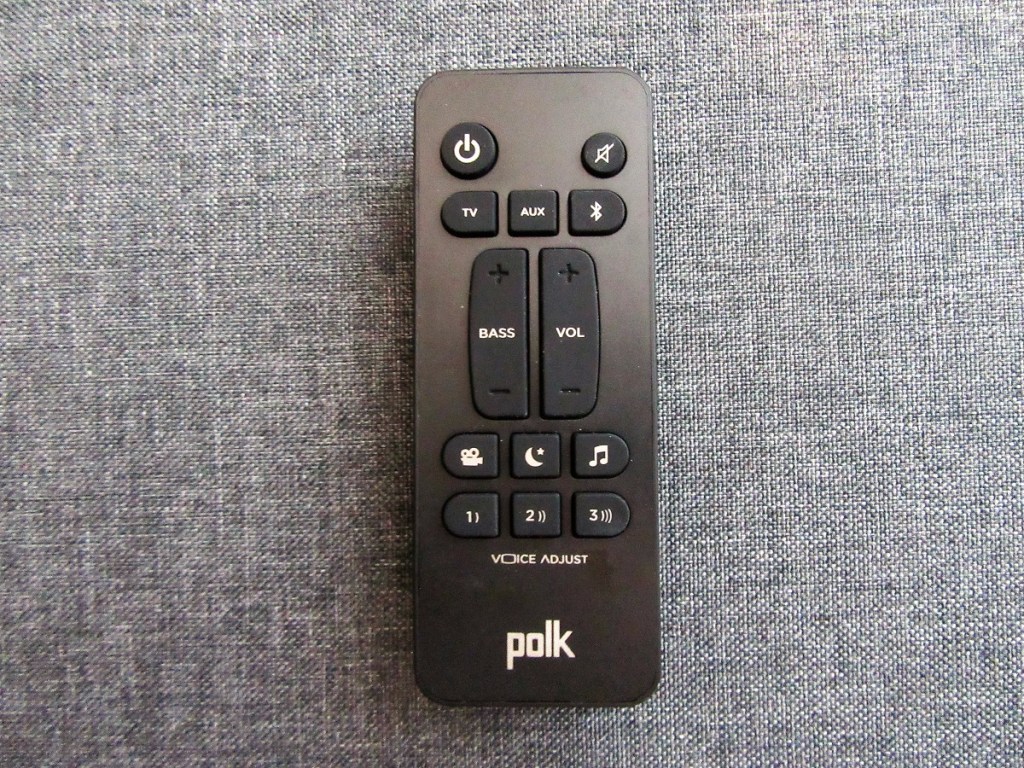
If we’d had our new Polk Signa S2 sound bar when I first heard the line, I could have used the remote control Voice Adjust dialogue level to reproduce clearer, crisper dialogue.
For the record, I’ve never heard the full song “Who Let the Dogs Out,” which was performed by a “Bahamian junkanoo” band formed in 1977 and released in 2000. I had to look up “junkanoo” and it’s a Bahamian cultural celebration, a festival of music, dance, and dog pounds.
There are conflicting opinions about what the song means. Some say that it was about men calling women filthy names and women fighting back by shouting “Who let the dogs out?” On the other hand, I also read that the song won a Grammy.
When we got home, I googled Covid jokes and found a lot of them. One of the better hits was RJ Julia Booksellers, advertising a book entitled Coronavirus Humor. The author was just called “Mad Comedy,” which means several “top comics” contributed. It was published in April 2020 by Indy Pub.
The best part? There was a statement saying “A portion of the proceeds of this book benefit the hard-working ‘essential workers’ who are sacrificing so much to help us all during the 2020 epidemic.”
I think I was the last lone ranger Chief Resident in Psychiatry, meaning doing the job solo. After that, there were always at least two senior residents managing that. One of the things I did was to give lectures on various topics that were not strictly related to how to work on the wards and clinics, but how to communicate with other professionals and with patients.
The other big task was fielding outside telephone calls from doctors in other hospitals trying to transfer patients to The University of Iowa Hospital psychiatric units. That’s right, that was a resident’s duty. I had some pretty difficult conversations. I couldn’t just accept every referral.
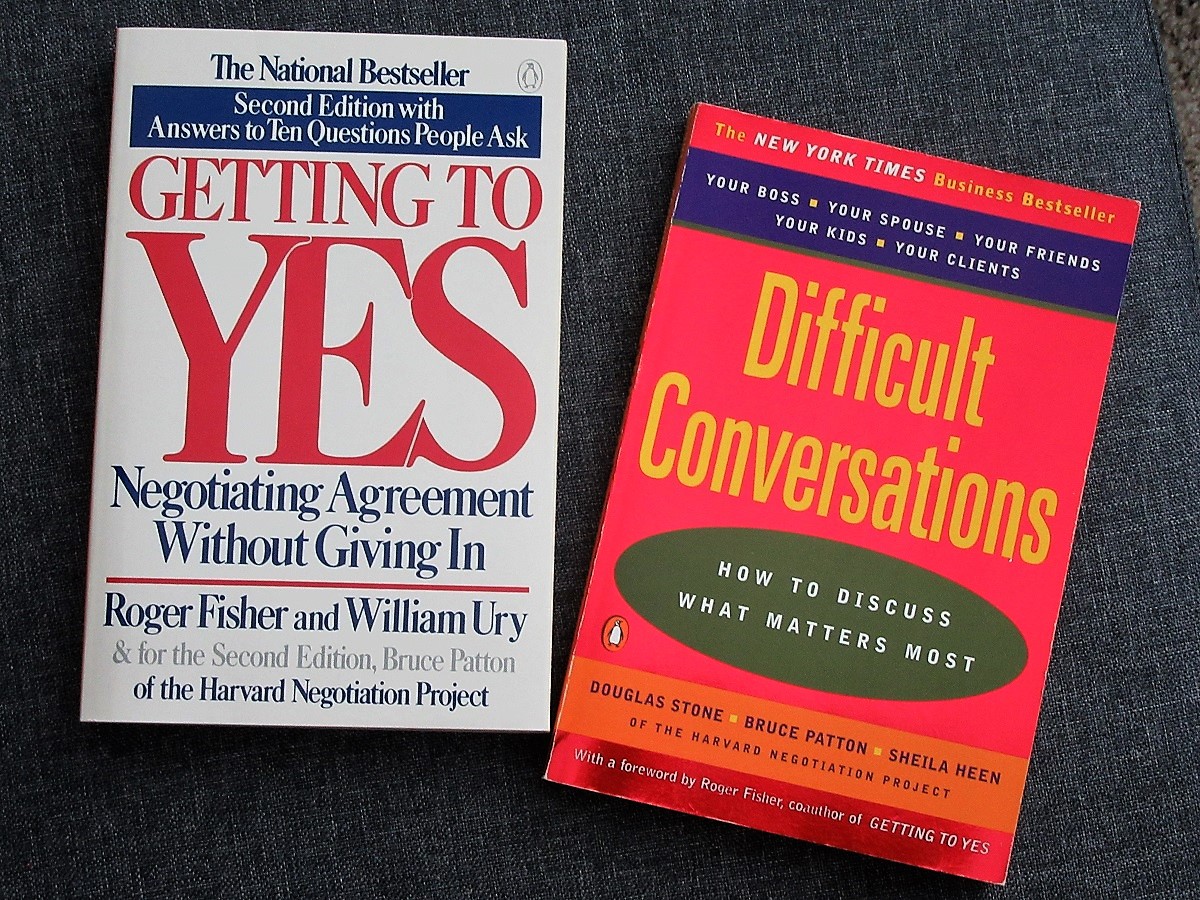
I used a couple of books as guides: “Getting to Yes” by Fisher and Ury, and Difficult Conversations by Stone, Patton, and Heen. I should seriously have reread those books during my entire career and even now. Nobody’s perfect. I encountered racism from patients, so I was no stranger to a variety of difficult conversations in many different situations.
Anyhow those two books are on the short list at the University of Iowa Conflict Management web page. There’s a ton of resources there available for learning about how to manage conflict and recognize what implicit bias is and what it is not.
Implicit bias gets a lot of press. I think it can tend to set people on edge before and during seminars on equity, diversity, and inclusion. Not everybody is a racist. But our brains are wired for implicit biases. I think we all need to get busy, and I mean everybody, including me. A good place to start is understanding implicit bias.
I’ve been reading To Kill a Mockingbird and thinking over something a character named Miss Maudie said in Chapter 10: “People in their right minds never take pride in their talents.” It seems to run counter to popular opinion. Why wouldn’t you take pride in your talents?
I got a lot of hits on my google search for this quote, by the way.
Miss Maudie’s statement was soon after Atticus shot a rabid dog with a marksman’s skill. Jem and Scout had been grousing about how they couldn’t find anything to be proud of in their old man. Atticus had never told his children about his skill as a marksman. He gave his kids guns but declined to teach them how to shoot.
I try to make sense of Miss Maudie’s comment by thinking about marksmanship as a skill, which is often distinguished from a talent, usually because the latter is thought to be a trait you’re born with. On the other hand, it’s hard to think of modesty (which is what keeps you from bragging or “taking pride”) as a talent. Some might say it’s more like a character trait.
Can you can develop a talent by practice? Can you improve your modesty by working at it and how would you do that, deadlifting your inner barbells? I tend to think you either have it or you don’t. And why does it take being in your right mind to refuse to take pride in or brag about your talent?
I often hear athletes (think Super Bowl) bragging non-stop about their talents. But I stop well short of admiring them for doing it. It’s annoying, but often preferable to the half-time show. Why do they grab their crotches?
Maybe it doesn’t make sense to brag about a talent you’re born with. I’m not sure if modesty is also something you’re born with. Babies seem very immodest, especially when they’re pooping, based on my extensive research of TV commercials and anecdotes.
On the other hand, a talent is also often said to be something which can be honed to perfection. In fact, Miss Maudie said that Atticus’s skill with a gun was a gift from God, a talent—which he perfected by practice. This might contradict the definition of talent as a thing you’re just born with. She goes on to say that Atticus thought this particular gift from God gave him an unfair advantage, so he gave it up. It would be unseemly to take pride in such a thing, and why would it even occur to someone with a talent to minimize it? The religious reference “pride goeth before a fall” is obvious, but religion doesn’t always seem to play a big role.
Maybe both talent and traits like modesty can be honed as well. What if they’re sort of like lifting just one of your eyebrows to make you look haughtily bemused? You can cultivate it, or at least some people say you can. There’s even a WikiHow for it. But it seems like you have to find your dominant eyebrow, which means there’s something inborn that makes it easier.
Can you develop modesty as though it’s a skill, assuming that it’s also a trait which is malleable? Is there a modesty cortex? Then, you could say some people have a talent for modesty. And how about those splinter talents or skills (like suddenly playing the piano like a virtuoso) which can appear abruptly after brain injuries? Can modesty be like that, a nascent itch in the body waiting to be scratched? That kind of makes you want to drop a piano on the guy at the cocktail party who brags about his golf game, doesn’t it?
I suppose some would take pride in being modest, although it sounds paradoxical—until I remember all the people I’ve seen who can feign desirable traits.
So, is there a Gold’s Gym for character traits where we can go and develop talents like modesty, patience, respect, kindness, and mercy?
Not exactly, but we can give ourselves a kick start by checking out some resources that aren’t that hard to find. Those would be different from what you can pick up from “To Kill a Mockingbird,” although it’s obvious that’s how I got steered to this topic in the first place. Remind me again, why is this book be taken off required reading lists?









 Go Retire Psychiatrist