I'm a retired consult-liaison psychiatrist. I navigated the path in a phased retirement program through the hospital where I was employed. I was fully retired as of June 30, 2020. This blog chronicles my journey.
I just found out that the Federal Emergency Management Agency (FEMA) will conduct a routine Emergency Alert Test around 2:20 p.m. ET today.
According to FEMA, “The purpose of the test is to ensure that the systems continue to be effective means of warning the public about emergencies, particularly those on the national level.”
You can ignore the misinformation on social media about conspiracy theories regarding the test.
I ran across this article (reference below) on the potential benefit of climbing stairs for cardiovascular health. The highlights and abstract are below:
“Highlights
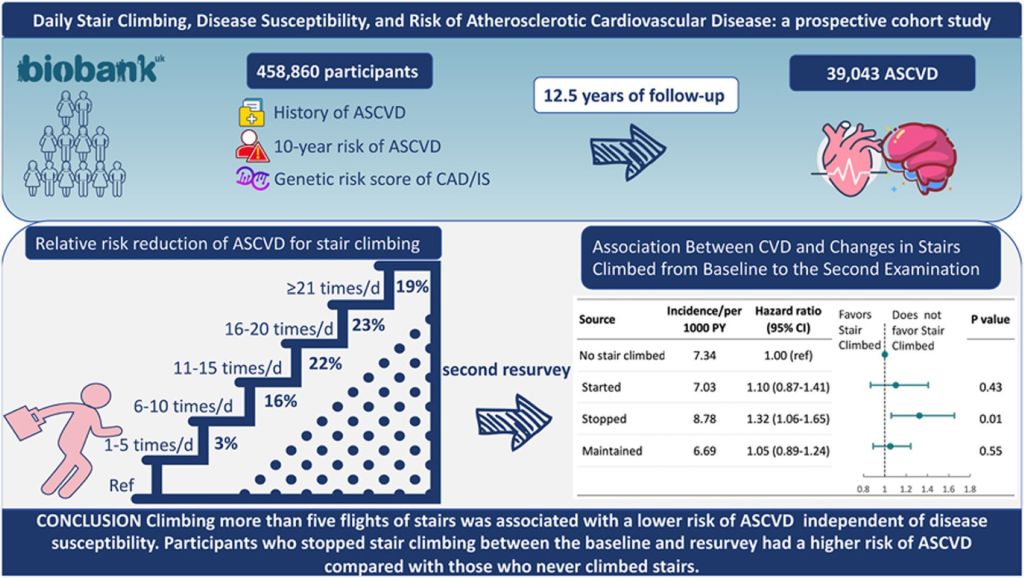
This large cohort of UK adults demonstrated that climbing more than five flights of stairs daily was associated with over a 20% lower risk of ASCVD.
The associations were broadly concordant in populations with varying susceptibilities to ASCVD.
Participants who discontinued stair climbing between the baseline and resurvey exhibited a higher risk of ASCVD in comparison to those who never engaged in stair climbing.
Abstract
Background and aims
The associations between the intensity of stair climbing and atherosclerotic cardiovascular disease (ASCVD) and how these vary by underlying disease susceptibility are not fully understood. We aim to evaluate the intensity of stair climbing and risk of ASCVD types and whether these vary by the presence of ASCVD risk factors.
Methods
This prospective study used data on 458,860 adult participants from the UK Biobank. Information about stair climbing, sociodemographic, and lifestyle factors was collected at baseline and a resurvey 5 years after baseline. ASCVD was defined as coronary artery disease (CAD), ischemic stroke (IS), or acute complications. Associations between flights of stair climbing and ASCVD were examined as hazard ratios (HRs) from Cox proportional hazards models. The modification role of disease susceptibility on such associations was assessed by analyses stratified by levels of genetic risk score (GRS), 10-year risks of ASCVD, and self-reported family history of ASCVD.
Results
During a median of 12.5 years of follow-up, 39,043 ASCVD, 30,718 CAD, and 10,521 IS cases were recorded. Compared with the reference group (reported climbing stairs 0 times/day at baseline), the multivariable-adjusted HRs for ASCVD were 0.97 (95% CI, 0.93–1.01), 0.84 (0.82–0.87), 0.78 (0.75–0.81), 0.77 (0.73–0.80) and 0.81 (0.77–0.85) for stair climbing of 1–5, 6–10, 11–15, 16–20 and ≥21 times/day, respectively. Comparable results were obtained for CAD and IS. When stratified by different disease susceptibility based on the GRS for CAD/IS, 10-year risk, and family history of ASCVD, the protection association of stair climbing was attenuated by increasing levels of disease susceptibility. Furthermore, compared with people who reported no stair climbing (<5 times/d) at two examinations, those who climbed stairs at baseline and then stopped at resurvey experienced a 32% higher risk of ASCVD (HR 1.32, 95% CI:1.06–1.65).
Conclusions
Climbing more than five flights of stairs (approx 50 steps) daily was associated with a lower risk of ASCVD types independent of disease susceptibility. Participants who stopped stair climbing between the baseline and resurvey had a higher risk of ASCVD compared with those who never climbed stairs.”
This interests me because I climbed well over 20 flights of stairs pretty much every day when I was a consultation-liaison psychiatrist. Occasionally, I logged over 40 flights. The hospital had 8 floors and I was often repeatedly hiking up the stairs. I avoided using elevators because they slowed me down too much.
There was a threshold effect of stair climbing in the study, meaning the benefit was lost if you went over a certain number of “floors.” Going over 15 or 20 didn’t gain much for subjects. A flight was 10 stair steps.
I think the idea is that in those who live in homes with the right number of stair steps, you’ve got a no cost, low tech form of cardiovascular exercise. You might exert a little more stress on the carpet.
On the other hand, you could save wear and tear on the carpet (if you’re worried about it) by spending some money on stair stepping exercise equipment. You can buy a Stairmaster model for about $2.000-3,000. There are cheaper stair stepper models, which look a little flimsy and even unstable enough to raise the risk for falls, in my view.
But I would never go back to work just to climb the stairs again.
Reference:
Song Z, Wan L, Wang W, Li Y, Zhao Y, Zhuang Z, Dong X, Xiao W, Huang N, Xu M, Clarke R, Qi L, Huang T, Daily stair climbing, disease susceptibility, and risk of atherosclerotic cardiovascular disease: A prospective cohort study, Atherosclerosis (2023)
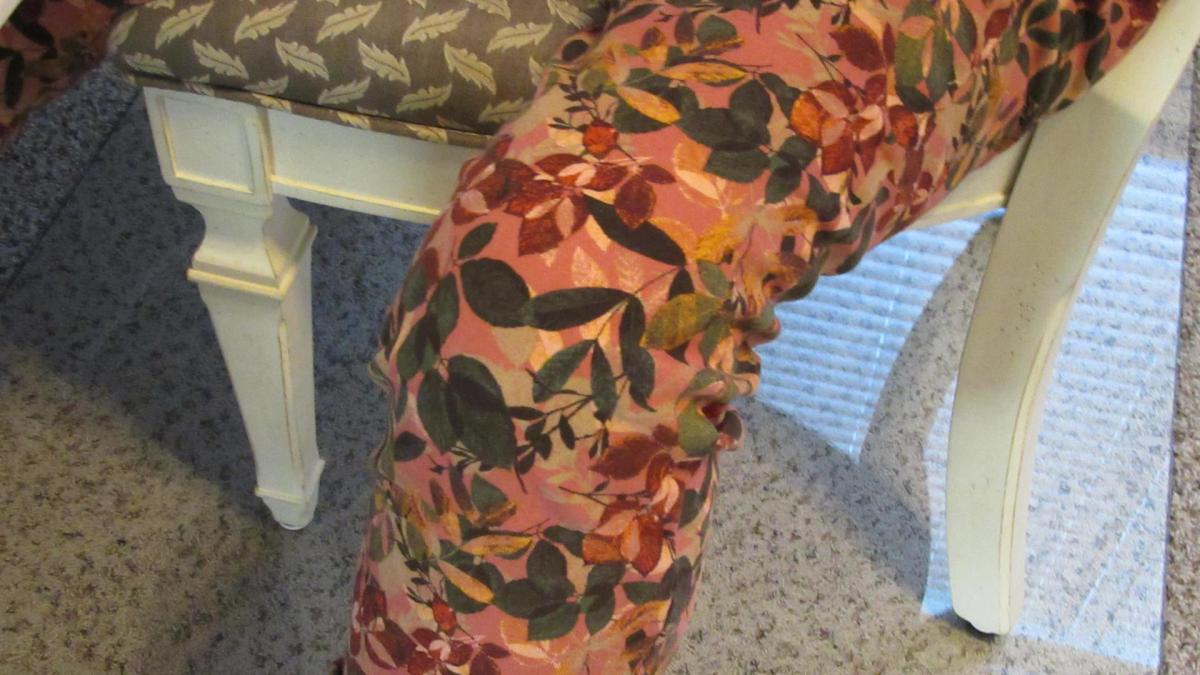
Sena got some new pants with an autumn leaves print. It fit really well with the colors we saw on a walk down Scott Boulevard.
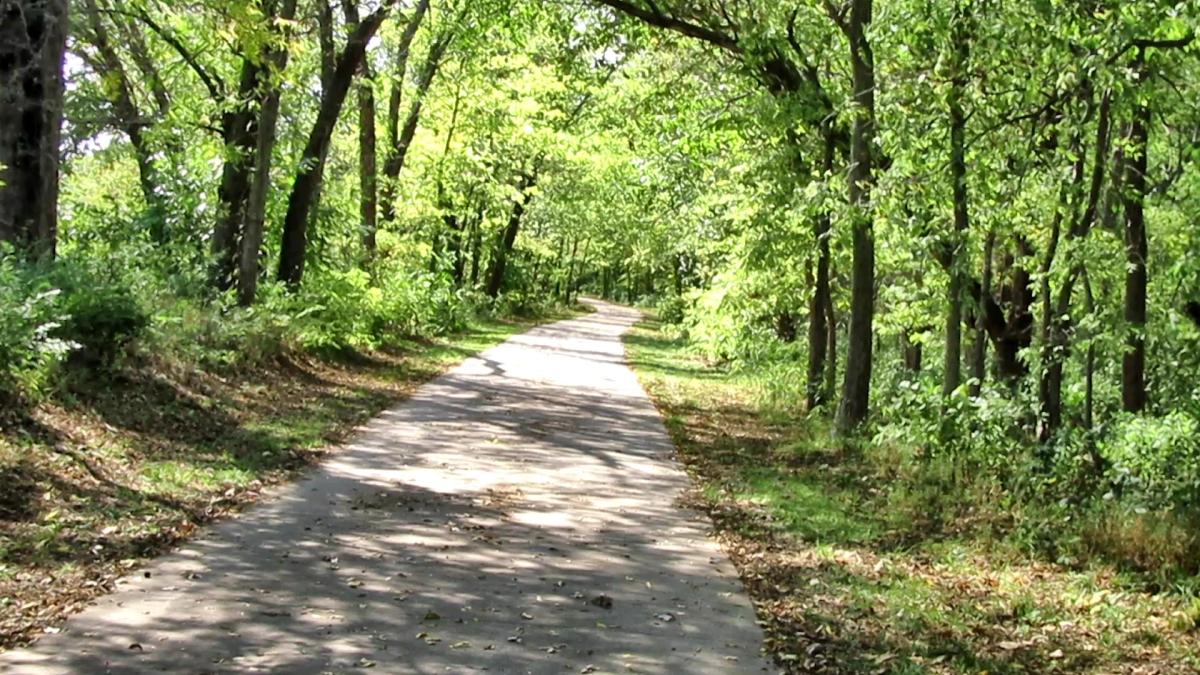
We always see something a little different along the way. We never noticed that the Sitting Man pedestal has a hole in it shaped like a heart. It could have been chipped into the stone intentionally.
There was a lot of golden rod but we didn’t see any ragweed—which I’m very allergic to this time of year.
The trees around the Harvest Preserve property are changing colors. The old barn across the street from it looks a little more weathered. We don’t know whether the staff will decorate it into a haunted house again for Halloween. They did that last year and it was a hoot.
The walk up the hill to the Sitting Man seemed a little steeper this year. I don’t remember exactly when I got so bow-legged. A runner easily ran up the hill and still had breath to say “Hi” on the way back down. He never missed a step, even though I personally know there are a lot of irregularities in the ground.
We saw the miracles of autumn the other day, out on the Terry Trueblood Recreation Area. It was quiet, only a light breeze set the flowers and grasses swaying.
There were almost no birds out. No ducks were out on Sand Lake.
On the other hand, I guess there were birds, sort of. We greeted other walkers, an older couple who turned out to be snowbirds. They’ll be heading to Florida soon for the winter. They had no worries about the weather down there. They’ll be in the middle of the state, presumably far away from storm surges. They stay in an RV park over the winter months. It’s not far from a place called The Villages, which is a famous planned retirement community, which got a reputation for being a haven for older but wilder swingers. They have a very large Homeowners Association (HOA), which is sort of a very large and expensive Disney World for older retirees. It’s often called a golf cart community because that’s how most residents get around the place. While there are no HOA fees per se, there is a community development district fee of around $120-220 a month. Dave Barry wrote a chapter about The Villages in his book “Best State Ever: A Florida Man Defends His Homeland.” I told the couple about Dave Barry’s take on The Villages. I don’t think they ever heard of him. They’re excited about returning to the RV park soon.
I was a little alarmed by a loud voice, calling out like a policeman, “Get on the ground!” I looked up ahead and didn’t see a policeman. But occasionally, we heard the barking order, “Get on the ground!” Eventually we saw a young man on a walk, apparently under someone’s supervision. This was the man who was yelling “Get on the ground!” He greeted us politely. As he passed by, every so often he blurted out, “Get on the ground!” I wondered if he might be someone with a form of Tourette’s Disorder, compelled to blurt out something every few minutes. The supervisor was walking side by side with a man who seemed uncomfortable, holding his hands up to his eyes which appeared sunken in the sockets. He made no sound at all. I wondered if, peaceful as we thought the day was, whether he found it difficult to bear what might have been a sensory storm for him. The supervisor was polite to us and paid close attention to the other two men.
Mostly we watched the breeze blowing the grasses and the flowers–and were grateful.
The CDC recommendations for Fall-winter immunizations were updated as of September 29, 2023. A few states require a physician’s prescription for the RSV vaccine. Information varies on the web on which states require a prescription for the RSV vaccine. The Iowa Board of Pharmacy website is clear on the matter–you’ll need a prescription.
Most states don’t require a prescription for the RSV vaccine. The CDC recommends having a shared decision-making discussion with your doctor to help you decide about whether the RSV vaccine is right for you. The best thing to do would be to call your doctor, the state board of pharmacy, or your local pharmacy to find out how you should proceed.
We got over to Wendy’s to try the new Pumpkin Spice Frosty yesterday. I thought it was pretty good. Sena was OK with it at first—but then decided she wouldn’t get it again.
We’re now focused on trying the Peppermint Frosty. We might have to wait until mid-November, though. I read this was out last year around the same time (mid-November). I don’t know how we could have missed it.
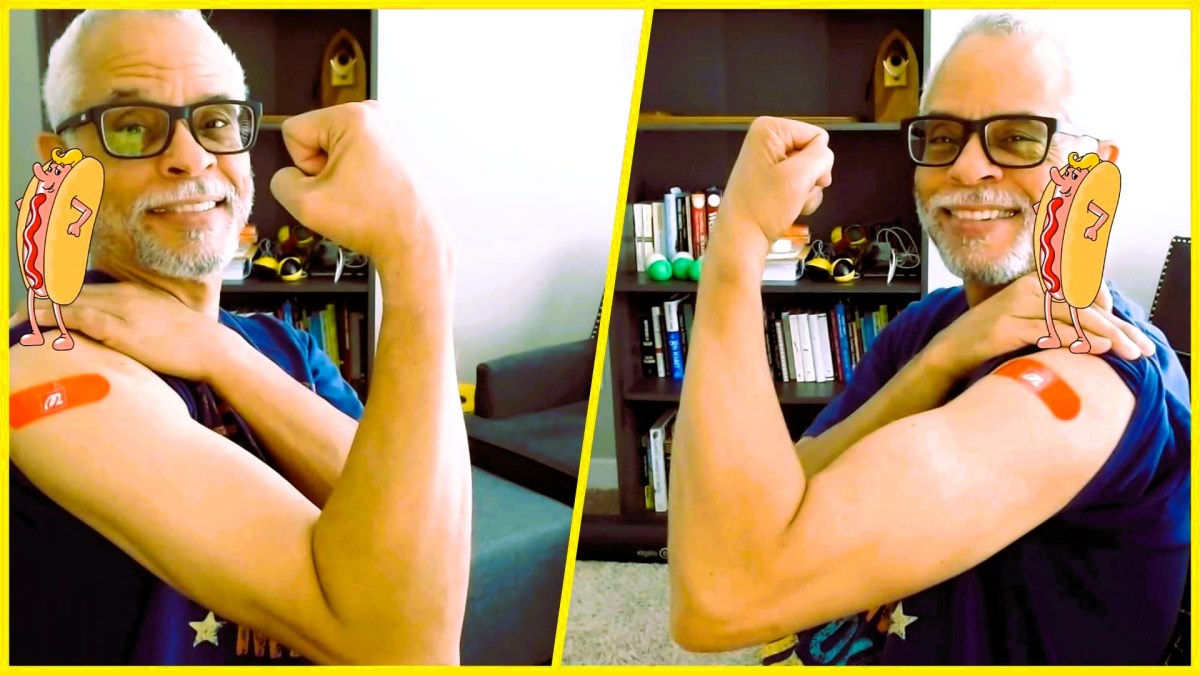
Today I got the new Covid-19 vaccine and the flu shot. I scheduled on line late last week and got right in. I didn’t have to wait long in line—and there were others getting the same vaccines. Sena will get them tomorrow.
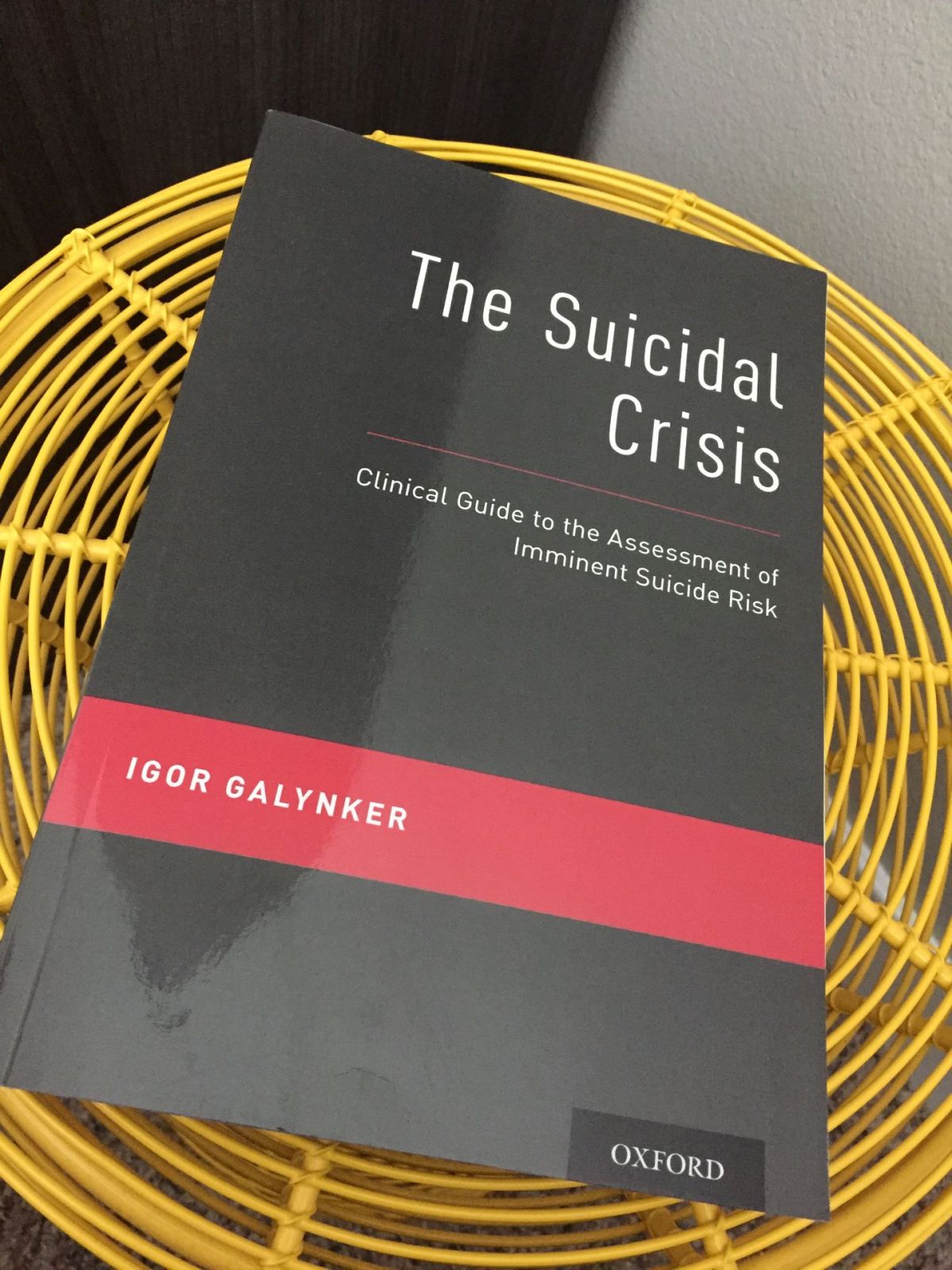
I was looking at my bookshelves and found the copy of the book, “The Suicidal Crisis: Clinical Guide to the Assessment of Imminent Suicide Risk.” It was written by Dr. Igor Galynker. It’s a fit topic for this month because September is National Suicide Prevention Month.
This brings back memories. I still have a gift from Dr. Galynker. It’s a stuffed animal called Bumpy the Bipolar Bear.
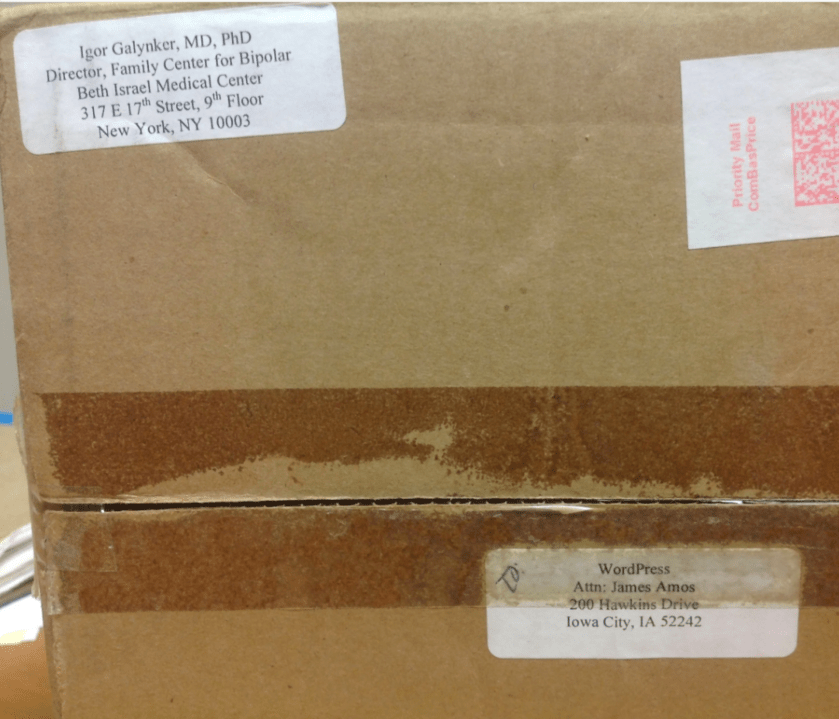
It arrived at my office at The University of Iowa Hospitals & Clinics in 2011. It was in a box addressed to:
WordPress
Attn: James Amos
200 Hawkins Drive
Iowa City, IA 52242
I’m still not entirely sure why he sent me Bumpy. There was no letter of explanation. I was writing a blog at the time called “The Practical Psychosomaticist” and I might have posted something about some research he published on suicide risk assessment.
I bought a copy of his book a few years ago. I barely had time to skim a few of the chapters because I was too busy conducting suicide risk assessments in the emergency room, the general hospital, and the clinics in my role as a psychiatric consultant. In fact, I think it’s an excellent resource.
I also found a YouTube video (posted about a month ago) in which he describes his suicide crisis syndrome assessment. You can find the actual set of questions for the assessment here and in a link posted in the description below the YouTube.
September is National Suicide Prevention Month. The 988lifeline website has many resources for getting the word out about the importance of not missing any opportunities to help prevent suicide.
In fact, there is a recently published article entitled “Multiple Missed Opportunities for Suicide Risk Assessment in Emergency and Primary Care Settings.” A few of the important take home points:
“Screening for suicide risk, while a critical step in potentially preventing death or injury by suicide, is fraught with additional challenges centering around the poor sensitivity and specificity of many of the screening tools. The widely used PHQ-9 question about suicide has poor sensitivity and specificity. A much better screening tool we recommend is the Columbia-Suicide Severity Rating Scale Screener which can be administered by both clinicians and non-clinician individuals who have been trained in its use.
So called “no harm contracts” are best avoided and, instead, replaced with approaches that emphasize joint planning that more respectfully builds upon patients’ innate resiliency to self-soothe, build upon one’s protective factors and reduce those risk factors that are modifiable, and problem-solve ways to create a series of “what-if” scenarios of what to do if suicidal feelings start to intensify
Firearms are the leading means of fatal suicides in the U.S. Effort to ensure patients at risk for suicide do not have access is critical
There is a bidirectional and undoubtedly complicated relationship between substance use and suicide.”





 Go Retire Psychiatrist