The Wild West Sandbox of AI Enhancement in Psychiatry!

I always find Dr. Moffic’s articles in Psychiatric Times thought-provoking and his latest essay, “Enhancement Psychiatry” is fascinating, especially the part about Artificial Intelligence (AI). I liked the link to the video of Dr. John Luo’s take on AI in psychiatry. That was fascinating.

I have my own concerns about AI and dabbled with “talking” to it a couple of times. I still try to avoid it when I’m searching the web but it seems to creep in no matter how hard I try. I can’t unsee it now.

I think of AI enhancing psychiatry in terms of whether it can cut down on hassles like “pajama time” like taking our work home with us to finish clinic notes and the like. When AI is packaged as a scribe only, I’m a little more comfortable with that although I would get nervous if it listened to a conversation between me and a patient.

That’s because AI gets a lot of things wrong as a scribe. In that sense, it’s a lot like other software I’ve used as an aid to creating clinic notes. I made fun of it a couple of years ago in a blog post “The Dragon Breathes Fire Again.”

I get even more nervous when I read the news stories about AI making delusions and blithely blurting misinformation. It can lie, cheat, and hustle you although a lot of it is discovered in digital experimental environments called “sandboxes” which we hope can keep the mayhem contained.

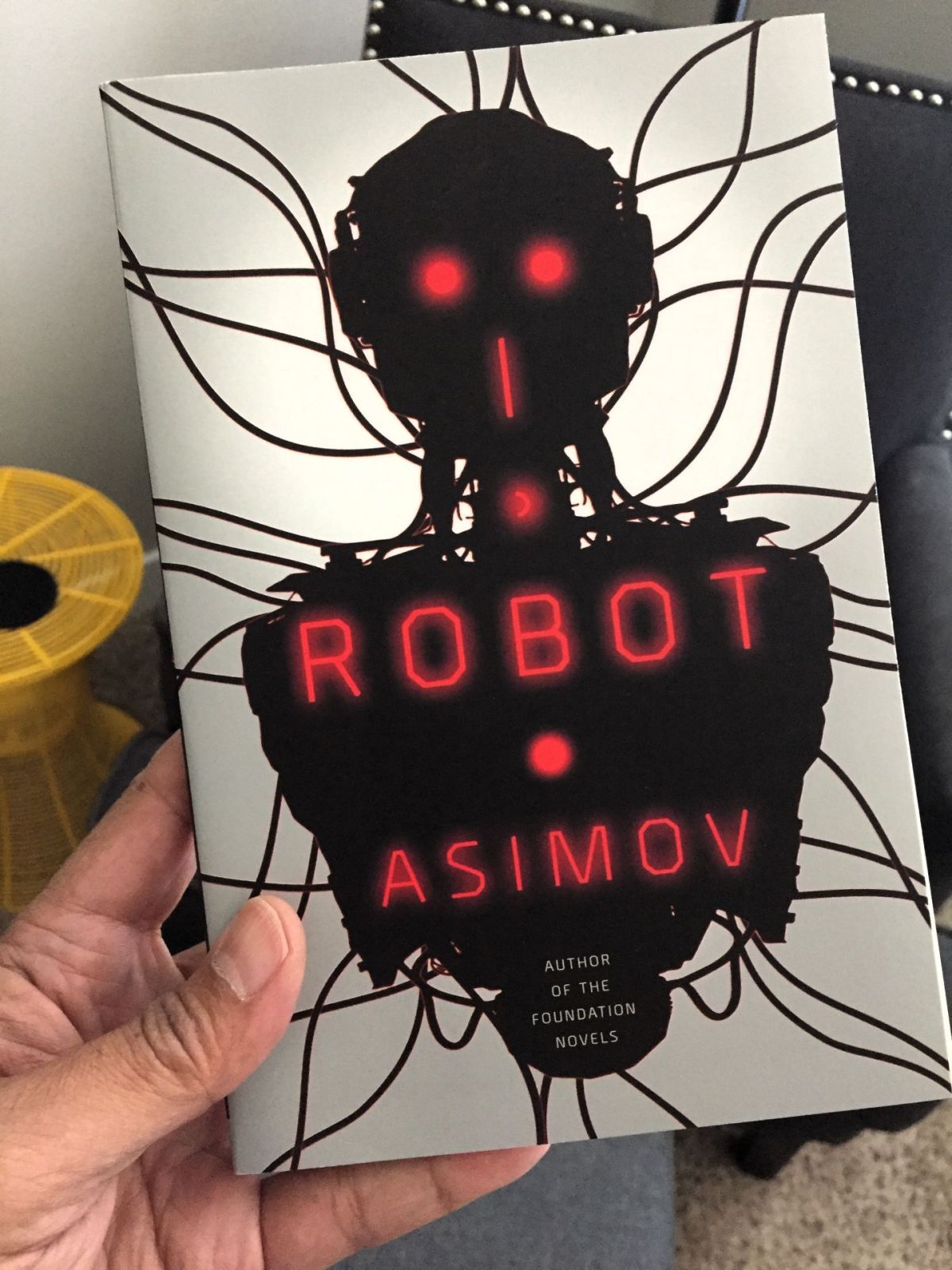
That made me very eager to learn a little more about Yoshua Bengio’s LawZero and his plan to create the AI Scientist to counter what seems to be a developing career criminal type of AI in the wild west of computer wizardry. The LawZero thing was an idea by Isaac Asimov who wrote the book, “I, Robot,” which inspired the film of the same title in 2004.

However, as I read it, I had an emotional reaction akin to suspicion. Bengio sounds almost too good to be true. A broader web search turned up a 2009 essay by a guy I’ve never heard of named Peter W. Singer. It’s titled “Isaac Asimov’s Laws of Robotics Are Wrong.” I tried to pin down who he is by searching the web and the AI helper was noticeably absent. I couldn’t find out much about him that explained the level of energy in what he wrote.

Singer’s essay was published on the Brookings Institution website and I couldn’t really tell what political side of the fence that organization is on—not that I’m planning to take sides. His aim was to debunk the Laws of Robotics and I got about the same feeling from his essay as I got from Bengio’s.

Maybe I need a little more education about this whole AI enhancement issue. I wonder whether Bengio and Singer could hold a public debate about it? Maybe they would need a kind of sandbox for the event?


Groundhog Great House!

How much round could a groundhog grind if a groundhog could grind ground and so could you call that grind ground round?

Now that we’ve got that out of the way, let’s talk about the woodchucks in our back yard. By the way, woodchuck and groundhog are different names for the same big rodent that can feast on whatever’s growing in your garden.

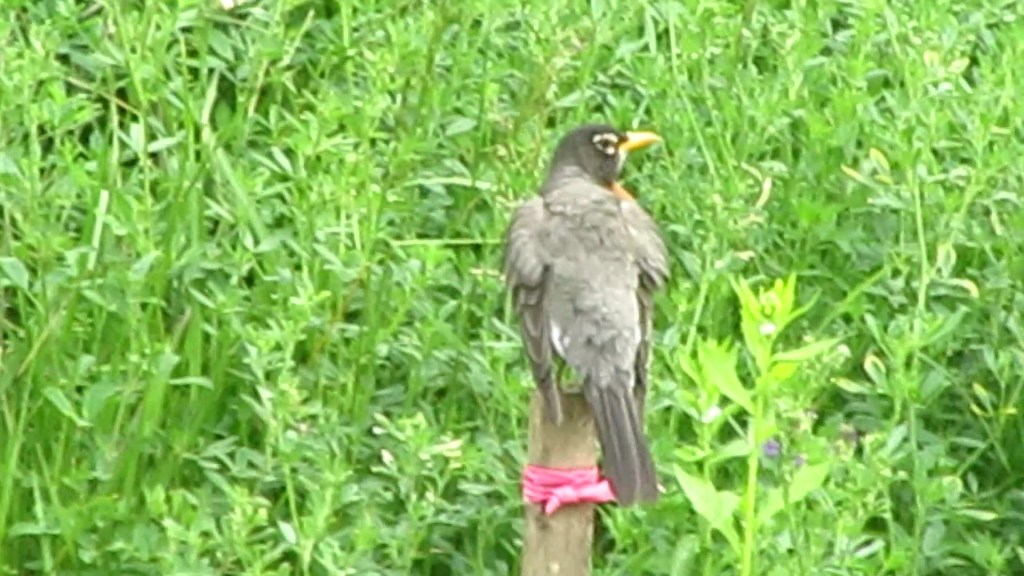
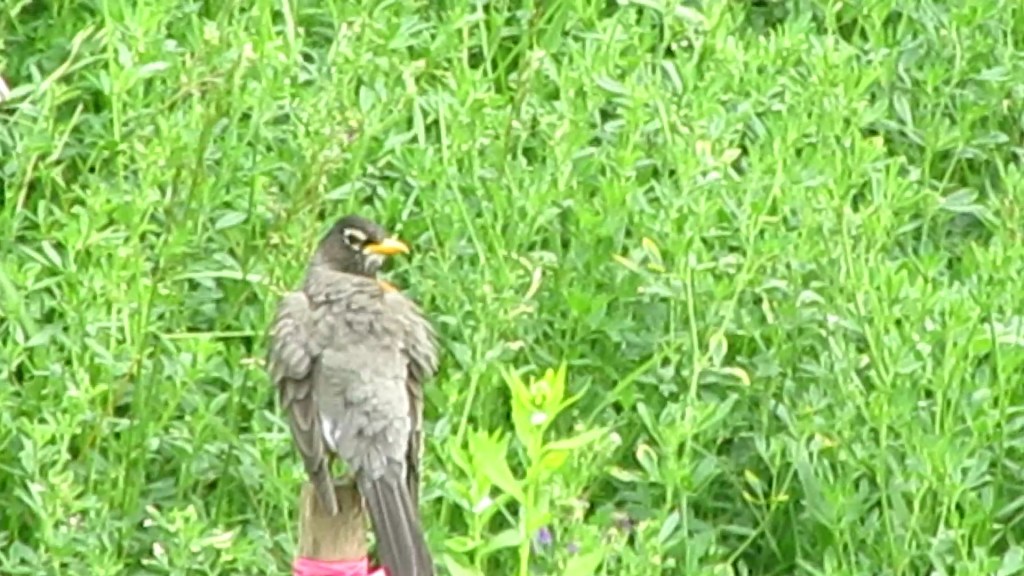
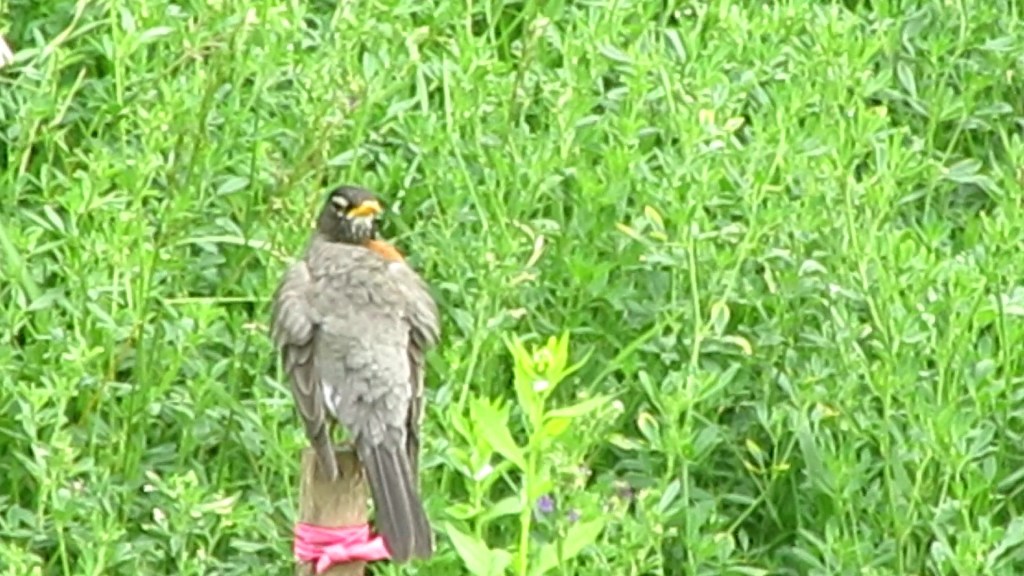
Now that it looks like our pesky robin has retired from beating on our windows for whatever reason, we’ll probably return the black window film we got to cover them.

Now we’ve got a completely different critter visiting us—a family of marmots, groundhogs, woodchucks, whistle pigs (they emit a high-pitched whistle when alarmed), giant rats munching veggies in our back yard. They remind Sena of meerkats, so I guess you could call their home Groundhog Great House.

It’s actually a little family of momma woodchuck and her two pups, who are almost as big as she is. Their den is close to the flower garden. They tend to feed in the early or latter part of the day and we caught them on film yesterday afternoon. They’re pretty skittish and tend to freeze and scamper at the drop of a leaf.

When we lived at a previous house several years ago, there was a big woodchuck that lived in back part of our yard. One evening it was standing up stock still and mesmerized by something in the sky. It looked like a statue of a woodchuck. There were big gray clouds blotting out the sun. It just so happened that a big storm was coming and not long after there was a severe storm warning.

Woodchuck staring at the cloudy sky in 2018

I snapped the picture of the woodchuck on May 2, 2018 and the National Weather Service has a record of hail reports in Iowa City on that date. I don’t know how much evidence there is for the theory that some animals can sense changes in atmospheric pressure, so it could have been a coincidence.

Anyway, the family of woodchucks in our backyard are more concerned about filling their stomachs than checking barometric pressures or looking up the weather reports on their tiny screen TVs in burrows which can run for 50 feet, by the way. They dig like crazy. For now, they munching on the wild stuff and turn up their noses at the catmint.

I suppose some think woodchucks look cute, but they can carry a variety of diseases including rabies most commonly, tularemia (rabbit fever), Lyme disease, hantavirus and others.

Slow Down, Tithonus

What I sometimes don’t like about the X-Files episodes were the esoteric titles. One of them was “Tithonus.” I watched it again last night. It’s about a police photographer named Fellig who claimed to be about 150 years old because he cheated death sometime during the days of Yellow Fever in the U.S. in the 18th through the 20th centuries. He was in a hospital sick from Yellow Fever but didn’t look at Death, which was some kind of entity taking those who were dying from Yellow Fever. Death took his nurse instead because she looked at him.

Ever since then, he’s been trying to catch a glimpse of Death mainly by following people around who he somehow knew were about to die. I think the idea was that if he caught up with Death and stared at it, then he could finally die, because by this time he’s so tired of living that he’s attempted suicide several times. He often acts like he’s in a hurry to catch a glimpse of Death.

The main way Fellig knows who is about to die is because they look black and white instead of in living color. Agent Scully is working with another investigator who believes Fellig is a serial killer. Fellig looks at Scully and she’s monochromatic (black and white) which means she’s about to die. So, he tries to stick close to her so he can get a look at Death. The other investigator shoots Fellig and the bullet also hits Scully. Fellig tells her to close her eyes and he finally gets his chance to look at Death and dies. Scully survives.

So, that preamble leads me to talk about the title “Tithonus” a little. Tithonus in Greek mythology was this rich mortal with whom Eos, the goddess of dawn, fell in love. She made him immortal but forgot to give him eternal youth so he gradually because a shriveled up, demented old fart. This led to some pretty intense arguments between them:

Tithonus: So, here I am, senile because you neglected to give me eternal youth when you gave me immortality. This is just like the time you made me a Braunschweiger sandwich, but instead of using my favorite spread, Miracle Whip, you used mayonnaise!

Eos: How does that even make sense? I try my best! You should use your walker more often; then you wouldn’t trip and fall so much.

Tithonus: Excuses! And you hide my Geritol!

So, Eos turned him into a cricket to interrupt his constant babbling.

Anyway, occasionally I think about my mortality because I’m not getting any younger. I’m more forgetful. I can’t walk as far as I used to. I can still juggle, but I’m beginning to accept the fact that I may never be able to do the shower pattern or the off the head trick. Sena and I still play cribbage, but I’m starting to notice that I make certain mistakes in counting that I didn’t make in the past. I can’t stay up as late as I once did.

On the other hand, I can get along without certain things like TV, mainly because I notice I enjoy reading more. I ignore the news a lot more than I formerly did. I would rather listen to music or watch the birds. I admire Sena’s garden from our back windows, where I can watch the dawn arise.

I’m in no hurry.

The Demonic Robin Ignores Window Film!

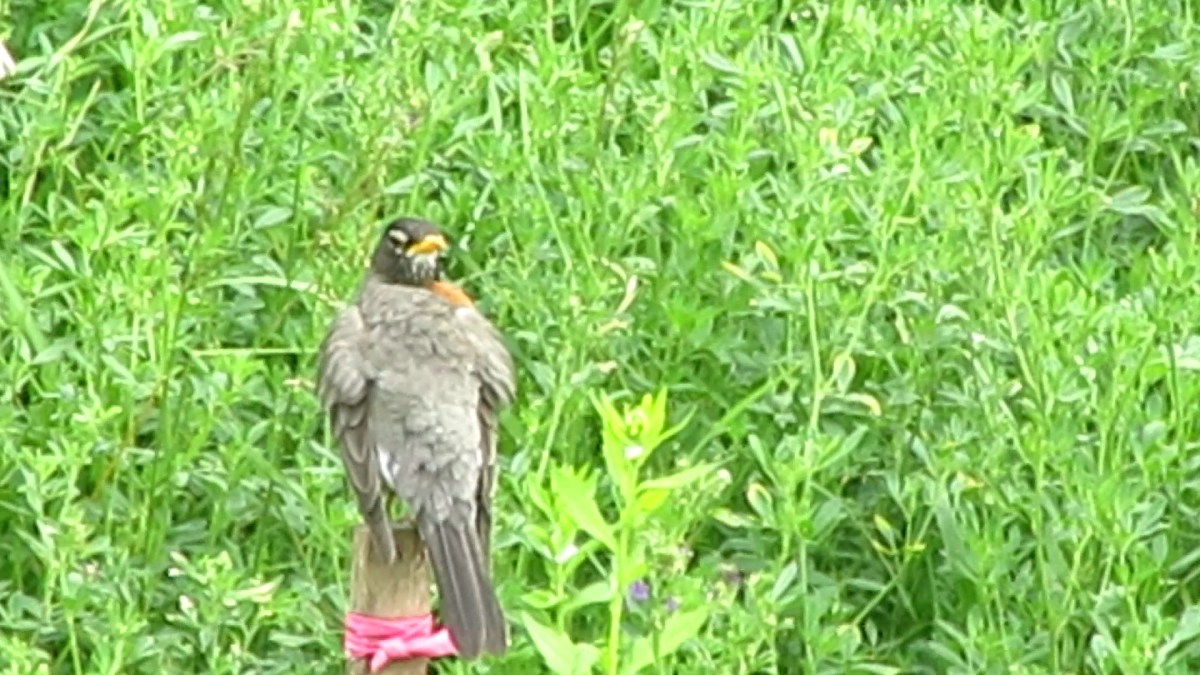
This morning, we noticed the demonic robin flapping around our downstairs window well again. The window film doesn’t work, probably because it’s essentially clear and has a sort of light scattering pattern on it. So, Sena ordered a new film which is basic black. We’re hoping it eliminates refection, which we think is still the main explanation for the bird’s behavior.

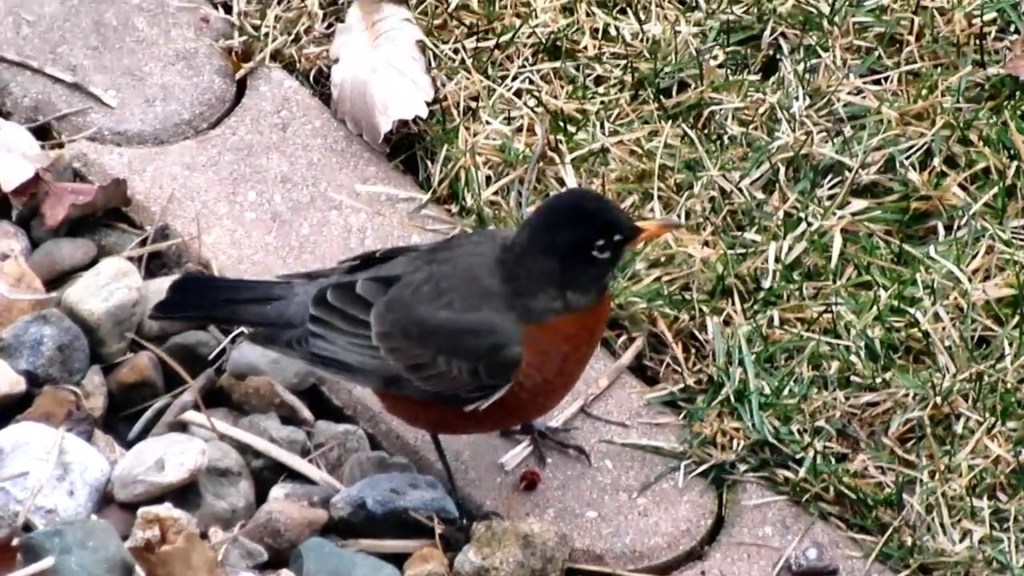
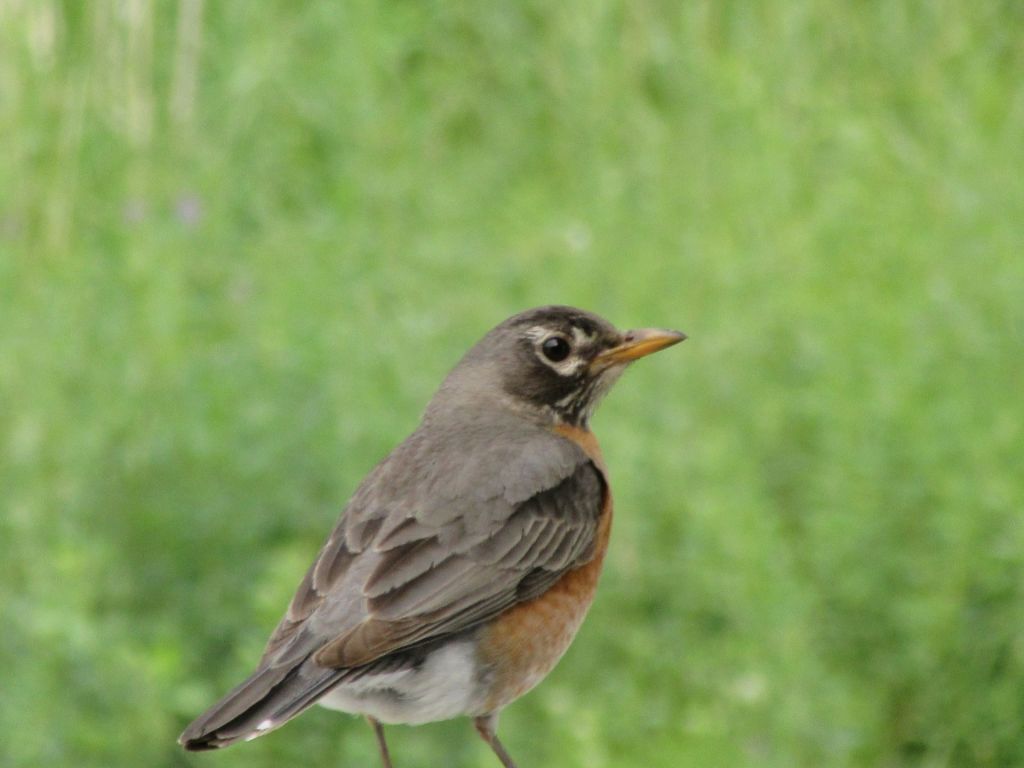
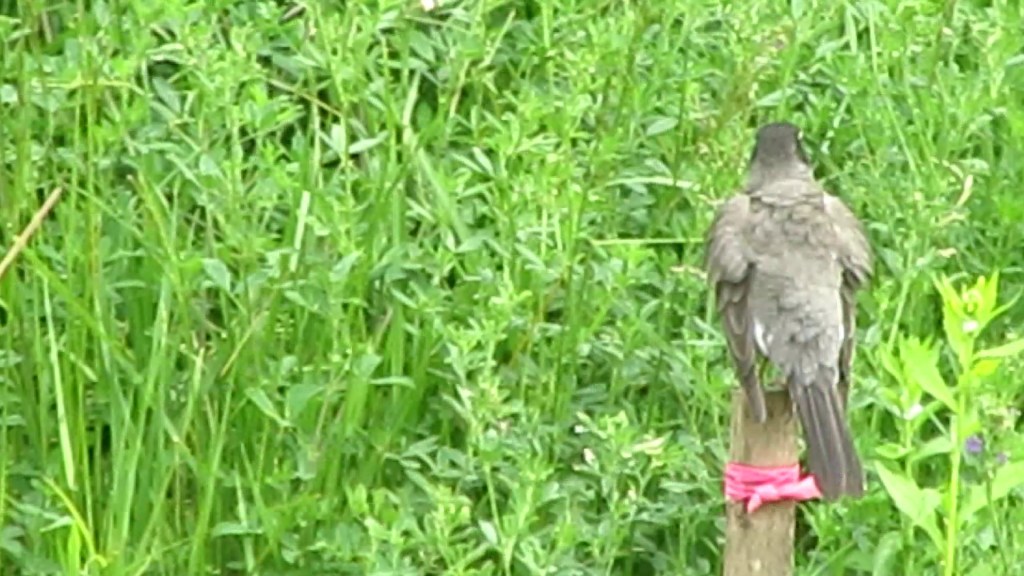
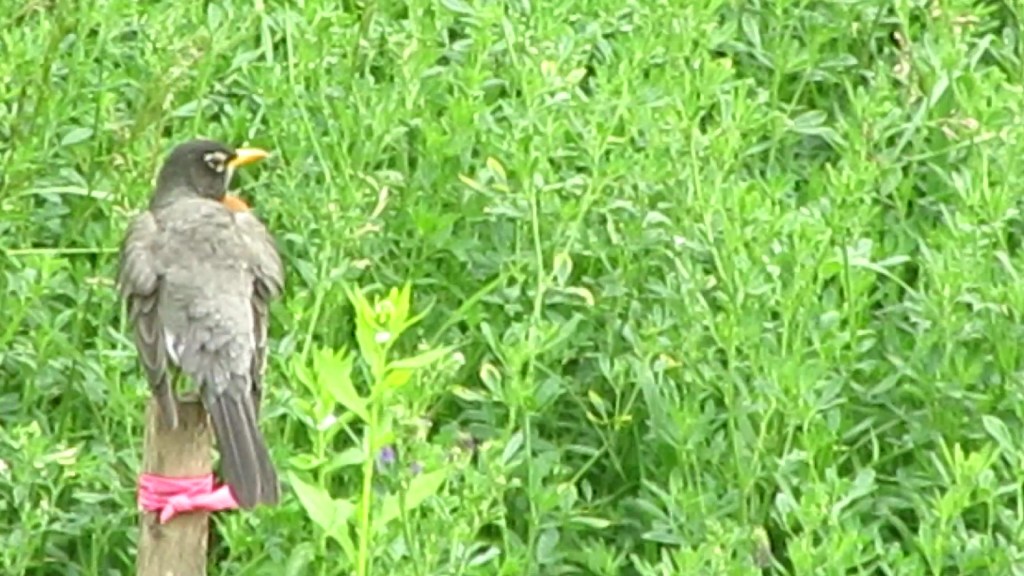
I think this is a female because of the color of its head. Typically, a male robin’s head will be virtually black but a female’s head is mostly gray. That’s according to my favorite handbook on Iowa birds by Stan Tekiela, Birds of Iowa Field Guide, 2nd edition updated in 2023.

I’m just remembering that it’s not entirely true that we’ve never had a problem with birds who had a poor sense of boundaries around houses we’ve lived in previously. In fact, one house we lived in was home to sparrows. We tried to scare them away with rubber snakes, but they didn’t work. I guess part of the trouble was they never moved unless we moved them around. And last year, a pair of house finches built a nest in the fake Christmas tree on the front porch of one of the previous houses we lived in. There were eggs in it when I found it. I set up a video camera to record their comings and goings. The eggs never hatched.

And that reminds me; we lived in a house many years ago in which a pair of mourning doves built a nest on one of our outdoor stereo speakers!

But before then, I can’t remember that we ever had birds’ trespass on the many properties we’ve previously lived in. It’s a common story. Bird encroachment can happen to you at any time in your lives.

There are many choices for how to cope with the issue, many of which you can find in the blog post with several years of comments, “How we stopped a robin’s pecking at window glass” I mentioned yesterday. Some suggested shooting the birds, although there is a law against it. Anyway, I’m pretty sure that, poor shot that I am, I’d put more holes through the windows than in any bird. Netting seems to be effective for some people, but for others only to the extent that they wrap themselves up in it because they’re fit to be tied from frustration.

While we’re waiting for the new window film to get here, I’m now wondering what’s going to happen to something else Sena bought the other day: patio tomatoes. We didn’t know you could grow tomatoes in a pot on your patio. Years ago, a garden center salesperson scoffed at the idea.

The pertinent concern is whether birds, like the Ms. Demonic Robin, will poke holes in the tomatoes. We have two varieties, the cherries and the slicers. One cherry tomato is already visible. Come to think of it, a lot of critters will eat tomatoes, and many of them trot, hop, crawl, or stomp across our back yard in and out of the woods.

The other plant Sena got was a Maltese Cross (Lychnis chalcedonica) flower. Because of the shape of its flowers, it’s named after the Maltese cross. It’s supposedly resistant to deer and rabbits. It can attract hummingbirds and butterflies. I think robins won’t eat it.

ADDENDUM: I almost forgot another interesting time a robin did something ridiculous at another house we used to live. You can read about the hoorah’s nest a robin built on our deck in the post “Who’s a Hoorah’s Nest?

The Window Hating Demonic Robin!

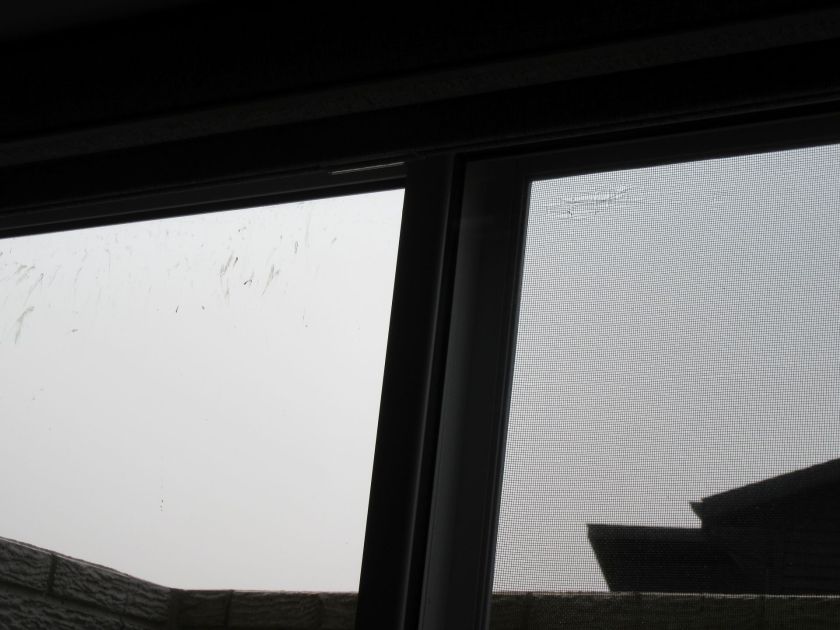
Now we’ve got a female robin who is pecking our window well window and even tearing up the screen.

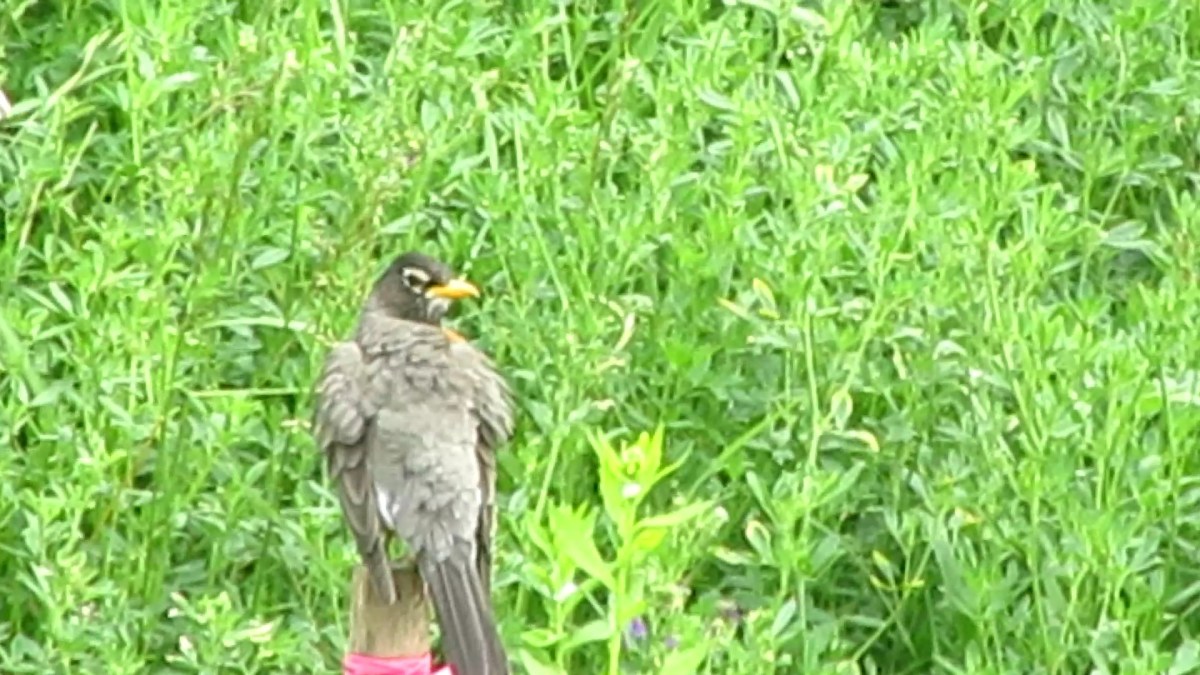
She can turn her head almost completely backward so I know she’s the window-hating, demonic robin from hell. She never pecks the window panes below the level of the well, which makes me believe this is still a problem with seeing her own reflection as another marauding bird.

I call her demonic because I caught pictures of her sitting on a wooden lath staring back at me with her head turned at pretty much 180-degree angle, glaring at me—like something out of the movie The Exorcist.

She’s been at it for over a week now with no end in sight. She’ll stay up most of the night flapping against the glass. Sena got the idea of trying some window film which has a pattern on it. Maybe that’ll break up the light. We taped it up just to see if it works.

It’s not like there’s a whole flock of birds attacking the house or the block or the town, like the movie “The Birds.” It’s not the Alfred Hitchcock thing, which he got from a story by Daphne du Maurier, also titled “The Birds.” I’ve never read it. I’m aware of one scientific explanation for birds attaching en masse, which was about the time thousands of seabirds attacked the coastline near Monterey, California because they ate neurotoxin infested phytoplankton.

It’s just one obsessed bird, and maybe she’s the only one snacking on poisoned phytoplankton. I can find plenty of advice on the web about how to stop this crazed bird-brain preoccupation. Take a look at the blog “Hinessight: How things look through an Oregonian’s eyes” and read the very long post “How we stopped a robin’s pecking at window glass.”

Read it for entertainment. And maybe you’ll find something workable to prevent devil-driven robins who spend a lot of time twirling their heads watching reruns of “The Exorcist” on their tiny screen TVs and get their kicks from pecking at your window. There are 13 years’ worth of comments, so get comfortable.

Comments Without Spoilers on the Svengoolie Movie “The Haunted Strangler”

Last night I watched the Svengoolie Show movie, “The Haunted Strangler” (1958), starring Boris Karloff as Dr. Rankin, which had psychiatric overtones, along with hints at demonic possession. This was evidently a rerun of a previous Svengoolie episode.

Without spoilers, I can point to a time setting goof you can see in two copies of the film on the internet Archive. It involves a line by the character Dr. Kenneth McColl (played by Tim Turner, in which he attempts to explain Dr. Rankin’s behavior using the term “projective identification.” The problem is that as far as the time setting of the film’s story (from 1860 to the early 1880s), this psychoanalytic term for a defense mechanism was not invented until the mid-1940s by psychoanalyst Melanie Klein.

The point in one of the Internet Archive copies of the movie “The Haunted Strangler” where “projective identification” is mentioned by Dr. Kenneth McColl (played by Tim Turner) as a way to explain Rankin’s behavior is at 1:03:28, added on 09/02/2019 by Amalgamated. It’s also at 1:28:44 on the Internet Archive copy “Creature Feature: The Haunted Strangler” which is actually a Svengoolie episode, added by “Uh? Want Entertainment” on 02/22/2022.

Another interesting feature pointed out on the Svengoolie show includes the lack of complicated makeup for the transformation of Dr. Rankin into a homicidal monster. Karloff just removed his dentures and grimaced. I’m pretty sure it saved money on production costs.

The other psychiatric connection of “The Haunted Strangler” to psychoanalysis is dissociation both as a mental disorder and a defense mechanism. It’s also connected to dissociative identity disorder. In fact, the character Dr. Kenneth McColl mentions “dual personality” in the movie “The Haunted Strangler.”

There’s an echo also to “The Strange Case of Dr. Jekyll and Mr. Hyde” which was a novella published in the mid-1880s by Robert Louis Stevenson, which was adapted from Freud’s concepts of the id, the ego, and the superego. And we got the 1920 film “Dr. Jekyll and Mr. Hyde” (which I’ve never seen) arising from the dual personality idea. I think Svengoolie showed “Abbott and Costello Meet Dr. Jekyll and Mr. Hyde,” which I’ve also not seen.

There were several warnings (more than I usually have seen) to viewers about the possibility some scenes in the movie might be too intense for younger or sensitive viewers.