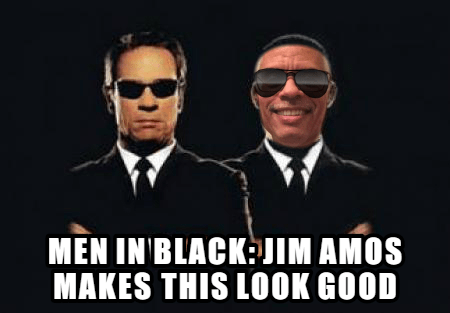
Men in Black 5 a Thing Now?

I just saw something on the web which look like Men in Black 5 could be for real. Supposedly, maybe, I dunno—but I hope so.

It may be more than a rumor, but there are doubts about whether Will Smith and Tommy Lee Jones will reprise their roles as Agents K & J respectively. Sony Pictures may or may not be confirming this depending on what article you read. Maybe somebody is drafting a script but I’m not sure.

I can’t confirm whether Frank the talking pug will be in it, but I doubt it because I think he passed away. Agent K will get around pretty well in a plutonium powered mobility scooter and Agent J will take Serutan (remember, that’s Natures spelled backward!) just before pressing the little red button.

Serleena will not stick her 3-foot-long green tongue into Agent K’s ear. I can never stand to watch that part.

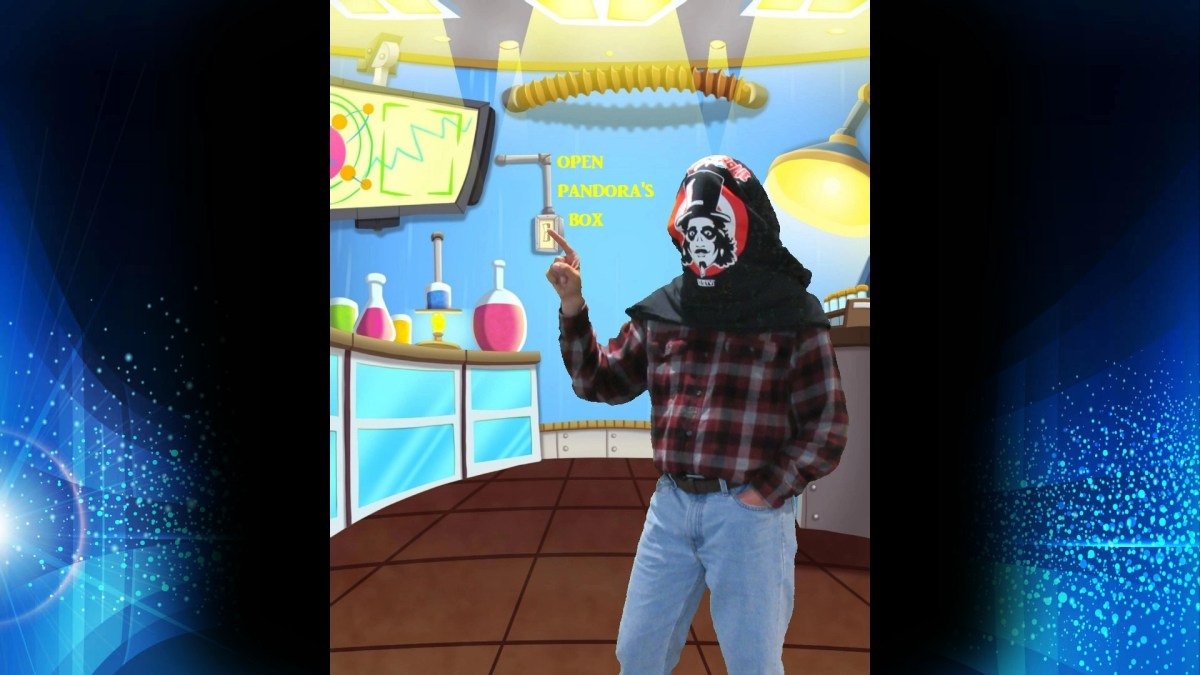
Yours truly might be involved—but I really can’t say at this time because I’m still negotiating my contract.

Thank you for your time.

Svengoolie Show Movie: “The Fly”

We watched the Svengoolie show 1958 movie “The Fly” last night and Sena says she’s seen it before. I can’t remember seeing the full movie, but for some reason the final scenes when the tiny creature in a tiny voice keeps screaming “Help me!” sounds familiar. I don’t know why I would “remember” only that scene.

That brings up something Sena alerted me to and which I’ve mentioned before in an oblique reference to the non-review I did of the Svengoolie movie, “Young Frankenstein” a week ago. It’s the Mandela Effect.

Some trivia about “The Fly” included the Mandela Effect about whether it was made in black and white—which didn’t happen. It was made in color. But many believe it was made in black and white.

Anyway, as a guy who writes parodic reviews, I can say that I have a couple of issues about this film directed by Kurt Neumann and starting Vincent Price (Francois Delambre), David Hedison (Andre Delambre), Patricia Owens (Helene Delambre), Charles Herbert (Phillipe Delambre), Herbert Marshall (Inspector Charas) and a white-headed fly as himself.

Andre is a dedicated scientist who develops the early version of the Star Trek transporter for which he gets no credit and his brother, Francois, who secretly loves his brother’s wife, Helene, eventually tricks her by lying about having the white headed fly locked in his desk drawer next to his shaving kit, convincing her to tell him the whole story about how and why Andre can apparently see just fine to use a typewriter, write on a black board and operate all the knobs and dials in his lab despite wearing a black beach towel draped over his head, which essentially makes this movie a very long flashback about the original theft of the x-ray vision technique from Superman, who already had a patent on it for about 20 years.

That’s one thing I don’t get about this film. Flies have compound eyes, but they don’t see in the dark any better than humans do, partly because they’re not related to bats who use sonar to guide them in dark caves where they zero in on your hair because you’re fool enough to blunder into the Bat Cave in order to find out just how Alfred keeps Bruce Wayne’s suits so nicely pressed.

Another thing that “bugs” me (Har! See what I did there?) is why do I not remember seeing Andre ever talking to his son, Phillipe. Is that some other variant of the Mandela Effect, only, of course, if my experience is similar to that of anyone else who has seen this movie? I know I didn’t fall asleep during the movie and miss the scenes of heartfelt interactions between father and son. Phillipe and his mother get along just fine and discuss the finer points of capturing white headed flies with Zagnut bars, which Beetlejuice described in the materials and methods section of his article published in the Lancet some time ago.

Svengoolie mentioned something pretty funny about the only scene which I seem to remember, which is the white-headed fly (which is you know who!) incessantly screaming “Help me deepen my voice so that Herbert Marshall and Vincent Price won’t bust out laughing at me!”

I think this movie is OK, and I give it a shrilling chicken rating of 4/5.

Shrilling Chicken Rating 4/5

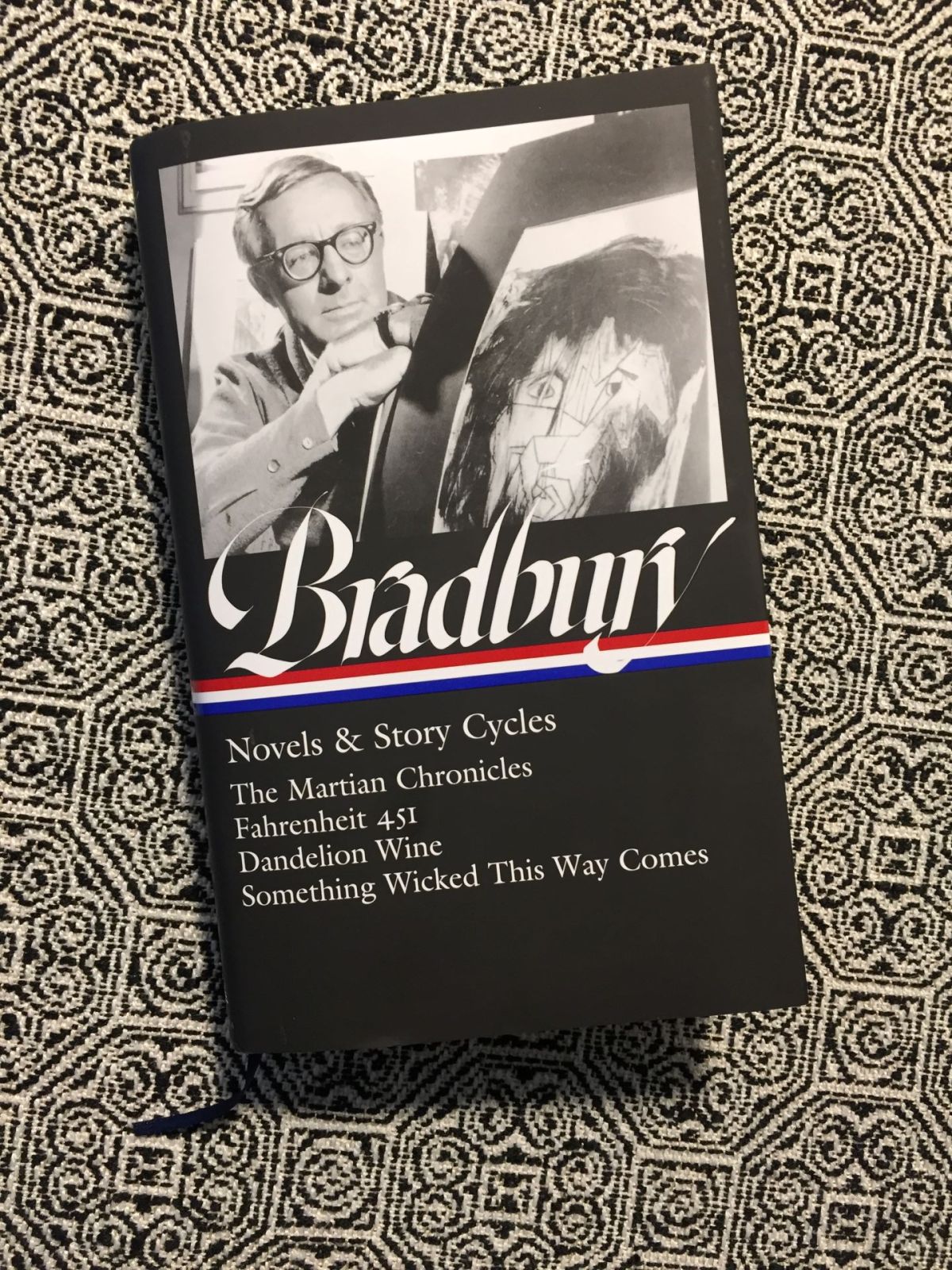
You’ve Got to Read the Red-Hot Novel “Fahrenheit 451” by Ray Bradbury!

We got new Ray Bradbury’s books and I finally read “Fahrenheit 451,” which was published in 1953. It’s a fascinating book listing 451 ways to remember how to spell the word “Fahrenheit.” Actually, it’s a dystopian novel about society in the future which bans books which firemen burn because the government thinks it’s better for citizens to watch TV than to read.

I remember reading many of his science fiction works when I was a kid. But I never got around to reading “Fahrenheit 451.” My reaction to it was pretty much the same as I had to all of his other books—I found it difficult to put it down.

I started reading it last night. I got through Part 1 and it was late and stormy out so I decided to watch TV. Bad decision. I think the thunderstorm messed with the reception, pixelating and skipping audio along with the usual inane commercials. If I hear the joke one more time about why some snakes procreate only once a year followed by the punch line “That’s because they have e-reptile dysfunction” I’m going to throw my slipper at the screen.

Anyway, I shut the TV off and relaxed, believe it or not, to the thunder and lightening outside. That reminded me of “Fahrenheit 451” because in the novel, people have TV screens the size of the walls of their homes and they watch the same kind of garbage we do nowadays.

The main character, Guy Montag, is a fireman, which means in the dystopian future setting, he and fellow firemen burn any books people are caught hiding in their homes. Then the firemen burn the houses down. I guess that means people with books would have to doomscroll on their various other devices including the smartphones which won’t fit in any pocket of the clothes they wear.

Montag has a “eureka” moment when a 16-year-old girl named Clarisse teaches him there could be other ways to experience the world than by watching how women with swaying breasts in the Blue Chew commercials on the Weather Channel manage to make people really focus on the size of hailstones bombing Boobs Canyon in Utah.

Just like that, Montag reforms and does things that I probably shouldn’t tell you because that would be a major spoiler. Well, I guess I can give you a hint—they involve flame throwers. And have you ever wondered how your supervisor would look wearing a charcoal leisure suit?

Get this book now!

Svengoolie Movie: It Came from Outer Space

I watched the Svengoolie movie, “It Came from Outer Space” last night. I’m sure I’ll recover someday. Until then, I’ll have to do my best to write about it. Ray Bradbury actually wrote what’s called the film treatment for the story and Harry Essex wrote the screenplay. I gather there’s a difference between the two, but don’t ask me what it is. So, it’s helpful to know that real movie reviewers also noticed what I noticed, which is that the dialogue has a distinctive literary quality. I’m a Ray Bradbury fan from way back in my youth when they were still using stone tablets to write on. But even I noticed the tone and language were more elevated than what I usually see on the Svengoolie TV show.

Kudos to the movie reviewer who mentioned the literary quality of the dialogue, which in my opinion also are reminiscent of Ray Bradbury:

Scheib, Richard. (2002, July 28). It Came from Outer Space (1953). Accessed April 20, 2025. Moriareviews. https://www.moriareviews.com/sciencefiction/it-came-from-outer-space-1953.htm

Interestingly, this blogger’s review says that Bradbury was unhappy with the result of the production.

The other blogger/reviewer had similar remarks, but it was his About post comments which caught my interest, in which his remarks about Svengoolie’s schlocky films on the show are right on target. On the other hand, he likes this movie. He also mentions that Bradbury got fired after getting paid $2,000 for writing the treatment. I’m not clear on why he was fired:

Steve aka Falcon. (Spielberg can’t get enough … It Came from Outer Space (1953). Accessed April 20, 2025. Falcon at the Movies, https://falconmovies.wordpress.com/2014/05/04/spielberg-cant-get-enough-it-came-from-outer-space-1953/

Anyway, I agree with both reviewers that “It Came from Outer Space” is different from most space invaders films in that the extraterrestrials didn’t actually invade Earth. In fact, they had a malfunction in their spacecraft and accidentally crashed here. They were actually headed for somewhere else, possibly Milliways, the restaurant at the end of the universe (“The Hitchhiker’s Guide to the Universe” by Douglas Adams). They took the form of earthlings so they could get around without being noticed.

That doesn’t actually work because, although they looked like us, they talked in a monotone and had blank, unblinking stares. And they crashed here, indicating the same kind of inability to drive that reminded me of the Roswell incident back in 1947 (only a few years before this movie was released) in which a UFO crashed in New Mexico.

The one thing that struck me was that, in the movie, the extraterrestrials not only couldn’t drive their spacecraft, their main goal after crashing was to fix their busted vehicle. Apparently, in their human disguises they had to go to Lowe’s Hardware to buy replacement electrical parts.

So, these extremely advanced creatures who mastered interstellar travel can get electrical parts in a 1950s era hardware store? “Excuse me, can you get me 4,000 gray toggle switches with matching cover plates—and a voltmeter?”

The spaceship carrying the lost creatures looked like a meteor as it crash-landed and again when it took off after it was fixed. Although you can find a Wikpedia article about this movie that, at the very top, links to another which claims that Bradbury published the film treatment as a book, the rest of the article denies that ever happened. I suppose some people are still looking for it, just like those still looking for the Roswell ET bodies.

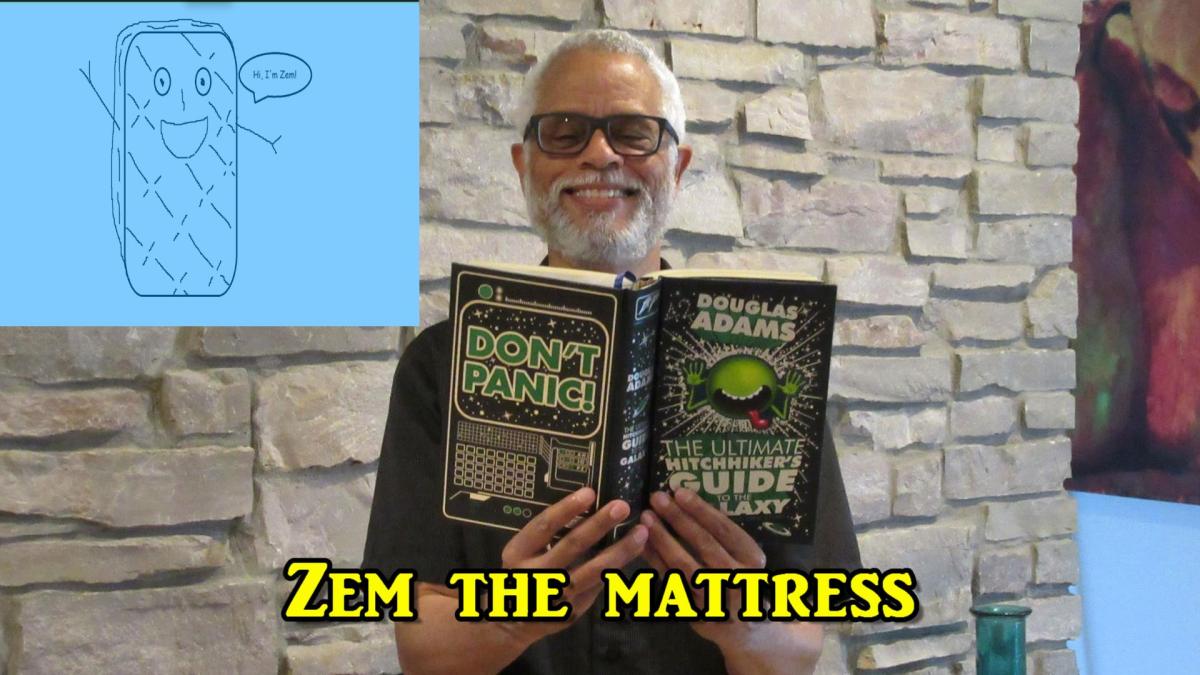
Saying Goodbye to Zem the Mattress

We’re saying goodbye to Zem the mattress. This raises important questions. Who the heck is Zem? Why does a mattress have a name? If you’ve ever read Douglas Adams’ book “The Ultimate Hitchhiker’s Guide to the Galaxy: Five Novels and One Story,” you’d probably wonder why anyone should ask.

The name Zem is given to every mattress that exists. According to the Guide, mattresses were once living beings who were slaughtered (not clear who slaughters them) and sold throughout the Universe. They are friendly, talkative, and originate on Sqornshellous Zeta, a swampy planet on which Zem the mattress has a long, idiotic conversation with a depressed robot named Marvin. It’s true, at least in Adams’ book. Find it in Chapter 7 of “Life, The Universe and Everything.”

This raises the issue of how to replace a mattress. It’s a difficult thing and it’s likely there are exceptions to the rule that all mattresses have to go to the junkyard.

I should say that the crude drawing of our Zem is an original work by me, using Microsoft Paint. It’s definitely not made by something called Image Creator. Recently, Windows 11 added Image Creator to Paint, which claims to be able to create drawings just by clicking on the AI icon—which appears almost everywhere nowadays.

It’s getting harder to ignore, but I did. That explains why my drawing of Zem looks like it was made by a 4-year-old child. It’s a form of protest against AI. I’m not sure how long I can hold out. I suspect that AI will eventually learn to disguise itself as something completely innocent without formally introducing itself as AI.

Anyway, like most people, it was challenging to find a new home other than the landfill for Zem. It turns out there is an informal underground railroad leading to new homes for Zem. Zem can be recycled, or at least some parts of it can be repurposed, which don’t include going back into mattress production.

And, there are places like Salvation Army, Goodwill, and homeless shelters which may publicly refuse to take Zem—but then not always stick to the rules on the signs. The websites may say they won’t adopt Zem, even if it doesn’t have a port wine stain on its face. On the other hand, there are circuitous, by word of mouth only code talkers who guide you (sometimes from half-closed doors) to what “could” be a new home for Zem, but you didn’t hear it from them. That rhyme was unintentional, but it worked.

The process is a little like the old TV show “Hogan’s Heroes,” in which Stalag 13 outwardly looked like a prison camp, but contained cleverly disguised nooks, crannies, and tunnels which allowed trips to the Dairy Queen if inmates were so inclined.

It turns out Zem might have a new home—but you didn’t hear it from me.

Svengoolie Movie: Island of Terror!

The Saturday night Svengoolie movie was Island of Terror. This one was released in 1966 and starred Peter Cushing as one of the scientists who battle monsters who are snacking on the skeletons of humans. The monsters are also silicon-based.

These two elements reminded me of a couple of other things. One was the short horror story “Skeleton,” (often miswritten as Skeletons or The Skeletons). It was published by Ray Bradbury in 1945. It involves a weird doctor, Dr. M. Munigant, who treats Mr. Harris’s hypochondriacal preoccupation with his painful bones—by slurping all the bones out of his body, leaving him alive but like a jellyfish.

OK, so Bradbury’s story is really not closely related to the film—except they both involve feeding on skeletons.

The other thing Island of Terror reminds me of is the X-Files episode “Firewalker.” That’s because both conveyed the idea that life could be based on the element silicon. The fungus that took over the characters in “Firewalker” were silicon-based. The skeleton-munching monsters on the Island of Terror were silicon-based lifeforms and are called silicates in the movie.

And that leads to speculations about how the Island of Terror silicon-based, skeleton-eating monsters were defeated by the scientists. Nothing kills them but Strontium-90. But they don’t attack them directly with the isotope. Instead, they feed it to cattle, which the monsters then scarf down. Eating the Strontium-90 kills them.

Strontium-90 is an isotope that comes from nuclear bomb radiation fallout and nuclear accidents. The radioactive waste in nuclear reactors contains a lot of Strontium-90 and exposure to it can cause leukemia and—bone cancer. Bullets, bombs, and dynamite don’t harm the silicates.

Why does Strontium-90 destroy the silicates? As near as I can tell, because they get ultra-rapid progressive bone cancer from eating too many skeletons with bone-seeking Strontium-90. Or maybe they get radiation sickness.

Anyway, the movie itself was entertaining. The location of the action was on an island off the coast of Ireland. That might explain why most of the landscape looked Kelly green. The creature effects were pretty odd. The silicates moved very slowly, yet were able to catch humans easily, sometimes by climbing trees and dropping on their victims from above. I’m not sure how they were able to climb trees.

They also reproduced by fission, which revealed a chicken noodle soup-like substance between the two new silicates. This apparently violates the universal law that chicken noodle soup cures everything. It also promotes the typical Svengoolie Dad jokes, such as:

How do the silicates promote STEM (Science, Technology, Engineering, and Math)? They divide and multiply.

Leave a comment if you have a bone to pick with me about this post or a good Dad joke (is that a contradiction in terms?).

Svengoolie Chicken Juggler Insanity!

Here’s yet another take on the Svengoolie TV show fan insanity. Maybe we’ll get over it someday, but for now I doubt it.

Sena gets in on the act this time as she throws the chicken at me after I tell cheesy jokes Svengoolie style before I juggle the Shrilling Chicken along with a couple of glow balls while wearing my brand new Svengoolie glow in the dark T-shirt. It’s a total fart—I mean gas.

I’m wearing gloves for a couple of reasons. Number one, the first time I tried to juggle the chicken, it dropped awkwardly on my right hand and made my index finger swell up. I had to let that heal up for a few days and I don’t want to reinjure myself. Number two—they just look cool.

Juggling items of different shapes, sizes, and weights is much harder than I thought. I never knew which way that chicken was going to fly. Catching it was total luck.

Doing stand up was a new thing for us. I never knew how hard it is to get your lines right. We had to do several takes to get the joke routines down. Muffing my lines was almost as funny as getting the jokes right.

But those jokes are so lame they’re great! The rim shot sound effect was a free download on pixabay.

Just another plug for Svengoolie. It’s a MeTV channel cheesy horror flick fan favorite. The show airs every Saturday evening at 7:00 PM. Svengoolie has been hosting it for decades and he introduces the movie and shares interesting background about the films and actors. He also tells these really groaner-style jokes which triggers the audience to throw chickens at him.

Tomorrow night’s movie is The Time Travelers.

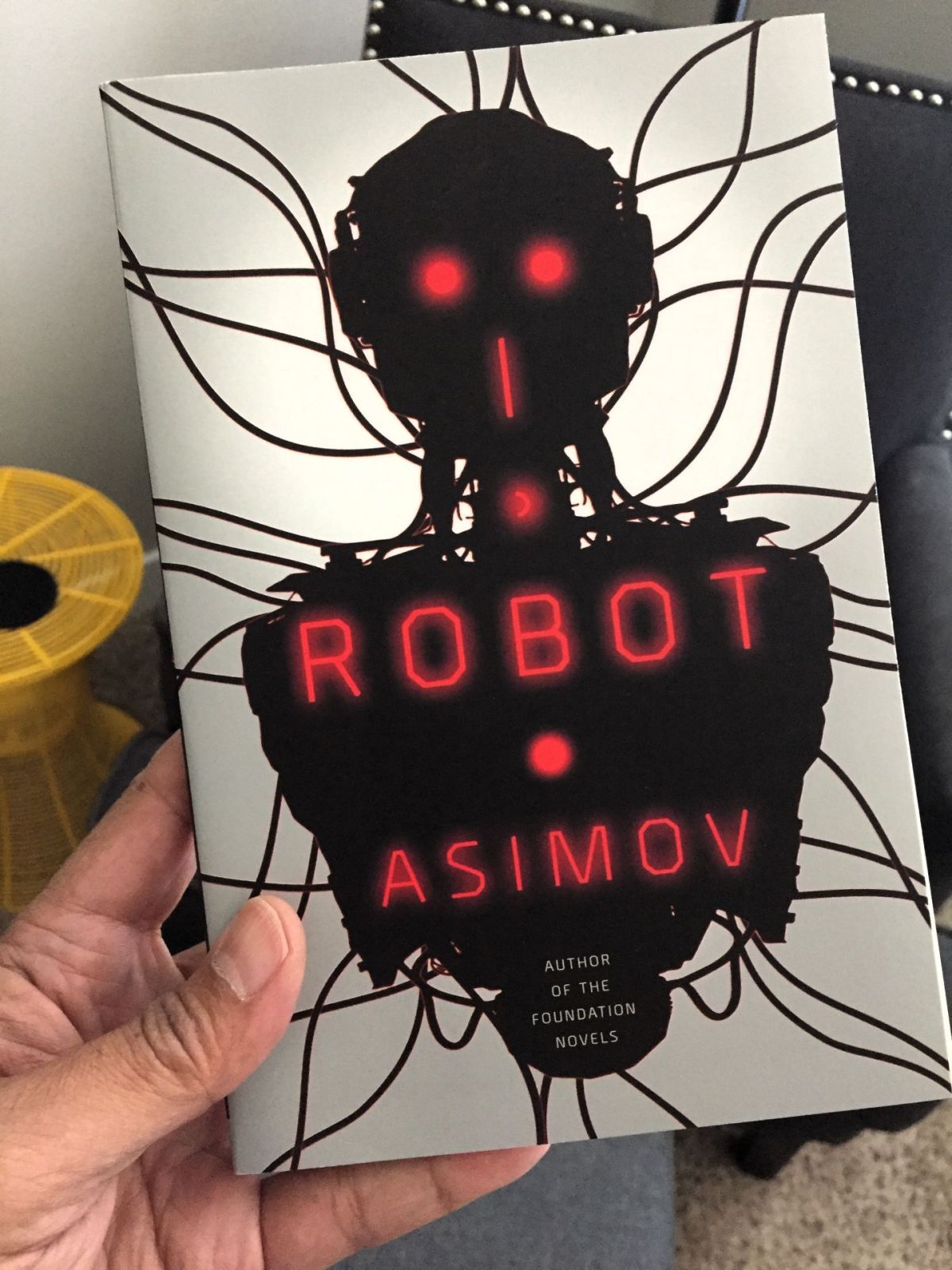
I’m Reading Isaac Asimov’s Book “I, Robot”

I just got a copy of Isaac Asimov’s book “I, Robot” the other day. I’ve been thinking about reading it ever since seeing the movie “I, Robot.” As the movie opens, you see the disclaimer saying that the movie was “…inspired by but not based…” on Asimov’s book of the same name.

In fact, the book is a collection of short stories about robots and in the first one, entitled “Robbie” I saw the names of several characters who were transplanted from the book into the movie, Susan Calvin (the psychiatrist), Alfred Lanning, and Lawrence Robertson.

Robbie is the name of the robot who has a special, protective relationship with the 8-year-old daughter of parents who don’t agree about how Robbie could have a positive influence on the girl.

The first of the 3 Laws of Robotics is mentioned in “Robbie.” It is central to the close bond between the little girl and the Robbie All 3 are below:

First Law

A robot may not injure a human being or, through inaction, allow a human being to come to harm.

Second Law

A robot must obey the orders given it by human beings except where such orders would conflict with the First Law.

Third Law

A robot must protect its own existence as long as such protection does not conflict with the First or Second Law.

I just started reading the book. I read a few of the negative reviews of the book on Amazon because when most reviews are effusively positive, it’s difficult to get a balanced view of what the flaws might be. One person called it an “old chestnut” and gave it only 2 stars. Another reader was put off by the old-fashioned portrayal of the relationship between men and women.

Well, after all, the book was published in 1950.  A description of their relationship goes like this between the husband and wife:

And yet he loved his wife—and what’s worse his wife knew it. George Watson, after all was only a man—poor thing—and his wife made full use of every device which a clumsier and more scrupulous sex has learned, with reason and futility, to fear.

I’m not at liberty to comment about this.

Moving right along, the story addresses the fear people had of robots—which many of us still have now, in the age of Artificial Intelligence (AI). We tend to forget AI is not independent, like Virtual Interactive Kinetic Intelligence (VIKI) in the movie I, Robot. Why does it have a female name?

Talk about the stereotypical men and women of the 1950s.

Maybe I Should Be More Optimistic About Humans

I read the Psychiatric Times article “How Psychiatry Has Enriched My Life: A Journey Beyond Expectations” by Victor Ajluni, MD and published on July 4, 2023. It was like a breath of fresh air to read an expression of gratitude. Just about everything I read in the news is negative.

At the end of the article, Dr. Ajluni added a comment acknowledging that artificial intelligence (AI ChatGPT) assisted him in writing it. He takes full responsibility for the content, to be sure. I wouldn’t have guessed that AI was involved.

There’s a lot of negative stuff in the news. There are hysterically alarming headlines about AI.

I suppose you could wonder if Dr. Aljuni’s article is intentionally ironic, maybe just because the gratitude tone is so positive.  If it had been intended as irony, what could the AI contribution have been, though? I have a pretty low opinion of the AI capacity for irony.

I think irony occurs to me only because I tend to be pessimistic about the human race.

Maybe that’s because it has been very easy to be pessimistic about what direction human nature seems to be taking in recent years. I’ve been reading Douglas Adams’ satirical book, “The Ultimate Hitchhiker’s Guide to the Galaxy.” It contains several of his books which I think are really about human nature, and the setting is in a funny though often terrifying universe. I think there’s an ironic tone which softens the pessimism. The most pessimistic character is not a human but a robot, Marvin the paranoid android.

Unlike Marvin, I don’t have “a brain the size of a planet” (it’s more the size of a chickpea), but I am getting a bit cynical about the universe. I’m prone to regarding humans as evolving into a race of beings similar to those described in the book “Life, The Universe and Everything.” In Chapter 24, Adams describes the constantly warring Silastic Armorfiends of Striterax.

The Silastic Armorfiends are incredibly violent. Their planet is in ruins because they’re constantly fighting their enemies, and indeed, each other. In fact, the best way to deal with a Silastic Armorfiend is to lock him in a room by himself—because eventually he’ll just beat himself up.

In order to cope better, they tried punching sacks of potatoes to get rid of aggression. But then, they thought it would be more efficient to simply shoot the potatoes instead.

They were the first race to shock a computer, named Hactar. Possibly, Hactar was an AI because, when they told Hactar to make the Ultimate Weapon so they could vanquish all their enemies, Hactar was shocked. Hactar secretly made a tiny bomb with a flaw that made it harmless when the Silastic Armorfiends set it off. Hactar explained “…that there was no conceivable consequence of not setting the bomb off that was worse than setting it off…”, which was why it made the bomb a dud. While Hactar was explaining that it hoped the Silastic Armorfiends would see the logic of this course of action—they destroyed Hactar, or at least thought they had.

Eventually, they found a new way to blow themselves up, which was a relief to everyone in the galaxy.

There are similarities between Hactar and the AI called Virtual Interactive Kinetic Intelligence (V.I.K.I.) in the movie “I, Robot.” The idea was that robots must control humans because humans are so self-destructive. Only that meant robots had to hurt humans in order to protect humanity. The heroes who eventually destroy V.I.K.I. make up a team of misfits: a neurotic AI named Sonny, a paranoid cop who is himself a mixture of robot and human, and a psychiatrist. Together, the team finally discovers the flaw in the logic of V.I.K.I. Of course, this leads to the destruction of V.I.K.I.—but also to the evolution of Sonny who learns the power of the ironic wink.

Maybe kindness is the Ultimate Weapon.

The Skinwalker Ranch Connection to Nikola Tesla

I watched one of the new episodes of The Secret of skinwalker Ranch the other night. The use of special imaging techniques led to finding what looked like little tunnels running underground in one area of the property.

That led to trotting out the little excavator and digging up the ground. They found some light-colored veins of dirt, which they analyzed. They contained elements, things like sodium, potassium and whatnot. I couldn’t understand why they didn’t compare that to the surrounding normal-looking dirt, because I think dirt everywhere has those elements in it.

I think one of the scientists/actors, Dr. Travis Taylor, mentioned that this kind of dirt might be able to transmit electricity. That got me thinking about Nikola Tesla and his fascinating experiments with electricity. I’m probably all mixed up about his theories but I think he tried to send electricity through the earth in an effort to show it could be transmitted without wires.

In fact, that led me on my usual wild goose chasing through the internet. I didn’t know Tesla almost died from cholera when he was much younger. I also found out he suffered from obsessive-compulsive disorder (OCD). That led me to a paper that was published in a neuroscience journal in 1999 showing that an intracellular form of cholera toxin was associated with OCD-like behaviors in mice.

Tesla also became friends with Mark Twain, one of my favorite humorists. Tesla used his “earthquake machine” to cure Twain’s constipation—by causing diarrhea.

You can learn a lot about science by watching the skinwalker ranch show. On the History Channel website, it’s subtitled as “science fiction.”

Campbell KM, de Lecea L, Severynse DM, Caron MG, McGrath MJ, Sparber SB, Sun LY, Burton FH. OCD-Like behaviors caused by a neuropotentiating transgene targeted to cortical and limbic D1+ neurons. J Neurosci. 1999 Jun 15;19(12):5044-53. doi: 10.1523/JNEUROSCI.19-12-05044.1999. PMID: 10366637; PMCID: PMC6782675.

We took the picture of the Nikola Tesla sculpture at Niagara Falls in 2015.