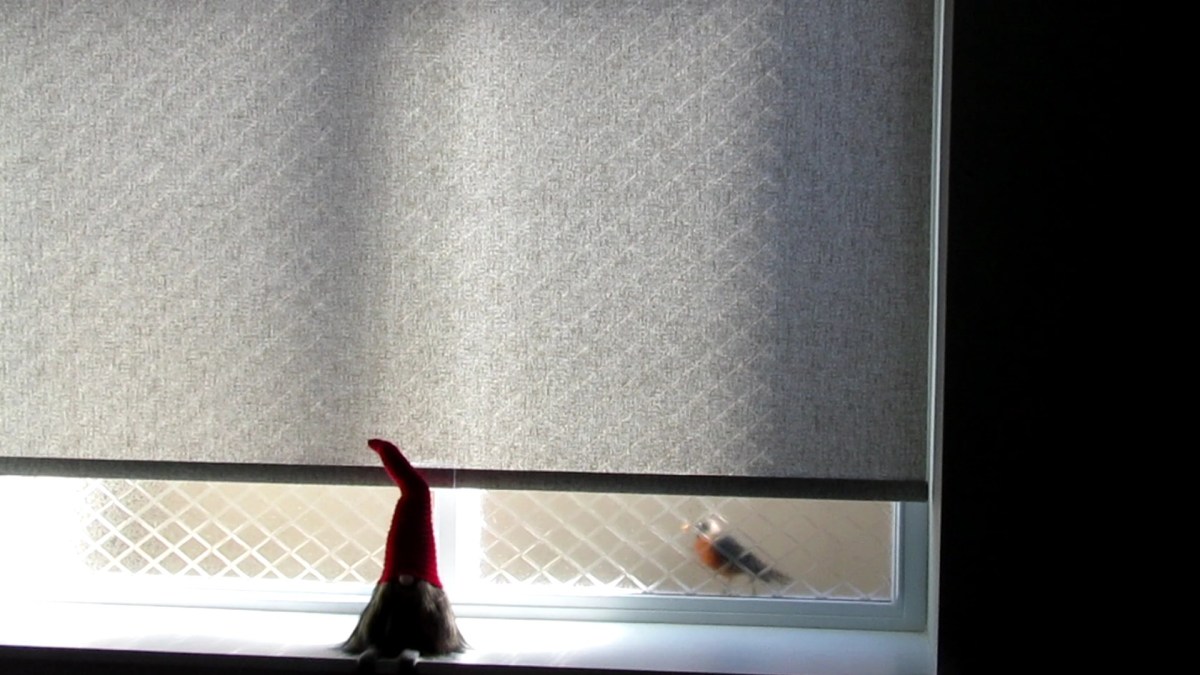
A couple of days ago, last year’s pesky female robin came back to peck at one of the basement windows. It’s a window well and she looks like she might be bringing next materials to it. She’s also beating at the window with her wings, as though she sees her reflection—despite the window film Sena applied to it.
I’m pretty sure this is the same robin who twisted her head around backward, Exorcist style, to stare balefully at me last spring.
She does this during the day. They sleep at night, thank goodness. But at the crack of dawn, she’s out quixotically pecking and flapping at the windows like they’re windmills.
We’re also on the lookout for the house finch pair. They seem to be scouting the covered back porch fan as a likely spot for a nest.
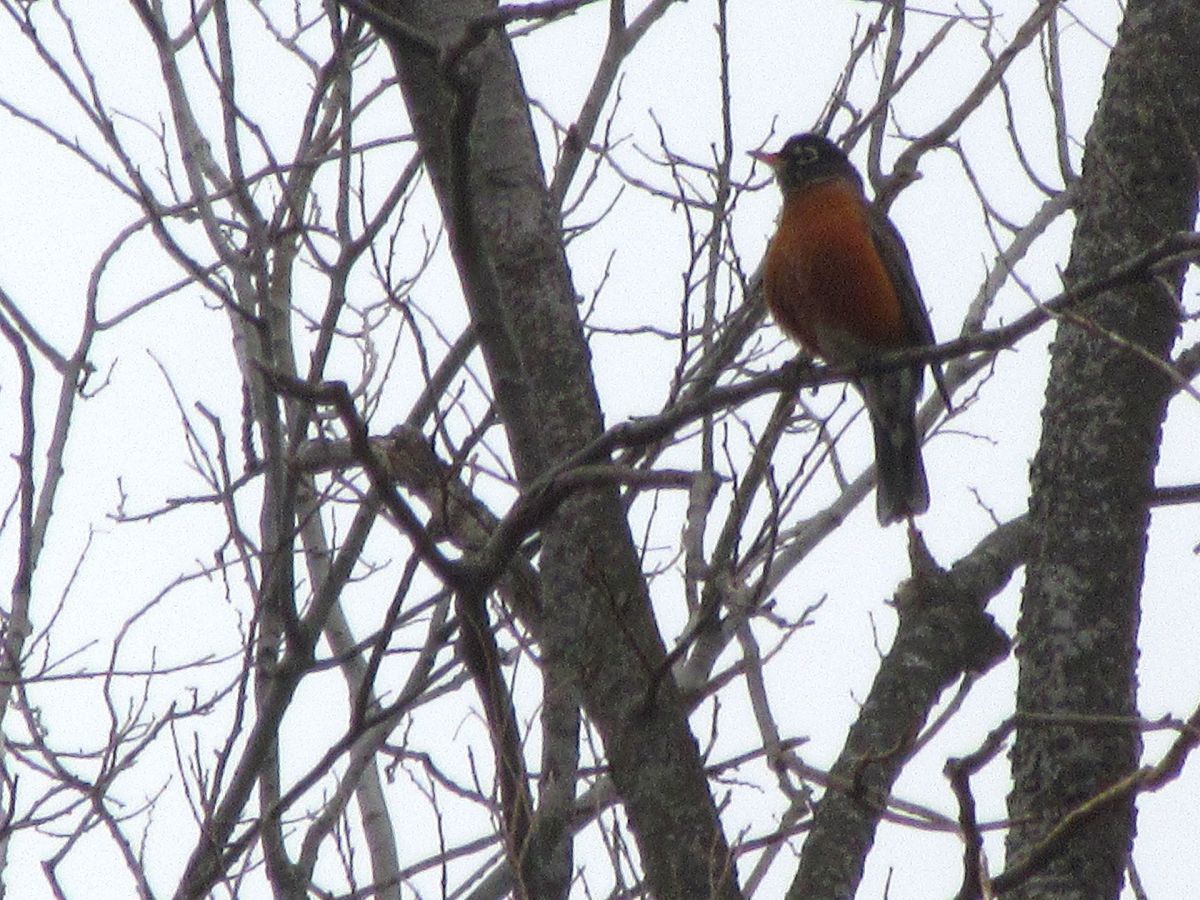
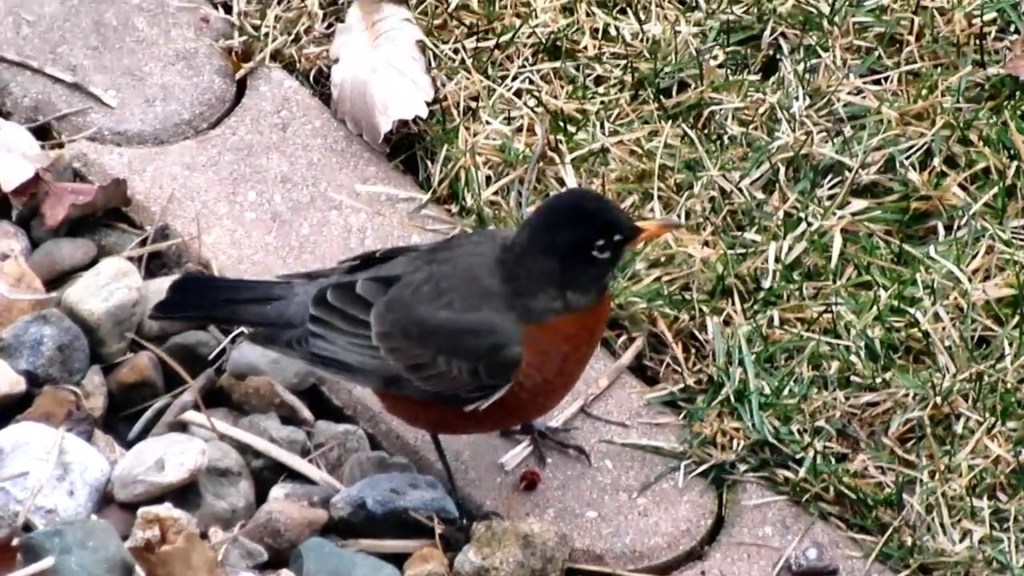
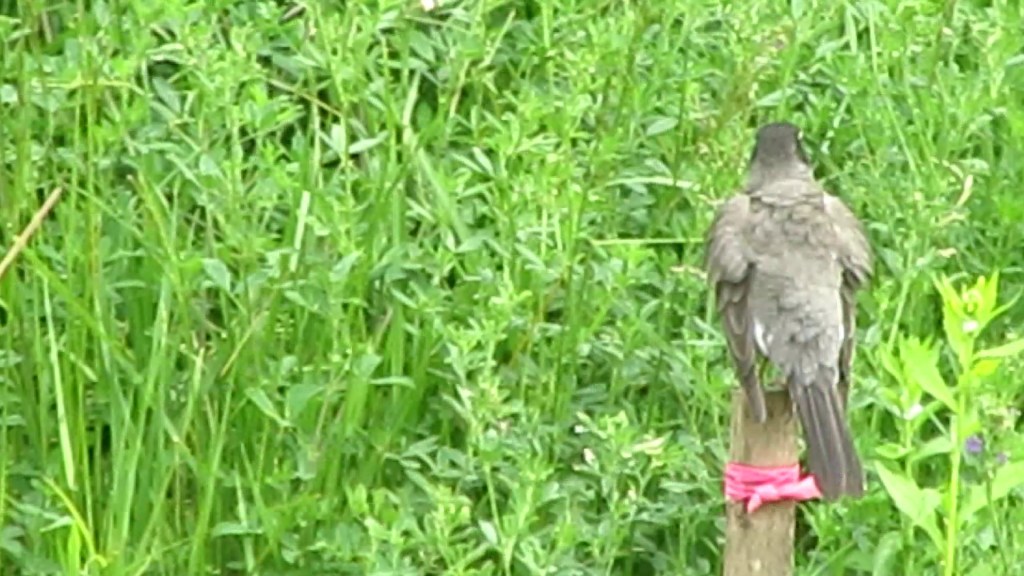
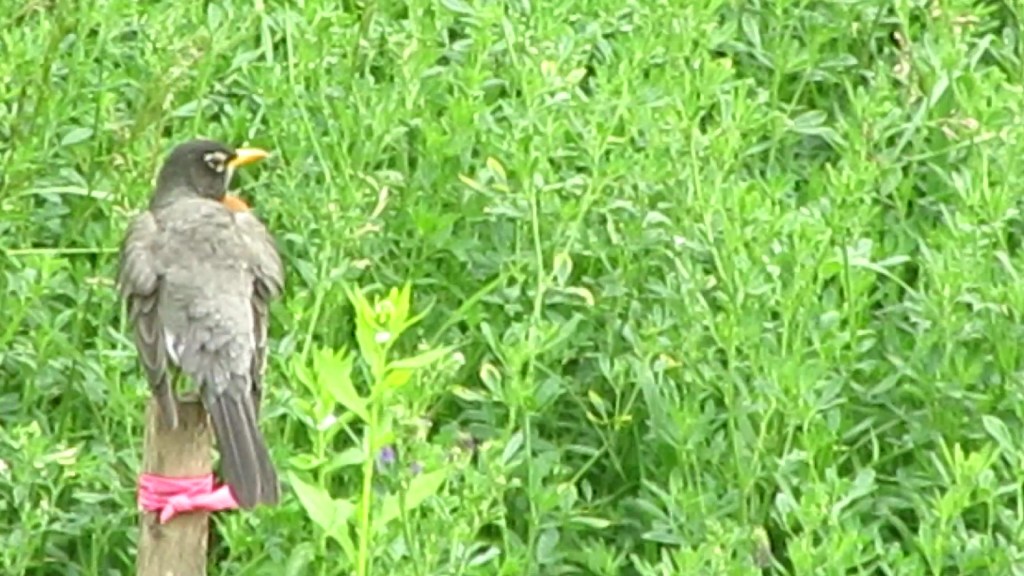
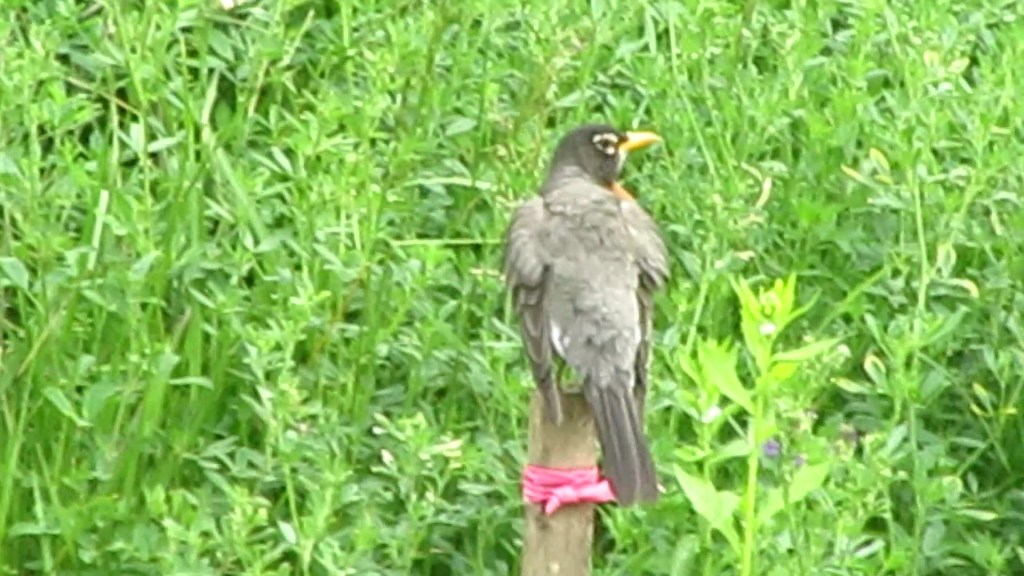
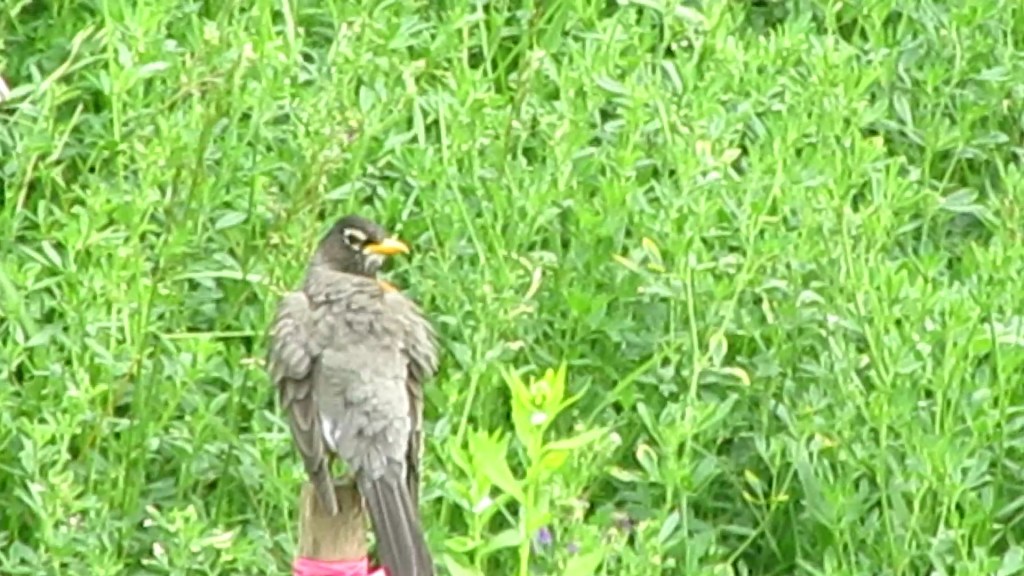
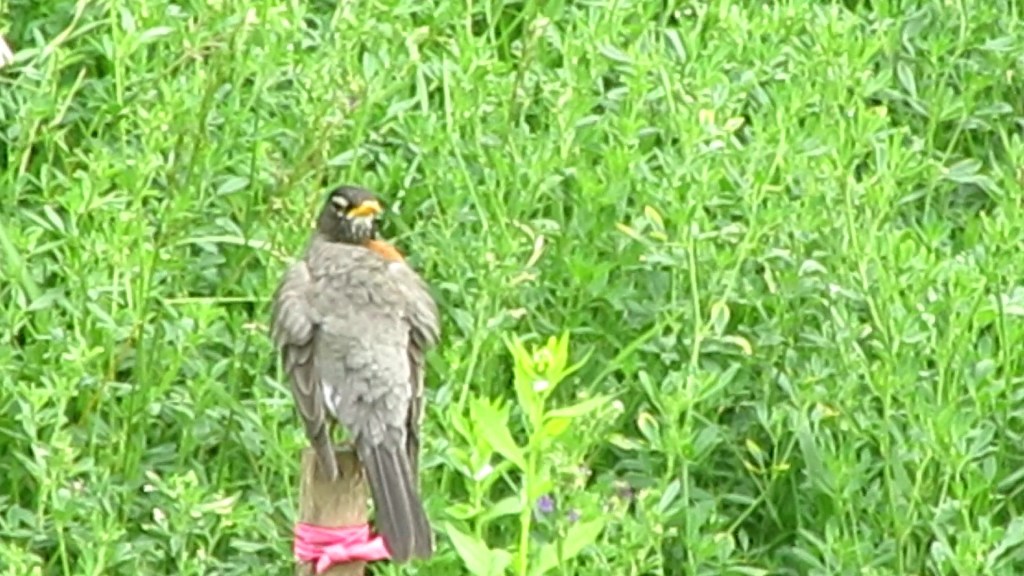
I caught sight of a couple of robins today and managed to get a fair snapshot of one. They’re casing our back yard for nesting sites. I’m also wondering if they’ll attack their reflections in our windows now that Sena covered them with plastic overlays last year.
So far, they sit high up in the trees-and they just eyeball me.
This morning, we noticed the demonic robin flapping around our downstairs window well again. The window film doesn’t work, probably because it’s essentially clear and has a sort of light scattering pattern on it. So, Sena ordered a new film which is basic black. We’re hoping it eliminates refection, which we think is still the main explanation for the bird’s behavior.
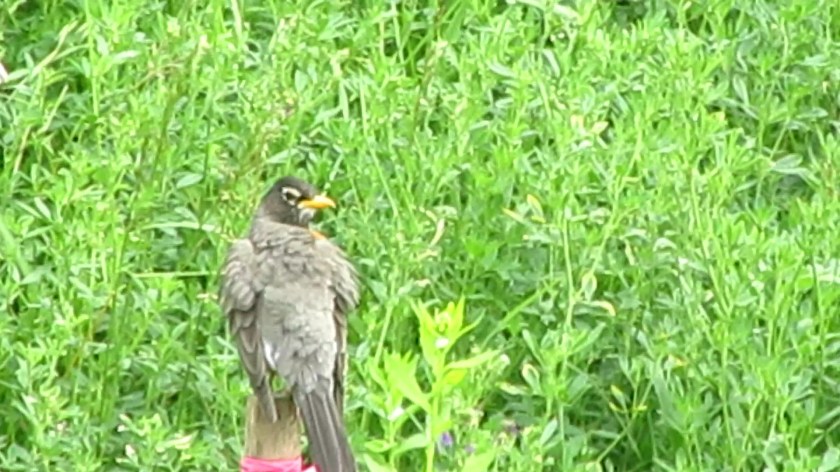
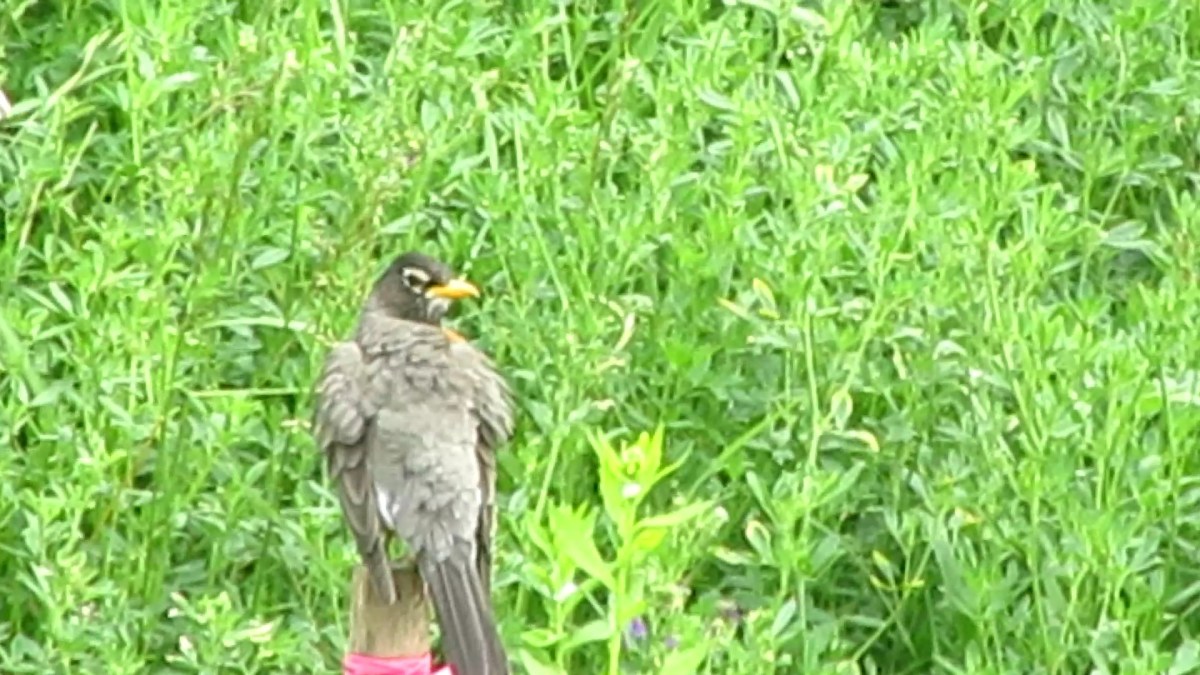
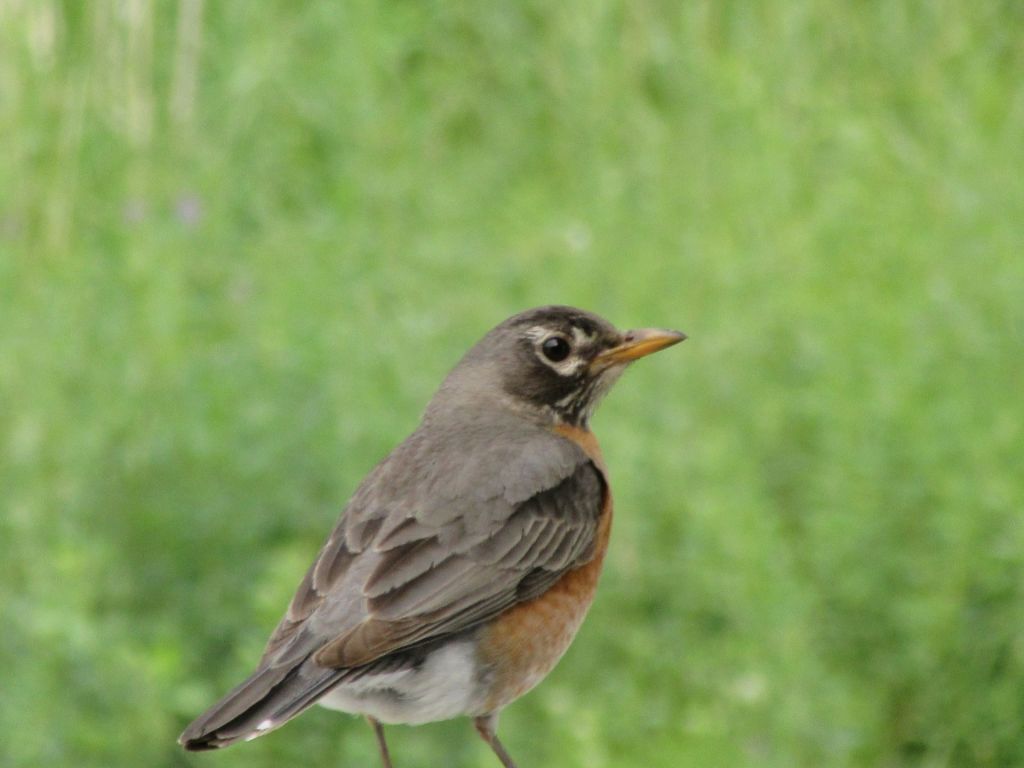
I think this is a female because of the color of its head. Typically, a male robin’s head will be virtually black but a female’s head is mostly gray. That’s according to my favorite handbook on Iowa birds by Stan Tekiela, Birds of Iowa Field Guide, 2nd edition updated in 2023.
male robinfemale robin
I’m just remembering that it’s not entirely true that we’ve never had a problem with birds who had a poor sense of boundaries around houses we’ve lived in previously. In fact, one house we lived in was home to sparrows. We tried to scare them away with rubber snakes, but they didn’t work. I guess part of the trouble was they never moved unless we moved them around. And last year, a pair of house finches built a nest in the fake Christmas tree on the front porch of one of the previous houses we lived in. There were eggs in it when I found it. I set up a video camera to record their comings and goings. The eggs never hatched.
rubber snakehouse finch in fake Christmas tree
And that reminds me; we lived in a house many years ago in which a pair of mourning doves built a nest on one of our outdoor stereo speakers!
But before then, I can’t remember that we ever had birds’ trespass on the many properties we’ve previously lived in. It’s a common story. Bird encroachment can happen to you at any time in your lives.
There are many choices for how to cope with the issue, many of which you can find in the blog post with several years of comments, “How we stopped a robin’s pecking at window glass” I mentioned yesterday. Some suggested shooting the birds, although there is a law against it. Anyway, I’m pretty sure that, poor shot that I am, I’d put more holes through the windows than in any bird. Netting seems to be effective for some people, but for others only to the extent that they wrap themselves up in it because they’re fit to be tied from frustration.
While we’re waiting for the new window film to get here, I’m now wondering what’s going to happen to something else Sena bought the other day: patio tomatoes. We didn’t know you could grow tomatoes in a pot on your patio. Years ago, a garden center salesperson scoffed at the idea.
The pertinent concern is whether birds, like the Ms. Demonic Robin, will poke holes in the tomatoes. We have two varieties, the cherries and the slicers. One cherry tomato is already visible. Come to think of it, a lot of critters will eat tomatoes, and many of them trot, hop, crawl, or stomp across our back yard in and out of the woods.
The other plant Sena got was a Maltese Cross (Lychnis chalcedonica) flower. Because of the shape of its flowers, it’s named after the Maltese cross. It’s supposedly resistant to deer and rabbits. It can attract hummingbirds and butterflies. I think robins won’t eat it.
ADDENDUM: I almost forgot another interesting time a robin did something ridiculous at another house we used to live. You can read about the hoorah’s nest a robin built on our deck in the post “Who’s a Hoorah’s Nest?
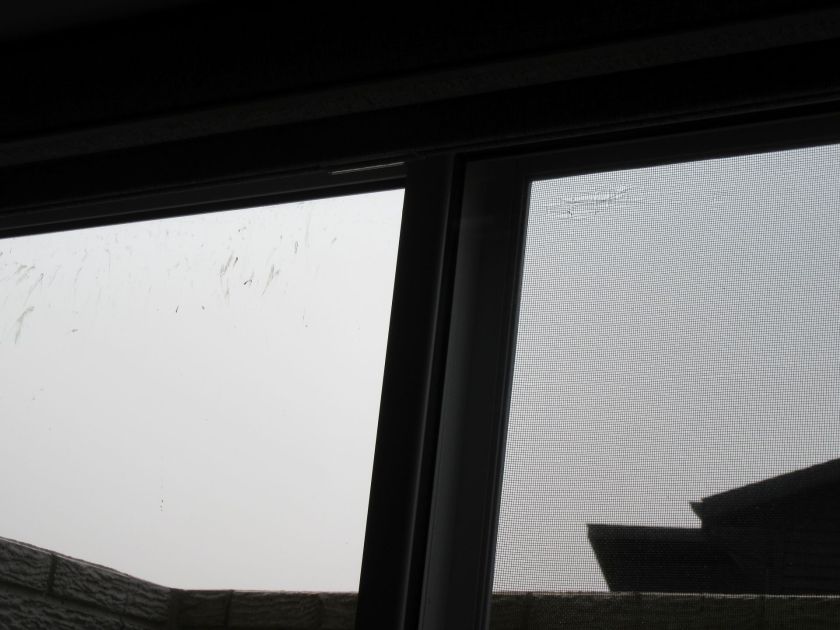
Now we’ve got a female robin who is pecking our window well window and even tearing up the screen.
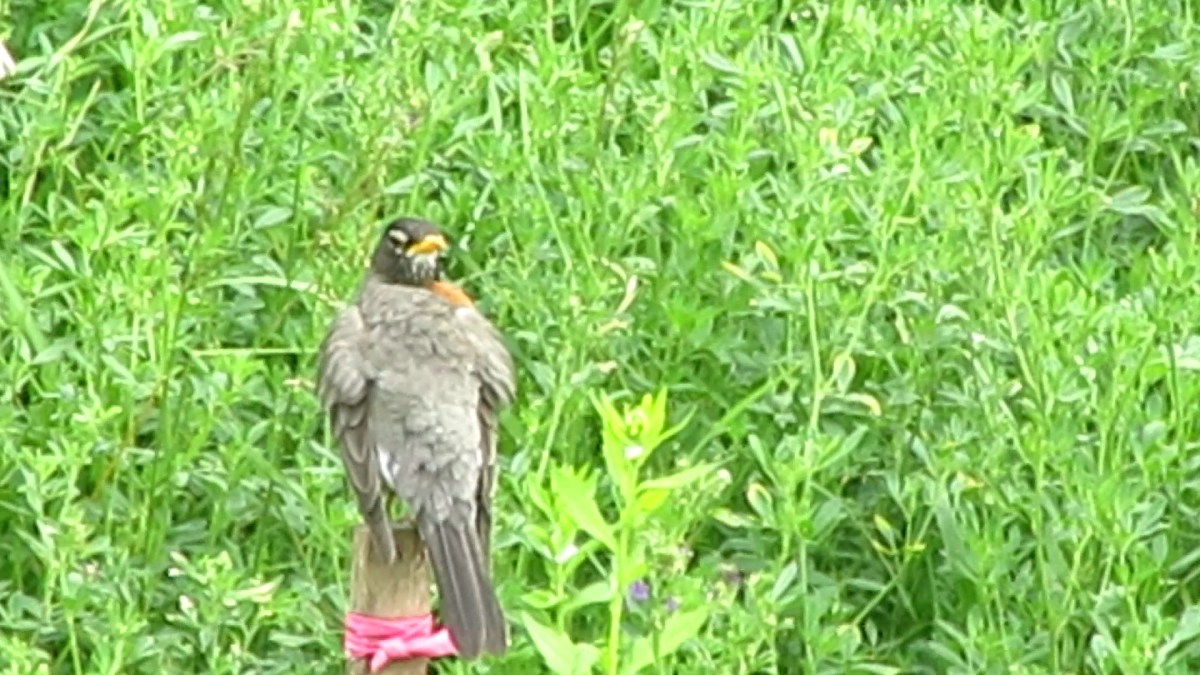
She can turn her head almost completely backward so I know she’s the window-hating, demonic robin from hell. She never pecks the window panes below the level of the well, which makes me believe this is still a problem with seeing her own reflection as another marauding bird.
I call her demonic because I caught pictures of her sitting on a wooden lath staring back at me with her head turned at pretty much 180-degree angle, glaring at me—like something out of the movie The Exorcist.
She’s been at it for over a week now with no end in sight. She’ll stay up most of the night flapping against the glass. Sena got the idea of trying some window film which has a pattern on it. Maybe that’ll break up the light. We taped it up just to see if it works.
It’s not like there’s a whole flock of birds attacking the house or the block or the town, like the movie “The Birds.” It’s not the Alfred Hitchcock thing, which he got from a story by Daphne du Maurier, also titled “The Birds.” I’ve never read it. I’m aware of one scientific explanation for birds attaching en masse, which was about the time thousands of seabirds attacked the coastline near Monterey, California because they ate neurotoxin infested phytoplankton.
It’s just one obsessed bird, and maybe she’s the only one snacking on poisoned phytoplankton. I can find plenty of advice on the web about how to stop this crazed bird-brain preoccupation. Take a look at the blog “Hinessight: How things look through an Oregonian’s eyes” and read the very long post “How we stopped a robin’s pecking at window glass.”
Read it for entertainment. And maybe you’ll find something workable to prevent devil-driven robins who spend a lot of time twirling their heads watching reruns of “The Exorcist” on their tiny screen TVs and get their kicks from pecking at your window. There are 13 years’ worth of comments, so get comfortable.
We always thought of Robins as birds who are the harbingers of spring. On the other hand, we’ve seen Robins in the middle of winter. We saw them today.
I realize that you technically can’t call a Robin a Sunbird. There is a species of Sunbird. It’s a small tropical forest bird. And you could call a person who travels from hot, humid parts of the country to cooler parts a sunbird—sort of the opposite of snowbirds; those who migrate from the cold north to the warm south in the winter months.
And so, I think you could call the Robin a sunbird—sort of. They’ll stick around all winter as long as the berries hold out.
We have a robin’s nest in our back yard with 3 nestlings. I can hear Momma robin nearby, nervous about me and my camera. I’m careful not to disturb them too much, not to stay too long. I hope they make it. I hope for a lot of things like civility, peace, love, acceptance. It should be alright to hope for this one little thing extra—that baby robins grow up.
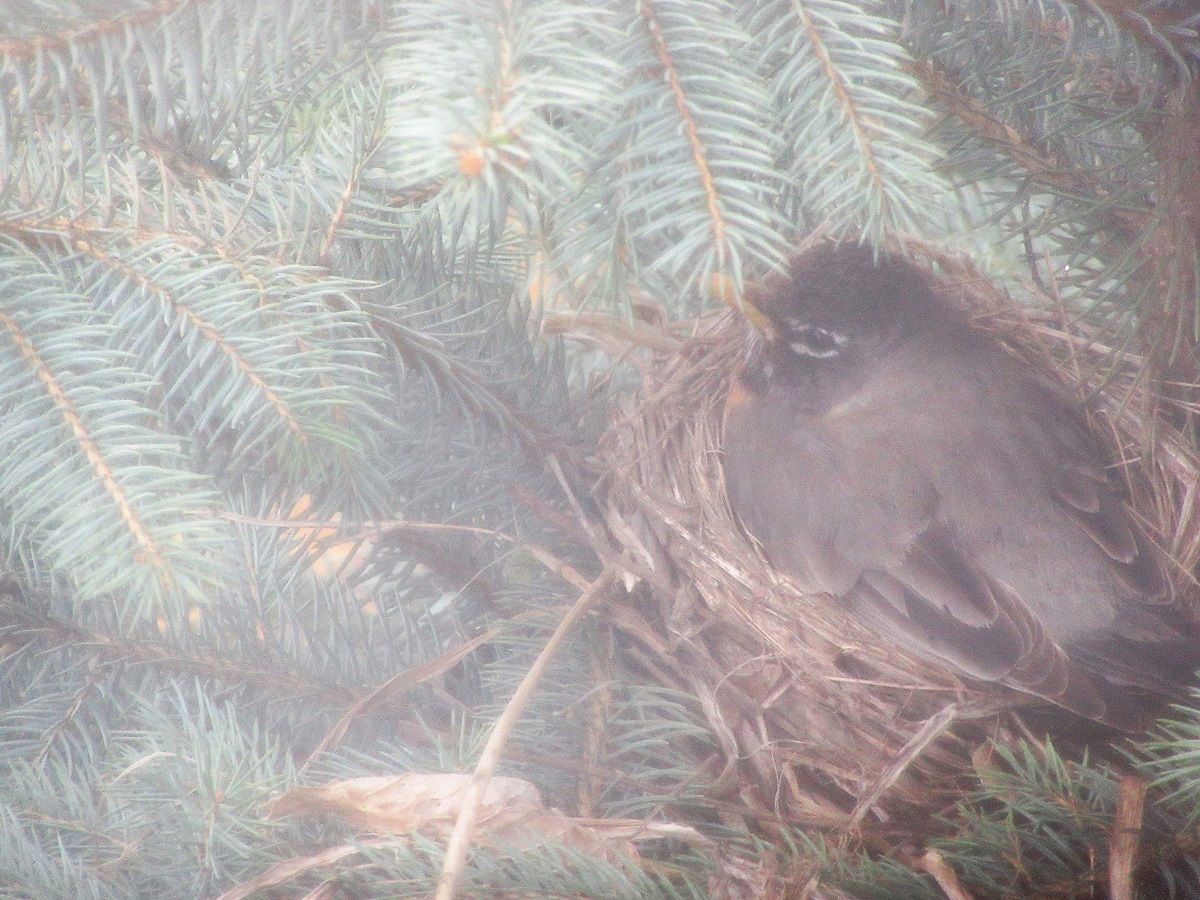
Happy Mother’s Day! The blog post for today is a little unusual because it’s about a “mother” robin who built a nest on April 9, 2019 and is still sitting on it as of today. It’s unusual because she’s been sitting on the nest for at least a couple of weeks now even though there have been no eggs in it. We can’t figure why she’s sitting on an empty nest.
Things got started relatively well. In fact, after building the usual sloppy nest, the mother robin laid two eggs in it. That was the largest number of eggs we ever saw. The number went down from two eggs to one to none over a couple of days or so.
“And then there were none.” I never read Agatha Christie’s book by the same name or saw the TV miniseries on which it was based several years ago. On the other hand, death played a role—a natural one—in the case of the very devoted mother robin.
The robins built their nest in an evergreen tree right below one of our windows. What was nice about that was that I never had to creep up on them, see them thunder out of the tree, mess with the branches around the nest, snap photos—and leave a scent trail for large predatory birds.
Now, speaking of predatory birds…I never saw any of them this time. I know last year I heard a heavy flapping noise (like bedsheets on a clothesline) outside of my office window and opened the blinds just in time to see a huge crow or turkey vulture take off from our front yard tree. Its beak was full of house finch nestlings. I swore I would never again engage in monitoring bird nests in that way.
This time there was only circumstantial evidence of nest robbery. My wife saw broken egg shells on the ground under the tree but it’s not clear exactly when she saw that.
But mother robin still sits on the nest. I have not been able to find any information about this behavior in nesting birds.
It’s not that birds never display odd nesting behavior. One of E.B. White’s essays, “Mr. Forbush’s Friends,” published in the Essays of E.B. White (White, E. B. (1977). Essays of E.B. White. New York [etc.: Harper and Row), describes a great number of these peculiar behaviors. One quote: “Had pair of Carolina wrens build nest in basket containing sticks of dynamite. No untoward results.”
I did wonder why our mother robin built a nest so visible from the sky. That was as bad as building a nest in a basket of dynamite. I know we have a tendency to anthropomorphize animal behavior, but I’m having trouble explaining this mother robin’s persistence in sitting on an empty nest. There are no new eggs; yet she acts as if eggs are there. Is she grieving? Is she hallucinating? How long will this go on?
Maybe some of you know what this is all about and I welcome your comments. Until then, it looks like for this robin, Mother’s Day is endless.
Spring is here! I heard this rustling outside my window this afternoon and when I opened the blinds, I saw flocks of Robins and Cedar Waxwings on our trees, feasting on the berries and little cones. Boy, can they party!
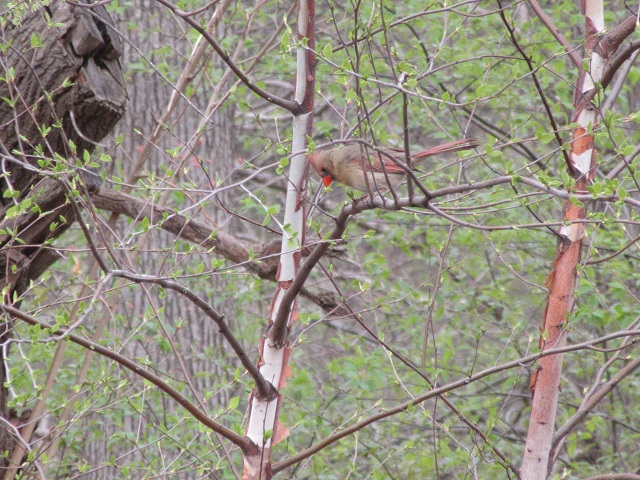
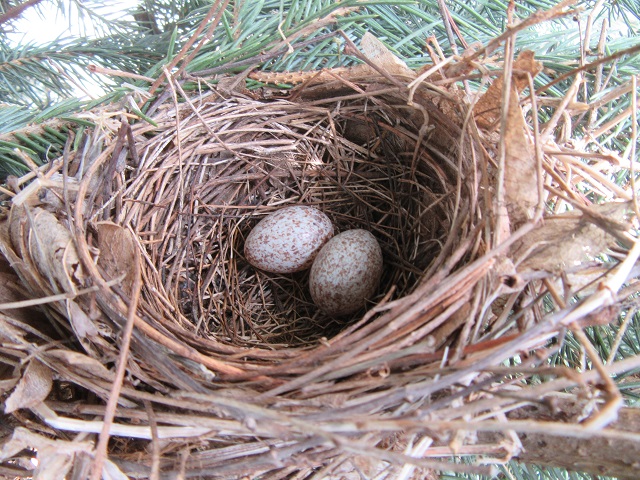
I’m not sure what to think about our cardinals. We saw the egg cache go from two to three—than back to two in the same day. No kidding, the nest gained a third egg in the morning and lost it in the afternoon.
Three eggs…
And then there were two…
I looked all over the ground and couldn’t find it. Before
that, I was hunting around the web trying to learn more about cardinals and
discovered that robins and cardinals will sometimes lay their eggs in the same
nest. It’s not always clear why this happens, maybe competition or mutualism.
Maybe they’re just swingers.
There was an article published about nest-sharing between
cardinals and robins several years ago, published in The Wilson Journal of
Ornithology. The authors observed cardinals and robins sharing a nest with
mixed eggs in Polk County, Iowa of all places. Iowa is a happening place. Both species
incubated the eggs; however, only the robins fledged.
“Govoni, P. W., et al. (2009). Nest Sharing Between an American Robin and a Northern Cardinal, BIOONE.
Mixed-clutch nest sharing was observed between an American Robin (Turdus migratorius) and a Northern Cardinal (Cardinalis cardinalis) in Saylor Township, Polk County, Iowa in May 2007. The nest contained three American Robin eggs and two Northern Cardinal eggs, but only American Robin young were fledged successfully. This was not a case of brood parasitism, as both females were observed alternating incubation of the nest. Competition for desirable nest sites might be a possible cause for this type of interspecific behavior.”
Others speculate that robins will eat cardinal young. I’m not so sure about that. Based on what little I found on the web about it, it’s controversial whether robins actually raid cardinal nests to eat the eggs. They rarely will eat shrews and small snakes. Like me, they hate coconut. They eat a lot of chokecherries, often after they’ve fermented into wine, on which they get pretty drunk and could play pranks on cardinals (“Hey, let’s go cardinal-tipping and steal some eggs!”).They sure like worms and follow my wife around as she waters the lawn, snacking on them as they emerge from their flooded tunnels, gasping and frantically hunting for their flood insurance policies. They also ham it up for the camera.
Robin hamming it up and probably three sheets to the wind.
My wife has spied a robin or two flying around the back
yard. It raises questions about competition because robins nested and raised a
brood last year in the same tree and in the exact same spot where the cardinals
are settled this year.
It’s hardly prime real estate in my opinion. We’re always
out in the back yard, making noise and flinging water and grass clippings. And
we’re continually nosing around the nests, which makes the adult birds pretty nervous
and fussy, putting up Do Not Trespass signs and privacy fences.
If robins ate the third egg, they had excellent table
manners. There’s no trace of shell or yolk anywhere. I wondered if the cardinal
had carried off one of the eggs out of impatience with our continual spying on
their nest. But how? The eggs look too big for a bird’s beak. Can they carry it
in their feet? Or do they own luggage?
And where would they take it? I supposed it’s possible they
could be taking it to another nest they previously built—but it would be
occupied by a previous brood. Cardinals nest more than once a season; the male
feeds the young while the female builds another one, according to Birds of Iowa
Field Guide by Stan Tekiela (2000).
I have no idea what’s going on with these birds. I’ll keep
you posted as the situation develops.















 Go Retire Psychiatrist