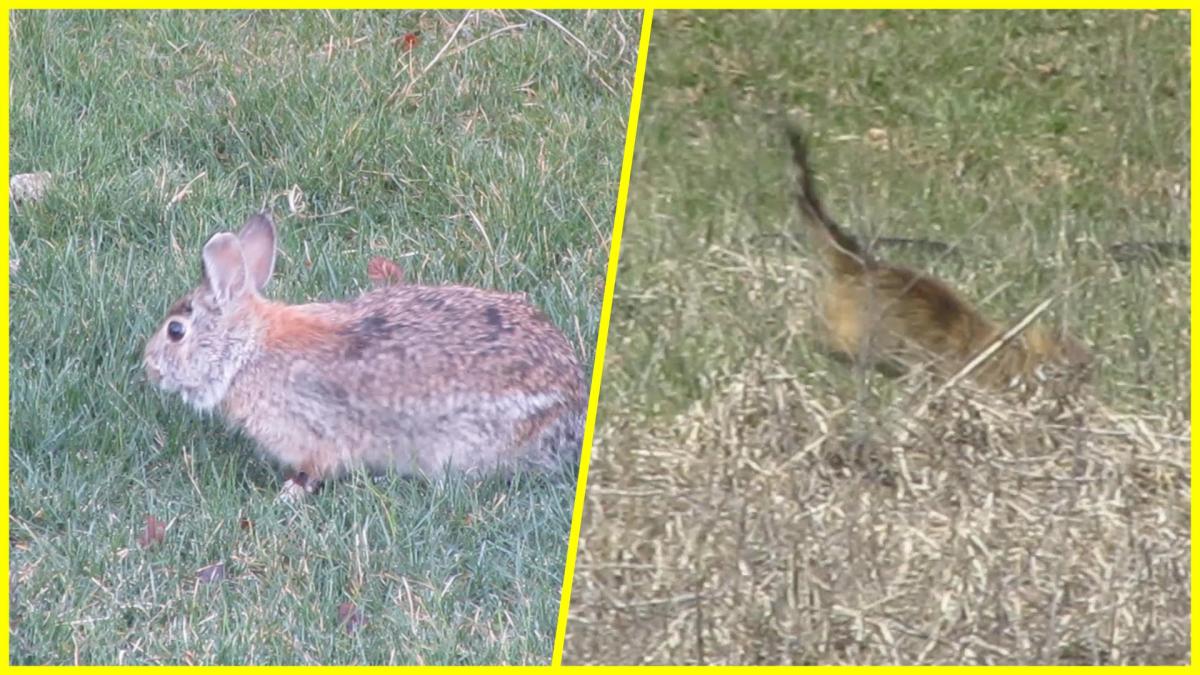
Recently, we saw a rabbit in our back yard on one occasion and a feral tabby cat on another day doing what they do best.
The cat was hunting and the rabbit was on the lookout for hunters. The hunted and the hunter are both alike in many ways except for the most obvious—one gets to eat the other.
Otherwise, in action they are both like coiled springs: alert, jumpy, and ready to do what they do best, flee or pounce.
Whether you are predator or prey, you do this every day.
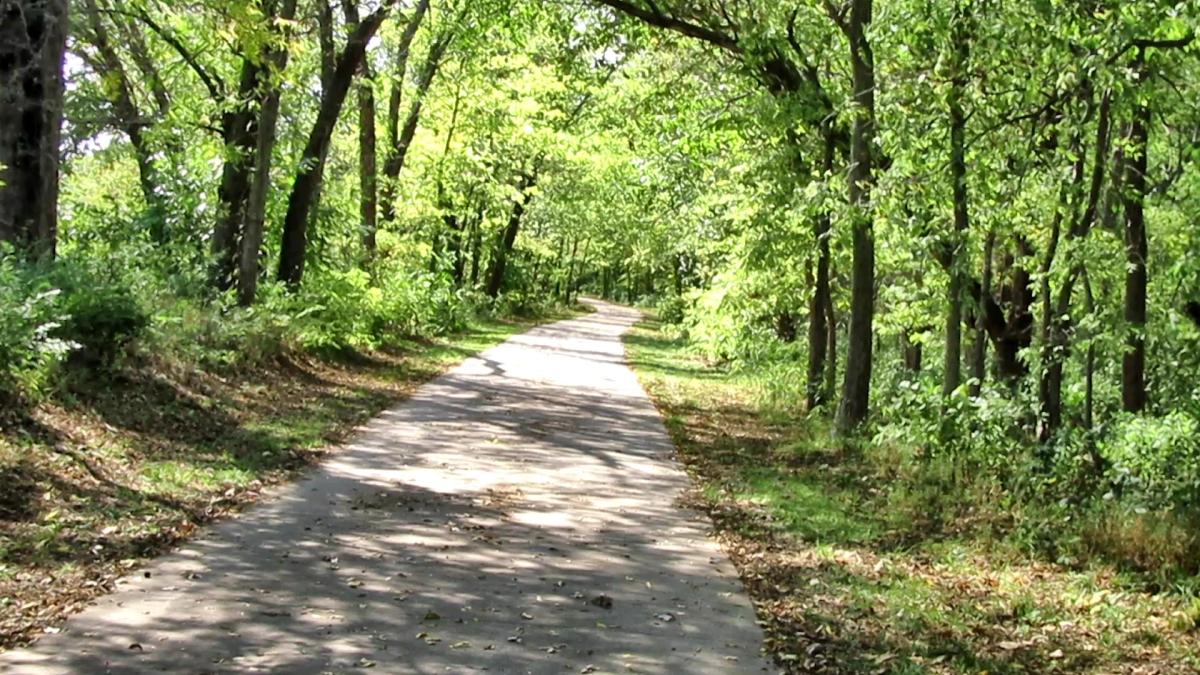
A couple of days ago the temperature was in the mid-seventies, which is pretty balmy for February. We took the opportunity to get out for a walk on the Terry Trueblood Trail. It’s coincidental, but we did the same thing on the exact same date last February. It’s under the same condition for the most part—escaping from the bad news on the web. The difference was the temperature; it was only in the fifties last year.
The remarkable thing last February was that another trail walker claimed to have seen 16 bald eagles. I’ll have to say that we doubted it, at first. But shortly after that, we caught sight of half a dozen. There were also the quilted hearts we saw, connected to the “I Found a Quilted Heart” project, the goal of which is to make you happy.
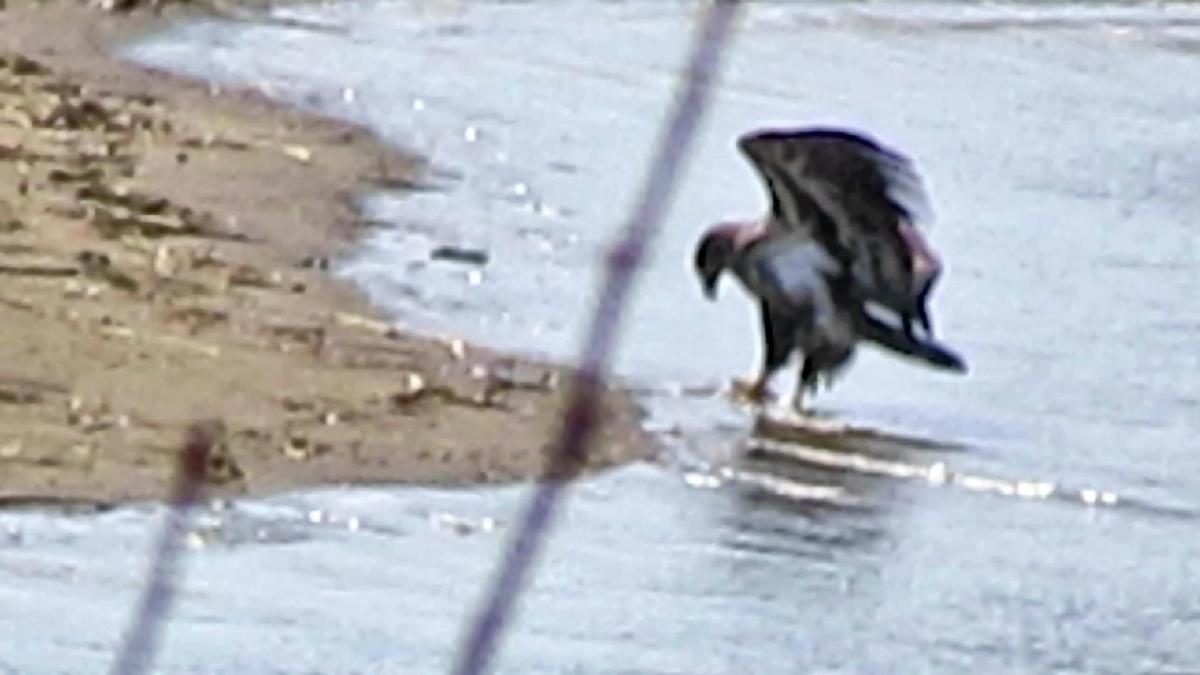
This time, although we didn’t find any quilted hearts, we saw a young bald eagle in flight. It was a little hard to tell what it was at first. Bald eagles don’t look bald when they’re in the juvenile stage. I had to look it up. Juveniles look pretty mottled. I wondered if its parents were the bald eagle pair, which we saw at Trueblood in December of 2023. Probably not, given that nesting begins in January, incubation lasts over a month and the eaglets take their first flight over two months later, according to the Iowa Dept of Natural Resources. But it’s fun to think about.
This junior bald eagle looked a little clumsy, both in the air and near the water’s edge. It looked like it might have caught a little fish. It seemed like it was trying to learn how things work in the world and how it’s supposed to fit in.
Instinct takes care of most of that for a bald eagle. Humans have a lot of figuring out to do. We ran into somebody on the trail who told us a great deal about local history. Over time, a lot of things have changed in Iowa City. That goes for the world, too. Much of the time, the changes don’t always seem to make life better, at least according to older people who talk about them.
But the seasons come and go. Bald eagles lay eggs. Eaglets fledge. They don’t gaze up at the moon. Humans do look up at the moon, and occasionally fly there. It’s hard to know why.
There are plenty of earthly mysteries. We saw small black handprints on the Trueblood sidewalk, not far from the shelter. I can’t figure out why they would be there, and what’s more, I can’t find out anything on the internet that explains it. So much for the internet. I supposed I could take a chance and ask Artificial Intelligence (AI) about it, but I’m not confident it wouldn’t just make something up.
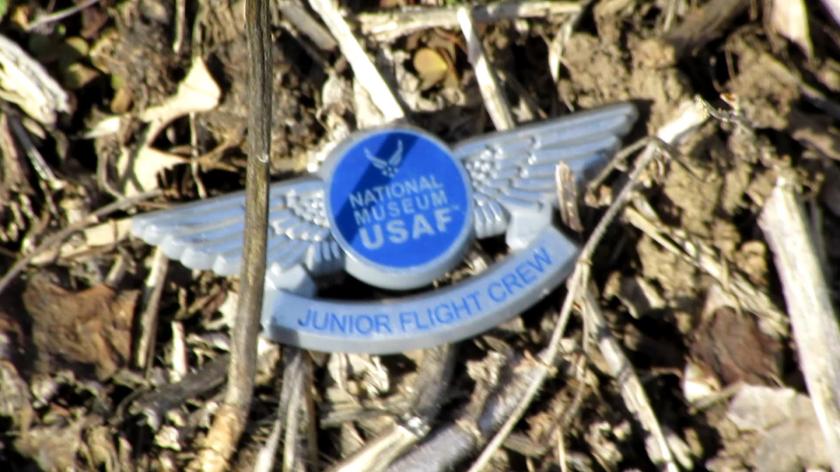
We also found a little badge on the ground. It was labeled National Museum USAF Junior Flight Crew. This time, when I checked the internet, I found out there is a lot of information about it on the internet—but none of it helped me understand why it would be on the ground along the Terry Trueblood Trail. You can find a very long article on the internet about how items from the National Museum USAF might not have been handled the way they should have been. You can buy one for about $20 or so on eBay, if you’re interested.
I think it’s more interesting to see how the junior bald eagles learn their way around the world. They earn their wings the old-fashioned way.
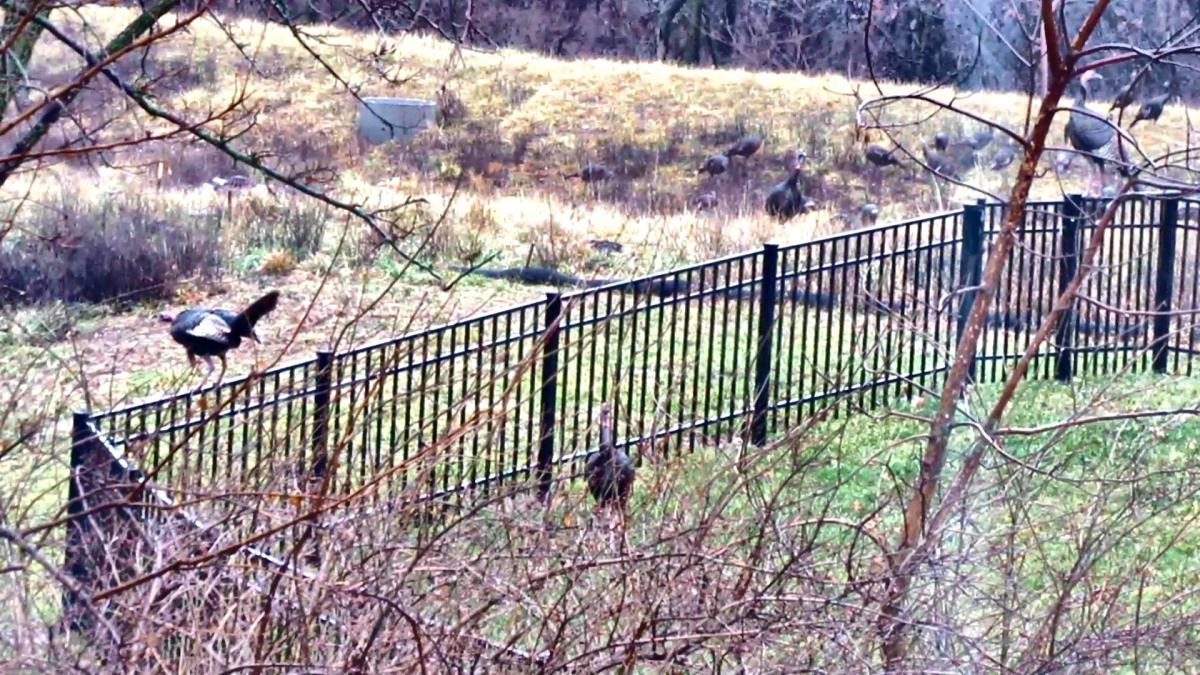
The wild turkeys are still doing the high jump over the fence. This time, I saw one of them jumping over the fence into the yard. So, they know how to get inside! But I couldn’t get a picture of it! I was washing the dishes at the time.
They seemed to have a somewhat easier time jumping back over the fence out of the yard. What the heck, you have to give them a little credit.
We got our first snowfall that stuck around yesterday. We didn’t have to shovel because it melted off our sidewalk and driveway shortly past noon.
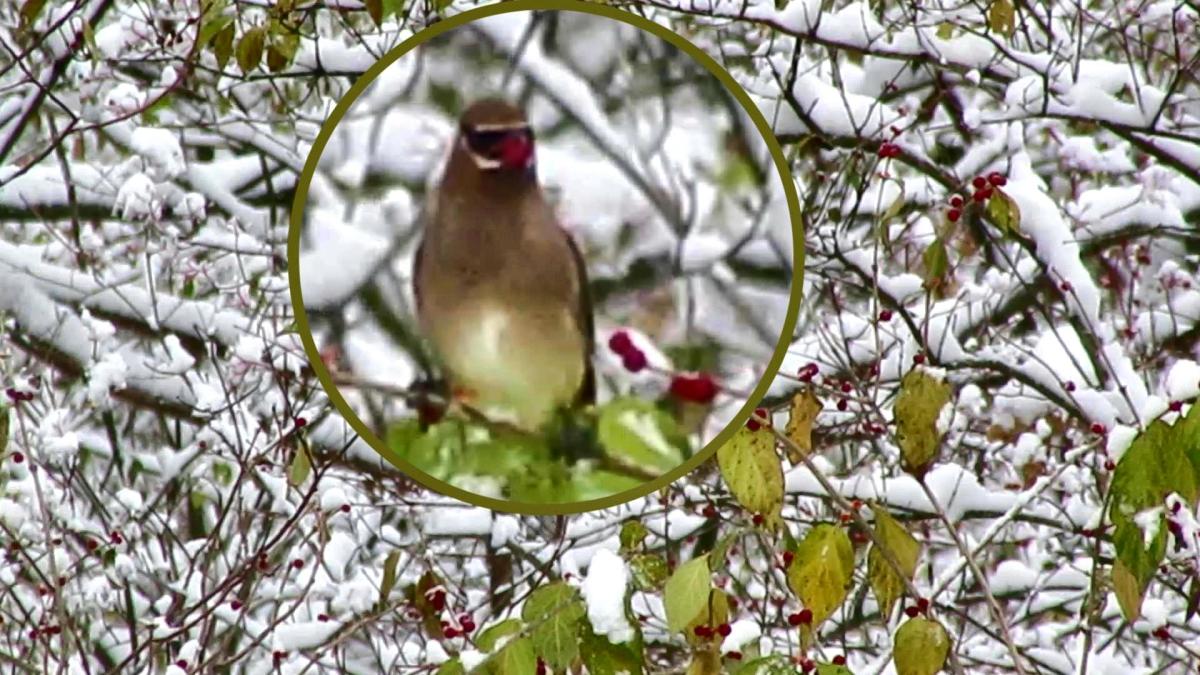
On the other hand, the snow drew the birds out for the berries in the trees. Cedar Waxwings and other small birds feasted in the early morning. Whether they got the winterberries low to the ground or the ones high up in the trees—they got them.
It snowed the better part of the morning. It caught some Iowa drivers off guard. There were pictures in the news of cars rolled over on their roofs in the ditches.
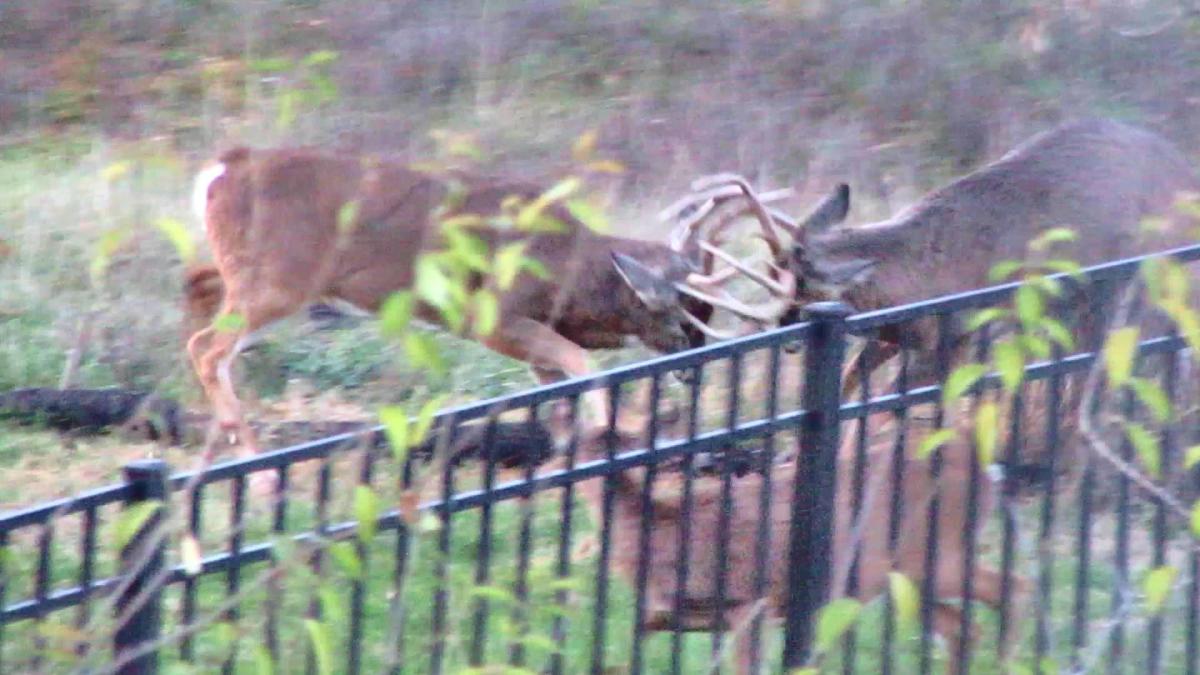
I caught sight of some buck deer contending for some does out in the clearing behind our house. This is probably what you might call the rut for white tail deer. The bucks do a lot of jousting for access to the does. But clearly, the does decide.
We have never caught them mating on film. In fact, the does never display any interest in the bucks as they trot around and fight each other. The only way we know mating eventually happens is when the spotted, frail-looking fawns appear in the spring.
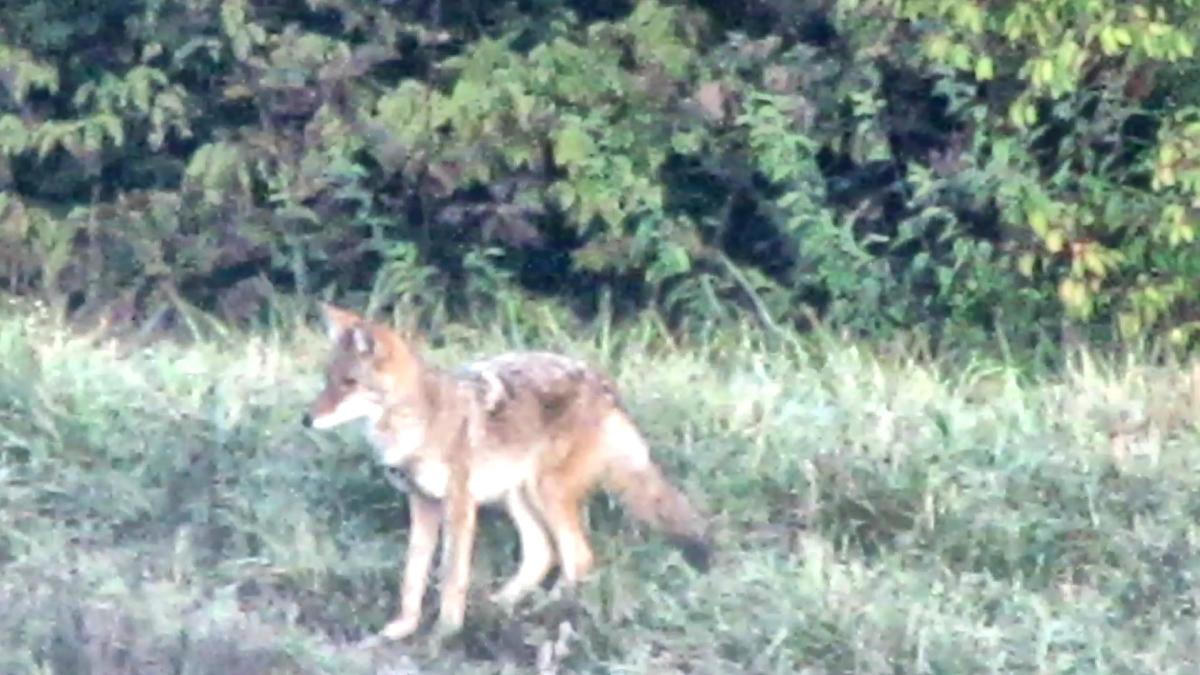
We again caught sight of the fox. It was hunting for breakfast, and this time it caught a mouthful of—mouse or mole, but whatever it was the hunter gulped it down in a hurry.
It got pretty close to our neighbor’s fence while circling the outlot. Just like the tabby cat, it switches its tail when it’s about to catch a meal.
We think this is a red fox rather than a gray, but we’re not naturalists. The web reference I read says both red and gray foxes don’t chew their food, but swallow it whole, which is what this one did.
Foxes walk on their toes (called digitigrade), which is probably why I thought this one had a funny-looking gait. I thought at first it was lame when it was walking in the tall grass.
Yesterday, Sena called me to the window in the sun room to see the “tabby cat.” When I got there, it looked a lot more like a fox. It was hunting in the outlot and it may have caught a rodent. It also seemed to be flea bitten.
When we first moved in to this house a few years ago, I saw a fox moving her kits from the outlot way off north somewhere, probably to another part of the woods. I guess she didn’t like the neighborhood. It was beginning to get a bit noisy from all the construction on the new neighborhood.
This was not the same fox. It looked quite at home.
We saw the miracles of autumn the other day, out on the Terry Trueblood Recreation Area. It was quiet, only a light breeze set the flowers and grasses swaying.
There were almost no birds out. No ducks were out on Sand Lake.
On the other hand, I guess there were birds, sort of. We greeted other walkers, an older couple who turned out to be snowbirds. They’ll be heading to Florida soon for the winter. They had no worries about the weather down there. They’ll be in the middle of the state, presumably far away from storm surges. They stay in an RV park over the winter months. It’s not far from a place called The Villages, which is a famous planned retirement community, which got a reputation for being a haven for older but wilder swingers. They have a very large Homeowners Association (HOA), which is sort of a very large and expensive Disney World for older retirees. It’s often called a golf cart community because that’s how most residents get around the place. While there are no HOA fees per se, there is a community development district fee of around $120-220 a month. Dave Barry wrote a chapter about The Villages in his book “Best State Ever: A Florida Man Defends His Homeland.” I told the couple about Dave Barry’s take on The Villages. I don’t think they ever heard of him. They’re excited about returning to the RV park soon.
I was a little alarmed by a loud voice, calling out like a policeman, “Get on the ground!” I looked up ahead and didn’t see a policeman. But occasionally, we heard the barking order, “Get on the ground!” Eventually we saw a young man on a walk, apparently under someone’s supervision. This was the man who was yelling “Get on the ground!” He greeted us politely. As he passed by, every so often he blurted out, “Get on the ground!” I wondered if he might be someone with a form of Tourette’s Disorder, compelled to blurt out something every few minutes. The supervisor was walking side by side with a man who seemed uncomfortable, holding his hands up to his eyes which appeared sunken in the sockets. He made no sound at all. I wondered if, peaceful as we thought the day was, whether he found it difficult to bear what might have been a sensory storm for him. The supervisor was polite to us and paid close attention to the other two men.
Mostly we watched the breeze blowing the grasses and the flowers–and were grateful.
On a balmy day we went for a walk on the Terry Trueblood trail. There was a cool breeze in contrast to the brutal humidity lately. There was a mix of natural beauty and some not so natural sights.
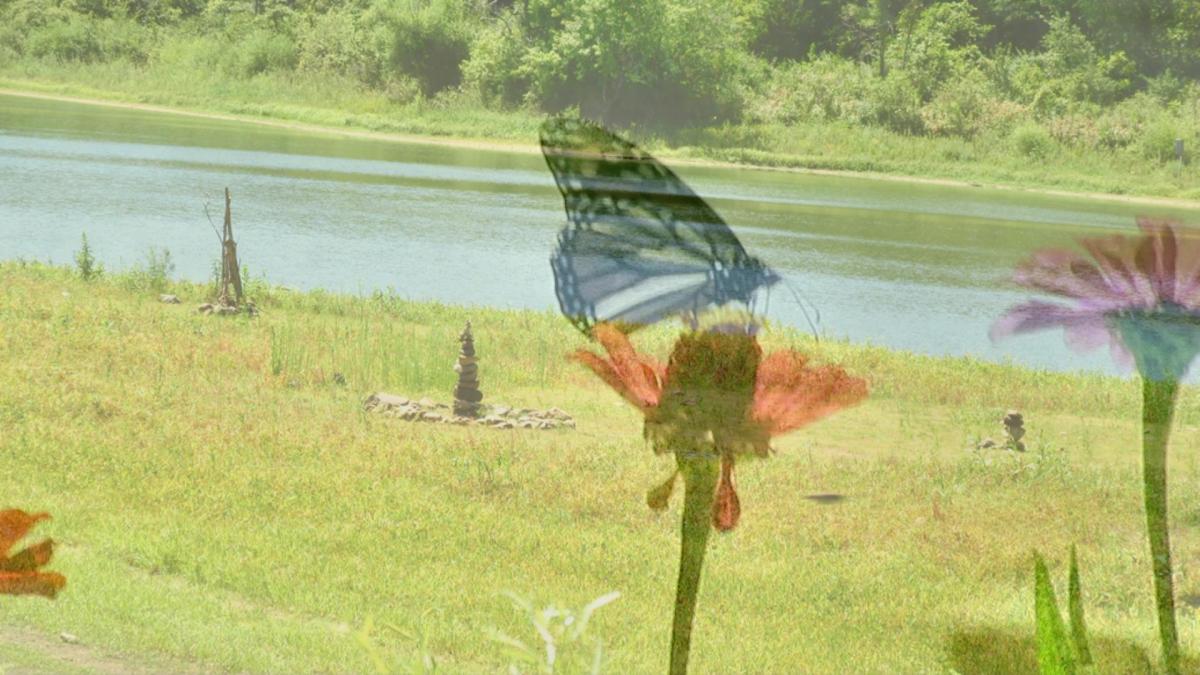
The flowers were gorgeous as usual. But we also saw stacked stones close to the shore of the lake. I should say there were a couple of stacked stones and one which was made of tree branches that reminded me of the Eiffel Tower.
That was the first time we’ve ever seen stacked stones there. I looked up the topic of stacking stones on the web and there’s disagreement about whether it’s a good thing or not. Some say it disturbs the natural order of things while others say it pays homage to nature.
We saw a couple of people out on the shore and one of them kicked over one of the piles. I guess that’s one person who doesn’t like rock stacking.
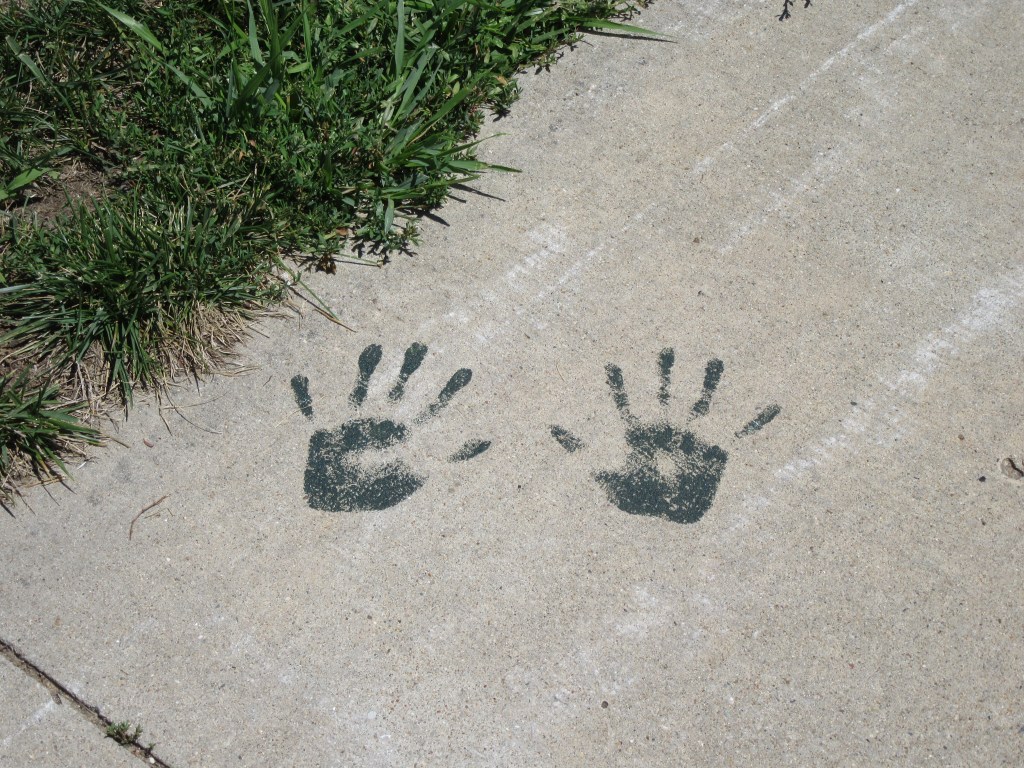
We also saw a pair of black hands stamped on the sidewalk. What’s that about? Some say that black hands are about death, criminality, or even the Black Lives Matter movement. I don’t know what it means.
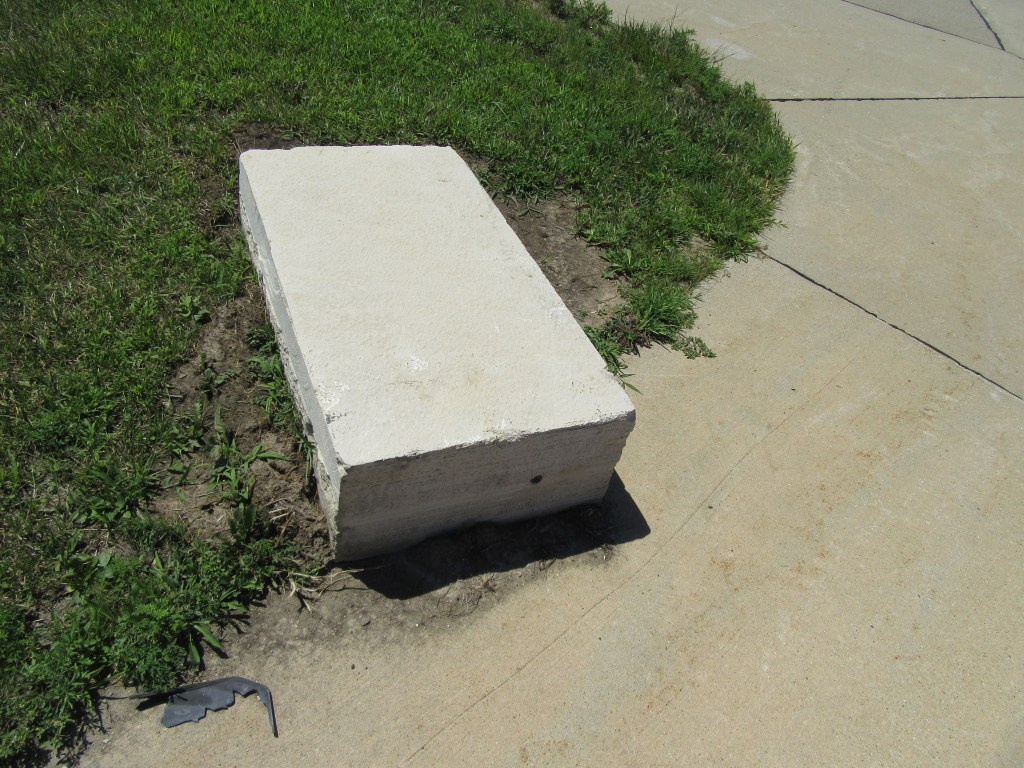
And a couple of the large stones along the edges of the parking lot were shoved out of place. Who knows why. They looked very heavy. It probably took a lot of work to move them, and for no apparent reason. It reminded me of the rocks, some of which weigh several hundred pounds, that seem to move by themselves across the desert in Death Valley Park, leaving trails behind. There’s a natural explanation for it, involving the interplay of ice, wind, and water. I’m pretty sure humans moved them.
Anyway, there was plenty of natural beauty along the trail. They were the only source of wonder we cared about that day.
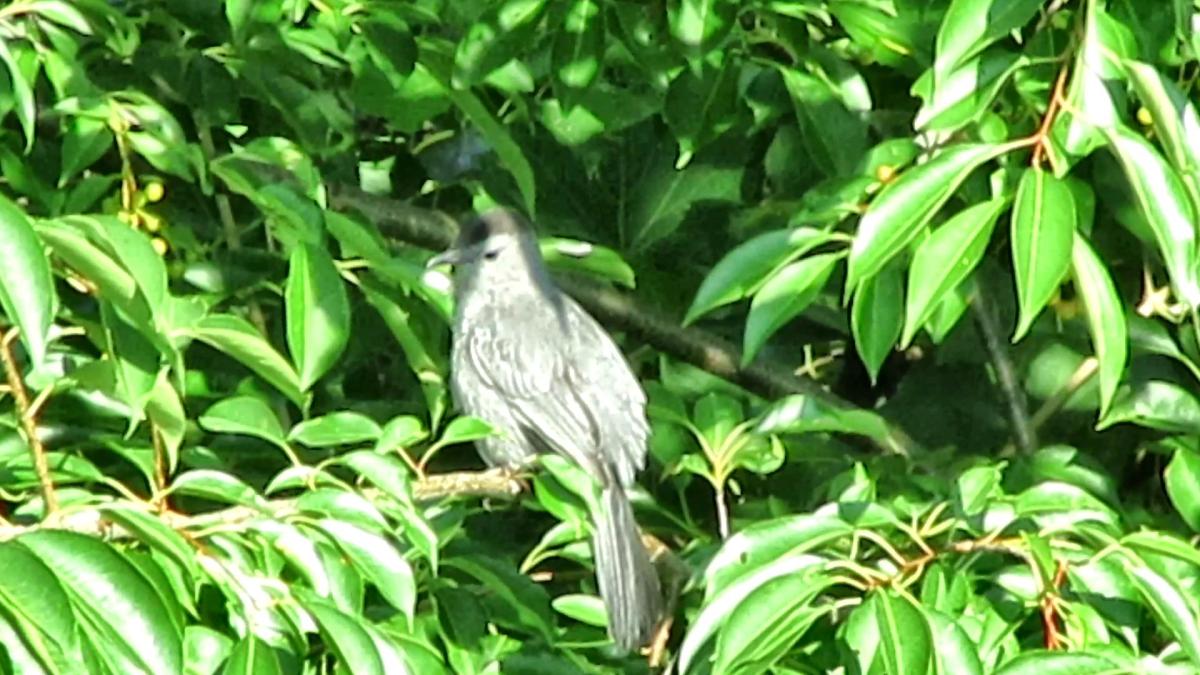
We’ve got more videos of birds and a butterfly (which I think is a swallowtail) in our garden. The catbirds and oddly, song sparrows (I thought they were rare in our part of the country?) are turning out to be regular visitors. They like the mulberries and spend a lot of time preening. They visit every day and they’re always a welcome sight.





 Go Retire Psychiatrist