Starlings and More!

Sena got a video of a large flock of birds flying around in the outlot beyond our backyard. We thought they were all starlings, but I couldn’t focus enough on individual birds to tell for sure if there were other species mixed in with them. I couldn’t even confidently identify a starling although I’m pretty sure that’s what many of them were.

I think it’s not unusual for other small nondescript blackbirds to mingle with starlings. While we can’t make a case for the smallish flock being a murmuration, there was an impressive number of them. Trying to identify specific species by repeated attempts to focus and magnify using video editing software mostly led to my murmuring under my breath—mainly curses.

Starlings are often called pests and web sources say they are among several species of birds that spread disease. The Iowa State University Extension calls them “nuisance birds.”

My usual resource, Birds of Iowa Field Guide (2023 edition) by Stan Tekiela is a little more generous in the description of the European Starling, calling it a songbird which can mimic the songs of up to 20 species and can even imitate the sound of the human voice. Other web resources compare them to mockingbirds. Large flocks of starlings commonly mix with other blackbirds in the fall. Starlings were introduced to New York City in 1890-91 from Europe.

See if you can pick out the starlings in our video and other birds. I got mostly eyestrain from the effort.

Autumn is the Time to Slow Down

We visited the Terry Trueblood Trail and relaxed. The temperature was in the 60s, just a little on the breezy side. Everything seemed to move slower, except for the lady bugs which tried to keep warm by landing on us everywhere they could. I thought they would get into my rolled up blue jean cuffs, but amazingly they did not.

There was a small, brave patch of asters hanging on for dear life, literally. We both loved the red tree and you can tell which one it is in the video. I should know what kind of tree it is, but for now I guess just seeing it was good enough.

The cedar waxwings were flitting around maniacally and sometimes that means they’re getting smashed on fermented berries. But I didn’t see that there was enough on the branches for a party.

A pelican lazily swam across the lake in a way that suggested that it’s OK to just relax. What’s the hurry?

We might have seen one of the last northern shovelers (a dabbling duck) still hanging around. It’s like it was saying, “There’s still plenty of time.”

Whether that’s true or not, slowing down doesn’t hurt at all.

A Flick on Fall Flickers

Today, as usual, we had to interrupt our cribbage game so Sena could capture video of all the birds in our backyard, the fall colors, and whatnot.

She caught some shots of Northern Flickers, which she has not seen before although I can remember catching them on camera years ago. They’re really strikingly colored birds and you can easily distinguish female from male birds.

The males have a black mark next to their bills which is called a mustache, which the females don’t have. They don’t migrate and you can see them all year round.

Sena was slinging the camera around and hurrying from window to window to get the best shots. She accidentally caught me on camera. I threw a still shot of it in the video just for laughs.

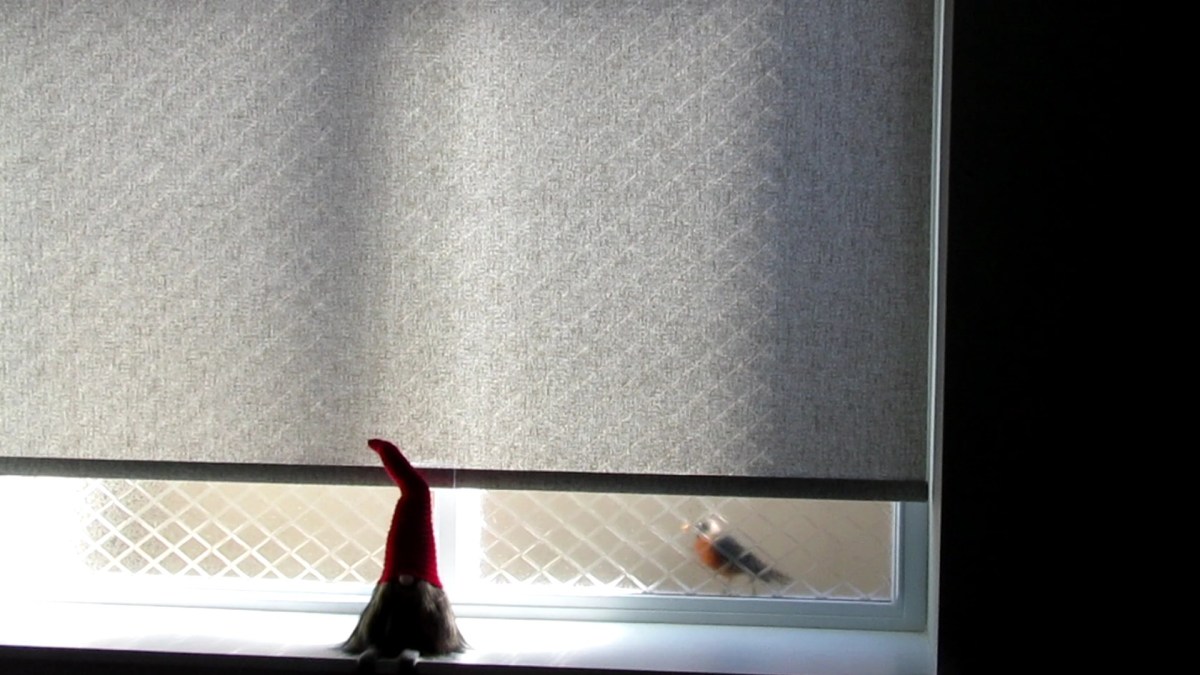
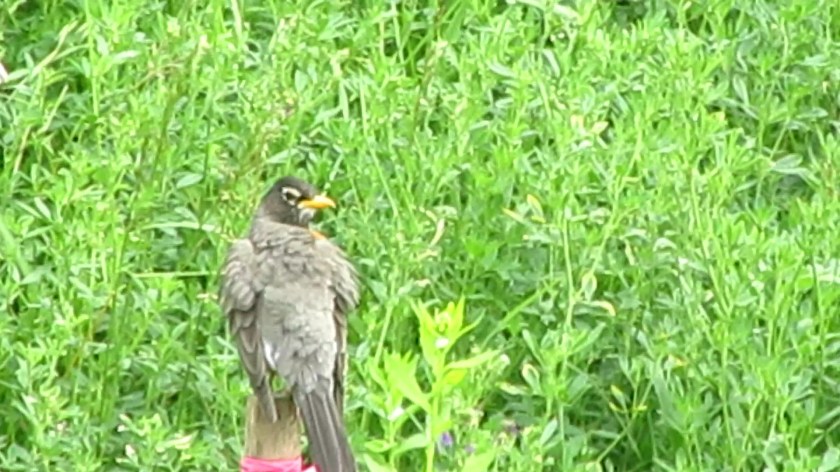
We saw a bird we didn’t recognize at first mostly because it was small and preening with its back to us. It had a red breast, so it was probably a young robin. Our luck, it’ll try to attack our windows next spring, although Sena put up some window film which may prevent that—we hope.

The fall colors are relaxing. The squirrel reminded me of Dug the dog in the Disney Pixar movie Up. I would have stuck a picture of Dug in the video but it’s copyrighted.

By the way, I won the cribbage game today. It happens.

Music Credit for YouTube video:

Carefree Melody by Twin Musicom is licensed under a Creative Commons Attribution 4.0 license. https://creativecommons.org/licenses/by/4.0/

Source: http://www.twinmusicom.org/song/302/carefree-melody

Artist: http://www.twinmusicom.org

Swallowtails Can Be Tipped or Tipless!

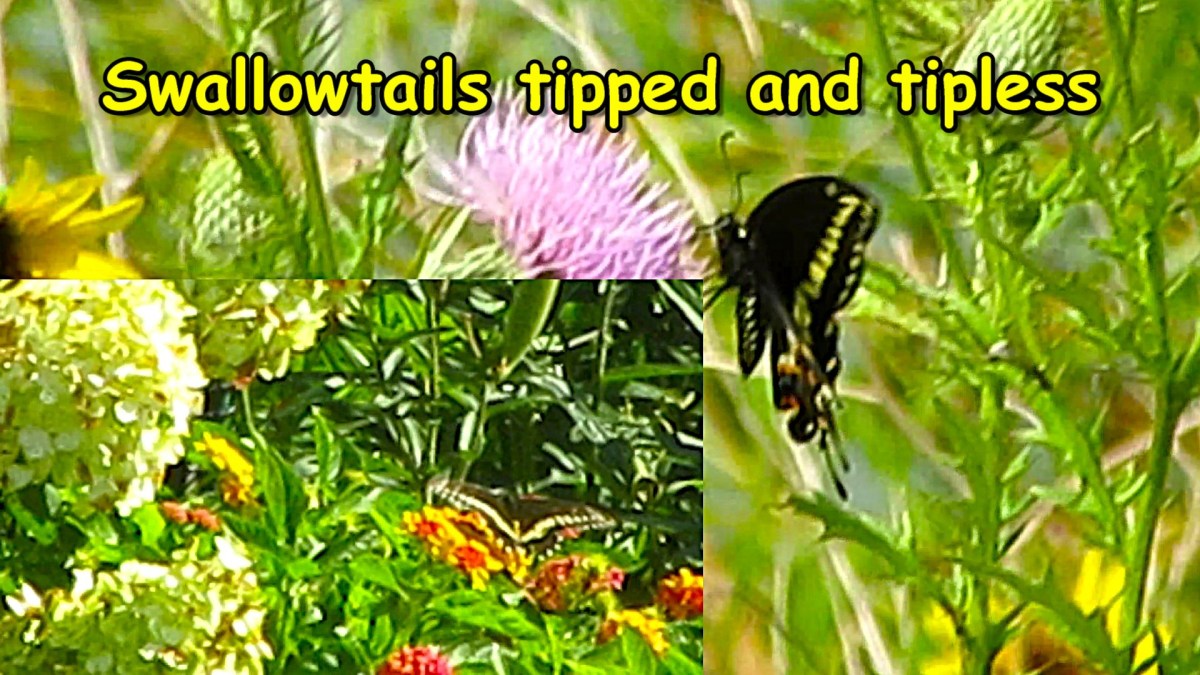
Sena pointed out a swallowtail butterfly fluttering around the lantana in our backyard garden yesterday. The lantana is great for attracting butterflies and hummingbirds because it has bright flowers and sweet nectar.

At first, I didn’t think it was unusual but I got video anyway. When I looked at it, I eventually noticed that the butterfly (which admittedly might be a different species) was lacking either one or both of the tips on its hindwings. For comparison, I checked a video clip of a swallowtail Sena shot when we were out on the Terry Trueblood walking trail a couple of weeks ago. The videos are obviously not the same quality. I shot the one yesterday through a window.

Sure enough, that swallowtail on the Terry Trueblood trail had impressive hindwing tips. I wondered what was so different about the tips on the one we saw yesterday. Not all swallowtails have tips and maybe the tips are smaller or only faintly visible on some species.

It turns out that the wing tips are probably a piece of butterfly anatomy that can be easily sacrificed when bird predators try to eat the butterflies. This is similar to some lizards whose tails can be sacrificed to predators for the same reason. Maybe the wing tips distract birds from attacking the central body parts. Anyway, I found an article about it on the web.

The article cites a study published in the May 2022 issue of the Proceedings of the Royal Society B that seemed to back up the idea that the tips might be an escape tactic. In the article, you can even see a video of bird preferentially targeting the sacrificial tips.

In our video, you can just barely make out either a transparent vestige of one of the tips or maybe there are two barely visible tips on the swallowtail in our garden. I saw a Facebook entry photo showing that females tend to be larger and have more prominent bluish coloring and males tend to be smaller and have more yellowish markings (interestingly, the male in that photo seems to be missing the right hindwing tip). Maybe we’re seeing a female in the video from 2 weeks ago and a male in yesterday’s video, only the male in that picture seems to have obvious hindwing tips, though they are smaller. I don’t know if anyone could help us sort this out.

Monarch Butterfly Tagged for Life!

As I announced yesterday, we put together a short YouTube video on the tagged monarch butterfly we saw yesterday at Terry Trueblood Recreation Area, with the help of another guy who pointed it out to us. This was a lot of fun because we didn’t know anything about the monarch tagging project.

The tagging project is just one part of a comprehensive educational and research program. One interesting section on bugs that feed on milkweed talks about milkweed beetles, but I didn’t find anything about milkweed bugs until I checked another site. It sounds like splitting hairs, but they’re not the same insect although they both feed on the milkweed, which the monarch larvae eat.

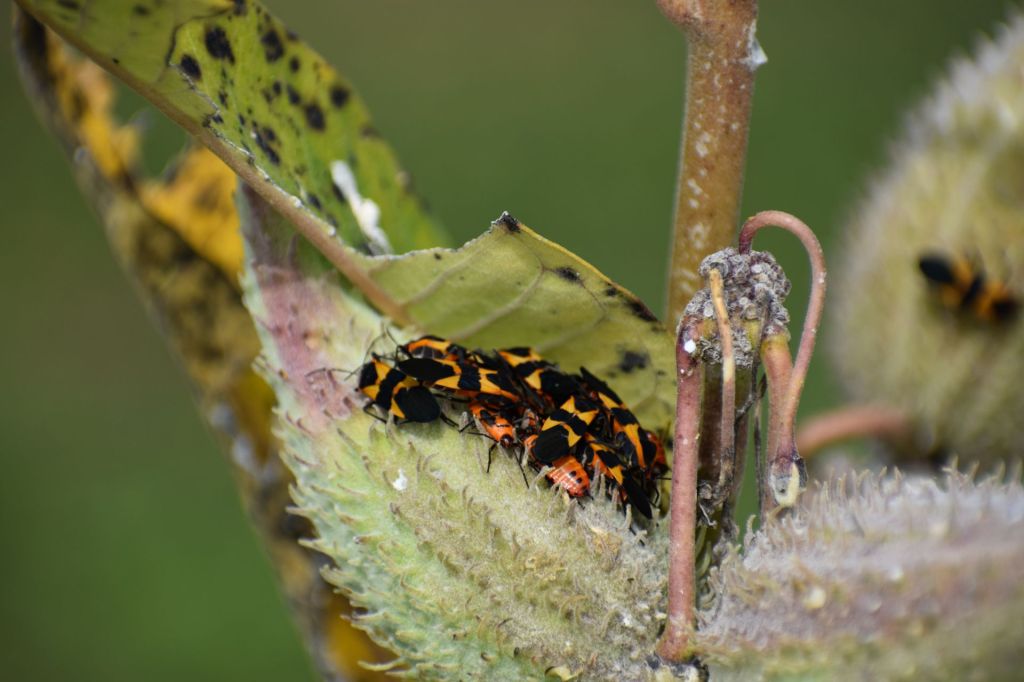
I got a photo of the milkweed bugs. Although the pile of them on the milkweed look like two different insects, the smaller ones are just younger versions of the same bug. I don’t think there were milkweed beetles on the milkweed plant I saw.

The other interesting thing is how to tell male from female monarchs. I’m not confident I can do that, although there is a video I posted yesterday (made by the Monarch Watch team) which tells you how to distinguish them.

We think the tagged monarch we saw might be a male, but I wouldn’t bet on it. We saw another monarch (which is featured in the video) which could be a female.

There is a fall open house at Kansas University West Campus in Lawrence, Kansas on Saturday, September 13, 2025.

We Found a Tagged Monarch Butterfly Today!

We’re both pretty excited today because we found a tagged monarch butterfly with a guy’s help out on the Terry Trueblood Trail. We saw quite a few monarch butterflies around the flowers and saw a man spending a lot of time getting a video of one of them with his smartphone. Sena remarked about how nice all the flowers were and he pointed to the butterfly and said it was tagged.

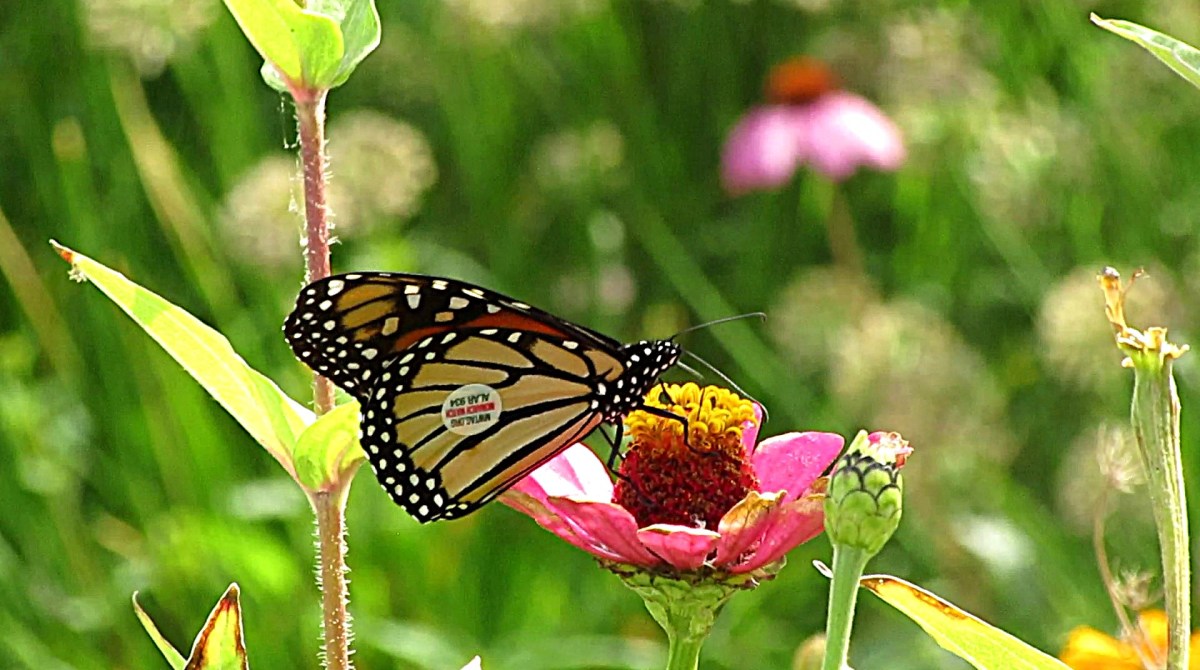
We had no idea what he meant until after we filmed the butterfly and saw this tag with numbers and letters printed on its wing. Sena got a really good shot of it and we were able to read the code.

Then we discovered the website for tracking monarch butterflies.

You can actually report the tagged butterfly to MonarchWatch.Org.  We had never heard of the Monarch Watch Tagging Program, which got started in 1992 to track the monarch’s migration pattern.

We’re not certain of the sex of the monarch we saw today (which is part of the reporting process), but that’s OK. We can just enter “Unknown.” On the other hand, you can find instructions on line.  We plan to make a video of our walk tomorrow with the monarch as the star, but I wanted to give you a heads up about the most exciting part of it today.

Mighty Hawk!

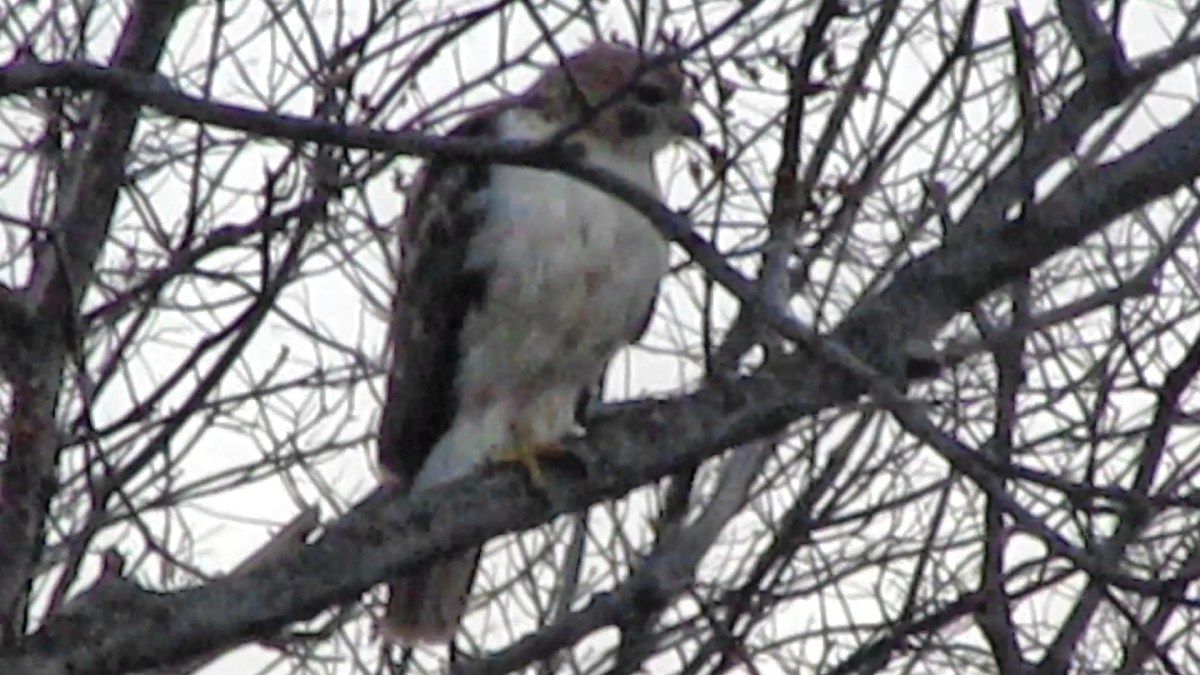
Today we saw this cool Red-Tailed Hawk on the fence—sort of, in a manner of speaking. This hawk was definitely not on the fence about getting brunch though. It would fly off the fence a few times and we expected it would come up with a mouse or squirrel or something—empty claws.

The woodchucks are too big for the hawk.

The experts say you can distinguish a male from a female Red-Tailed Hawk because the female is “25% larger.” I guess that might work if you saw them together—doing something X-rated.

On the other hand, there was a Red-Tailed Hawk named Pale Male that was famous in the New York City Central Park area. He got his name because his head was white. He took several females as mates during his life. They raised several eyasses, which was a new word for me today; it means young hawks. Mary Tyler Moore (“Oh, Rob”) participated along with other neighbors in protests about anti-pigeon spikes being removed and eventually they were replaced by “cradles.”

If you don’t remember the “Oh, Rob!” quote it was Mary Tyler Moore’s (as Laura Petrie) frequent complaint about husband Rob Petrie (Dick Van Dyke) on the Dick Van Dyke show (sitcom in the 1960s). Give yourself a gold star if you thought of the X-File episode “Arcadia” in which Agents Mulder and Scully took the names of the Petries.

Anyway, the Red-Tail Hawk is an impressive bird. It was just not a lucky day for hunting.

The Hummingbird is a Blur!

Yesterday I noticed a hummingbird hovering about the flower pots on our porch. I hurried to get my point and shoot camera and shot video, through a window as usual and it was getting a little late in the evening too, so light was low.  

Can I blame the bird for always looking like a blur—or not? Anyway, the video looks similar to others I’ve managed to capture in years past, except this one was the closest I’ve ever gotten to one. I tried messing with the clip using my video editing software, but I ended up believing it best to leave it mostly unmessed around with.

On the other hand, the one I got about 6 years ago was pretty fair for an amateur backyard birder. Same camera, same software although I was closer to the birds and I’m pretty sure I was sitting outside and very patient. They were very interested in our little feeder.

I think the hummingbirds we’ve seen are ruby-throated species partly because that’s the most common in Iowa. Typically, I think it’s just the males who have ruby-colored throats; our visitor didn’t.

I guess the usual way to attract hummingbirds is with a feeder but other people say there are other reasons hummingbirds visit us. More common to the indigenous peoples, they may be thought of as the spirits of those who recently died and are visiting those they were close to.

I don’t remember the movie “The Curious Case of Benjamin Button” so well but I’ve glanced briefly at web articles which connect it with hummingbirds, which has something to do with their ability to fly backwards or in a figure 8, maybe connecting that with reverse aging or infinity. Other symbolic connections are with joy, healing, and partnership. There are so many connections they seem to blur together—sort of like the bird itself as it hovers and flits from flower to flower.

I think this hummingbird just really liked Sena’s flowers.