Thoughts on the Dr. MLK, Jr Distinguished Lecture by Michele Norris

Sena and I viewed a recording of the Dr. Martin Luther King, Jr Distinguished Lecture given by Michele Norris on January 23, 2023. It was not available to the general public, about which I have inquired. It was a very interesting, informative, and entertaining presentation. It was about her 14-year Race Card Project which led to her new book, “Our Hidden Conversations: What Americans Really Think About Race and Identity.”

Michele opened with a little information about Bayard Rustin, which we didn’t know. There’s a film titled “Rustin,” available on Netflix which is about him and Dr. King and their complicated relationship. He was a gay black man, which was difficult for the civil rights movement leaders to accept. He was the key organizer for the 1963 March on Washington for Jobs and Freedom.

In her own words, Ms. Norris created the Race Card Project because she thought no one wanted to talk about race. She found out she was wrong because there was an avalanche of response to her request that people write something about race on a small postcard (6 words) and send it back. Interesting examples:

“Father was racist. I’M NOT. Progress!”

“Did my Southern Grandpa attend lynchings?” (This card came from Iowa.)

“Married a white girl. Now what?” (The girl thought of the guy as an “assimilated” brown man.)

“Alabama. MLK assassinated. Students cheered. Horrified.” (This was in a college classroom.)

“We aren’t all strong, black women.” (Norris’s comment was that it makes black women seem more like a weed and not a flower).

“Two white dads. Three black kids.” (Adorable photo included of gay married men with three adopted black children.)

“Can someone help me find my privilege?” (Photo of a white man included. Ms. Norris said that most of the cards are from white people, which surprised her.)

“My name is Jamaal. I’m white.” (Include a picture of a white guy. This was a story about Iowa. The guy showed up for a job interview, and the receptionist says “I thought you would be taller.”)

“Vote for Obama. Look like me.” (White guy married to white gal; they adopted black girl. I think he meant, in the abstract, that no matter what color you or the candidate are you should vote based on whether the person is qualified for the job. It’s funny that his very young daughter commented on it in a predictably concrete way given her age. She said she lived in Iowa and didn’t see too many people who looked like her. Ms. Norris said this story would be included in the book.)

It’s tough to express complicated ideas in just six words.

Ms. Norris says it’s unlikely that we’re going to agree with each other. She wants to build bridges across the chasm which divides us and she is hopeful about our ability to do that. We ordered her book.

Making My Own Race Card

Tomorrow’s schedule for the Martin Luther King Jr. Celebration of Human Rights Week has Michele Norris presenting the MLK Distinguished Lecture, “Our Hidden Conversations.” It’s based on her Race Card Project which produced her new book “Our Hidden Conversations: What Americans Really Think About Race and Identity.”

Sena and I probably are not going to make it to Michele Norris’s lecture tomorrow, mostly because of the bad weather.

The Race Card Project involved people sending in cards with just six words on it which described their experience with race and identity and much more than that. I didn’t learn of the project until this month.

If I were to send in a card, it would say, “Everyone changed but Jim.” What’s important about that is who said it, because it wasn’t me. It was somebody who was my best friend in grade school. I lost touch with Dan, who was white, for a while when we were kids.

When I caught up with him while we were still pretty young, he had changed. He seemed much older than our real age. He used to have a great sense of humor, despite his life being a little difficult. Our lives were both hard, in many ways that didn’t involve race. We both grew up in relative poverty.

But after only a few years of not seeing each other, he seemed cynical, which was very different from how I remembered him.

I don’t recall how I found him, but I met with him at his school. I expected to find the same guy who made me laugh. But he didn’t seem glad to see me. I must have mentioned it, and I probably pointed out that he had changed.

And that’s when Dan said, without looking at me, “Everyone changed but Jim.” The meeting was brief. I left and never saw him again.

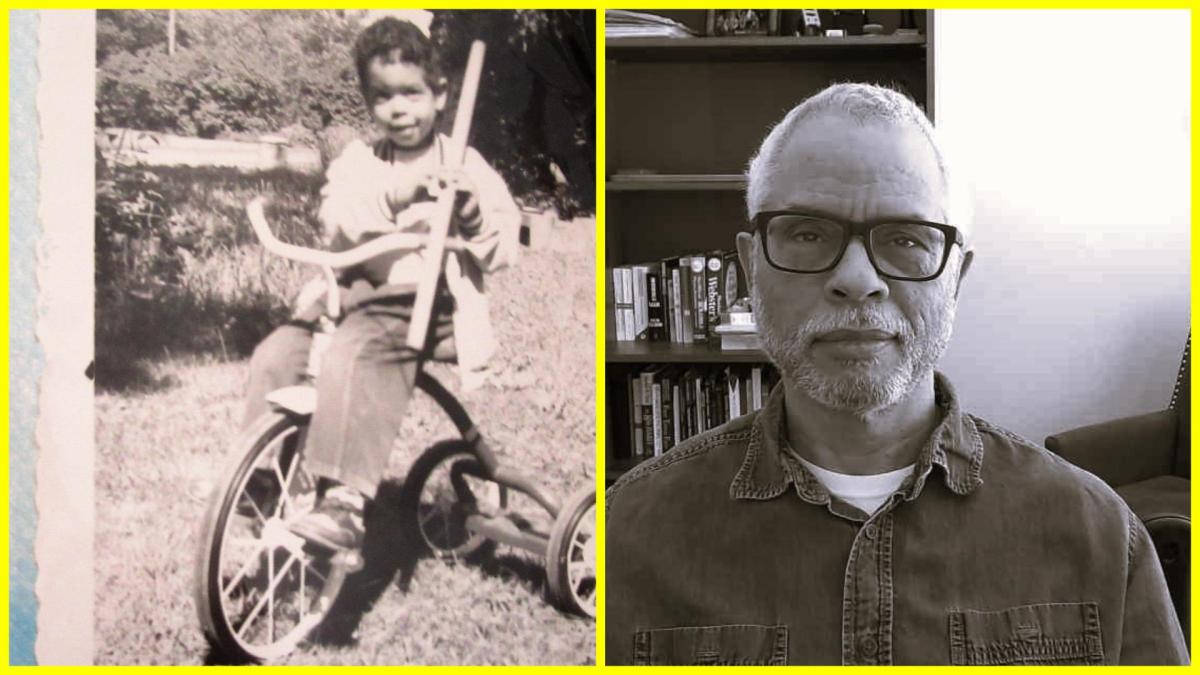
Friends were tough to find for me. I didn’t have any black friends. My father was black and my mother was white. They separated when my younger brother and I were little, and we lived with mom. Despite what some people may or are rumored to think, racism has always been a part of living in America.

Black people tended to live in different zip codes, not the one in which I grew up. I was often the only black kid in school, and this story was and is still common. I didn’t have black friends because I didn’t live in the zip codes where black people lived.

Dan wasn’t the only friend I had. There was only one other; he was white too. Like me and Dan, Tim and I didn’t stay friends.

A lot happened after that, which is always a part of coming of age. And I guess that’s because a lot of things changed—including me.

Generosity, kindness, and love, especially the love from my wife, saved me from lifelong bitterness, for which I’m grateful. I think a sense of humor was also important. And even though definitions differ about what friendship is—I have friends.

Martin Luther King Day About Peace and Unity

I noticed that Iowa City and Huston-Tillotson University in Austin, Texas have a couple of things in common regarding the celebration of the Martin Luther King holiday this week—one is inclement weather. The other thing is hope for peace and unity.

I was a student at Huston-Tillotson (one of the HBCUs) back in the 1970s. I saw it snow there once. It turns out that one of the MLK events will be postponed to January 27, 2024, and that’s the Austin MLK March. It’ll be too cold, with a chance for freezing rain. The event is billed as the MLK CommUnity March. The MLK Festival and Food Drive has been rescheduled to January 27th as well, and that will be at Huston-Tillotson University. The emphasis is on unity.

In Iowa City, the MLK Peace March on January 15, 2024 will instead be a vehicular parade because of the really cold weather we’ve been having recently. The emphasis is on peace. The parade will start at 9:30 AM.

All of my life I’ve admired Dr. Martin Luther King for his efforts to unite everyone in peace. Despite the world’s current events, I still have hope that the effort will continue.

We all have a lot in common, and it’s not just the weather.

The Intergalactic Angle on Your Point of View

I finally watched the movie “The Hitchhiker’s Guide to the Galaxy” the other night. It was released in 2005 and based on Douglas Adams’ book of the same title. In fact, he co-wrote the screenplay. A lot of it was not in the book. I thought a couple of scenes were noteworthy and pretty funny. I made connections to Dr. Martin Luther King, Jr. annual observance, which is this month.

One of them was the Point of View Gun. It’s probably unfortunate that the main prop was a gun, but hey, it was a ray gun. It didn’t kill anyone and in fact, it caused the person “shot” with it to be able to understand the perspective of another person. It was just temporary, but for a short while it enabled persons or extraterrestrials to understand another’s point of view. It was designed by the Intergalactic Consortium of Angry Housewives to influence their husbands to understand them better.

One of Dr. Martin Luther King’s main points was how important it is to try to understand and validate someone else’s point of view.

One drawback of the Point of View gun (besides the obvious associations with gun violence) was that the effect was specific to whoever was using it. So, when the ultra-maladjusted robot Marvin mowed down a gang of Vogons (hideous and cruel extraterrestrial bureaucrats who destroyed Earth in order to make room for an intergalactic bypass), they all collapsed from depression.

The other scene I thought was funny was the Vogon planet’s slap-happy encounter between the heroes and the creatures shaped like spatulas that popped out of the ground and smacked anyone in the face who had an idea.

I didn’t think the movie was nearly as good as Adams’ book. But I wonder if you could cross the spatula creatures with the Point of View gun that would take the perspective-taking power of the gun and give it to the spatula creatures who would slap you silly whenever you failed to even try to understand another’s point of view. I could use that kind of a slap sometimes.

It’s remarkable the connections you could make between Dr. Martin Luther King, Jr and The Hitchhiker’s Guide to the Galaxy.

Martin Luther King Jr Day 2024!

Dr. Martin Luther King Jr Day is officially the third Monday of January every year. It’s January 15, 2024 this year. It’s really a community affair, which hopefully expands more broadly out to all people.

There are a number of events planned. In the spirit of emphasizing the community projects, here’s the high points:

The University of Iowa general announcement highlights the food drive and service goals.

The City of Coralville web site lists many activities, including an opportunity to help paint a community mural on January 15th!

The Iowa City web page lists several activities as well, including an MLK Day Family Storytime on January 15th.

“I Have a Dream” Speech 60 Years Later

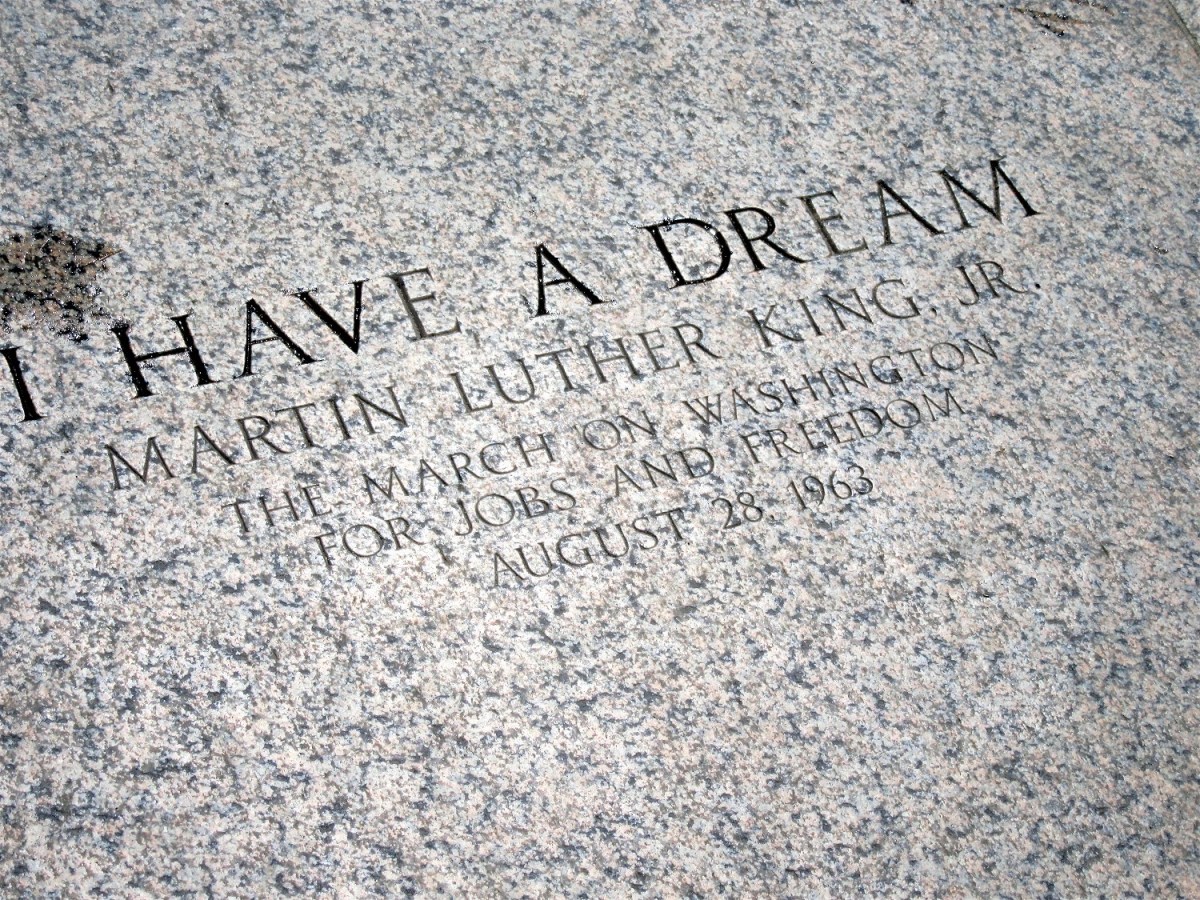
Today is the 60th anniversary of the Reverend Dr. Martin Luther King Jr’s “I Have a Dream” speech at the Lincoln Memorial in Washington D.C.

I was too young to remember it. However, I have a deep appreciation of the meaning it has not just for Black people, but for all of us. It’s not difficult to broaden the implication for all people.

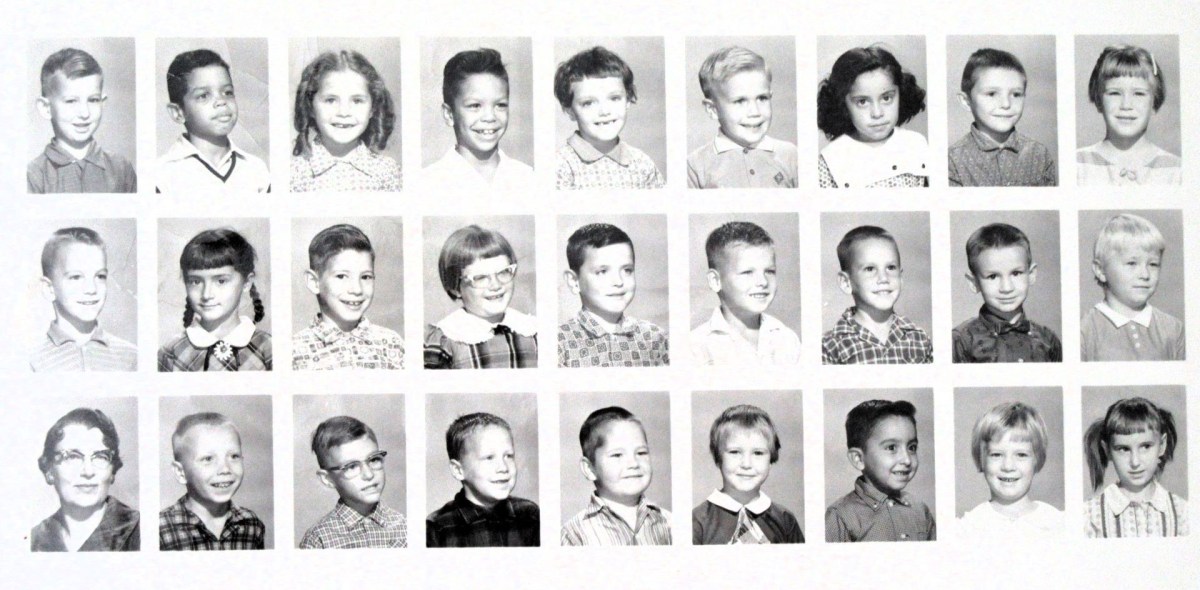
My personal reflection about this started this morning with a look at one of my primary school class pictures. I’m the handsome guy 2nd from the left in the top row. The other kids of color in the photo are Latino.  

The photo shows not just a group of kids. It also illustrates, just by chance, pretty closely the percentage of black persons in the state of Iowa as of the 2021 U.S. census, about 4%. Historically though, in the county in which I was living at that time, the percentage of nonwhite persons was listed at 0.4%. This was a 28% drop from the previous decade. In 1980, the percentage of Black people in the state was only 1.8%. As near as I can tell from the web, the current percentage of Black people as of the most recent data is 3.74% (possibly as of 2021).

My father was black and my mother was white. In Iowa, the law against miscegenation (marriage between blacks and whites) was repealed in 1839. On the other hand, my parents got their marriage license in 1954 in Watertown, South Dakota—which was 3 years prior to when that state repealed its law against interracial marriage. Right below the license, though, is a certificate of marriage marked State of South Dakota in Codington County. It certifies that my parents were married in Mason City, Cerro Gordo County in the state of Iowa.

I’m not going to try to puzzle that one out. My mother kept a lot of old photos and legal records that anchor me in my personal history.

I have photos of my father with me and my brother, Randy. I also have photos of my mother with me and my brother.

What I don’t have are photos of all of us together. It’s understandable to ask why. I wonder if it has something to do with the culture and mindset of the time. Why was it not possible to find someone, black or white, to snap a family photo of us together?

We can pass legislation repealing anti-miscegenation laws as well as other laws to protect civil rights. That is a necessary (but perhaps insufficient) step toward non-exclusion of certain groups of people from basic human rights.

Ashley Sharpton, who is an activist with the National Action Network and daughter of Reverend Al Sharpton, said that Americans need to “turn demonstration into legislation.”

I agree with her. On the other hand, I also wonder what more has to happen in the minds of all of us to turn legislation into transformation—of our personal implicit biases, which are not in themselves always bad or inescapable.

And since we’re into rhyming, what about asking another question? Can we turn demonstration into legislation while encouraging transformation without bitter confrontation?

My Two Cents on The Embrace Sculpture Honoring MLK Jr and Coretta Scott King

I first saw a photo of the sculpture honoring Dr. Martin Luther King Jr and Coretta Scott King, called “The Embrace” a couple of days ago. I remember my first impression being that it would have been nice to see a full sculpture of the couple rather than disembodied arms.

Sena mentioned it today because it was unveiled at Boston Commons. This was just before my mindfulness meditation, so I just told her that I saw the picture of it and said I would have to think about it some more.

As I sat in meditation, it occurred to me that “The Embrace” expressed what I think is a basic abstract idea, which is the challenge for us to embrace the notion that we’re all humans who ought to accept each other, and be kind and generous to one another.

That’s what I think the Kings did. That’s why Dr. King won the Nobel Peace Prize.

You could make a sculpture of the King as a couple embracing each other after he won the Nobel Prize. It would have been beautiful. On the other hand, you could make a sculpture which tries to do more than that. How difficult would it be to make a representation of what it might look like if all of us embraced our humanity—and each other?

It sounds too difficult. Yet the artist managed to do just that. Anyway, that’s my two cents.

Martin Luther King, Jr. Celebration of Human Rights Week 2023

The Martin Luther King, Jr. Celebration of Human Rights Week 2023 begins January 16, 2023. See the University of Iowa Healthcare list of events, which will be updated.

59th Anniversary of MLK’s “I Have a Dream” Speech on August 28, 1963

Sena reminded me that today is the 59th Anniversary of Reverend Martin Luther King Jr’s “I Have a Dream” speech in Washington, D.C. After she reminded me about it, I found this anniversary mentioned in only a few headlines on the web.

But that’s no excuse. It doesn’t matter that I was just a small child on August 28, 1963. And when I hear the speech, it still makes the hair on the back of my neck stand up.