The Fortuitous Connection Between the Meyer Lemon and James Thurber

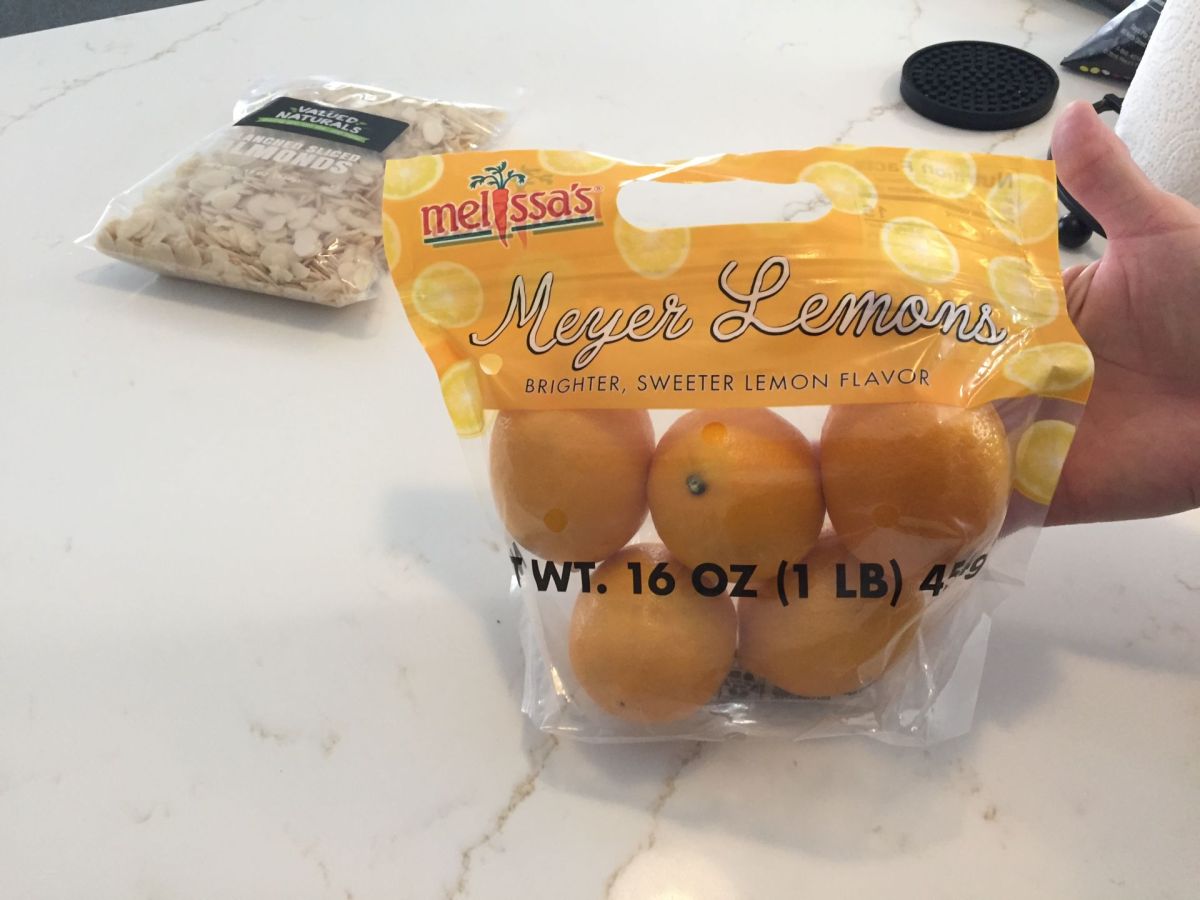
Sena bought some Meyer Lemons today, which we had not heard of until she saw them on TV on the QVC network. She bought them for a fish dinner.

I was curious about the Meyer Lemon. We’ve never eaten them before. People say they’re sweeter than regular lemons. It’s a hybrid between a lemon and an orange.  I did a little digging on the web and found a little background about them, which curiously connects to James Thurber in a roundabout way.

Anyway, an explorer and employee of the U.S. Department of Agriculture named Frank Nicholas Meyer introduced the fruit to the United States in 1908 after he collected them while traveling in China. It was named after him although the fruit had been growing in China for millennia. Meyer was an immigrant to America from Amsterdam in 1901 and became a citizen in 1908, modifying his name from Frans Nicolaas Meijer to Frank Nicholas Meyer.

Meyer is also credited with the discovery that the Chestnut blight disease was originally imported to America from trees in China. He collected fungus specimens which were identified as the cause of the disease which was killing chestnut trees in America in 1904.

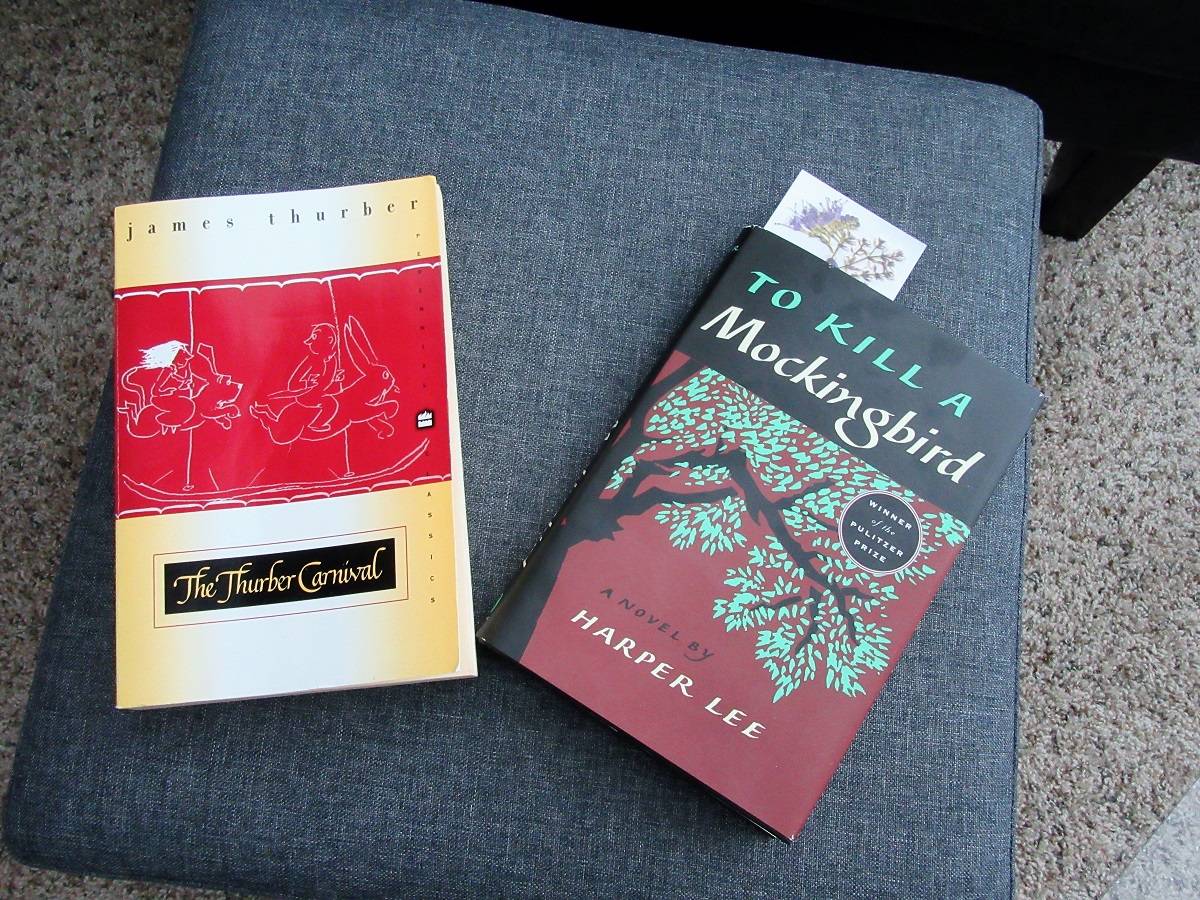
That gets us to the connection of Meyer lemons to the writer James Thurber, although I confess the connection is indirect. Thurber wrote a short story, “The Car We Had to Push” which was published in the 1945 collection, The Thurber Carnival.

Part of the story is about a character named Cousin Zenas, who died of—yep, you guessed it, the Chestnut blight. Now, even though the story is in a copyrighted book, the full text turns up in a couple of blogger sites. I found one copy of The Thurber Carnival you might be able to borrow and read for free on the Internet Archive. Don’t believe the Google Gemini Artificial Intelligence bot, which always intrudes itself at the top of my web searches. You can’t get the book as a free pdf from “The Project Gutenberg website,” which I suspect is a confabulation.

Anyway, the Meyer Lemon tastes great and Sena was able to squeeze a lot of juice out of one small Meyer lemon. You can even eat the rind. She bought a bag of 5 of them which cost $7.00, and they were little compared to the large ones she saw on the QVC network.

They’re a great accent to a fish and hush puppies’ dinner. The sauce is made with Miracle Whip, by the way.

Thoughts on the Big Mo Pod Show “Funkin’ Down the Highway”

This is a post about the Big Mo Pod Show we heard last night on the KCCK FM radio dial 106.9. Incidentally, the KCCK fund drive was enormously successful this year, earning $100,000 in donations, according to Big Mo (aka John Heim) himself.

One item is the cover by Buddy Miles of the song “Tobacco Road.” This rendition was different from performances by other artists. Big Mo liked it and so did I. I did a little web search on it because I couldn’t catch all the lyrics. It was originally done by John D. Loudermilk in 1960. Miles’ version is essentially the same.

What interested me even more about “Tobacco Road” are the associations I have about it with specific literary works. I’ll admit I’ve never read nor seen the film adaptations of Erskine Caldwell’s books, “Tobacco Road” and “God’s Little Acre.” But one of my favorite short stories by James Thurber is “Bateman Comes Home,” which was published in a collection entitled “The Thurber Carnival,” in a hardcover edition in 1945. You’ve got to read it to get a sense of how comical the parody is of the regional dialect used in Caldwell’s novels. In fact, Thurber himself gives the game away about his intent in writing “Bateman Comes Home” by adding a wry comment as a subtitle:

Written after reading several recent novels about the deep south and confusing them a little—as the novelists themselves do—with “Tobacco Road” and “God’s Little Acre.”

He also adds another comment at the end of the short story: “If you keep on long enough it turns into a novel.”

The other thing I noticed about the podcast last night is that one of the songs which was not included in the list, “Joliet Bound,” was performed by an artist I haven’t heard of, the Reverend Shawn Amos, who is no relation to me, of course. But my background as a psychiatrist made me take special notice of details about his family, one of which is that his mother, Shirl-ee Ellis, a singer herself, had been diagnosed with schizoaffective disorder. Sadly, she eventually died by suicide. Shawn Amos is also the youngest son of the Famous Amos chocolate chip cookie founder, Wally Amos (again, no relation), although I’ve gotten a lot of friendly ribbing about that.

The song “Joliet Bound” is about a guy who expresses that he’s wrongly accused of killing a man over a woman and is on his way to Joliet prison in Joliet, Illinois. The Joliet Prison is a tourist destination nowadays and has other distinctions attached to it. It was featured in the 1980 film, the Blues Brothers. There were some famous inmates there, among them John Wayne Gacy, who was once evaluated and diagnosed with antisocial personality disorder by psychiatrists at The University of Iowa in 1968 as described in Dr. Donald Black’s book, “Bad Boys, Bad Men: Confronting Antisocial Personality Disorder (Sociopathy).”

Congratulations KCCK Radio!

Thoughts So Far on “To Kill a Mockingbird”

I am just getting started reading “To Kill a Mockingbird” by Harper Lee. As I said in a previous post, I can’t remember ever reading it, but I saw the movie (or most of it). I have seen news reports that some schoolteachers are opposed to keeping the title on required reading lists.

I just finished the 3rd chapter, the one that contains an oft quoted line from Atticus:

“You never really understand a person until you consider things from his point of view…until you climb into his skin and walk around in it.”

 I found dozens of hits on the web about this quote. There are likely a lot more. I don’t have to explain it to anyone, least of all to schoolteachers.

I can see my bookshelf from my chair where I’m reading Lee’s novel. I see my copy of a book by James Thurber, “The Thurber Carnival.” I occasionally re-read a story in it entitled “Bateman Comes Home.” I think it’s hilarious. There’s a short message ahead of the main text:

“Written after reading several recent novels about the deep south and confusing them a little—as the novelists themselves do—with “Tobacco Road” and “God’s Little Acre.”

And then I searched the web and found a web site, The Library dot org, and on a web page entitled Kids Booklists, there was the message, “If you liked ‘To Kill a Mockingbird’,” you might also enjoy…” Beneath it was a list of books, including “God’s Little Acre” by Erskine Caldwell.  

I noticed the resemblance. I’ll keep you posted.