COVID Conspiracy Theories

A few days ago, I read the news story about COVID-19 antivaxx vigilantes interfering with the medical care of patients hospitalized with COVID-19. The writer interviewed Dr. Wes Ely, MD, MPH. He’s an intensive care unit (ICU) specialist at Vanderbilt University.

I first corresponded with Dr. Ely by email about 10 years ago when I wrote a blog called “The Practical Psychosomaticist.” I sort of poked fun of him in one of my posts about the chapter on psychiatrists and delirium in one of his books, Delirium in Critical Care, which he co-authored with another intensivist, Dr. Valerie Page, and published in 2011.

I can’t really tell the anecdote the way I usually told it to residents and medical students because of copyright rules but the antipsychotic drug haloperidol is mentioned. I made fun of the very short section “Psychiatrists and Delirium” in Chapter 9 (“Treatment of delirium in critical care”). It’s only a couple of paragraphs long and comically gives short shrift to the psychiatrist’s role in managing delirium. That’s ironic because I have always thought the general hospital psychiatric consultant’s role was very limited in that setting.

Maybe you should buy that book and, while you’re at it, buy the other one he recently published this month, Every Deep-Drawn Breath. My wife just ordered it on Amazon. It’s reasonably priced but in order to qualify for free shipping, she had to buy something else. It turned out to be Whift Toilet Scents Drops by LUXE Bidet, Lemon Peel (travel size, not that we’re traveling anywhere in this pandemic). Be sure to get the Lemon Peel.

In the email Dr. Ely sent to me and many others about the book, he said, “Every penny I receive through sales of this book is being donated into a fund created to help COVID and other ICU survivors and family members lead the fullest lives possible after critical illness. This isn’t purely a COVID book, but stories of COVID and Long COVID are woven throughout. I have also shared instances of social justice issues that pervade our medical system, issues that you and I encounter daily in caring for our community members who are most vulnerable.”

Anyway, the Anti-Vaxx vigilantes have played a big role in filling up the Vanderbilt ICU and many others by posting conspiracy theories about the COVID-19 vaccines on social media, which for some reason are hard to control. They persuade patients and their families that doctors are trying to kill them with the treatments that are safe and effective. Instead, they recommend ineffective and potentially harmful interventions such as Ivermectin, inhaling hydrogen peroxide, and gargling iodine.

There are different opinions about conspiracy theories and those who believe in them. Some psychiatrists say that conspiracy theories are not always delusional. One psychiatrist wrote a short piece in Current Psychiatry, Joseph Pierre, MD, “Conspiracy theory or delusion? 3 questions to tell them apart.”  Current Psychiatry. 2021 September;20(9):44,60 | doi:10.12788/cp.0170:

What is the evidence for the belief? Can you find explanations for it or is it bizarre and idiosyncratic?

Is the belief self-referential? In other words, is it all about the believer?

Is there overlap? There can be elements of both.

The gist of this is that the more self-referential the conspiracy theory, the more like it is to be delusional.

Another article which expands on this idea is on Medscape: Ronald Pies and Joseph Pierre, “Believing in Conspiracy Theories is Not Delusional”—Medscape-Feb 04, 2021. According to them, delusions are fixed, false beliefs (something all psychiatrists learn early in residency) and usually self-referential. Conspiracy theories are frequently, but not necessarily, false, usually not self-referential, and based on evidence one can find in the world—often the internet. Conspiracy theories have blossomed during the COVID-19 pandemic. One of them is that it’s a government hoax. An important difference between the current pandemic and the flu pandemic of 1918 is the world wide web which makes it easier for many people to share the conspiracy theories.

Pies and Pierre describe a composite vignette of someone who has a conspiracy theory featuring many false beliefs about the COVID-19 vaccines ability to change one’s DNA, thinks that research results about the vaccines are faked, mistrusts experts, has no substance abuse or psychiatric history and no mental status exam abnormalities. He exhibits exposure to misinformation, biased information processing, and mistrusts authorities.

They would say he has no well-defined psychiatric illness and antipsychotic treatment (such as haloperidol) would not be helpful. However, similar to the approach with frankly delusional patients, they would argue against trying to talk the person out of his false beliefs. Instead, if the person can be engaged at all, the focus should be on trying to establish trust and respect, clarifying differences in the information sources available, and allowing time for the person to process the information. It would be more helpful to avoid confrontation and arguments, instead pointing out inconsistencies in the information the person has and contrasting it with facts. Countering misinformation with accurate information could be helpful.

There are two major routes to anti-vaccination beliefs of the severity under discussion here. One is the problem of conspiracy theories out there. The other is the florid delirium that can happen to patients admitted to ICUs with severe COVID-19 disease. The former may not be a classifiable mental illness per se, but the latter definitely is.

Haloperidol is not the main solution for either problem.

Catatonia: Another Reason to Get the COVID-19 Vaccine

My wife and I have been immunized against COVID-19 and we recognize that people can be hesitant about getting vaccinated. However, I’m remembering my last few months prior to my retirement a year ago working as a general hospital psychiatric consultant and I saw one or two cases of catatonia in the context of COVID-19 infections.

Catatonia is a complex, potentially lethal neuropsychiatric complication of many medical disorders including COVID-19. It can make a person mute and immobile, often making health care professionals mistake it for primary psychiatric illness (for example, catatonic schizophrenia). You can access a fascinating educational module on the National Neuroscience Curriculum Initiative (NNCI) website about catatonia and how it can be associated with COVID-19.

Catatonia can kill people, rendering them unable to move or eat, leading to blood clots and dehydration among a host of other complications. You’ve seen the news stories about blood clots being an extremely rare but deadly side effect of the Johnson & Johnson COVID-19 vaccine. The risk for blood clots is actually higher from COVID-19 infection itself compared with the very low risk from the vaccine.

I made a YouTube video about catatonia and other neuropsychiatric emergencies and that presentation continues to be viewed fairly often. You’ll want to crank up the volume.

I wrote a blog post about catatonia in the setting of delirium a couple of years ago and the information in it is still relevant below.

Catatonic patients may have a fever and muscular rigidity that leads to the release of an enzyme associated with muscle tissue breakdown called creatine kinase (CK). The level of CK can be elevated and detectable on a lab test.

Many patients will have a fast heart rate and fluctuating blood pressure. They may sweat profusely which can lead to a sort of greasy facial appearance. They may have a reduced eye blink rate or seem not to blink at all. They may display facial grimacing.

The patient may exhibit the “psychological pillow” (some call this the “pillow sign”). While lying in bed, the patient holds his head off the pillow with the neck flexed at what looks like an extremely uncomfortable angle. The position, like other odd, awkward postures can be held for hours.

Catatonia can be caused by both psychiatric and medical disorders. It tends to be more common in bipolar disorder than in schizophrenia even though catatonia has historically been associated with schizophrenia as a subtype. You can also see it in encephalitis, liver failure, and in some forms of epilepsy and other medical conditions—to which we can now add COVID-19 infection.

The patient may perseverate or repeat certain words no matter what questions you ask. He may simply echo what you say to him and that’s called “echolalia”.

Although catatonic stupor is what you usually see, less commonly you can see catatonic excitement, which is constant or intermittent purposeless motor activity.

The usual way to assess catatonic stupor in order to distinguish it from hypoactive delirium is to administer Lorazepam intravenously, usually 1 to 2 milligrams. A positive test for catatonic stupor is a quick and sometimes miraculous awakening as the patient returns to more normal animation. The reaction is usually not sustained and the treatment of choice is electroconvulsive therapy (ECT), which can be life-saving because the consequence of untreated catatonia can be death due to such causes as dehydration and pulmonary emboli.

Another less invasive test that doesn’t use medicine is the “telephone effect” described in the 1980s by a neurologist, C. Miller Fisher. It was used to temporarily reverse abulia or akinetic mutism, which in a subset of cases of stupor are probably the neurologist’s terms for catatonia. Sometimes the mute patient suffering from abulia can be tricked into talking by calling him on the telephone. It’s pretty impressive when a patient who is mute in person answers questions by simply calling him up on the telephone just outside his hospital room. 

So that, in my opinion, is yet another reason to get the COVID-19 vaccine.

Hoofing it Around the Hospital

Again today, I hoofed it around the hospital. I put 43 floors and a little over 4 miles on my step counter.

I don’t like waiting for elevators so I take the stairs. And a Consult-Liaison Psychiatrist is like a fireman, running all over putting out fires.

I did other things today. I gave the usual lecture on delirium and dementia to the medical students. I notice that as I have gotten older, I tend to tell more anecdotes about my experiences managing delirium in patients on the medical side of the hospital.

I’m in my anecdotage, as I told the students today.

I also lamented the decision by the powers that be to copyright the Montreal Cognitive Assessment (MoCA). The medical students will be able to use it for free, but faculty won’t.

I think that’s ageism. I won’t pay so I won’t use the MoCA anymore.

Informal Bedside Tests for Delirium

Most of this post is an updated redux from years ago about an informal bedside test for delirium called the oral trails test. I learned about it from my senior resident when I was a junior psychiatry resident in training at the VA Medical Center.

There was an elderly patient admitted to the psychiatry unit who was thought to be psychiatrically ill but who actually seemed confused to me and the senior resident. We consulted medicine in order to get him transferred to the general medicine unit but it was tough going. I think the medicine resident disagreed with our clinical impression that he was confused and didn’t think medical transfer was necessary.

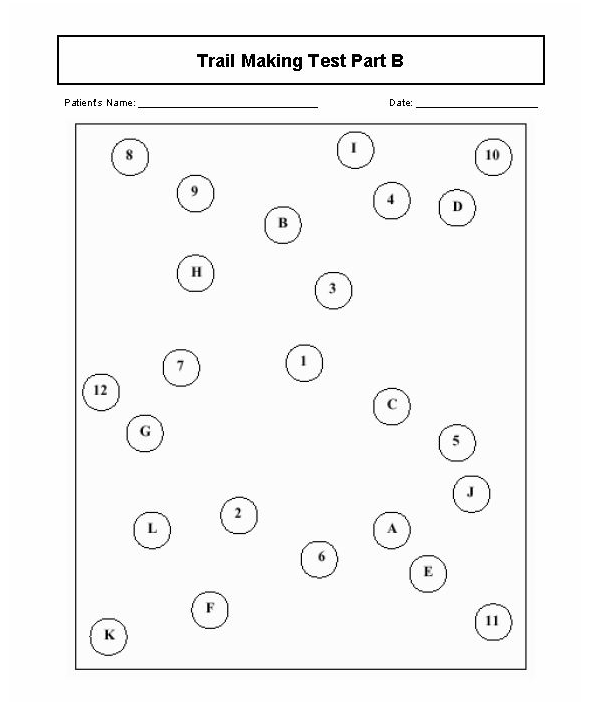
Anyway, my senior resident showed me her version of the oral version of the mixed Trails A and B Test for executive function. There is a written form which is part of the Repeatable Battery for the Assessment of Neuropsychological Status (RBANS). First, she asked him to count from 1 to 7; then she asked him to recite the letters of the alphabet from A to J. She then asked him to try reciting those letters in alternating sequence. Of course, he failed miserably and was eventually transferred to internal medicine. The Trails actually is a paper and pencil test and it looks like a dot to dot game, like the example below:

Trails Test

My senior resident told me she learned the oral Trails test from her senior resident and couldn’t remember anything else about it. I used the test for years but a neuropsychologist criticized the practice, questioning the test’s validity, and rightly so.

Of course, I’d been doing it wrong. You’re supposed to have the patient count to 25, then recite the letters of the alphabet, then recite the numbers and letters in alternating sequence from 1 to 13 and A to M. More than two errors in pairings indicate cognitive impairment.

There are limitations to the verbal Trails and caution is advised in more recent literature, indicating that there are moderate education effects in older patients and that it may be wiser to use both paper and pencil and oral versions together.

Still the search goes on for quick and dirty ways to screen for cognitive impairment in the elderly because this and advanced age are two main risk factors for delirium.

Nowadays, I do the Mini-Cog (shown in the video below) or the Single Question in Delirium (SQiD) test, which just involves asking a family member if the patient seems confused lately.

References:

Mrazik, M., Millis, S., & Drane, D. L. (2010). The oral trail making test: effects of age and concurrent validity. Archives of clinical neuropsychology: the official journal of the National Academy of Neuropsychologists, 25(3), 236–243. doi:10.1093/arclin/acq006

Ricker, J. H., & Axelrod, B. N. (1994). Analysis of an Oral Paradigm for the Trail Making Test. Assessment, 1(1), 47–51. https://doi.org/10.1177/1073191194001001007

Sands, M., Dantoc, B., Hartshorn, A., Ryan, C., & Lujic, S. (2010). Single Question in Delirium (SQiD): testing its efficacy against psychiatrist interview, the Confusion Assessment Method and the Memorial Delirium Assessment Scale. Palliative Medicine, 24(6), 561–565. https://doi.org/10.1177/0269216310371556

Quiz Show versus Grand Rounds for Delirium Education Redux

Here’s a redux of one of my blog posts from years ago. There’s not been much change in the data or clinical practice regarding delirium, except we’re even less enthusiastic about using any kind of psychotropic medication to treat delirium, even hypoactive delirium. Try the puzzle.

“So, you want to put on a game show contest to educate clinicians about delirium? Contact David Meagher, a psychiatrist in (where else?) Limerick, Ireland. He reported on this innovative educational workshop in the November 2010 Vol. 3 issue of the Annals of Delirium, the newsletter for the European Delirium Association (EDA). He also published the study which describes the contest in International Psychogeriatrics [1].

The workshop focused on clinician attitudes toward drug therapy for distressed delirious patients. It explored pre-existing attitudes and practice toward the use of medications to manage delirium and exposed participants to a very interactive educational event modeled after a popular TV quiz show. There were two teams (skeptics versus neuroleptics) furnished with a list of statements about delirium pharmacotherapy. The participants later completed a post-workshop questionnaire that explored changes in attitudes as a result of the workshop.

The participants were all experts on the subject and there was a good deal of variability in attitudes and practice. Some of the questions put to the teams involved using antipsychotics prophylactically to prevent delirium, the mechanism of action of antipsychotics, and what role benzodiazepines play in the treatment of non-alcohol withdrawal delirium.

One of the more puzzling findings was that the frequency of antipsychotic use was inversely proportional to the perception of the strength of supporting evidence. In other words, the less they knew about antipsychotics, the more often they used them. Most participants seemed to believe that the principal mechanism of action of antipsychotics is sedation, despite the lack of supporting evidence.

Some clinicians used antipsychotics to relieve the stress of caregivers rather than that of delirious patients, an example of patients getting the right treatment for the wrong reasons as observed by Meagher—and many of us in the field.

The workshop also highlighted the tendency of clinicians to focus on risk management rather than effective therapeutic intervention in the management of delirious patients with disruptive behavior and severe distress. This mainly relates to focus on the potential adverse effects of antipsychotics such as extrapyramidal side effects, metabolic, and cerebrovascular effects.

The quiz show activity was fun and challenging. The device of dividing the participants into two small teams with larger audience participation cut down on the anxiety that could be provoked by giving the “wrong answer”. The questions were true/false and didn’t always have clear right or wrong answers. It was highly interactive, a component of continuing medical educational (CME) activities that is increasingly encouraged because it’s more likely to lead to changes in clinician attitude and practice. The one time Grand Rounds CME “seat time” is going the way of the dinosaur.

So a couple of findings from the quiz show post-activity questionnaire were that clinicians were more likely to use antipsychotics prophylactically and to use antipsychotics to manage hypoactive delirium.

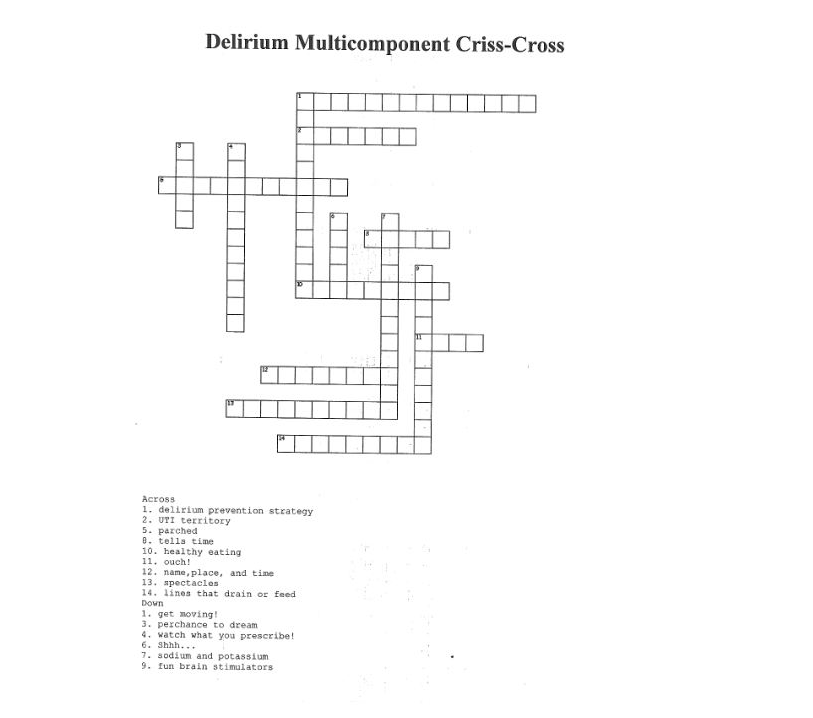
 Our delirium intervention project group members are not quite as enthusiastic yet about these two interventions. We’re a bit more inclined at least initially to focus on non-pharmacologic multicomponent strategies such as the example below:

  • Minimize the use of immobilizing catheters, intravenous lines, and physical restraints
  • Avoid immobility, early mobilization
  • Monitor nutrition
  • Provide visual and hearing aids
  • Monitor closely for dehydration
  • Control pain
  • Monitor fluid-electrolyte balance
  • Monitor bowel and bladder functioning
  • Review medications
  • Reorient communications with the patient
  • Place an orientation board, clock, or familiar objects (i.e., family photographs) in patient rooms
  • Encourage cognitively stimulating activities such as word puzzles
  • Facilitate sleep hygiene measures, including relaxation music or tapes at bedtime, warm drinks, and gentle massage
  • Minimize noise and interventions at bedtime, e.g., by rescheduling medication times

But I’m just as enthusiastic about interactive educational methods to engage learners in order to build a culture more likely to produce champions who will lead the delirium prevention effort—try the delirium multicomponent crisscross puzzle below. The clues are contained in the list of multicomponent tactics above.”

  1. Meagher, D.J., Impact of an educational workshop upon attitudes towards pharmacotherapy for delirium. Int Psychogeriatr, 2010. 22(6): p. 938-46.

SQiD vs CAM Redux

This was a blog post I wrote back in 2011 on another blog, The Practical C-L Psychiatrist. SQiD is short for Single Question in Delirium and it’s a very short and effective screen for delirium, if you have a reliable informant. I also mention the Edinburgh Delirium Test Box (EDTB). It has been further developed into a smartphone app.

“The November Vol. 3 issue of the Annals of Delirium published a summary of an interesting study of a Single Question in delirium (SQiD) as a screen for delirium compared to the Confusion Assessment Method (CAM), the Memorial Delirium Assessment Scale (MDAS) and a psychiatrist interview[1].

The question “Do you think (name of patient) has been more confused lately?” was put to a friend or relative of 21 patients. Compared with psychiatric interview, the SQiD achieved a sensitivity and specificity of 80% (95% CI 28.3-99.49%) and 71% (41.90-91.61%) respectively. The CAM demonstrated a negative predictive value (NPV) of 80% (51.91-95.67%) and the SQiD showed an NPV of 91% (58.72-99.77%). The CAM in the study had only a 40% sensitivity used by minimally trained clinical users.

The negative predictive value of a test tells you how likely it is that you actually don’t have the condition or disease. It’s defined as the number of true negatives (people who test negative who are not affected) divided by the total number of patients who test negative and it varies with test sensitivity, test specificity, and disorder prevalence. The sensitivity of a test is how accurately it detects patients who are positive for the disorder (in this case delirium). If 100 patients are positive for the disorder, then a test that is 80% sensitive will detect 80 of those cases and miss 20 actual cases of the disorder. Specificity is defined as how accurately a test detects patients who do not have the disorder. In our delirium example, if 100 patients are free of the disorder, then a test that is 71% specific will correctly tell 71 of those people that they are not affected and will incorrectly tell 29 that they have the disorder when they don’t.

This seems to suggest that a single question screening question packs a fair punch compared to screening instruments and psychiatric interview for identifying delirium. The CAM takes a few minutes to complete and requires training to achieve optimal identification rates.

The authors suggest the SQiD deserves further study and their results seem to support the conclusion. The study is limited by small sample size, but intuitively the premise is appealing. This is one of the quickest tests for delirium applicable and can be applied by almost anyone.

Single question screening exams for depression are not unheard of so there is precedence for the SQiD. You just have to be careful about what you say in front of patients and families. “Go ahead and run the squid on Mr. Jones” could raise a few eyebrows.

This is possibly a low tech solution in a pinch when the CAM forms file is empty or the battery is low on the Edinburgh Delirium Test Box (EDTB)[2]. The EDTB is a more high-tech solution to testing for what neuropsychologists believe what one of the main abnormalities is in delirium—lack of sustained attention. It’s a computerized neuropsychological testing device.

And that face-off would be called SQiD versus Box.”

References:

1.         Sands, M., et al., Single Question in Delirium (SQiD): testing its efficacy against psychiatrist interview, the Confusion Assessment Method and the Memorial Delirium Assessment Scale. Palliative Medicine, 2010. 24(6): p. 561-565.

2.         Brown, L.J.E., et al., Detecting deficits of sustained visual attention in delirium. Journal of Neurology, Neurosurgery & Psychiatry.

Coach’s Corner On Delirium

I’m anticipating a busy time next month on the psychiatry consultation service. I suspect delirium will be the main event, as it is most of the time.

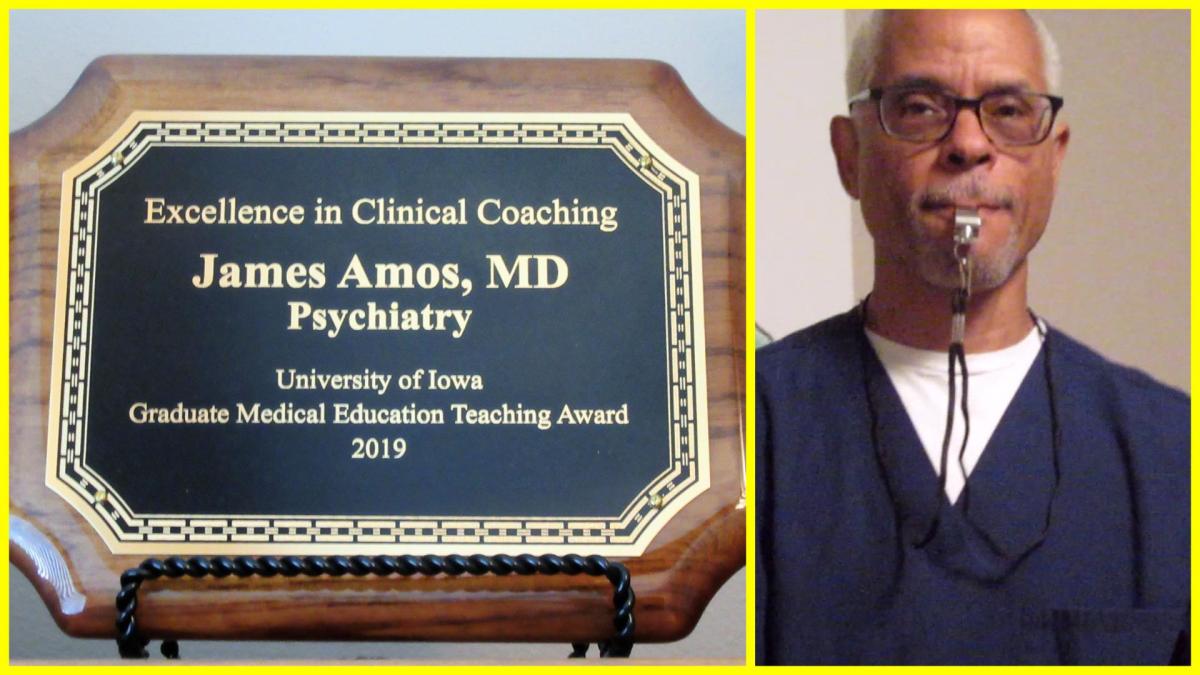
So I made a very short YouTube video on delirium. It’s cast in the style of a coach’s corner because I was one of the many clinicians who won the Excellence in Clinical Coaching Award this year.

I’m honored to be in such distinguished company and congratulate all the winners.

Coach’s Corner on Delirium

Let’s Promote Living Well to 100

Living Well

I get a big kick of this video every time I see it. It’s a YouTube about people who are 100 years old who are funny, wise, and talented. It’s included on the SSM Health St. Mary’s Hospital YouTube channel. St. Mary’s Hospital is in Madison, Wisconsin. I worked as a psychiatrist there very briefly a long time ago.

However, the other thing this video brings to mind is something sad. I see patients half my age (nowhere near 100) almost every day in the hospital who are delirious, sometimes for prolonged periods of time. According to the medical literature, they will be at risk for developing dementia and not infrequently do. In fact, research tends to show that for every day someone spends delirious, the risk for developing dementia goes up 35%. That makes delirium a life-limiting condition which can happen to anyone at any age.

I got delirious after a routine colonoscopy, a procedure to screen for colon cancer and other pre-cancerous tumors that used to be routinely recommended for those who reach 50. It was the worst 50th birthday present a guy could ever get.

I was delirious probably because I got sedated with a combination of Versed and Demerol. The worst part of the condition probably lasted only a couple of hours at most following the procedure. But I was sure wiped out the rest of the day.

I would have a tough time picking out the worst part of the whole process, the bowel prep (guzzling a big jug of GoLytely which should be called GoHeavily) or enduring the post-procedure delirium. It was probably the latter.

I don’t remember much. My wife tells me that I kept repeating something about not taking NSAIDs. I think there was something about that in the informed consent and education materials that got sort of stuck in one of my neurons. I kept sliding down in bed while I was in the recovery room, which I was in for a little while longer than is usually expected.

Preventing delirium is a vital job for health care professionals everywhere. We can’t prevent each and every case, but there are definitely things we can do to mitigate the problem. One of the most important goals is to try to minimize or avoid the use of certain offending drugs such as anticholinergic and sedative-hypnotic agents.

It’s also good to remember that the population at highest risk for getting delirious is the elderly and those who already may have cognitive impairment.

Preventing delirium, based on current literature, means first implementing non-pharmacologic multicomponent interventions. These may require a large cadre of volunteers. The best example is the Hospital Elder Life Program (HELP) at Yale, which is copyrighted by Dr. Sharon Inouye. Six of the most important features to address:

–Normalizing electrolytes such as sodium and keeping patients well-hydrated

–Mobilizing patients as much as possible, including getting immobilizing devices such as foley catheters removed as early as you can

–Making sure sensory aids such as eyeglasses and hearing aids are available

–Ensuring that medications are monitored so as to minimize exposure to drugs that are anticholinergic or sedating.

Anyway, working on preventing delirium and minimizing its impact is an ongoing challenge. Keep the goal in mind: We want as many people as possible to live well to 100.

Wes Ely Brings House Down

Wes Ely came to town.

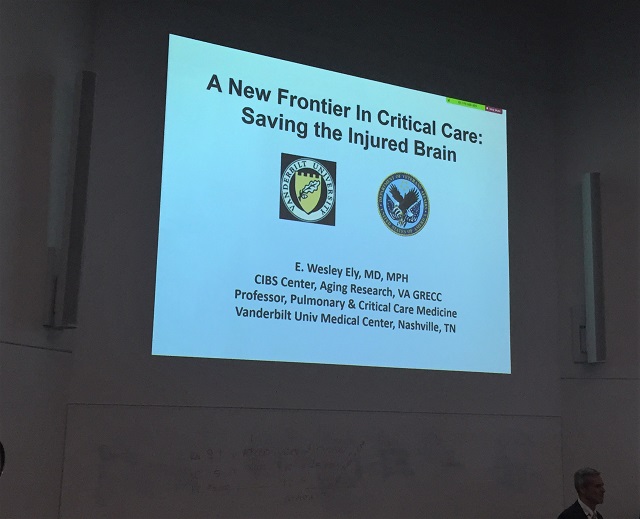
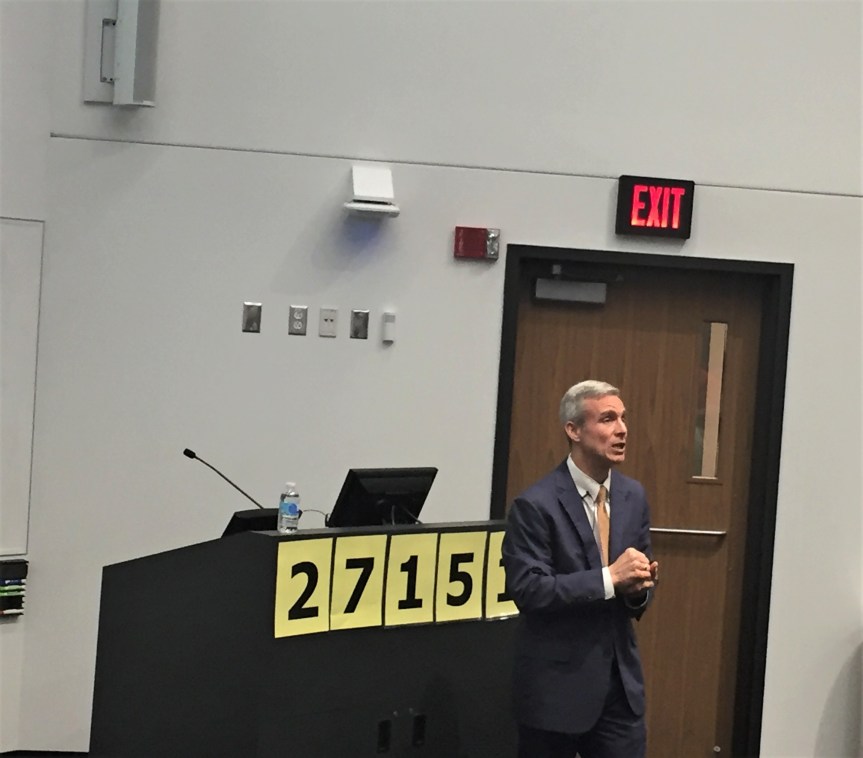
I know I’d been saying that I probably wouldn’t have time to attend Wes Ely’s Grand Rounds presentation yesterday, “A New Frontier in Critical Care: Saving the Injured Brain.” But against all odds, I actually got to go, along with some medical students and a Family Medicine resident.

As I expected, Dr. Ely brought the house down. His talk was similar to the one he gave at Emory University in Atlanta, Georgia, but not identical. He described the results of the study “Haloperidol and Ziprasidone for treatment of Delirium in Critical Illness,” published last October in the New England Journal of Medicine. There’s a YouTube video of that in my March 28, 2019 post announcing his visit to Iowa City.

He also discussed in detail the ABCDEF bundle for protecting the brains of patients in the ICU.

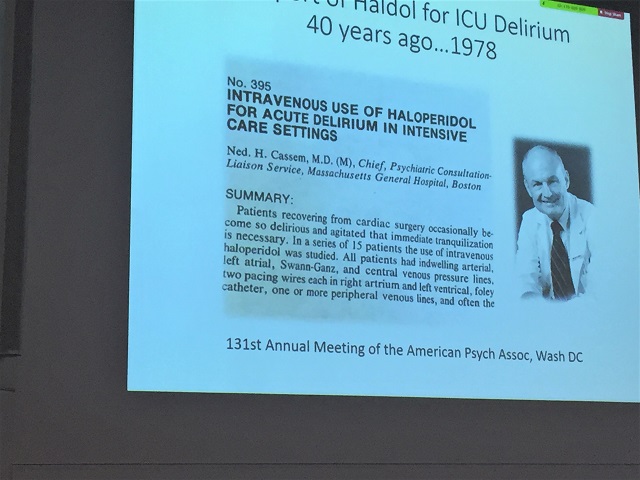
When he outlined the history of intravenous haloperidol for the treatment of delirium in critical care units, I had to cringe because I remembered the continuous IV haloperidol infusion protocol (running at 5-10 mg an hour) developed by Riker and colleagues. I mention it for historical reasons only. I don’t recommend using it.

IV haloperidol for ICU Delirium

Riker, R. R., G. L. Fraser and P. M. Cox (1994). “Continuous infusion of haloperidol controls agitation in critically ill patients.” Critical care medicine 22(3): 433-440.

After his presentation, Dr. Ely  asked for questions. I asked him what he thought the role of the psychiatrist is regarding ICU delirium. He actually recognized me; we met very briefly at a meeting of the American Delirium Society in Indianapolis several years ago.

Even better, he knew enough to mention the catatonic variant of delirium and the irony of using a benzodiazepine to treat it, which you would avoid like the plague in delirium (except for alcohol withdrawal, for example). However, benzodiazepines can reverse catatonia. See my post from April 10, 2019 (“Delirium and Catatonia: Medical Emergencies”). He thought psychiatrists would know more about that and would be important collaborators in managing catatonia.

Wes bringing the house down.

It’s difficult not to be excited by the advances in medicine and psychiatry when an inspirational scientist, humanist, and visionary leader like Wes comes to town. It makes me wonder how I’m going to get a buzz like that out of anything I do in retirement.

On the other hand, I get a kick out of making silly videos.

Wes Ely at University of Iowa Today

Wes Ely, MD will be giving the Internal Medicine Grand Rounds today at noon at University of Iowa Hospitals and Clinics. The title of his presentation is “A New Frontier in Critical Care: Saving the Injured Brain.”

I’m on duty today in the general hospital as a psychiatric consultant. I’m pretty sure I won’t be able to attend Dr. Ely’s talk, ironically because I’ll be helping colleagues care for delirious patients.

But I found a YouTube video of the talk he gave with the same title. He delivered it in 2017 at a Critical Care Summit meeting at Emory University in Atlanta, Georgia.

I gave a talk to the medical students yesterday about delirium and dementia, which you can view in yesterday’s post. I urged them to try to attend Dr. Ely’s talk today because it would be a stellar, eye-opening, inspirational presentation. I talked about many of the same topics relevant to delirium that he does–but he’s a rock star. He’s a scientist and a humanist. I met him briefly at a meeting of the American Delirium Society several years ago and he’s brilliant.

I was listening to his talk via this YouTube video as I quickly tapped out this post. He’s an intensivist and focuses on delirium in critical care. While the focus of his talk is called “ICU delirium,” I think it’s important to realize that delirium is delirium–anywhere in the hospital or in nursing homes, skilled care facilities, and hospital emergency rooms.

The first-person video that Dr. Ely shows of a patient who developed what is essentially a dementia from prolonged delirium in the ICU is compelling. It’s a stunning revelation from someone who has not recovered from the neurocognitive injury that we call delirium. Some patients have even committed suicide because of the long-term brain injury resulting from delirium.

Dr. Ely makes the point that changing the culture of hospital medicine regarding the approach to assessing and managing delirium is a baby step process. It takes time.

Change happens, especially if we approach it as a team.