Quiz Show on Delirium

Here’s an old post from February 15, 2011 from my previous blog The Practical Psychosomaticist called Quiz Show Versus Grand Rounds for Delirium Education:

“So you want to put on a game show contest to educate clinicians about delirium? Contact David Meagher, a psychiatrist in (where else?) Limerick, Ireland. He reported on this innovative educational workshop in the November 2010 Vol. 3 issue of the Annals of Delirium, the newsletter for the European Delirium Association (EDA). He also published the study which describes the contest in International Psychogeriatrics[1].

The workshop focused on clinician attitudes toward drug therapy for distressed delirious patients. It explored pre-existing attitudes and practice toward the use of medications to manage delirium and exposed participants to a very interactive educational event modeled after a popular TV quiz show. There were two teams (skeptics versus neuroleptics) furnished with a list of statements about delirium pharmacotherapy. The participants later completed a post-workshop questionnaire that explored changes in attitudes as a result of the workshop.

The participants were all experts on the subject and there was a good deal of variability in attitudes and practice. Some of the questions put to the teams involved using antipsychotics prophylactically to prevent delirium, the mechanism of action of antipsychotics, and what role benzodiazepines play in the treatment of non-alcohol withdrawal delirium.

One of the more puzzling findings was that the frequency of antipsychotic use was inversely proportional to the perception of the strength of supporting evidence. In other words, the less they knew about antipsychotics, the more often they used them. Most participants seemed to believe that the principal mechanism of action of antipsychotics is sedation, despite the lack of supporting evidence.

Some clinicians used antipsychotics to relieve the stress of caregivers rather than that of delirious patients, an example of patients getting the right treatment for the wrong reasons as observed by Meagher—and many of us in the field.

The workshop also highlighted the tendency of clinicians to focus on risk management rather than effective therapeutic intervention in the management of delirious patients with disruptive behavior and severe distress. This mainly relates to focus on the potential adverse effects of antipsychotics such as extrapyramidal side effects, metabolic, and cerebrovascular effects.

The quiz show activity was fun and challenging. The device of dividing the participants into two small teams with larger audience participation cut down on the anxiety that could be provoked by giving the “wrong answer”. The questions were true/false and didn’t always have clear right or wrong answers. It was highly interactive, a component of continuing medical educational (CME) activities that is increasingly encouraged because it’s more likely to lead to changes in clinician attitude and practice. The one-time Grand Rounds CME “seat time” is going the way of the dinosaur.

So a couple of findings from the quiz show post-activity questionnaire were that clinicians were more likely to use antipsychotics prophylactically and to use antipsychotics to manage hypoactive delirium.

 Our delirium intervention project group members are not quite as enthusiastic yet about these two interventions. We’re a bit more inclined at least initially to focus on non-pharmacologic multicomponent strategies such as the example below:

  • Minimize the use of immobilizing catheters, intravenous lines, and physical restraints
  • Avoid immobility, early mobilization
  • Monitor nutrition
  • Provide visual and hearing aids
  • Monitor closely for dehydration
  • Control pain
  • Monitor fluid-electrolyte balance
  • Monitor bowel and bladder functioning
  • Review medications
  • Reorient communications with the patient
  • Place an orientation board, clock, or familiar objects (ie, family photographs) in patient rooms
  • Encourage cognitively stimulating activities such as word puzzles
  • Facilitate sleep hygiene measures, including relaxation music or tapes at bedtime, warm drinks, and gentle massage
  • Minimize noise and interventions at bedtime, e.g., by rescheduling medication times

But I’m just as enthusiastic about interactive educational methods to engage learners in order to build a culture more likely to produce champions who will lead the delirium prevention effort—try the delirium multicomponent criss-cross puzzle below. The clues are contained in the list of multicomponent tactics above.”

  1. Meagher, D.J., Impact of an educational workshop upon attitudes towards pharmacotherapy for delirium. Int Psychogeriatr, 2010. 22(6): p. 938-46.

Going Down Blogging Memory Lane

I’ve been going down the blogging memory lane lately and thought I’d repost what was probably the very first post I published on my first blog, The Practical Psychosomaticist. The title was “Letter from a Pragmatic Idealist.”

While a lot of water has gone under the bridge since mid-December of 2010, some principles remain the same. Some problems still remain, such as the under-recognition of delirium.

Just a few thoughts about words, just because I’m a writer and words are interesting. The word “Psychosomaticist” is clunky and I’ve joked about it. I tried to think of another name for the blog.  I thought “Pragmatic Idealist” was original until I googled it—someone already had coined it. Then I considered “The Practical Idealist”, with the same result. The same thing happened with “The Practical Psychiatrist.” All of the terms had been used and the associations didn’t fit me. I couldn’t find anyone or any group using the term “The Practical Psychosomaticist.” 

Finally, after the Academy of Psychosomatic Medicine (APM) changed its name to the Academy of Consultation-Liaison Psychiatry (ACLP) in 2016, I changed the name of the blog to The Practical C-L Psychiatrist, finally dropping the name “psychosomatic” along with its problematic associations.

I guess the chronicle would be incomplete without an explanation of what happened to that blog. Around 2016, the General Data Protection Regulation (GDPR) was adopted by the European Parliament. WordPress, a popular blogging platform which I use, eventually decided that even hobby bloggers had to come up with a quasi-legal policy document to post on their websites to ensure they were complying with the GDPR regulation and not misusing anyone’s personal data.

I didn’t think that applied to hobby bloggers like me yet it was required. I wasn’t collecting anyone’s personal data and not trying to sell anything. I deleted my blog in July of 2018.  Because I loved to write, I eventually started a new blog around the last year of my phased retirement contract with my hospital in 2019.

Anyway, here’s the December 15, 2010 post, “Letter from a Pragmatic Idealist.”

“I read with interest an article from The Hospitalist, August 2008 discussing the Center for Medicare and Medicaid Services (CMS) requirement for hospitals to submit information on Medicare claims regarding whether a list of specific diagnoses were present on admission (POA)[1]. The topic of the article was whether or not delirium would eventually make the list of diagnoses that CMS will pay hospitals as though that complication did not occur, i.e., not pay for the additional costs associated with managing these complications. At the time this article was published, CMS was seeking public comments on the degree to which the conditions would be reasonably preventable through application of evidence-based guidelines.

I have no idea whether delirium due to any general medical condition made the list or not. But I have a suggestion for a delirium subtype that probably should make the list, and that would be intoxication delirium associated with using beverage alcohol in an effort to treat presumed alcohol withdrawal. There is a disturbing tendency for physicians (primarily surgeons) at academic medical centers to try to manage alcohol withdrawal with beverage alcohol, despite the lack of medical literature evidence to support the practice [2, 3]. At times, in my opinion, the practice has led to intoxication delirium in certain patients who receive both benzodiazepines (a medication that has evidence-based support for treating alcohol withdrawal) combined with beer—which generally does not.

I’ve co-authored a couple of articles for our institution’s pharmacy newsletter and several of my colleagues and pharmacists petitioned the pharmacy subcommittee to remove beverage alcohol from the formulary at our institution, where beer and whiskey have been used by some of our surgeons to manage withdrawal. Although our understanding was that beverage alcohol had been removed last year, it is evidently still available through some sort of palliative care exception. This exception has been misused, as evidenced by cans of Old Style Beer with straws in them on bedside tables of patients who are already stuporous from opioid and benzodiazepine. A surgical co-management team was developed, in my opinion, in part to address the issue by providing expert consultation from surgeons to surgeons about how to apply evidence-based practices to alcohol withdrawal treatment. This has also been a failure.

I think it’s ironic that some professionals feared being sanctioned by CMS for using Haloperidol to manage suffering and dangerous behavior by delirious people as reported by Stoddard in the winter 2009 article in the American Academy of Hospice and Palliative Medicine (AAHPM) Bulletin[4]. Apparently, CMS in fact did have a problem with using PRN Haloperidol (not FDA approved of course, but commonly used for decades and recommended in American Psychiatric Association practice guidelines for management of delirium), calling it a chemical restraint while having no objection to PRN Lorazepam, which has been identified as an independent predictor of delirium in ICU patients[5]. Would the CMS approve of using beer to treat alcohol withdrawal, which can cause delirium?

As a clinician-educator and Psychosomatic Medicine “supraspecialist” (term coined by Dr. Theodore Stern, MD from Massachusetts General Hospital), I’ve long cherished the notion that we, as physicians, advance our profession and serve our patients best by trying to do the right thing as well as do the thing right. But I wonder if what some of my colleagues and trainees say may be true—that when educational efforts to improve the way we provide humanistic and preventive medical care for certain conditions don’t succeed, not paying physicians and hospitals for them will. I still hold out for a less cynical view of human nature. But if it will improve patient care, then add this letter to the CMS suggestion box, if there is one.”

1.        Hospitalist, D. (2008) Delirium Dilemma. The Hospitalist.

2.        Sarff, M. and J.A. Gold, Alcohol withdrawal syndromes in the intensive care unit. Crit Care Med, 2010. 38(9 Suppl): p. S494-501.

3.        Rosenbaum, M. and T. McCarty, Alcohol prescription by surgeons in the prevention and treatment of delirium tremens: historic and current practice. General Hospital Psychiatry. 24(4): p. 257-259.

4.        Stoddard, J., D.O. (2009) Treating Delirium with Haloperidol: Our Experience with the Center for Medicare and Medicaid Services. Academy of Hospice and Palliative Medicine Bulletin.

5.        Pandharipande, P., et al., Lorazepam is an independent risk factor for transitioning to delirium in intensive care unit patients. Anesthesiology, 2006. 104(1): p. 21-6.

About Me Page Revisited

I’ve been looking at my About Me page and see that it needs revising. I’m way past the stage of being in phased retirement and I’m pretty sure I can’t do without this blog—or at least some way to keep writing. I notice I said that I was not sure how long I’d keep blogging.

I recently updated my YouTube trailer. It’s my first attempt at an elevator pitch in years. It’s a 48 second video, probably the shortest video I’ve ever done. According to some experts, it’s 3 seconds too long. If you want to read the long version, it’s on this blog, “Elevator Pitch for a Very Slow Elevator.”

Anyway, I’ve been retired from psychiatry since June 30, 2020 (there was a minor clerical glitch in the exact date). My wife, Sena and I have gotten all of our Covid-19 vaccines—until they come up with more. We have made Iowa City our home for over thirty years.

We play cribbage. One of the most fun cribbage games we played was the game on the Iowa state map board. That was a blast. The video of it was over 10 times longer than most YouTube videos I make. That’s because the main reason for the game was to talk up Iowa. You really ought to visit, maybe even move here. You can get used to snow. I keep reading articles on the web telling me I’ve got to stop shoveling at my age. I’ll think it over.

We also like going for walks. One of our favorite places to walk is on the Terry Trueblood Trail. Sometimes you can see Bald Eagles out there.

I have not yet mentioned Consultation-Liaison Psychiatry, even once. That’s a big difference from the old About Me page. It was the first thing I mentioned then, because it was just about the most important role I had in life.

It took a long time before I began to question that once I retired—about a year or so. It was a lot like being a firefighter. In fact, my pager was the bell, and I even had a firefighter’s helmet, a gift from a family medicine resident who rotated through the psychiatry consult service. I didn’t wear it when I interviewed patients. It would have alarmed them.

I also carried around a little camp stool. It was because there were never enough chairs in patient rooms to accommodate me, the trainees, and visiting family. Often, I sent a medical student to find me a chair from out in the hall—until I got the stool. I slung it over my shoulder and away I went. I was sort of like the guy on that old Have Gun—Will Travel (paladin) TV show (a 1950s-1960s relic with a gunslinger called Paladin). Have Stool—Will Travel. A surgeon, who also doubled as a palliative care medicine consultant, gave me the little chair as a gift. I passed it on to a resident who took it with good grace.

I miss work a lot less now than I did when I left. I think I must have loved my work. Maybe I loved it too much, because leaving it was hard. There are different kinds of love. I love writing. I love long walks and watching the birds. And most of all I love Sena.

Love

I’m gradually replacing work with something else I love, which is writing. Mindfulness meditation and exercise also help. And let’s not forget, I change electrical outlets. I think I’ve changed just about every outlet (and many toggle switches) in the house. They ought to do away with those bargain bin plugs. Just because they’re cheap doesn’t mean they’re any good.

I’m not sure yet how I’ll edit the About Me page. Maybe I’ll just call the first one Chapter One and this one Chapter Two.

Thoughts on Near-Death Experiences

There is a very interesting Medscape article on Near Death Experiences (NDEs), “Young Doctor Explores Near-Death Experiences – Medscape – Jan 13, 2022.” The story was written by Stephanie Lavaud. It was a transcript of an interview with a general practitioner from, Francois Lallier, MD, PhD, from Reims University Hospital in France. He conducted a retrospective study on NDEs for his general medicine dissertation. He discussed the results in his book, Le mystere des experiences de mort imminente (translation: The Mystery of Near-Death Experiences).

It has so far collected several interesting comments. I submitted a couple.

One of them was about a teacher and colleague of mine, Dr. Russell Noyes, Jr, MD, Professor Emeritus University of Iowa. He published several articles about NDE related to traumatic accidents, mainly in the 1970s. Lallier used the Greyson Near-Death Experience Scale for his study, and this scale was based on the work of Noyes and others.

He also participated in a Iowa Public Radio Show in 2018. Dr. Noyes collected over 200 personal accounts of NDEs but declined to publish them. I don’t recall that Dr. Noyes ever discussed his interest in this area with me.

My other comment was a correction to a mistake in my first comment, in which I said no patient I saw in my career as a consult-liaison psychiatrist ever reported a Near-Death Experience to me. I remembered one later. It occurred decades ago but I had forgotten about it. I included the patient’s NDE self-report in a grand rounds presentation, which was not mainly about NDEs.

As a consultation-liaison psychiatrist, I saw many patients with severe medical illness and I can recall only one patient who described an experience of NDE. Delirium was a common syndrome in most of the patients I saw, especially those in the intensive care units.

I think it’s possible that some of the cases of NDE might be attributable to delirium. Vivid and compelling hallucinations and delusions are common symptoms of delirium. The catatonic variant of delirium, which can be caused by severe benzodiazepine withdrawal and other psychiatric disorders can lead to the rare Cotard’s syndrome, marked by the nihilistic delusion that one is dead or even paradoxically immortal, has lost one’s body, is rotting internally or is without limbs and other body parts. The line between NDEs and neuropsychiatric disease can sometimes be thin. However, I don’t categorically dismiss NDEs as mental illness.

Dr. Noyes was very familiar with delirium. He was one of my first teachers in the practice of consultation-liaison psychiatry. He taught me and countless other trainees and early career psychiatrists about anxiety, somatoform disorders, and delirium. He knew the difference between neuropsychiatric illness and NDEs.

In the National Public Radio interview, he explained that after consulting with an attorney who cautioned about the possibility of lawsuits related to breach of confidentiality (obtaining releases of information consents after so much time had passed would have been next to impossible), he decided against publishing his collection of personal accounts of NDEs.

The Medscape article author pointed out that many doctors usually take little interest in the issue of NDEs with patients. Lallier said this is because it’s not normally a part of medical school curriculum. On the other hand, one doctor pointed out in the comment section that he had been conducting NDE research for a decade and had published a series of articles in a peer-reviewed journal. Dr. John Hagan III reported that the articles were included in a medical textbook for physicians in 2017, The Science of Near-Death Experiences, copyrighted by the Missouri State Medical Association (MSMA). Dr. Hagan added that the MSMA passed a resolution which was sent to the national US medical organizations asking that all medical school curricula include education on NDEs.

Even the titles of the books I mention in this post are interesting: The Mystery of Near-Death Experiences and The Science of Near-Death Experiences. The mystery vs the science—or the mystery and the science? They seem almost analogous to bookends, or maybe the Janus head, which is fun to speculate about.

The Janus head used to be the logo for the Academy of Consultation-Liaison Psychiatry (ACLP). It was replaced by some nondescript design for reasons I don’t understand. It reminds me of waves, which could lead to seasickness.

Janus was a god in Roman mythology and is typically represented as having two heads, each facing opposite directions. Janus was the god of doors, gateways, and transitions. He held a key in one hand to open gates and a staff in the other to guide travelers. He is said to represent the middle ground between the abstract and the concrete, between life and death—and perhaps between mystery and science.

University of Iowa Health Care Black History Month Lecture: “Pursuing Health Equity—A Call to Action”

Yesterday Sena and I listened to the Zoom lecture “Pursuing Health Equity—A Call to Action,” delivered by Louis H. Hart, III, MD from noon to 1:00 PM. Dr. Hart is the inaugural Medical Director of Health Equity for Yale New Haven Health System and Assistant Professor of Pediatrics and faculty member in the Yale School of Medicine. The lecture was sponsored by the University of Iowa Office of Diversity, Equity, and Inclusion in the College of Medicine. The introductory remarks about him were that his “leadership work addresses unjust structural and societal barriers that lead to inequitable health outcomes for the patients we serve.” His lecture was intended to “focus on efforts to ingrain an equity lens into clinical operations.”

Sena and I talked a lot about Dr. Hart’s presentation, as usual in a spirited way. We don’t always agree on everything and we’re not shy about saying so to each other. The lecture was recorded. However, since I don’t know when it might be publicly available, I looked on the web, and as luck would have it, I found a YouTube (see below) of a similar lecture he gave on June 22, 2021 in New York. The message was basically the same, and included many of the same slides.

Dr. Hart is very committed and passionate about health equity. Calls to action typically, as you’d expect, are delivered with passion, which sometimes entails emphasizing the “whys” of what must be done over the “hows” regarding implementation of changes to our health care system.

He began by letting the audience know that we’d all probably be a little uncomfortable about some parts of his message. He had a little original one-liner about comfort zones, which I unfortunately can’t recall exactly, but it conveyed a message similar to the one below:

A comfort zone is a beautiful place, but nothing ever grows there.

John Assaraf

In the YouTube video below, Dr. Hart reminds me of myself in my role as a consultation-liaison psychiatrist many years ago, when I was trying to persuade our general hospital medical staff to take delirium much more seriously, stop seeing it as a psychiatric problem, and treat it as a complication of severe medical disease. I got acquainted with a famous critical care doctor, Wes Ely, MD, who recently published a fascinating book, “Every Deep Drawn Breath.” He has worked tirelessly for most of his career to teach his colleagues, nurses, and trainees, especially those in critical care, to get the point he made so succinctly in his research notebook: “Hypothesis: The lung bone is connected to the brain bone.” I wish we could keep it that simple.

I was a crusader at the time. I often took nurses and doctors and medical students out of their comfort zones, driven to ingrain in them the delirium lens that would help save patients from developing dementia and dying from the deadly syndrome of delirium.

My approach sometimes probably didn’t sit too well with my peers and my trainees. My call to action for preventing delirium likely moved a few clinicians—but just as likely alienated others.

I can see how some people might get that feeling from Dr. Hart in the video, although when I compare him with others who beat the drum loudly about structural racism in general and get pretty confrontational, I think he does a pretty fair job of moderating that approach. I get his passion and his urgency, which is for the most part balanced by his impressive ability to articulate all the “whys” about what must be done. I was reasonably confident he could collaborate with all of the people he needs to figure out the “hows.”

Now, to throw you a curve ball, I’m giving you the link to a podcast in which, if I close my eyes, I nearly don’t recognize Dr. Hart as he describes in polished detail the “hows” of his plan to improve health equity. It seemed almost miraculous. He’s just as passionate about his mission, but the crusader gives way to the thorough, confident, caring and even witty administrator presenting his very sophisticated vision of what the health care system of the future might look like. See what you think.

Our Impressions of University of Iowa Free Webinar Yesterday: The Stories That Define Us”

We were overall delighted with yesterday’s presentation, University of Iowa Free Webinar: “Breaking Barriers: Arts, Athletics, and Medicine (1898-1947).” It’s one in a series of 4 virtual seminars with two more scheduled this month, which you can register for at this link.

February 15: Endless Innovation: An R1 Research Institution (1948–1997)

February 22: The Next Chapter: Blazing New Trails (1998–2047)

The moderator was university archivist and storyteller, David McCartney.

Presenters include:

Yesterday’s presentation was recorded and will be uploaded to The University of Iowa Center for Advancement YouTube site at a later date.

McCartney did an excellent job as moderator, although got stumped from a question from a viewer about who was the first African American faculty member in the College of Medicine. He’s still working on tracking that down. It wasn’t me. I’m not that old and I am not risen from the dead, as far as I can tell; but to be absolutely clear, you should ask my wife, Sena. I was able to google who was the first African American graduate of the University of Iowa law school: Alexander Clark, Jr. McCartney thinks he might have been the first University of Iowa alumnus, although he couldn’t confirm that.

On the other hand, I could have been the first African American consulting psychiatrist (maybe the only African American psychiatrist ever) in the Department of Psychiatry at UIHC—but I can’t confirm that. Maybe McCartney could work on that, too.

 There are a few words about me in the department’s own history book, “Psychiatry at Iowa: The Shaping of a Discipline: A History of Service, Science, and Education by James Bass: Chapter 5, The New Path of George Winokur, 1971-1990:

“If in Iowa’s Department of Psychiatry there is an essential example of the consultation-liaison psychiatrist, it would be Dr. James Amos. A true in-the-trenches clinician and teacher, Amos’s potential was first spotted by George Winokur and then cultivated by Winokur’s successor, Bob Robinson. Robinson initially sought a research gene in Amos, but, as Amos would be the first to state, clinical work—not research—would be Amos’s true calling. With Russell Noyes, before Noyes’ retirement in 2002, Amos ran the UIHC psychiatry consultation service and then continued on, heroically serving an 811-bed hospital. In 2010 he would edit a book with Robinson entitled Psychosomatic Medicine: An Introduction to Consultation-Liaison Psychiatry.” (Bass, J. (2019). Psychiatry at Iowa: A History of Service, Science, and Education. Iowa City, Iowa, The University of Iowa Department of Psychiatry).”

And in Chapter 6 (Robert G. Robinson and the Widening of Basic Science, 1990-2011), Bass mentions my name in the context of being one of the first clinical track faculty (as distinguished from research track) in the department. In some ways, breaking ground as a clinical track faculty was probably harder than being the only African American faculty member in the department.

I had questions for Lan Samantha Chang and for Dr. Patricia Winokur (who co-staffed the UIHC Medical-Psychiatry Unit with me more years ago than I want to count.

I asked Dr. Chang what role did James Alan McPherson play in the Iowa Writers Workshop. She was finishing her presentation and had not mentioned him, so I thought I’d better bring him up. She had very warm memories of him being her teacher, the first African American to win a Pulitzer Prize for fiction, and a long-time faculty member at the Workshop.

She didn’t mention whether McPherson had ever been a director of the Workshop, though she went through the list of directors from 1897 to when she assumed leadership in 2006. You can read this on the Workshop’s History web page. I have so far read two sources (with Wikipedia repeating the Ploughshares article item) on the web indicating McPherson had been acting director between 2005-2007 after the death of Frank Conroy. One source for this was on Black Past published in 2016 shortly after his death, and the other was a Ploughshares article published in 2008. I sent an email request for clarification to the organizers of the zoom webinar to pass along to Lan Samantha Chang.

I asked Dr. Winokur about George Winokur’s contribution to the science of psychiatric medicine. Dr. George Winokur was her father and he was the Chair of the UIHC Psychiatry Department while I was there. She mentioned his focus on research in schizophrenia and other accomplishments. I’ll quote the last paragraph from Bass’s history on the George Winokur era:

“Winokur, in terms of research, was a prototype of the new empirical psychiatrist. Though his own research was primarily in the clinical realm, he was guided by the new neurobiological paradigm (perhaps in an overbalanced way) that was solidifying psychiatry with comparative quickness. New techniques in imaging and revelations of the possibilities in genetic study and neuropsychopharmacology lay ahead. George Winokur had helped the University of Iowa’s Department of Psychiatry—and American psychiatry as a whole—turn a corner away from subjectivity and irregularity of Freudian-based therapies. And once that corner had been turned there was no going back.”

George Winokur was the department chair at University of Iowa Hospitals and Clinics from 1971 to 1990 and had a unique and memorable style. George also had a rough sense of humor. He had a rolling, gravelly laugh. He had strict guidelines for how residents should behave, only slightly tongue-in-cheek. They were written in the form of 10 commandments. Who knows, maybe there are stone tablets somewhere:

Winokur’s 10 Commandments

  1. Thou shalt not sleep with any UI Psychiatry Hospital patient unless it be thy spouse.
  2. Thou shalt not accept recompense for patient care in this center outside thy salary.
  3. Thou shalt be on time for conferences and meetings.
  4. Thou shalt act toward the staff attending with courtesy.
  5. Thou shalt write progress notes even if no progress has been made.
  6. Thou shalt be prompt and on time with thy letters, admissions and discharge notes.
  7. Thou shalt not moonlight without permission under threat of excommunication.
  8. Data is thy God. No graven images will be accepted in its place.
  9. Thou shalt speak thy mind.
  10. Thou shalt comport thyself with modesty, not omniscience.

Quinn Early has a lot of energy and puts it to good use. His documentary of the sacrifices of African American sports pioneers, including “On the Shoulders of Giants” (Frank Kinney Holbrook) is impressive.

There was a good discussion of the importance of the book “Invisible Hawkeyes: African Americans at the University of Iowa during the Long Civil Rights Era”, edited by former UI faculty, Lena and Michael Hill.

Sena and I thought yesterday’s presentation was excellent. We plan to attend the two upcoming webinars as well. We encourage others to join.

My Most Dreaded Retirement Question

Yesterday somebody asked me “So what do you do now that you’re retired?” I have come to dread the question. I told him I write this blog. That seemed to surprise him a little. It sounded a little lame to me as I said it. I’m not sure it’s the right answer to this question that I still don’t know how to answer, even though I’ve been retired for a little over a year.

I remember the blog post I wrote a couple of years or so ago, “Mindfully Retiring from Psychiatry.” It sounded good. It still sounds good even as I re-read it today. Others were reading it too, judging from my blog stats. I wondered if one of them was the guy who asked me the dreaded question.

I still exercise and do mindfulness meditation, although for several months after I retired, I dropped those habits. A lot was going on. We moved. I didn’t weather that process well at all. I was bored. In fact, I still struggle with boredom. The derecho hit Iowa pretty hard. It knocked over a tree in our front yard, which I had to cut up with a hand saw. The COVID-19 pandemic and social upheaval is an ongoing burden for everyone and seems to be directly related to making everyone very angry all the time. Sena and I are fully vaccinated but I’m pretty sure that more vaccinations are on the way in the form of boosters.

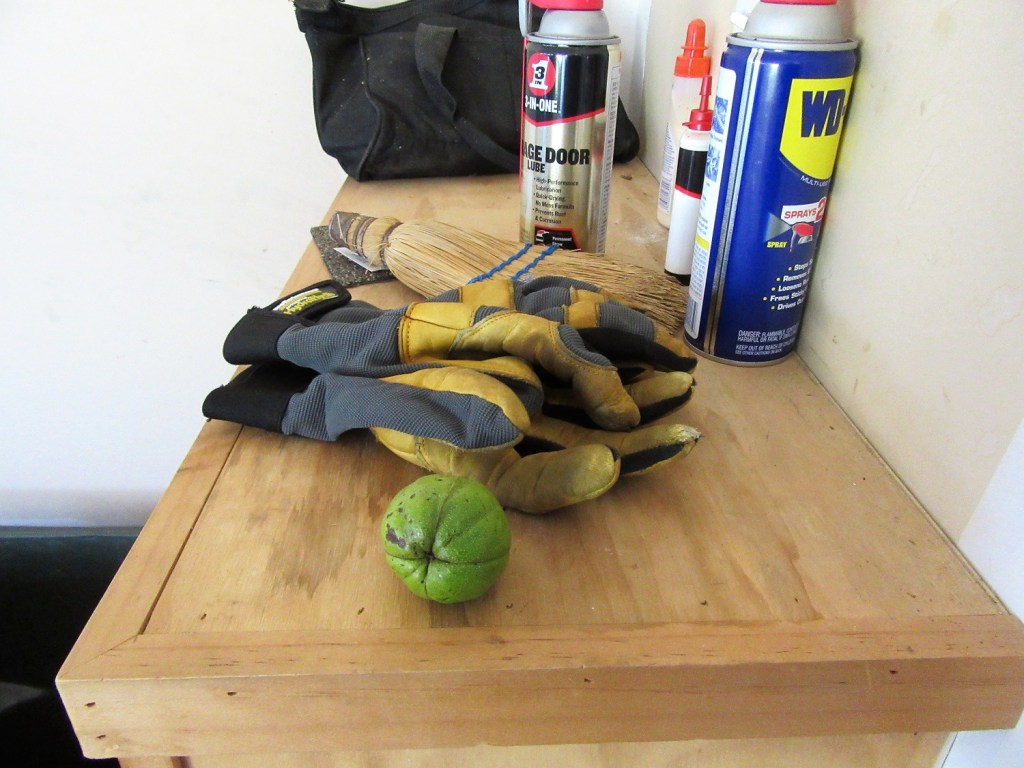
I’ve had to do things I really never wanted to learn how to do. Sena handed me a hickory nut she found in the yard this morning, reminding me of walnut storms we had at a previous home. I picked up scores (maybe hundreds) of walnuts there. I don’t want to do that again. I remember being jarred awake each time a walnut hit the deck.

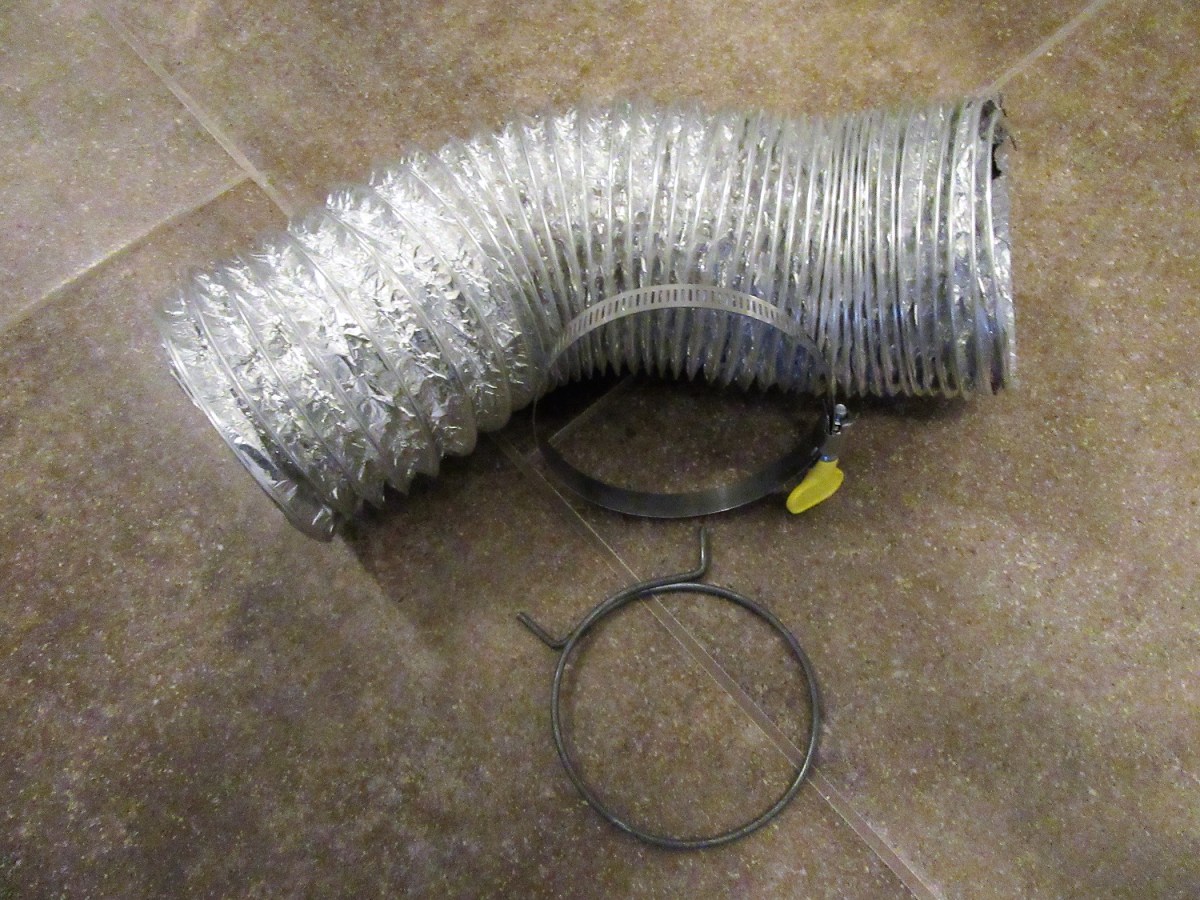
And for the first time, I had to replace a dryer vent duct. I’m the least handy person on the planet. Our washer and dryer pair are both 54 inches tall and I found out that when you have to drag a big dryer away from the wall, you have to do it like you really mean business.

You don’t want to look at what’s behind the dryer. Worse yet is jumping down behind it in a space barely big enough for me to turn around. Getting out of it is even harder. Jump and press to the top of the machines and watch those cords and hoses.

I tried so-called semi-flexible aluminum duct. I switched to flexible foil duct, despite the hardware store guy telling me that it’s illegal. It’s not. You want to wear gloves with either because you’ll cut up your hands if you don’t.

Who’s the genius who thought of oval vent pipe on the wall when the duct is 4-inch round? It’s not illegal but it does make life harder. And how do you attach the duct ends to the pipes? Turn key or screw type worm drive clamps. If you don’t have enough room for a screw driver, the turn key style is the best bet. Good luck finding those wire galvanized squeeze-style full clamps. I think they’re often out of stock because they’re not only older, but easier to use and cheaper.

See what I mean? I would not even have the vocabulary for that kind of job if I were still working as a psychiatrist. I would just hire a handyman to do it—like I do for a lot of other things I still don’t know how to do since I retired. It’s sort of like that Men in Black movie line from Agent K when he tells Agent J what they have to do on their first mission: “Imagine a giant cockroach, with unlimited strength, a massive inferiority complex, and a real short temper, is tear-assing around Manhattan Island in a brand-new Edgar suit. That sound like fun?”

No, it doesn’t and neither does replacing a dryer vent duct or any number of things retired guys get to learn because they have too much time on their hands.

So, I’m really glad to change the subject and talk about other people who are doing things I admire. First is a former student of mine, Dr. Paul Thisayakorn, who is a consultation-liaison (CL) psychiatrist in Bangkok, Thailand. He did his residency at The University of Iowa Hospitals and Clinics. He put together a CL fellowship program in Thailand. The photo below shows from left to right: Paul, Dr. Tippamas, the first CL Psychiatry fellow, and Dr. Yanin. Dr. Tippamas will be the first CL Psychiatry trained graduate in Thailand next year and will work at another new medical school in Bangkok. Dr. Yanin just graduated from the general psychiatry residency program last year. Paul supervised her throughout her CL Psychiatry years. Now she is the junior CL staff helping Paul run the program. Within the next few years, Paul will send her to the United States or the United Kingdom or Canada for clinical/research/observership experience so she can further her CL education. Way to go, Paul and your team!

Dr Paul Thisayakorn and CL Psychiatry grads (see text for details)

By the way, that tie I’m wearing in the Mindfully Retiring from Psychiatry post picture (the one with white elephants; the white elephant is a symbol of royal power and fortune in Thai culture) was a going away gift from Paul upon his graduation.

The other is a heavy-hitter I met years ago, Dr. E. Wes Ely, MD, MPH, a critical care doctor who is publishing a new book, Every Deep-Drawn Breath, which well be coming out September 7, 2021. Our interests converged when it came to delirium, especially when it occurs in the intensive care unit, which is often. I met him in person at an American Delirium Society meeting in Indianapolis. He’s a high-energy guy with a lot of compassion and a genius for humanely practicing critical care medicine. I sort of made fun of one of his first books, Delirium in Critical Care, which he wrote with Dr. Valerie Page and published in 2011, the same year I started a blog called The Practical Psychosomaticist (which I dropped a few years ago as I headed into phased retirement). Shortly after I made fun of how he compared the approaches of consult psychiatrists and critical care specialists managing delirium, he sent me an email suggesting I write a few posts about the ground-breaking research he and others were doing to advance the care of delirious ICU patients—which I gladly did. I think he actually might have remembered me in 2019 when he came to present a grand round in the internal medicine department at University of Iowa Hospitals & Clinics (I wrote 3 posts about that visit: March 28 and April 11 and 12).

In the email Dr. Ely sent to me and many others about the book, he said, “Every penny I receive through sales of this book is being donated into a fund created to help COVID and other ICU survivors and family members lead the fullest lives possible after critical illness. This isn’t purely a COVID book, but stories of COVID and Long COVID are woven throughout. I have also shared instances of social justice issues that pervade our medical system, issues that you and I encounter daily in caring for our community members who are most vulnerable.”

I look up to these and others I had the privilege of working with or meeting back before I was not retired and struggling to come up with a good answer to the dreaded question: What do you do now that you’re retired?

Hey, what do you do now that you’re retired?

Busy as a Beaver

I’m probably busy as a beaver, especially now that I’ve read a short description of how a beaver builds a dam. The article is short on references; in fact, there are none to back up the unidentified author’s remarks. In fact, I suspect the article is fact-free, the only apparent purpose to create test questions for grade-school children.

The author says that, while beavers are busy when engaged in tree felling and dam building, they are disorganized, poor at planning the activities and often mess them up—even accidentally getting killed by falling timber.

By analogy then, since I retired last year, I’ve been about as busy as a beaver. When my frame of reference was working at the hospital as a consulting psychiatrist, I was extremely busy. I put on 3 to 4 miles and about 30 floors a day chasing consults all over an 800-bed hospital with 8 floors.

Now my typical day is very different. Staying physically fit is challenging. I exercise daily, but it’s hardly as demanding as when I was working. I start off with floor yoga to warm up. I hop on the stationary bike, which is not a Peloton or anything like it. There’s nobody in the display exhorting me to crush that Peloton. The digital mileage counter display doesn’t even work.

Next, I do bodyweight squats. My ankle and knee joints crackle and pop loudly, but as long as they don’t hurt, I imagine I’m fine. Next, I do curl and press exercises with a pair of 10-pound dumbbells. Then I do planks. After 3 sets of squats, etc., I get back on the bike. Following the exercises, I sit for mindfulness meditation. That whole business takes about an hour.

As far as beaver busyness, the only time I felled any timber was last summer, when I flirted with danger using a power pole saw trying to clear dead tree limbs left over from the derecho. That actually was a poorly planned activity and was certainly dangerous. I guess I was busy as a beaver then.

Is there such as a thing as being mentally busy as a beaver? Apparently not. Sena and I play cribbage now and then. Other than that, there’s always TV. I listen to music on the Music Choice Channel on TV. I like the Easy Listening and Light Classical stations. Each musical artist featured has several short biographical notes appear while the music plays. I practice doing mental subtractions when the artist’s birthdate appears. It’s the old borrowing method of subtraction you learn in grade school—unless nobody teaches that anymore. There are usually several grammatical and usage problems (worse than mine) with the information about artists and I practice recasting sentences. Sometimes they’ll mention a musician’s nickname, such as BullyboysquatlowjoocedewdliosityBrahms. Several of the classical musicians composed symphonies before they were potty-trained.

On the practical side, I watch the Weather Channel, following which are shows like Highway Thru Hell and Heavy Rescue 401. Those guys are really busy, dragging semi-trucks out of ditches in snowstorms in British Columbia. They operate 75-ton wreckers with rotating booms and winches which regularly spit their cables at anyone nearby.

I alternate the heavy wrecker shows with the Men in Black (MIB) movies, which poke fun at the UFO and alien themes (a welcome counterpoint to Ancient Aliens which takes itself too seriously). I was sure I was watching MIB movies way too much until I found all of the fans’ contributions to websites which list the many errors in the movies. Just google “MIB goofs.” You’ll see the triumphant announcement from those who somehow know what color scheme New York City streets signs had in 1969 and point out how wrong the movie is. On the other hand, I know what kinds of pies young Agent K and Agent J had in MIB 3 (apple with a “nasty piece of cheddar” and strawberry rhubarb, respectively).

I guess all this makes me busy as a beaver.

Bird Poop Luck and Boston Duck Tours

Last night Sena and I watched a YouTube video walking tour of Boston, Massachusetts. It brought back memories of a trip we made there about 16 years ago. The main reason for the journey was a November teaching conference (sponsored by the Academy of C-L Psychiatry, back then called the Academy of Psychosomatic Medicine) on consultation-liaison (C-L) psychiatry I enrolled in, presented by the Mass General Hospital C-L psychiatry division. Funny, I don’t recall much about the details of the conference itself. Maybe that was because I got distracted by a bird pooping on me early on the first day.

I was on a break between programs and sitting outside the Boston Marriott at Copley Place. Suddenly I saw something white and gooey plummet inside the left cuff of my pants. It turned out to be bird poop, which led to my frantically racing back into the building to clean up.

I don’t know what kind of bird dropped that load of poop on me. It was probably a sparrow—but it could have been a seagull or even a duck, which reminds me of the highlight I can manage to remember about the trip, which was the Boston Duck Tour. I guess that means that the old story about a bird pooping on you bringing good luck might be true.

Anyway, while we didn’t have a chance to walk the Freedom Trail, we got tickets for the Duck Tour on a very chilly day. Remember, it was November. Because the annual meetings of the Academy of C-L Psychiatry were held in November, they were usually in warmer parts of the country. The Boston location was a real outlier.

We were lucky (because of the bird poop, no doubt) to find the Boston Duck Tours station at the Prudential Center on Boylston Street, practically right across the street from our hotel.

We were pretty impressed by the versatility of the Duck Tour bus, which converts readily into a boat because it’s a replica World War II amphibious DUKW vehicle.

It was a fantastic sightseeing tour. I remember the Leonard P. Zakim Bunker Hill Bridge and only now do I compare it to the Longfellow Bridge (also known as the Salt & Pepper Bridge). The Zakim cost a $100 million or so new, but the repair of the much older Longfellow Bridge cost over $300 million. I’m not knocking old stuff; just sayin’.

Leonard Zakim was a famous civil rights leader whose courage and respect for the dignity and rights of others seemed to get stronger after his bout with bone marrow cancer, the pain and depression from which he dealt with by using both medical and complementary therapies.

The Zakim Bridge was a part of the “Big Dig” which was a major $22 billion reroute of the main highway running through Boston and which was basically done by the time of our visit in 2004. It cost a lot of money and there has been some controversy about it.

Big Dig

There was also some controversy about whether the Duck Tours driver let Sena drive the vehicle while we were either crossing the Charles River or the Boston Harbor, I can’t recall which. He asked for volunteers to pilot the craft, but there were no immediate takers. He asked again and Sena spoke right up and took the driver’s seat. She’s modest about whether she actually drove the Duck.

Then again, maybe that bird poop luck kept us on course.

Snow Today

It’s snowing today, starting this afternoon. It’s not a blizzard. It comes down slowly and peacefully. Occasionally I see people and their kids and dogs out walking in it, likely grateful for the fresh air. It’s hard to be stuck indoors, self-isolating because of the COVID-19 epidemic. We play cribbage.

Sena tried the grocery pickup thing in order to avoid crowds. She ordered yesterday and picked up this afternoon. For the most part, the shoppers did OK. We noticed that as she was ordering, items would be sold out even before and sometimes after (we found out later) the ordering was done.

But we were able to get toilet paper.

This epidemic changes your life in many ways. I’m in the latter stage of phased retirement and I’ll go back on the consultation-liaison psychiatry service in April. I expect it to be busy, but I’ll likely not do as many face-to-face interviews, depending on the situations in the emergency room and the general hospital.

I probably won’t carry around my camp stool, which I use to sit with patients when I interview them. It’s just another item that the coronavirus can stick to.

We’re told not to wear neckties because they’re germy, but I gave that up a long time ago for banded collar shirts. But now I’ll have to remember to keep my arms bare up to the elbows.

We’re also reminded to avoid elevators so as to maintain social distance (6 feet or 2 meters, roughly). I’ve been taking the stairs for years. Many people avoid the stairs.

I’ve gotten used to handwashing because I’m a hospitalist. I’ll wear masks a lot more frequently as well as don and doff personal protective equipment as needed more often.

I’m older and I worry a little bit about belonging to a higher risk age group for COVID-19 and being exposed more. On the other hand, I’m pretty healthy compared to a lot of patients younger than me.

I’m glad the next generation of doctors will be taking over, though.

I usually never notice how pretty the snow is.