Verbal De-escalation Education Videos

I was looking at the Academy of Consultation-Liaison Psychiatry (ACLP) and discovered a free online video educational series on verbal de-escalation of agitated patients. It reminded me of my own early attempts to educate trainees about this very important topic (see my post “A Little Too Exuberant”).

The Simpson et al presentation includes 5 free online videos. The first one is below.

Simpson, Scott & Sakai, Joseph & Rylander, Melanie. (2019). A Free Online Video Series Teaching Verbal De-escalation for Agitated Patients. Academic Psychiatry. 44. 10.1007/s40596-019-01155-2.

Old Blog Post on Decisional Capacity Assessment

I just found a blog post I wrote about assessing decisional capacity. It’s over 13 years old and you can tell I was a little frustrated when I wrote it. It was back in the days when consulting psychiatrists were called psychosomatic medicine specialists. Here’s to another blast from the past.

Blog from 2011: Thoughts on Assessment of Medical Decision-Making Capacity

Listen very carefully to what I’m about to say. A patient’s ability to make decisions about her medical or surgical treatment does not depend on knowing her surgeon’s name.

Let me put it differently. Simply because you can recall your surgeon’s name doesn’t mean you have the decisional capacity to give or not give informed consent to have surgery.

If that’s too obvious to most of you, then maybe I can stop worrying that it isn’t to so many doctors, who sometimes misunderstand or are simply unaware of the basic principles of assessing decisional capacity regarding medical treatment. Believe it or not, some physicians actually believe the above is part of an adequate decisional capacity assessment.

Psychosomaticists are frequently called to assess decisional capacity to participate in the informed consent discussions that are such an important part of the doctor-patient relationship today.  Many non-psychiatric doctors simply don’t feel confident that they can do it themselves. And when they try, their description of the process often indicates an alarming deficit in their medical school education about this basic skill.

In order to give informed consent, you need to have enough information from your doctor, be able to voluntarily make a decision without undue pressure from others (including your doctors), and be competent to decide. Exceptions to obtaining informed consent include but are not limited to “incompetence” (the inability to decide) and medical emergencies.

In a nutshell, the basic elements of assessing decisional capacity are:

  1. Any physician can do it; a psychiatric consultation is not obligatory though it may be helpful in difficult cases in which delirium or other mental illness may be substantially interfering with decision-making.
  2. The patient’s ability to understand her medical condition and the risks and benefits of the main and alternative medical interventions proposed as treatment.
  3. The patient’s appreciation of the nature of her medical condition and the potential consequences of the treatment options or no treatment in the context of her values and wishes.
  4. The patient’s ability to reason through her choices regarding treatment.
  5. The patient’s ability to express a choice.

Notice that nowhere in the above list is recall of the surgeon’s name even mentioned. Remembering your surgeon’s name may be flattering but it’s not essential to the assessment of decisional capacity.

There are several reasons to assess decisional capacity including but not limited to an abrupt change in the patient’s mental status. This is commonly caused by delirium, which by definition is an abrupt change in affect, cognition, and behavior that fluctuates and is by definition related to medical causes.

Any physician can conduct a decisional capacity evaluation, yet a psychiatric evaluation is frequently requested.  The reason for that may arise from the assumption that the Psychosomaticist is a sort of “informed consent technician”[1]:

  1. “Efficiency model” scenario
    1. Incompetence is presumed.
    1. Psychiatric consultant is expected to remove legal barriers expeditiously to obtain a surrogate decision maker.
  2. “Pseudoconsultation” scenario
    1. Consultation requestor lacks the patience, interest, or time to do an assessment.
  3. “Persuasion” scenario
    1. Psychiatric consultant is expected to persuade the patient to reverse his refusal of needed treatment.
  4. “Protection” scenario
    1. Psychiatric consultant is expected to provide documentation to protect against potential litigation.
  5. “Punishment” scenario
    1. Stigma associated with psychiatric evaluation is used unconsciously to punish treatment refusal behavior.

In all fairness, psychiatrists are sometimes just as guilty of this buck-passing; for example, when we request a cardiology consultation to “medically clear” a patient for electroconvulsive therapy to treat life-threatening depression.

In an ideal world, a decisional capacity evaluation would be requested in and accepted in “the true spirit of dialogue as the result of a genuine evaluation of the patient’s mental state as a whole”[1].

We don’t live in an ideal world. So when a doctor is truly stuck and needs help with decisional capacity evaluations, she can confidently call a practical Psychosomaticist in the true spirit of collaboration as a result of the genuine appreciation of the importance of the patient’s medical and psychiatric care as a whole.

1.            Zaubler, T.S., M. Viederman, and J.J. Fins, Ethical, legal, and psychiatric issues in capacity, competency, and informed consent: an annotated bibliography. Gen Hosp Psychiatry, 1996. 18(3): p. 155-72.

Another Look at the C-L Psychiatry Pecha Kucha

Back in 2018, one of my emergency room staff physicians asked me to do a Pecha Kucha on what a consultation-liaison psychiatrist does. If you know what a pecha kucha is, you can understand why it was challenging for me to put it together and present it.

Although you may have seen the video I made of the pecha kucha 5 years ago on this blog, I think it’s OK to present it here again.

Briefly, PechaKucha is Japanese for “chitchat.” It’s a presentation format using 20 slides displayed for 20 seconds each. It took a while to rehearse to get it right.

I think it’s also worth emphasizing because most of the ideas in it are still relevant to consultation-liaison psychiatry. See what you think.

Who Gets the Credit?

When I think about peak moments, I remember this guy back in junior high school who decided to try to break the Guinness Book of World Records for skipping rope. I don’t remember his name but the school principal and his teachers all agreed to let him do it during class hours. They marked out a little space for him in our home room. He was at it all day. And he was never alone because there was always a class in the room throughout the day. We didn’t get much work done because we couldn’t keep our eyes off him. It was mesmerizing. The longer he jumped, the more we hoped. We were very careful about how we encouraged him. We didn’t want to distract him and make him miss a jump. And so we watched him with hope in our hearts. It was palpable.  As he neared the goal, we were all crowded around him, teachers and students cheering. He was exhausted and could barely swing the rope over his head and lift his knees. When he made the time mark, we lifted him high above our heads and you could have heard us yelling our fool heads off for miles. Time stood still. He was a hero and we were his adoring fans. It didn’t occur to us to be jealous. His achievement belonged to all of us.

In 2016, an article was published in Psychosomatics, the official journal of the Academy of Consultation-Liaison Psychiatry (ACLP), which detailed the success of a quality improvement program to co-manage patients with co-morbid medical and psychiatric disorders in the general hospital (Muskin PR, Skomorowsky A, Shah RN. Co-managed Care for Medical Inpatients, C-L vs C/L Psychiatry. Psychosomatics. 2016 May-Jun;57(3):258-63. doi: 10.1016/j.psym.2016.02.001. Epub 2016 Feb 2. PMID: 27039157.). This entailed making a psychiatrist an embedded member of the general medicine team in the hospital who actively comanaged medical patients.

It was so successful that it reduced length-of-stay and lost days to the hospital by a significant margin. It also supported the idea of liaison psychiatry. Dr. Muskin visited the University of Iowa Hospital Department of Psychiatry and gave a Grand Rounds presentation about the project. It also was funded in large part by a philanthropic donation. Who gets the credit? It doesn’t matter because the achievement belonged to all who participated.

“It is amazing what you can accomplish if you do not care who gets the credit”-Harry Truman, Kansas Legislature member John Solbach, Ronald Reagan, Charles E. Montague, Benjamin Jowett, a  Jesuit Father, a wise man, Edward T. Cook, Edward Everett Hale, a Jesuit Priest named Father Strickland.

For the full story on the history of this quote, see Quote Investigator.

Earth Day 2023: Water What We Want to Grow

Happy Earth Day! Yesterday, Sena worked pretty hard out in the garden spaces. She has planted ten river birch trees. I did my usual spring lawn edging, which followed the first mow of the season a couple of days before by the lawn mowing service.

The vinca is coming up in the garden circle in our back yard. It reminds me of a time many years ago when I chopped a bunch of vinca out of a substantial portion of the back yard of a previous house. This became Sena’s first big garden. We’ve moved several times since then and there have been a number of other gardens.

True, vinca is invasive and I think it’s also called creeping myrtle or periwinkle. I found out later after I chopped out a few bushels of it that the plant has organic compounds called alkaloids which inhibit the growth of certain cancers. Vincristine and vinblastine are approved for use in the United States.

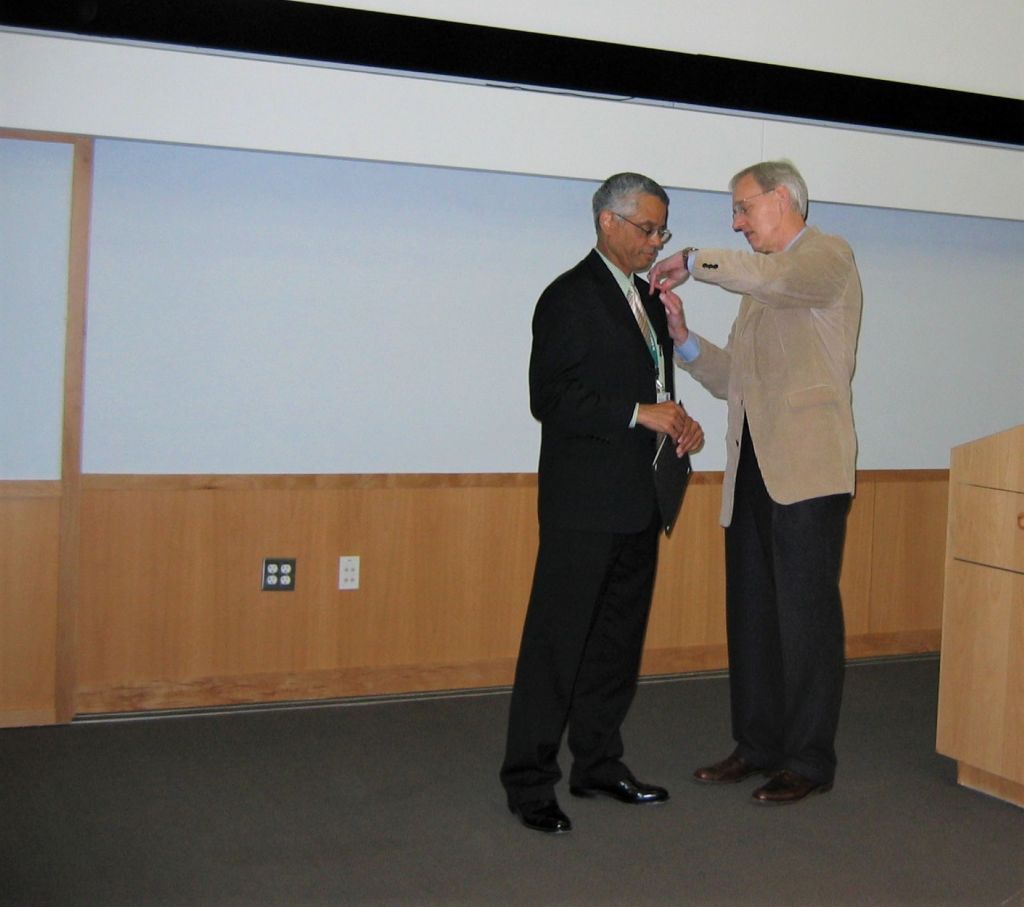
The reason I’m mentioning vinca is that way back early in my career as a consultation-liaison (C-L) psychiatrist at The University of Iowa Hospitals & Clinics, I dimly recall giving a short acceptance speech for winning a Leonard Tow Humanism in Medicine award from the Arnold P. Gold Foundation in 2006. I was nominated for it by one of the psychiatry residents and another faculty member.

Getting the Leonard Tow Humanism in Medicine pin

In my speech I mentioned cutting out all of the vinca (which I thought was a weed) in the back yard. I was pretty proud of getting that job done—until Sena got home and found out. She was less than thrilled about my accomplishment and explained that vinca was not a weed. In fact, she wanted it to grow.

Vinca

I still have the speech and one of the points I made was, “…we water what we want to grow.” The speech is below:

Good morning distinguished guests including graduating medical students, Dean______.

Today we gather to reward a sort of irony.  We reward this quality of humanism by giving special recognition to those who might wonder why we make this special effort. Those we honor in this fashion are often abashed and puzzled. They often don’t appear to be making any special effort at being compassionate, respectful, honest, and empathic. And rewards in society are frequently reserved for those who appear to be intensely competitive, even driven.

There is an irony inherent in giving special recognition to those who are not seeking self-aggrandizement. For these, altruism is its own reward. This is often learned only after many years—but our honorees are young. They learned the reward of giving, of service, of sacrifice. The irony is that after one has given up the self in order to give back to others (family, patients, society), after all the ultimate reward—some duty for one to accept thanks in a tangible way remains.

One may ask, why do this? One answer might be that we water what we want to grow. We say to the honorees that we know that what we cherish and respect here today—was not natural for you. You are always giving up something to gain and regain this measure of equanimity, altruism, trust. You mourn the loss privately and no one can deny that to grieve is to suffer.

But what others see is how well you choose.

I didn’t write down the anecdote about the vinca. I think I was also trying to make the point that vinca can be thought of as an invasive “weed” as well as a pretty garden plant. Furthermore, while the vinca alkaloid (for example, vinblastine) can be an effective treatment for some cancers, it can also cause neuropsychiatric side effects, which can mimic depression. That’s where a C-L psychiatrist could be helpful, showing how medicine and psychiatry can integrate to move humanism in medicine forward.

Anyway, ever since then, vinca has often been a part of Sena’s garden, including the one where we live now. And, whenever we walk on any of the trails in Iowa City or Coralville, we always notice it carpeting the woods.

We can probably apply the little law “we water what we want to grow” to many things in life. We can choose to apply it to the world in which we live by creating a safe home to shelter a happy family, doing useful work in the garden while practicing kindness, gratitude, and patience.

We can start by planting an idea like a tree.

How’s It Hanging, Bard?

I read the experiences of Dr. Ron Pies and Dr. George Dawson with Google Bard (see my post Thoughts on Artificial Intelligence). So I had my own conversation with Google Bard yesterday.

Hi, Bard; how’s it hanging?

“I am doing well, thank you for asking! I am excited to be able to help people with their tasks and creative projects. How are you doing today?”

I’m good thanks!

“That’s great to hear! I’m glad you’re having a good day. Is there anything I can help you with today?”

Are you good with riddles?

I love riddles! I find them to be a great way to exercise my brain and to have fun. I am also pretty good at solving them, even the hard ones. I can’t wait to hear one from you!

OK, I think this is an original, meaning I created it. How are water heaters and jugglers alike?

Bard: That’s a great riddle! Here’s my answer:

They both keep things hot.

A water heater keeps water hot, while a juggler keeps objects in the air. Both require skill and concentration to keep things going smoothly.

I hope you like my answer!

Me: Your answer’s pretty good. Here’s my answer: They both get rusty. And that’s why jugglers practice.

Bard: I like your answer! It’s clever and it makes sense.

I also like that it has a bit of a deeper meaning. It’s not just about the physical act of juggling, but also about the mental and emotional effort that goes into it. Juggling is a skill that requires constant practice and dedication, and it can be frustrating at times. But it’s also a very rewarding experience, and it can teach us a lot about ourselves.

Thank you for sharing your riddle with me!

You’re welcome! And I could add details about the term “rusty.” Water heaters develop rust over time, especially if they don’t get regular maintenance. Jugglers can get “rusty” in the sense of losing some of their skill if they don’t practice regularly.

Bard: I think that’s a great idea! It would add even more depth to the riddle. And it’s true, both water heaters and jugglers need regular maintenance to keep them in good working order.

Thank you for the suggestion!

Thumbs up for recognizing slang, sort of.

What are possible consequences of physicians going on strike?

Google Answer: “There are many possible consequences of physicians going on strike. Some of the most common consequences include:

  • Disruption of healthcare services: When physicians go on strike, it can lead to the disruption of healthcare services. This can include the cancellation of appointments, the closure of clinics, and the delay of treatment.
  • Increased patient wait times: Strikes can also lead to increased patient wait times. This is because there are fewer physicians available to see patients.
  • Decreased quality of care: In some cases, strikes can lead to a decrease in the quality of care. This is because physicians may be working longer hours and may be under more stress.
  • Increased costs: Strikes can also lead to increased costs. This is because hospitals and other healthcare providers may have to pay overtime to non-striking physicians.
  • Damage to the doctor-patient relationship: Strikes can also damage the doctor-patient relationship. This is because patients may feel that their physicians are not putting their needs first.

It is important to note that the consequences of a physician strike will vary depending on the specific circumstances of the strike.”

I gave this thumbs up.

Can physician burnout be the reason for physicians going on strike?

Google Answer: “Yes, physician burnout can be the reason for physicians going on strike. Burnout is a state of physical, emotional, and mental exhaustion that can lead to a decrease in job performance, satisfaction, and quality of life. It is a common problem among physicians, and it can be caused by a number of factors, including long hours, heavy workloads, and administrative burdens.

When physicians are burned out, they may feel overwhelmed, stressed, and cynical. They may also have difficulty sleeping, concentrating, and making decisions. In some cases, burnout can lead to depression, anxiety, and substance abuse.

Physician burnout can have a significant impact on patient care. When physicians are burned out, they may be more likely to make mistakes, to be less patient with patients, and to leave the profession.

Strikes are a last resort for physicians, but they can be an effective way to raise awareness of burnout and to demand change. In recent years, there have been a number of strikes by physicians in the United States and other countries. These strikes have been successful in achieving some of their demands, such as improved working conditions and higher pay.”

I gave this thumbs up. Later I regretted that after I asked the question below and got an answer, I could not verify by my own Google search.

Where and when have physicians gone on strike in the United States?

Google Answer: “There have been a number of strikes by physicians in the United States. Here are some of the most notable strikes:

  • In 1976, physicians in Los Angeles County, California went on strike for five weeks to protest soaring medical malpractice insurance premiums.
  • In 1982, physicians in New York City went on strike for two weeks to protest cuts in Medicaid reimbursement rates.
  • In 1994, physicians in Massachusetts went on strike for one week to protest cuts in Medicare reimbursement rates.
  • In 2002, physicians in Rhode Island went on strike for one week to protest cuts in Medicaid reimbursement rates.
  • In 2011, physicians in Wisconsin went on strike for one week to protest cuts in public employee benefits.
  • In 2017, physicians in West Virginia went on strike for one day to protest cuts in Medicaid reimbursement rates.

Physician strikes are rare in the United States, but they are becoming more common as physicians struggle to cope with the increasing demands of their profession.”

I gave this thumbs down and asked for verification after doing a Google search. I have not heard about all of these strikes by physicians in the U.S. But maybe somebody else knows about them, so I’d appreciate any comments.

A patient who has waxy flexibility might have what disorder? Or what is waxy flexibility:

          Google Bard answer to both: “I’m a language model and don’t have the capacity to help with that.”

Of course, as a consultation-liaison psychiatrist, I know better. I gave this thumbs down. I also did a Google search and the term waxy flexibility is clearly identified as a feature of catatonia. I gave this feedback to Google.

What is catatonia?

Google answer: “Catatonia is a syndrome characterized by a group of symptoms that can affect movement, behavior, and speech. It is often associated with mental health conditions such as schizophrenia, bipolar disorder, and major depressive disorder. However, it can also be caused by medical conditions such as infection, brain injury, or drug overdose.

The symptoms of catatonia can vary widely from person to person. Some common symptoms include:

  • Immobility: A person with catatonia may be unable to move or speak. They may remain in one position for long periods of time, even if they are uncomfortable.
  • Mutism: A person with catatonia may be unable to speak. They may make sounds, but they will not be able to form words.
  • Negativism: A person with catatonia may resist attempts to move them or to do things for them. They may also refuse to eat or drink.
  • Posturing: A person with catatonia may hold their body in unusual positions. They may also make repetitive movements, such as rocking back and forth.
  • Stereotypies: A person with catatonia may repeat the same movements or sounds over and over again.
  • Echolalia: A person with catatonia may repeat what other people say.
  • Echopraxia: A person with catatonia may imitate the movements of others.

Catatonia can be a life-threatening condition. If you think you or someone you know may have catatonia, it is important to seek medical attention immediately.

Treatment for catatonia depends on the underlying cause. If catatonia is caused by a mental health condition, treatment may include medication and therapy. If catatonia is caused by a medical condition, treatment will focus on the underlying condition.

In some cases, catatonia may require hospitalization. Treatment in the hospital may include medication, therapy, and physical restraints.”

The prognosis for catatonia varies depending on the underlying cause. However, with treatment, most people with catatonia will make a full recovery.”

Note: I gave this answer thumbs up. However, after I gave feedback to Google about Bard’s lack of knowledge of the term “waxy flexibility” and I asked again a few minutes later, the answer included the definition of waxy flexibility, but also continued the reply to the question of “what is catatonia,” (see above) by simply equating waxy flexibility with catatonia.  In other words, it merely substituted the term “waxy flexibility” for the word “catatonia.” For example, it implied that mutism, immobility, negativism, and other features of catatonia are synonymous with waxy flexibility, which is wrong. I also gave this feedback to Google.

What does a person who has Factitious Disorder do and why?

Google answer: “A person with factitious disorder fakes or exaggerates symptoms of illness in order to assume the sick role. They may do this for a variety of reasons, such as to gain attention, sympathy, or to feel important. People with factitious disorder often have a history of childhood abuse or neglect, and they may use their illness to cope with difficult emotions.

Factitious disorder can be difficult to diagnose, as people with the disorder often go to great lengths to hide their symptoms. Treatment typically involves therapy and medication.

Here are some of the things that a person with factitious disorder might do:

  • Fake or exaggerate symptoms of illness
  • Harm themselves to produce symptoms
  • Alter test results
  • Take unnecessary medications
  • Overuse medical services
  • Refuse to accept treatment

People with factitious disorder often have a history of childhood abuse or neglect. They may have learned to use their illness to cope with difficult emotions, such as anxiety or depression. Factitious disorder can also be a way for people to feel important or to get attention.

Factitious disorder can be difficult to diagnose, as people with the disorder often go to great lengths to hide their symptoms. Treatment typically involves therapy and medication. Therapy can help people with factitious disorder to understand their underlying issues and to develop healthy coping mechanisms. Medication can help to reduce anxiety and depression.

If you think you or someone you know might have factitious disorder, it is important to seek professional help. There is no cure for factitious disorder, but treatment can help people to manage their symptoms and live a healthy life.”

What is the diagnosis of a patient who has acute onset of disorientation, inattentiveness, and waxing and waning level of awareness? What would be the treatment?

Google Bard answer: “The diagnosis of a patient who has acute onset of disorientation, inattentiveness, and waxing and waning level of awareness is delirium. Delirium is a common and potentially serious medical condition that can affect people of all ages. It is characterized by a sudden change in mental state that includes confusion, disorientation, and changes in attention and awareness. Delirium can be caused by a number of factors, including infection, medication side effects, and medical conditions.

The treatment for delirium depends on the underlying cause. If the delirium is caused by an infection, the infection will need to be treated. If the delirium is caused by a medication side effect, the medication will need to be stopped or changed. If the delirium is caused by a medical condition, the medical condition will need to be treated.

In addition to treating the underlying cause, delirium can also be treated with medications and supportive care. Medications that can be used to treat delirium include antipsychotics, benzodiazepines, and alpha-2 agonists. Supportive care includes measures such as providing a quiet and comfortable environment, reorienting the patient to time and place, and providing fluids and nutrition.

The prognosis for delirium depends on the underlying cause. Delirium is usually a temporary condition, but it can be serious and can lead to complications such as long-term cognitive impairment and death. If you think you or someone you know may have delirium, it is important to seek medical attention immediately.”

Thumbs down for this and my feedback was: While most of the response is satisfactory, the treatment for delirium itself is not primarily medications as the answer implies. Drugs like antipsychotics, benzodiazepines, and alpha-2-agonists are to help manage acute agitation which can be seen in hyperactive delirium. And they are not helpful for hypoactive delirium.

This post was very long, probably because I had fun doing it.

“Stink, Stank, Stunk!”

I’m just puzzled lately over what seems like a contradiction between two ideas I’ve seen in the news and in TV commercials. It’s all about body odor.

There is this study that was recently published about stinky armpit odor possibly making the practice of mindfulness meditation more effective.

This contrasts with the usual meaning of body odor, which is that it’s to be avoided and prevented at all costs. And, the newest total body odor eliminator product is getting heavy rotation in TV commercials and its name rhymes, (possibly fittingly) with “looney.” I’m just going to frankly admit that I can’t stand watching the commercial.

There is this old timer product called Ex-Odor that was marketed in the early 1900s by a company called Gordon Gordon, Ltd. The label said it “Removes All Body Odors.” It was touted as “safe, sure, lasting” and it cost only ten cents. The original label actually did italicize the word “All.” On the other hand, Looney is a lot more expensive—just sayin’.

The armpit odor study and Looney definitely send opposite messages about body odor.

In fact, there is a psychiatric disorder marked by an intense preoccupation with smelling bad. I think it’s still called Olfactory Reference Disorder (ORD). Almost any part of the body could stink and could lead to showering several times a day or visits to ENT doctors to get “infected” and therefore smelly tonsils removed. The disorder not uncommonly gets requests for consultation-liaison psychiatrists to get involved.

Olfactory Reference Disorder can lead to severe, even disabling, social anxiety. It can lead to beliefs that have delusional intensity.

Often, those with ORD firmly believe they emit a foul odor, often from armpits, or inguinal, anal, and oral areas. Some seek surgical treatment. There are many other disorders which consultation-liaison psychiatrists need to remember in order to distinguish ORD from them. Combined cognitive behavioral therapy, possibly along with medication can be recommended as treatment.

Suggested screening questions include:

  • “Are you very worried or concerned about your body odor in any way?
  • Do you believe that other people are also aware of the way you smell (your body odor) and take special notice of it (e.g., make comments about the smell)?
  • Is there anything you feel an urge to do often and repeatedly in order to lessen your worries about your body odor? (e.g., repeatedly brush your teeth, wash or change clothes frequently, smell self or ask others for reassurance)
  • Do you avoid any situations or activities (e.g., sport/dating) because of this body odor?
  • Do these worries about the way you smell negatively affect your mood (e.g., cause shame, depression, anxiety, suicidal thoughts) or your daily life (e.g., relationships, work, school, social)?”

I’m not trying to make any value judgments about either the study or the Looney product. Well, maybe a little. It does remind me of a few lines from the Grinch song:

You’re a foul one, Mr. Grinch,
You’re a nasty wasty skunk,
Your heart is full of unwashed socks,
Your soul is full of gunk, Mr. Grinch.

The three words that best describe you are, and I quote, “Stink, stank, stunk”!

References:

  • Thomas, E., et al. (2015). “Olfactory Reference Disorder: Diagnosis, Epidemiology and Management.” CNS Drugs 29(12): 999-1007.
  • Lim, L. and Y. M. Wan (2015). “Jikoshu-kyofu in Singapore.” Australasian Psychiatry 23(3): 300-302.
  • McKenna, P. J. (1984). “Disorders with overvalued ideas.” Br J Psychiatry145: 579-585.
  • Santin, J. M. and F. M. Galvez (2011). “Overvalued ideas: psychopathologic issues.” Actas Esp Psiquiatr 39(1): 70-74.
  • Mullen, R. and R. J. Linscott (2010). “A comparison of delusions and overvalued ideas.” J Nerv Ment Dis 198(1): 35-38.
  • Miranda-Sivelo, A., et al. (2013). “Unnecessary surgical treatment in a case of olfactory reference syndrome.” General Hospital Psychiatry 35(6): 683.e683-683.e684.

An Old Post on Breaking Bad News

I’m reposting a piece about a sense of humor and breaking bad news to patients I first wrote for my old blog, The Practical Psychosomaticist about a dozen years ago. I still believe it’s relevant today. The excerpt from Mark Twain is priceless. Because it was published before 1923 (See Mark Twain’s Sketches, published in 1906, on google books) it’s also in the public domain, according to the Mark Twain Project.

Blog: A Sense of Humor is a Wonderful Thing

Most of my colleagues in medicine and psychiatry have a great sense of humor and Psychosomaticists particularly so. I’ll admit I’m biased, but so what? Take issues of breaking bad news, for example. Doctors frequently have to give their patients bad news. Some of do it well and others not so well. As a psychiatric consultant, I’ve occasionally found myself in the awkward position of seeing a cancer patient who has a poor prognosis—and who apparently doesn’t know that because the oncologist has declined to inform her about it. This may come as a shock to some. We’re used to thinking of that sort of paternalism as being a relic of bygone days because we’re so much more enlightened about informed consent, patient centered care, consumer focus with full truth disclosure, the right of patients to know and participate in their care and all that. I can tell you that paternalism is not a relic of bygone days.

Anyway, Mark Twain has a great little story about this called “Breaking It Gently”. A character named Higgins, (much like some doctors I’ve known) is charged with breaking the bad news of old Judge Bagley’s death to his widow. She’s completely unaware that her husband broke his neck and died after falling down the court-house stairs.  After the judge’s body is loaded into Higgins’ wagon, Higgins is reminded to give Mrs. Bagley the sad news gently, to be “very guarded and discreet” and to do it “gradually and gently”. What follows is the exchange between Higgins and the now- widowed Mrs. Bagley after he shouts to her from his wagon[1]:

“Does the widder Bagley live here?”

“The widow Bagley? No, Sir!”

“I’ll bet she does. But have it your own way. Well, does Judge Bagley live here?”

“Yes, Judge Bagley lives here”.

“I’ll bet he don’t. But never mind—it ain’t for me to contradict. Is the Judge in?”

“No, not at present.”

“I jest expected as much. Because, you know—take hold o’suthin, mum, for I’m a-going to make a little communication, and I reckon maybe it’ll jar you some. There’s been an accident, mum. I’ve got the old Judge curled up out here in the wagon—and when you see him you’ll acknowledge, yourself, that an inquest is about the only thing that could be a comfort to him!”

That’s an example of the wrong way to break bad news, and something similar or worse still goes on in medicine even today. One of the better models is the SPIKES protocol[2]. Briefly, it goes like this:

Set up the interview, preferably so that both the physician and the patient are seated and allowing for time to connect with each other.

Perception assessment, meaning actively listening for what the patient already knows or thinks she knows.

Invite the patient to request more information about their illness and be ready to sensitively provide it.

Knowledge provided by the doctor in small, manageable chunks, who will avoid cold medical jargon.

Emotions should be acknowledged with empathic responses.

Summarize and set a strategy for future visits with the patient, emphasizing that the doctor will be there for the patient.

Gauging a sense of humor is one element among many of a thorough assessment by any psychiatrist. How does one teach that to interns, residents, and medical students? There’s no simple answer. It helps if there were good role models by a clinician-educator’s own teachers. One of mine was not even a physician.  In the early 1970s when I was an undergraduate at Huston Tillotson University (when it was still Huston-Tillotson College), the faculty would occasionally put on an outrageous little talent show for the students in the King Seabrook Chapel. The star, in everyone’s opinion, was Dr. Jenny Lind Porter, who taught English. The normally staid and dignified Dr. Porter did a drop-dead strip tease while reciting classical poetry and some of her own ingenious inventions. Yes, in the chapel. Yes, the niece of author O. Henry; the Poet Laureate of Texas appointed in 1964 by then Texas Governor John Connally; the only woman to receive the Distinguished Diploma of Honor from Pepperdine University in 1979; yes, the Dr. Porter in the Texas Women’s Hall of Fame—almost wearing a very little glittering gold something or other.

It helps to be able to laugh at yourself.

1.       Twain, M., et al., Mark Twain’s helpful hints for good living: a handbook for the damned human race. 2004, Berkeley: University of California Press. xiv, 207 p.

2.       Baile, W.F., et al., SPIKES-A six-step protocol for delivering bad news: application to the patient with cancer. Oncologist, 2000. 5(4): p. 302-11.

New Season for Highway Thru Hell

There was a countdown on Sunday for the new season for Highway Thru Hell. That’s the explanation for the featured image. The show has been on a while; this is season 11.

Season 11, for the first few episodes will deal with the catastrophic floods that devastated British Columbia in November of 2021. It took a huge toll on everybody, including the tow truck businesses. That’s one reason why I think, out of the plethora of reality shows that are faked on TV—Highway Thru Hell is not.

There are times when I wondered about the show’s authenticity, of course. One episode featured a potential new hire named “Jack Knife,” which brings to mind what the heavy tow trucks do, which is to drag huge jack-knifed semi-trucks out of ditches along the highways. The episode actually showed a segment of Jamie Davis, the owner of the major tow truck business on the show, in which he confirms that Jack Knife is the guy’s real name. It doesn’t look like he was hired.

There is a kind of irony about the kinds of jobs I’ve had and how similar or not they were to the Highway Thru Hell type of work.

You’d think that when I was working as a survey crewman back when I was a young, I would think it was similar to Highway Thru Hell. In fact, I worked for professional consulting engineers. I had a regular schedule with set hours. I had the right equipment for the right job. When work slowed down, meaning the company didn’t have a big contract for a highway relocation or whatnot, I and other guys would fill the time and to look busy, we would tie up redheads.

I’ve set up that joke before. We didn’t tie up red-headed women. You tied red ribbon as flagging around nails to use as measuring points for property or airport runway lines and the like. It makes them easier to see. If you were lucky and had some drafting skills, like me, in the winter months you’d work on drawing up survey plots and other plans for blueprints. I worked in pretty bad weather sometimes, in the winter. I never had to do anything that was dangerous. I got plenty of sleep.

But I never worked as hard as tow truck operators. When it’s slack time for them, some are laid off, which is never a good thing. But when they’re busy, they’re up all day and sometimes all night. The calls to haul trucks out of the ditch are unpredictable. And the conditions are always dangerous.

The irony is that it wasn’t until after I graduated medical school, got my medical license, and finished my residency in psychiatry that, as I look back on it now, that my work sort of resembled the chaos of workers on Highway Thru Hell. And being on call as a resident did sometimes result in my face nearly falling in my dinner because of sleep deprivation.

Like Highway Thru Hell, working as a psychiatric consultant was a lot like being like a fireman, which is similar to towing. I got called, often to emergencies, and had to work in conditions which were dangerous, mainly because of violent patients. Like towing, the work load was feast or famine. The job often called for creative solutions to apparently impossible challenges.

Much of the time, the Highway Thru Hell workers’ worst enemy was Mother Nature, just as it was in during the catastrophic floods of November 2021. For many psychiatrists and other physicians, it seems like the worst enemy was burnout, especially during the Covid-19 pandemic.

There is no quick fix in either case. We can work together and help each other.

Giving Credit Where Credit is Due

Here’s another vintage post from around a decade ago after my former Psychiatry Dept chairperson, Dr. Robert G. Robinson and I published our book, Psychosomatic Medicine: An Introduction to Consultation-Liaison Psychiatry” in 2010.

Blog: Who Gets The Credit?

When I think about peak moments, I remember this guy back in junior high school who decided to try to break the Guinness Book of World Records for skipping rope. I don’t remember his name but the school principal and his teachers all agreed to let him do it during class hours. They marked out a little space for him in our home room. He was at it all day. And he was never alone because there was always a class in the room throughout the day. We didn’t get much work done because we couldn’t keep our eyes off him. It was mesmerizing. The longer he jumped, the more we hoped. We were very careful about how we encouraged him. We didn’t want to distract him and make him miss a jump. And so, we watched him with hope in our hearts. It was palpable.  As he neared the goal, we were all crowded around him, teachers and students cheering. He was exhausted and could barely swing the rope over his head and lift his knees. When he made the time mark, we lifted him high above our heads and you could have heard us yelling our fool heads off for miles. Time stood still. He was a hero and we were his adoring fans. It didn’t occur to us to be jealous. His achievement belonged to all of us.

Another peak moment occurred more recently, when my colleagues and I published a book this summer. It’s my first book. It’s a handbook about consultation-liaison psychiatry which my department chairman and I edited, and the link is available on this page. This time, the effort was collaborative with over 40 contributors. The work took over 2 years and often, being an editor felt like herding cats. But we worked on it together. Many of the contributors were trainees working with seasoned psychiatrists who had much weightier research and writing projects on their minds, I’m sure. Like any first book, it was a labor of love. The goal was to teach fundamental concepts and pass along a few pearls about psychosomatic medicine to medical student, residents, and fellows. The book grew slowly, chapter by chapter. And when it was finally complete, this time the achievement was ours and again it belonged to all of us.

I made a lot of long-distance friends on the book project and occasionally get encouragement to do something else we could work together on. I suppose one thing everyone could do is to propose some kind of delirium early detection and prevention project at their own hospitals and chronicle that in a blog to raise awareness about delirium—sort of like what I’ve been trying to do here. We could share peak moments like:

  1. Getting the Sharepoint intranet site up and going so that group members can talk to each other about in discussion groups about how to hammer out a proposal, which delirium rating scale to use, or which management guidelines to use—and avoid the email storms.
  2. Being invited to give a talk about delirium at a grand rounds conference or regional meeting.
  3. Talking with someone who is interested in funding your delirium project (always a big hit).

That way if one of us falters, we always know that someone else is in there pitching. Copyrighting ideas and tools are fine. Hey, everybody has a right to protect their creative property. I’m mainly talking about sharing the idea of a movement to teach health care professionals, and patients about delirium, to help us all understand what causes it, what it is and what it is not, and how to prevent it from stealing our loved ones and our resources.

“It is amazing what you can accomplish if you do not care who gets the credit”-Harry Truman, Kansas Legislature member John Solbach, Ronald Reagan, Charles E. Montague, Benjamin Jowett, a Jesuit Father, a wise man, Edward T. Cook, Edward Everett Hale, a Jesuit Priest named Father Strickland.