I’m writing this post today because this firefighter retires tomorrow—and I’ll probably be very busy and too weary at the end of my last day on the psychiatry consult service to write. In fact, I’ve been too busy and tired to post for the last several weeks because we’ve been in the process of moving. Does that ever really end?
I can tell that what will really end at around 5:00 PM tomorrow is my career as a general hospital psychiatric consultant. It has been a long time coming. I’ve been on a 3-year phased retirement contract and going back and forth between wishing for it to end sooner and being scared to death as the final day approaches.
There are those last things: handing in the keys, the white coats, the parking hang tag and the like. I’ve cleaned out my office and somebody already wants it. I’m surprised that I’m just the tiniest bit territorial about the place, which is strange. I never spent much time in it because I was always chasing consults around the hospital.
I’ve never retired before. I wonder what the rules are. I still don’t know how to answer everybody’s question: “What are you going to do?”
There is the “new” house. It’s actually an older home, which fits my status as an older person, I guess.
The floors squeak and creak, a lot like my joints. There are little jobs and slightly bigger jobs to do for which I’m painfully aware of the need to develop a whole new skill set—or at least relearn them.
It’s about new noises and new animals. A fox trots across our yard occasionally. I’m used to deer, but we’ve never spotted a fox on our lawn. It has a rusty coat streaked with a lot of gray. It looks old. But it’s a good hunter and more than once we’ve seen it carrying a big mouthful of something that might have put up a pretty good fight.
I’m touched by the well-wishers, and those who say thanks for the memories. Just about every day of the last week, I’ve seen and done something at the hospital which makes me say, “That is what I’ll miss.”
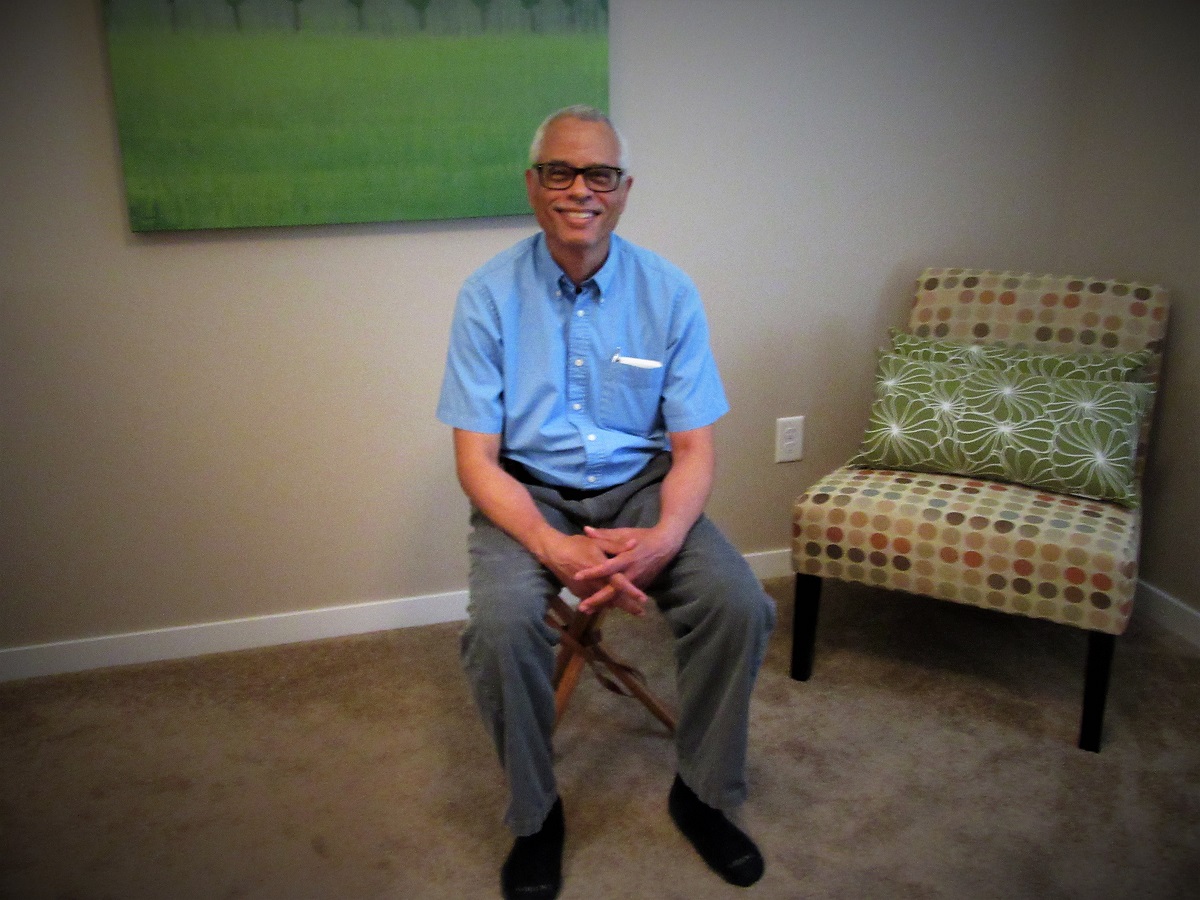
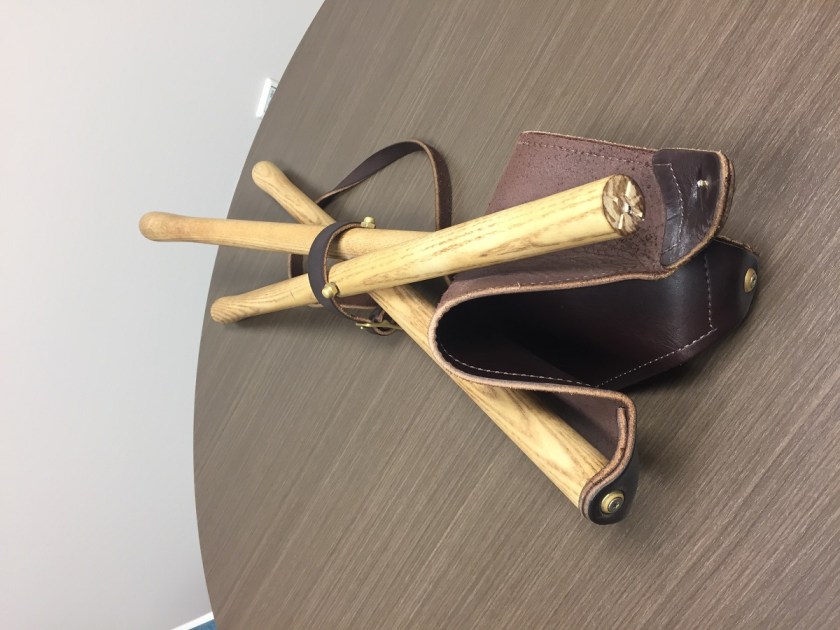
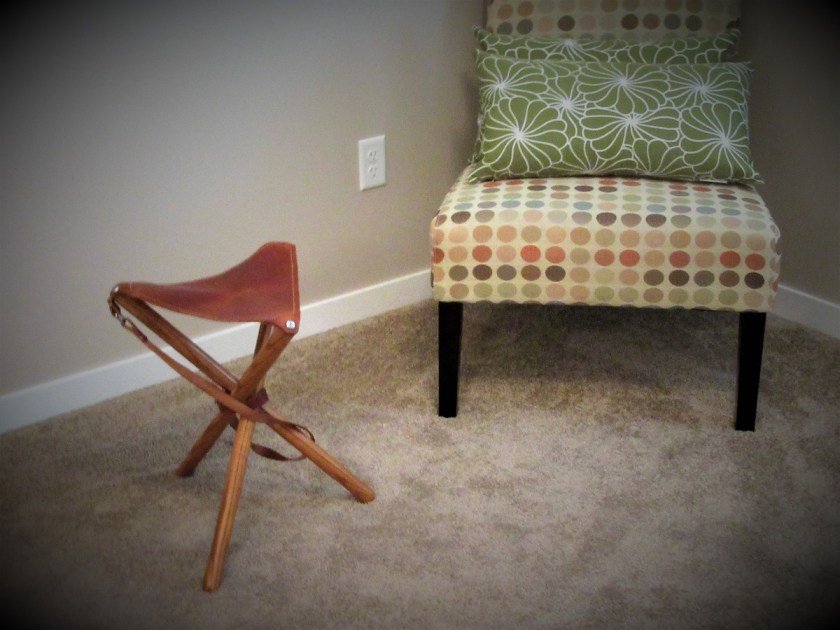
I brought my camp stool home from my office at the hospital yesterday. For the past several years and up until the time of the COVID-19 pandemic, I used it while interviewing hospitalized patients as part of my job as a consultation-liaison psychiatrist in the general hospital. I stopped only when I wondered whether carrying around an object which could be contaminated with the virus was a safe thing to do.
A colleague lent me the little chair when he and his colleagues on the Palliative Care Medicine consultation service started using them. I asked him whether he wanted it back and he graciously said I could take it with me now that I’m retiring—and use it as a camp stool (in a way, saying “Please take your seat”). For many years prior to getting the stool, I had been finding a chair or sending my trainees to find one for me. I felt more comfortable sitting eye to eye with patients and I got the impression that my patients appreciated that as well.
I got a lot of positive feedback from patients, family members, and other hospital staff about the little chair. I think it helped break the ice with patients and was a great opener, especially if they felt well enough to express a sense of humor— “Hey, doc; you don’t need nunchucks; I promise I’ll be good!”
There are a few papers in the medical literature supporting the usefulness of sitting with patients. Most authors assert that it helps build rapport and increases the patients’ perception of how interested their physicians or other health care clinicians are in their welfare (see the reference list below).
Once, when my original little chair broke beneath me during an evaluation for catatonia in one patient, the stool abruptly became a novel catatonia assessment tool.
The patient was mute but there was little evidence otherwise for catatonia, one of the chief features of which is the inability to react to any stimulus in the environment. I was seated on the chair explaining in detail the intravenous lorazepam challenge test for catatonia (which often interrupts the episode of muteness and immobility).
I was sitting in front of the patient but facing the family and the consult service trainees while expatiating on the topic. As I was droning on, I heard a sudden pop—and I fell flat on my fundament as the chair collapsed beneath me.
My audience exploded in loud laughter, and pointed at the patient. When I turned to look at him, he was convulsed with silent mirth.
I considered this a negative test for catatonia in this case, though impractical for regular use.
My colleague gave me a replacement camp stool, more securely built. However, he mentioned he might give up using his as a result of my accident which, incidentally, befell (rimshot) another doctor on his team. I’m not sure whether I’ll use the little chair. If I sit on it too long, my legs go numb. I think that’s about 10-15 minutes, about the length of time mentioned in one of the studies below. It didn’t seem to influence the positive perception of the visit—but it did make me walk funny.
I probably spend about the same time with patients now that I don’t use the little chair. But I don’t feel right about it. I’m always reminded of what Hackett said:
“As a matter of courtesy, I sit down when interviewing or visiting patients. Long accustomed to the ritual of making rounds, many physicians remain standing as a matter of course. Standing, physicians remind me of missiles about to be launched, poised to depart. Even if that is not necessarily true, they look the part. Patients sense this and it limits conversation. In addition, when standing, the physician necessarily looks down on the patient. This disparity in height is apt to encourage the attribution of arrogance. Looking down at a patient who is prone emphasizes the dependency of the position. Sitting at the bedside equalizes station. Sitting with a patient need not take longer than standing with him.”—Thomas Hackett, in MGH handbook of general hospital psychiatry, 1978.
References:
Johnson RL, Sadosty AT, Weaver AL, Goyal DG. To sit or not to sit?. Ann Emerg Med. 2008;51(2):188‐193.e1932. doi:10.1016/j.annemergmed.2007.04.024
Swayden KJ, Anderson KK, Connelly LM, Moran JS, McMahon JK, Arnold PM. Effect of sitting vs. standing on perception of provider time at bedside: a pilot study. Patient Educ Couns. 2012;86(2):166‐171. doi:10.1016/j.pec.2011.05.024
Strasser F, Palmer JL, Willey J, et al. Impact of physician sitting versus standing during inpatient oncology consultations: patients’ preference and perception of compassion and duration. A randomized controlled trial. J Pain Symptom Manage. 2005;29(5):489‐497. doi:10.1016/j.jpainsymman.2004.08.011
Orloski CJ, Tabakin ER, Shofer FS, Myers JS, Mills AM. Grab a Seat! Nudging Providers to Sit Improves the Patient Experience in the Emergency Department. J Patient Exp. 2019;6(2):110‐116. doi:10.1177/2374373518778862
Merel SE, McKinney CM, Ufkes P, Kwan AC, White AA. Sitting at patients’ bedsides may improve patients’ perceptions of physician communication skills. J Hosp Med. 2016;11(12):865‐868. doi:10.1002/jhm.2634
The robins are building their Hurrah’s nests in our back yard again. That’s about the only thing that has not changed. The COVID-19 (C-19) pandemic has changed just about everything else in our lives.
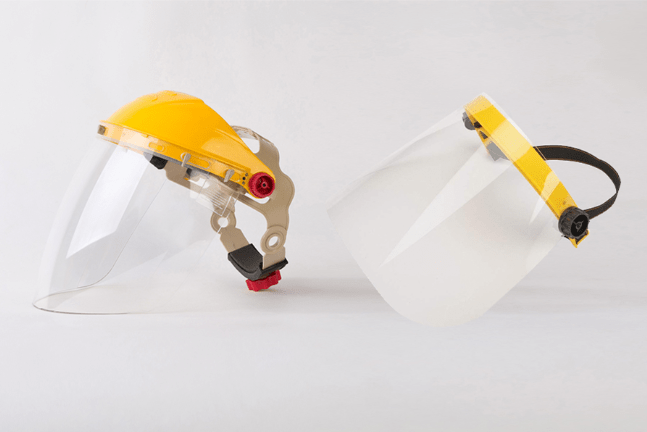
I wear a face shield now at the hospital. We’re told to wear it as much as possible, like putting on our clothes in the morning. Don’t we leave them on all day? The shield keeps you from touching your face, which is why it’s better than a face mask. However, I’ve noticed something about wearing the face shield for much of the day. Before I describe it, let me give you analogy: If you’ve ever worked detasseling corn when you were young a long time ago, you might remember what happened when you closed your eyes at night and tried to go to sleep. I saw corn fields—miles and miles of corn fields. When I opened my eyes, the vision would disappear. But as soon as I closed my eyes again, I saw the vast corn fields.
It’s crazy, but I have a similar sensory after-effect when I doff my face shield–sometimes I still feel the headband. The pressure of it is just the same as if I were still wearing it. I suppose it’s because I cinch it too tightly. But if I don’t, it slips down my brow, pushing my eyeglasses down my nose.
Another change—I’m a Consultation-Liaison (C-L) Psychiatrist, so I’m used to washing my hands in between patients in the hospital. Now, I’ve got something I’ve never had before–alligator hide patterns on the backs of my hands. They’re dry and cracked. I don’t count the number of times I wash my hands, but it’s a lot more frequent than I used to do. It’s not uncommon for health care professionals to wash hands 75-100 times a day in the C-19 era. I have to use hand cream conscientiously—something I almost never did.
I’m less comfortable being closer than several feet away from people. I tend to hug the walls and corners in stairwells, where I now encounter more people than I ever have before. I guess the message everyone hears is “Stand by me—six feet away if you please.”
I don’t shake hands anymore. The lines into the hospital sometimes lead to crowding while we wait to have our temperatures taken and answer the screening questions about whether we’ve had fever, cough, shortness of breath, etc. It’s perfunctory most of the time, because virtually always the answer is “no” and everybody is in a hurry.
I don’t carry my little camp stool with me anymore, which allowed me to sit down with patients and have face to face, eye level interaction. I’m distinctly uncomfortable standing over them because I haven’t done that in years. If there is a chair in the room, I’m hesitant to use it because, like the camp stool, I worry that it might carry C-19 virus on its surface.
I used to evaluate psychiatric patients in our emergency room by simply going there and seeing them face to face, either in their rooms or, when it was really busy (which is most of the time), in the hallways.
I just used a remote telehealth interface platform using an iPad the other day, which allows me to interview patients from my office, in order to avoid the risk of contagion. It was a little slow and awkward, and I was uncomfortable that a health care professional had to be in the emergency room to hold it up for the patient—who was covered in blood. I felt a little guilty.
I used to round with medical students and residents on our patients. We were the movable feast, a sort of MASH (Mobile Army Surgical Hospital) unit, more like Mobile Unifying Shrink Hospital (MUSH). Unifying means unifying medicine and psychiatry. The medical students are not permitted on the wards now, in order to protect them. It’s awkward rounding with only one resident at a time, although another resident can do other things like chart review and telephone relatives for collateral history. I get in the hospital earlier nowadays, and see many non-C-19 patients alone without trainees, preparing for the C-19 surge when I expect we’ll get many more consultation requests to help care for C-19 patients with delirium and depression. It’s a one-man hit-and-run psychiatry consult service and efficiency is mandatory to meet the demand.
I see patients by myself for another reason. Try as we might, C-19 positive patients will slip through the screens. Many are asymptomatic but contagious, and any test will have false negative results. The idea is to expose the least number of health care front line staff members as possible. Faculty capacity is stretched pretty thin, which is pretty much the situation everywhere. I have to choose. I’m older. I’m weeks from retirement. I’m afraid.
But robins don’t have the burden of choice. They obey their instinct every spring, just the same.
I began rereading the book Invisible Man by Ralph Ellison today, which is Leap Day. Given what little I know about Leap Day and Leap Year in general, there isn’t a connection.
I first read Invisible Man well over 40 years ago. It was a paperback and I took it with me to Huston-Tillotson College in Austin, Texas (now Huston-Tillotson University), one of the historically black colleges and universities (HBCUs) in the United States.
It was very hot in Austin in my freshman year and the students didn’t have air-conditioned dormitories in those days. It must have been over 90 degrees. The glue melted on most of my paperback books, including Invisible Man. I suppose that’s why I eventually threw the book away, because it was falling apart.
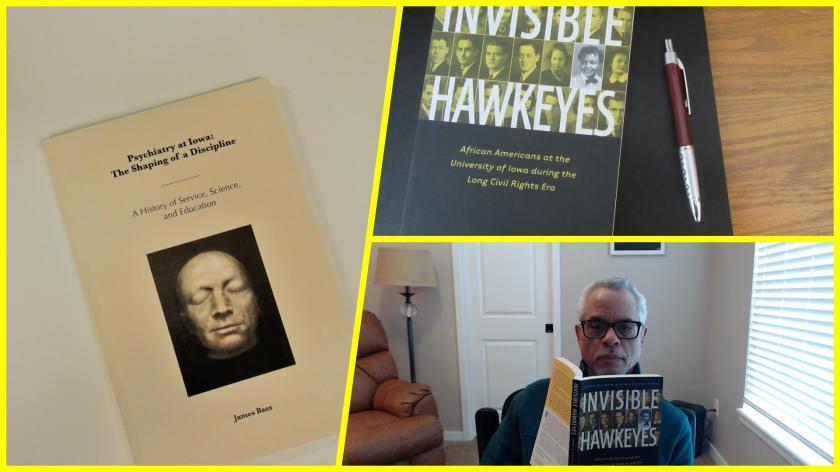
After all these years, I bought a hardcover edition. We have air-conditioning now. I was motivated to read it again after I read Invisible Hawkeyes: African Americans at the University of Iowa during the Long Civil Rights Era, edited by Lena M. Hill and Michael D. Hill. See my blog posts, Milestones, and The Iowa River Landing Sculpture Walk, for background.
When I was a young man, I identified with the protagonist in Invisible Man. The Prologue still strikes a chord.
On the other hand, I googled my name today and found a few links that made me feel less invisible. Probably the most surprising link was to an interview with me entitled “James Amos, MD,” which you can read here. The piece evoked memories of a past version of me—which has not changed much since then. It mentions my former blog The Practical Psychosomaticist which I later renamed The Practical C-L Psychiatrist (C-L stands for Consultation-Liaison) after the flagship organization, the Academy of Psychosomatic Medicine changed its name to the Academy of C-L Psychiatry in response to a poll of its membership asking whether the name should be changed.
This biography makes me more visible, at least on the web. On the other hand, the blog no longer exists, due in part from my concerns about the General Data Protection Regulation (GDPR), which was enforced in 2018. I posted a lot of educational material about C-L Psychiatry on the blog along with pictures and presentations of my trainees. In a way, I did not protect their privacy and I was uncomfortable about that.
Other web pages surfaced during my self-googling. They included my article on delirium, “Psychiatrists Can Help Prevent Delirium,” posted on Psychiatric Times in 2011.
I also found my blog post on physician burnout, “How I left the walking dead for the walking dead meditation,” published on the Gold Foundation web site in 2014.
And there was my other Gold Foundation post about rude doctors, “Are doctors rude? An insider’s view,” posted in 2013.
There are a couple of petitions left over from years ago as well, about the controversial Maintenance of Certification (MOC) and the closure of state mental hospitals in Iowa several years ago.
I also found my review of Dr. Jenny Lind Porter’s book, The Lantern of Diogenes and Other Poems (published 1954).
The book seller’s note to me when Porter’s book was delivered in 2011 read as follows:
“Thanks for your purchase! It’s rare to find a book of this age that when you open the pages, it creaks like it is unread. I guess someone liked the way it looked on their bookshelf! Haha! Enjoy the book and Happy New Year, Rob J.”
An unread author is an invisible author. The first poem in the book is below:
The Lantern of Diogenes
by Jenny Lind Porter
All maturation has a root in quest.
How long thy wick has burned, Diogenes!
I see thy lantern bobbing in unrest
When others sit with babes upon their knees
Unconscious of the twilight or the storm,
Along the streets of Athens, glimmering strange,
Thine eyes upon the one thing keeps thee warm
In all this world of tempest and of change.
Along the pavestones of Florentian town
I see the shadows cower at thy flare,
In Rome and Paris; in an Oxford gown,
Men’s laughter could not shake the anxious care
Which had preserved thy lantern. May it be
That something of thy spirit burns in me!
Dr. Porter’s house in Austin, Texas was demolished a few years ago. There were plans to build a house there reminiscent of the architectural style of her original home and also a remembrance of her published work. I just noticed a satellite image of the property. There is no visible evidence that anything of that nature was ever built. Dr. Porter is, in a sense, invisible although her lantern still burns.
Visibility is a relative term. My advancing age and approaching retirement sometimes lead me to feel like I’m becoming invisible, gradually vanishing from the landscape of consultation-liaison psychiatry and general medicine.
Ralph Ellison’s book Invisible Man is a visible legacy. My legacy is small—yet the flame flickers, visible after all.
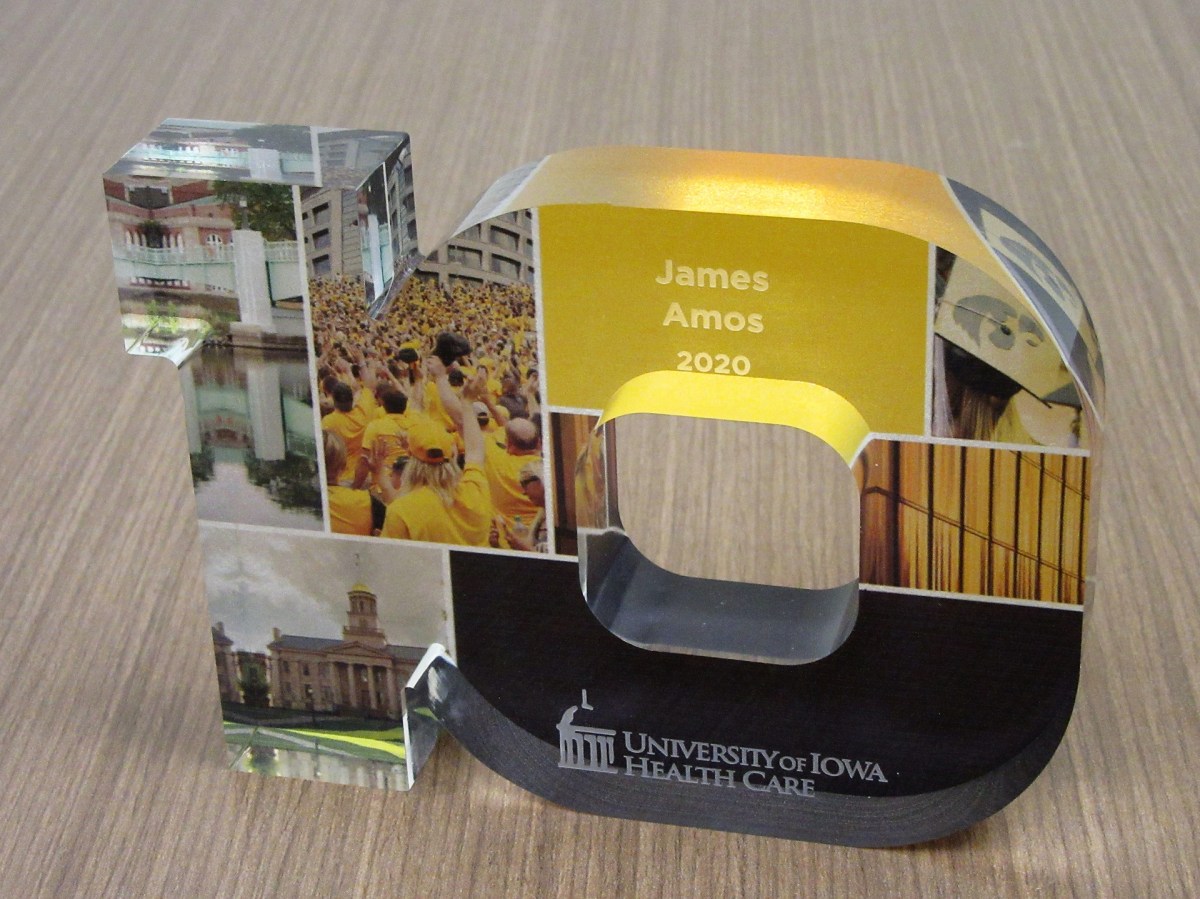
I got a nice, if puzzling surprise today. At a faculty meeting I was recognized for my 10-year anniversary of service at our hospital. It’s an important milestone, even if it is wrong. They scheduled this small event a couple of months ago, but I was too busy on the psychiatry consult service to break away. I also usually carry the pager for the trainees during the noon hour when the faculty meetings are held.
The 10-year anniversary recognition was very kind—except that I’ve been here for twenty odd years, not counting residency and medical school.
In all fairness, my department knows that and we shared a few jokes about it. I guess I should clarify that I have left the university for private practice a couple of times, which interrupts the years of service recognition timelines.
I was gone both times for a total of less than 12 months—just sayin’. I returned for a few reasons, although mainly because I missed teaching.
Anyway, I showed up at the faculty meeting, albeit a little guilty looking because I’m usually too busy to attend. My department chair arrived and said that she had to run back to get my “statue.”
That jarred me. Several years ago, when I had my first blog, The Practical Consultation-Liaison (C-L) Psychiatrist, I used to kid my readers that someday a statue of me would be erected in the university Quad. It would be made of Play-Doh.
And that’s why I asked her as she turned to leave, “Is it made of Play-Doh?” She looked puzzled and I didn’t really think I could explain in a way that wouldn’t make me look like I’d been smoking something illegal.
The “statue” is a handsome little sculpture of the number 10, standing for 10 years of service. It has color photos embedded in it of various aspects of academic life at the University of Iowa, many of which I’ve had the privilege of enjoying in the 30 odd years my wife, Sena, and I have been in Iowa City.
Just before the meeting, I had walked up to the 8th floor (I always take the stairs) to the psychiatry department offices to see if I could get a copy of the recently published history of the department, Psychiatry at Iowa: The Shaping of a Discipline: A History of Service, Science, and Education, written by James Bass.
Mr. Bass interviewed many people in the department, including me. I didn’t expect that my perspective on the consultation service, the clinical track, or my race would even get mentioned. However, 2 out of 3 made it into print.
It didn’t really surprise me that my being African American was not mentioned. I think I’m probably the only African American faculty member of the department in its 100-year history, at least until very recently.
It reminded me of another book that I just acquired, Invisible Hawkeyes: African Americans at the University of Iowa during the Long Civil Rights Era, edited by Lena M. Hill and Michael D. Hill.
In a small way, I’m making the invisible visible.
Making the invisible visible
And also, because it’s great for my ego, I’m going to quote what Bass wrote about me in Chapter 5, The New Path of George Winokur, 1971-1990:
“If in Iowa’s Department of Psychiatry there is an essential example of the consultation-liaison psychiatrist, it would be Dr. James Amos. A true in-the-trenches clinician and teacher, Amos’s potential was first spotted by George Winokur and then cultivated by Winokur’s successor, Bob Robinson. Robinson initially sought a research gene in Amos, but, as Amos would be the first to state, clinical work—not research—would be Amos’s true calling. With Russell Noyes, before Noyes’ retirement in 2002, Amos ran the UIHC psychiatry consultation service and then continued on, heroically serving an 811-bed hospital. In 2010 he would edit a book with Robinson entitled Psychosomatic Medicine: An Introduction to Consultation-Liaison Psychiatry.” (Bass, J. (2019). Psychiatry at Iowa: A History of Service, Science, and Education. Iowa City, Iowa, The University of Iowa Department of Psychiatry).
In chapter 6 (Robert G. Robinson and the Widening of Basic Science, 1990-2011), he mentions my name in the context of being one of the first clinical track faculty in the department. In some ways, breaking ground as a clinical track faculty was probably harder than being the only African American faculty member in the department.
As retirement approaches this coming June, I look back at what others and I worked together to accomplish within consultation-liaison psychiatry. The challenges were best described by a former President of the Academy of Consultation-Liaison Psychiatry, Thomas Hackett (this quote I helped find for James Bass and anyone can view it on the Internet Archive):
“A distinction must be made between a consultation service and a consultation liaison service. A consultation service is a rescue squad. It responds to requests from other services for help with the diagnosis, treatment, or disposition of perplexing patients. At worst, consultation work is nothing more than a brief foray into the territory of another service, usually ending with a note written in the chart outlining a plan of action. The actual intervention is left to the consultee. Like a volunteer firefighter, a consultant puts out the blaze and then returns home. Like a volunteer fire brigade, a consultation service seldom has the time or manpower to set up fire prevention programs or to educate the citizenry about fireproofing. A consultation service is the most common type of psychiatric-medical interface found in departments of psychiatry around the United States today.
A liaison service requires manpower, money, and motivation. Sufficient personnel are necessary to allow the psychiatric consultant time to perform services other than simply interviewing troublesome patients in the area assigned. He must be able to attend rounds, discuss patients individually with house officers, and hold teaching sessions for nurses. Liaison work is further distinguished from consultation activity in that patients are seen at the discretion of the psychiatric consultant as well as the referring physician. Because the consultant attends social service rounds with the house officers, he is able to spot potential psychiatric problems.”— Hackett, T. P., MD (1978). Beginnings: liaison psychiatry in a general hospital. Massachusetts General Hospital: Handbook of general hospital psychiatry. T. P. Hackett, MD and N. H. Cassem, MD. St. Louis, Missouri, The C.V. Mosby Company: 1-14.
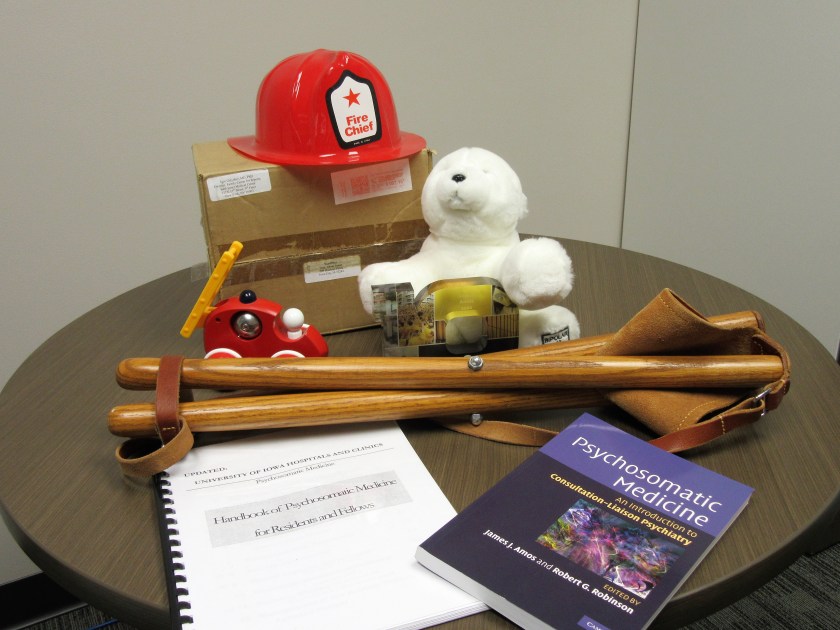
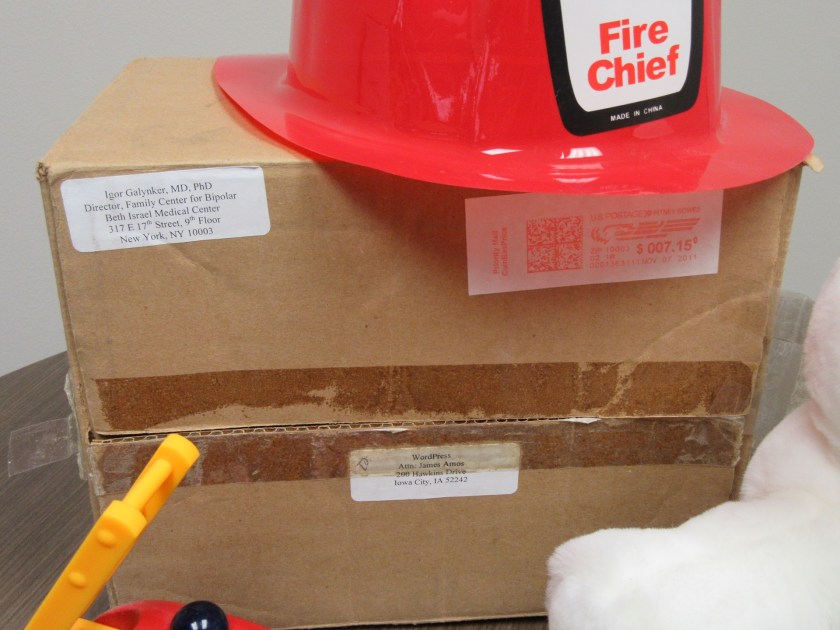
I have what seems like precious few mementos of my sojourn here in the department and, indeed, on this earth. I have a toy fireman’s helmet I found hanging in a plastic sack on my office doorknob one day. It was a gift from a Family Medicine resident who rotated on the consult service and who learned why I called it a fire brigade.
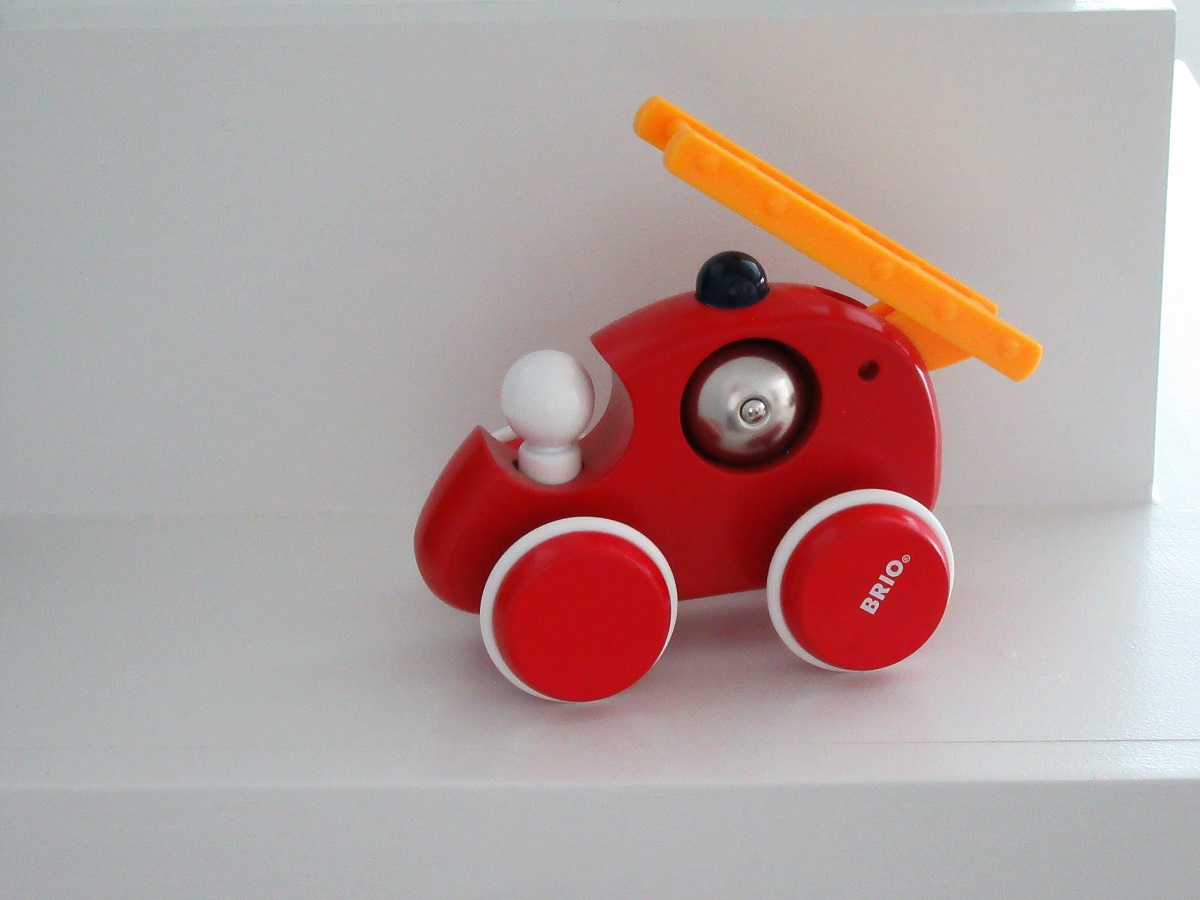
For the same reason, I have a toy fire truck, sent to me by a New York psychoanalyst who was also a blogger.
I have Bumpy the Bipolar Bear, believe or not, sent to me by psychiatrist, Dr. Igor Galynker, about whose emergency room suicide risk assessment method I had blogged about several years ago. C-L psychiatrists do a lot of suicide risk assessments in the hospital and the clinics. I still have the box with the address to me:
WordPress
Attn: James Amos
200 Hawkins Drive
Iowa City, IA 52242
I have my first homemade handbook for C-L Psychiatry and the published handbook that eventually replaced it. Thank goodness the leaders of the Academy of Consultation-Liaison Psychiatry listened to the membership and changed the name from Psychosomatic Medicine to C-L Psychiatry.
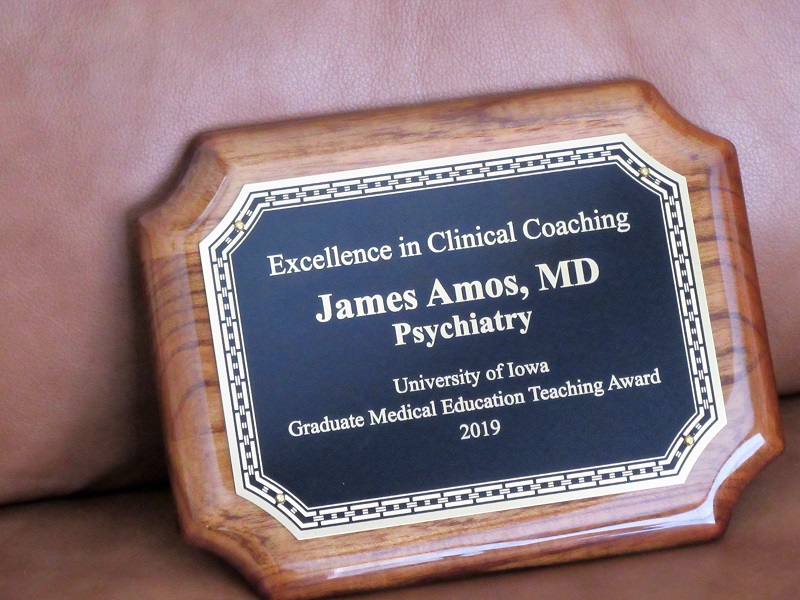
I have an award for being an excellent clinical coach.
And I have my little camp stool, which a colleague who is a surgeon and emergency medicine physician gave me and which allows me to sit with my patients anywhere in the hospital, so that I don’t have to stand over them.
It will all fit in a cardboard box on my last day—the next milestone.
This is just a short update on how phased retirement is
going. I’m back in the saddle. Last Friday I went back on duty on the
Consultation-Liaison Psychiatry service. I’m at 50% time. My step counter today
shows about 2 miles and 17 floors—a slow day. That’s fine with me.
Colleagues pass me in the hall and say, “I thought you were
retired.” They don’t look happy when I tell them I’ll be fully retired in June
next year.
But I’m a little happier. It’s taking a long time to get
used to not being a fireman, which is what it means around here to be a C-L
psychiatrist.
How’s the cooking going? Miserable but getting better, in a
way. I can deal with things like “Just Crack an Egg,” which my wife, Sena got for
me, as a sort of sympathy gift, I guess. I can handle it. And I made an omelet
the other day, my first ever. The kitchen was not filled with smoke and it was
edible.
How’s the exercise routine going? I’m still at it, 20
minutes every day, along with my mindfulness practice.
As I was giving my usual orientation remarks to the new
trainees coming on the service this morning, I caught myself saying “I do it
for the juice” when telling them why I do this schtick. I’ve said that to a lot
of residents and medical students over the years.
I guess I should rethink that remark and the mindset that
makes me say it so often. Pretty soon, I won’t be chasing all over the hospital
anymore— “for the juice.”
I’ve been trying hard to find something else for the juice.
Sena and I’ve rediscovered card games we haven’t played in over 20 years:
Pinochle and Gin Rummy. I lost track of time playing Gin yesterday, I had so
much fun. We just celebrated our 42nd anniversary. It was magical.
Starting this month, I’ve got a 10-month countdown to retirement. I was reminded of that when I got a brochure in the mail for the University of Wisconsin 7th Annual Update and Advances in Psychiatry. It’s scheduled for October 11-12, 2019 at the Monona Terrace, which is the usual location.
I’ve received these announcements in the mail every year for
longer than 7 years. I’ve never had the time to make it to a single of these
meetings. I’ve always been on duty. I’m not sure why they are advertising them
as though they started only 7 years ago.
I can remember getting an announcement in 2009 in which the
title of the update was Nontrivial Neuropsychiatric Nourishment from Noble
Notable Nabobs. How’s that for a sense of humor? There were several like that
prior to 2009 but I never kept the brochures. I haven’t seen any brochures like
that for the last seven years.
I don’t know who came up with the humorous titles. I wonder
if it was Dr. Jefferson. I noticed this year’s brochure had an In-Memoriam notice
about James W. “Jeff” Jefferson, MD, who has been a luminary of psychiatry for
decades. He was also a major presenter at these psychiatry advances meetings.
He was active in psychiatry for over 50 years.
And me? I’m retiring after a much shorter career, by
comparison. I’ve been running all over the hospital as a Consult-Liaison Psychiatrist
during the busiest time in academic medical centers everywhere–July and the
early part of August when senior medical students become full-fledged resident physicians.
Newly-minted doctors tend to request many psychiatric consultations. On average
I’m putting close to 4 miles and 30-odd floors on my step counter (with C-L
psychiatrists, maybe it’s not the years but the miles that count—literally). I’ve
not taken vacation during the past 2 years of my current phased retirement
contract—and don’t plan one for this final year.
That reminds me of time in 2012 when my wife, Sena, and I went
to Madison, Wisconsin on a vacation, the first in a long time. The residents
were wondering when I was going to get away. Madison is a great place to visit
and we lived there briefly when I took a stab at private practice.
We stayed at the Monona
Terrace, which gives a great view of Lake Monona. We loved Olbrich Botanical
Gardens. We rented a couple of bikes at Machinery Row Bicycles and rode all the
way to Olbrich. The rental bikes were a far sight more affordable than a lot of
the ones you could buy. Many were priced at several thousand dollars.
And I found an old copy
of Robbins Pathologic Basis of Disease at Browzers Bookshop on State Street. I
used that book as a medical student. My class used the nearly 7 pound red 3rd edition
containing 1,467 pages. This book is hailed as an outstanding foundational
text, which it is. Dr Stanley Robbins has been eulogized as an exacting editor
who championed writing of the type espoused by Will Strunk in The
Elements of Style.
Not to be picky, but the book contained the phrase
“not excessively rare” in reference to some process or disease which I can’t
recall. I do recall that a majority of our class howled about this verbiage,
which seemed the antithesis of what Strunk tried to teach.
You could see a lot of interesting sights on State Street. During
a previous visit, we saw a guy walking down the middle of the street with a rattlesnake
coiled on his head, wore it like a hat.
We had a lot of fun in Madison. It’s that kind of relaxed,
good time that I want to retire to. Ten months to go.
I updated my suicide risk assessment presentation today in
light of new data on suicide risk assessment stratification. It turns out that
using such tools might not be supported by the research evidence. That’s not
going to stop the use of such tools, which include the Columbia–Suicide
Severity Rating Scale, which is in wide use.
I found criticism of these scales in a recently published
article in Clinical Psychiatry News, published June 21, 2019, “Why we need
another article on suicide contracts,” by Nicholas Badre, MD and Sanjay S. Rao,
MD.
For many years now, psychiatrists and other health care professionals have learned that trying to use no-suicide or no-self harm contracts are controversial and don’t prevent suicide. Badre and Rao sound like they’re easing away from that contention although they still say that a thorough clinical suicide risk assessment ought to be done.
Until I saw this article, I was not aware of a recent review
of 70 studies showed that: “no individual predictive instrument or pooled
subgroups of instruments were able to classify patients as being at high risk
of suicidal behavior with a level of accuracy suitable to be used to allocate
treatment.”
Carter, G., et al. (2017). “Predicting suicidal
behaviours using clinical instruments: systematic review and meta-analysis of
positive predictive values for risk scales.” Br J Psychiatry 210(6):
387-395.
This was even more interesting because we recently changed our
practice regarding suicide risk assessments on the psychiatry consultation service
based on relatively new recommendations from the Joint Commission on
Accreditation of Hospital Organizations (JCAHO). The Joint Commission favors
the risk assessment tools.
Of course I’m not going to second-guess the Joint Commission
but after 27 years (counting residency) of struggling to assess suicide risk, I’ve
learned that it can hardly be reduced to any single rating instrument.
I have often said to patients that I don’t use no-suicide
contracts because they’re too much like promises—and promises are broken every
day. That segues into what I prefer which is to work with the patients on
developing a safety plan, which I compare to no-suicide contracts by saying “a
plan is better than a promise any time.”
Working on the safety plan with patients gives me another way
of assessing the strength of my alliance with them and a way to improve it as
well as a method for evaluating their ability to formulate a workable way to
stay safe that emphasizes their individuality.
On the other hand, the safety plan is no guarantee of safety,
any more than the no-suicide contract.
But often enough I’ve gotten the sense that some patients
and I have even had a little fun working on suicide safety plans—ironic as that
sounds. I find how important pets are, hear little anecdotes about a favorite hobby
or goal, aspirations, hopes, and memories of better times when they coped
really well.
Listening for understanding to someone who is contemplating suicide or who has attempted suicide is never easy. It’s the hardest thing I do. I can’t say that I’ll miss it when I retire. I have great faith in the next generation of doctors.
We saw this rabbit in our front yard
today, stretched out on the grass under our crabapple tree. It’s 117 degrees
this afternoon with the heat index and we won’t get out from under the Excessive
Heat Warning until later this evening. Thank goodness for air conditioning.
Rabbits don’t have air conditioning and can’t escape the heat.
Sena stands the heat better than I do; she waters the lawn and garden, keeping it beautiful. On the other hand, I felt body-slammed just walking out to get the mail.
Out in Sena’s garden
The old saying goes, “If you can’t
stand the heat, get out of the kitchen.” It means you if you can’t take the
pressure of a situation, then you should move and let somebody else take over.
It was popularized by President Harry S. Truman, who said the originator of the
proverb was Judge Buck Purcell of the Jackson County, Missouri Court—whoever he
was.
Anyway, I’m on call this weekend
and got to talking with a colleague who is thinking about retirement. We go
back a long way in our education and careers. He asked me about what phased
retirement is like. I told him I thought if I’d tried to retire outright, I
probably would have just come back to work.
That’s a twist on standing the heat. As a psychiatric consultant, I’m like a fireman (get it?) in the general hospital, putting out fires, so to speak, all over the hospital. Most often the problem still tends to be delirium, an acute change in mental status that should be considered a medical emergency rather than a psychiatric problem per se. It’s just one of many crises that I encounter every day. Over 23 years (not counting residency), I learned how to stand the heat in that kitchen. When I retire, somebody else will have to get in there and cook. Speaking of cooking—I still can’t.
I guess I’m mixing my metaphors
(fireman and kitchens, etc.). So what? I’m a retiring geezer and I guess I’ve
earned the right to mix my metaphors as much as I want.
But in my first year of the 3-year
phased retirement contract, I felt a different kind of heat–the heat of trying
to find something to do with my unstructured time. It was a struggle for a guy
who’s accustomed to being in almost constant motion, climbing up and down 20-30
floors (I hate waiting for elevators) and covering 2-3 miles a day.
The only trouble is—I can’t get out of the kitchen of retirement. I’m getting up there in age and even though most of the time, I seem to leave some of the trainees huffing and puffing getting up the stairs, I know they’ll replace me someday. But I can’t find a replacement to do my retirement time for me.
I have 11 months to go before I
retire. I can feel the heat.
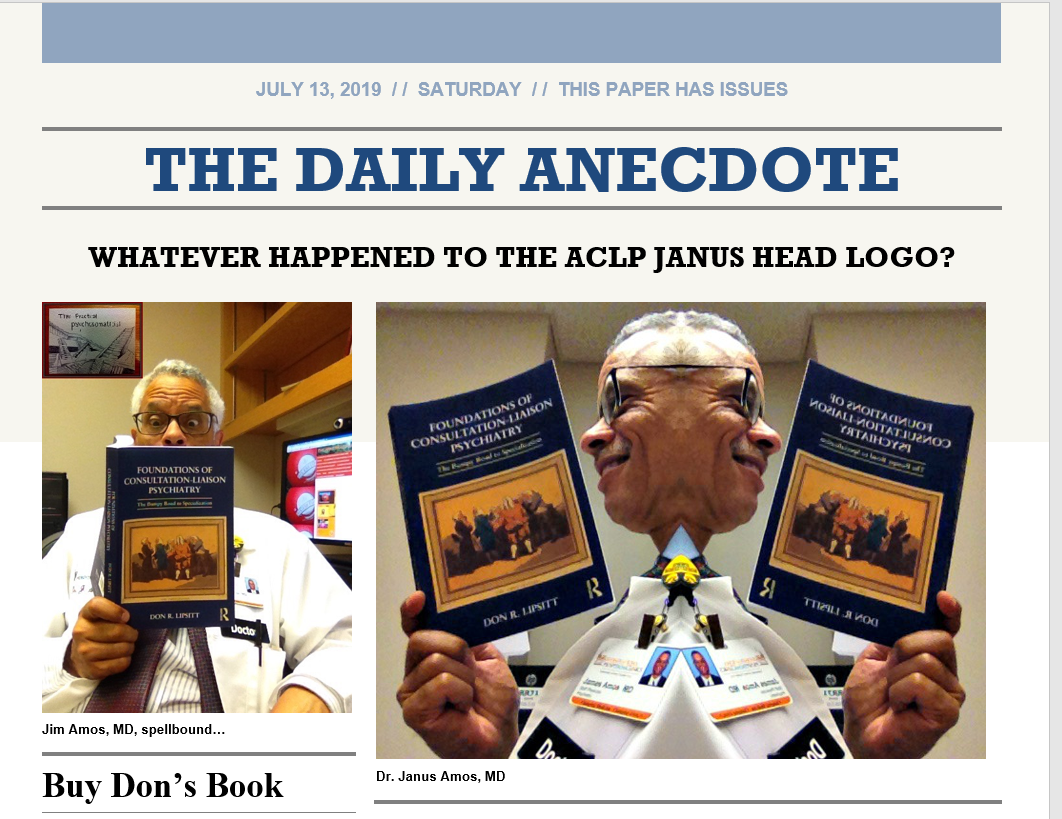
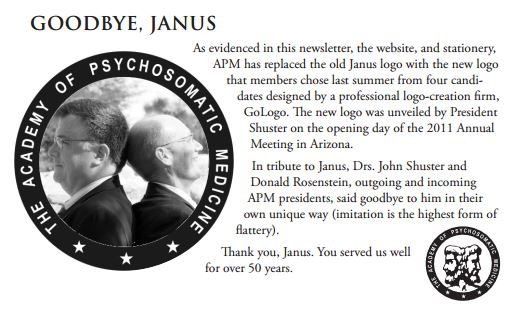
I got an email from Don R. Lipsitt, MD yesterday which reminded me of the Janus Head logo for the Academy of Consultation-Liaison Psychiatry (ACLP). It was changed to another sort of nondescript logo several years ago for reasons I didn’t understand.
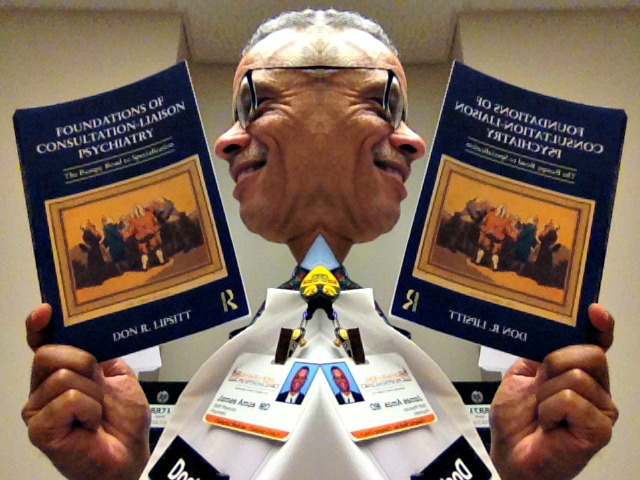
Dr. Lipsitt is a luminary in C-L Psychiatry and recently published a definitive history of the field, Foundations of C-L Psychiatry: The Bumpy Road to Specialization (2016).
Go ahead; buy this book!
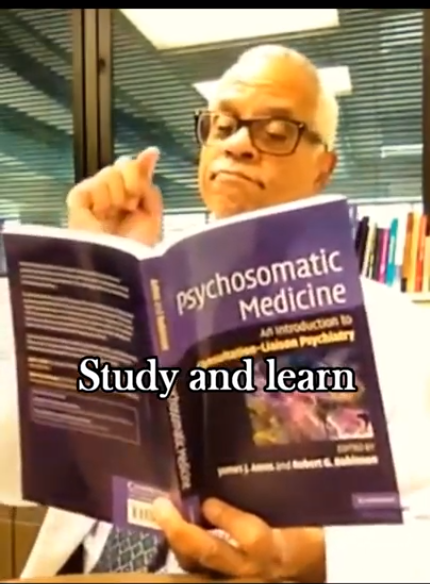
I posted a blog or two about Don and his book in a previous blog, The Practical C-L Psychiatrist. We’ve never formally met. A few years ago, he noticed that I had written about him and his book. I had sent him an email message about it at around the same time the APM was considering the name change for the organization, telling him that I had plugged his book and asking him what he thought of the name change. Incidentally, he thought both of our books made a great package, so I guess I’m allowed to plug mine, strangely titled Psychosomatic Medicine: An Introduction to C-L Psychiatry, editors James Amos and Robert Robinson (2010).
Go ahead; buy my book, too…
Don expressed his
opinion about the name change:
“I feel I have dealt with that at some length in my book. I
still feel C-L is most fitting and that the Board made a big mistake naming it
PM. Who were they? Any C-L psychiatrists among them? Any Psychosomaticists? Why
are not the “complex medically ill” a special population? And why is
APA now offering courses on “integrated” care (which is what C-L
psychiatry has always been about? The notion that C-L was not
declared a specialty because it was considered a skill of ALL psychiatrists
(with minimal training), then how do geriatric or child psychiatry become specialties
(that all psychiatrists also have training in)? Don’t get me started.”
He considered his book, in large part, a “polemic” against
the name “Psychosomatic Medicine.”
Anyway, the ACLP was formerly the Academy of Psychosomatic
Medicine (APM) until a couple of years ago when the organization responded
robustly to the membership (of which I was one at the time) to abandon the term
“Psychosomatic Medicine” and adopt what rank and file practitioners
preferred—Consultation-Liaison Psychiatry.
It was a kind of rebranding and it was not the first time
the academy had considered a name change. I and a lot of other C-L
Psychiatrists cringed at the term “psychosomatic,” not so much because of the
word itself in terms of its true denotation, but because of the unfortunate
negative connotations it had acquired.
Another luminary of C-L Psychiatry, Dr. Thomas Hackett, MD,
wrote about the term “psychosomatic” in the Massachusetts General Hospital:
Handbook of general hospital psychiatry: edited by Hackett and Ned Cassem
(1978):
“The term ‘psychosomatic service’ has had a variable
history. The term generally leaves a bad taste in the mouths of physicians. It
reminds them of the 1930s, 1940s, and 1950s, when various psychosomatic schools
espoused doctrines linking specific psychological conflicts or unique
personality profiles with diseases designated as psychosomatic. Compounding
this misunderstanding has been the term’s abuse by the general public, who
regard anything psychosomatic as either imaginary or nervous in origin. As a
consequence, most people believe that a psychosomatic disease is not to be
taken seriously.”
Well, anyway, because of my anecdotage, I’ve strayed a
little from my original story about the Janus head logo.
I already mentioned that the logo was abandoned in favor of something that looks like waves and could lead to seasickness. I inquired about the history of the use of the Janus head logo.
In addition to my curiosity about why the logo was changed, I also wondered why it was chosen in the first place and when. According to Don, it was part of the organization’s journal, Psychosomatics, in the late ‘60s and ‘70s. What was interesting is that it was already in use by the Journal of Geriatric Psychiatry when the Psychosomatics editors started using it. However, a conflicting view was that it was not introduced to the cover until 2010. Hmmmm.
I saw the 2012 issue of the APM Newsletter had a pretty funny picture of Drs. Shuster and Rosenstein posing as Janus and the statement “Thank you, Janus. You served us well for over 50 years.” That might put the origin of the logo, at least, around 1962 although my understanding is that APM was started in 1953 (TN Wise, A Tale of Two Societies, Psychosomatics 1995).
Time to say “Hello, again, Janus?”
It’s
just my opinion, but because Janus is the ancient god of beginnings and
transitions, gates, doorways, endings and time, and typically depicted as
two-faced because he looks to the future and the past, I think the symbol is a
better image for what C-L Psychiatry has been through over the years.
Anyone for re-rebranding and go retro back to the Janus head logo?













 Go Retire Psychiatrist