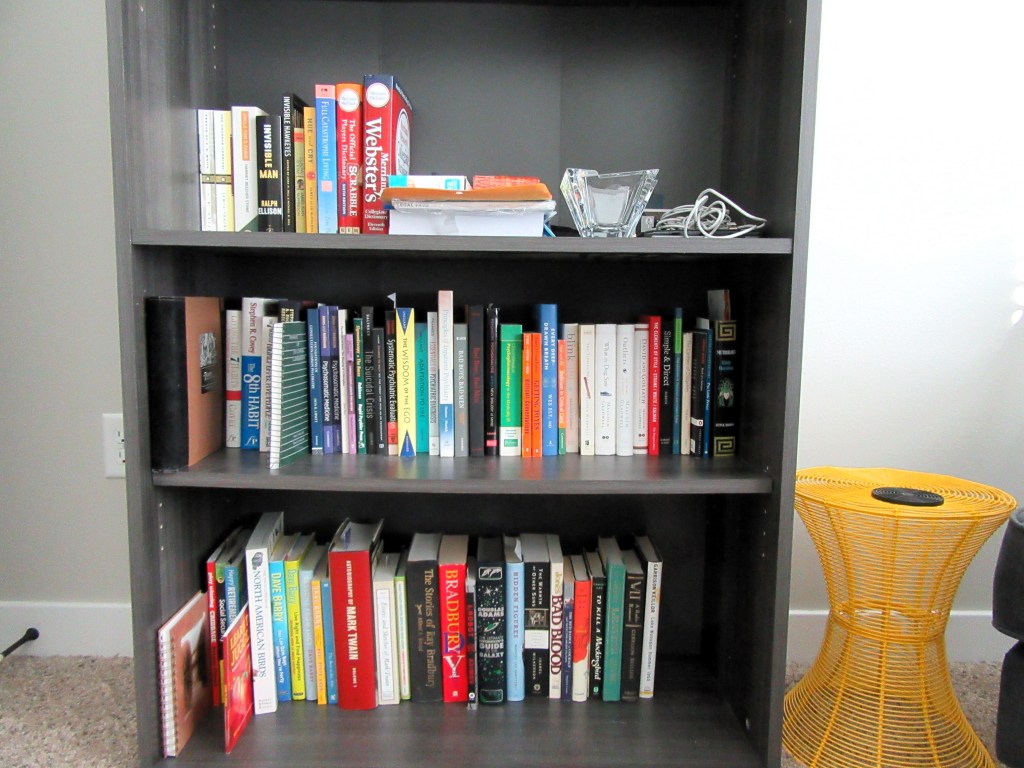
We just got a couple of books by Ray Bradbury, and I’m pretty excited. Some of the stories I recognize, but there will be some, perhaps many, that will be new to me.
Tag: books
Just Got Isabel Wilkerson’s Book: “Caste: The Origins of Our Discontents”
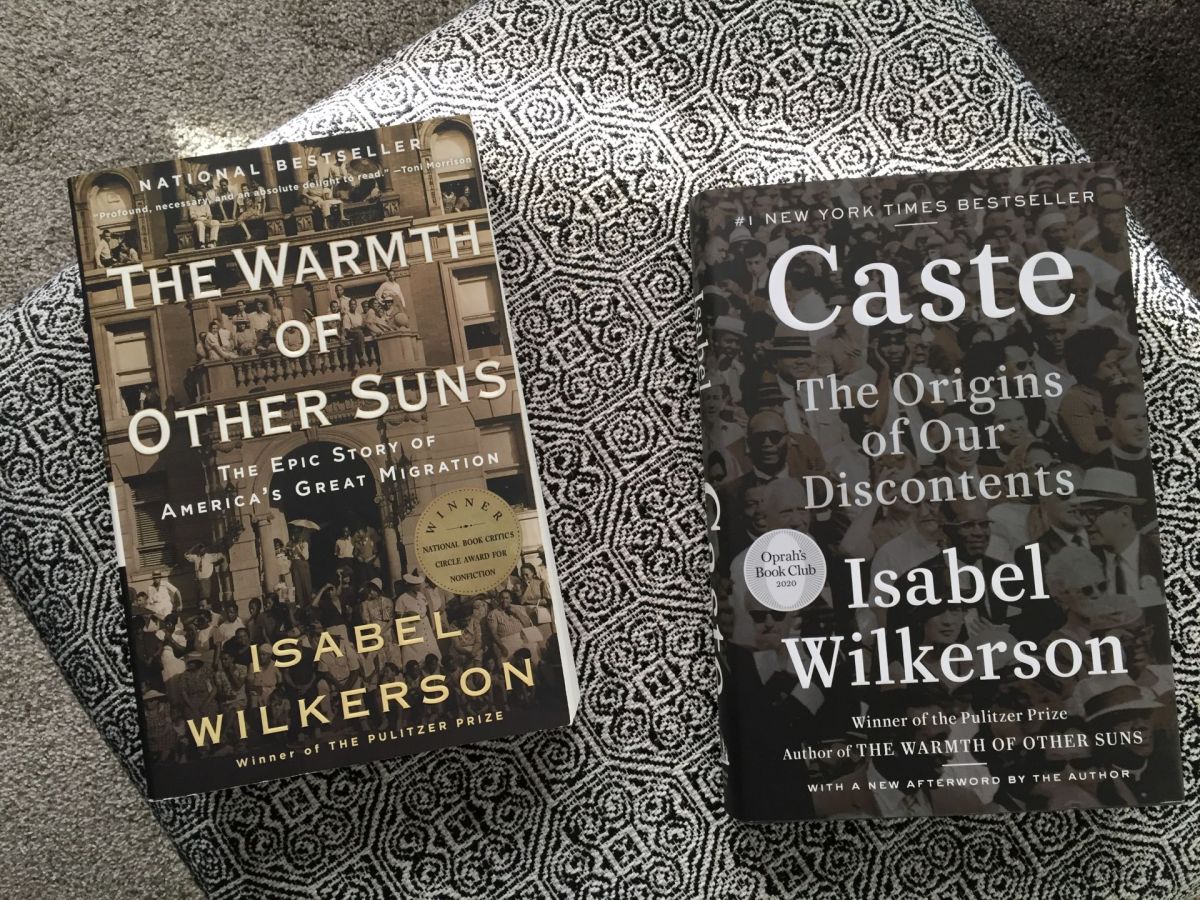
I just got a copy of Isabel Wilkerson’s book “Caste: The Origins of Our Discontents.” I read her other book, “The Warmth of Other Suns” years ago. It won a Pulitzer Prize.
I read the first section, “Toxins In The Permafrost And Heat Rising All Around.” It brought back memories of the 2016 Presidential Election, which I won’t discuss in any detail. It does seem ironic now.
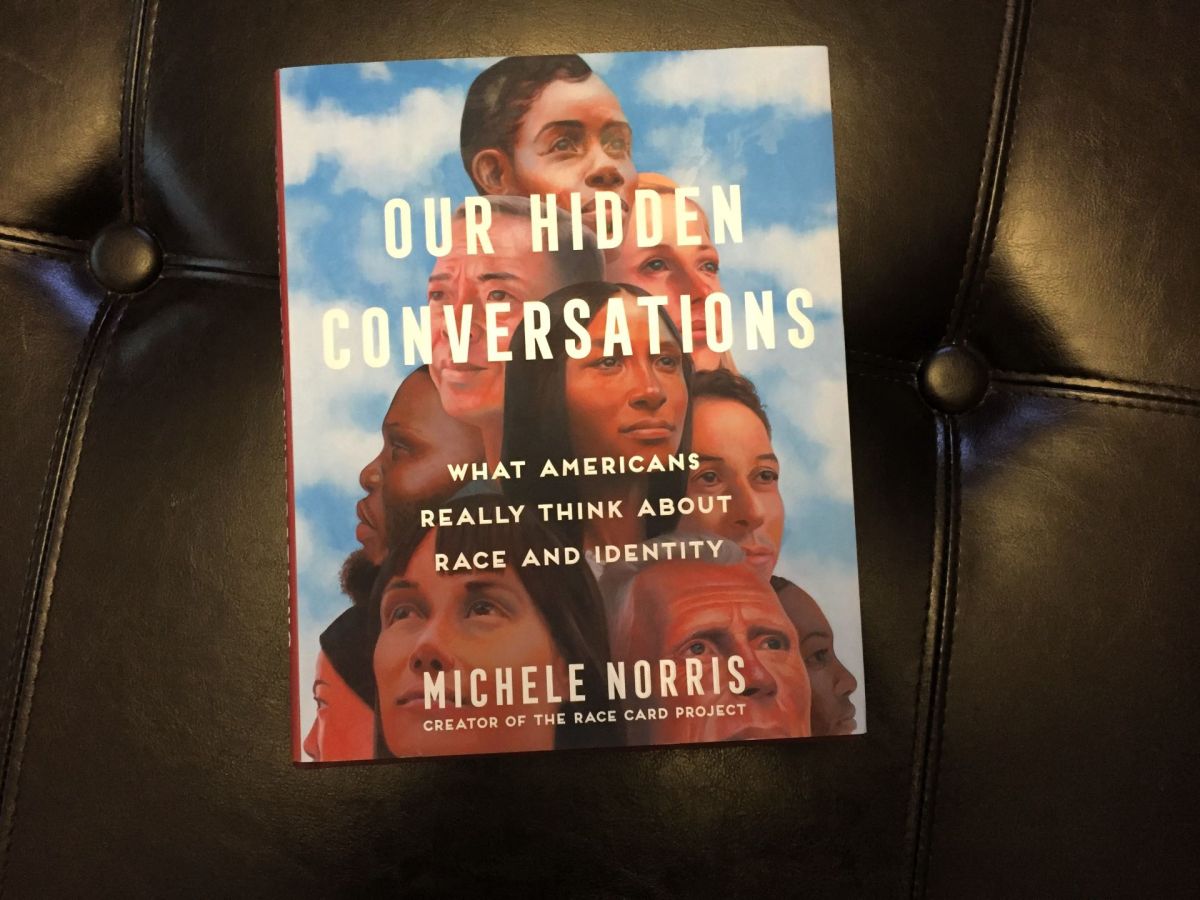
I have no doubt that “Caste” will be an uncomfortable read, like Wilkerson’s first one and like Michele Norris’s book, “Our Hidden Conversations.”
Just a reminder, Isabel Wilkerson is scheduled to speak as part of Dr. Martin Luther King, Jr. events on February 5, 2025 at the University of Iowa Medical Education and Research Facility (MERF); Prem Sahai Auditorium. General admission is free although it’s a ticketed event, more information here.
Reading My Old Book in a New Light
Sena bought me a wonderful new lamp to read by and it improves on the ceiling fan light I wrote about the other day (And Then a Light Bulb Went Off).”
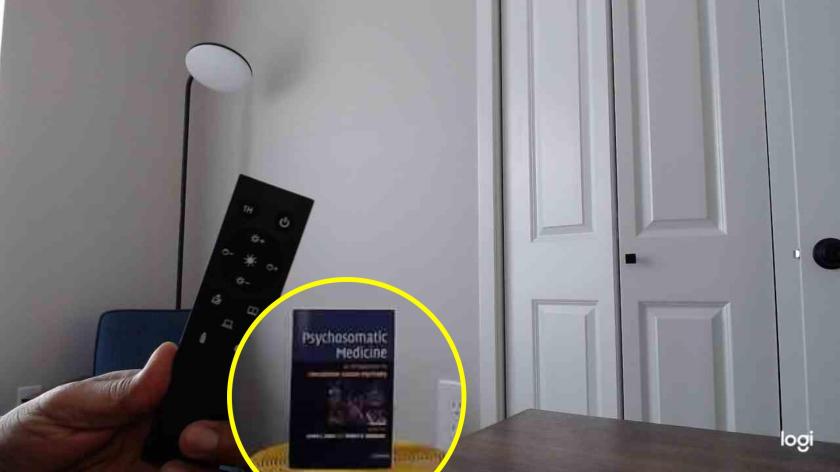
The new lamp even has a nifty remote control with which you can choose the ambient feel. There are several selections, one of which is called “breastfeed mode,” a new one on me. There’s a light for that?

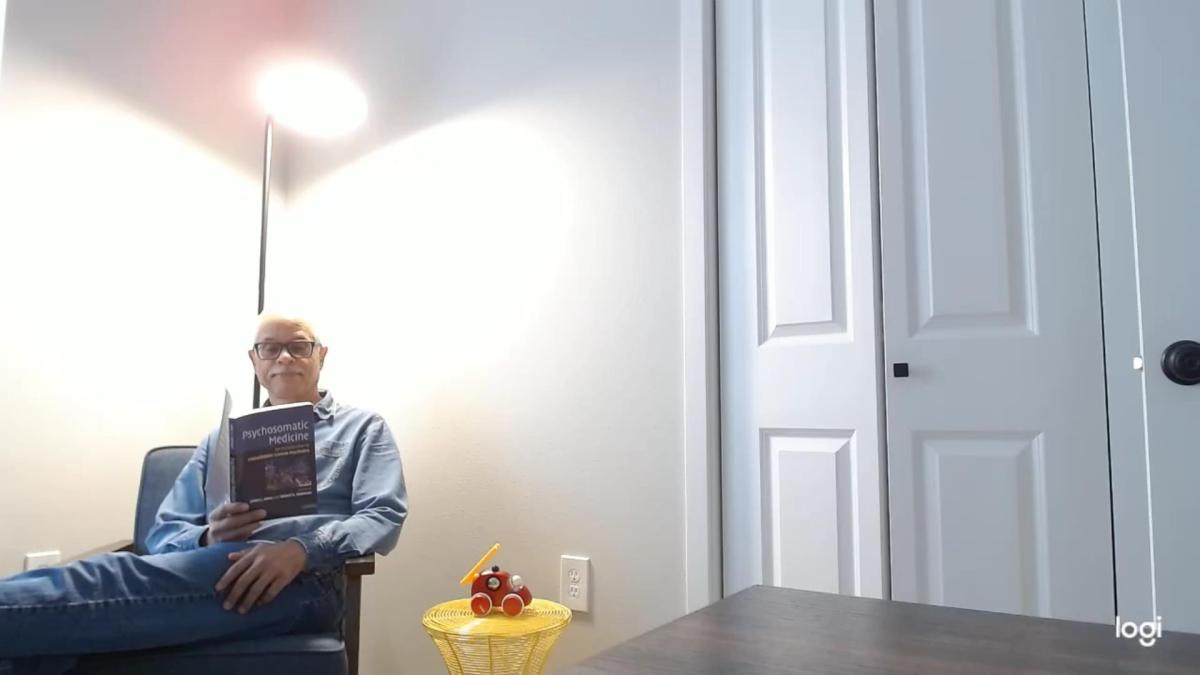
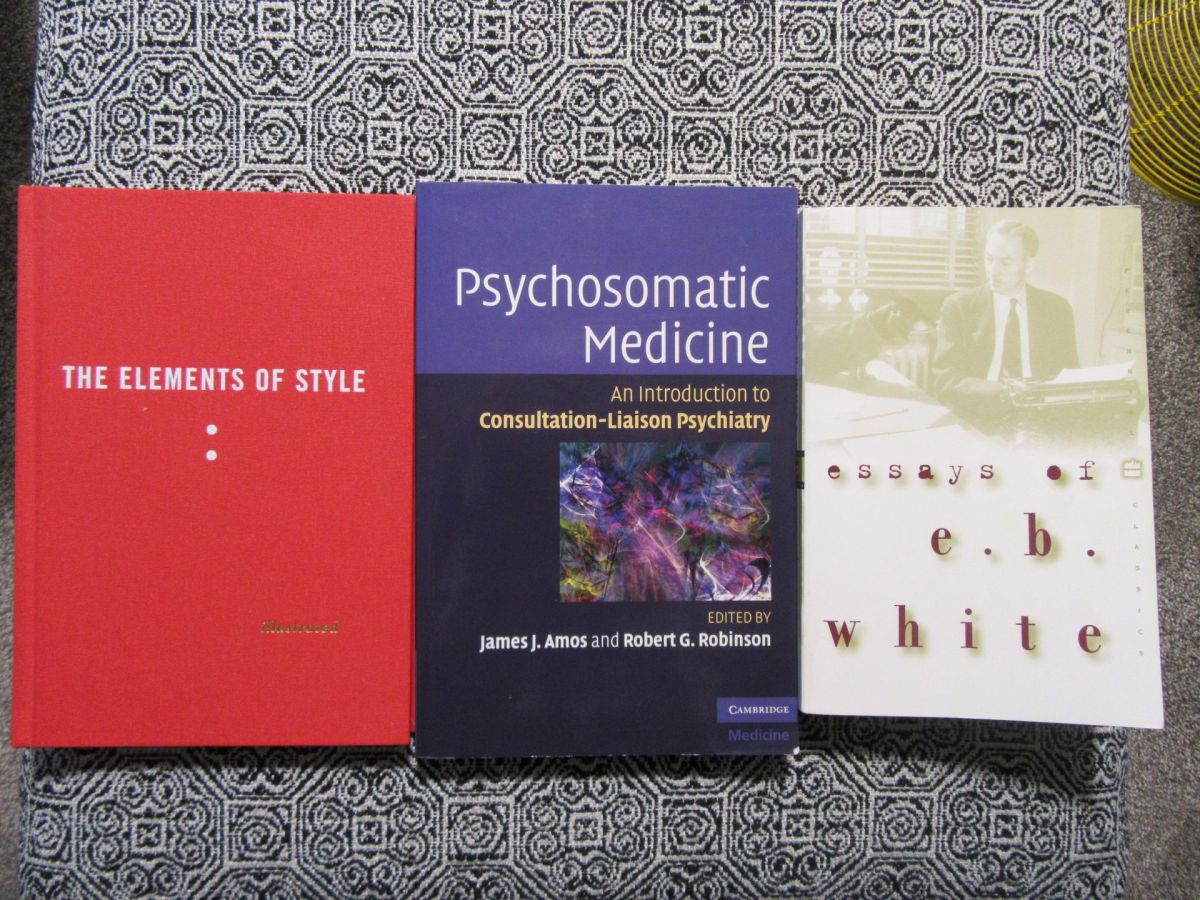
The lamp arrived at about the same time I got a notice from my publisher for my one and only book, “Psychosomatic Medicine: An Introduction to Consultation-Liaison Psychiatry,” that people are still buying—after 14 years! My co-editor was my former psychiatry department chair, Dr. Robert G. Robinson. As far as I know, Bob has dropped off the face of the earth. I hope he’s well.
Consultation-Liaison Psychiatry is probably about the same as I left it when I retired 4 years ago. I walked all over the hospital trying to help my colleagues in medicine provide the best possible care for their patients. I put in several miles and stair steps a day. I saw myself as a fireman of sorts, putting out fires all over the hospital. I got a gift of a toy fire engine from a psychiatrist blogger in New York a long time ago.
Now I walk several miles on the Clear Creek Trail, like I did yesterday and the day before that. I have shin splints today, which tells me something—probably overdid it.
So, I’m taking a break from walking and reading an old book in a new light.
Thoughts on Journalist Sydney J. Harris
I just have a few things to say about Sydney J. Harris, who was a journalist whose columns were syndicated to over 200 newspapers. I remember reading them in the Des Moines Register years ago.
I ran across one of his books for sale on Amazon. I’ve never read any of them, but I found one of them, “Winners and Losers” on sale “new” for $111 and change. I was astonished. I admire his diction and learning, but I would never pay that much money for one of his books. You can buy them for less than $5, even on Amazon. You can read “Winners and Losers” for free on the Internet Archive.
You can also find a lot of quotes from Sydney J. Harris on the web. I found a collection which I thought were admirable. Funny thing is, the more I read, the more I thought he was a product of his times. I thought I could detect a little male chauvinism (maybe more than a little). The more quotes I read, the more I noticed he almost always used the word “men” or “man” and rarely mentioned women, unless you count:
“The commonest fallacy among women is that simply having children makes them a mother—which is as absurd as believing that having a piano makes one a musician.”
Nobody’s perfect.
Black History Month: In Honor of James Alan McPherson
I thought it would be nice to mention James Alan McPherson, Pulitzer Prize winning author and longtime Iowa Writers’ Workshop faculty member, in keeping with the theme of this month’s Black History Month: African Americans and the Arts. A neighborhood park was named in his honor (James Alan McPherson Park) in 2021. There has been a plan to erect a memorial plaque in his honor, which I believe is still in process.
There is a very nice summary of his accomplishments as a writer on the Black Past website.
More Thoughts On “Our Hidden Conversations” Book by Michele Norris
I need to correct something I got wrong in my first post about Michele Norris’s Distinguished Lecture on January 23rd. While reading her book, “Our Hidden Conversations” I ran across this race card in the chapter “Black Babies Cost Less to Adopt:”
“Vote (for) Obama! He looks like me!”
That was the 8-year-old daughter said that. The person who sent in the card was her father, Dr. Val Sheffield and he was a medical student in Iowa at the time. Once you know that, you realize why he wondered whether he should have been “…happy or dismayed by this comment.”
Anyway, I’m a little over halfway through the book, “Our Hidden Conversations.”
The title of the chapter above, “Black Babies Cost Less to Adopt” is troubling and it has a lot to say about how it was common in the past to discount the cost of adopting black babies. Foster care of non-white kids was also a subject in the chapter. Identity conflicts are common and can lead to reminiscing about things like:
“I was not Black enough.”
“I was not Asian enough.”
“I was not Hispanic enough.”
What matters is being kind enough.

Preliminary Thoughts on “Our Hidden Conversations” Book
This is a short post about my initial impressions about the book, “Our Hidden Conversation” by Michele Norris.
I’m not finished with the book yet, but I thought I would let you know that the first chapter, “Bread Crumbs” was tough to read. I had to put it down and come back to it a few times because it brought back memories.
The chapter title “Bread Crumbs” means the clues that parents, grandparents, etc. might leave for subsequent generations to find which might shed light on one’s background, explain troubling circumstances, and so on.
I have some bread crumbs left to me by my family. Some are in the form of photos, although there is no family photo of all of us together.
I remember the hair combing routine my mom had with me and my brother every Sunday morning before church when we were kids. Our father was black and my mother was white. Dad was out of the home and we lived with mom. We were the only black kids in the church. In fact, all the members were white.
Mom used a prodigious amount of hair oil while vigorously combing our curly hair back. It took many strokes and the pulling pinched a bit. The ritual took a little while. When I look back on it, I guess the goal was to straighten our hair as much as possible.
Everyone in the church always treated us kindly and I was baptized there.
If you decide to read “Our Hidden Conversations,” give yourself a break whenever you feel like you need it.
Rearranging My Books
The other day, I finally rearranged my bookshelf. I’ve put it off for a long time. While I was doing it, I remembered where I spend the most time in my thoughts. I don’t have a very broad library, which probably illustrates where my mind wanders. It has changed very little over the years. Retirement affected it some, but not a great deal. After I rearranged the books, it was not just better organized. It made me think about the past, the present, and the future.


I have a lot of books by Malcolm Gladwell for some reason. The Tipping Point was published around the time when all of my immediate family members died for one reason for another. They died within a few years of each other. It was a difficult time. I remember hoping I would just get through it. I did.
I’m still a fan of Stephen Covey. The 7 Habits Manual for the Signature Program marks a time when I was contemplating leaving my position at The University for a position in private practice. It didn’t work out, and it’s just as well.
Of course, there are many books about consultation psychiatry, including the one I wrote with my former Dept. of Psychiatry Chair, Robert Robinson. Every once in a while, I search the web to find out what former colleagues and trainees are doing now. I can’t find a few, which makes me wonder. A couple have died. I’m a little less eager to look around each time I find out about those. Finding obituaries is a sad thing—and it makes me a little nervous about my own mortality. One or two have apparently simply dropped off the face of the earth.
I read some books for fun. I’m a fan of humorists, which is no surprise. The most recent is The Little Prince. That book and others like it inspire me.
I like books that make me laugh and give me hope. It’s difficult to sustain hope in humanity, if you read much of the news, which I tend to avoid.
I feel better when we go out for walks. Recently we did that about a week ago when there were a couple of warm days. On one day, we saw a couple of bald eagles and northern shovelers (the latter of which we’ve never seen before), at Terry Trueblood Recreation Area.
On another warm day we saw a couple Harvest Preserve staff members preparing to hang a big Christmas wreath on the side of a barn on the property that faces Scott Boulevard. They’d got some evergreen branches from an “overgrown Christmas tree farm.” It had a big red bow. They were going to decorate it further and hang it. We hoped it would be finished by the time we returned that day, but it wasn’t done.
When we returned a day later, it was very cold but the wreath was on the barn wall and it was festooned with gorgeous decorative balls. It was worth waiting for.
Video music credit:
Canon and Variation by Twin Musicom is licensed under a Creative Commons Attribution 4.0 license. https://creativecommons.org/licenses/by/4.0/
Artist: http://www.twinmusicom.org/
The Thing About Identity
I was searching on the web for something about my co-editor, Robert G. Robinson, MD, for our book Psychosomatic Medicine: An Introduction to Consultation-Liaison Psychiatry, published in 2010.
The reason I was searching for something about him was that I’ve had difficulties finding anything on the web lately about doctors I had worked with years ago and admired—and the search revealed they had died. It has been a little jarring and got me thinking about my own mortality.
My search didn’t turn up any obituary about Dr. Robinson, but I found a couple of interesting items. One of them is, of all things, a WordPress blog item, the About section. It’s dated April 2012. I’ve seen it before. It’s supposedly about a person named Dr. Robert G. Robinson, MD and the only thing on it is his name and affiliation with The University of Iowa Carver College of Medicine. Every WordPress blog has an About section. I have one and I’ve been blogging since 2010.
There’s no entry in the About section for him on WordPress. However, there was another item on the web that looked like it was a blog (It’s another blogging site called About.me), and it was labeled as an About section. It was a biographical summary of his academic and scientific career. Of course, it was impressive. At first, it looked like he was planning to write a blog, which could have been very educational because he’s an extremely accomplished psychiatrist with a very long bibliography of published articles about psychiatric research, a lot of it about post-stroke syndromes.
But when I looked at the social media links on the WordPress page, it led to a picture of someone who is definitely not the Robinson I know. This person was a “Certified Rolfer.” Remember Rolfing? It’s a form of deep tissue massage developed in the 1970s. The Dr. Robinson I know was never involved in Rolfing.
I’m not sure what happened with the WordPress and other blog items, but it looked the WordPress section was a case of mistaken identity. The most recent genuine item on the web about him is a 2017 University of Iowa article about his receiving the Distinguished Mentor Award.
I hope somebody doesn’t get confused by that WordPress mistake.
Then, I happened to come across an article that, at first, I didn’t recognize. The link on the search page listed Dr. Robinson’s name. It’s on the Arnold P. Gold Foundation website for humanism in medicine. The title is “Are doctors rude? An Insider’s View.” It didn’t have my byline under it. It took me a minute, but I soon recognized that I wrote it in 2013. At the bottom of the page, I was identified as the author.
At first, I thought it was a mistake; there was a place for an icon that at one time had probably contained a photo of me, but it was missing. It’s my reflection about a Johns Hopkins study finding that medical interns were not doing basic things like introducing themselves to patients and sitting down with them.
This was not a case of mistaken identity. But I got a little worried about my memory for a few seconds.
Anyway, I was reminded of my tendency to have trainees find a chair for me so I could sit down with patients in their hospital rooms. I later got a camp stool as a gift from one of my colleagues on the Palliative Care consult service. It was handy, but one of my legs always got numb if I sat too long on it. It broke once and I landed flat on my fundament one time in front of a patient, family, and my trainees. The patient was mute and we had been asked to evaluate for a neuropsychiatric syndrome called catatonia. The evidence against it was the clear grin on the patient’s face after my comical pratfall—and because of the laughter that we could see but not hear.
One of the points of this anecdote is that it’s prudent to be skeptical about what you see on the internet. The other point is that parts of your identity can hang around on the web for a really long time, so it’s prudent to be skeptical about how permanent your current identity is.