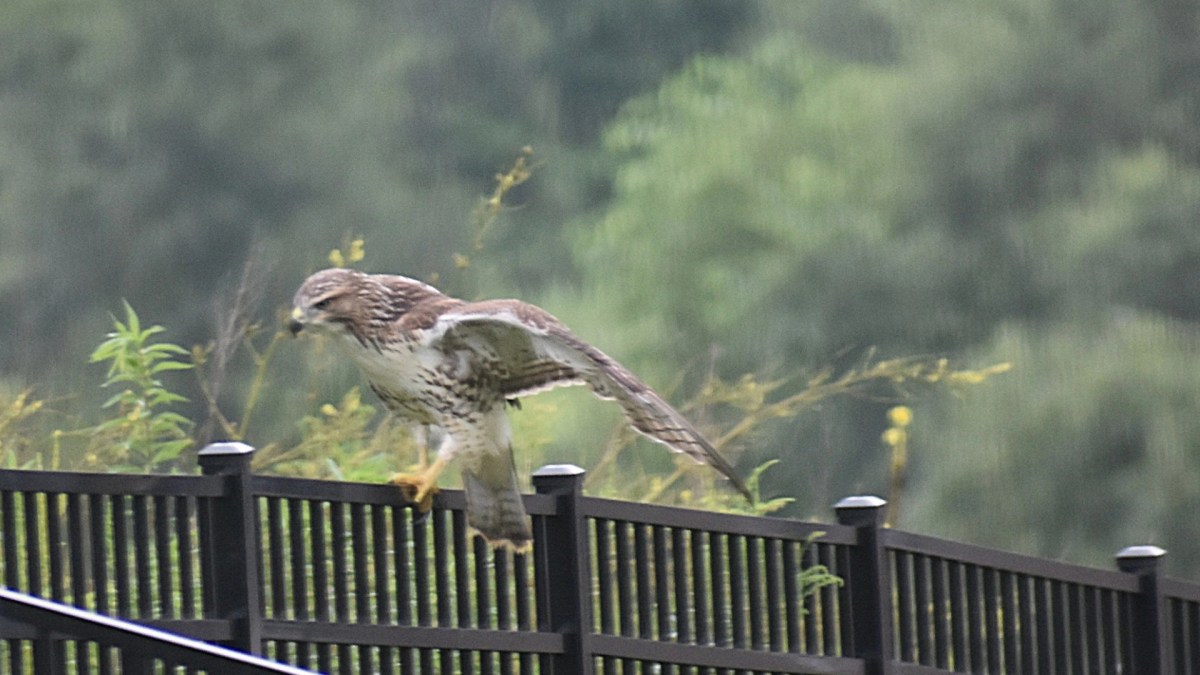
Today we saw this cool Red-Tailed Hawk on the fence—sort of, in a manner of speaking. This hawk was definitely not on the fence about getting brunch though. It would fly off the fence a few times and we expected it would come up with a mouse or squirrel or something—empty claws.
The woodchucks are too big for the hawk.
The experts say you can distinguish a male from a female Red-Tailed Hawk because the female is “25% larger.” I guess that might work if you saw them together—doing something X-rated.
On the other hand, there was a Red-Tailed Hawk named Pale Male that was famous in the New York City Central Park area. He got his name because his head was white. He took several females as mates during his life. They raised several eyasses, which was a new word for me today; it means young hawks. Mary Tyler Moore (“Oh, Rob”) participated along with other neighbors in protests about anti-pigeon spikes being removed and eventually they were replaced by “cradles.”
If you don’t remember the “Oh, Rob!” quote it was Mary Tyler Moore’s (as Laura Petrie) frequent complaint about husband Rob Petrie (Dick Van Dyke) on the Dick Van Dyke show (sitcom in the 1960s). Give yourself a gold star if you thought of the X-File episode “Arcadia” in which Agents Mulder and Scully took the names of the Petries.
Anyway, the Red-Tail Hawk is an impressive bird. It was just not a lucky day for hunting.
Yesterday I noticed a hummingbird hovering about the flower pots on our porch. I hurried to get my point and shoot camera and shot video, through a window as usual and it was getting a little late in the evening too, so light was low.
Can I blame the bird for always looking like a blur—or not? Anyway, the video looks similar to others I’ve managed to capture in years past, except this one was the closest I’ve ever gotten to one. I tried messing with the clip using my video editing software, but I ended up believing it best to leave it mostly unmessed around with.
On the other hand, the one I got about 6 years ago was pretty fair for an amateur backyard birder. Same camera, same software although I was closer to the birds and I’m pretty sure I was sitting outside and very patient. They were very interested in our little feeder.
I think the hummingbirds we’ve seen are ruby-throated species partly because that’s the most common in Iowa. Typically, I think it’s just the males who have ruby-colored throats; our visitor didn’t.
I guess the usual way to attract hummingbirds is with a feeder but other people say there are other reasons hummingbirds visit us. More common to the indigenous peoples, they may be thought of as the spirits of those who recently died and are visiting those they were close to.
I don’t remember the movie “The Curious Case of Benjamin Button” so well but I’ve glanced briefly at web articles which connect it with hummingbirds, which has something to do with their ability to fly backwards or in a figure 8, maybe connecting that with reverse aging or infinity. Other symbolic connections are with joy, healing, and partnership. There are so many connections they seem to blur together—sort of like the bird itself as it hovers and flits from flower to flower.
I think this hummingbird just really liked Sena’s flowers.
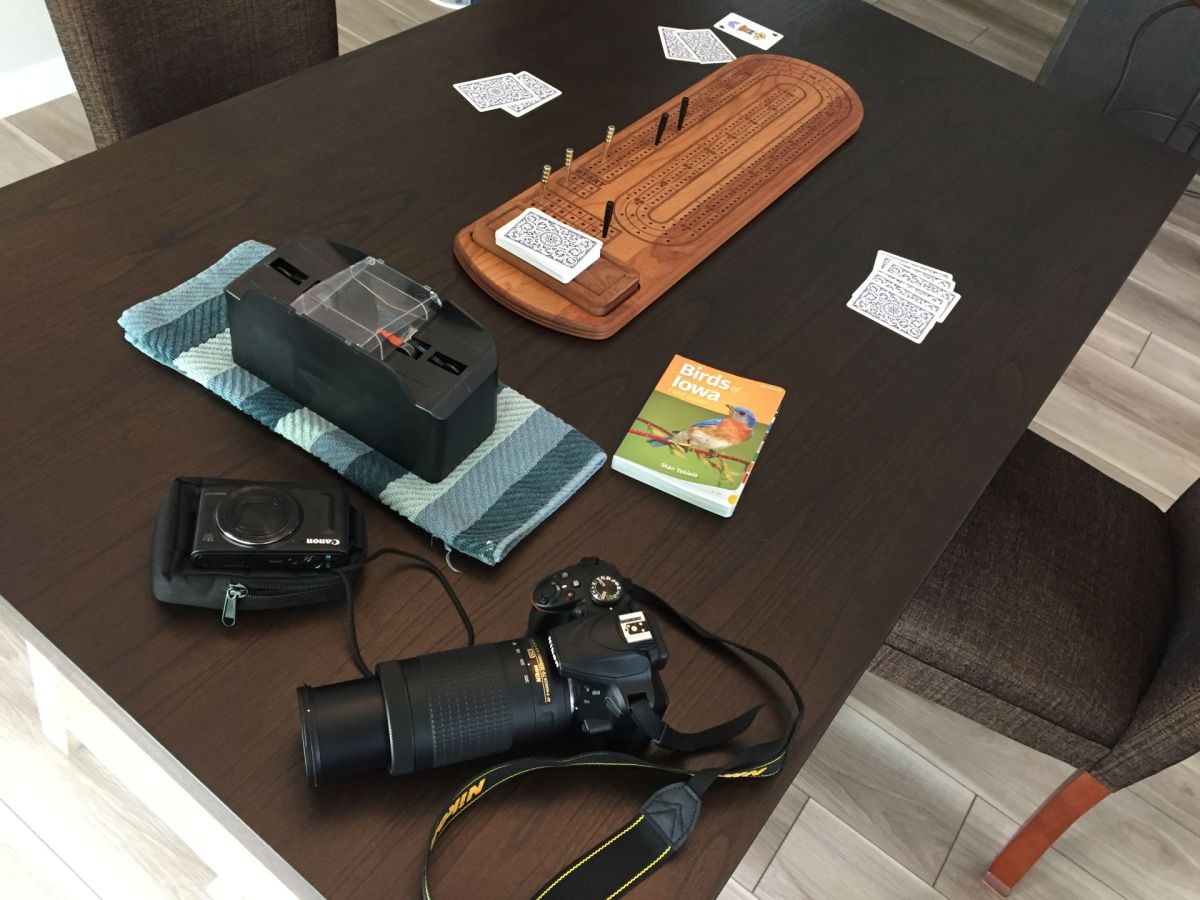
We were playing cribbage and Sena noticed a lot of birds out in the back yard—as well as the woodchuck again. We both grabbed the cameras and forgot about cribbage for a while.
You have to gaze at the pictures long enough to see there’s more than one or two birds perching in various places.
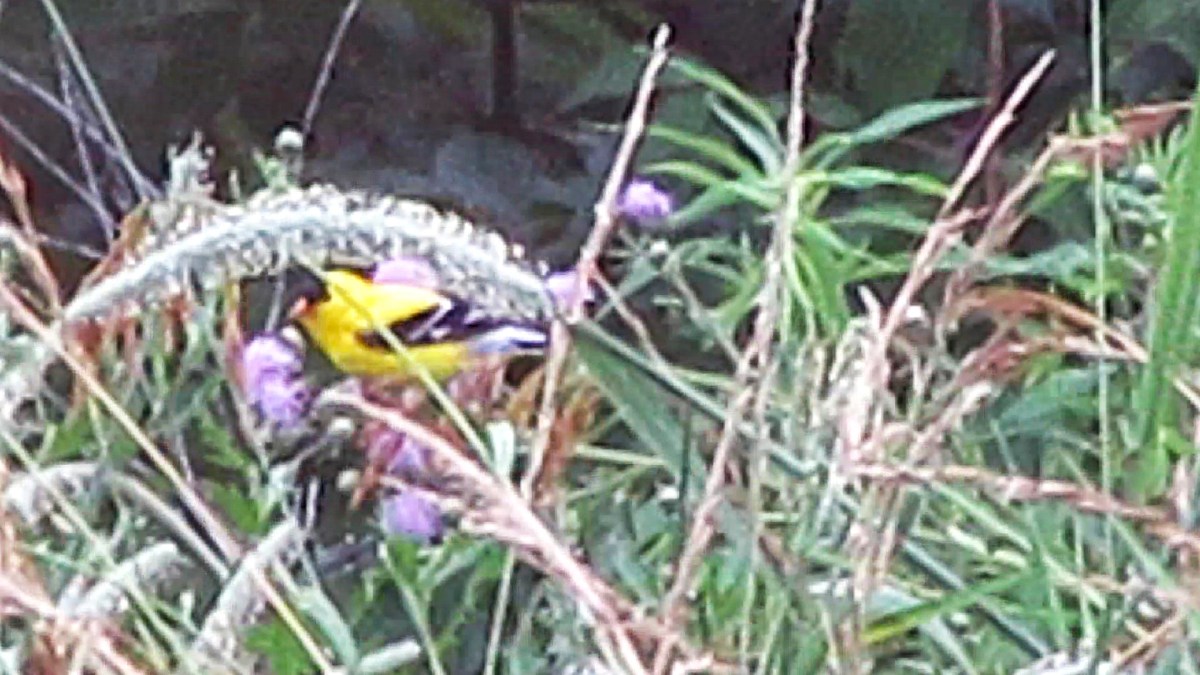
We were distracted from our cribbage match today when Sena saw a couple of goldfinches out in the back yard. One of them was clearly a male, bright yellow all over except for his black wings. The other was probably a female because it was olive colored. The sunlight must have varied because at times it looked like it had colors more like the male.
At one point the male seemed to be distracted by something we couldn’t see shaking the bushes behind them. They sure were hungry. I took the video with my Canon point and shoot. Sena reminded me about the Nikon DSLR and I rushed to get it. By that time, the goldfinches were gone. I have to remember to leave both cameras out after this.
Just like a few days ago, yesterday evening while we were playing cribbage, Sena spied a slim indigo bunting. This one flew right up to our window! It was probably not the same one we first saw. That guy was buff, likely because he’d been branch pressing in the gym.
This character was slim and trim and looked like a lot of other birds we saw charging at their reflections in our windows last month. He really wanted to tell that other bunting where to fly off. I think he should work out more if he’s going to strut like that.
If we’d been sitting by the window all day long with camera at the ready, we’d have been unlikely to ever catch Slim Indigo peering and posing like he was on the bird walk.
It’s a random surprise when lucky breaks like that happen. It can take your breath away. I’m not sure why we’ve been lucky enough to catch a look at Slim, especially after over 20 years since seeing the last one. One answer to that might be here. Sometimes it’s better to be lucky than good. By the way, that reminds me; Sena won the cribbage game—this time.
The one thing I couldn’t get by shooting video through a window is Slim’s voice. Clearly, you can see he was chirping at one point. So, here’s a link for that.
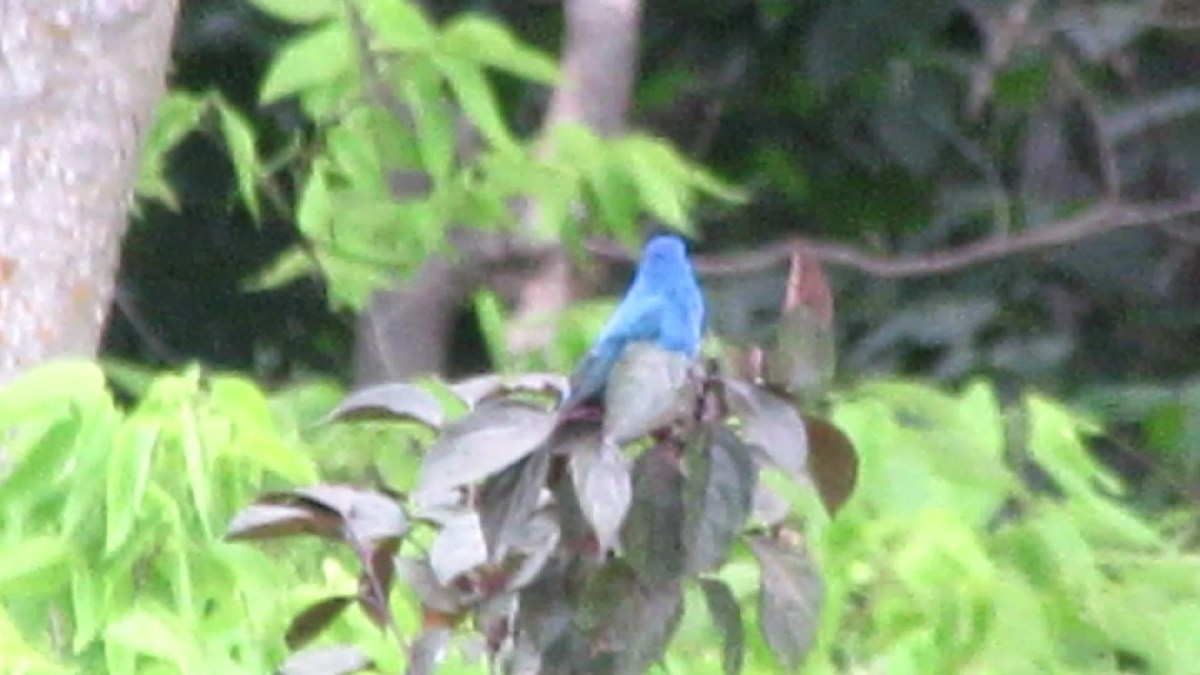
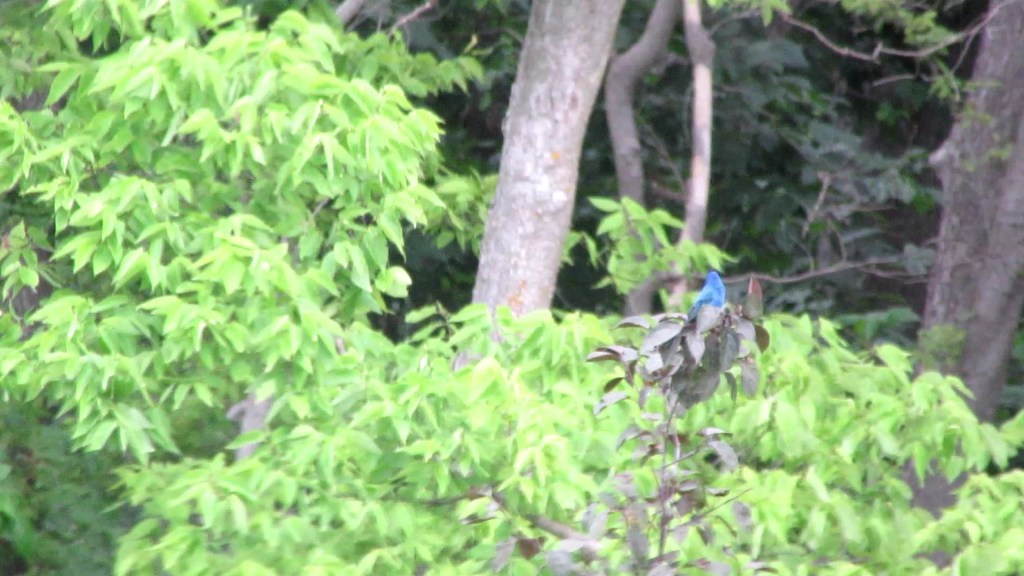
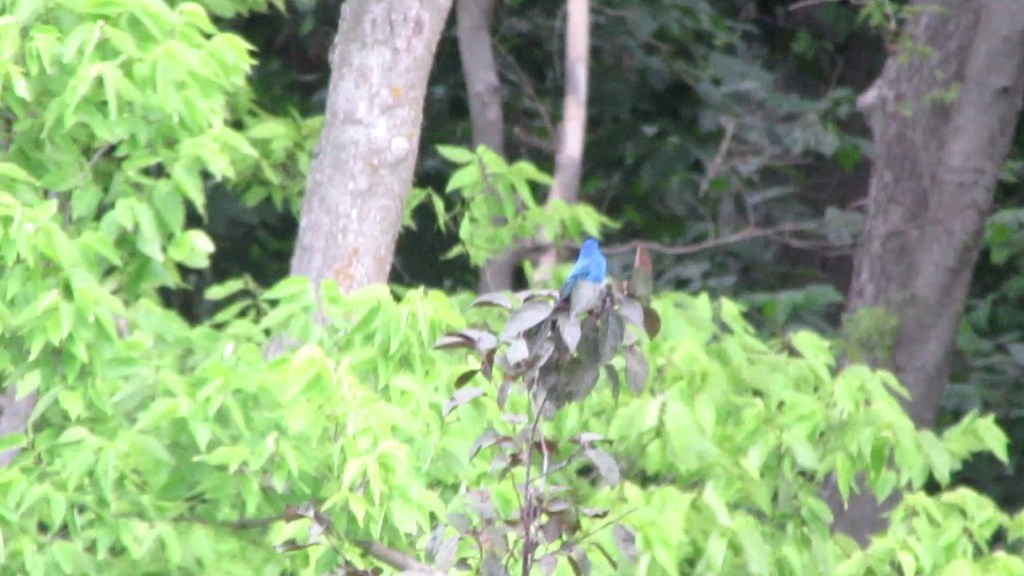
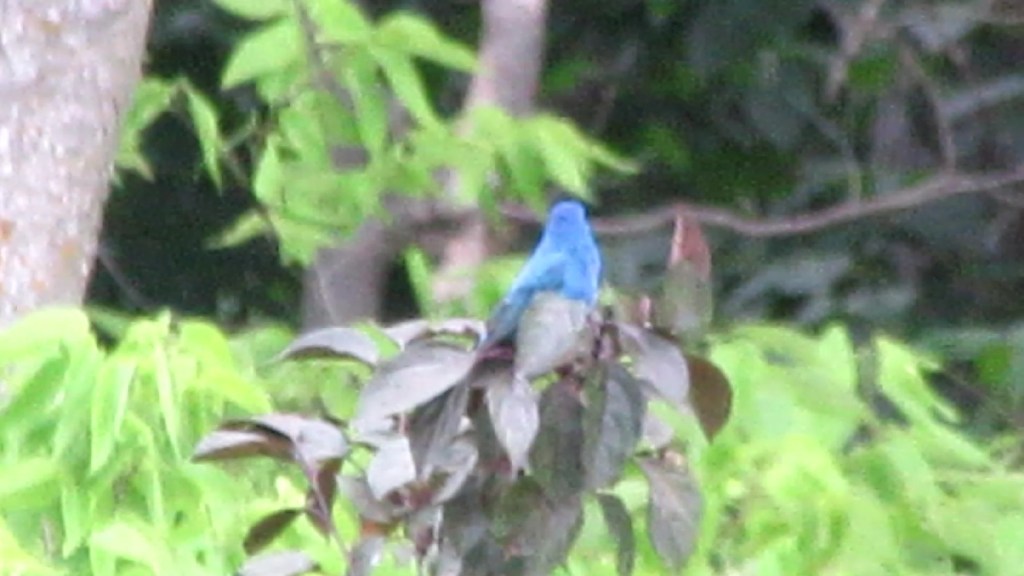
We were playing cribbage this afternoon and Sena spotted a blue bird perched on top of our crab apple tree in the back yard. I rushed to get the camera and got a quick video about 7 seconds long before it flew off. I pulled a few images of the back of the bird; it never turned around. We’re both pretty sure it’s a male indigo bunting, which Sena probably spotted about a week or so ago.
Click each image and then click the little “i” icon, which will open up to instructions on how to enlarge the image.
According to my field manual, it’s actually a gray bird without actual blue pigment in the feathers. They look blue because of how they refract light, similar to blue jays. I have personally not seen an indigo bunting in over 20 years.
And I won the cribbage game, which is pretty rare because Sena will not be defeated! How much excitement in one day can I stand?
Sena took video this morning of a pair of goldfinches having breakfast in our backyard garden. They were all about getting the seeds out of the thistle or knapweed, whatever that is out there. The female is harder to see, naturally, because of its muted coloration to make it less visible. The male is loudly dressed as usual.
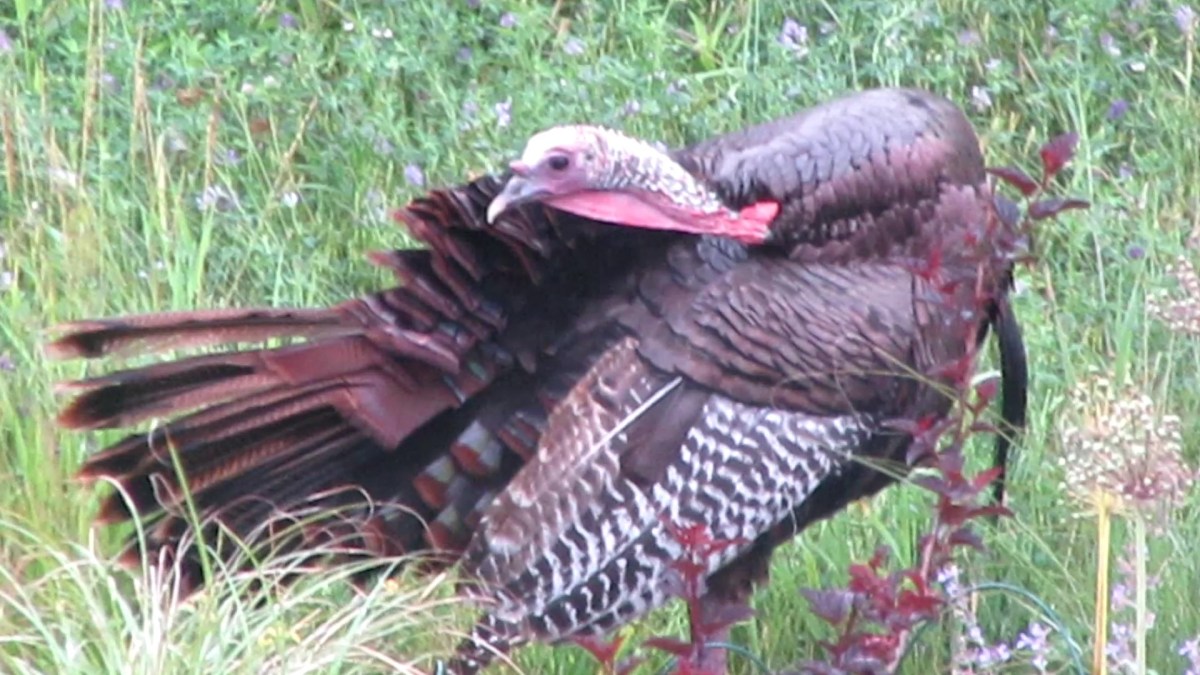
We have this lone wild turkey who hangs out in Sena’s backyard garden. I’m going to refer to it using male pronouns because I think it’s a jake, which I think is proper lingo for young male turkeys.
We saw 4 or 5 turkeys last year traipsing through the yard. I think the winter was hard on the small flock and this guy is the only one who survived.
I’m going to call him Jake for now until somebody corrects me about the gender and thinks of a cooler name. The hens usually have bluish-gray heads and are smaller. Jake’s head has a lot of red in it. He also has a couple of spurs on his legs and I think hens usually don’t. I used this website for general guidance.
You can’t say “never” or always” about the characteristics of male and female turkeys. I see web references that say hens can have beards, which are those hairy things stuck to their chests.
One thing that confuses me is the guidance about the tips of the breast feathers, which says they’re always black on males and brown on females. Almost everything about Jake says he’s male except for the feather tips you see in the video while he’s preening. They look brown.
Jake has a horn on the front of his head, which will eventually become the snood, which is a wormy-looking kind of appendage that dangles off the front of the heads of male turkeys.
Males usually strut, but I think Jake doesn’t because he’s alone and doesn’t have a reason to strut, which is to compete for dominance with other males. There are no other males.
It’s a little unusual for turkeys to be loners. I don’t know if there’s a clear explanation for why some turkeys are loners. I think it’s fairly common for hens in the breeding and nesting season to be solitary.
We saw a big flock of turkeys last year in the back yard of a previous neighbor. They evidently all hopped over their fence and then acted like they couldn’t figure out how to jump back out. I made a YouTube video of it because it was comical.
I don’t know how Jake will find another flock to join.
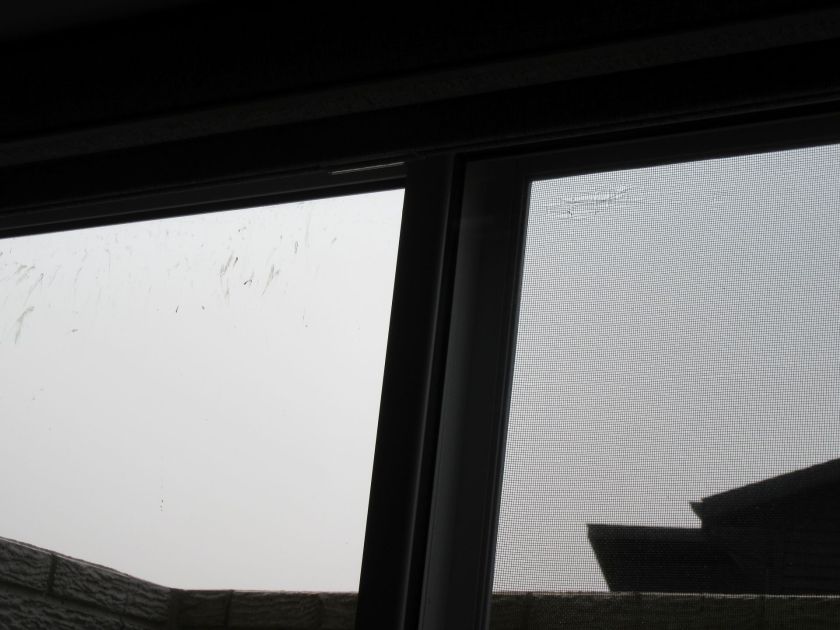
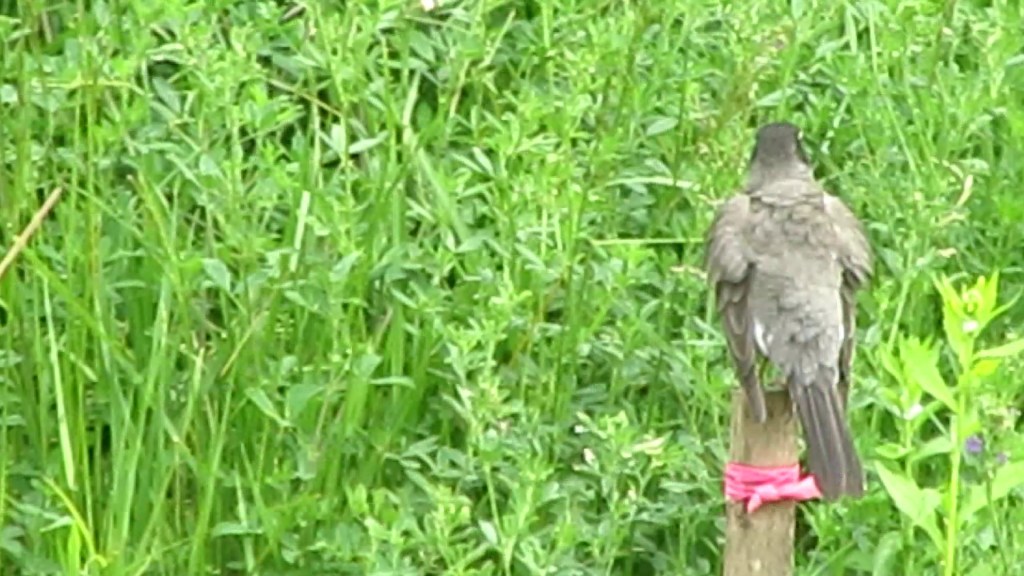
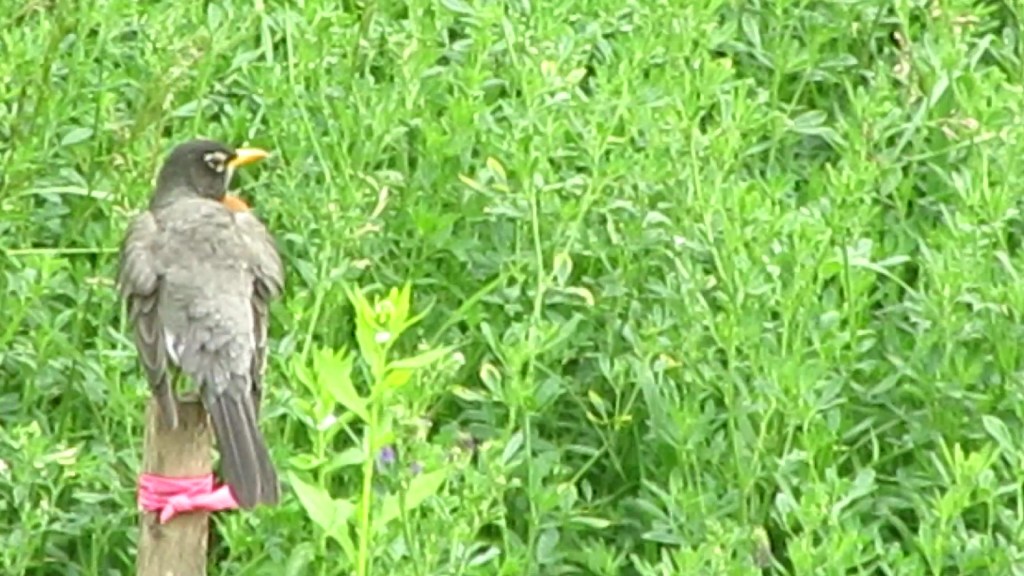
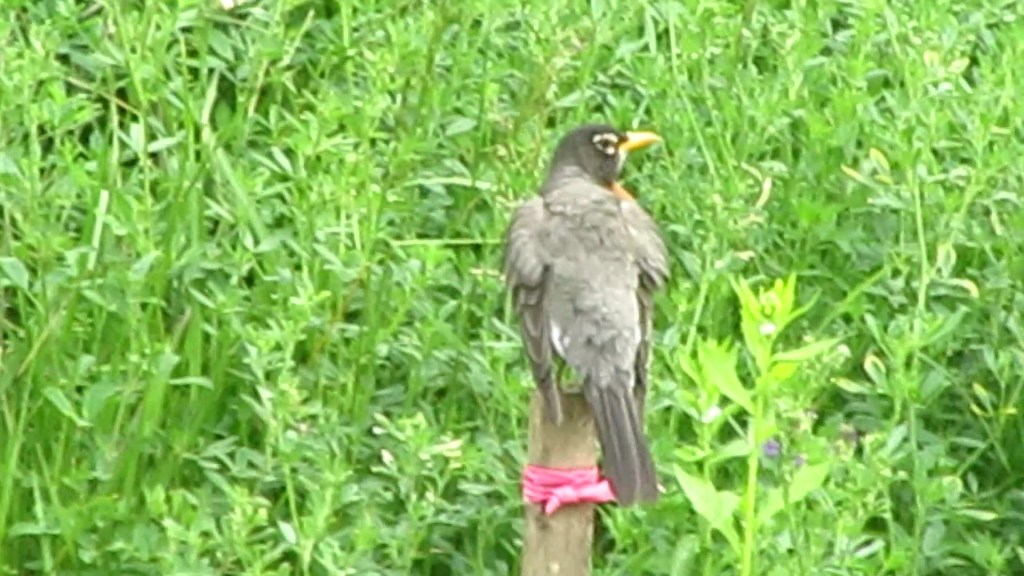
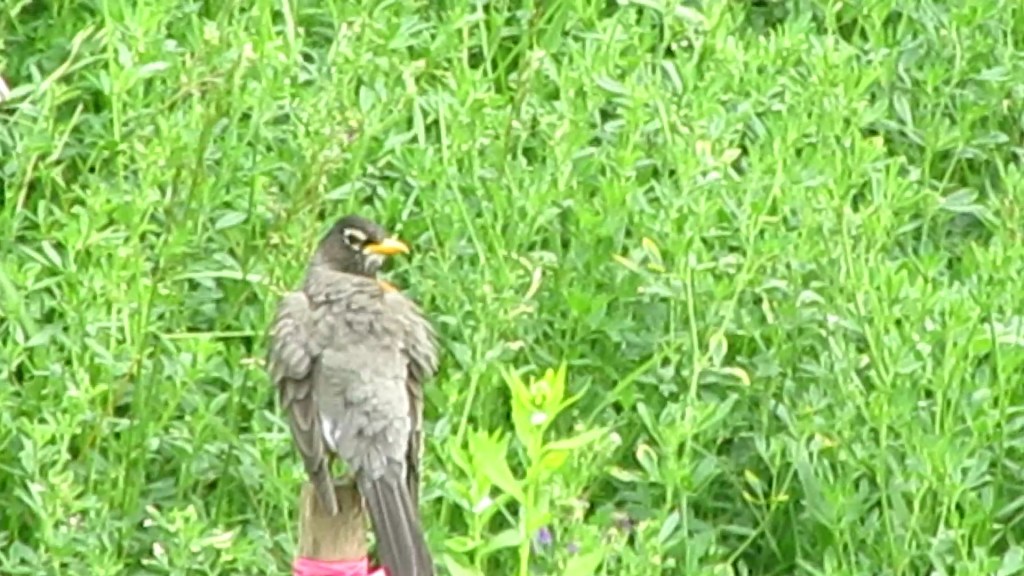
This morning, we noticed the demonic robin flapping around our downstairs window well again. The window film doesn’t work, probably because it’s essentially clear and has a sort of light scattering pattern on it. So, Sena ordered a new film which is basic black. We’re hoping it eliminates refection, which we think is still the main explanation for the bird’s behavior.
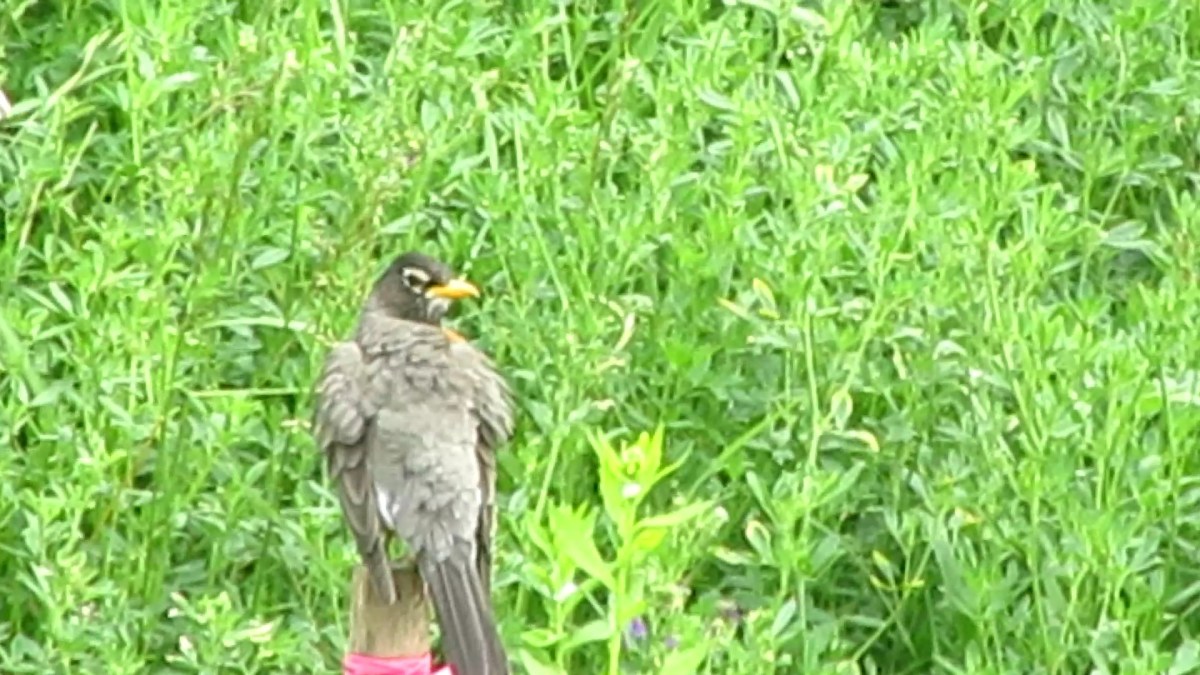
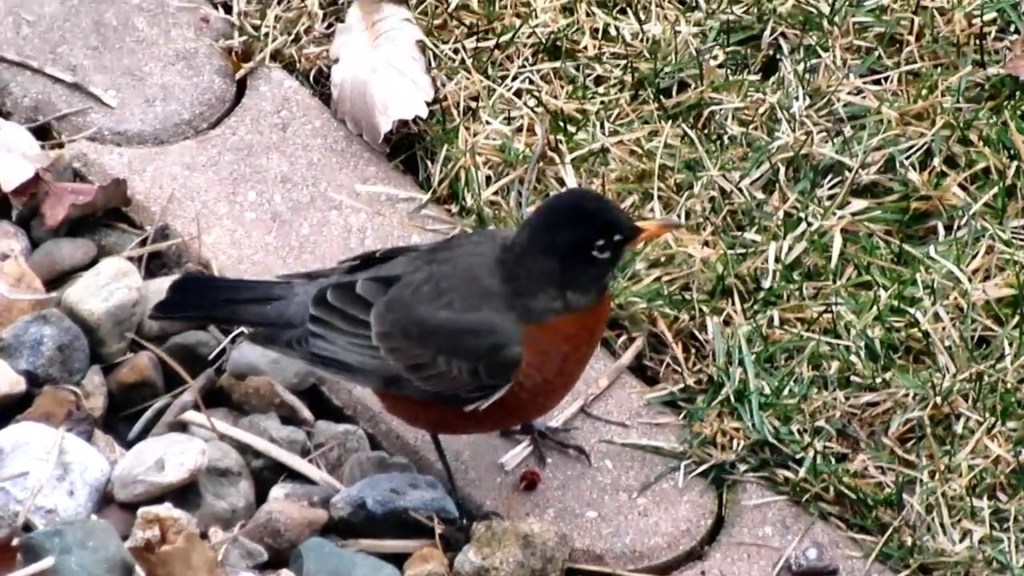
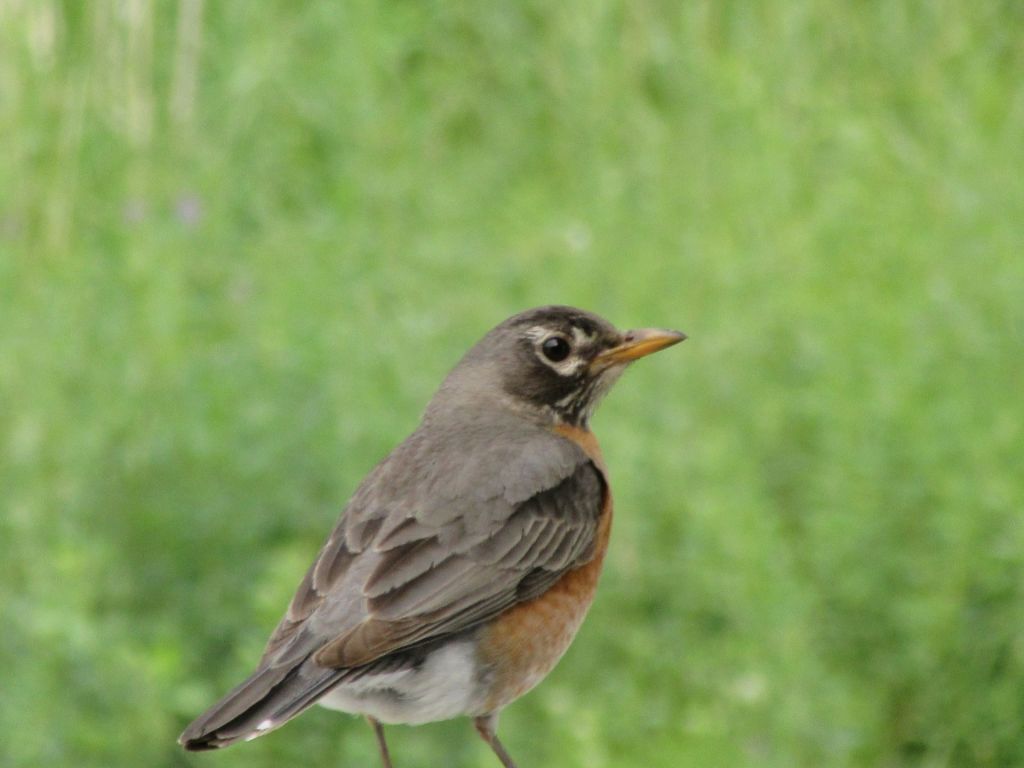
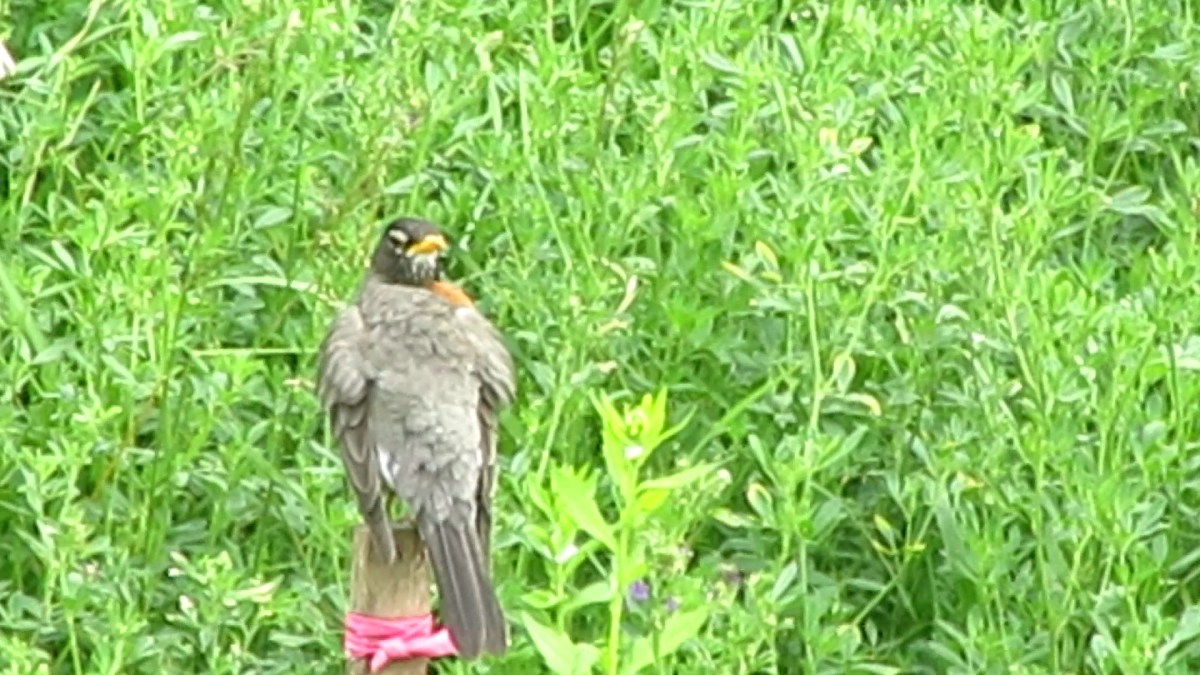
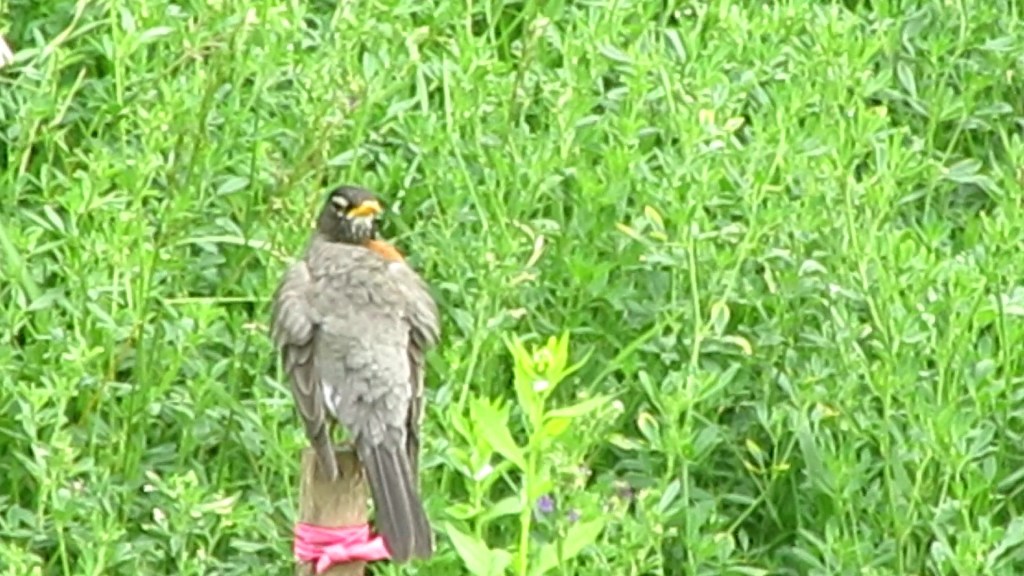
I think this is a female because of the color of its head. Typically, a male robin’s head will be virtually black but a female’s head is mostly gray. That’s according to my favorite handbook on Iowa birds by Stan Tekiela, Birds of Iowa Field Guide, 2nd edition updated in 2023.
male robinfemale robin
I’m just remembering that it’s not entirely true that we’ve never had a problem with birds who had a poor sense of boundaries around houses we’ve lived in previously. In fact, one house we lived in was home to sparrows. We tried to scare them away with rubber snakes, but they didn’t work. I guess part of the trouble was they never moved unless we moved them around. And last year, a pair of house finches built a nest in the fake Christmas tree on the front porch of one of the previous houses we lived in. There were eggs in it when I found it. I set up a video camera to record their comings and goings. The eggs never hatched.
rubber snakehouse finch in fake Christmas tree
And that reminds me; we lived in a house many years ago in which a pair of mourning doves built a nest on one of our outdoor stereo speakers!
But before then, I can’t remember that we ever had birds’ trespass on the many properties we’ve previously lived in. It’s a common story. Bird encroachment can happen to you at any time in your lives.
There are many choices for how to cope with the issue, many of which you can find in the blog post with several years of comments, “How we stopped a robin’s pecking at window glass” I mentioned yesterday. Some suggested shooting the birds, although there is a law against it. Anyway, I’m pretty sure that, poor shot that I am, I’d put more holes through the windows than in any bird. Netting seems to be effective for some people, but for others only to the extent that they wrap themselves up in it because they’re fit to be tied from frustration.
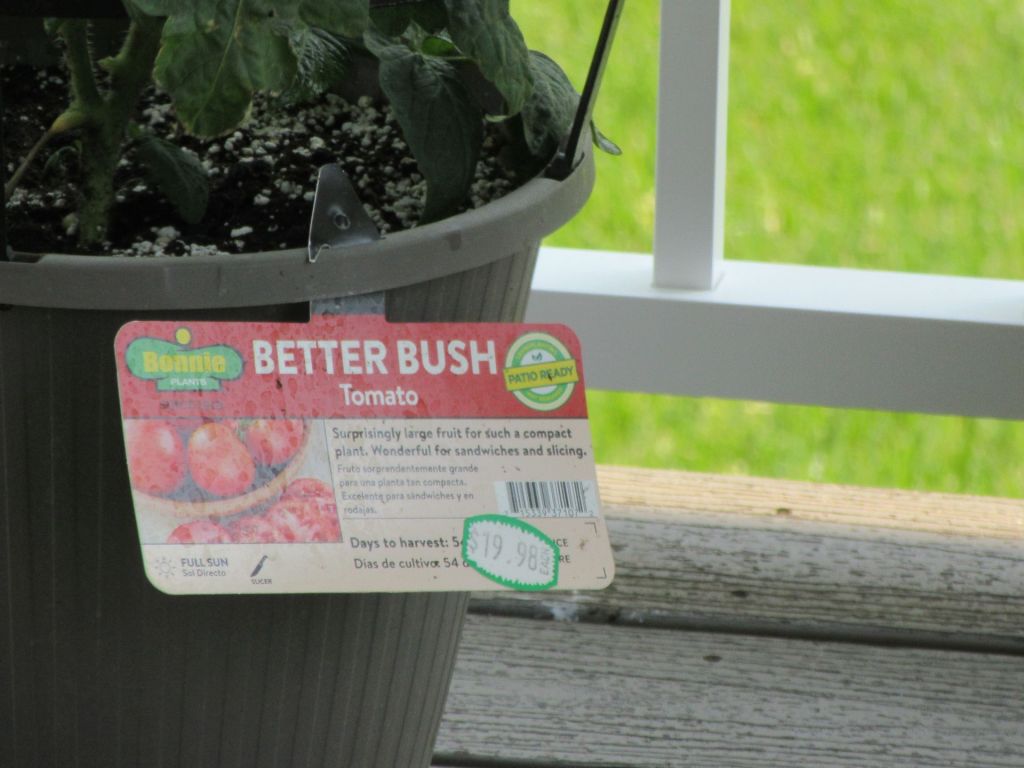
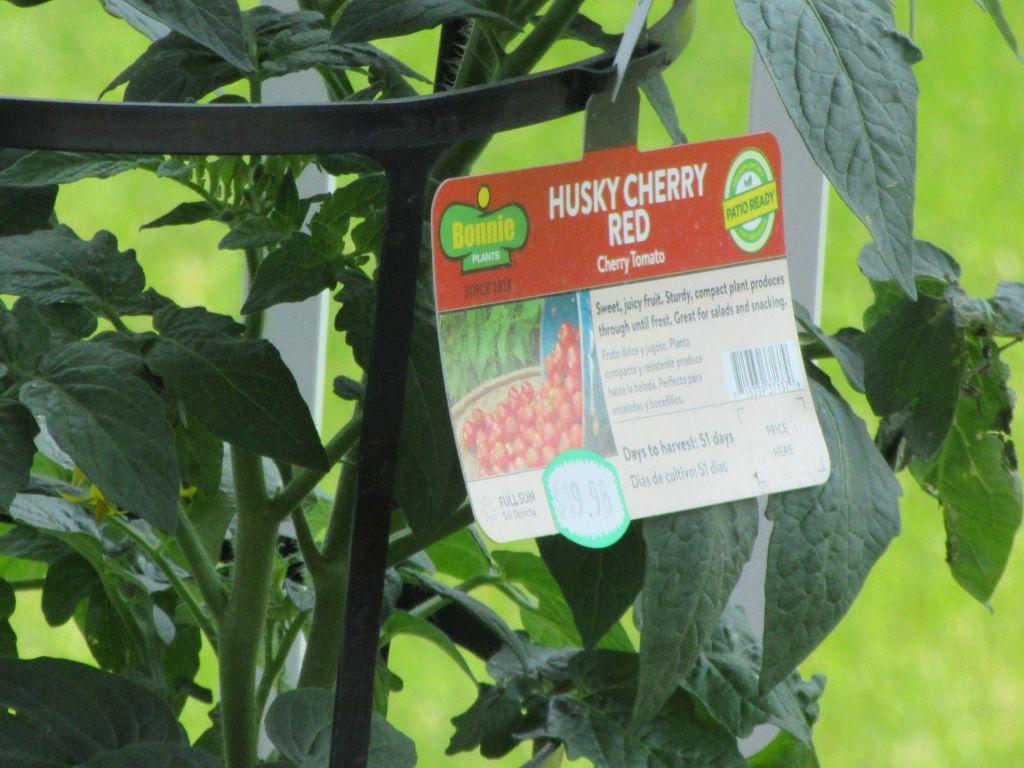
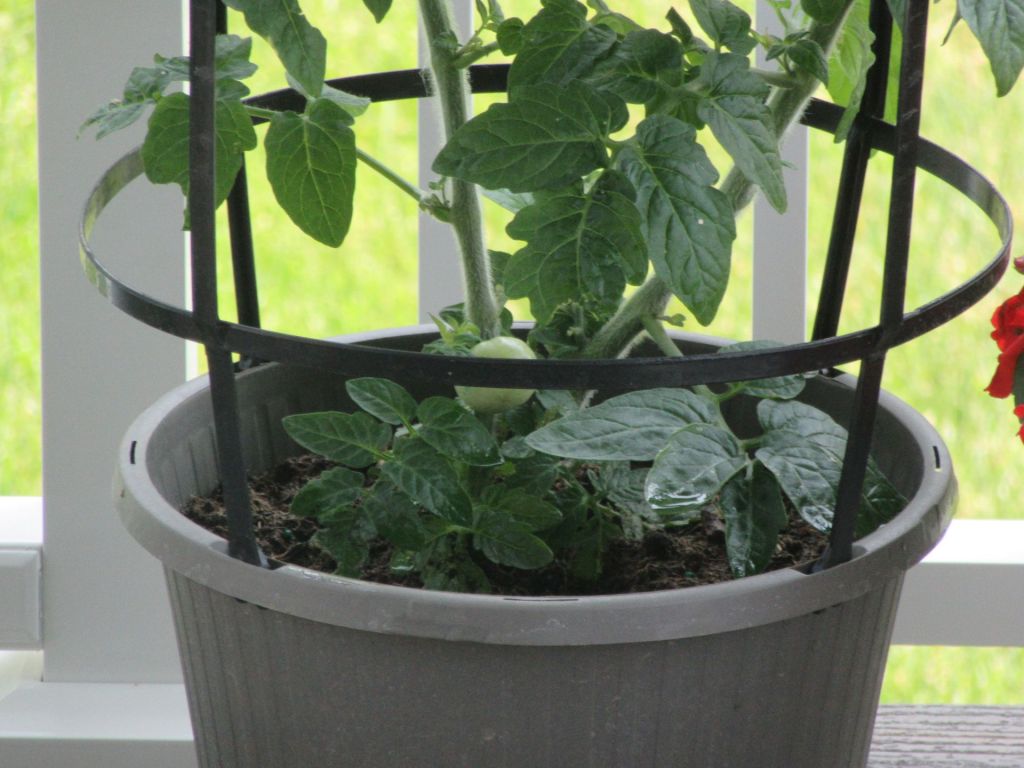
While we’re waiting for the new window film to get here, I’m now wondering what’s going to happen to something else Sena bought the other day: patio tomatoes. We didn’t know you could grow tomatoes in a pot on your patio. Years ago, a garden center salesperson scoffed at the idea.
The pertinent concern is whether birds, like the Ms. Demonic Robin, will poke holes in the tomatoes. We have two varieties, the cherries and the slicers. One cherry tomato is already visible. Come to think of it, a lot of critters will eat tomatoes, and many of them trot, hop, crawl, or stomp across our back yard in and out of the woods.
The other plant Sena got was a Maltese Cross (Lychnis chalcedonica) flower. Because of the shape of its flowers, it’s named after the Maltese cross. It’s supposedly resistant to deer and rabbits. It can attract hummingbirds and butterflies. I think robins won’t eat it.
ADDENDUM: I almost forgot another interesting time a robin did something ridiculous at another house we used to live. You can read about the hoorah’s nest a robin built on our deck in the post “Who’s a Hoorah’s Nest?
Now we’ve got a female robin who is pecking our window well window and even tearing up the screen.
She can turn her head almost completely backward so I know she’s the window-hating, demonic robin from hell. She never pecks the window panes below the level of the well, which makes me believe this is still a problem with seeing her own reflection as another marauding bird.
I call her demonic because I caught pictures of her sitting on a wooden lath staring back at me with her head turned at pretty much 180-degree angle, glaring at me—like something out of the movie The Exorcist.
She’s been at it for over a week now with no end in sight. She’ll stay up most of the night flapping against the glass. Sena got the idea of trying some window film which has a pattern on it. Maybe that’ll break up the light. We taped it up just to see if it works.
It’s not like there’s a whole flock of birds attacking the house or the block or the town, like the movie “The Birds.” It’s not the Alfred Hitchcock thing, which he got from a story by Daphne du Maurier, also titled “The Birds.” I’ve never read it. I’m aware of one scientific explanation for birds attaching en masse, which was about the time thousands of seabirds attacked the coastline near Monterey, California because they ate neurotoxin infested phytoplankton.
It’s just one obsessed bird, and maybe she’s the only one snacking on poisoned phytoplankton. I can find plenty of advice on the web about how to stop this crazed bird-brain preoccupation. Take a look at the blog “Hinessight: How things look through an Oregonian’s eyes” and read the very long post “How we stopped a robin’s pecking at window glass.”
Read it for entertainment. And maybe you’ll find something workable to prevent devil-driven robins who spend a lot of time twirling their heads watching reruns of “The Exorcist” on their tiny screen TVs and get their kicks from pecking at your window. There are 13 years’ worth of comments, so get comfortable.











 Go Retire Psychiatrist