Well, I decided it was time to return to the circle beard after over 6 months of struggling to grow a full beard. I have too many potholes. I think it takes as much time and trouble to have a beard as it does to shave every day.
I found a web site about how some face shapes work better with specific beard styles. The author suggested measuring your face. I tried it. I measured my face length, forehead, cheekbones, and jaw line. The measurements are applied such that they classify you as having a face that is shaped: square, rectangle, round, oval, diamond, triangular, or like a heart.
According to the article, the bottom line is that I have a square-shaped face. So, I’m a square dude and what that means is that I should stick with a circle beard (mustache and goatee).
This makes sense because that’s what I used to have. See my blog post and YouTube video from 3 years ago, “Facial Hair and the Masked Worker.” I used to keep it stubble short so I could pass the fit test for the N95 respirator at the hospital when I was working as a psychiatric consultant.
Because I’m retired from the hospital, fit testing is no longer an issue. On the other hand, I think the circle beard will be less trouble to groom.
Sena ordered a beard kit for me. I’ve never seen one before. I’ve been trying to grow a beard for the last several months. It’s a new thing. Before retirement, I could get away with a mustache or a circle beard stubble. But I couldn’t see working at the hospital while trying to grow a full beard.
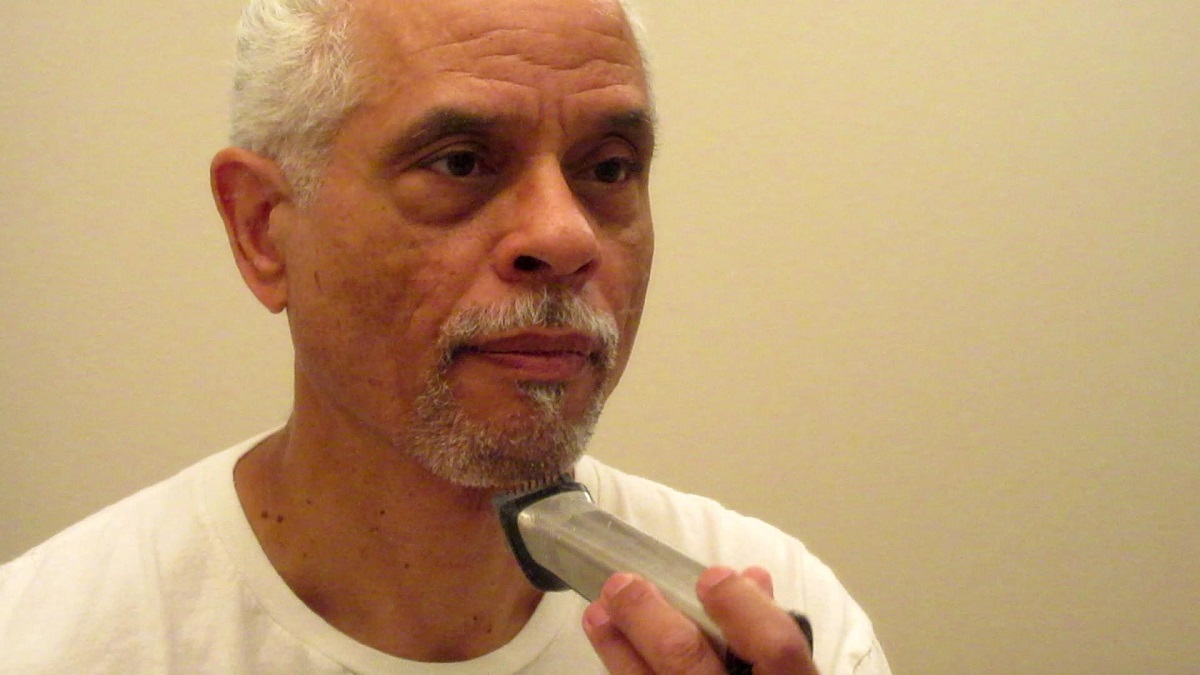
I’ve trimmed it a couple of times; I have a beard trimmer with a set of guards. I’ve got some bare spots, like a lot of guys. We saw a YouTube commercial about a product called beard growth oil. The guy said it covered his “potholes” in no time.
All the beard kits have about the same items. There’s beard shampoo, beard balm, and beard oil. They can have fragrances, like peppermint and eucalyptus or sandalwood. A lot of them seem to have infusions of things like avocado and papaya. The makers are big on natural stuff.
I’m just trying to grow a beard, not make a salad.
The kit has a comb, a brush, and scissors. I think the brush bristles are made of boar hairs. I wonder what’s special about boar hairs. Some of the kits come with beard growth oil and even a little mini roller to roll it into the hair roots. Some guys swear by it. I can’t help laughing when I think about it. And there are a large number of positive reviews about the kits in general.
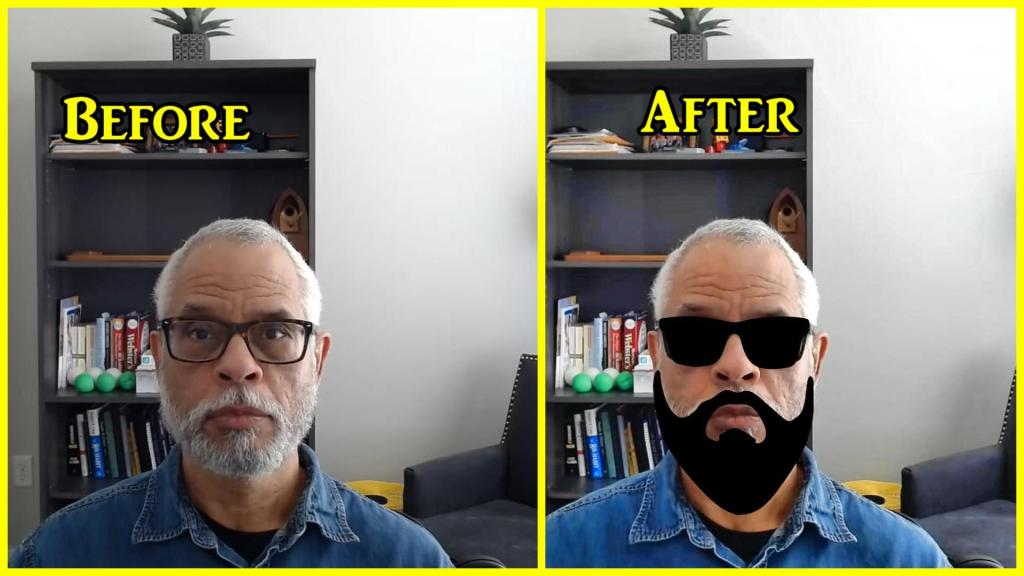
I’m not sure what I would look like after beard growth oil. I might have a totally different appearance. If the kit comes with hair coloring, I might end up looking a little sinister.
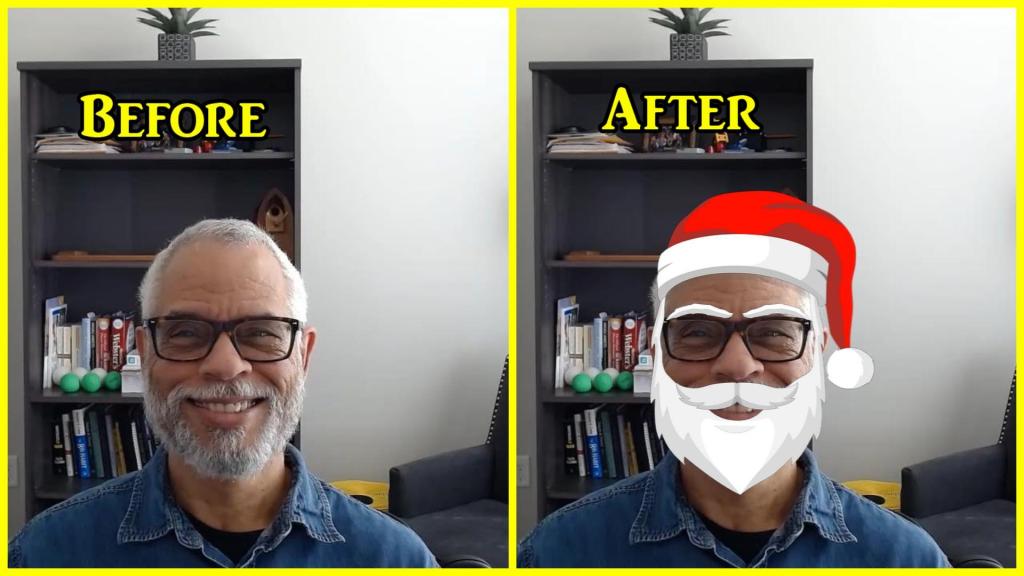
On the other hand, I might resemble a department store Santa Claus. I’m not looking for the job.
I’m not sure what’ll happen with this. Until now, I have tended not to mess with my facial hair other than to snip away the stragglers and fly-aways.
I follow some guidelines. I trim the mustache away from my upper lip. I have no interest in tasting my meals long after I’m done eating. I shave neck hairs above my Adam’s apple. That doesn’t mean I’m uppity about neck beards. I just don’t like a scratchy neck.
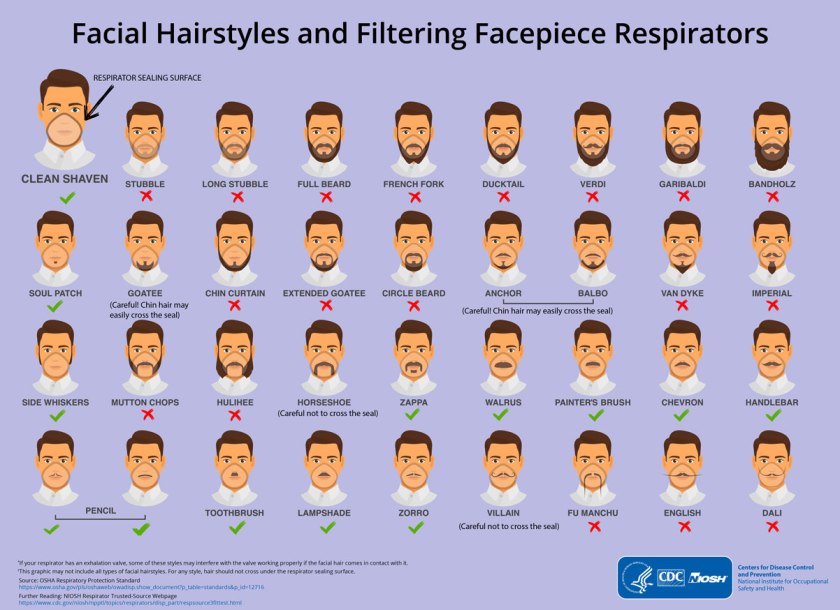
I’ve seen the news warning us about how facial hair can interfere with the N95 respirator mask seal. It’s connected with the concerns about the novel coronavirus which you no doubt have heard unless you live under a rock. The Centers for Disease Control (CDC) reiterated their warning about how certain beard and mustache styles can interfere with the recommended mask for helping protect you from infection.
As a health care worker, I’m required to be fit tested annually for the N95 respirator mask. “Fit” is not an acronym, by the way; it just refers to how well the mask fits. It’s a twenty-minute test in which a technician or nurse uses a special machine to check for how tight the seal is around the mask in order to ensure protection from airborne particles, including viruses.
I passed my fit test.
I saw the graphic yesterday of all the different facial hair styles that pass muster—most of them don’t. I’ve never heard of half of them. Believe it or not, I didn’t know that little tuft of hair under my lower lip is called a “soul patch.” I guess maybe I’m the one who’s been living under a rock.
I’ve read that some experts think that any facial hair is bad and recommend that you have to be clean shaven. I think some places won’t even allow fit testing on anyone who has facial hair.
However, I found a PubMed study published in the latter part of 2018 which showed that you can pass a fit test “even with substantial facial hair in the face seal area;” the abstract is below:
Floyd, E. L., et al. (2018). “Influence of facial hair length, coarseness, and areal density on seal leakage of a tight-fitting half-face respirator.” J Occup Environ Hyg 15(4): 334-340.
BACKGROUND: OSHA regulations state that an employer shall not permit tight-fitting respirators to be worn by employees who have facial hair that comes between the skin and facepiece seal. Studies have shown that facial hair in the face seal zone can increase penetration and decrease the fit factor (FF), although the relationship between the amount and characteristics of facial hair and the increase in penetration is not well quantified. This article examines the influence of facial hair length, areal density, and coarseness on FF for one model of half-face elastomeric negative-pressure air purifying respirator. APPROACH: Quantitative fit tests (QNFT) were performed on 19 subjects with beards initially 0.500-in long and subsequently trimmed to 0.250, 0.125, and 0.063 in, then after a razor shave. Three fit tests were performed at each of the 5 lengths, for 285 total tests. The average diameter and areal density of cheek and chin hair were measured. Penetration was modeled as a function of hair length category, beard areal density, and hair coarseness. RESULTS: FF decreased with beard length, especially beyond 0.125 in. However, passing FF scores were achieved on all tests by all subjects at the smooth shave and 0.063 in conditions, and 98% of tests were passed at 0.125 in; seven subjects passed all tests at all conditions. Chin and cheek areal densities were significantly different and were only weakly correlated. Beard hair diameters were normally distributed across subjects (mean 76 microm, standard deviation 7.4 microm). Beard length and areal density, but not coarseness, were statistically significant predictors of fit using an arcsine transformed penetration model. FF decreased with increasing beard length, especially beyond 0.125 in, although FF with a “stubble” beard did not differ significantly from a smooth shave. FF also decreased with increasing areal beard hair density. CONCLUSION: Beard length and areal density negatively influence FF. However, tight-fitting half-face negative-pressure respirator fit tests can achieve adequate fit factor scores even with substantial facial hair in the face seal area.
I generally have a stubble circle beard. When I don’t use the stubble guard on my trimmer for a while, I supposed my chin whiskers could lead to what some have called the “goatee leak.”
The CDC web site posted a funny article in 2017 on their web site entitled, “To Beard or not to Beard? That’s a good Question!” That facial hair chart is in the article. They also remind you check your mask seal every time you use it, no matter what your facial hair status is.
There’s a pretty funny YouTube video about this issue. The title is “The Bearded Guide to N95 Respirator Fit Testing.” My video is below.




 Go Retire Psychiatrist