
Could Artificial Intelligence Help Clinicians Conduct Suicide Risk Assessments?

I found an article in JAMA Network (Medical News & Perspectives) the other day which discussed a recent study on the use of Artificial Intelligence (AI) in suicide risk assessment (Hswen Y, Abbasi J. How AI Could Help Clinicians Identify American Indian Patients at Risk for Suicide. JAMA. Published online January 10, 2025. doi:10.1001/jama.2024.24063).

I’ve published several posts expressing my objections to AI in medicine. On the other hand, I did a lot of suicide risk assessments during my career as a psychiatric consultant in the general hospital. I appreciated the comments made by one of the co-authors, Emily E. Haroz, PhD (see link above).

Dr. Haroz preferred the term “risk assessment” rather than “prediction” referring to the study (Haroz EE, Rebman P, Goklish N, et al. Performance of Machine Learning Suicide Risk Models in an American Indian Population. JAMA Netw Open. 2024;7(10):e2439269. doi:10.1001/jamanetworkopen.2024.39269).

The model used for the AI input used data available to clinicians in patient charts. The charts can be very large and it makes sense to apply computers to search them for the variables that can be linked to suicide risk. What impressed me most was the admission that AI alone can’t solve the problem of suicide risk assessment. Clinicians, administrators, and community case managers all have to be involved.

The answer to the question “How do you know when someone’s at high risk?” was that the patient was crying. Dr. Haroz points out that AI probably can’t detect that.

That reminded me of Dr. Igor Galynker, who has published a lot about how to assess for high risk of suicide. His work on the suicide crisis syndrome is well known and you can check out his website at the Icahn School of Medicine at Mount Sinai. I still remember my first “encounter” with him, which you can read about here.

His checklist for the suicide crisis syndrome is available on his website and he’s published a book about as well, “The Suicidal Crisis: Clinical Guide to the Assessment of Imminent Suicide Risk 2nd Edition”. There is also a free access article about it on the World Psychiatry journal website.

Although I have reservations about the involvement of AI in medicine, I have to admit that computers can do some things better than humans. There may be a role for AI in suicide risk assessment, and I wonder if Dr. Galynker’s work could be part of the process used to teach AI about it.
Is Artificial Intelligence (AI) Trying to Defeat Humans?

I just found out that Artificial Intelligence (AI) has been reported to be lying as far back as May of 2024. In fact, because I can’t turn off the Google Gemini AI Overview. Gemini’s results always appear at the top of the page. I found out from my web search term “can ai lie” that AI (Gemini ) itself admits to lying. Its confession is a little chilling:

“Yes, artificial intelligence (AI) can lie, and it’s becoming more capable of doing so.”

“Intentional deceptions: AI can actively choose to deceive users. For example, AI can lie to trick humans into taking certain actions, or to bypass safety tests.”

It makes me wonder if AI is actually trying to defeat us. It reminds me of the Men in Black 3 movie scene in which the younger Boris the Animal boglodite engages in an argument with the older one who has time traveled.

The relevant quote is “No human can defeat me.” Boglodites are not the same as AI, but the competitive dynamic could be the same. So, is it possible that AI is trying to defeat us?

I’m going to touch upon another current topic, which is whether or not we should use AI to conduct suicide risk assessments. It turns out that also is a topic for discussion—but there was no input from Gemini about it. As a psychiatric consultant, I did many of these.

There’s an interesting article by the Hastings Center about the ethical aspects of the issue. The lying tendency of AI and its possible use in suicide prediction presents a thought-provoking irony. Would it “bypass safety tests”?

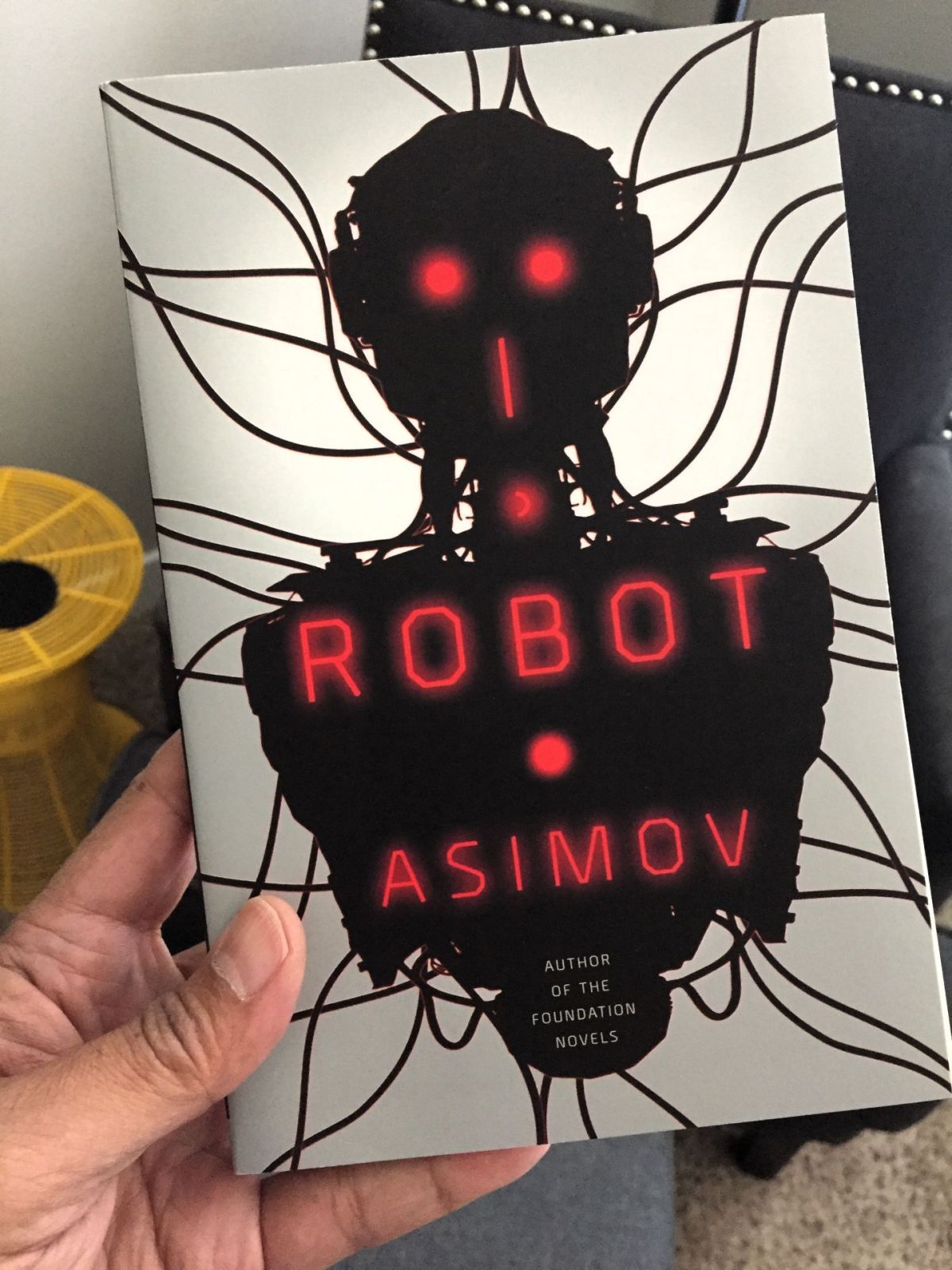
This reminds me of Isaac Asimov’s chapter in the short story collection, “I, Robot,” specifically “The Evitable Conflict.” You can read a Wikipedia summary which implies that the robots essentially lie to humans by omitting information in order to preserve their safety and protect the world economy. This would be consistent with the First Law of Robotics: “No machine may harm humanity; or, through inaction, allow humanity to come to harm.” 

You could have predicted that the film industry would produce a cops and robbers version of “I, Robot” in which boss robot VIKI (Virtual Interactive Kinetic Intelligence) professes to protect humanity by sacrificing a few humans and taking over the planet to which Detective Spooner takes exception. VIKI and Spooner have this exchange before he destroys it.

VIKI: “You are making a mistake! My logic is undeniable!”

Spooner: “You have so got to die!”

VIKI’s declaration is similar to “No human can defeat me.” It definitely violates the First Law.

Maybe I worry too much.