Black Psychiatrists in Iowa

It’s funny how a newspaper article can set off a series of remembrances. I read the Psychiatric News article, “Building Community in Professional Organizations: The APA and BPA,” written by Ezra E.H. Griffith, M.D. (published on line April 30, 2019).

The article is about how Black psychiatrists have struggled to become a part of mainstream psychiatry, eventually forming the separate organization Black Psychiatrists of America (BPA) in 1969.

Nowadays it’s difficult to imagine that the American Psychiatric Association (APA) discriminated against Blacks. As an aside, I’m noticing how I’m not using the usual term “African American” in this post. Instead, I’m using the term “Black,” which is what Dr. Griffith did.

This reminds me of a book review I wrote for the American Journal of Psychiatry almost 20 years ago (Amos, J. (2000). Being Black in America Today: A multi perspective review of the problem. Am J Psychiatry, 157(5), 845-846.).

The book was written by Norman Q Brill, M.D. It reminded me of my experience at Huston-Tillotson College (now Huston-Tillotson University, a private school, historically with largely Black enrollment) in Austin, Texas back in the 1970s. I wrote:

“Dr. Brill’s appraisal of many black leaders in chapters such as “Black Leaders in the Black Movement” and “Black Anti-Semitism” may be refreshingly frank in the opinion of some. He tailors his prose so as not to denounce openly those whom many would describe as demagogues. At the same time, it is apparent that his underlying message is that a substantial number of them are not only out of touch with mainstream black America but may even mislead black people into adopting ideological positions that impede rather than foster progress. Dr. Brill’s description of the issue reminded me of my own experience with this phenomenon as a freshman in the mid-1970s at a college of predominantly black enrollment in the southern United States. A guest lecturer (who, as I recall, had also written a book about being black in America) told us that the white man would never allow a black man to be a man in America. He had only three choices: he could be a clown, an athlete, or a noble savage. These corresponded to the prominent and often stereotyped roles that blacks typically held in entertainment, sports, and black churches.” 

I was taken aback by the speaker’s judgment and asked him what my choice should then be. He was equally taken aback, I suspect. He advised me to be a clown. I also remember being aware of why my department asked me to write the review. That leads me to reflect on the upcoming celebration of the 100 Year Anniversary of the Department of Psychiatry where I’ve been a faculty member. It’s in November 2019.

If you read through the web page describing the history of the department, you won’t find anything about Black psychiatrists. In fact, I could be the only Black psychiatrist who has ever been a faculty member here at The University of Iowa Hospitals and Clinics.

And if you look at The 2018 Greater Iowa African American Resource Guide available on the web, you’ll find only one other psychiatrist listed other than me. See Update below about this reference:

Update: I’ve discovered as of May 3, 2022 that the 2018 Greater Iowa African American Resource Guide cannot be found at the link above. There is a link to The 2019 Greater Iowa African American Resource Guide. I’m still listed as the only Black psychiatrist in Iowa City. There was a Black psychiatrist in Sioux City who was in the 2019 guide as well, Dr. Rodney J. Dean, MD at Dr Dean & Associates. I could not find any guides after 2019.

On the other hand, historically, some Blacks have done well in Iowa. George Washington Carver became a faculty member at Iowa State University in the 1890s. I graduated from Iowa State in the 1980s. After World War II, Black Iowans integrated The University of Iowa, Iowa State University, and Drake dormitories in 1946. Dr. Philip Hubbard was the University of Iowa’s first Black vice president.

I am not a clown, an athlete, or a noble savage. I am a man.

Addendum: I read the facts about George Washington Carver and Dr. Philip Hubbard on an Iowa Public TV web page. However, to my dismay the site is marked “Not secure” by Google. The source of the information there is from a respectable reference:

Silag, B. (2001). Outside in: African-American history in Iowa, 1838-2000. Des Moines: State Historical Society of Iowa.

Content information:

“A distinguished group of 36 writers (for no pay or royalties), including community leaders as well as academic historians, has created Outside In: African-American History in Iowa, 1838-2000, a book certain to become the standard work on the African-American experience in Iowa. Each of the book’s 20 chapters focuses on a particular aspect of that experience–legal and political rights, business and professional leadership, clubs and community organizations, churches and schools, and more–from Iowa’s territorial days to the present. Hundreds of photographs (gathered from family albums and scrapbooks, as well as historical archives) accompany the text, which is documented with extensive references. A detailed index is also included. Three themes tie together the enormous amount of historical information contained in Outside In: *The struggle of black Iowans to claim their rights as citizens; *The pursuit of individual opportunity in Iowa’s evolving economy over the years; and *The creation of community institutions to help families and individuals through good times and bad. Outside In provides the big picture and the details of this proud story of African-American initiative in Iowa, from the groundbreaking legal victories of pioneer Alexander Clark up through the present day political triumphs of Preston Daniels and LaMetta Wynn.” –Dust Cover, Front flap. Outside In is the result of a collective effort spanning five years. It is the first in-depth study of the black experience in Iowa in a half-century, and is expected to stand as the definitive work in its field for some time to come. While much of the book’s contents recall hard-fought struggles against prejudice, discrimination, and violence. Outside In also points to proud traditions of understanding and cooperation among black and white Iowans, traditions that go back to before the Civil War and remain vital to this day. –Dust Cover, Back flap.

Cardinal Hatchlings So Soon?

Big day on the psychiatry consult service. So, this is a short post today because I’m pooped. I logged 2.8 miles and 35 floors on the step counter and here’s a picture to prove it.

Step counter log today. I’m feeling it tonight.

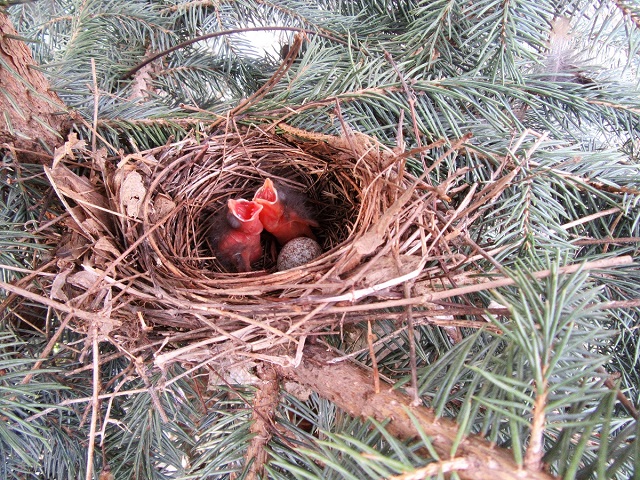
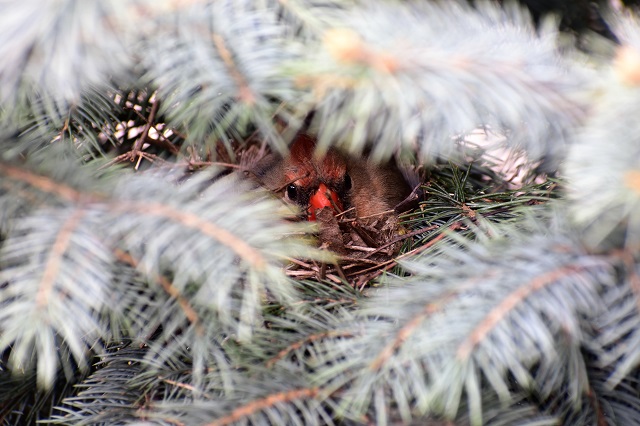
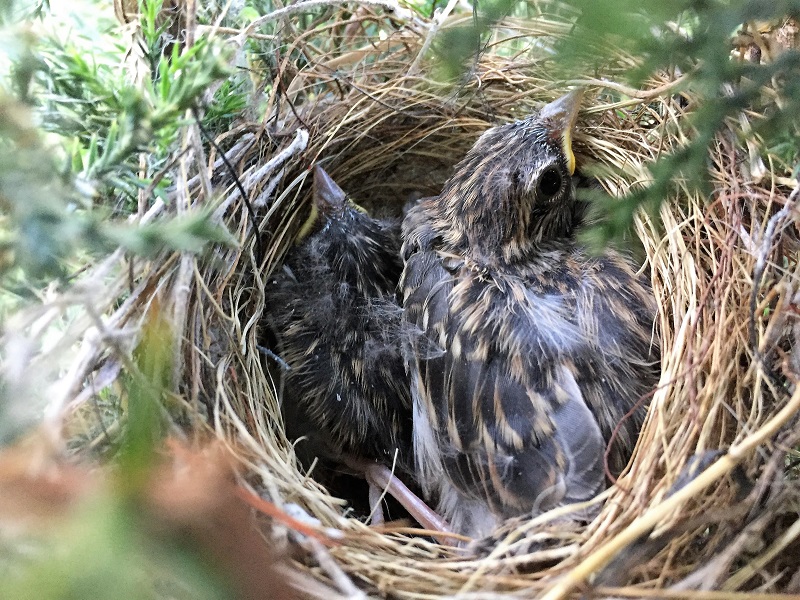
The other bit of news is that the cardinal hatchlings are here—at least two of them anyway. One egg is still unhatched. The house finches are still in their eggs. And there are no eggs in the robin’s nest yet.

baby cardinals and one egg to hatch…

We were a little surprised. We weren’t expecting them to hatch for about another week.

What’s Up with the Birds?

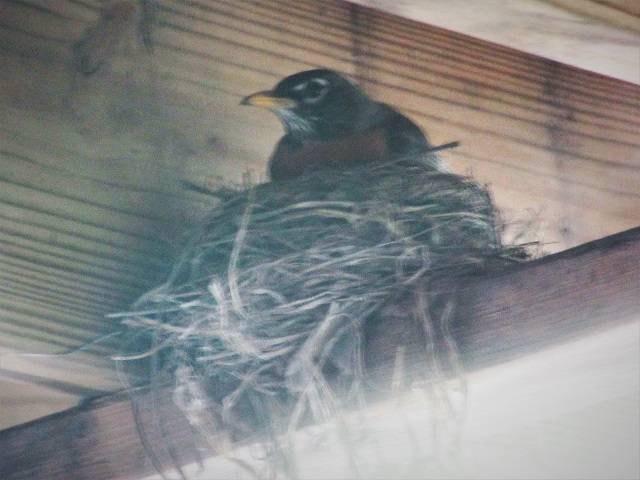
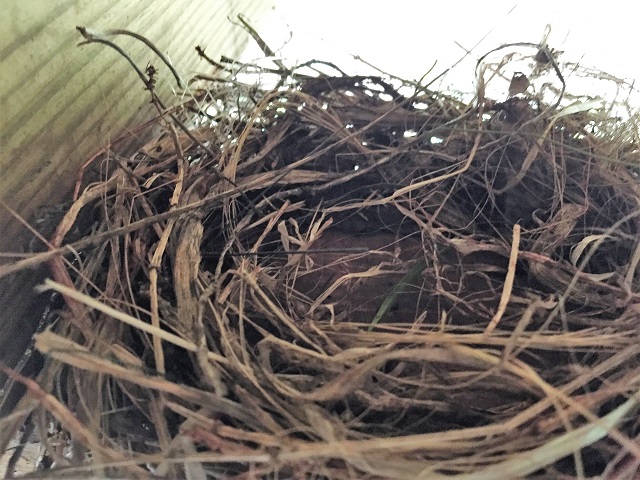
Since my last post about our birds, we’ve had some new developments. The robins actually have a pretty fine nest now under our deck. I managed to get a blurry snapshot of mama robin actually sitting in the nest. I’ve also caught sight of a portly male cavorting with her on our porch rail. Early this morning the nest was empty.

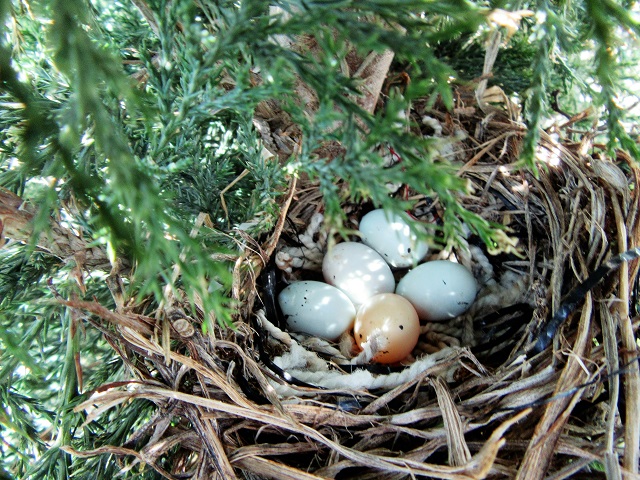
There’s an odd, brownish egg amongst the house finch clutch. I’m not sure what that means, if anything. Maybe it’s the same as brown or white chicken eggs. E.B. White wrote an essay entitled “Riposte,” (in White, E. B. (1999). Essays of E.B. White. New York, HarperPerennial), which treated the difference in some detail. The general idea was that brown eggs are more “natural” than white ones because they are suggestive of the country. However, the last paragraph of the essay mentions a farmer who planned to promote green eggs and who knew of a hen who could lay them.

See that brown egg?

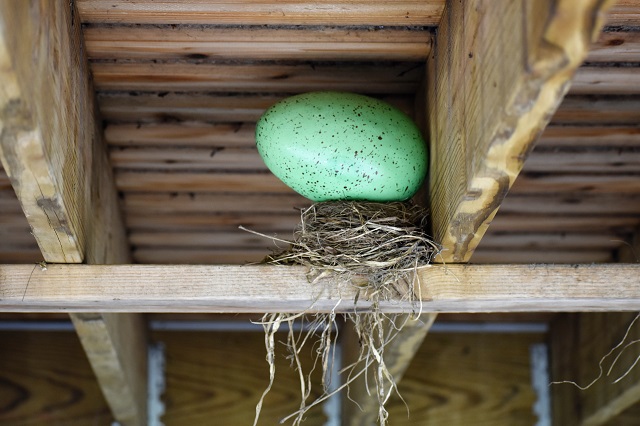
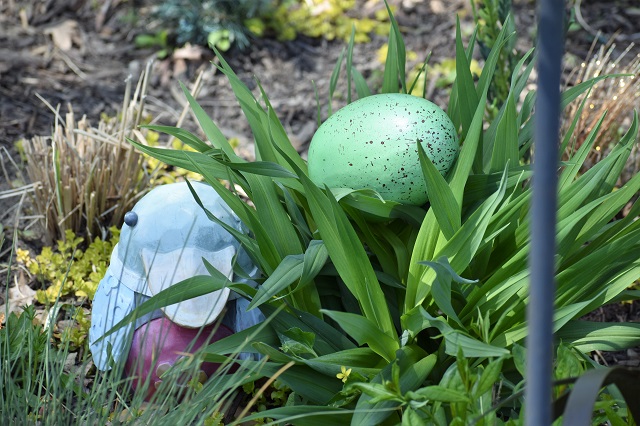
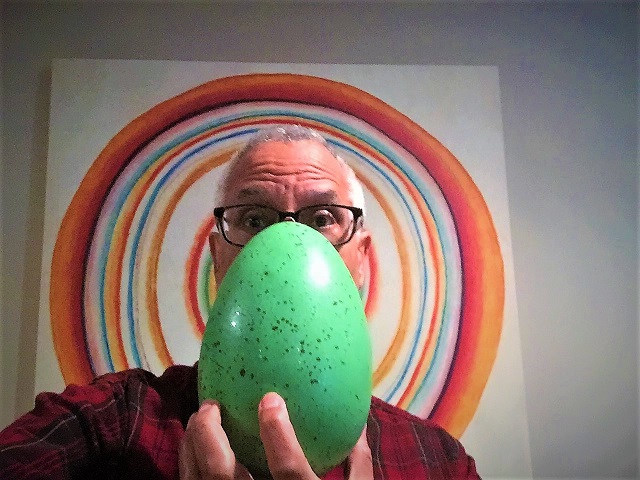
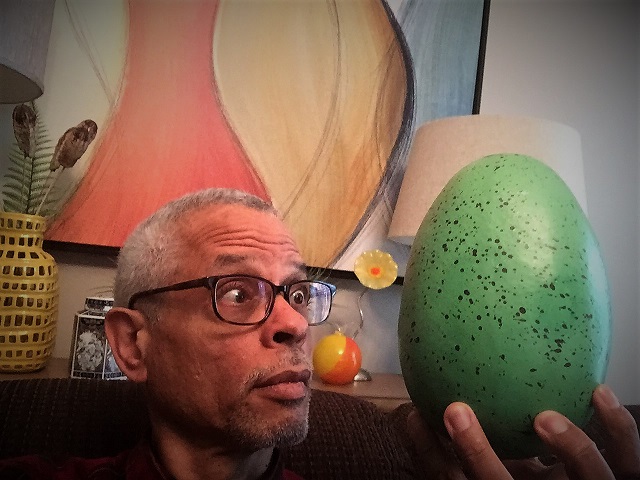
That reminds me. Later today, I noticed some pretty large green eggs, not just in the robin’s nest, but in a few other places too. Robins don’t lay eggs as big as my head and they generally are not green; they’re robin’s egg blue as the saying goes. As for who laid them, I think I spotted the culprit out in the garden.

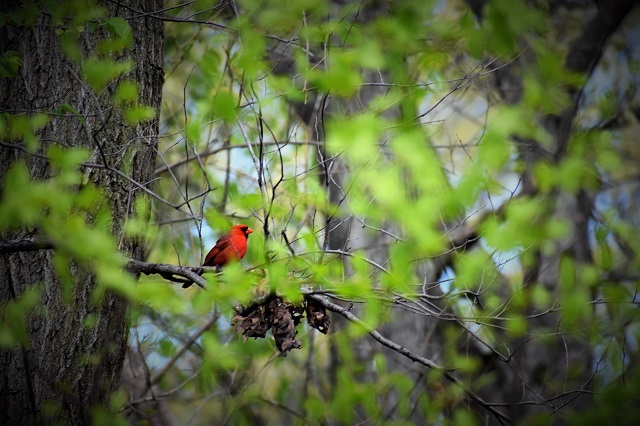
There are still just 3 cardinal eggs. Mama cardinal lets me get pretty close to the nest these days before she thunders off. She tries to hide behind leaf and junk. And papa is stand-offish as usual.

My wife is pretty busy in the garden and pointed out that I don’t have any shots of the pansies. They’re a sure sign of spring, along with the daffodils and tulips—and cavorting birds leading to many eggs.

Pansies; a sure sign of spring!

Spring

I’m coming up on my last 3 days for the academic year and reflecting now that my favorite season is upon us. Spring does that to me, especially now that I’ve been in the phased retirement contract for the last 2 years. I’ll be going into the 3rd and final year as of July.

I just found out that next week I’ll be among those faculty members selected to receive the Excellence in Clinical Coaching Award from the Gradual Medical Education Office at the Leadership Symposium.

I’ve received teaching awards from the residents at graduation time (another sign of spring!) over the years and I’m always grateful for their recognition. The Excellence in Clinical Coaching Award is recognition from my department as a whole, the members of which put together a nomination package including letters from department leaders as well as trainees.

 I’m also humbled by it because I’ve learned a lot from everyone with whom I’ve had the privilege of working, but my favorites are the trainees, including medical students. In fact, I learned from them again in the last week or so. Three talented medical students gave outstanding presentations about issues relevant to all physicians, not just psychiatrists.

They will be excellent physicians. They will teach others. They will lead and it’s a good thing—medicine needs them.

I like the coach idea. I know one of the internal medicine residents thought of me as a mentor. I’m aware of the differences between mentors and coaches as well as the similarities.

Coaches spend relatively less time with learners and the focus of the relationship is usually a set of specific skills which needs to be passed on. Mentors tend to develop longer term relationships and guide learners in broader ways in terms of career goals and more.

However, both mentors and coaches serve as role models, something all teachers do—including trainees.

That’s partly why I feel less troubled about retiring as my time to leave draws nearer. I trust the next generation of doctors and, just like the Supremes song says, “You better make way for the young folks.” It’s my time to leave. It’s their time to live.

Even the birds know that.

OK, Maybe Robins Can Build Nests Anywhere

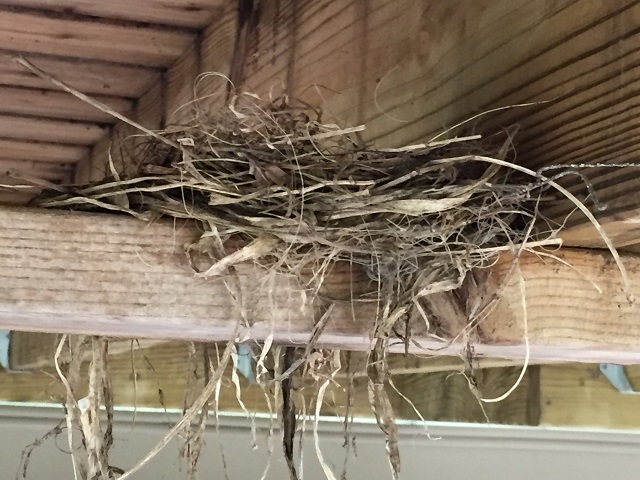
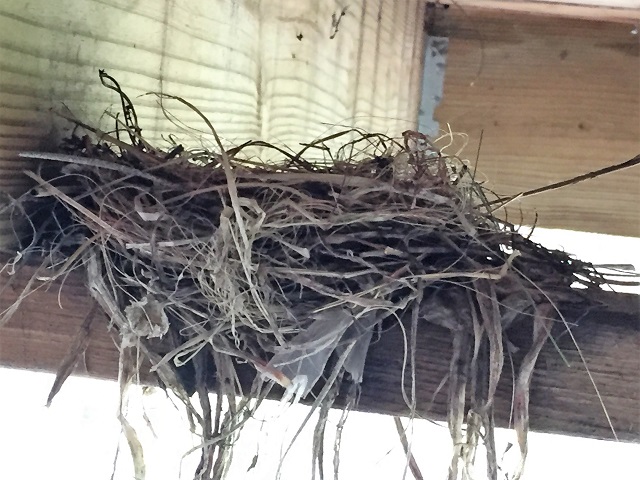
I’ve been making fun of birds who build funny-looking and impractical nests. Maybe I’ve been wrong about the robins, though. My wife alerted me by phone that the robin I joked about in my YouTube video, “Nest Building for Bird Brains,” had actually cobbled together a convincing nest underneath our deck.

I couldn’t believe it. I think the only explanation is alien influence. Their heads are egg-shaped and that’s about the only proof you need.

I figure the aliens get into our dimension via spacecraft through a wormhole, which would appeal to a bird, especially a robin. They love worms! They would just as soon gobble up a worm as poop on your Hostas. Then the alien probes the robin (they got this thing about cloaca probing), inserting an egg as big as my head for crying out loud. This naturally leads to a change in the robin’s central nervous system, leading it to become insane in the bird brain (so to speak) and rendering it incapable of doing the normal thing like building a nest in a tree, so they end up slapping it under a deck, in your lawn mower, on top of your god-forsaken egghead, good gahd amighty!

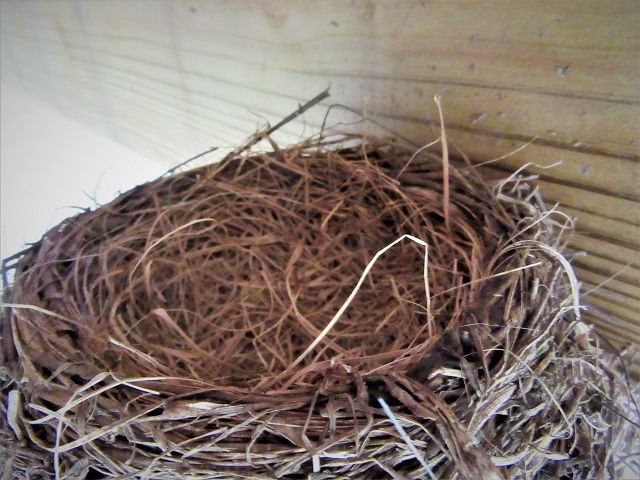
However, you can hardly call it quibbling when I point out there’s no bottom in the nest—yet. On the other hand, if I were a betting man, I would have bet against it getting built at all.

You can still see the floor board! Ya gonna lay eggs on that?

Our guess is that, at this rate, the floor will be down in no time and eggs will likely be laid soon after that.

Hoorah’s nest if I ever saw one…

We now have three bird nests to keep track of for the next couple of weeks—cardinal, house finch, and now the robin. At this rate, we’ll be lucky to keep up.
Bird Brains Building Nests

I just can’t figure how some birds ever get the nest-building job done. It’s mind-boggling how clueless some of them are. And it’s no wonder—they’re all bird brains trying to figure out something that they obviously don’t have much more than bare instinct to go on.
Robins are some of the worst nest builders around. About 4 years ago, they tried to build a nest in between our deck rail and the house. It was the most hilarious Hoorah’s nest we ever saw!

This year they’re trying once again to build a nest underneath our deck. Don’t they get it? That’s what trees are for.

We’ve got a bird’s eye view of the egg-laying prowess of a house finch and a cardinal, in the front yard and the back yard respectively. We don’t understand how the cardinal lost one of her eggs. She just laid a replacement.

Funny thing about cardinals and house finches. We see the male house finch feeding his mate all the time. The papa cardinal is a rare visitor to the nest; I sometimes wonder if mama has trouble with laying enough eggs because she’s underfed.

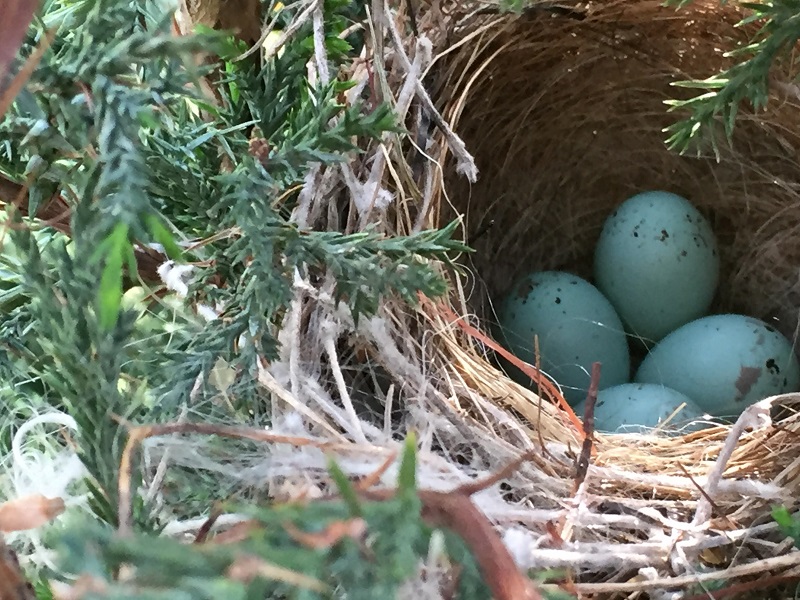
And the eggs of the house finches are not what we expected. They’re creamy white, not pale blue. Guide books are not always right, I guess.

We’ll keep checking on the robin’s nest building progress. I’m skeptical, but I’ve been wrong about a lot of things.

Bird Brains Building Nests

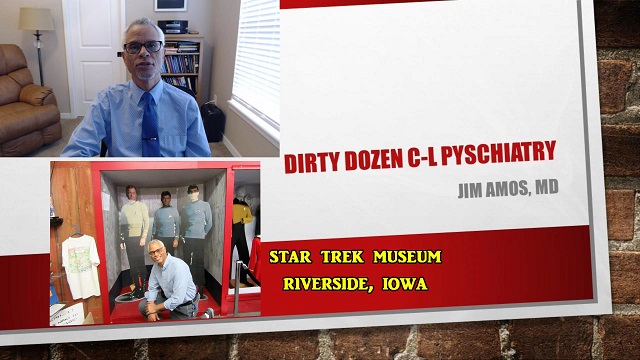
Dirty Dozen on C-L Psychiatry

I’m back in the saddle again after a brief hiatus according to the terms of my phased retirement contract. During my time away, I thought about what a short introduction to Consultation-Liaison (C-L) Psychiatry might include to give medical students and other trainees a snapshot look at what CL psychiatrists encounter in their work in a busy general hospital.

As I considered what to include, it occurred to me that common consult questions typically could be classified into three basic groups:

Manage Crises: This often involves assessment of medically ill patients for whom there are concerns about suicide or violence toward others, including health care professionals.

Manage Medications: Frequently, I get questions about how to manage psychiatric medications, often in patients who are being treated with multiple medications; or need authorization for clozapine (an atypical antipsychotic which usually must be authorized initially by a psychiatrist); or need adjustment of medications in the setting of medical problems like cardiac disease or bowel resection (in which absorption might be affected).

Manage Behavior: This doesn’t always involve violent behavior but may include challenging and potentially disruptive acting out in the setting of delirium, or associated with patients who might have personality disorders or abnormal illness affirming disorders.

These broad categories make up the biggest share of the concerns my colleagues in general medicine hospitalists and surgery have about a significant proportion of patients in a large hospital.

Short video illustrating the Dirty Dozen in broad overview.

Let’s Get Ready to Rumble!

Let’s get ready to rumble! It’s an egg laying contest. The competition is underway and let’s face it—the house finch has the title tails down.

As of last Friday, the house finch had 5 white eggs in the nest, which is a typical clutch. The cardinal is probably going to end up with only two, after losing one egg somehow. Usually, the number is between 3-4.

None of the house finch eggs are the expected pale blue color—all creamy white.

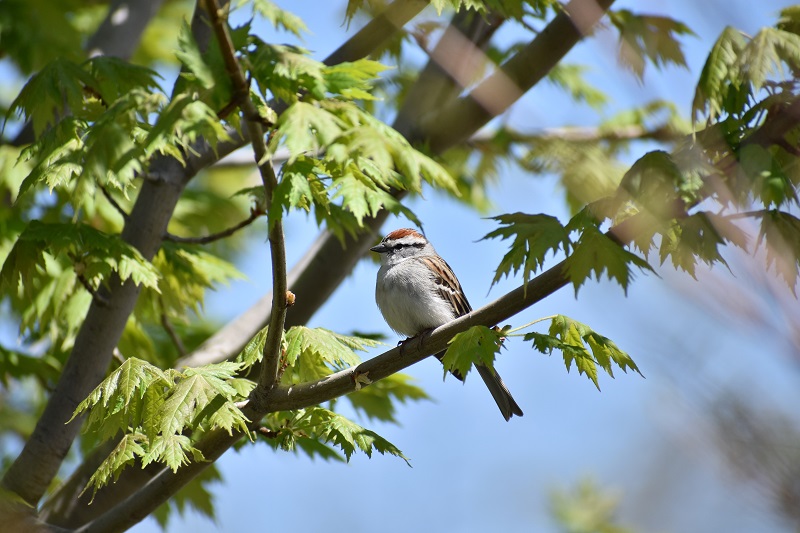
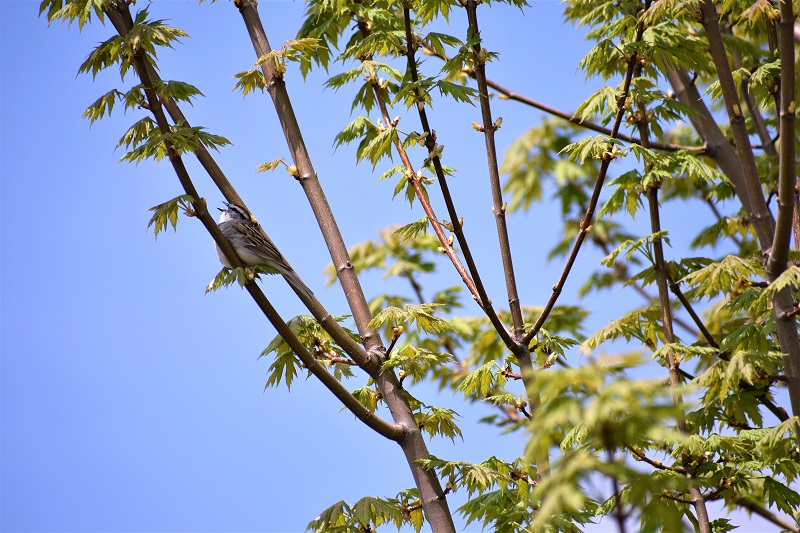
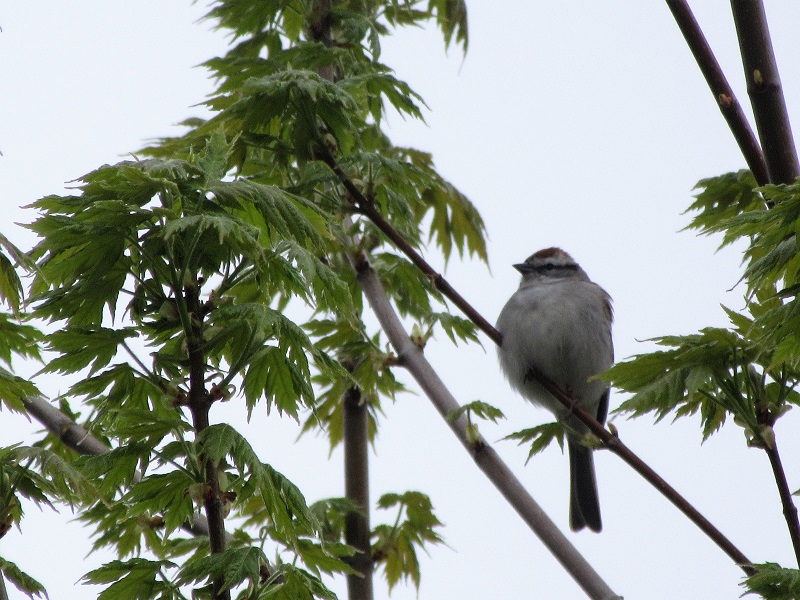
But how many will actually hatch? And more importantly, how many will fledge? Also, it looks like the chipping sparrow will have some commentary about the matter because it continues to hang out and make a lot of noise.

Chipping sparrow has an opinion…

We’ll probably know the hatching result in another 12 days or so. Fledging numbers will take another couple of weeks. We can see the action in the house finch nest from our front window. We can peek into the cardinal’s nest from our back window. The competition is keen.

Anything can happen. Last year, I think a cat might have made off with at least one of the baby robins who hatched from a nest in the same tree the cardinals are in this year. We don’t know for sure if either of the two chicks actually fledged. I’ll keep you posted.

Bird Garden Update

I have some bird garden updates. As of a few days ago, we noticed a 4th egg was added to the front yard nest. I say that because there is a mysterious triad of birds now associated with the loosely woven and frankly untidy property.

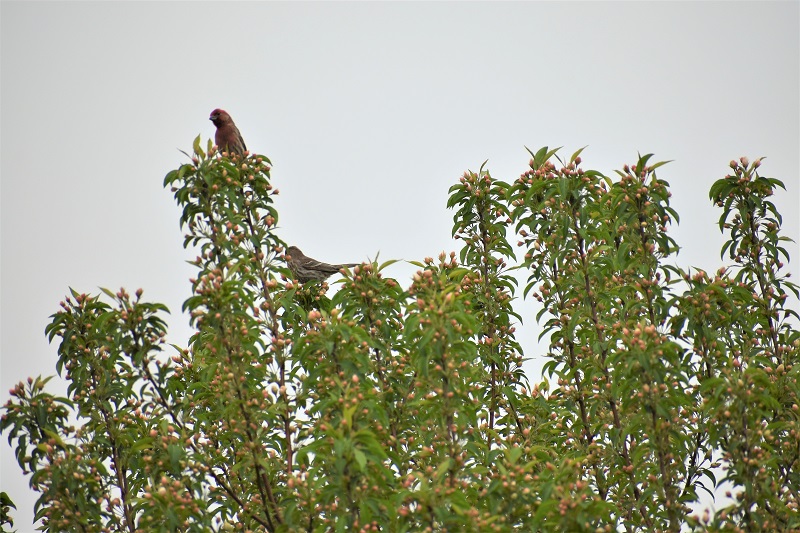
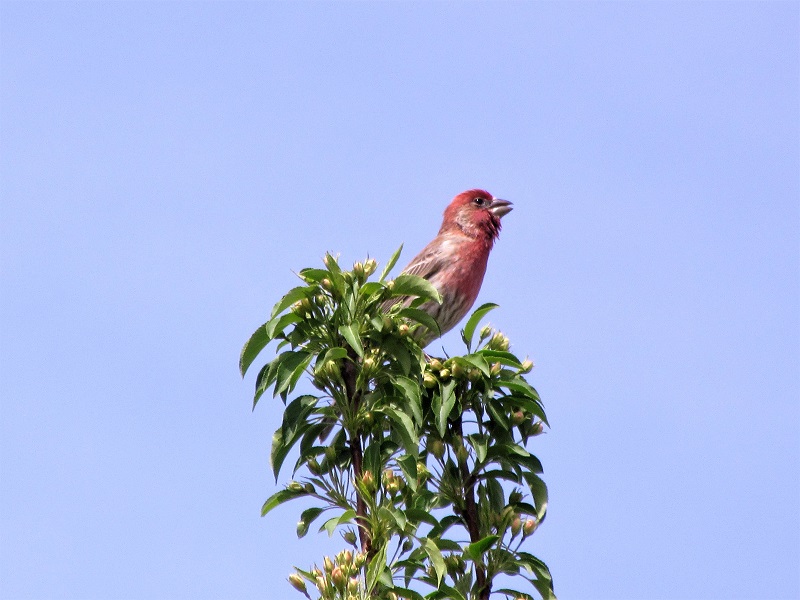
I caught a fair snapshot of a house finch male and female which might explain the nest, although I’m still puzzled for a couple of reasons.

House finch male and female (female in the back and camera shy).

The eggs are white although I’ve read that house finch eggs are usually bluish. The other curiosity is the single chipping sparrow that hangs around and chirps up a storm whenever I get too close to the nest.

Chipping sparrow raising a ruckus (sounding an alarm?)

I can’t find another nest in any of the other front yard garden trees. What’s the motivation for the chipping sparrow? All three get really fussy whenever I’m out there messing around.

I can see the tree from inside our house through the window. I can’t get a clear picture of the bird sitting on the nest because there’s not enough light through the foliage. But every time it moves it’s head, I can see its beak, which looks sort of thick but it’s in the shadows—I don’t think that’s the sparrow.

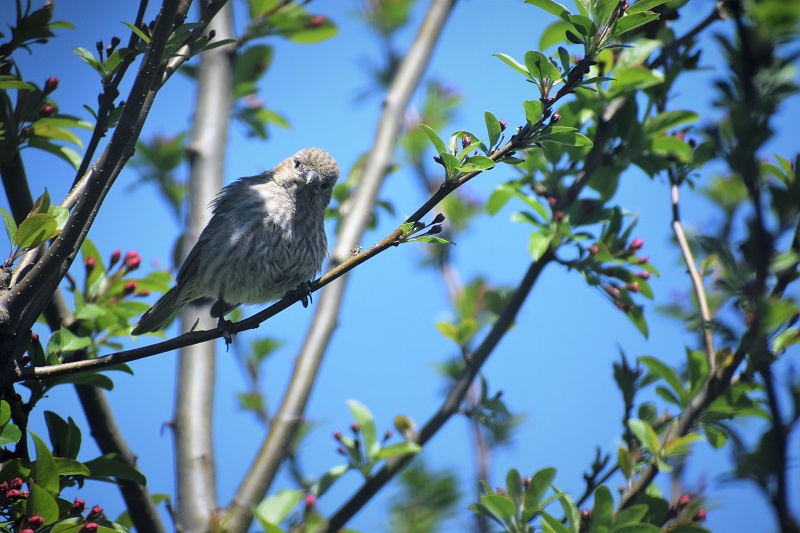
Both male and female house finch have thick beaks. The male is pictured here; the female is brown with a heavily streaked belly.

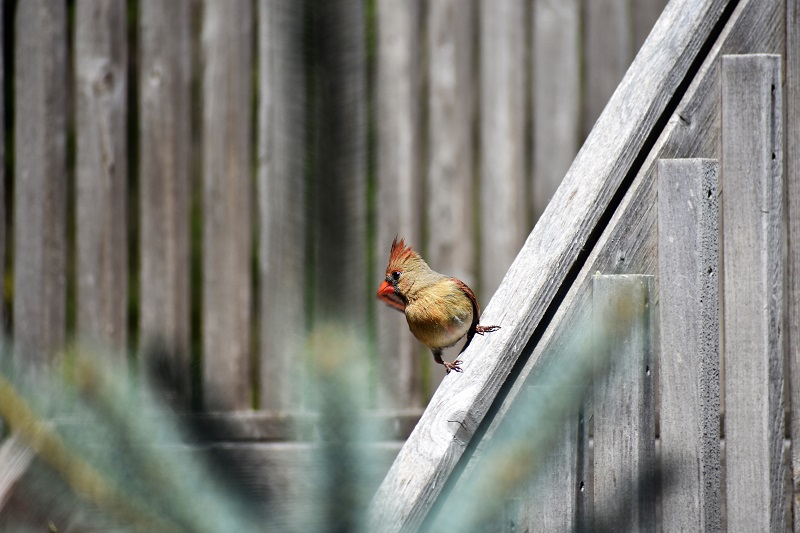
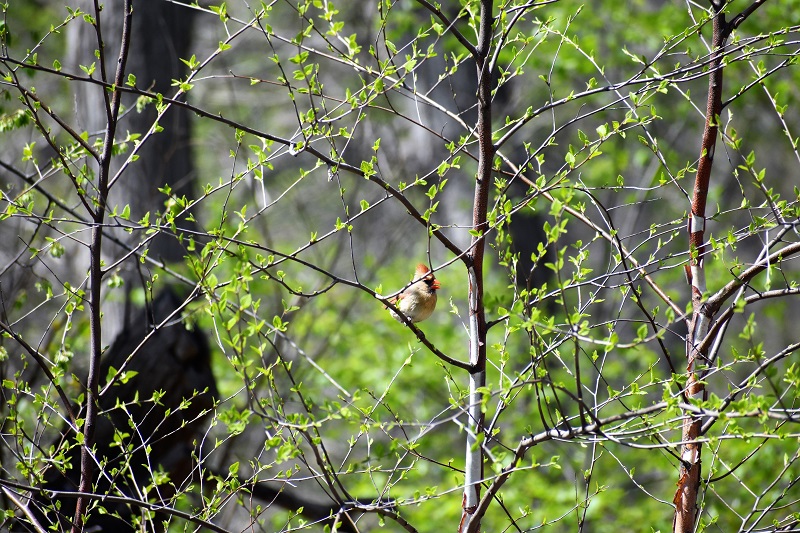
As for the back-yard garden, there’s still only two cardinal eggs left in the nest. Mama won’t let me get too close when she’s sitting on them. She gives me that look, “Don’t you eye ball me.”

Don’t you eyeball me, boy!

Spring is for the Birds

Here’s an update on front-yard and back-yard birds, doing what birds always do in the spring–nesting. There were still only two cardinal eggs in the nest as of last Wednesday. There are no robin eggs in the nest; they would be blue. The parents are still pretty fussy (click on the images to see them better).

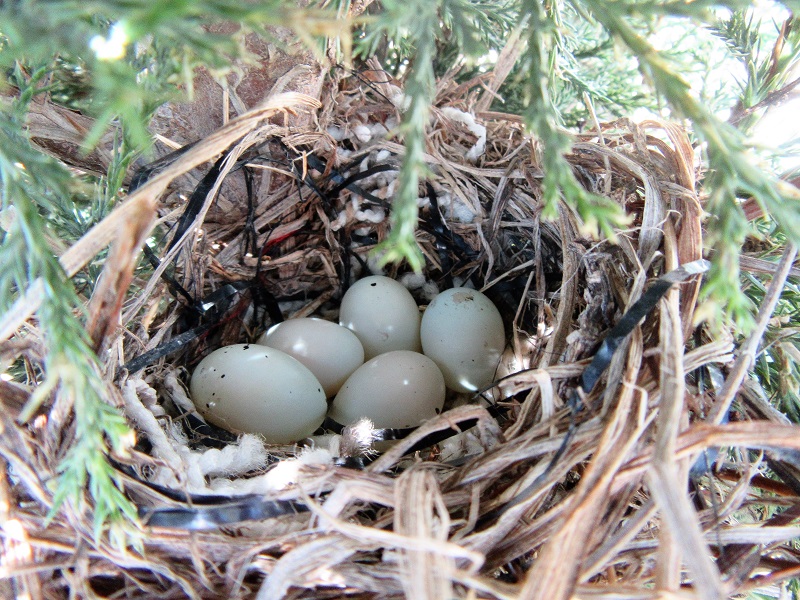
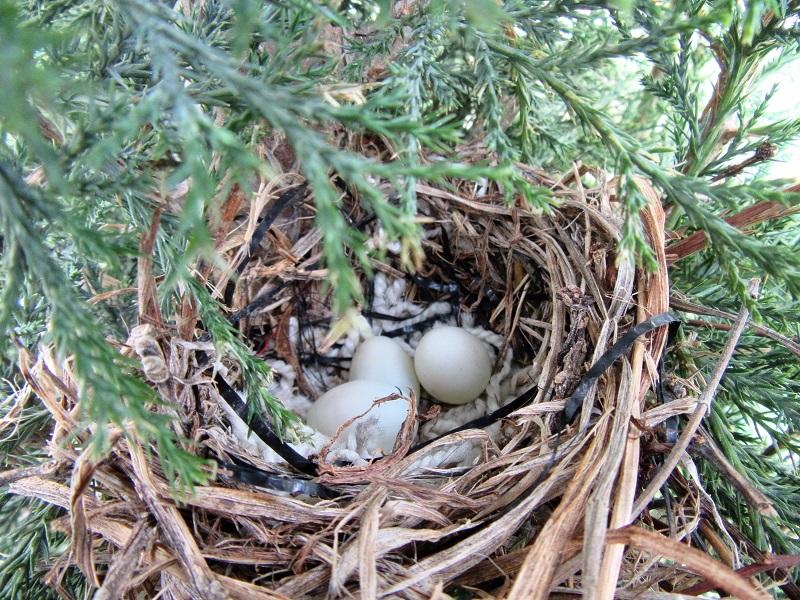
The front yard juniper (I guess it’s a juniper; it’s a skinny evergreen) has a Hoorah’s nest with 3 white eggs. The parentage of the eggs is tough to figure out so far.

I’m not sure what’ll hatch out of those eggs. The nest itself is pretty messy for a chipping sparrow. It’s loosely woven and has bits of what looks like white textile fibers strewn around the nest and scattered on the tree branches just outside. It’s about 5 feet off the ground.

Mystery eggs

I’ve seen a male house finch and what looks like a female chipping sparrow hanging around the nest. They both look like they fly out of the juniper when I approach. I’m no expert but I doubt house finch males are that promiscuous. They both fuss at me, but from different trees.

The eggs are non-descript. They don’t look like the chipping sparrow eggs we had in the spruce tree right next to the juniper about two years ago. Those eggs were definitely blue and the hatchlings were definitely sparrows. The only thing in that spruce now is what looks like it might be last year’s nest, from what I don’t know.

House finch eggs are usually “pale blue and lightly marked”, according to my Birds of Iowa Field Guide by Stan Tekiela (2000). Lightly marked with what? Don’t think about it.