

The graphic below is from University of Iowa Health Care. It’s a reminder of what you can do after you’ve been fully vaccinated for COVID-19. You can review CDC guidance here.


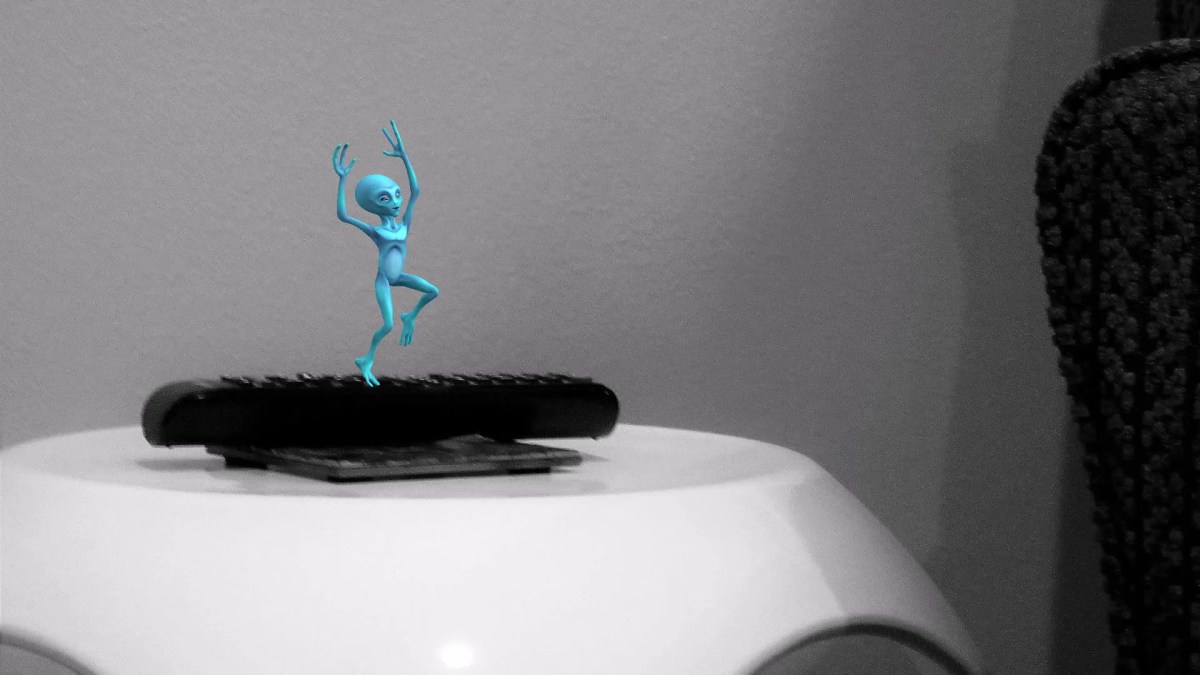
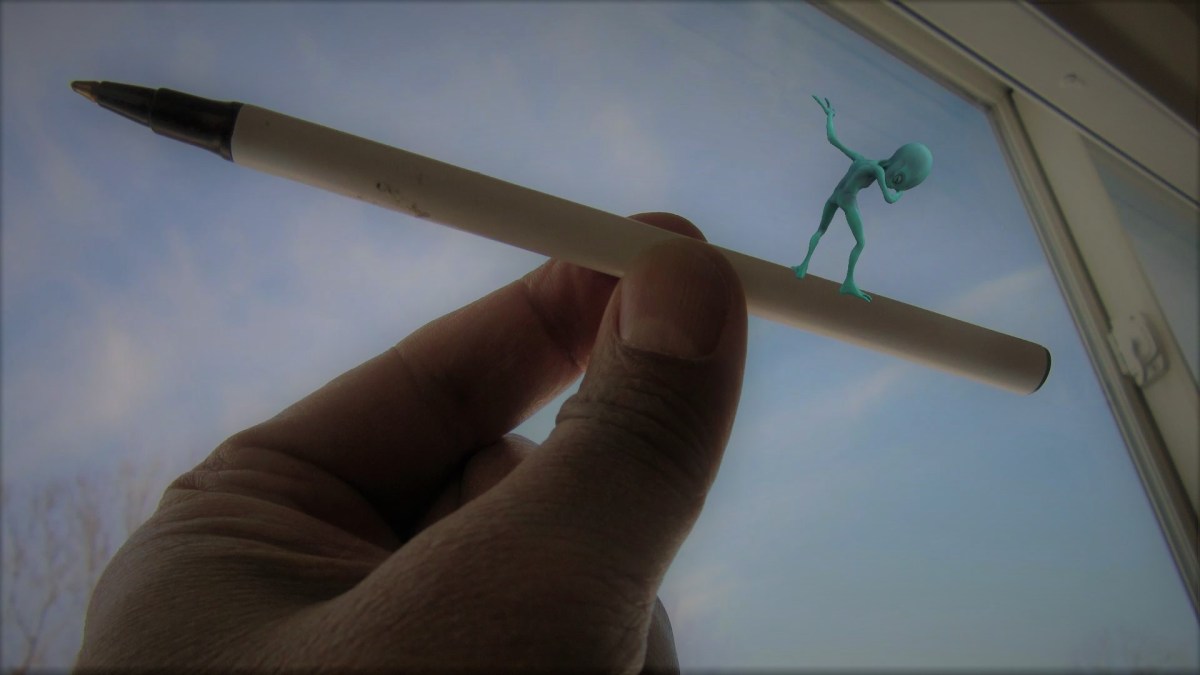
Remember my post last month on dancing aliens causing my TV remote to make clicking noises all by itself? Well, despite changing batteries, the clicking noises returned, only a couple of days later. The thing clicks even when I’m holding it in my hand but not pressing any buttons. I don’t know what causes it, but the probability that aliens are involved is really low.
That reminds me of the upcoming government report on UFOs this month—which will probably be delayed and not contain any evidence proving aliens exist. I used to say that I can’t prove a negative, meaning that I can’t prove the non-existence of things like aliens, Bigfoot, and tasty fruitcake.
It turns out I’m probably wrong about that. There are philosophers out there who say you can prove a negative, although not with absolute certainty, but through induction. One of them is Dr. Steven D. Hales, who wrote “Thinking Tools: You Can Prove a Negative” in 2005. Dr. Hales is Professor and Chair of Philosophy at Bloomsburg University in Bloomsburg, PA. It was published in eSkeptic, the email newsletter of the Skeptics Society and Think (vol. 10, Summer, 2005) pp. 109-112.
I got by in my freshman philosophy class in college, but I can follow Dr. Hale’s article fairly well. My college professor worked really hard explaining inductive reasoning. Dr. Hales does it effortlessly and he has a pretty good sense of humor.
Therefore, inductively speaking, there is no such thing as tasty fruitcake.
We have a robin’s nest in our back yard with 3 nestlings. I can hear Momma robin nearby, nervous about me and my camera. I’m careful not to disturb them too much, not to stay too long. I hope they make it. I hope for a lot of things like civility, peace, love, acceptance. It should be alright to hope for this one little thing extra—that baby robins grow up.
Music credit:
Midsummer Sky by Kevin MacLeod is licensed under a Creative Commons Attribution 4.0 license. https://creativecommons.org/licenses/by/4.0/
Source: http://incompetech.com/music/royalty-free/index.html?isrc=USUAN1100158
Artist: http://incompetech.com/
There’s this great line in the movie, “Close Encounters of the Third Kind.” After Roy Neary (played by Richard Dreyfuss) is captured by the military and he has been briefed by scientists, he gets a little upset and says, “Well I got a couple of thousand goddamn questions, you know. I want to speak to someone in charge. I want to lodge a complaint. You have no right to make people crazy!”
I feel like Roy about this UFO thing that’s now being called UAP (Unidentified Aerial Phenomenon). The UAP Task Force is supposed to give some kind of report on this sometime this month. Reports of UFOs (I’m going to keep using that term) have been going on for years and they’ve been getting more complicated lately as stuff gets declassified about them.
I don’t know what I’m going to do about the UAP Task Force report. I have trouble understanding small stuff, like dehumidifiers for example. Sena bought one the other day, one with a 40-pint capacity. Sena asked the salesman how many pints there are in a gallon. The guy asked his smartphone the question—and then said “2”.
OK, I admit I’m no whiz kid in math. But even I could get the right answer by duplicating what he did. I asked my smartphone, for the first time, mind you. I had never tried that feature. It clearly and audibly gave the correct answer of 8 pints in a gallon. I’m not sure how that got messed up at the store. Sena also asked if the dehumidifier had a filter. The salesman said he did not think so. There is a very large, flat filter visible to the naked eye on the rear of the unit that just snaps in and out of place.
And don’t get me started about the operating instructions for the timer on it. I know it’s not a clock. The instructions tell us how to program the timer to turn the thing on and off by using the arrow buttons. They go on at length about how to program it by pressing the Timer OFF or Timer ON, either when the unit is off or on. They tell you to press the arrow buttons left or right to increase or decrease the Timer by 0.5 or 1.0 hour increments up to 24 hours. You set both Timer OFF and Timer ON and the green lights come on, indicating it’s programmed.
What they don’t tell you is that you can’t program multiple time intervals. You can make it come on and go off for one interval. It does that by counting “down the time remaining until start.” What they also don’t tell you is that you need to set both by using time zero as the starting point. If you set Timer ON for 0.5 hours FROM NOW (say time zero is 7:30, meaning you want it to come on at 8:00), and you want the unit to turn itself off after 4 hours, you need to set Timer OFF counting from 7:30, not 8:00.
A clock would have been nice—and clear instructions as well.
So, I want someone with authority to give me the straight story on UFOs. I want to know who’s in charge here. I have my doubts that I’m going to get straight answers if you can’t get them from a guy selling dehumidifiers who doesn’t even known how to use his own smartphone.
Anyway, I found this website called Metabunk and it debunks a fair amount of UFO phenomena. It’s run by Mick West. I can tell it’s fascinating, but I really don’t understand much of what he and others discuss. It’s over my head (of course, since almost everything is). A lot of the language is technical since a lot of what we’re seeing and hearing about UFOs can be misunderstood because, let’s face it, some of this stuff is faked and some of it is ordinary. There are many camera, CGI, and puppet-type tricks which can be applied to give the impression of strange, alien spacecraft. See the extensive post, “How Do You Stage UFO Photos and Videos? Let Us Count the Ways.”
But Metabunk isn’t just about debunking; it’s also about understanding science and technology. When I watch Ancient Aliens or similar TV shows, I really don’t have to do much thinking because they’re mostly speculative. It helps to see something which challenges that view; see West’s article, “The aliens haven’t landed: Why you should be skeptical of recent reports on UFO sightings.”
Maybe he’ll post about dehumidifiers and dehumidifier salesmen. They can’t be from this planet.
It’s a cool, sunny afternoon. The lawn has just been neatly mowed by hard-working, reliable people who use power mowers. We used to mow lawns at previous properties using old-time reel mowers. I should say my wife used to do the lion’s share of that while I was at the hospital, working as a consulting psychiatrist. Now that I’m retired, I sometimes just wonder what I’m good for.
But it’s not hard to remember what Memorial Day is for. I was never a soldier. I never knew anyone who died in war. I only talked with military recruiters in a time so long ago, I barely remember being that young. I think they knew I was not ready to die for my country. They didn’t scorn or openly reject me. They treated me with respect.
Though I know what grief is because I am bereft, I cannot imagine what it’s like to grieve the death of any loved one who perished in war.
All I know is that when I was young and thought I wanted to be in the armed forces, there were recruiters who saw through me and knew I did not want to be a soldier.
They knew I did not want to die thousands of miles from my home in a bloody field. They knew I did not want to be buried forever in a foreign graveyard.
They knew I could not be one of them. Yet they did not treat me like an outsider. Now all I can do is be grateful. Now what I can do is honor them in silence.
I finally got a picture of a fox not far from our property—but not close enough to get a good image. That said, it led me to do a little reading on the web about foxes. The most interesting item is the idea foxes might be able to locate prey under deep snow by using some kind of magnetic sense involving a protein in the retina called a cryptochrome. I’m not sure if this has been conclusively proven yet, but some scientists have said that this explains why foxes are able to find mice hiding in deep snowdrifts. They use a comical nose dive leap to catch them. It looks crazy, but it might increase their hunting success rate. Maybe that’s the origin of the expression “crazy like a fox”. Other animals, including bears, might be able to use this magnetic sense. Let’s hope not.
Bears don’t have a comical leap when they hunt. They’re anything but comical when they’re surprised. A land surveyor in Alaska surprised a brown bear recently and got badly mauled. The Associated Press news item title was “10 Seconds of Terror: Alaska man survives bear mauling.”
It’s a harrowing story although the man’s telling of it is almost eerily non-dramatic. He’s pretty matter-of-fact about the whole thing. It turns out he’s lived in Alaska for 40 years. He personally knows five other people who’ve been mauled by bears in Alaska. He even sounds like it would have been all the same to him if he’d been killed rather than injured. He didn’t sound like he was depressed or even unhappy, just calmly matter-of-fact.
That’s exactly how several Alaskans talk about what sounds like an absolute traffic jam of UFOs in the skies over the state. I guess I should call them Unidentified Aerial Phenomena (UAP) now that we have a government task force (The U.S. Office of Naval Intelligence) assigned to investigating them. It sounds a little crazy. I sometimes wonder if this might be an attempt to draw attention away from other things happening in the country that’s getting a lot of press. That might be crazy like a fox.
I’ve watched the show Aliens in Alaska a few times. Ordinary, everyday Alaskans tell their stories about the UAP they’ve witnessed. They all describe them in the same way the guy talked about getting mauled by a bear, even the ones who say they’d been abducted by aliens. One guy was pretty frank about his UAP story, and even joked that maybe he was putting himself at risk for getting hustled off to the Alaskan Psychiatric Institute (API). Most of the time, when people are telling these stories on other TV shows, they always seem to be a little hysterical, which makes them a little less convincing. But the way Alaskans tell their stories, it’s like hearing how they got mauled by a bear, no big deal (“…oh, and did I ever tell you how I won 10 straight games of cribbage, all with at least one perfect 29 score?”).
Come to think of it (for no particular reason), I’ve never heard of any episodes of bear mutilations. There are plenty of stories about cattle mutilations, which are often attributed to aliens. How come bears don’t get the same treatment? Maybe because they’d fight back. Getting back to that mauled land surveyor, when I was a land surveyor’s assistant back in the day in Iowa, the only trouble I had with animals was with pesky cows trying to tip our tripods over out in the fields—probably as revenge for cow-tipping. I didn’t tip cows. They never put the salad fork in the right place (rim shot).
Anyway, I saw a commercial recently made by Alaska Governor Mike Dunleavy, talking up Alaska as a major tourism destination, also touting the state as having one of the highest vaccination rates in the country for COVID-19, although that has been fact-checked. According to the commercial, among the many exhilarating experiences you can have in Alaska is to see the bears.
He didn’t mention the aliens (which I’d rather see than bears), even though it could be one of the biggest draws to the place given the soaring interest in UAP. Crazy like a fox.
I remember a scene in the 1979 movie The Jerk, starring Steve Martin as Navin. He was telling Marie (played by Bernadette Peters) about pizza in a cup. They were both eating pizza in a cup. At the time, this was funny because it was ludicrous to think of pizza being served in a cup. It was almost unthinkable. Now you can find recipes for pizza in a cup all over the web. Things have changed.
But what does that have to do with COVID-19 Long Haul Syndrome? As a retired consultation-liaison psychiatrist, I can tell you that it’s beginning to look like things have not changed when it comes to doctors thinking somebody has a psychiatric syndrome if he presents with symptoms that can’t be medically explained. In other words, it’s easier to invent pizza in a cup then to rethink the mind-body dualism puzzle.
That seems to be happening with COVID-19 Long Haulers. I’m beginning to see the telltale signs of somatoform-type labels eventually getting applied to patients who get mild symptoms that sound like COVID-19 early on, but which often don’t get severe enough to require hospitalization. They tend to be younger, and develop long-term symptoms, some lasting for over a year, that sound a lot like what many doctors used to page me about—medically unexplained symptoms (MUS). They have fatigue, often have breathlessness, and pain for which medical tests often turn up negative results. When doctors substitute other words for MUS that they believe are less stigmatizing, there is a predictable backlash by patients who reject the new, softer label. Pizza in a pan.
Further, I noticed a study sponsored by Beth Israel Deaconess Medical Center listed on Clinical Trial dot gov called Mind Body Intervention for COVID-19 Long Haul Syndrome (first posted April 22, 2021). Participants will be assessed using the Somatic Symptom Scale-8 (SSS-8) which measures somatic symptom burden and was developed in the context of evaluating the DSM-5 somatic symptom disorder diagnosis. Pizza in a pan again.
I also found a comprehensive article on line, “The Medical System Should Have Been Prepared for Long COVID” by Alan Levinovitz, which presented a thorough description of the problem many patients have with physicians telling them their symptoms are “all in their heads.” Unfortunately, this now includes the symptoms of COVID-19 Long Haul Syndrome. In all fairness, I think most physicians try not to give patients that impression. For many years, I was often consulted to assist primary care and specialist physicians in “convincing” patients to think “both/and” about symptoms which could not be medically explained. In fact, that was part of my approach because, believe it or not, some patients were stuck in an “either/or” mindset about symptoms: physical vs psychological, body vs mind, eventually reaching invalidating conclusions like real vs not real. It’s not helpful, partly because physicians tend to get stuck in that mindset as well. We can’t seem to get the pizza out of the pan and into a cup.
Levinovitz mentions that some patients with COVID-19 Long Haul Syndrome have symptoms similar to another syndrome which had been linked to somatoform illness, Myalgic Encephalomyelitis/Chronic Fatigue Syndrome (ME/CFS). There is a great deal of information about it on the CDC website although the cause is still unknown. The CDC language treads very carefully on the issues of causation and treatment—and manage to draw a sort of dotted-line link between ME/CFS and COVID-19. It’s the same old pan.
Levinovitz also mentions Postural Orthostatic Tachycardia Syndrome (POTS), another poorly understood syndrome. I remember presenting a Grand Rounds about a patient with this POTS to my colleagues in the Psychiatry Department when I was an Assistant Professor. I invited the cardiologist who consulted me about the issue in one of his patients—who he suspected of having anxiety as the primary issue. Years later, I was consulted by another doctor about a different patient who definitely had abnormal test results (Tilt Table) consistent with POTS, did not suffer from anxiety, yet still thought psychiatry might have something to offer. The patient was puzzled but polite about why a psychiatrist was consulted. Pizza in the pan.
It’s very difficult for physicians to convey, in all humility, “I don’t know, but I still care.” The reasons why are complicated. The push for medical certainty, the packed medical clinic schedules, the limited time to spend with patients. It’s easy to say we must reimagine the way we practice medicine. It’s very hard to do. It’s a lot harder than reimagining the path from pizza in the traditional pan to pizza in a cup.
We were on our way home yesterday and drove by a couple of restaurants (Wig & Pen Pizza and Vine Tavern and Eatery) with crowded parking lots. We have not seen that since the COVID-19 pandemic hit a year ago. This seemed to coincide with the CDC announcement of the new mask guidance indicating you can ditch the mask both outdoors and indoors—if you’re fully vaccinated. The updated guideline was a little hard to find on the CDC website, I noticed. It didn’t jump right out at you like the update on the pause of the Johnson & Johnson vaccine.
I checked the websites for both restaurants. They still say you have to wear masks. Pretty soon after that CDC update, news headlines appeared which provoked a few questions. How do you tell the difference between unmasked and masked persons who say they’re fully vaccinated? One headline said something like, “Get vaccinated or keep wearing your mask.”
And I saw a new term today, “vaccine bouncers.” Nobody wants to be a vaccine bouncer. In other words, since you can’t tell by looking at somebody if they’re fully vaccinated, how are you going to confirm the vaccination status of anyone? I don’t think there’s a lot of confidence in the ability to reliably detect the Pinocchio effect. And, regrettably, vaccination cards can be faked.
Some of us are vaccine hesitant. And some of us are unmask hesitant. Even though Sena and I are fully vaccinated, we still tend to wear masks indoors for now. And to be fair, the CDC guidelines stipulate that you should abide by local rules on wearing masks if required by public transportation and stores. But those guidelines are rapidly changing, maybe a little too rapidly for those who paid attention to daily scary news about upticks in coronavirus death rates when people sing too loud.
I feel like telling us to ditch the masks might be another way of offering an incentive to get vaccinated. Most of us hate masks. They’re hot, confining, make us feel too stifled to breathe easily, and so on. On the other hand, getting infected with COVID-19 is the ultimate respiration suppressor. As a recently retired general hospital psychiatric consultant, I’ve been called to critical care units to help manage anxiety in patients bucking respirators, which means they were fighting the ventilator tube. I didn’t have a whole lot to offer.
I think incentives are better than mandates, though (don’t spend it all in one place!). The best incentive is doing something to help all of us recover from the pandemic.






 Go Retire Psychiatrist