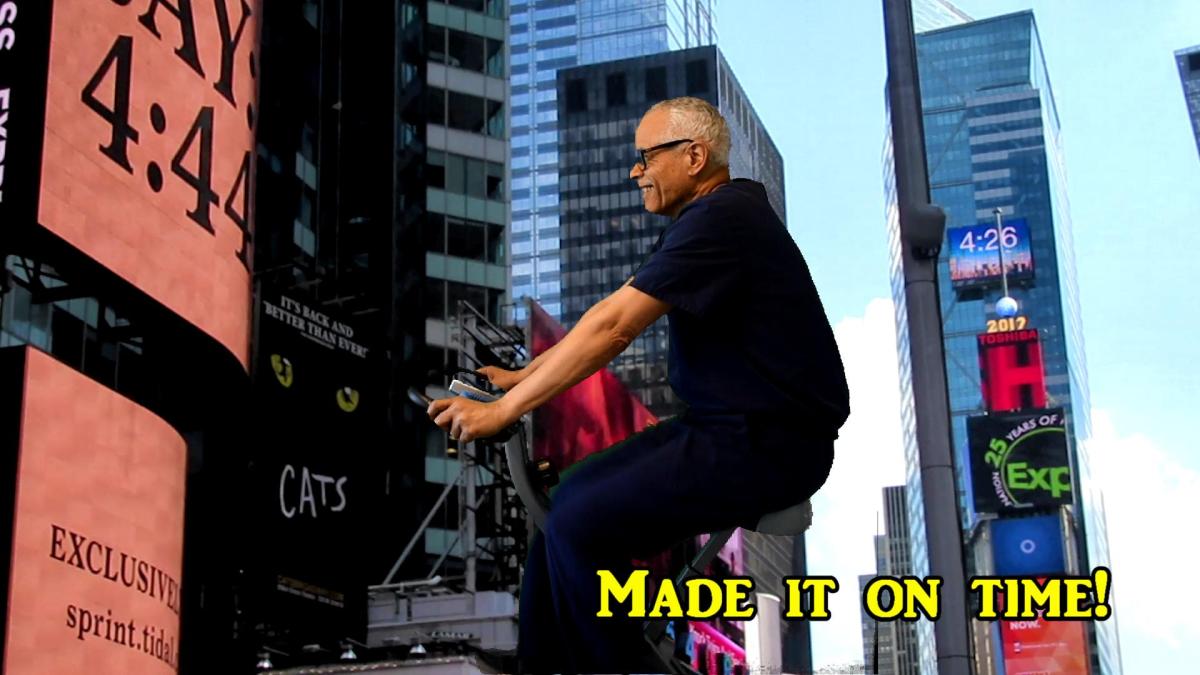
Okay, so I’m nobody’s personal trainer, but I have an update on my exercise routine, which I’m doing daily for the most part. I spend about a half hour on the “workout” which starts with a floor yoga warm up. I get on the exercise bike for 5 minutes. Then I do 3 sets of body weight squats, dumbbells, and planks. I finish off with another 5 minutes on the bike.
Obviously, my goal is not to be ripped. I just want to keep my bowels moving, to sleep OK, and stay reasonably fit for a geezer. I also do daily mindfulness meditation.
I still have a lot of work to do on being more well-rounded. And I mean a lot.
This is just a reminiscence. I know the word “wherefores” in the title is old-fashioned, but I’m an old guy and so what? When I was a young guy living in Mason City, Iowa where I grew up, I could not afford to rent an apartment. Shortly after I became an emancipated minor, I was lucky to be able to rent a dormitory room at the YMCA at 15 North Pennsylvania Avenue. The building was placed on the National Register of Historic Places in 2002.
Reference: M, Ben and Clio Admin. “Mason City YMCA (1926-200).” Clio: Your Guide to History. September 30, 2021. Accessed May 10, 2022. https://theclio.com/entry/140366
I guess that makes me sort of historic too. It was built in 1926. I think it rents out apartments now. I recently read a Globe Gazette article about the beginnings of the YWCA on 2 South Adams and it was built in 1918. The current Mason City Family YMCA is located on 1840 S Monroe Avenue.
There is a local legend that bank robber John Dillinger and his gang stayed at the YMCA while planning their robbery of the First National Bank in 1934. Track star Jesse Owens stayed there briefly in 1937, starring for a basketball exhibition.
I recently read a Globe Gazette article on the web about the beginnings of the YWCA on 2 South Adams. As I said, it was built in 1918, but I don’t know when it closed. The YWCA sat empty for years until a couple of artists got a loan from a local realtor. They’re renovating it. (Zachary DuPont. “Old YWCA building takes strides toward renovation,” Globe Gazette on line, 10/29, 2021, updated 1/18/2022).
They plan to build artist studios on the 2nd floor, performance space where a basketball court is presently, a community area and art gallery on the first floor, and make single apartment/dormitory rooms cheaper than regular apartments (maybe similar to what the YMCA had many years ago, up to 12 units on 3rd floor). My wife, Sena, stayed there briefly and that was very helpful.
The YWCA is not on the National Register of Historic Places. It’s not clear why. The artists have raised some money with a GoFundMe campaign toward the renovation project. The website is titled “Save the Historic Mason City YWCA.” So why is it not on the National Register of Historic Places?
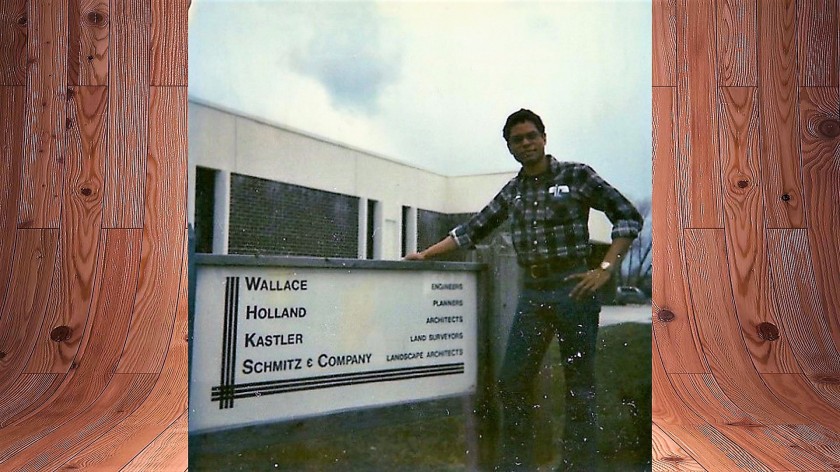
Anyway, I moved into a very cramped room at the YMCA on either the 3rd floor in my teens. I was working as a draftsman and surveyor’s assistant for WHKS & Co., a consulting engineering company. It was mainly a place to sleep. Most of the time I was traveling, working on out-of-town jobs such as relocating Highway 13 between Elkader and Strawberry Point (really more like straightening out all the curves in it), land surveys and the like.
Portrait of the legacy blogger as a young man
I also have a distant memory of learning how to swim at the YMCA when I was a kid. I was terrified of even putting my face in the water and used to get fierce headaches just getting into the pool. I’m not sure how I got over it, but I did.
There were a fair number of eccentric characters who lived at the YMCA back in my day. I didn’t consider myself one of them and that’s probably why I didn’t end up staying there for decades. I could have worked in Mason City for the rest of my life, having breakfast at the café in the old Brick and Tile Building on East State Street, and eating all of my other meals in restaurants along Federal Avenue until I was too old to do much more than sit in Central Park.
But I didn’t. I’ll get to that.
There were a number of guys who stayed long term at the YMCA. It was kind of uncomfortable for that. There was only one communal bathroom and shower. There were no kitchens. There was barely enough room for a bed, a kneehole desk and chair, and you had to listen to the cast iron heater radiator clank most of the night. They were just sleeping rooms, but it was a little too loud to sleep sometimes because of the banging noise from the radiators.
I found out one of my neighbors was building a motorcycle in his room. He was very proud of it. It was a large machine and took up a lot of space. He kept it very clean. The Director of the YMCA at the time was John Calhoun and he’d been involved with the YMCA since 1943. He had a reputation for being pretty strict about the rules, which likely included one prohibiting the building of motorcycles in your dormitory room. We kept the motorcycle a secret of course.
There were some guys whose wives kicked them out of the house. They were always going out for coffee. They could drink a lot of coffee, smoke a prodigious number of cigarettes, and talk non-stop about how bad things were in the world in general.
There was an old candy bar vending machine on the floor. I got what must have been an ancient Butterfinger. I bit into it and found what I thought was half a worm wriggling around. Finding a worm was bad enough, but half a worm alarmed me. Where was the other half?
I even telephoned the local hospital emergency room to ask if I were in danger of some kind of poisoning. There was only a pay phone available at the YMCA, even for the guys who lived there. The ER doc couldn’t stop laughing long enough to say more than I’d most likely be just fine. “Fine,” he said. I haven’t eaten a Butterfinger since.
I met one guy who kept saying basically one thing over and over: “So my ancestors came over on the Mayflower. All well and good…” Then he would sort of trail off. His expression didn’t change at all. In fact, he looked flat most of the time. I didn’t know it at the time, but he probably had a chronic, severe mental illness.
I don’t remember who told me that the athletic director was gay. I don’t know if he was or not, and it didn’t matter. He treated everybody with kindness and respect and we treated him likewise. I remember he gave me sound advice about the safest length of time to spend in the steam room after I almost blacked out after sitting in there way too long.
I learned the dollar bill jump trick from an older guy in the weight room. He didn’t call it that, but it was a similar challenge. The idea is to bet you that you can’t bend over or squat, grab just your toes and jump over a broomstick—without letting go of your toes. I think he actually showed it to me and another youngster. We tried over and over. All we did was fall and laugh. It’s a good thing he didn’t make us bet.
There wasn’t much to do around there except play pool. There was this underfed-looking guy who used to play a deadly game of call shot eight ball. He amazed me because he worse eyeglasses that were as thick as pop bottle bottoms. I didn’t understand how he could even see his own hands. He won every game.
I know it sounds a little dull, living at the YMCA. On the other hand, I’d have probably been in a tight spot if the YMCA had not been there when I was young.
I read a Wikipedia article about the song in the late 1970s, “Y.M.C.A.” by the Village People. The author noted that in the early days of the YMCA, the single room occupancy dormitory rooms were for guys who moved to the city from rural areas to find work. Later, YMCA tenants tended to be youth “…facing life issues” or the homeless.
And I met Sena there. She switched jobs from working across the street at a school administration building to work at the YMCA.
I never hung out at the front desk as much as I did after she showed up. I pretended to read the newspaper a lot. She probably wondered why I was always there. We played bumper pool. I don’t remember who won the games, but I had trouble concentrating on my shots.
She does everything. There must be a God because she is God’s gift to me. I guess after all, I did just fine after eating half a worm.
We’re filling a bag to help families in the program affiliated with the National Association of Letter Carriers (NALC). Letter carriers in Iowa City will be picking up bags of non-perishable food items placed beside mailboxes on the second Saturday in May, which is on May 14, 2022 this month. Edward James Olmos is the food drive’s celebrity spokesperson, which gives the title of the movie he played a role in, “Stand and Deliver,” a special meaning in this context.
We’ve never seen a total lunar eclipse, but it’ll happen May 15-16, 2022. It happens over several hours. For us in Iowa City, Iowa it starts at around 8:30 PM on May 15, 2022 and ends at around 2:00 AM on May 16, 2022.
You don’t need any special eclipse glasses and you can see it with your bare-naked eyes. A lunar eclipse occurs when the Earth passes between the Sun and Moon and lines up precisely so that it blocks the Sun’s light, which otherwise reflects off the Moon. Find more at the Farmer’s Almanac.
There’s a web site to find out when you can see it where you live.
I’m not a fan of country music, generally. I usually listen to the Big Mo (AKA John Heim) blues show on KCCK 88.3 on Friday nights. I also listen to the Music Choice channel on TV, either Easy Listening or Light Classical.
However, a few nights ago I heard the song “Grandpa, Tell Me ‘bout the Good Old Days” on Easy Listening. It was a haunting instrumental that I can be a sucker for sometimes. I noticed the rhythms that alerted me to its country genre, though.
On the other hand, the melody had that quality which makes me want hear nothing else for a while. An artist named Danielle Nicole sang “Bobby” on a Friday night blues in the second week of February, which did that for me.
How I feel about this kind of music reminds me of the Greek myth of Odysseus, who on his long journey back to Ithaca following the Trojan war, he and his crew of sailors encountered the island of the Sirens. Their voices made anyone who heard them forget everything but their haunting voices. The sailors wasted away, leaving hills of their skeletons. The only way to pass the Sirens safely was to stop the ears of the crew with wax. But Odysseus wanted to hear the song and made his men lash him to the mast so that he could not join those who gave up their lives to hear the music. He ached for knowledge in the lyrics even more than the melody of the songs the Sirens sang, and for the deepening of the spirit which absorbed the souls of those who heard the hypnotizing cadences. Just hearing the melody could extinguish the will to live.
The good old days melody didn’t extinguish my will to live, of course. But it was easy to get caught up in it and I noticed how deeply I reminisced. I looked up the lyrics and, at first, thought they were just quaint. Then they began to sound ironic to me.
The song (and I mean mainly the melody although the irony of the lyrics was part of the spell) seemed to raise the image of a bubble, which I know sounds strange. I remember blowing soap bubbles when I was a kid. They are delicate, bright, beautiful, but fragile—just like those so-called memories of what some older people call the good old days. You don’t even want to breathe too hard on them, which would hurt the spell, the illusion that there are such things as shiny, clear, light as air memories of a past without sorrows that float forever.
Of course, the bubbles burst as I got older. Innocence doesn’t last long in the world. It seems like every generation has to learn this all over again. The joys are replaced by broken promises, sorrows, and regrets.
Eventually, a golden haze settles over the anger, shame and guilt, softening the broken edges of the world which cut our souls. And the golden stories of the good old days that never happened save us for a little while every now and then—as long as there are those willing to sing them. Because we can almost always find the bubbles when we need them. Be careful not to listen to the Sirens too long. And if you do, be careful not to breathe too hard on the beautiful and fragile bubbles.
How much better would it be if we make the good times happen here and now?
Well, Sena ordered a new Sharp calculator and we just got it. It’s a Sharp EL-M335. It has a bigger, easier to see display and larger keys than the vintage Sharp ELSI MATE EL-505. We stuck with the Sharp brand because it’s durable and reliable.
I’ve mentioned the old Sharp EL-505 in previous posts, mainly to highlight the idea that vintage doesn’t necessarily mean useless. It served well for over 30 years believe it or not, and we didn’t change the two double AA batteries for more than a decade. You can call me a liar or demented, but it’s the truth.
I’ll probably use the new one to do things like total up our Scrabble game scores to find out how badly I lose each time we play and to spell words on it. It’ll be used for other tasks.
And an added plus—the words I spell on the new calculator are larger and easier to read than on the old one.
I remember buying the old one shortly before we moved to Ames, Iowa so I could start college at Iowa State University. I got the Sharp ELSI MATE EL-505 because it had special scientific functions on it because I was planning to study engineering.
I quickly found out I didn’t have the head for the mathematics necessary to get through an engineering program. So, I ended up using it for things like—scoring Scrabble games and spelling words.
The Sharp EL-M335 actually uses a solar cell and a backup Alkaline manganese battery. I wouldn’t have been able to tell you that unless I used a magnifying glass to see the operation manual’s tiny print. It’s a good thing the display uses bigger characters.
However, replacing the battery in the new calculator will require using a very tiny screwdriver to remove 6 very tiny screws. It’s a good thing we have a very tiny Kobalt screwdriver set with Phillips and flat head bits that you can store in the handle.
So, there you have it. We have a brand new, modern Sharp calculator. And it looks sharp. But we don’t plan to throw away our vintage calculator. It’s been good to us.
Okay, so the title sounds familiar but it’s wrong. And why does it matter? For the record, the actual quote is more like “How many angels can dance on the head of a pin? It comes from philosophers in the Middle Ages. Before I get to the point of all this nonsense, I have to tell you I was shocked to find an actual equation formulated by a guy named Anders Sandberg that can help us find the answer—if we ask the right question. Sandberg says we can get the right answer if we reformulate the question. This would mean you can’t use the head of the pin, but should use the point.
That makes so much sense. Why didn’t I think of that?
Anyway, Sena found an article (“Humanity Will Need to Survive About 400,000 Years if We Want any Chance of Hearing from an Alien Civilization”) that says something called the Drake Equation shows that it’ll take about 400,000 years before we have contact with an alien civilization. The Drake Equation tries to estimate how many Communicating Extraterrestrial Intelligent Civilizations (CETIs) there are. The equation has been called flawed because of the unpredictability of quantifying the probability life may appear on a suitable planet. It’s a matter of conjecture. I don’t get the math, but the concept is interesting.
Now the author of this blog post (it’s actually a WordPress blog called Universe Today) cites a study from a couple of researchers that essentially ask a different question, mathematically speaking. The researchers think of this as a thought experiment and give a rather pessimistic outlook on the whole thing.
Now look back at a 2016 New York Times article, “Yes, There Have Been Aliens,” an opinion piece written by astrophysics professor Adam Frank. He is more optimistic about the Drake Equation and cautions us to “…ask the right question.”
You’ll have to subscribe to the New York Times if you can’t read Frank’s full opinion piece in one sitting. Not that I have any dispute with him, but this reminds me of Agent K in Men in Black who praised supermarket tabloids as having the “Best investigative reporting on the planet; read the New York Times if you want, they get lucky sometimes.”
Again, the math is beyond my little pinhead, but Frank was a lot more optimistic about contacting aliens. It sounds like the outlook on this depends a lot on how you set up the equation. Get the point?
Now, haven’t these guys checked the news and watched the paranormal TV shows? Are they not aware of the large population of UFO watchers out there? One source says that Canadians are spotting up to 3 UFOs a day.
Hey, aliens even stop to admire our lawns. Giorgio Tsoukalos, AKA, the hair guy, from Ancient Aliens would say the aliens contacted us a long time ago. So, why do we need the Drake Equation?
That’s why we need to ask the right question. So how many times do aliens grab their groins while rapping unintelligible lyrics on the point of a pin?
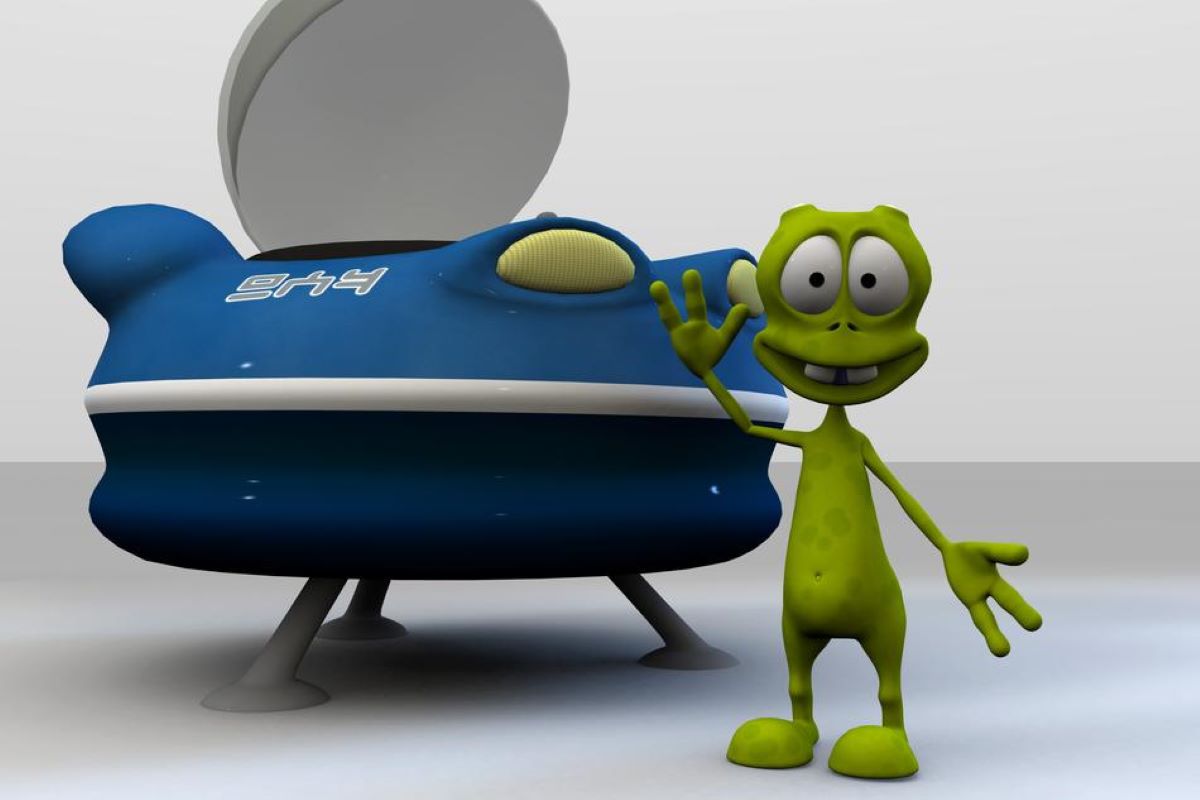
That’s right; the answer is zero—aliens don’t have groins. You’re welcome.
We drove by Terry Trueblood Recreation Area today and were amazed by the big crowd of people. We found out about the NAMIWalkstoday because of the signage and people everywhere at the park.
The National Alliance on Mental Illness (NAMI) has been around since 1979, and you can read more from the top fundraiser for today’s event, Margalea Warner!
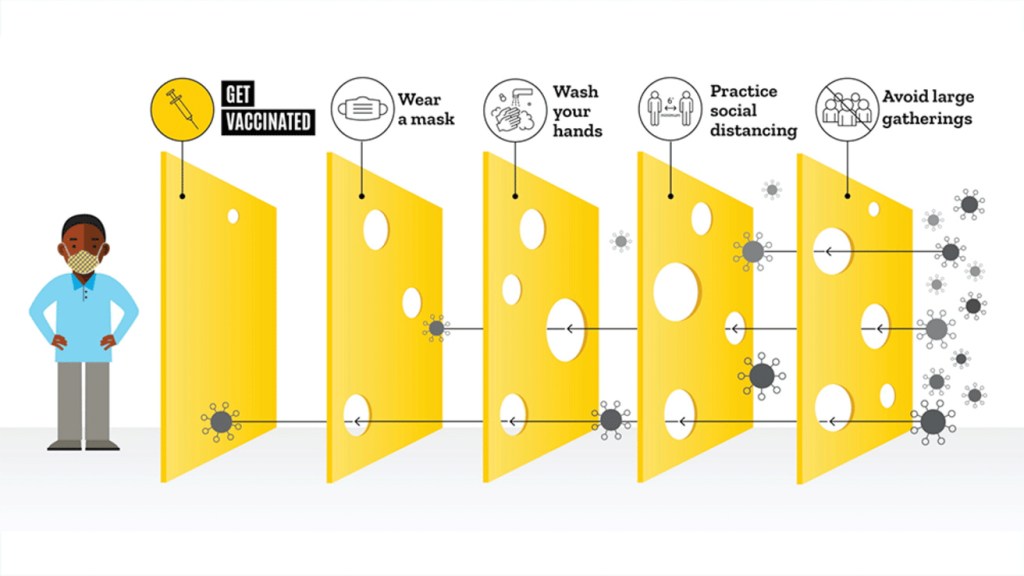
The CDC has reported that the level of COVID-19 transmission in Johnson County, Iowa is Medium. It’s recommended to adopt appropriate safety precautions accordingly. The Swiss Cheese Model is an easy way to remember:
Swiss Cheese Model
Learn more about how to keep yourself and others safe.
University of Iowa Health Care is participating in a multi-center Phase 2 clinical trial evaluating various additional COVID-19 vaccine boosters. It’s the COVID-19 Variant Immunologic Landscape (COVAIL) trial, sponsored by the National Institute of Allery and Infectious Disease (NIAID). The trial “will test new and existing booster vaccines in various combinations to see which ones provide immune responses that cover existing and emerging COVID-19 variants.”
















 Go Retire Psychiatrist