Looking Back on Gunslingers and Chess Masters

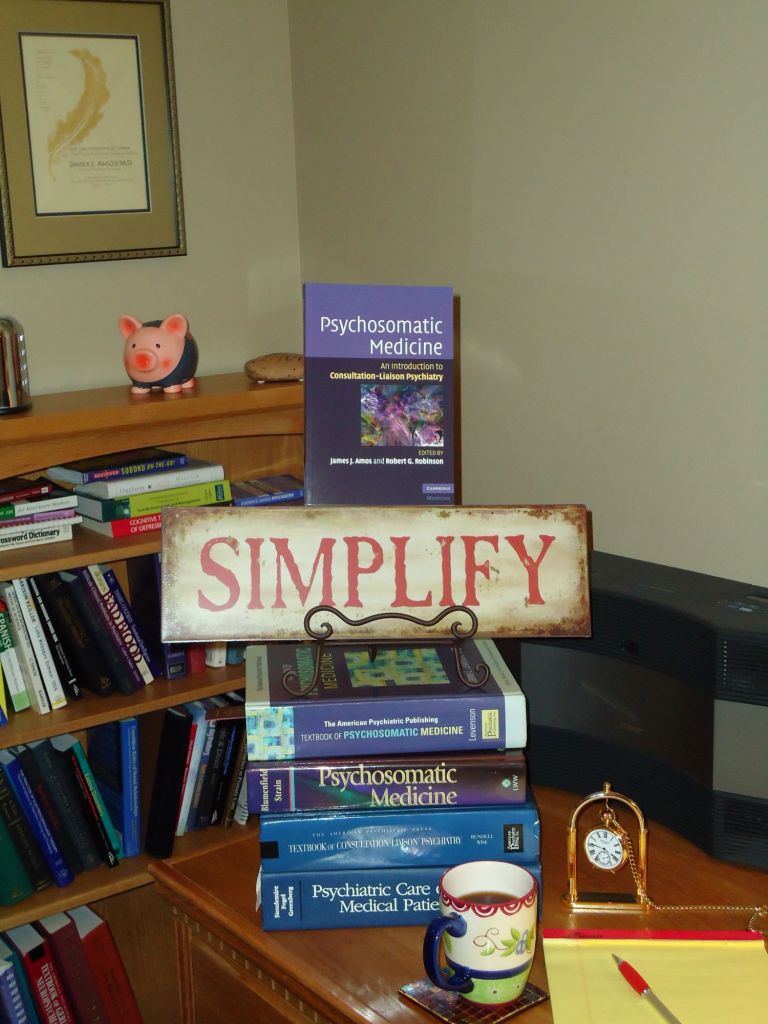
I was looking at an early version of the handbook of consultation-liaison psychiatry that eventually evolved into what was actually published by Cambridge University Press. I wrote virtually all of the early version and it was mainly for trainees rotating through the consult service. The published book had many talented contributors. I and my department chair, Dr. Robert G. Robinson, co-edited the book.

In the introduction I mention that the manual was designed for gunslingers and chess masters. The gunslingers are the general hospital psychiatric consultants who actually hiked all over the hospital putting out the psychiatric fires that are always smoldering or blazing. The main problems were delirium and neuropsychiatric syndromes that mimic primary psychiatric disorders.

The chess masters were those I admired who actually conducted research into the causes of neuropsychiatric disorders.

Admittedly the dichotomy was romanticized. I saw myself as a gunslinger, often shooting from the hip in an effort to manage confused and violent patients. Looking back on it, I probably seemed pretty unscientific.

But I can tell you that when I followed the recommendations of the scientists about how to reverse catatonia with benzodiazepines, I felt much more competent. After administering lorazepam intravenously to patients who were mute and immobile before the dose to answering questions and wondering why everyone was looking at them after the dose—it looked miraculous.

Later in my career, I usually thought the comparison to a firefighter was a better analogy.

The 2008 working manual was called the Psychosomatic Medicine Handbook for Residents at the time. This was before the name of the specialty was changed back to Consultation-Liaison Psychiatry. I wrote all of it. I’m not sure about the origin of my comment about a Psychosomatic Medicine textbook weighing 7 pounds. It might relate to the picture of several heavy textbooks on which my book sits. I might have weighed one of them.The introduction is below (featured image picture credit pixydotorg):

“In 2003 the American Board of Medical Specialties approved the subspecialty status of Psychiatry now known as Psychosomatic Medicine. Long before that, the field was known as Consultation-Liaison Psychiatry. In 2005, the first certification examination was offered by the American Board of Psychiatry and Neurology. Both I and my co-editor, Dr. Robert G. Robinson, passed that examination along with many other examinees. This important point in the history of psychiatry began many decades ago, probably in the early 19th century, when the word “psychosomatic” was first used by Johann Christian Heinroth when discussing insomnia.

Psychosomatic Medicine began as the study of psychophysiology which in some quarters led to a reductionistic theory of psychogenic causation of disease. However, the evolution of a broader conceptualization of the discipline as the study of mind and body interactions in patients who are ill and the creation of effective treatments for them probably was a parallel development. This was called Consultation-Liaison Psychiatry and was considered the practical application of the principles and discoveries of Psychosomatic Medicine. Two major organizations grew up in the early and middle parts of the 20th century that seemed to formalize the distinction (and possibly the eventual separation) between the two ideas: the American Psychosomatic Society (APS) and the Academy of Psychosomatic Medicine (APM). The name of the subspecialty finally approved in 2003 was the latter largely because of its historic roots in the origin of the interaction of mind and body paradigm.

The impression that the field was dichotomized into research and practical application was shared and lamented by many members of both organizations. At a symposium at the APM annual meeting in Tucson, AZ in 2006, it was remarked that practitioners of “…psychosomatic medicine may well be lost in thought while…C-L psychiatrists are lost in action.”

I think it is ironic how organizations that are both devoted to teaching physicians and patients how to think both/and instead of either/or about medical and psychiatric problems could have become so dichotomized themselves.

My motive for writing this book makes me think of a few quotations about psychiatry in general hospitals:

“Relegating this work entirely to specialists is futile for it is doubtful whether there will ever be a sufficient number of psychiatrists to respond to all the requests for consultations. There is, therefore, no alternative to educating other physicians in the elements of psychiatric methods.”

“All staff conferences in general hospitals should be attended by the psychiatrist so that there might be a mutual exchange of medical experience and frank discussion of those cases in which there are psychiatric problems.”

“The time should not be too long delayed when psychiatrists are required on all our medical and surgical wards and in all our general and surgical clinics.”

The first two quotes, however modern they might sound, are actually from 1929 in one of the first papers ever written about Consultation Psychiatry (now Psychosomatic Medicine), authored by George W. Henry, A.B., M.D. The third is from the mid-1930s by Helen Flanders Dunbar, M.D., in an article about the substantial role psychological factors play in the etiology and course of cardiovascular diseases, diabetes, and fractures in 600 patients. Although few hospital organizations actually practice what these physicians recommended, the recurring theme seems to be the need to improve outcomes and processes in health care by integrating medical and psychiatric delivery care systems. Further, Dr. Roger Kathol has written persuasively of the need for a sea change in the way our health care delivery and insurance systems operate so as to improve the quality of health care in this country so that it compares well with that of other nations (2).

This book is not a textbook. It is not a source for definitive, comprehensive lists of references about all the latest research. It is not a thousand pages long and does not weigh seven pounds. It is a modest contribution to the principle of both/and thinking about psyche and soma; consultants and researchers; — gunslingers and chess masters.

In this field there are chess masters and gunslingers. We need both. You need to be a gunslinger to react quickly and effectively on the wards and in the emergency room during crises. You also need to be a chess master after the smoke has cleared, to reflect on what you did, how you did it—and analyze why you did it and whether that was in accord with the best medical evidence.

This book is for the gunslinger who relies on the chess master. This book is also for the chess master—who needs to be a gunslinger.

“Strategy without tactics is the slowest route to victory. Tactics without strategy is the noise before defeat”—Sun Tzu.”

References:

1.        Kathol, R.G., and Gatteau, S. 2007. Healing body and mind: a critical issue for health care reform. Westport, CT: Praeger Publishers. 190 pp.

2.        Kornfeld, D., and Wharton, R. 2005. The American Psychiatric Publishing Textbook of Psychosomatic Medicine. Psychosomatics 46:95-103.

To Boost or Not to Boost?

To boost or not to boost? That is the question. I’m still thinking about whether or not it’s important for me to get the second booster for the COVID vaccine. What might help me decide is a little bit more information from University of Iowa Hospital epidemiologist Dr. Daniel Diekema, MD.

The Omicron subvariant, BA.2, is much more transmissible than most past variants. According to Dr. Diekema, it’s responsible for more than half of all Covid-19 cases in Iowa. On the one hand, it doesn’t cause more severe disease than the other variants, and it’s just as responsive to the current vaccines.

On the other hand, just because I’m older makes me more susceptible to severe disease and less responsive to vaccines. That’s according to studies done by Stanley Perlman. MD, PhD at the University of Iowa.

So even if the first booster dose is effective against severe COVID-19 disease, I may be better off getting the second booster sooner rather than later.

It’s also important to continue wearing a mask and practicing social distancing as well as good hand hygiene.

The Path to Asapiprant: Perspiration or Inspiration?

I just found a University of Iowa Health Care announcement about a potential novel treatment to protect older patients from the ravages of Covid-19 infection. According to the announcement:

“An experimental drug that counters immune aging, effectively prevents death in older mice with severe COVID-19, suggesting it may have potential as a therapy to protect older people who are most at risk from the disease. The new findings by researchers with University of Iowa Health Care were published recently in the journal Nature.”

The experimental drug is called Asapiprant. I’m far from knowing anything much about immunology but the path to this discovery reminds me of the work of Ed Wasserman who wrote a book I’ve not yet read but probably should, As If By Design: How Creative Behaviors Really Evolve (2021, Cambridge University Press).

I first found out about Dr. Wasserman from an episode of The University of Iowa’s virtual events of Uncovering Hawkeye History. The title for this one was “Endless Innovation: An R1 Research Institution (1948–1997).” This event series was designed to highlight notable elements of UI’s 175-year history.  

Anyway, in a nutshell, Wasserman’s theory is that innovation is often more about perspiration rather than inspiration. He says it’s often a combination of the 3 C’s: Context, Consequence, and Coincidence. And while I was noodling around on the web, it struck me that this might fit how the Asapiprant innovation developed.

To be sure, the University of Iowa was a critical part of the story of how Asapiprant eventually became an important agent to protect the elderly from immune system aging and thereby decrease the mortality from Covid-19 disease.

I found out the agent was originally called S-555379. It was developed by Shionogi & Co., Ltd as a possible treatment for hay fever several years ago. I think that would be the Coincidence.

But in 2011, Stanley Perlman MD, PhD, professor of microbiology and immunology in the UI Carver College of Medicine, published a paper, which I think is part of the Context:

Zhao J, Zhao J, Legge K, Perlman S. Age-related increases in PGD(2) expression impair respiratory DC migration, resulting in diminished T cell responses upon respiratory virus infection in mice. J Clin Invest. 2011 Dec;121(12):4921-30. doi: 10.1172/JCI59777. Epub 2011 Nov 21. PMID: 22105170; PMCID: PMC3226008.

This paper was cited by Shionogi in the company’s announcement of their license agreement with BioAge Labs, Inc., posted on January 26, 2021:

“It is known that age-related declines in immune function are significant risk factors that increase morbidity and mortality from infectious diseases2. Therefore, it has been suggested that restoring immune function may reduce the severity of various infectious diseases, including COVID-19. The DP1 receptor has been identified as a drug discovery target that improves age-related declines in immune function in an original AI-driven analysis of longitudinal omics data in humans conducted by BioAge. In addition, in a study conducted at the University of Iowa by Dr. Stanley Perlman in which an existing DP1 receptor antagonist was administered in an aged mouse model of SARS coronavirus (SARS-CoV) infection, the mortality rate of mice was improved and a significant decrease in viral load in the lungs was observed3. Based on these exciting study results, we have concluded a license agreement in expectation of development of this compound as an immunopotentiator for the elderly by drug repositioning.”

And I think part of the Consequence is that BioAge, Inc. has announced that the drug, the name of which was changed to BGE-175 and now called Asapiprant is about to undergo Phase 2 clinical trials for treating older patients hospitalized with COVID-19.

Whether you call it perspiration or inspiration, I think it deserves our admiration.

Featured image picture credit: Pixydotorg.

The Chicken Finally Lays An Egg

Below is an old post from a previous blog that I published on June 6, 2010. Although the title in my record is simply PM Handbook Blog, there must have been another title. Maybe it should have been more like The Chicken Has Finally Laid an Egg (you’ll get the joke later).

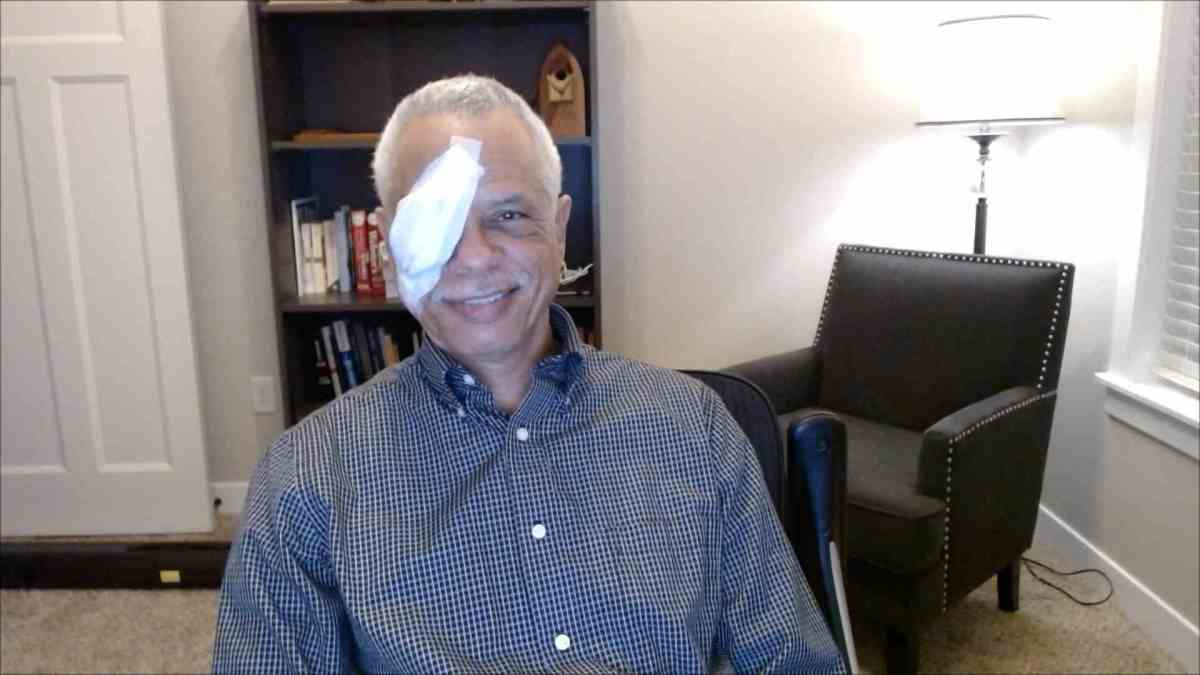
There are two reasons for posting it today. One is to illustrate how the Windows voice recognition dictation app works. It’s a little better than I thought it would be. The last time I used it, it was ugly. I’m using it now because I thought it might be a little easier than trying to type it since I still have problems with vision in my right eye because of the recent retinal tear injury repair. So, instead of doing copy paste, what you’re seeing is a dictation—for the most part.

On the other hand, I’m still having to proofread what I dictate. And I still find a few mistakes, though much fewer than I expected.

The other reason for this post is to help me reflect on how far the fellowship has come since that time. It did eventually attract the first fellow under a different leader. That was shortly after I retired. It was a great step forward for the department of psychiatry:

“Here is one definition of a classic:

“Classic: A book which people praise but don’t read.” Mark Twain.

When I announced the publishing of our book, Psychosomatic Medicine, An Introduction to Consultation Liaison Psychiatry, someone said that it’s good to finally get a book into print and out of one’s head. The book in earlier years found other ways out of my head, mainly in stapled, paperclipped, spiral bound, dog eared, pages of homemade manuals, for use on our consultation service.

It’s a handbook and meant to be read, of course, but quickly and on the run. As I’ve said in a previous blog, it makes no pretension to being the Tour de Force textbook in America that inspired it. However, any textbook can evolve into an example of Twain’s definition of a classic. The handbook writer is a faithful and humble steward who can keep the spirit of the classic lively.

We must have a textbook as a marker of Psychosomatic Medicine’s place in medicine as a subspecialty. It’s like a Bible, meant to be read reverently, venerated, and quoted by scholars. But the ark of this covenant tends to be a dusty bookshelf that bows under the tome’s weight. A handbook is like the Sunday School lesson plan for spreading the scholar’s wisdom in the big book.

Over the long haul, the goal of any books should mean something other than royalties or an iconic place in history. No preacher ever read a sermon to our congregation straight out of the Bible. It was long ago observed by George Henry that there will never be enough psychiatric consultants. This prompts the question of who will come after me to do this work. My former legacy was to be the Director of a Psychosomatic Medicine Fellowship in an academic department in the not-so-distant past. Ironically, though there will never be enough psychiatric consultants, there were evidently too many fellowships from which to choose. I had to let the fellowship go. My legacy then became this book, not just for Psychosomatic Medicine fellows, but medical students, residents, and maybe even for those who see most of the patients suffering from mental illness—dedicated primary care physicians.

My wife gave me a birthday card once which read: “Getting older: May each year be a feather on the glorious Chicken of Life as it Soars UNTAMED and BEAUTIFUL towards the golden sun.” My gifts included among the obligatory neckties, a couple of books on preparing for retirement.

Before I retire, I would like to do all I can to ensure that the next generation of doctors learn to respect the importance of care for both body and mind of each and every one of their patients. That’s the goal of our book. And may the glorious chicken of life lay a golden egg within its pages to protect it from becoming a classic.”

Chicken picture credit: Pixydotorg.

The Connection Between The University of Iowa and Factitious Disorder

I found another old blog post, Thoughts on Munchausen’s Syndrome, which reminded me of a psychiatric disorder I saw probably more frequently than most psychiatrists unless they are consultation-liaison specialists. I wrote it in June of 2011. I still don’t understand the disorder and I doubt anyone else does either. The interesting connection to Iowa is that a patient with Factitious Disorder was admitted to the University of Iowa Hospital in the 1950s. The treating doctor published a paper about him in the Journal of the American Medical Association.:

“I ran across an old poem written by William Bennett Bean, M.D., who was a physician in the Department of Medicine at the University of Iowa. It’s called “The Munchausen Syndrome” and it was published in 1959 [1]. Dr. Bean was Professor and Chairman of the Department of Medicine at the University of Iowa in 1948. Of course, he did more than write interesting poetry. He specialized in nutrition. He was named the Sir William Osler Professor of Medicine at Iowa in 1970.  He was well-known as a clinician and teacher. He was also called a “masterful teller of tales”, which may explain in part why he wrote “The Munchausen Syndrome.”  One quotation is “The one mark of maturity, especially in a physician, and perhaps it is even rarer in a scientist, is the capacity to deal with uncertainty.”

The poem is about a psychiatric disorder about which there is a great deal of uncertainty, formerly called Munchausen’s Syndrome, now known as Factitious Disorder. It’s based on an actual case of the disorder, an account of which was published in the medical literature [3]. An excerpt from the beginning of the work follows:

THE MUNCHAUSEN SYNDROME

By WILLIAM B. BEAN, M.D.

IOWA CITY, IOWA

The patient who shops around from doctor to doctor, the dowager alert for some new handsome young physician to hear her flatulent and oleagi­nous outpourings, the bewildered neurotic who has had a dozen operations for a thousand misunderstood complaints—these we recognize as interest­ing patients or as nuisances we have to deal with as charitably as we may. They occupy the lower end of the spectrum of humanity with all its in­finitely various people. Nearby reside the malingerer and the deadbeat, a shoplifter of medical aid who escapes just ahead of the policeman. At the frayed end of this spectrum we find a fascinating derelict, human flotsam detached from his moorings, the peripatetic medical vagrant, the itiner­ant fabricator of a nearly perfect facsimile of serious illness—the victim of Munchausen’s syndrome. This is the tale of such a patient. He had our medical department in an uproar off and on for forty days and forty nights. His Odyssey I outline here in verse. I find to my anguish that much of the verse does not scan, some does not rhyme, and all is obscure. I proceed.

THE MUNCHAUSEN SAGA

In the summer of Nineteen and Fifty-four At Iowa City, our hospital door,—

Mecca for hundreds every day—

A merchant seaman came our way—A part time wrestler, in denim jacket

Crashed through the door with a horrible racket,

Two hundred sixty pounds at least,

He was covered with blood like a wounded beast.

Try to excuse the tone of the piece; it was written in another era when a more intolerant attitude toward illness mimicry was viewed as malicious undermining of the physician-patient relationship. In fact, it’s virtually impossible to distinguish Factitious Disorder from Malingering. We think of the former as belonging in the category of mental illness and the latter as, well, not an illness at all, but lying in order to get something or to get out of something. Factitious Disorder is marked by lying as well and some try to make the case that the lying which patients with Factitious Disorder engage in, sometimes called “pseudologia fantastica” or pathologic lying, is somehow different from ordinary lying. According to Bean, it’s like this:

He gave us a history, in elegant diction, Which later we found was all out fiction. Carpenter, wrestler and bosun’s mate And stevedore. He could exaggerate! His body was covered with many a scar He said from surgeons near and far

His appendix went in County Cork A navel hernia in New York.

Once, he declared, in Portland, Maine,

A surgeon stripped out his saphenous vein. Surgical scars above one kidney

Came from an ectomy done in Sidney. Scarred, he was, on his abdomen

From a wreck, he said, when with women roamin.’ Another injury he wouldn’t reveal us

Messed up his left internal malleolus. From time to time, as he wove this story

He boasted of prowess and wealth and glory. By courage he ruled his fellow sailors

But he didn’t say much of his many jailors.

In fact, we understand very little about so-called pathologic lying, though the telling of tales is engaged in not just by psychiatric patients. One of the most fascinating consequences of the frustration physicians feel about Factitious  Disorder was the fraudulent case report about Factitious Munchausen’s Syndrome. The paper was published by a couple of resident physicians in the New England Journal of Medicine and was a spurious account of an emergency room patient named Norman U. Senchbau, who claimed to actually have Munchausen’s Syndrome and who demanded admission to hospital for treatment [2].  He supposedly confessed to having undergone many surgeries and to prove it, displayed many scars on his abdomen…which washed off with soap and water. Of course, the name of the patient is just an anagram of Baron Munchausen.

I occasionally get calls from internists and surgeons about patients whom they suspect of manufacturing illness for the sake of taking the role of patient (part of the definition of the disorder in the Diagnostic and Statistical Manual of Mental Disorders). As often as not, I have no clear idea of how to proceed with interviewing someone who probably does deliberately produce illness, other than to do my best to listen for understanding, to avoid confronting them, and to seek some way to interrupt their self-destructive behavior. In the end I don’t believe we now know much more than Bean did:

What do we know of the pathogenesis

Of hospital vagrants and doctors menaces? Maybe the person acts unenlightened

From a real disease which has him frightened. Does part of the reason he may vex you all Lurk in dark leanings homosexual?

What is the cause, and what are the reasons He wandered pitifully through the seasons? Lonely pilgrim out of orbit

Peace and quiet lost in forfeit.

Hospital haunters, doctor deceivers

Their acting confounds even nonbelievers. Derelicts lost in a cold society

Wanderlusting, without satiety.

Social pariah or medical freak

Whence does he come and what does he seek?

I cannot relieve my brain’s congestion By unveiling an answer to this question In the age of sputniks, the fall of parity We all should try to think with clarity.

L’Envoi

Princes and wise men of many conditions

Beautiful ladies and honored physicians

I’m sorry I cannot fasten my claws in

What causes the Syndrome named Munchausen, This off again, on again, gone again Finnegan

Comes in, than goes out and at length comes in again. Munchausen’s victims must be expected

To plague our lives unless detected.

Those we identify when we sight ’em

Should be restricted ad infinitum

So be alert for this great nonesuchman Munchausen syndrome’s flying Dutchman.

1.    Bean, W.B., The Munchausen syndrome. Perspectives in biology and medicine, 1959. 2(3): p. 347-53.

2.   Gurwith, M. and C. Langston, Factitious Munchausen’s syndrome. The New England journal of medicine, 1980. 302(26): p. 1483-4.

3.   Chapman, J.S., Peregrinating problem patients; Munchausen’s syndrome. Journal of the American Medical Association, 1957. 165(8): p. 927-33.”

University of Iowa Ophthalmology Always a Top Contender

Well, I suppose I should tell you why you’re seeing these oldie blog posts from a different era in my career. It’s because I didn’t know whether I’d even be able to see well enough to write after my retinal detachment surgery, which was this past Friday. So, I scheduled a few posts from the past just in case.

The University of Iowa Ophthalmology Department is always highly ranked in the country according to U.S. News & World Report. It was seventh in 2021-2022.

I found out 3 weeks ago that I’ve been walking around with a detached right retina for years probably. One of the biggest risks for developing the condition is being over 50 years old. Hey, do you want to look like me by the time your fifty—ish?

I never could have been a contender

You know, what Sena and I think of whenever we hear about retinal detachment is Sugar Ray Leonard and his retinal tear in 1982 when he was at the top of his career. He almost didn’t have the surgery right away until a doctor told him might go blind if he chose to put it off. I think we pretty much stopped watching boxing because of how dangerous it is.

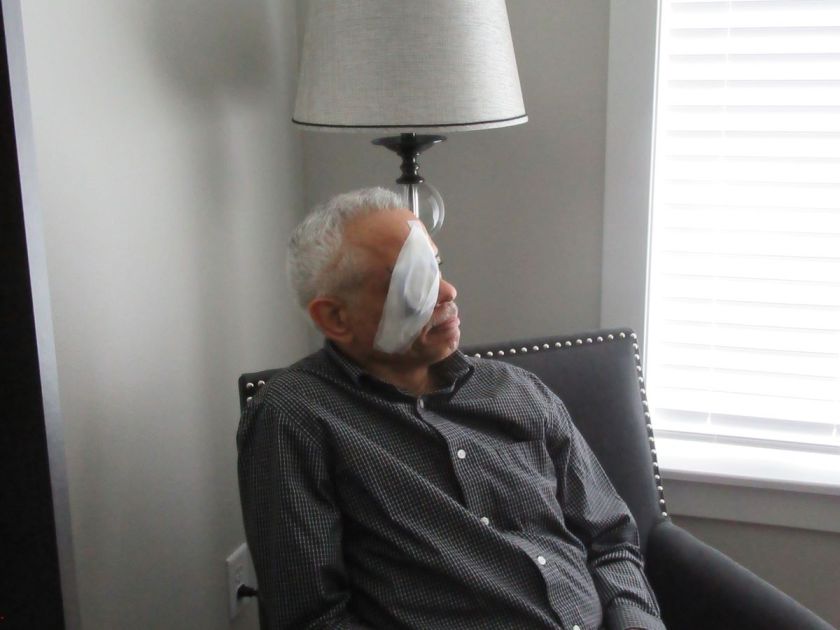
Don’t slap me on the head, I just had retinal detachment surgery!

Leonard’s description of his retinal detachment is classic: “The only thing I felt, I’d get hit in the eye and it swells, then all of a sudden it felt like a shade. It felt like a little shade opens in your eye — you don’t completely see the full picture. It looked like my eye was swollen, well… it felt like my eye was swollen because my vision at that time was getting worse because that curtain was coming down….

“I didn’t even know what (the doctor) was talking about. He said, ‘You have a detached retina.’ I said, ‘OK’. We thought we could come after the fight. Seriously,” said Leonard, who was told by the world renown surgeon Ronald G. Michels that holding off this surgery for another week could lead to blindness.”

He had the surgery right away.

I had a crack team of surgeons and the nursing and other staff were the best. I’m not going to bore you with a blow-by-blow account of the procedure. It did involve sharp objects. I got by with minimal sedation and pain control was good. They did a procedure called a scleral buckle (which is made of silicone) in which they tie this belt around the eye, cinch it tight until it pops like a grape, and then charge you $10 million. I think it’s covered by insurance, but check with your carrier just to make sure.

One thing that does tend to happen when I get sedation is an uptick in my baseline absent-mindedness. Shortly after we got home after the procedure, I couldn’t find my house keys or my car keys (don’t worry, I wasn’t driving). I even called the hospital to check if I’d left them there. Later, I happened to open the cupboard where I usually place them—and there they were. I had put them away and immediately forgot that I did it.

I’m now counting on Sena to give me the mandatory eye drops, 17 drops per hour from 6 nine-quart bottles until death. Don’t bother to eat, sleep, or go to the bathroom in any regular way—you’ll be too busy administering eye drops. Are we clear on that?

The swelling is already going down. I can carry around my eye in a bushel basket now instead of a wagon. Sena can barely look at it without cringing. But if I were to try to give myself the drops, they’d be dribbling down my shirt.

If you don’t get your eyes examined after you see what looks like a curtain coming down over your eye or see flashes of light—you should get your head examined. Psychiatrists will likely charge you only $10 million.

Picture credit Wikimedia: Not copyrighted material.

Going Down Blogging Memory Lane

I’ve been going down the blogging memory lane lately and thought I’d repost what was probably the very first post I published on my first blog, The Practical Psychosomaticist. The title was “Letter from a Pragmatic Idealist.”

While a lot of water has gone under the bridge since mid-December of 2010, some principles remain the same. Some problems still remain, such as the under-recognition of delirium.

Just a few thoughts about words, just because I’m a writer and words are interesting. The word “Psychosomaticist” is clunky and I’ve joked about it. I tried to think of another name for the blog.  I thought “Pragmatic Idealist” was original until I googled it—someone already had coined it. Then I considered “The Practical Idealist”, with the same result. The same thing happened with “The Practical Psychiatrist.” All of the terms had been used and the associations didn’t fit me. I couldn’t find anyone or any group using the term “The Practical Psychosomaticist.” 

Finally, after the Academy of Psychosomatic Medicine (APM) changed its name to the Academy of Consultation-Liaison Psychiatry (ACLP) in 2016, I changed the name of the blog to The Practical C-L Psychiatrist, finally dropping the name “psychosomatic” along with its problematic associations.

I guess the chronicle would be incomplete without an explanation of what happened to that blog. Around 2016, the General Data Protection Regulation (GDPR) was adopted by the European Parliament. WordPress, a popular blogging platform which I use, eventually decided that even hobby bloggers had to come up with a quasi-legal policy document to post on their websites to ensure they were complying with the GDPR regulation and not misusing anyone’s personal data.

I didn’t think that applied to hobby bloggers like me yet it was required. I wasn’t collecting anyone’s personal data and not trying to sell anything. I deleted my blog in July of 2018.  Because I loved to write, I eventually started a new blog around the last year of my phased retirement contract with my hospital in 2019.

Anyway, here’s the December 15, 2010 post, “Letter from a Pragmatic Idealist.”

“I read with interest an article from The Hospitalist, August 2008 discussing the Center for Medicare and Medicaid Services (CMS) requirement for hospitals to submit information on Medicare claims regarding whether a list of specific diagnoses were present on admission (POA)[1]. The topic of the article was whether or not delirium would eventually make the list of diagnoses that CMS will pay hospitals as though that complication did not occur, i.e., not pay for the additional costs associated with managing these complications. At the time this article was published, CMS was seeking public comments on the degree to which the conditions would be reasonably preventable through application of evidence-based guidelines.

I have no idea whether delirium due to any general medical condition made the list or not. But I have a suggestion for a delirium subtype that probably should make the list, and that would be intoxication delirium associated with using beverage alcohol in an effort to treat presumed alcohol withdrawal. There is a disturbing tendency for physicians (primarily surgeons) at academic medical centers to try to manage alcohol withdrawal with beverage alcohol, despite the lack of medical literature evidence to support the practice [2, 3]. At times, in my opinion, the practice has led to intoxication delirium in certain patients who receive both benzodiazepines (a medication that has evidence-based support for treating alcohol withdrawal) combined with beer—which generally does not.

I’ve co-authored a couple of articles for our institution’s pharmacy newsletter and several of my colleagues and pharmacists petitioned the pharmacy subcommittee to remove beverage alcohol from the formulary at our institution, where beer and whiskey have been used by some of our surgeons to manage withdrawal. Although our understanding was that beverage alcohol had been removed last year, it is evidently still available through some sort of palliative care exception. This exception has been misused, as evidenced by cans of Old Style Beer with straws in them on bedside tables of patients who are already stuporous from opioid and benzodiazepine. A surgical co-management team was developed, in my opinion, in part to address the issue by providing expert consultation from surgeons to surgeons about how to apply evidence-based practices to alcohol withdrawal treatment. This has also been a failure.

I think it’s ironic that some professionals feared being sanctioned by CMS for using Haloperidol to manage suffering and dangerous behavior by delirious people as reported by Stoddard in the winter 2009 article in the American Academy of Hospice and Palliative Medicine (AAHPM) Bulletin[4]. Apparently, CMS in fact did have a problem with using PRN Haloperidol (not FDA approved of course, but commonly used for decades and recommended in American Psychiatric Association practice guidelines for management of delirium), calling it a chemical restraint while having no objection to PRN Lorazepam, which has been identified as an independent predictor of delirium in ICU patients[5]. Would the CMS approve of using beer to treat alcohol withdrawal, which can cause delirium?

As a clinician-educator and Psychosomatic Medicine “supraspecialist” (term coined by Dr. Theodore Stern, MD from Massachusetts General Hospital), I’ve long cherished the notion that we, as physicians, advance our profession and serve our patients best by trying to do the right thing as well as do the thing right. But I wonder if what some of my colleagues and trainees say may be true—that when educational efforts to improve the way we provide humanistic and preventive medical care for certain conditions don’t succeed, not paying physicians and hospitals for them will. I still hold out for a less cynical view of human nature. But if it will improve patient care, then add this letter to the CMS suggestion box, if there is one.”

1.        Hospitalist, D. (2008) Delirium Dilemma. The Hospitalist.

2.        Sarff, M. and J.A. Gold, Alcohol withdrawal syndromes in the intensive care unit. Crit Care Med, 2010. 38(9 Suppl): p. S494-501.

3.        Rosenbaum, M. and T. McCarty, Alcohol prescription by surgeons in the prevention and treatment of delirium tremens: historic and current practice. General Hospital Psychiatry. 24(4): p. 257-259.

4.        Stoddard, J., D.O. (2009) Treating Delirium with Haloperidol: Our Experience with the Center for Medicare and Medicaid Services. Academy of Hospice and Palliative Medicine Bulletin.

5.        Pandharipande, P., et al., Lorazepam is an independent risk factor for transitioning to delirium in intensive care unit patients. Anesthesiology, 2006. 104(1): p. 21-6.

Quick Announcement on Covid-19 2nd Vaccine Booster

According to a University of Iowa Hospitals & Clinics announcement on The Loop, 2nd booster doses were available to employees, volunteers, and patients starting April 4, 2022.

The Fourth in the Series Uncovering Hawkeye History: The Next Chapter: Blazing New Trails (1998-2047)

The final installment of the series of Uncovering Hawkeye History, which is The Next Chapter: Blazing New Trails (1998-2047) was recorded and is now posted on the University of Iowa Center for Advancement website. You can view it below here:

Third Video in the Uncovering Hawkeye History Series: “Endless Innovation: An R1 Research Institution (1948-1997)”

Here’s the video recording of the third session in the Uncovering Hawkey History Series: Endless Innovation: An R1 Research institution (1948-1997).” Enjoy!