RSV Vaccine Prescription Necessary for Some States

Sena and I were wondering if you need a prescription to get the Respiratory Syncytial Virus (RSV) vaccine.

It turns out only four states require doctor prescription to get RSV vaccine: Iowa, Georgia, Missouri, and Utah. Washington D.C. is working on making the RSV vaccine available without a prescription.

The Iowa Pharmacy Association blog post about the issue makes it clear a prescription is needed to get the RSV vaccine.

COVID-19 in the Rearview Mirror?

One way to think about the Covid-19 pandemic can be that it’s in our rearview mirror, which is one way of saying it’s behind us now.

On the other hand, another way to think about it is that COVID-19 is in our rearview mirror because it’s tailing us.

So, we can’t keep staring in the rearview mirror because that’s not a safe way to drive. We can look forward and drive, paying attention to the signs, which guide us on how to stay ahead of and outrun another pandemic.

One way to do that is to bookmark the CDC COVID-19 web site.

Phenylephrine Spelled Backwards is Enirhpelynbehp

News headlines are screaming about class action lawsuits being filed against drug companies selling the oral form of a nasal decongestant that the FDA says doesn’t work. It’s called phenylephrine. Phenylephrine has been around since the early 1970s and it’s a common ingredient in over-the-counter (OTC) cold remedies found in grocery stores in the medicine aisle.

The FDA advisory committee met on September 11-12, 2023 about phenylephrine-containing oral products and there is a clarification of the FDA committee’s decision to identify them as ineffective that was posted on September 14, 2023.

A common OTC containing the agent is Sudafed PE. The Equate version of it is Suphedrine PE, which is cheaper. The name capitalizes on its similarity to the name Sudafed, which is pseudoephedrine—which is an effective oral agent for relieving nasal congestion. The problem with it is that it’s been behind-the-counter since 2006 because it can be used in the manufacture of methamphetamine.

Sena bought a box of Suphedrine PE the other day because she caught a head cold. She thinks it’s helplful.

I took a quick look at a few of the presentations of the FDA Advisory Committee meeting. Mainly I just noted the last slide of the FDA presentation, which said that recent studies showed phenylephrine 10 mg was not significantly different from placebo.

Another presentation showed that a large consumer survey indicated that Americans rely on phenylephrine and thought it was an effective nasal decongestant.

This reminded me of Serutan, which is just Nature’s spelled backwards. Serutan was not a placebo; it was a fiber-based laxative, but a lot of people made fun of it. But that, in turn, reminded me of Geritol, which was sold as a tonic a long time ago and which, for a while, was thought by many people to help women get pregnant. Who knows? Maybe some people still believe that, although even the manufacturer disputes the claim.

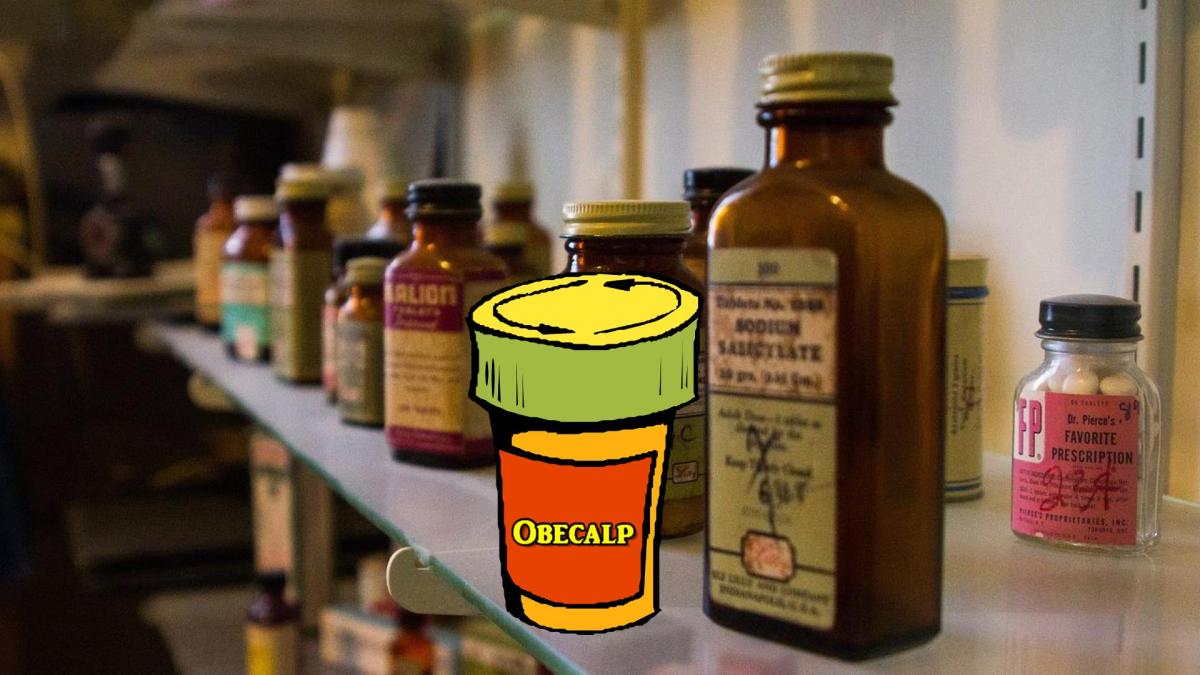
On the other hand, this in turn reminded me of a medication called Obecalp. You can find many web entries about Obecalp, which is just “placebo” spelled backwards. Some physicians may still be prescribing Obecalp (placebos don’t always have to be pills). In general, the opinion about the ethics of the practice is expressed in a recent paper (Linde K, Atmann O, Meissner K, Schneider A, Meister R, Kriston L, Werner C. How often do general practitioners use placebos and non-specific interventions? Systematic review and meta-analysis of surveys. PLoS One. 2018 Aug 24;13(8):e0202211. doi: 10.1371/journal.pone.0202211. PMID: 30142199; PMCID: PMC6108457.):

“Although the use of placebo interventions outside clinical trials without full informed consent is generally considered unethical [13], surveys in various countries show that many physicians prescribe “placebos” in routine clinical practice [47].”

There’s actually a fairly large body of research about placebo effects. One really long paper has interesting conclusions and key points (Wager TD, Atlas LY. The neuroscience of placebo effects: connecting context, learning and health. Nat Rev Neurosci. 2015 Jul;16(7):403-18. doi: 10.1038/nrn3976. PMID: 26087681; PMCID: PMC6013051.):

Conclusions:

A substantial part of the therapeutic benefit patients experience when undergoing medical treatment is caused by their brain’s response to the treatment context. Laboratory investigations of placebo effects provide a way of examining the brain mechanisms underlying these effects. Consistent findings across studies include reduced activity in brain areas associated with pain and negative emotion, and increased activity in fronto–striatal–brainstem circuits. In most cases, the creation of robust placebo effects across disorders and outcomes seems to require appropriate conceptual beliefs — maintained in prefrontal cortical networks — that are supported by experience-dependent learning in striatal and brainstem circuits. However, the critical ingredients for eliciting placebo effects, at both the psychological and brain level, are just beginning to be understood. These ingredients may differ substantially depending on whether the outcomes are symptoms, behaviours or changes in physiology. A better understanding of the neuroscience of placebo could yield rich benefits for both neuroscience and human health.

Key Points:

  • Placebo effects are effects of the context surrounding medical treatment. They can have meaningfully large impacts on clinical, physiological and brain outcomes.
  • Effects of placebo treatments are consistent across studies from different laboratories. These effects include reduced activity in brain areas associated with pain and negative emotion, and increased activity in the lateral and medial prefrontal cortex, ventral striatum and brainstem.
  • Placebo effects in pain, Parkinson disease, depression and emotion are enabled by engagement of common prefrontal–subcortical motivational systems, but the similarity across domains in the way these systems are engaged has not been directly tested.
  • Meaningfully large placebo effects are likely to require a mixture of both conceptual belief in the placebo and prior experiences of treatment benefit, which engage brain learning processes.
  • In some cases, placebo effects are self-reinforcing, suggesting that they change symptoms in a way that precludes extinction. The mechanisms that drive these effects remain to be uncovered, but doing so could have profound translational implications.

I will probably catch Sena’s head cold. By the way, Phenylephrine spelled backwards is enirhpelynehp.


Striking a Blow for Science with the Coffee Temperature Experiment!

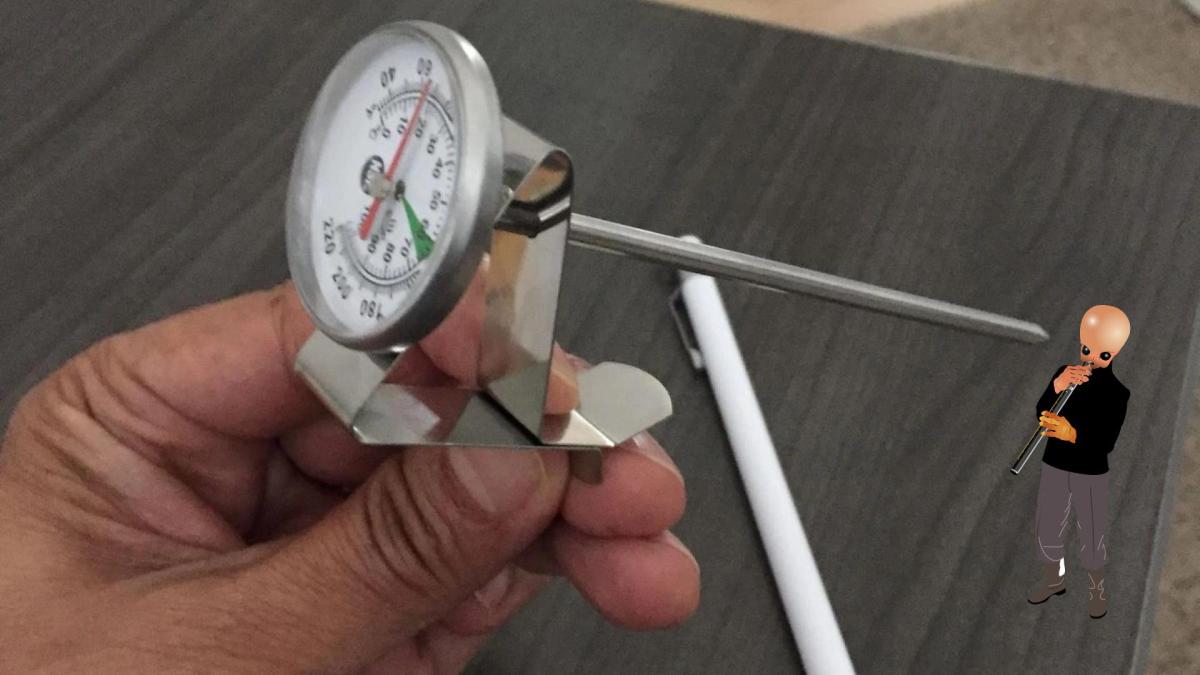
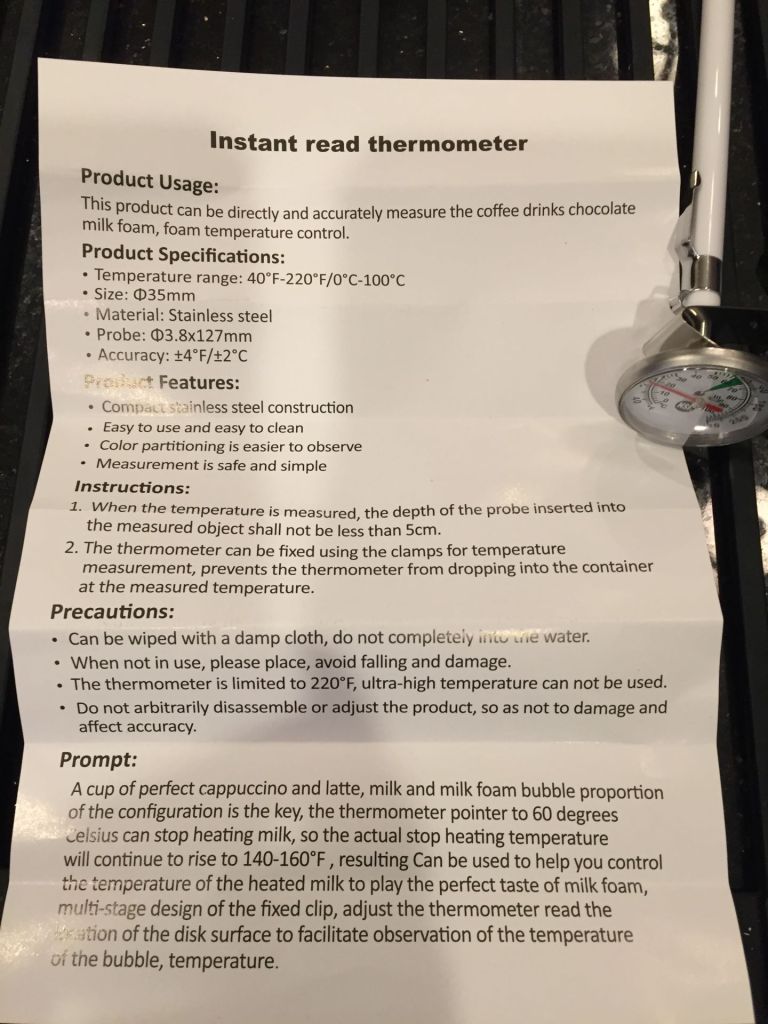
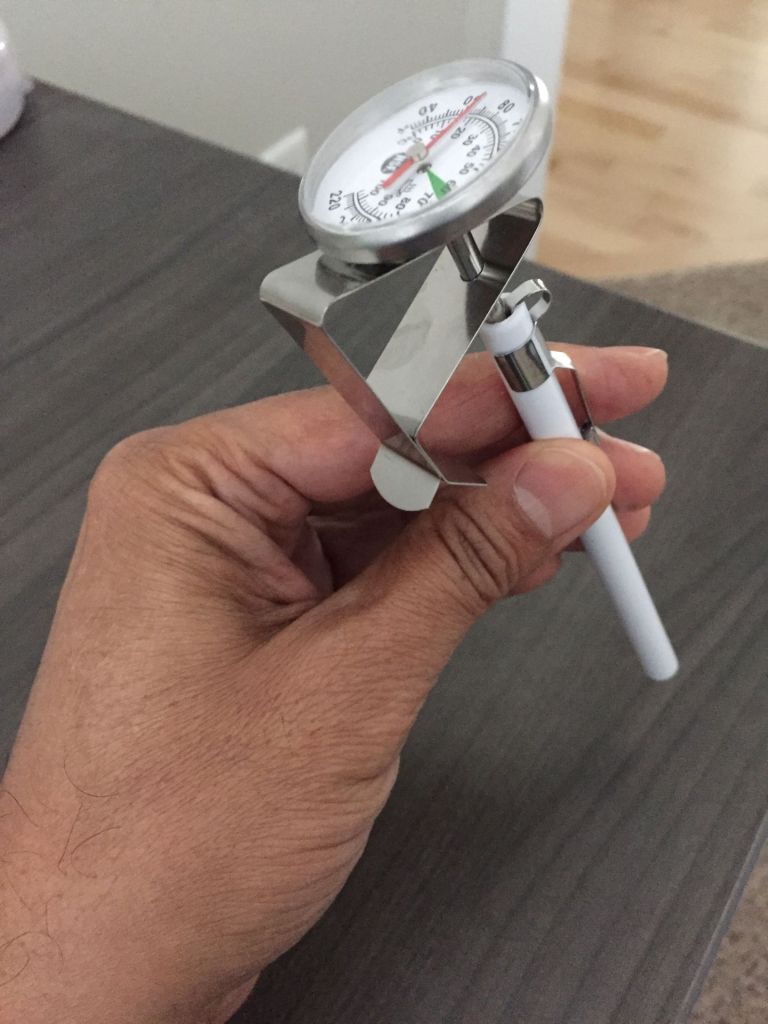
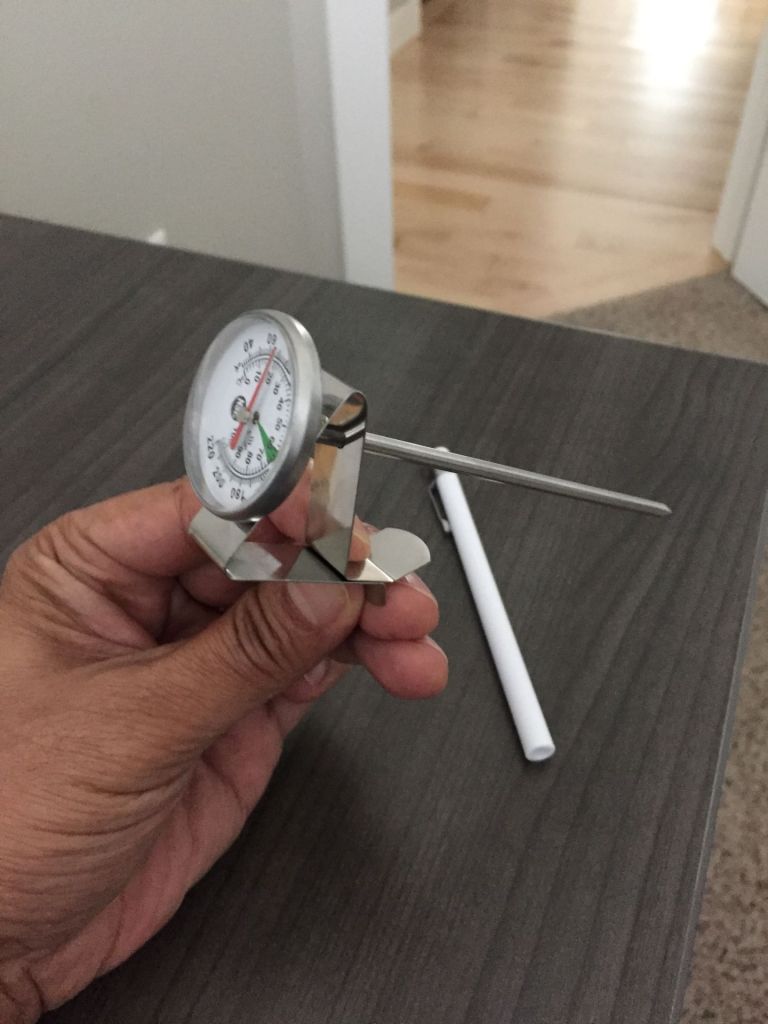
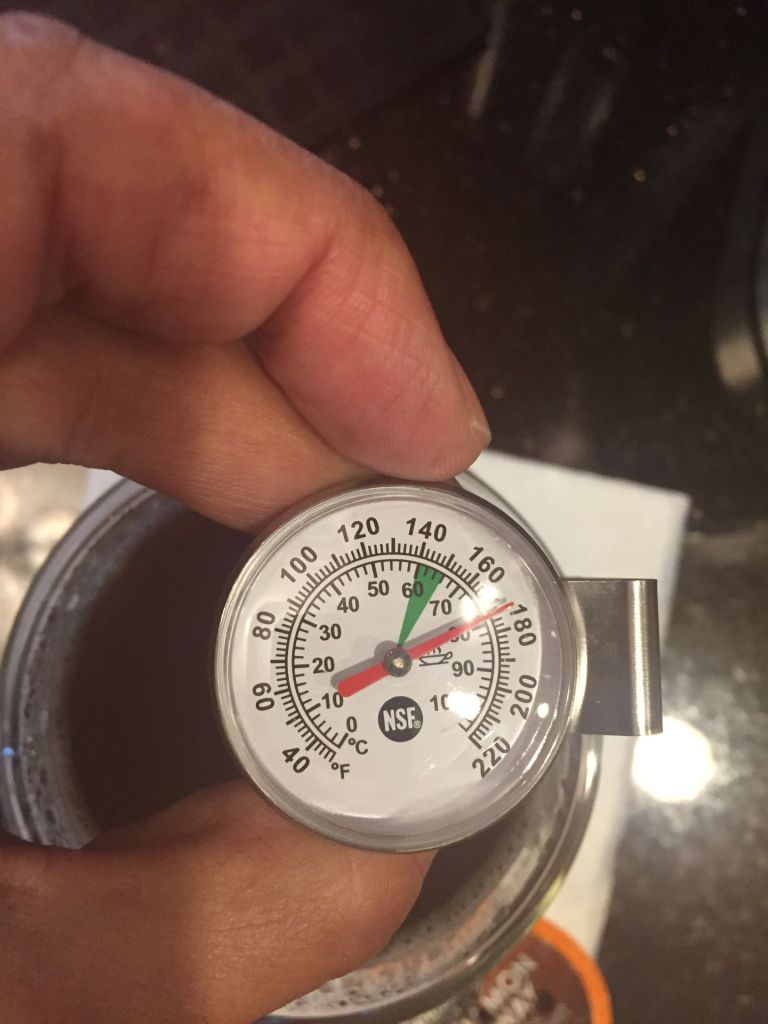
We got our new thermometer the other day and did a coffee cup temperature test. It’s certified by the National Sanitation Foundation (NSF), but we’re not sure where it was manufactured. The instruction sheet looks like it was translated into English.

First, we measured the temperature of coffee in different cups. We measured the temperature of coffee in a double wall glass mug and compared it with the temperature of coffee in a stoneware mug. Stoneware is a type of ceramic.

Right after brewing, the coffee in the double wall glass mug was around 180 degrees. In the stoneware mug, the coffee temperature was around 160 degrees. After 5 minutes the temperature dropped by about 20 degrees in both mugs. Not a big surprise to learn that the double wall glass mug kept coffee hotter.

In fact, I previously noticed when I drank coffee from the stoneware mug last week, it was less hot right after brewing.

Sena wanted to test the Keurig machine to see if the preference setting for making coffee hotter actually worked. In fact, there was no difference in the coffee temperature in either the glass or the stoneware mug after setting the temperature higher.

We then tested the claim of the makers of our old Black & Decker coffee maker that preheating the carafe with hot water actually kept coffee hotter. We were a little surprised that it seemed to work for the stoneware mug, but not for the double wall glass mug.

Just in the interest of full disclosure, we used plain water for the last two experiments. We didn’t think getting buzzed out on coffee was a worthwhile sacrifice in the name of science.

So, the takeaways from this experiment:

  1. The preference setting for temperature adjustment on the Keurig may not be all it’s cracked up to be.
  2. The stoneware mug didn’t keep coffee as hot as the double wall glass mug in either the Keurig or the Black & Decker model.
  3. The stoneware mug seemed to stay hotter when we pre-warmed the carafe on the Black & Decker coffee maker by filling it with hot water before brewing. Be sure you empty out the hot water first.

If you don’t mind sacrificing hot temperature for looks, then go with stoneware mugs. I guess some male reviewers said things like, “Now there’s a man’s coffee mug! I guess maybe that’s because they’re broader than they are tall—I mean the mugs, not the men (although I don’t know if they sent photos of themselves).

By the way, extraterrestrials are not intimidated by a thermometer.

Stop Me If You Heard This One Before

I saw one of my favorite X-Files episodes the other night. It’s titled “Monday.” Mulder goes through the day repetitively doing the same things, including fumbling his chance to thwart a bank robber who blows up the bank and everyone in it, including Mulder. See the Wikipedia for a full spoiler alert but I’m going to spill the beans here anyway.

A lot of people think the idea was stolen from the movie “Groundhog Day,” which I’ve never seen. Actually, it was stolen from a Twilight Zone episode called “Shadow Play,” which I have seen.

“Monday” got good reviews overall, which is saying a lot. I never got the part about how a bank robber (Bernard) who can only land a job mopping floors would be smart enough to build a bomb jacket.

That said, the scenes are mostly everybody going through the day doing the same things over and over. Mulder and Scully both meet Bernard and his girlfriend Pam, who was always waiting outside in the getaway car and is the only one who remembers what has happened each and every time, which is about 50. Pam thinks Mulder is the key to disrupting the endless cycle. She has been trying to get Mulder to change what he does every time he walks in the bank just to cash a check and interrupts Bernard in the process of robbing the bank.

Mulder never gets it right away, but does wonder aloud that he’s getting a sense of déjà vu. Déjà vu is the sense that an experience is something you had before but could not have. The medial temporal cortex triggers the false memory and, normally, the frontal lobe says, “No, this is not a memory.”

Eventually, Mulder gets the idea of repeating to himself over and over that Bernard has a bomb and changes his approach by giving his gun to Bernard and telling him he knows he has a bomb. This approach is based on the assumption Bernard will walk out without setting off the bomb because Mulder will let him go without trying to arrest him.

Then, Scully brings Pam into the bank, and Bernard almost surrenders to Mulder, until he hears police sirens—and tries to shoot Mulder but instead kills Pam because she steps into the path of the bullet. He gives up and doesn’t set off the bomb. Pam changed the ending and notices just before she dies that it never happened in any of the previous enactments.

There’s the brain-based definition of déjà vu and then there’s a more mundane definition, both of which are in the Merriam-Webster dictionary on the web. The mundane definition is “something overly or unpleasantly familiar,” mainly about situations that happen repeatedly (“here we go again”).

We all recognize the second definition. We sometimes say or do something which we would not if we just recognized that it’ll trigger a pattern of events we would like to avoid. Something has to change in order to interrupt the pattern.

Psychiatrists and psychotherapists are usually experts in helping people change repetitive, maladaptive patterns of thought and behavior.

Medications can be helpful, for example in the repetitious thoughts and behaviors of obsessive-compulsive disorder (OCD). Some cases of that may respond better to a combination of psychotherapy and medication.

One of the challenges is that there are not enough helpers to help those who need it. Another challenge is that the ones who need help often don’t recognize they need it. That’s called lack of insight.

The cycle of lack of insight and unpleasantly familiar, repetitive patterns sometimes resulting in explosive consequences is ubiquitous in our society.

Can somebody please bring Pam into the consulting room?

How to Find Covid-19 Vaccine Availability By County

I’m finding out that maybe the best way to learn what the local public health issues are concerning Covid-19 infections as well as vaccine availability are through the county public health agency in my area.

According to the Johnson County Public Health department, hospital admission rates in Johnson County currently low. I can search the map and see that admissions are rising in certain areas of Iowa.

I also learned that the new Covid-19 vaccine will more likely be available closer to the end of the month or early next month rather than in a few days as suggested by presenters at the CDC meeting on September 12, 2023.

The county public health agencies may not have the most current information. Johnson County’s last update as of yesterday was September 1, 2023.

You can also check local pharmacies for availability of the Covid-19 vaccine.

CDC Recommends Updated COVID-19 Vaccine This Fall-Winter Season

The CDC has posted a press release announcing that it has recommended the updated COVID-19 vaccine for the fall/winter virus season.

CDC ACIP Meeting Today on Covid-19 Vaccines

Today is the scheduled meeting for the CDC Advisory Committee on Immunization Practices (ACIP). It meets from 10 AM-4 PM EDT. The final agenda is here.

The presentation slides are at this link.

I also want to recommend the recent article on the new Covid vaccine published in Scientific American on September 1, 2023, entitled “When Will the Next COVID Vaccine Be Available, and Who Should Get It?

I think it’s a nice, balanced article which avoids extreme opinions and sticks to the scientific facts.

FDA Authorizes Updated mRNA Covid-19 Vaccines

Today, the FDA approved and authorized the updated mRNA Covid-19 vaccines, specifically for the monovalent XBB.1.5 variant.

See the announcement on the FDA website for full details. The CDC ACIP will meet to discuss clinically-based recommendations for the use of these vaccines tomorrow.

CDC Update on SARS CoV-2 Variant BA.2.86

New update on the Covid-19 variant BA.2.86 as of Sept. 8, 2023. Highlights:

  • “The current increases in COVID-19 cases and hospitalizations in the United States are not being driven by BA.2.86 and instead are being caused by other predominantly circulating viruses.
  • Early research data from multiple labs are reassuring and show that existing antibodies work against the new BA.2.86 variant. These data are also encouraging because of what it may mean for the effectiveness of the 2023-2024 COVID-19 vaccine, which is currently under review. That’s because the vaccine is tailored to the currently circulating variants.
  • Since CDC’s initial risk assessment, BA.2.86 has been identified in additional countries from both human and wastewater specimens. The variant has been identified in nine U.S. states as of September 8, 2023, at 11:30 AM EDT— in people across Colorado, Delaware, Michigan, Ohio, Pennsylvania, Virginia, and Washington, as well as one additional human case that is being investigated. The variant has also been identified in wastewater samples in two states, New York and Ohio.
  • The U.S. SARS-CoV-2 Interagency Group (SIG) classified BA.2.86 as a Variant being Monitored (VBM) on September 1, 2023.”