Thoughts on the Distinguished Education Lecture by Dr. Russell Ledet MD PhD

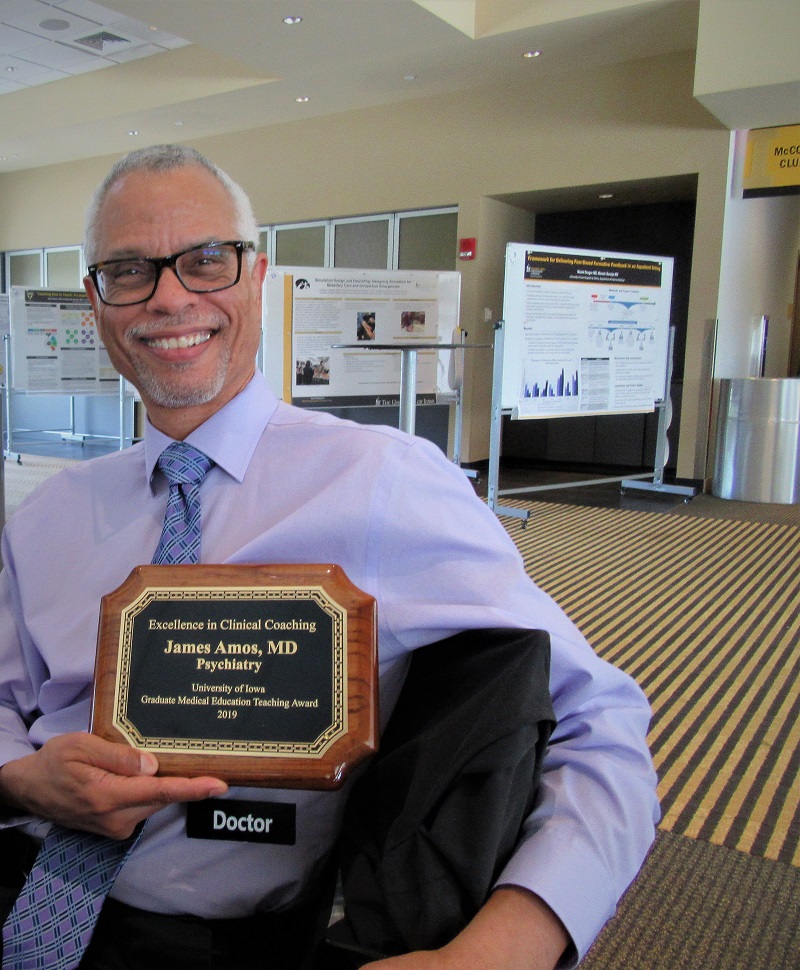
We enjoyed the Dr. Martin Luther King, Jr. Distinguished Education (originally given on January 17, 2023) by Dr. Russell Ledet. He’s definitely a mover and a shaker and this is another recorded presentation that I wish was available for the general public.

His bio is knockdown impressive. And even more interesting to me is that he’s presently in residency toward boarding in adult psychiatry and child psychiatry as well as pediatrics.

That’s right—triple boarding.

His talk was a fascinating oral autobiography from his upbringing in poverty to his military career, to his undergraduate and graduate college career, and his achievement in organizing a very successful nonprofit, The 15 White Coats. This helps get underrepresented minority students into medicine by giving them inspiration and financial support.

His life story by itself is inspiring. It’s also exhausting. The person introducing him wondered aloud if he ever slept!

He began with a well-known quote by Dr. Martin Luther King, Jr:

“It’s all right to tell a man to lift himself by his own bootstraps, but it is a cruel jest to say to a bootless man that he ought to lift himself by his own bootstraps.”

Dr. Ledet’s story of his path from bootlessness to crowning success is compelling. You really have to hear it from him to get a clear idea of how difficult it was. It’s hard to imagine that a star like him once rummaged through dumpsters for food for the family while his mother was on the lookout to make sure he didn’t get caught.

I think a big part of what kept him going was his wife and kids. In fact, his wife, Mallory Alise, insisted that he take the path because of her fear he would die if he continued a dangerous assignment in the military.

A member of the audience who had a career similar to Dr. Ledet asked a question about what more should he do to make sure young people of color would get the kind of opportunities to succeed. Dr. Ledet had a very good answer, but that was not the most interesting part of the interaction. Firstly, the questioner didn’t sound (I know this is going to sound crass) black. He sounded more like someone who had grown up in the Northern United States—like me. But during the course of the conversation, it was clear that he was black. He just didn’t sound like Dr. Ledet. He also mentioned, almost in passing, that some people of color who succeed may develop imposter syndrome.

This sounded strange at first, but I quickly realized that I sometimes had felt like an imposter. This cuts two ways with me. One was the obvious context in which I came out of an impoverished background to finish college and medical school, and had a career as a consultation-liaison psychiatrist at a university medical center where I published and taught for many years. At times I felt like a phony.

The other situation in which imposter syndrome arose was when I went to Huston-Tillotson University (an HBCU formerly called Huston-Tillotson College) in Austin, Texas back in the 1970s. Most of the students were from the region. I had a Northerner’s accent and somebody once remarked on it, asking me “Why do you talk so hard?” I was easily identified simply because of how I spoke. I didn’t always feel comfortable, despite for the first time being not the only black guy in school. Ironically, I didn’t feel like I fit in, even in an HBCU. Even among those who looked like me, I sometimes felt like a phony. But that was not an enduring affliction.

And I think Dr. Ledet has a great deal of confidence and energy. More power to him.

Make or Break Escape Plan When Your Car is in a Flood

Sena and I saw a Weather Channel segment on how to escape your car if it is sinking during a flood. It’s mainly a reminder to turn around, don’t drown. However, there were a couple of interesting things about it. One was the quiz, in the format of a “how would you survive?” quiz with 3 choices: Fasten the seat belt securely, shatter the window, or call 911. The right answer is to break the window and I’ll have more on that because there was no guidance at all about how to break the window. We thought that was an important omission.

The interesting thing about the video clip is that I thought I recognized it from a paranormal TV show, The Proof is Out There with Tony Harris. Most of the time, the conclusions tend to lean toward skepticism regarding paranormal explanations, but in this one, Tony called it a “Possible Miracle.”

In both the Weather Channel and The Proof is Out There, the vehicle was red and looked like it was bigger than a compact or standard size car. The way it moved in the flood water was very similar in both. The YouTube on The Proof is Out There was from Season 3 and it was posted on October, 2023. I’m pretty sure I saw it long before that. The video on the Weather Channel looks like a clip from the full video, and it stops early before the rest of the action.

In fact, there are a few news report videos (from the same news agency, the archives of which no longer have the video for some reason) of the incident, which happened in 2006 and which involves a woman in a red SUV in Pueblo, Colorado who drove into flood waters. The SUV sank, but not before attracting the attention of rescuers, reporters and camera crews. The SUV went underwater with windows rolled up and when it was later pulled out, the windows were still rolled up, unbroken, and all the doors were closed. It has never been clear how she escaped, although many speculated that it was a miracle.

Sena noticed that the windshield wipers were still working, something I had missed. A couple of YouTube viewers (in The Proof is Out There video) mentioned it, but nobody responded to the implication that the electric controls to the lower the windows might still have temporarily worked as the vehicle went under. That still doesn’t explain how they got rolled back up.

It’s also noteworthy that, despite the news story mentioning the driver’s name, where she worked, and that she had called her brother while the SUV was sinking, there doesn’t seem to be any record of anyone asking her how she’d gotten out of the vehicle.

This post is going to contain several YouTube videos, but I’m trying to keep them to the relevant minimum. I think, in all fairness to The Weather Channel about omitting how to shatter the vehicle window in order to escape sinking and drowning (during the TV episode mentioned above), they have posted a video in the past which does provide excellent guidance.

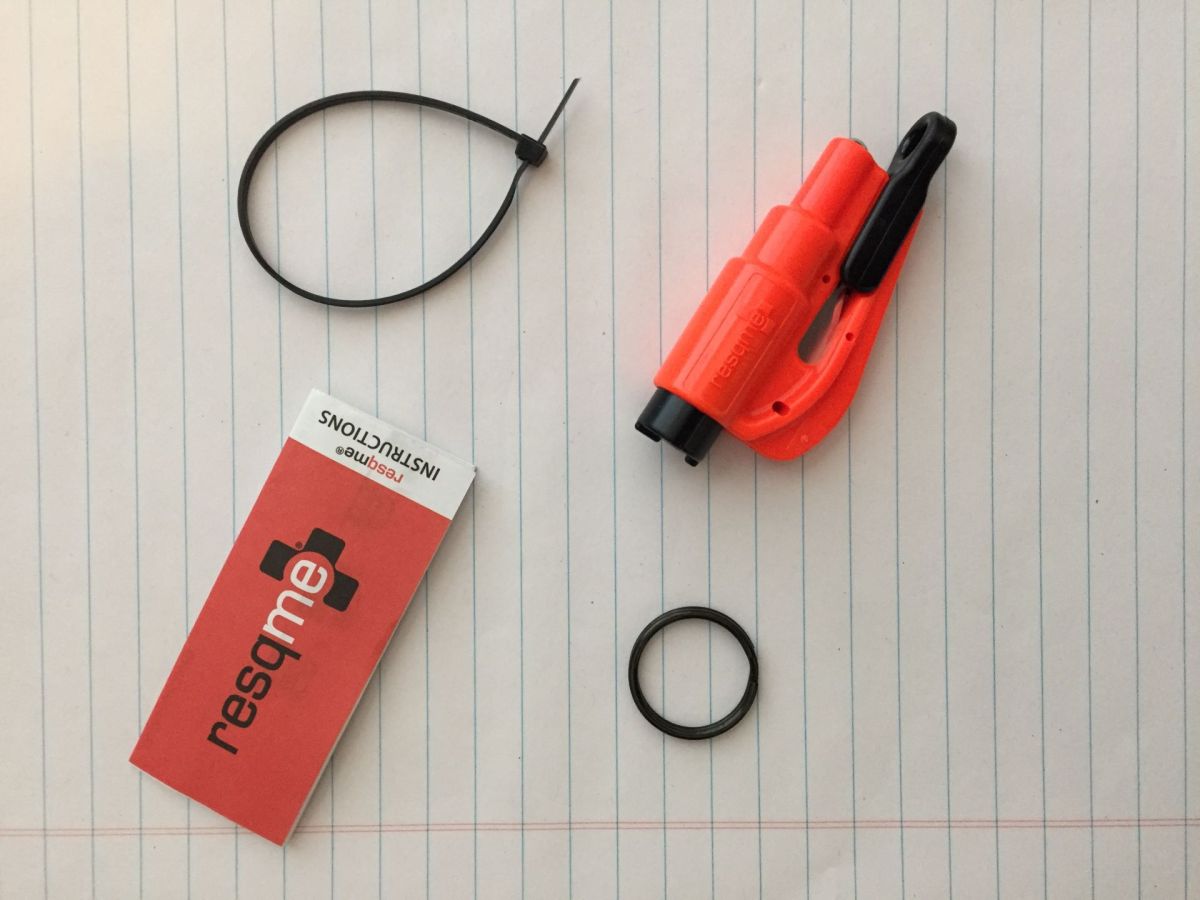
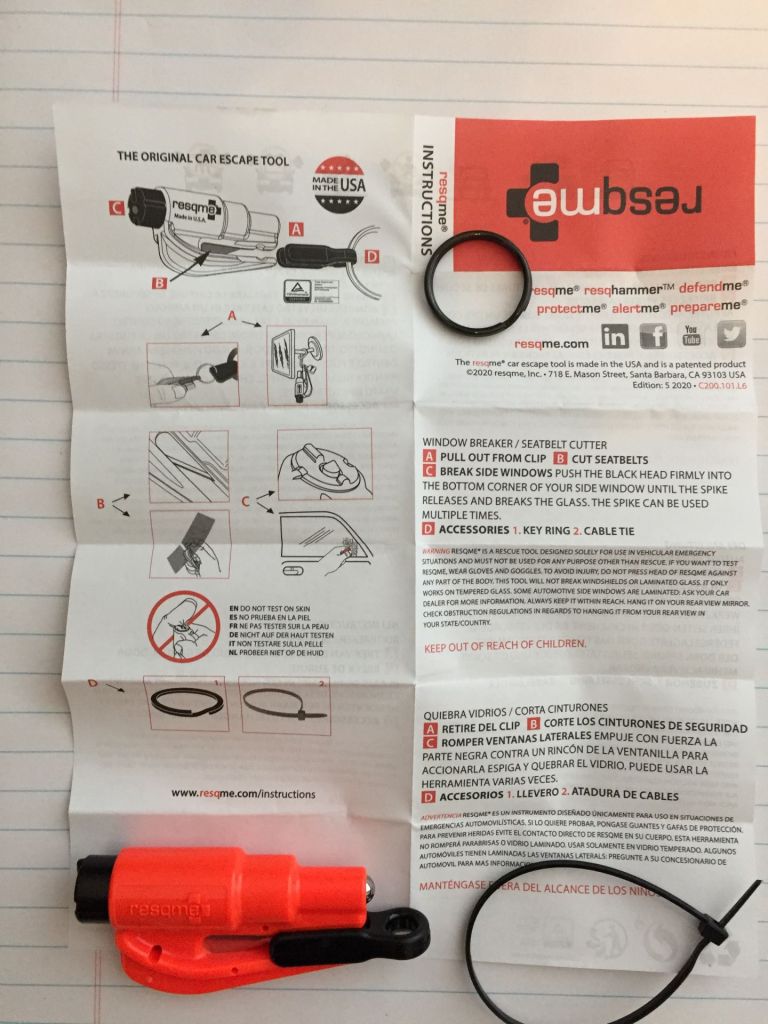
In this video, they mention something Sena knew about but which I was not familiar with—the little tool called a seat belt cutter and glass breaker. You can buy them just about anywhere, often for less than $20. The AAA web site has clear instructions for what to do in situations where this tool would come in handy. In that same web page, there’s a link to the AAA research study done in 2019 about these tools, which contains more helpful advice, such as that the spring-loaded tools work better than the hammer type, and that they work on tempered glass, not laminated glass.

In any case, we’re sold on the glass breaker and it’s on order. However, we would prefer to turn around, don’t drown.

Old Doctors vs Young Doctors

I ran across a recently published web article that originated from the Wall Street Journal (WSJ), to which I don’t have access because I’m not a subscriber. The title is “Do Younger or Older Doctors Get Better Results?” and it’s in the form of an essay by Pete Ryan.

It’s been picked up by over 130 news outlets and is actually based on an open access study published in the British Medical Journal (BMJ) in 2017, (BMJ 2017;357:j1797): Tsugawa Y, Newhouse J P, Zaslavsky A M, Blumenthal D M, Jena A B. Physician age and outcomes in elderly patients in hospital in the US: observational study BMJ 2017; 357:j1797 doi:10.1136/bmj. j1797.

I had a quick look at the rapid response comments. A couple resonated with me. One was from a retired person:

“I did not see specific patient age statistics vs physician age groupings. Wouldn’t older patients, whose risk of dying soon was higher, want to see their own older doctors? Lots of uncontrolled variables in this study… I also agree with one of the other comments that a patient who knew the end of their life was near would seek care from an older physician that would tend to be more empathetic with a patient of their own age.”

Another was from an emergency room physician, Dr. Cloyd B. Gatrell, who entered the comment on June 8, 2017. Part of it echoed my sentiments exactly:

“The authors’ own statements call their conclusion into question: “Our findings might just as likely reflect cohort effects rather than declining clinical performance associated with greater age….”

I suspect most of the web articles spawned by the study didn’t really talk about the study itself. They probably were mainly about your attitude if the doctor who entered the exam room had gray hair or not.

The study involved internal medicine hospitalists and measured mortality rates comparing physicians were in different age ranges from less than 40 years to over 60.

It got me wondering if you could do a similar study of younger and older psychiatrists. Maybe something like it has been done. I’m not sure what an appropriate outcome measure might be. If you focus on bad outcomes, completed suicides are probably too rare and can involve psychiatrists of any age. The quote that comes to mind:

“There are two kinds of psychiatrists—those who have had a patient die by suicide, and those who will.”

Robert Simon, MD, forensic psychiatrist

I doubt they would fall into any particular age category more often than any other.

Anyway, on the subject of physicians who are getting older and required to retire at a specific age, recent news revealed that Scripps Clinical Medical Group agreed to pay almost $7 million to physicians to settle an age and disability discrimination charge filed with the U.S. Equal Opportunity Commission over a policy requiring them to retire at age 75.

And this reminds me of an article in Hektoen International A Journal of Medical Humanities: Jean Astruc, the “compleat physician.” He was a doctor in the Age of Enlightenment and was a geriatrician. An excerpt from the article:

Jean Astruc had a special interest in geriatrics and in 1762 gave a series of lectures that were taken down by one of his students. He described how in old age the skin becomes thick and hard, the hair and teeth fall out, there becomes need for glasses, respiration becomes labored, urine escapes, there is insomnia, and people forget what they have done during the day but remember every detail of what they have done in the distant past. He recommended diet, some wine to help the circulation, exercise, long sleep, and “a life from bed to table and back to bed.”

I think there is a contradiction in Astruc’s recommendations.

I retired voluntarily a little over 3 years ago. It just so happens that one of the reasons was the Maintenance of Certification (MOC) program, which the BMJ study authors mentioned in the first paragraph of the introduction:

“Interest in how quality of care evolves over a physician’s career has revived in recent years, with debates over how best to structure programs for continuing medical education, including recent controversy in the US regarding maintenance of certification programs.”

That reminds me that I got an email a few days ago from Jeffrey M. Lyness, MD, the new President and CEO of the American Board of Psychiatry and Neurology (ABPN) in January of 2023, replacing Larry Faulkner, MD. It was a letter explaining how I could recertify. I decided not to renew several years ago and I’m not thinking of coming out of retirement. I have always been an opponent of the MOC.

Maybe he sent me the letter because he found the Clinical Chart Review Module on delirium that a resident and I made in 2018. As of January 24, 2024 you can still find the module on the web site just by typing in the word “delirium” in the search field. It could be the only document about delirium on the ABPN web site, although that’s difficult to believe.

On the other hand, it’s one of two modules that are labeled as approved although valid through December 31, 2023. Maybe it’s headed for retirement.

CDC Weekly Snapshot Shows Respiratory Virus Activity High

As of January 5, 2024, CDC is reporting that respiratory illness is increasing across the country. The levels are generally high in almost all regions.

“Activity Levels Update:

  • The amount of respiratory illness (fever plus cough or sore throat) causing people to seek healthcare is elevated or increasing across most areas of the country. This week, 39 jurisdictions experienced high or very high activity.
  • Nationally, emergency department visits due to influenza and COVID-19 are elevated in all age groups and increasing in all but school-aged children. Recent, holiday-related school closures and associated changes in healthcare seeking behavior may be impacting trends in influenza- and COVID-19-related visits among school-aged children. RSV-related emergency department visits decreased slightly nationally.
  • Nationally, COVID-19 wastewater viral activity levels and test percent positivity—indicators for infection levels—are higher than the same time last year (currently estimated as being 27% higher and 17% higher, respectively). However, indicators for illness requiring medical attention are lower, including emergency department rates being 21% lower than the same time last year.”

How to Cope with Pea Pods

The other day, we got to talking about sugar snap pea pods. The last several times we’ve had pea pods, I’ve had to deal with them the same way I always deal with foods, like coconut, that have the texture of processed wood—I spit them out.

Well, I don’t actually spit them out. I carefully yank the stringy, weaponized pea pods from between my teeth and hurl the mess into the parallel dimension where they obviously belong. Sena had the same problem, but politely removed the stringy mess and placed it carefully in my hair.

I did a web search on this problem, which evidently doesn’t get much attention. Almost everyone else loves pea pods, despite the tendency for them to immediately assume the texture of industrial strength confetti.

I found only one exception. It’s a short question and answer section on the Home and Garden Information Center of Maryland Extension. One thing I learned is that sugar snap peas that are grown from a special cultivar (a plant variety produced by selective breeding by an entity known as Satan) on the planet Whacko in a galaxy far, far away.

What happens is that the snap pea pod becomes as fibrous as an ancient redwood tree. The person says that “…pods are so fibrous they are barely worth eating.”

I guess what you can do is write to the producer and complain bitterly about the fibrosity monstrosity.

Or is there another solution? Sena found a YouTube which suggests the problem is the stem of the pea pod. You just cut the stem away, and the stringy mess should strip off with it.

So, there you have it. First strip away the stem—and then throw the pea pod away.

You’re welcome.

CDC Reports Respiratory Virus Activity Increasing

The Centers for Disease Control (CDC) reported respiratory illness leading to visits to the emergency room and hospitalization are rising across the country.

  • “Seasonal influenza activity is elevated and increasing in most parts of the country.
  • COVID-19 activity also remains elevated overall and is increasing in many areas.  Based on the biweekly period ending 12/23/2023, JN.1 is predicted to be the most prevalent SARS-CoV-2 lineage nationally.
  • RSV activity remains elevated in many areas of the country, though decreases have been observed in some areas.
  • Hospital bed occupancy and capacity, including within intensive care units, remain stable nationally.”

CDC Healthcare Provider Toolkit

The CDC has a healhcare provider toolkit available to prepare their patients for the 2023 for the fall and winter virus season. It’s up to date and comprehensive.

What The Heck, Let’s Talk About Butter

I’ve been pretty serious the last few blogs. Let’s lighten up and talk about butter. Is it bad for your health?

Not necessarily, according to a WebMD article. In fact, butter has health benefits:

  • It’s rich in nutrients like calcium and vitamin E
  • It may help lower your chances of cancer
  • It could slow down age-related macular degeneration
  • If you swab it all over you it’ll make you so slippery extraterrestrials will have trouble abducting you

There are risks, of course, including the risk of heart disease because butter has a lot of calories and saturated fat.

Sena puts butter on everything. She puts butter on butter. She bought a new kind of butter called Dinner Bell Creamery Salted Butter. Sounds like something the devil made, doesn’t it?

On the contrary, you can even learn a thing or two about life from reading the labels on the sticks.

Shout Out to the European Delirium Association

I just want to give an enthusiastic shout out to the European Delirium Association (EDA). I rediscovered the website. It’s updated and an extremely helpful organization in the study of delirium. It provides excellent education about the disorder.

I met one of the past presidents of the EDA, Alasdair MacLullich back in the early 2010s. In fact, while I was staffing the University of Iowa Hospital consultation-liaison service, he was generous enough to send us one of the pieces of technology which was designed to test for delirium: The Edinburgh Delirium Test Box or Delbox.

I wrote a blog post years ago about the EDA. At that time, the group published a newsletter called the Annals of Delirium. Here’s an excerpt from one of the issues in 2010:

Delirium has a long way to go before it gets the attention it deserves, before it is present in the public consciousness in the way cancer is, or even HIV. Bearing in mind the prevalence of delirium and the impact it has on patients and families we may believe it is only a matter of time, but I believe that the process is going far too slowly. Some countries are doing better than others and some areas of medicine are making greater inroads, which can only benefit us all in the long run. In the UK, however, if you search for delirium on the BBC website you are directed to the music page and the group Delirium Tremens.

I remember thinking that the anecdote reminded me of how that sounded a lot like the way things were going in the United States at that time.

And the EDA announcement about the new delirium organization in the U.S. that was just getting it’s start around that time, in 2011—the American Delirium Society (ADS).

There are educational videos about delirium on the EDA website and I’m excited to learn more about them.

Further, there was a sort of word search game I rediscovered that was made by the EDA. Some of the words are on the diagonal. Give it a shot! I finished it, but it was very challenging. If you need the key, please comment.