


The May FDA VRBPAC meeting on Covid vaccines, originally scheduled for this month has been rescheduled to June 5, 2024, 8:30 AM-4:30 PM EST.
Category: science
Svengoolie Movie Trilogy of Terror!
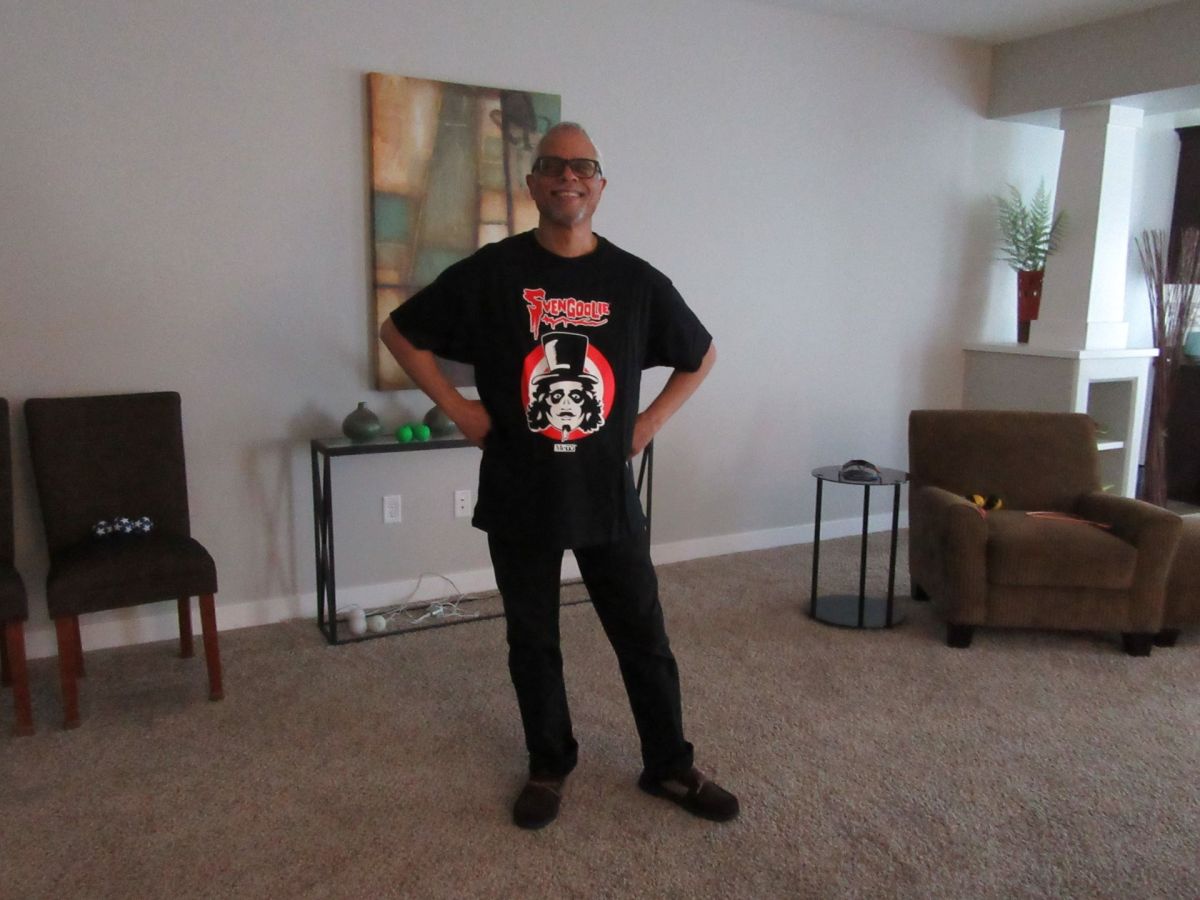
Last Saturday we watched the movie Trilogy of Terror on the Svengoolie show. Well, we tried anyway. There were a lot of interruptions from severe weather warnings. We didn’t mind them because you ignore them at your peril. It’s hard to forget the 2020 derecho in Iowa, which affected a lot of Iowans, including us.
Trilogy of Terror had some psychiatric aspects to it that reminded me how Hollywood frequently gets it wrong when portraying them in films—but sometimes hits the nail on the head.
Although we missed parts of the first and second parts of the movie, it wasn’t difficult to figure out the psychological angle. Both “Julie” and “Millicent and Therese” made me think of antisocial personality disorder (ASPD). The male college graduate student was a pretty good example of a predatory guy lacking any conscience and feeling no remorse for his bad behavior against his apparently meek and defenseless teacher, Julie.
But then the tables were turned and it was Julie who was actually the convincing, coldly calculating and remorseless psychopathic serial killer. She kept a scrapbook of the newspaper stories about her many victims.
One of my colleagues wrote the book about ASPD. Dr. Donald Black, MD, is the author of Bad Boys, Bad Men: Confronting Antisocial Personality Disorder (Sociopathy). In it he recounts the story of serial killer John Gacy. He was diagnosed with ASPD at the University of Iowa. He collected a great deal of data about antisocial men and also acknowledges that women can be diagnosed with ASPD. He has also co-edited and published the Textbook of Antisocial Personality Disorder.


The “Millicent and Therese” part of the movie displayed how a woman can be diagnosed with ASPD. This was the character Therese—who was also Millicent, a very strait-laced alter personality, which makes this also a case of what you could call dissociative identity disorder (DID), which may be related to severe trauma. This used to be called multiple personality disorder. What was interesting about this part of the movie was that both identities were being managed somehow by a family physician, not a psychiatrist—which is not at all plausible.
The last part of Trilogy of Terror is “Amelia,” in which Amelia buys a Zuni fetish doll (named “He Who Kills”) which she intends to give to her boyfriend. However, she’s in a hostile, dependent relationship with her mother who controls her and interferes with every aspect of her life. Of course, the doll comes to life and tries to kill her.
The struggle between Amelia and the doll makes me think about her internal struggle with angry and probably murderous feelings about her controlling mother. Amelia finally internalizes the doll’s rage (actually her own) when he emerges from the oven where she shoved him in an apparently futile attempt to burn him to a crisp. What it looks like is that she inhaled the smoke, finally owning her own rage by internalizing the doll’s smoky remains. This transforms her into a vengeful killer (now grinning with the sharp teeth of the doll) who calls her mother to invite her over to her apartment with the obvious plan to cut her to pieces with a large knife.
This is probably not a movie for kids or sensitive adults, which Svengoolie acknowledges several times during the show. This is why I like the segment with Kerwyn, the dad joke telling chicken with teeth who is voiced by Rich Koz, who also plays Svengoolie. Usually during that segment he tells a series of jokes, repeating the lines a couple of times, seemingly in an effort to teach you how to tell dad jokes. There’s also a Kerwyn joke of the week event, in which he tells a joke submitted by a fan. The joke video takes a few seconds to load, so be patient.
Yet Another Study Affirming Stair Climbing Is Great Exercise!

There is yet another study showing that climbing stairs is great exercise and could help you live longer. It’s not yet published in a peer-reviewed journal, but it was presented at the recent scientific congress of the European Society of Cardiology (ESC) Preventive Cardiology.
Conclusions were that, compared with not climbing stairs, doing so was associated with a 24% reduced risk of dying from any cause. There was a 39% reduced risk from dying of a cardiovascular disease.
One news story about this finding linked to an American Council of Exercise (ACE) article on an international sport called tower running. I’ve never heard of it before.
This could help get you ready for chasing extraterrestrials as shown in the famous fitness documentary Men in Black. Officer Edwards may have had “a real problem with authority” (ironic since he was a New York City cop). But as Agent K pointed out, “So do I. But this kid ran down a cephalopoid on foot, boss. That’s got to be tough enough.”
The point being: if you really know what’s good for you—you’ll take the stairs.
The University of Iowa Role in the Science Behind Psilocybin for Psychiatric Treatment

On April 9, 2024, the University of Iowa educational podcast, Rounding@Iowa presented a discussion about the study of the use of psilocybin in the treatment of psychiatric and addiction disorders. You can access the podcast below. The title is “Psilocybin Benefits and Risks.” The format involves an interview by Dr. Gerard Clancy, MD, Senior Associate Dean for External Affairs, Professor of Psychiatry and Emergency Medicine with distinguished University of Iowa faculty and clinician researchers.
In this presentation, the guest interviewees are Dr. Michael Flaum, MD, Professor Emeritus in Psychiatry, University of Iowa Carver College of Medicine, and Dr. Peggy Nopoulos, MD, Chair and Department Executive Officer for the University of Iowa Department of Psychiatry, Professor of Neurology, Pediatrics, and Psychiatry, University of Iowa Carver College of Medicine.
All three of these highly respected and accomplished faculty taught me when I was a trainee in the psychiatry department and afterward were esteemed colleagues.
The link icon adjacent to the title of the podcast takes you to the podcast website. The link to the article in Iowa Magazine about the psilocybin research at University of Iowa Health Care tells you more about Dr. Peggy Nopoulos and her role as principal investigator in the study.
There is also a link to the National Library of Medicine Clinical Trials web site where you can find out more details about the study design. You’ll notice a banner message which says: “The U.S. government does not review or approve the safety and science of all studies listed on the website” along with another link to a disclaimer with more details.
Cat-astrophizing About the Association Between Cats and Schizophrenia Risk
It seems like every few years there is a spate of news stories about the supposed risk of developing schizophrenia from having a pet cat. The bottom line is that there is no direct link, but you can’t tell a reporter that. I mentioned the issue in a blog post about a feral cat in our neighborhood last year.
The research about this often has limitations, some of which are pointed out in this web article. A Psychiatric News article published in 2017 presented a reasonable position which apparently no reporters have read.
I’m allergic to cat dander. On the other hand, some cats are important enough to be entrusted with carrying an entire galaxy around their belts, reported in the Men in Black documentary which is in large part about a cat named Orion.
Our Solar Eclipse Day: A Happening on Terry Trueblood Trail

Yesterday, we went out to Terry Trueblood Recreation Area to see the solar eclipse. It was a gorgeous day for it, although a bit chilly. When we got there about 11:30 AM, the parking lot was pretty empty and only a few people were there. We even ran into a few on the trail who didn’t know about the eclipse at all.
However, as the day went on, more visitors showed up, although by no means a crushing crowd. Sena and I were testing out our pinhole and cereal box viewers, and I practiced using the solar filter with my smartphone. While we were doing that, a woman approached us and we struck up a great conversation about the eclipse, which she was looking forward to as well.
As the time approached for the big event, others took up positions around the park. It didn’t take long for us to share stories with others. A woman shared her pinhole viewer with us. She also shared her eclipse glasses (Sena did as well) with another couple who had a NASA live feed on their large screen smartphone. They in turn shared the NASA live feed with us. The irony was the couple didn’t have eclipse glasses and couldn’t safely look up at the partial eclipse right where we were in Iowa City.
And that’s how we all got to share our experience of 4 eclipses, 3 of them total eclipses (albeit vicariously by the NASA live feed by smartphone) with Carbondale, Illinois as well as Arkansas and Texas. The videos were mesmerizing.
As the eclipse progressed, we noticed it got colder and darker. The birds stopped singing. On the NASA live feed, we heard a reporter excitedly remark that the bats were flying out of the caves because they thought it was nightfall. The Terry Trueblood Park lights turned on it got so dim; then they came back on as the eclipse reversed.
The eclipse itself was spectacular. Even more fascinating was how it brought some of us together with others to share it. It reminded me of an old term “the happening.” It was coined in the 1950s and, although I think it originally referred to artistic events, you could apply it to a lot of big and cool events—like eclipses. It was a happening.
Off to See the Eclipse!

We’ll be off to try to see the eclipse today, because the weather report yesterday (and this morning!) said it would be sunny and warm.
For the occasion, I made a cereal box eclipse viewer just for fun. We’ll see if it works. I sacrificed a box of Raisin Bran for it. Sena wondered where her cereal box viewer was. We had only one box of cereal in the pantry.
And we’ve got some eclipse glasses. Good luck out there!

 Go Retire Psychiatrist