Proposed Bill Would Ban mRNA Vaccines in Iowa

Sena just alerted me to a bill in the Iowa legislature right now that proposes mRNA vaccines (like the Covid vaccine for example) be banned in Iowa. Part of it says that any person who provides or administers such a vaccine would be guilty of a simple misdemeanor and subject to a $500 fine. I do not support it although I also support the right of others to disagree.

The bill advanced out of subcommittee yesterday and I’m not sure how although, admittedly, I don’t know what exactly that means about its chance of being ultimately passed into law. There were hundreds of comments against it. It moves for further consideration to the Iowa Senate Health and Human Services Committee according to a story in the Daily Iowan.

This sent me to the web to find out what other silly laws Iowa has passed. A few of them are below:

“Any person who attempts to pass off margarine, oleo, or oleomargarine as real butter is guilty of a simple misdemeanor in Iowa. This one originated in 1943, but is still in force today.”

“In Marshalltown, horses are forbidden to eat fire hydrants.”

“It is illegal for a mustached man to kiss a woman in public.”

All of the above are on this Iowa State University web page.

The Connection Between Vitamin A and Measles Is Not Just About Carrots

The measles outbreak is big in the news and the issue of the role of Vitamin A in measles reminded me of something I saw back in the 1970s. I was working as a drafter and survey crew assistant for WHKS & Co (consulting engineers in Mason City, Iowa) at the time. As I was working on a drawing, a co-worker walked by my desk and I noticed her skin was the color of a carrot. She was orange. She explained that she and her husband had been taking high doses of beta-carotene, which is a precursor for Vitamin A. She and her husband both worked at WHKS & Co but I think he was home sick that day, from taking too much beta carotene.

So that segues into what I found out about the connection between measles and Vitamin A. The Centers for Disease Control and Prevention (CDC) has a web page on it and cites references for the role of Vitamin A. Vitamin A does not prevent measles. But in children who are severely ill and hospitalized from measles and under a physician’s supervision, age-specific doses of Vitamin A can be given for a limited period of time.

There are two references for the administration of Vitamin A in the context of kids with measles, available through weblinks from the CDC. One of them is the World Health Organization (WHO), which recommends Vitamin A for vitamin deficient children and because measles infection by itself can cause acute Vitamin A deficiency, resulting in xerophthalmia (severe dry eyes). This can lead to blindness.

Usually this is more of a problem in developing countries, but the WHO recommends it even for children in the US.

The other reference is Red Book. This is not the magazine for American women looking for tips on beauty. The Red Book is from the American Academy of Pediatrics and it notes the WHO recommendation to administer Vitamin A to patients “…regardless of their country of residence.”

The caveat is that you can get either not enough or too much of a good thing. Beta-carotene is a precursor to Vitamin A.  Vitamin A toxicity is bad.

And you could avoid all this because there is an effective vaccine for measles. Don’t take my word for it. Talk to your pediatrician.

Girl Scout Cookies Are Safe!

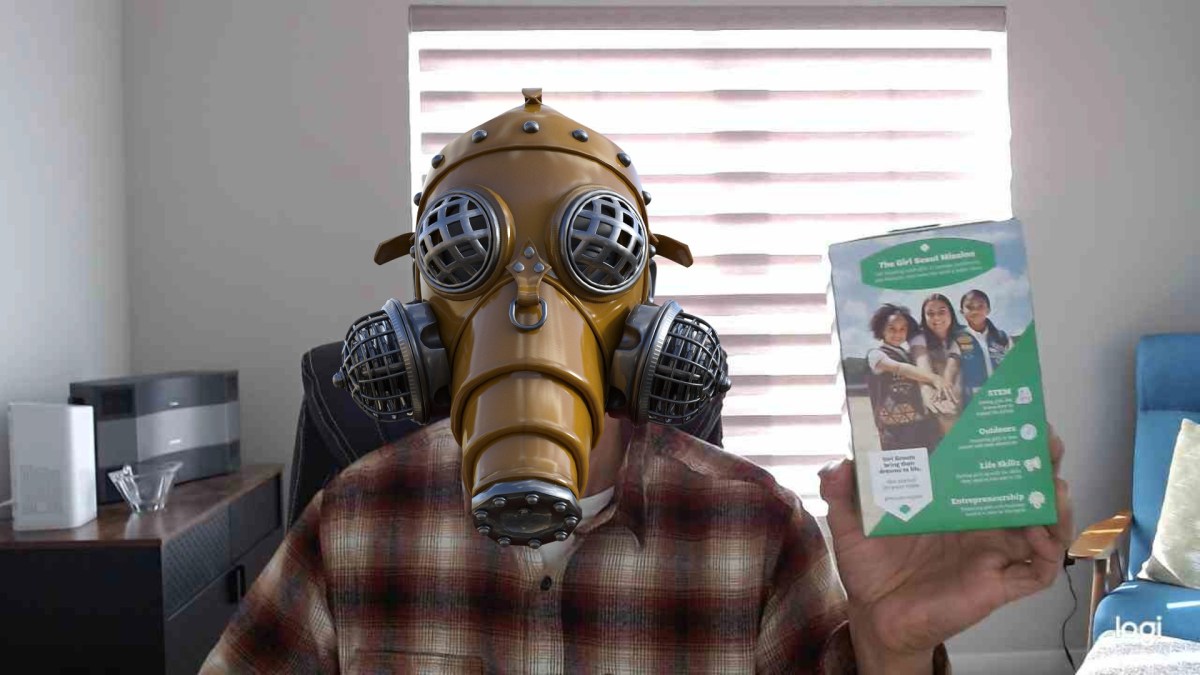
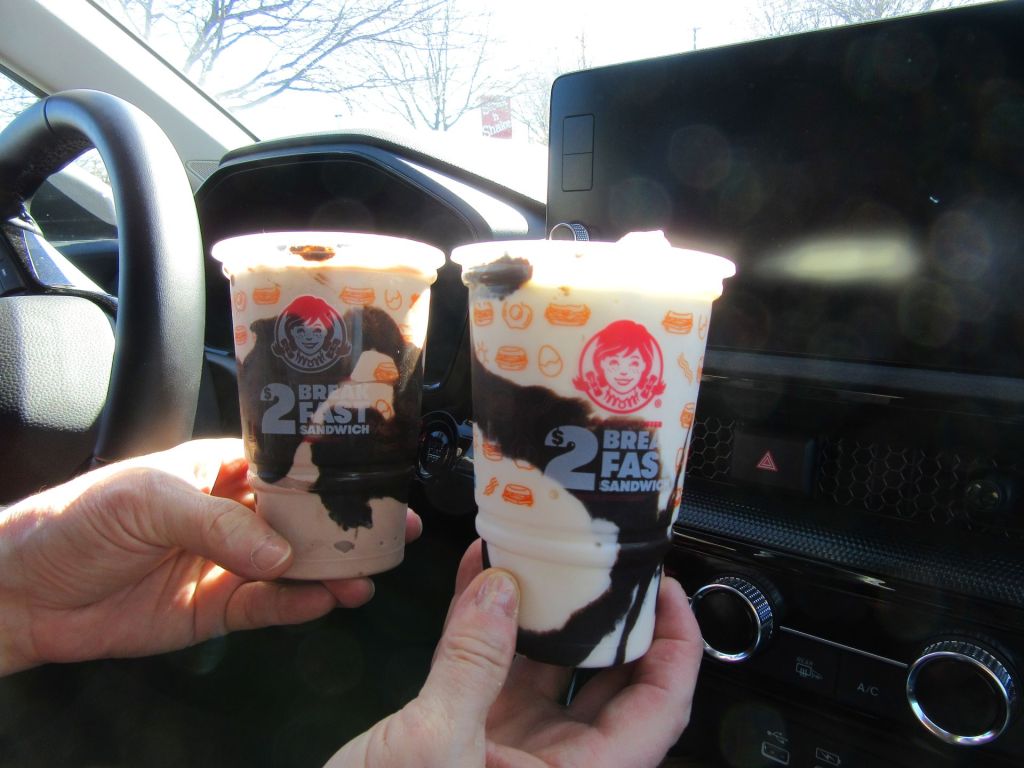
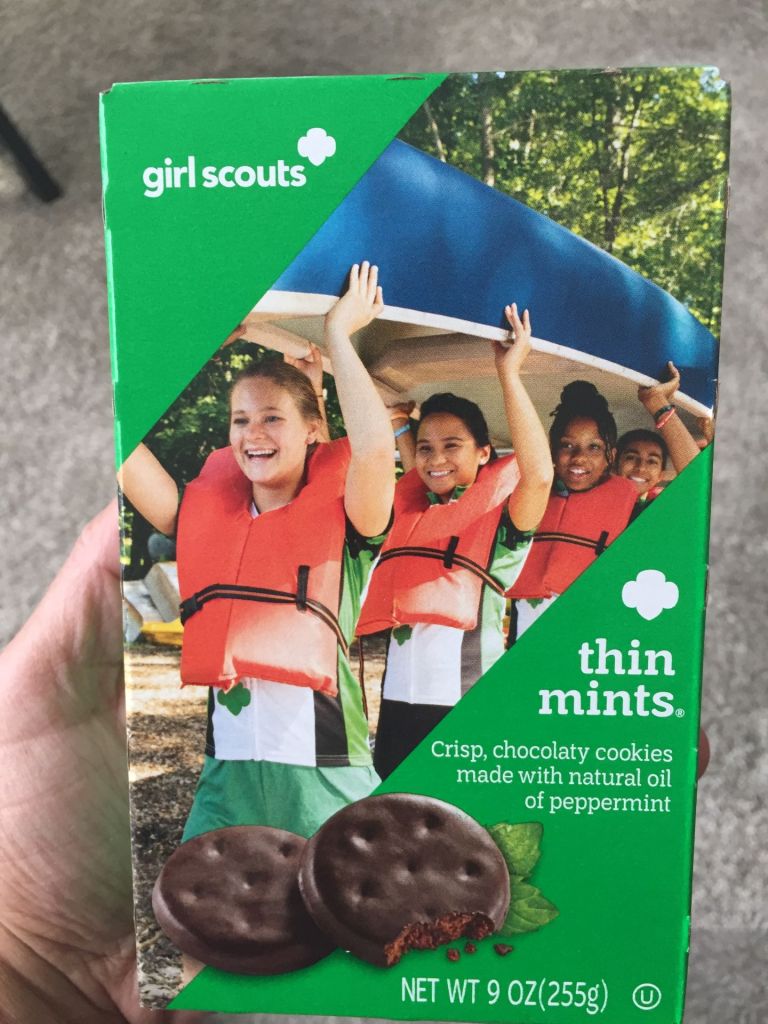
We were out the other day and tried the new Girl Scout Thin Mint Frosties. Sena got chocolate and I got vanilla. We thought they were delicious. Wendy’s partnered with Girl Scouts of the USA to serve them up and it’s a great idea. They’re swirled and topped with a mint-flavored cookie crumble sauce.

We heard that the Girl Scouts would be out selling their famous cookies the same day at booths outside different stores across Iowa including Iowa City, but we couldn’t find them that day. Maybe it was because it was a little cold to be standing outside in a booth. Interestingly today, the girl scout didn’t know this whole idea was a collaboration between Wendy’s and the Girl Scouts of America.

We finally found a website that posted a schedule of when and where the cookies would be selling.

The weird thing is just before Sena left to get some Thin Mints cookies, we found a news story on the web which raised an alarm about whether or not they are poisonous (they’re not), if you can imagine that. People have been buying Girl Scout cookies for years and I’ve never heard of any problems.

So, it occurred to me that even though we’re not employees of the federal government, we could find 5 things to say relevant to the Department of Gustatory Explorations (DOGE) as part of our frivolous investigation of this issue. I think I’ve got that department name right.

  1. It turns out there’s a group called Moms Across America which has partnered with an outfit called GMOScience and they’re calling out Girls Scout of America for selling cookies with “toxic” metals and glyphosate (an herbicide). In their own small, unpublished, non-peer reviewed study, they tested some cookies and found they all had some traces of these substances. They tested cookies including Thin Mints in 3 states which included Iowa.
  2. Snopes investigated and found a number of facts, one of which is that “a child would have to eat 9,000 cookies in a day to approach harmful levels of pesticide or naturally occurring metals.”
  3. The FDA says you can safely eat the Thin Mints and any of the other kinds of Girl Scout cookies. On the other hand, I will not eat cookies containing coconut because it has the consistency of little pieces of cellophane, which I would chew endlessly without ever being able to bring myself to swallow them. This is a personal idiosyncrasy that has nothing intrinsically to do with any food containing coconut.
  4. Don Huber is a retired Purdue University professor of plant pathology who is part of the anti-GMO movement. He’s made many claims which have been criticized and refuted, even by Purdue University faculty members. One of them is that glyphosate causes a number of diseases including Alzheimer’s disease and he claims his ideas are supported by the research of a Maharishi movement expert in yogic flying. By the way there is a Maharishi International University (MIU) located in Fairfield, Iowa. You can learn transcendental meditation there and read about yogic flying (more like hopping) in an interesting 2016 NPR article but you won’t find anything in the curriculum per se on their website about levitation (but you will if you search for the term “yogic flying”). Consequently, you won’t learn dad jokes about this, including but not limited to “Help, I’ve levitated and I can’t get down!”
  5. The Girl Scout cookies and the Frosties taste great.

Well, I think that about wraps it up for DOGE.

FDA Announces Clozapine REMS Program Eliminated

As of February 24, 2025, the FDA has eliminated the Clozapine Risk Evaluation and Mitigation Strategy (REMS) program. See the FDA link for details. Below is the announcement.

“Latest Update

February 24, 2025 – Beginning today, FDA does not expect prescribers, pharmacies, and patients to participate in the risk evaluation and mitigation strategies (REMS) program for clozapine or to report results of absolute neutrophil count (ANC) blood tests before pharmacies dispense clozapine. FDA still recommends that prescribers monitor patients’ ANC according to the monitoring frequencies described in the prescribing information. Information about severe neutropenia will remain in the prescribing information for all clozapine medicines, including in the existing Boxed Warnings.    

Although the risk of severe neutropenia with clozapine still exists, FDA has determined that the REMS program for clozapine is no longer necessary to ensure the benefits of the medicine outweigh that risk. Eliminating the REMS is expected to decrease the burden on the health care delivery system and improve access to clozapine. FDA has notified the manufacturers that the clozapine REMS must be eliminated. FDA has instructed the clozapine manufacturers to formally submit a modification to eliminate the Clozapine REMS and to update the prescribing information, including removing mandatory reporting of ANC blood tests to the REMS program.  

In the coming months, FDA will work with the clozapine manufacturers to update the prescribing information and eliminate the Clozapine REMS.”–FDA

Addiction Not the Same as Neuroadaptation

It’s common to read or hear people say they’re “addicted” to all sorts of things, like chocolate, but there’s a difference between addiction and adaptation. Adaptation can also be called “dependence” or the fancier “neuroadaptation.”

This can foster a discussion about whether you can be addicted to antidepressants, which by extension, could mean it’s difficult to discontinue them. Presumably, that would point to withdrawal symptoms being the obstacle to “getting off” them. Comparing them in terms of which one is more difficult to quit (as noted in the news lately) is fraught with difficulty.

Because I’m a retired psychiatrist, I searched the medical literature to refresh my knowledge about the issue. It turns out, according to a recent review, that it’s important to distinguish between dependence (neuroadaptation) and addiction.

The thing about addiction is that it’s about misusing or abusing substances in a compulsive way despite adverse consequences. Medical students used to remember it (for exams) as the 4 C’s: compulsion, craving, control (the loss of), and consequences (negative). I remember one doctor who added another c: conniving (to obtain substances).

On the other hand, dependence is marked by the adaptation of brain receptors to a substance and which doesn’t involve any of the c’s. This is the way to differentiate addiction from dependence, the latter being a consequence of taking antidepressants. One recent review article does a pretty good job of explaining this:

“Physical dependence to antidepressants may occur in some patients, caused by adaptation of the brain to long-term use of the medication. As pharmacologically defined, this physical dependence is a distinct phenomenon from addiction, and is manifested by a drug withdrawal syndrome.” — Horowitz MA, Framer A, Hengartner MP, Sørensen A, Taylor D. Estimating Risk of Antidepressant Withdrawal from a Review of Published Data. CNS Drugs. 2023 Feb;37(2):143-157. doi: 10.1007/s40263-022-00960-y. Epub 2022 Dec 14. PMID: 36513909; PMCID: PMC9911477.

The authors make the point that pretty much all antidepressants can cause dependence if you take them long enough. But with the possible exception of tranylcypromine (Parnate), they don’t lead to abuse or addiction. That was an interesting reminder. Parnate has a chemical structure similar to amphetamine and there are old case reports describing patients who usually have other substance use disorders abusing Parnate.

Anyway, antidepressants can lead to dependence which can be detected only if they stop using them. Withdrawal can be extremely uncomfortable and can last weeks to months, uncommonly for years.

Withdrawal syndromes vary among different substances. Alcohol and heroin can cause severe withdrawal that has to be managed in a hospital. That’s not to say it’s impossible to suffer antidepressant withdrawal serious enough to warrant hospitalization, but it would be rare. Partly that’s due to the difference in neuroreceptors.

Serotonergic receptors, for example, can be occupied by serotonergic antidepressants and lead to dependence mediated by neuroadaptation. If the antidepressant is abruptly stopped, there will be withdrawal, partly depending on the chemical half-life of the drug. Withdrawal can be marked by headache, dizziness, falls, electric shock sensations, and suicide attempts, for example.

Opioid and benzodiazepine withdrawal are mediated by opioid and Gamma Amino Butyric Acid (GABA) receptors respectively. Withdrawal symptoms can include but are not limited to tremor, sweating, seizures and delirium for benzodiazepine withdrawal, and muscle jerks, sweating, bone pain, nausea and vomiting, diarrhea, and muscle spasms for opioids such as heroin. Both may require medical detoxification in a hospital.

Who’s to say which withdrawal syndrome is worse? They’re both bad.

There’s not a lot of scientific literature out there on antidepressant withdrawal. The authors of the article cited above ended up with only 11 papers over a 20-odd year span after their search.

On average, antidepressants with shorter half-lives tend to be associated with withdrawal. Table 5 in the article cited above identifies the ones with lower to higher risk. Table 6 is a preliminary effort to categorize the level of risk to develop antidepressant withdrawal for an individual patient.

Are There Clear and Consistent Racial Differences in Immunity?

So, the short answer is “Probably not.” I did a little digging on this because I heard the recently confirmed HHS Secretary Robert F. Kennedy Jr (RFK Jr) cite studies which he says did indicate there are differences in humoral immunity between Caucasians and African Americans.

Now remember, I’m a retired general hospital psychiatric consultant and my immunology background consists of the standard immunology lecture in medical school. The class I remember most vividly was the one in which the lecturer stopped her lecture abruptly, sighed deeply and looked defeated, probably because she saw the look of confusion on our faces.

Now that you know my credentials, let me just review what I found in a far from exhaustive review of the scientific literature on the topic of whether or not African Americans have, as RFK Jr. remarked, a “better” immune system than Caucasians.

On my own, I found what RFK Jr referred to variously (depending what social media web source you use) as the “Poland” or “pollen” studies as the scientific source of information supporting his view. I suspect it’s this, in which the last author in the citation is GA Poland:

Haralambieva IH, Salk HM, Lambert ND, Ovsyannikova IG, Kennedy RB, Warner ND, Pankratz VS, Poland GA. Associations between race, sex and immune response variations to rubella vaccination in two independent cohorts. Vaccine. 2014 Apr 7;32(17):1946-53. doi: 10.1016/j.vaccine.2014.01.090. Epub 2014 Feb 13. PMID: 24530932; PMCID: PMC3980440.

It was later in the day that I finally also found the NPR news story, the author of which pointed out the same article.

I also found a couple of other articles which tend to contradict the findings of the Poland et al study. One of them was published in eClinicalMedicine in 2023:

Martin CA, Nazareth J, Jarkhi A, Pan D, Das M, Logan N, Scott S, Bryant L, Abeywickrama N, Adeoye O, Ahmed A, Asif A, Bandi S, George N, Gohar M, Gray LJ, Kaszuba R, Mangwani J, Martin M, Moorthy A, Renals V, Teece L, Vail D, Khunti K, Moss P, Tattersall A, Hallis B, Otter AD, Rowe C, Willett BJ, Haldar P, Cooper A, Pareek M. Ethnic differences in cellular and humoral immune responses to SARS-CoV-2 vaccination in UK healthcare workers: a cross-sectional analysis. EClinicalMedicine. 2023 Apr;58:101926. doi: 10.1016/j.eclinm.2023.101926. Epub 2023 Apr 4. PMID: 37034357; PMCID: PMC10071048.

The list of references include the Poland study (reference 27) cited above. The bottom line is the African American immune response to Covid is not “better” than that of white health care workers but the Asian immune response was stronger. I thought it was interesting that in the section “Evidence before this study,” the authors point out that in one previous study, African Americans had lower antibody responses to vaccination than Whites.

I looked at only one other study, published in Clinical Microbiology Review in 2019;

Zimmermann P, Curtis N2019.Factors That Influence the Immune Response to Vaccination. Clin Microbiol Rev 32:10.1128/cmr.00084-18.https://doi.org/10.1128/cmr.00084-18

OK, so I didn’t hunt through all 582 references, but I thought it was enough to note that the authors didn’t mention race as even being relevant anywhere in the body of the paper.

That said, I suspect the more important fact to focus on is racial disparity regarding African Americans even getting vaccines, especially the Covid vaccine. Vaccine hesitancy is common in this population and probably more important to address rather than whether or not there are significant racial differences in immunogenicity. The major challenge is providing accurate information about vaccines in general and Covid vaccines in particular.

The CDC Advisory Committee includes African American members who attend each meeting and emphasize the importance of including black people in vaccination campaigns. OK, so why was the meeting this month cancelled, postponed, or whatever?

Hey, I’m just an old psychiatrist, so don’t take my word for it about anything here. Ask an immunologist. If the immunologist gives you a blank look, you could try a Ouija Board.

Send The Asteroid; We Deserve It

About that news article regarding an asteroid colliding with earth—I couldn’t read it…hits too close to home (rim shot!).

More seriously (but not much!), the background for this is that the asteroid 2024 YR4 has been identified by NASA and is tracking it now. News stories emphasize its large size of maybe up to a few hundred feet and the low chance of it hitting earth at all. NASA’s latest estimate today of the probability of it hitting us at 0.28%. It’s scheduled to buzz by or through us in 2032.

I’m still trying to learn the terminology about rocks in and from space:

Asteroid: a rock that orbits the sun

Comet: an icy ball of dirt that orbits the sun

Meteor: a descriptive term about the amount of a certain edible substance, as in— “What did the black hole say after it swallowed an asteroid? It was good but I wish it had been a little meteor.”

Meteorite: a space rock that enters the earth’s atmosphere, creates a streak of light in the sky and lands on the earth’s surface.

Trilobite: a funny looking creature that died out during the mass extinction caused by a meteorite landing on the earth’s surface.

Any questions? No? Then let’s move on.

This should remind everyone of the well-known X-Files episode, “Tunguska.” Like many of the episode names, it’s pretty inscrutable unless you have a little background. Tunguska is an area in Siberia that in 1908 took a big hit from a cosmic event, basically an explosion of many megatons which flattened a forest of millions of trees. The impact occurred far up in the sky and was probably caused by a meteorite which left no impact crater.

Anyway, Agent Mulder talks about the Tunguska event as part of speculation about where a rock (found early in the episode) came from that has this black oil in it which infects humans (making them homicidal maniacs) and is made by extraterrestrials. Earlier a scientist speculated that the rock might be a meteorite containing fossilized extraterrestrial bacteria—just before the black oil got him.

Neil deGrasse Tyson, the famous astrophysicist remarked in a news report about this rock that now might not be a great time to cut funding to science.  

So that’s why we should be asking ourselves, “Why are they called hemorrhoids? Because Asteroids was already taken.”

Get Ready to Vaccinate Your Chickens!

I’ve heard about the recent contract a drug company (Zoetis) obtained to make chicken vaccine for the H5N1 bird flu virus which is hopping from birds to cows and even to humans. So far, I haven’t heard that the bird flu is transmitted between humans.

As far as eating eggs, I’ve read that the chance of getting bird flu is pretty slim—but experts tell you to cook your eggs to a temperature above 165 degrees. No soft egg yolks for me.

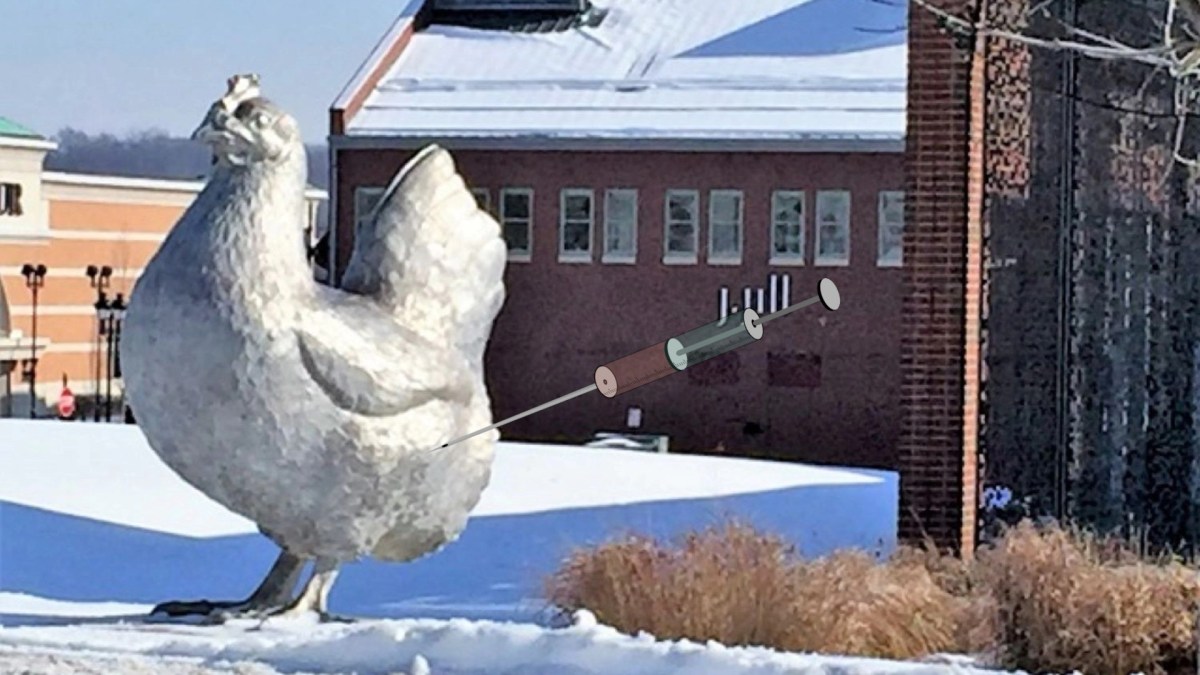
Anyway, Zoetis is making a vaccine for chickens. I got to wondering how you would vaccinate chickens. Obviously, you have to catch them first, wrestle them down to the barnyard floor and stick a needle into them somewhere under all the feathers.

There’s a Wikihow with instructions (including a video) for giving chickens vaccines. One of them says to inject the bird in the spot for which you have the easiest access and which is the “most comfortable for the chicken.”

How do you tell which is the most comfortable spot for the chicken to be impaled by a needle? Maybe it’s marked by a Walgreens sticker. You have to sterilize the spot, maybe with a splash of that moonshine you’re making on your property. Make sure you don’t drink any of it during the vaccination process. You want to make sure of your aim.

 When and how do you wrap a rubber band around the beak? You know darn well the chicken is going to peck you. You can tell we don’t have chickens in the backyard.

And then there are all the stories on the internet about how chickens can run around for a short while even after their heads are cut off. If they’re that energetic without their heads attached, how much more frantic are they going to be if they see you chasing after them with a needle? And remember, you’re going to probably poke them in the neck. Chickens know that. They also know you’re wearing only thin rubber gloves.

And aren’t chicken farms or ranches or coops, whatever, just chock full of thousands of chickens? Vaccinating all of them is a dawn to dusk proposition so you better have your Wheaties in the morning.

Are the roosters also up for the vaccine? One way to get them ready is to let them crow until they pass out. Then you can poke them. You’re welcome.

Rounding@Iowa Podcast: “Challenges in Transitioning Seriously Ill Patients from Pediatric to Adult Systems of Care”

I listened to the Rounding@Iowa podcast of February 11, 2025, “Challenges in Transitioning Seriously Ill Patients from Pediatric to Adult Systems of Care.”

89: Tick-borne Illnesses Rounding@IOWA

Join Dr. Clancy, Dr. Appenheimer & Dr. Barker as they discuss prevention, diagnosis and treatment of various tick-borne illnesses.  CME Credit Available:  https://uiowa.cloud-cme.com/course/courseoverview?eid=82296   Host: Gerard Clancy, MD Senior Associate Dean for External Affairs Professor of Psychiatry and Emergency Medicine University of Iowa Carver College of Medicine Guests: Ben Appenheimer, MD Clinical Associate Professor of Internal Medicine-Infectious Diseases Assistant Director, Infectious Diseases Fellowship Program Associate Clinical Director, Infectious Diseases Co-Medical Director, TelePrEP, University of Iowa Health Care University of Iowa Carver College of Medicine Jason Barker, MD Associate Professor of Internal Medicine-Infectious Diseases University of Iowa Carver College of Medicine Financial Disclosures:  Dr. Gerard Clancy, his guests, and Rounding@IOWA planning committee members have disclosed no relevant financial relationships. Nurse: The University of Iowa Roy J. and Lucille A. Carver College of Medicine designates this activity for a maximum of 1.0 ANCC contact hour. Pharmacist and Pharmacy Tech: The University of Iowa Roy J. and Lucille A. Carver College of Medicine designates this knowledge-based activity for a maximum of 1.0 ACPE contact hours. Credit will be uploaded to the NABP CPE Monitor within 60 days after the activity completion. Pharmacists must provide their NABP ID and DOB (MMDD) to receive credit. JA0000310-0000-26-038-H01 Physician: The University of Iowa Roy J. and Lucille A. Carver College of Medicine designates this enduring material for a maximum of 1.0 AMA PRA Category 1 CreditTM. Physicians should claim only the credit commensurate with the extent of their participation in the activity. Other Health Care Providers: A certificate of completion will be available after successful completion of the course. (It is the responsibility of licensees to determine if this continuing education activity meets the requirements of their professional licensure board.)  
  1. 89: Tick-borne Illnesses
  2. 88: Modifiable Risk Factors for Breast Cancer
  3. 87: New Treatment Options for Menopause
  4. 86: Cancer Rates in Iowa
  5. 85: Solutions for Rural Health Workforce Shortages

This was a very interesting presentation about the challenges of helping persons with life-limiting conditions (for example, hemophilia, cystic fibrosis, sickle cell anemia and more) transition from pediatric to adult systems of care. Most of the discussion was about the difficulty in finding doctors who would be willing and able to assume care of patients who had survived to adulthood who had been previously seen in pediatrics throughout childhood.

I listened very carefully to the whole podcast, waiting to hear about what the role of mental health care professionals would be in this kind of transition. There was no mention of it, not even after one of the presenters described a patient who was starting to have hallucinations.

My role as a consulting psychiatrist in a general hospital was mainly to see those with chronic diseases who were being treated by colleagues during a bout of cystic fibrosis or sickle cell crisis. I remember they were young adults, struggling with emotional distress and disruptive behavior.

I was surprised at the lack of discussion about the role of mental health assessments, diagnoses, and treatment including psychotherapy during transitions from pediatric to adult health care. Not that I would have had much to offer other than questions about how mental health professionals could be helpful regarding transitions—but I think they would have not been out of place.

I took a quick look at the resources provided. One of them was a University of Iowa website, the Iowa Center for Disabilities and Development: Transition to Adulthood Clinic For Teens and Young Adult Ages 14-30. Even here, the role of a psychologist was to evaluate learning problems.

One of the discussants mentioned a program called Got Transition, which has a very comprehensive website. There was a section for Special Populations and a list of resources and research when I searched the site using the term “mental health.” It was hard to find a section specific to the population under discussion in the podcast. On the other hand, it was very comprehensive.

In this podcast, discussants talked about the importance of a team approach to transitions. I wonder if there’s a place on the team for psychiatry.

Rife vs Ripe: Which is Right?

I noticed a couple of things about one of the President’s many new Executive Orders, which was “ESTABLISHING THE PRESIDENT’S MAKE AMERICA HEALTHY AGAIN COMMISSION,” or MAHA for short. It was posted on February 13, 2025. One thing it reminded me of is the tax filing season, which is upon us (everything reminds me of the tax filing season around this time of year). The other thing was a short article about the IRS, which is cutting staff sharply in response, probably as a response to the federal government workforce layoffs generally. One sentence in the article read:

“The IRS layoffs, first reported by the New York Times, come as part of a broader effort by President Donald Trump and Elon Musk’s overhaul of the federal government, which they argue is too bloated and inefficient, and ripe with waste and fraud.”

I put the word “ripe” in bold-face type because I sensed that the writer probably meant “rife” instead. I looked up the definitions of both just to make sure: Rife means abundant and ripe means mature (possibly overly mature as in smelly and ready for the garbage can).

I wonder if “rife” or “ripe” could apply to MAHA. I’m all for making us healthy. I agree with promoting health. I’m not sure what is meant by “assess the prevalence of and threat posed by the prescription of selective serotonin reuptake inhibitors, antipsychotics, mood stabilizers, stimulants, and weight-loss drugs.” It sounds like a shot across the bow for psychiatrists and primary care physicians.

Some of the content may be either “rife” (or is it “ripe”?) with potentially misleading innuendo, implying that health care professionals are not doing all we can already to promote health. I agree with promoting research into the “root causes” for mental illness. However, some people need psychiatric medications for “just managing disease.” Reducing the suffering of those who are tortured by depression and delusions and hallucinations makes sense because that’s the humane thing to do.

This reminds me of a very interesting article about what some scientists think about how life began on this planet and how it might start elsewhere in the universe. Some think life evolves mainly by chance, by a cosmic accident. Others think it’s inevitable and occurs when planetary conditions are right. So that might mean there’s a good chance there are extraterrestrials are out there. If they are, what would they think of us?

And this reminds me of a quote from the movie, Men in Black. Agent K is showing Edwards a universal translator, one of the many wonders in the extraterrestrial technology room, which gives us a perspective on how humans rank in the universe:

Agent K: We’re not even supposed to have it. I’ll tell you why. Human thought is so primitive it’s looked upon as an infectious disease in some of the better galaxies.

So is the universe “rife” with life—or is it “ripe”?